1 seat
8 built
Cirrus 110 hp, 2 built
Menasco C-4, 125 hp 2 built
Warner Scarab, 110 hp 4 built
Piston
Granville Bros A
2 place biplane
Engine: Kinner 12-5, 118 hp
9 built
G.B.S.1910 monoplane
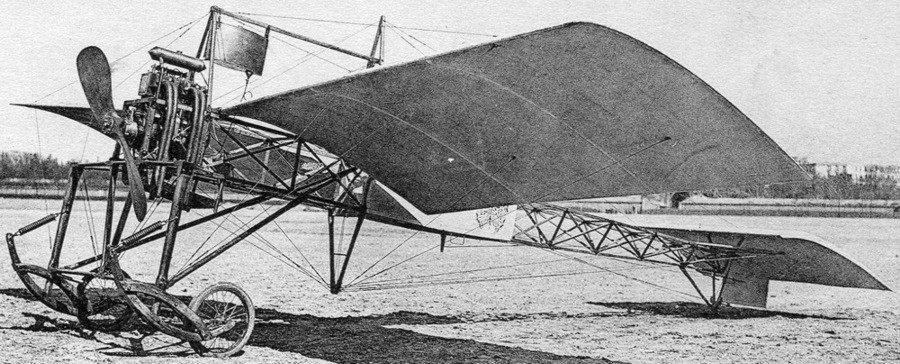
Built in France by Guyot, Bœswillwald et Stahl (G.B.S.), three of these Blériot-like planes with triangular cross-section were entered in the 1910 Tours meeting, but never showed up. Powered by a 40 hp Labor engine.
Gazuit-Valladeau GV 10 Gazelle
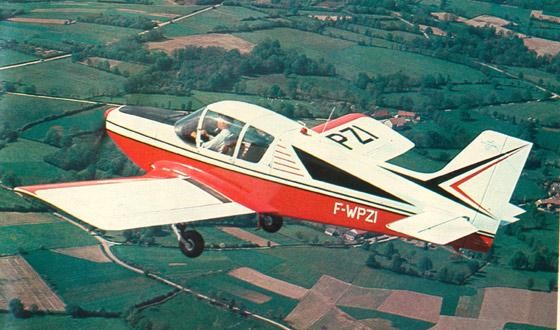
The company produced a 2/3-seat light aircraft, the GV 103L, which first flew on 1 May 1969. Subsequently built a second example with the intention of finding a sponsor for production of the type.
The GV 10-20 was an aerobatic two-seat version with 115 hp Lycoming engine.
The GV 10-31 was a four-seat version.
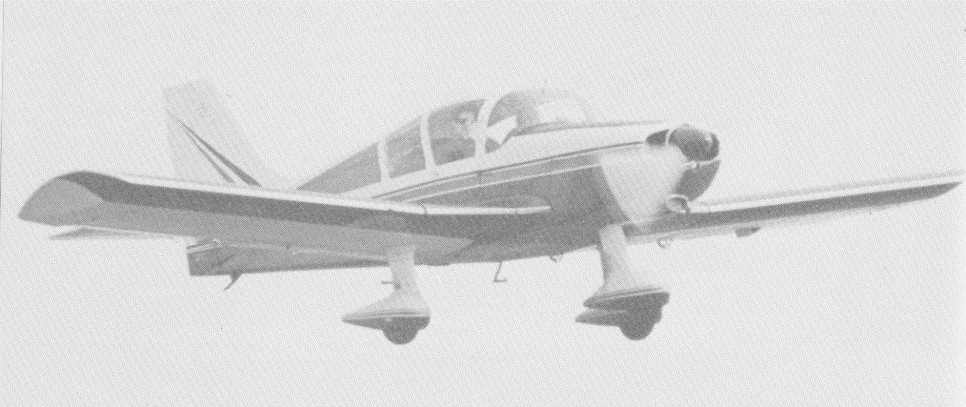
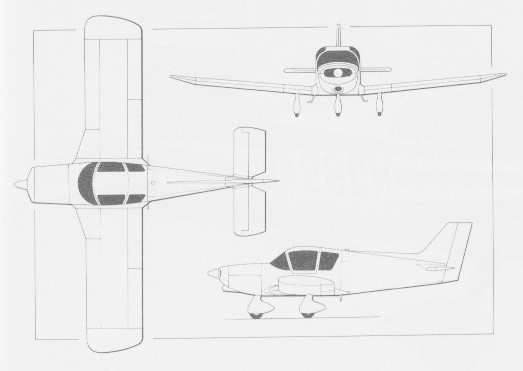
GV 10-31
Engine: Lycoming O-320, 150 hp
Wingspan: 28 ft 8.5 in / 8.75 m
Length: 21 ft 7.75 in / 6.60 m
Empty weight: 1212 lb / 550 kg
MTOW: 2182 lb / 990 kg
Max cruise 75%: 122 kt / 140 mph / 225 kph
ROC SL: 787 fpm / 240 m/min
Service ceiling: 14,760 ft / 4500 m
Range: 594 nm / 683 mi / 1100 km
Seats: 4
Max rear seat load: 340 lb / 154 kg
Baggage: 22 lb / 10 kg
Gazda Helicospeeder
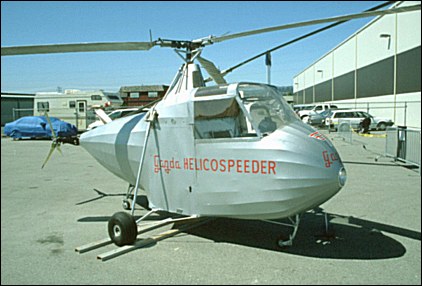
During a general conversation, Harold E. “Hal” Lemont told Gazda of his work with Igor Sikorsky; Gazda asked if Lemont would like to design and build a helicopter for him. They
agreed that Lemont would lay out a design for a two-pJace helicopter, and thus the Gazda Model 100 was begun.
The Gazda Model 100 Helicospeeder NX69154 was designed and developed in 1943, 1944, and 1945 by Antoine Gazda of Wakefield, Rhode Island. It was a single motor and torque aircraft with unique concepts which had the following features:
A swing tail for forward flight was designed to permit flight as a gyrodyne (V. Isaoco, J. Bennett) at higher than manual helicopter speeds with the rotor axis vertical.
To control blade inplane motion to prevent ground resonance a rotor azimuthal blade positioning system was included.
A wheel/stick installation was used so that positioning of the aircraft was achieved by one appropriate motion of the pilot control.
An internal swash plate below the main rotor gearbox actuated push rods going up to the rotor head which controlled blade collective and cyclic pitch as a low drag solution.
Belt drives were used between its engine, the cooling fan, and the main rotor gearbox. A drive shaft from the gearbox to the swinging tail rotor was also included with a torseinal damper as part of this shaft.
An all-aluminum single-seat helicopter, it was powered by a Continental A-75 engine.
Two assistants for detail designs were hired from previously known engineers who had attended RISC – Mr. S. Fitzpatrick in 1944 who was later replaced by Mr. H. Sadler in 1945.
The Helicospeeder was manufactured by Helicopter Engineering & Construction Co. and designed in accordance with general practice at that time. The fuselage was welded steel aircraft tubing. Main rotor blades were steel tubular spars, wooden leading edge wire cable training edge and airplane fabric covering. Cast aluminum gear cases and industrial/automotive gears, bearings, belts, and pulleys were used. The wheels came from a Piper Cub. Considering the limited pool of knowledge and experience in helicopter design, and Mr. Lemont’s earlier background with the Sikorsky VS-300, it is natural that there would be considerable similarity between these two machines.
Its Cierva-type rotor hub, with hydraulic-interconnect links between blades, made ground resonance impossible.
Initially, attempts were made to use a jet of air from the tail to counter torque. However, due to difficulties, a tail rotor was used that could be turned 90 degrees by the pilot, and thus serve as a push propeller for added thrust.
The Model 100 was constructed in the Rhode Island area during World War II, incorporating some surplus aircraft items. Powered by a 75 hp (56 kW) Continental A-75 engine, it was specified to carry one person and publicity releases claimed an ultimate goal of a 300 mph (483 km/h) maximum airspeed. Flight testing was done by Mr. Gazda himself, whose limited experience at the controls of a rotorcraft may have been detrimental to success of these tests. The designer/constructor carried out test flights and a more modest actual speed of 100 mph (161 km/h) was reached.
Production examples were expected to sell for 5,000 U.S. dollars, but no firm sales were made. As Gazda came to understand the difficulty in learning to fly the aircraft, plus the cost of further development, he decided to discontinue further work on this aircraft, and only one example of the initial version was completed.
The Helicospeeder was sold at auction after Mr. Gazda passed away, and was purchased by HAl Past-Chairman Vincent Colicci, who eventually sold it to Dr. Voss. After some years at AgRotors in Pennsylvania, Stanley Hiller took it on loan for his aviation museum in San Carlos, California, and had it restored to its original condition (it would appear that the Model 100 was also placed on public display at some point in time in the Owls Head Transportation Museum at Knox County Regional Airport—located two miles south of Rockland, Maine.)
Helicospeeder
Engine: 1 x Gazda, 130hp
Rotor diameter: 7.62m
Length: 5.79m
Height: 2.54m
Gross weight: 544kg
Cruising speed: 224km/h
Gavilan 358
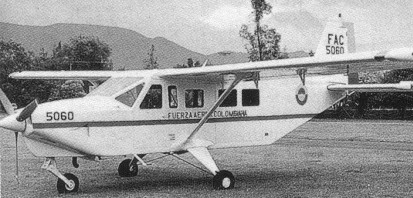
A 1998 addition to the Fuerza Aerea Colombiana (FAC) inventory was the indigenous Gavilan 358 eight seat light utility aircraft. Four were ordered by the FAC, the first of which was delivered on June 16 1998 after the type had achieved US FAA FAR Part 23, Amendment 46 type certification on May 26. Including these four, manufacturer El Gavilan SA had firm orders for 11 aircraft and was building an initial production batch of 12, which will include a number of the turboprop Model 508T, under development. A second production aircraft was delivered to TSS of Guatemala on June 17 and a third to Aeroexpreso of Bogota while the next export sale was due for delivery to Deobal of Argentina.
Gaunt No. 2 Baby
John Gaunt’s first biplane (1910) and his monoplane (1911) both crashed during attempts to get airborne, but biplane no.2 ‘Baby’ was much more successful. It had a lower wingspan which was somewhat less than that of the upper wingspan. The wings and interplane struts formed a single bay structure with additional pairs of interplane struts close to the fuselage in place of cabane struts, and an outward-leaning single strut on each side from the lower wingtip to the overhanging upper plane. The wings were unusual for the time, being covered not with fabric but thin plywood sheets. These were sewn together through eyelets inserted into them. Lateral control was provided by wing warping.
The fuselage was rectangular in cross-section and tapered towards the tail. A deep chord tailplane with highly swept leading edges and a pair of elevators with rounded trailing edges was mounted on top. At least part of the rudder projected below the fuselage. It was protected from the ground by a long tailskid, mounted well below the fuselage on a long post which also extended above the fuselage and appears, in a photograph, to have carried a small flag. The pilot’s open cockpit was positioned close to the trailing edge of the wing, which had a large cutout to improve visibility. The main undercarriage was built around a central skid, mounted on a pair of transverse V-struts to the fuselage. The two landing wheels were mounted on a split axle, attached to the skid.
The Baby was powered by a 30 hp (22 kW) Alvaston twin-cylinder, horizontally-opposed, water-cooled engine in the nose. It drove a two-blade propeller and was cooled by a pair of rectangular radiators, mounted longitudinally on the top edges of the fuselage, between the engine and the pilot, with their top edges attached to the lower surface of the upper wing.
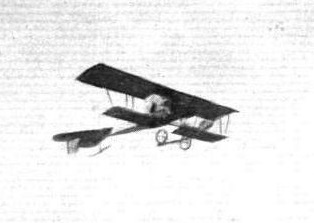
John Gaunt flew his aircraft successfully for the first time on 12 June 1911 from his base on Southport sands in Lancashire, England. On 23 June, he covered a total of about seven miles, still flying mostly in straight lines. In the first week of July, he increased the distance covered, despite a member of the crowd he had attracted, who, unnoticed, bent one elevator out of shape and almost caused a crash. By 24 July, he had achieved flights of 30 minutes and reached an altitude of 300 ft (100 m). On 4 August, he made his first cautious turn but turns on windy days remained a problem into early September. That month, the Baby was flown successfully by another pilot, W.S Leveson-Gower, who posed no problems for the aircraft despite weighing 70 lb (32 kg) more than Gaunt.
It seems the aircraft flew again in the summer of 1912, but that a crash on 22 August ended its career.
Powerplant: 1 × Alvaston 2-cylinder horizontally opposed, water-cooled
Propeller: 2-blade Gaunt, 7 ft 0 in (2.13 m) diameter
Wing area: 208 sq ft (19.3 m2)
Empty weight: 600 lb (272 kg)
Maximum speed: 50 mph (80 km/h, 43 kn)
Stall speed: 35 mph (56 km/h, 30 kn)
Crew: one
Gaudart 1911 monoplane
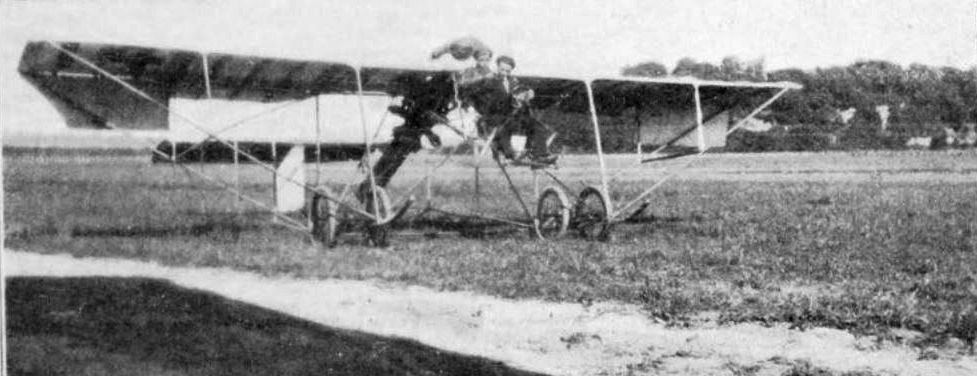
An experimental pusher monoplane with a rigidly trussed shoulder-mounted wing, one of a series of experimental types ordered by Jean Legrand. It was built by Louis Gaudart and was flown at Juvisy in May 1911.
Span: 29’6″
Length: 26’3″
Weight: 660 lb
Speed: 60 mph
Gates Lear 50
Gates Learjet Corporation reached a major milestone on 28 March 1980 when it delivered the 1,000th Learjet a Century III 35A. Learjets have now flown over one billion miles during more than 2.6 million flight/hr. The occasion was also marked by the roll out of the first production widebody Learjet Longhorn 50 series business jet.
Gates Learstar
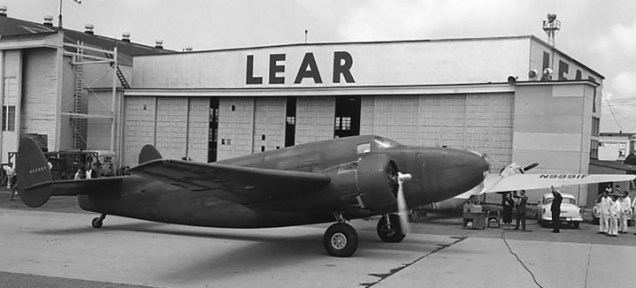
Shortly after World War II, Bill Lear bought a fleet of Lodestars. In 1953, Gordon Israel signed on with William Lear to redesign the Lockheed Lodestar into the Learstar executive transport. Lear tinkered with their noses and streamlined the fuselages. He added fairings to the landing gear and beefed up the horsepower. Lear’s new plane was one of the first truly executive aircraft, and Lear guaranteed a 300 mph cruise speed for businessmen who were in a hurry.
When the Learstar was finished, it was 52 knots faster than the stock Lockheed, and Lear eventually sold 72 of the big long range twins, one of them going to the Krupps of Germany on a delivery flight that went from Santa Monica to Dosseldorf, Germany with only one stop, at Frobisher.

