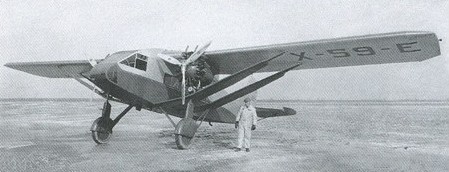
Three seat twin-engine high-wing cabin monoplane
Three seat twin-engine high-wing cabin monoplane

The General Airmotors Moore Three Valve features a compression control mechanism for easy altitude adjustment. There are 3 valves per cylinder – 2 intake and 1 exhaust. A Poultice head is secured to the cylinder barrel by a patented conforming clamp. The Moore Three Valve has low head temperature maximum 350 degrees F, and oil temperature of 120 degrees F.
Valve rocker arm assembly is a unit of three parts and three sets of ball bearings. Valves seat in steel cylinders. The crankcase assembly is two major ohnalite castings. Here is a two piece crankshaft, counterbalanced, with a solid master rod. Full floating main bearings on crank pin. Cylinders are carbon steel cup shaped blanks, forged and bored.
Accessories available were Heywood starter, propeller hub, nose cowling and exhaust manifold.
Type: 5 cylinder fixed radial, air cooled
Commercial Rating: 150 hp at 1850 rpm
Displacement: 540 cu.in
Compression ratio: 5.4-1
Bore: 5 in
Stroke: 5 1/2 in
Length: 41 1/2 in
Diameter: 44 5/8 in
Weight: 365 lb
Fuel consumption: not more than .53 lb/hp/hr
Oil consumption: not more than .015 lb/hp/hr
Lubrication: Force feed
Ignition: 2 Scintilla Magnetos PN-5-D
Carburation: 1 Stromberg NA R 5A
Spark plugs: 2 per cylinder
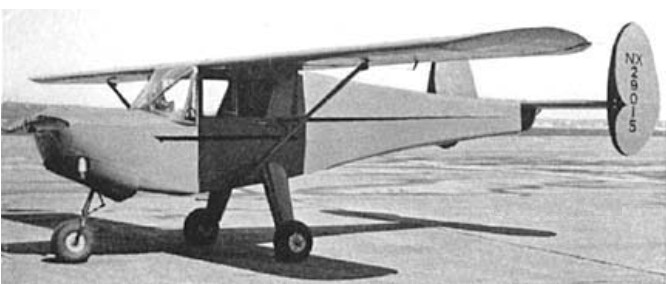
The General Aircraft Corporation was established to build an aircraft designed by Doctor Otto C. Koppen from the Massachusetts Institute of Technology. The aircraft was the G1-80 Skyfarer, a two-seat cabin high-wing braced monoplane with a light alloy basic structure and a mixed steel tube and fabric covering. It had an unusual tail unit, a cantilever tailplane with the elevator mounted on the upper surface of the tail with aluminum endplate fins and no movable rudders. It was powered by a 75 hp (56 kW) Avco Lycoming GO-145-C2 geared air-cooled four-cylinder engine.
The aircraft incorporated aerodynamic control principles covered by patents issued to Fred Weick, an early aeronautical engineer who went on to design and market the Ercoupe. Since it had no rudders (or rudder pedals), it was simpler to fly (it had a single control wheel, which controlled the ailerons and elevator), and was considered spin-proof. The aircraft was certified in 1941 with a placard that stated the aircraft was characteristically incapable of spinning. The company also made a comment to Popular Science in a September 1941 article, with first public photos that an “average” person could learn to fly the Skyfarer …in an hour or so…
It was anticipated that many aircraft would be ordered and built, but the United States became involved in the Second World War and the Skyfarer programme was abandoned after 17 examples had been built. The rights and tooling passed to Grand Rapids Industries in 1943, who built 2 aircraft before stopping production. The company became a manufacturer of the Waco CG-4A troop glider.
L.W. DuVon and Dr. David O. Kime of Western Union College convinced the type holder Grand Rapids Industries, to give the equipment, tools and one of the finished planes to the college in 1944. They then found local investors who formed Mars Corporation in 1945. The aircraft was later licenced as the Mars M1-80 Skycoupe with a 100 hp engine. One example was built and production plans were estimated to be as high as 75 planes in its first year. The glut of aircraft produced after the war left little market for the aircraft. The facility to manufacture the aircraft was sold by 1946.
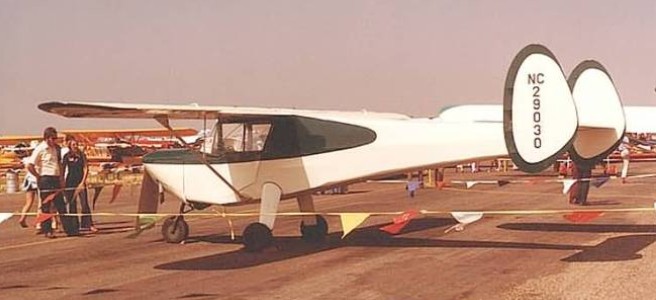
The aircraft NC29030 resides in the Plymouth County, Iowa Historical Museum.
G1-80 Skyfarer
Engine: 1 × Lycoming GO-145-C2, 75 hp (56 kW)
Wingspan: 31 ft 5 in (9.58 m)
Wing area: 121.3 sq.ft (11.27 sq.m)
Length: 22 ft 0 in (6.71 m)
Height: 8 ft 8 in (2.64 m)
Empty weight: 890 lb (404 kg)
Gross weight: 1350 lb (612 kg)
Maximum speed: 144 mph ( km/h)
Cruise speed: 100 mph (161 km/h)
Range: 350 miles (563 km)
Service ceiling: 10,000 ft (3050 m)
Seats: 1 pilot, 1 passenger, side-by-side
The General Aircraft GAL.58 Hamilcar 10 was a powered version of the Hamilcar 1 to AM Spec X.4/44, for Far-Easton Sector operations. The glider was fitted with two Bristol Mercury engines of 965 hp each, to enable the glider to maintain level flight when lightly loaded.
Wing span: 110.007 ft / 33.53 m
Wing area: 1657.441 sq.ft / 153.980 sq.m
Length: 68.012 ft / 20.73 m
Height: 20.243 ft / 6.17 m
Max take off weight: 45,500 lb / 20,412 kg
Weight empty: 25,510 lb / 11,571 kg
Aspect ratio: 7.3
Wing section: RAF 34 modified
Max speed: 145 mph / 233 kg
Max speed: 112 mph at 32,500 lb
Cruise: 180 kph at 14,742 kg
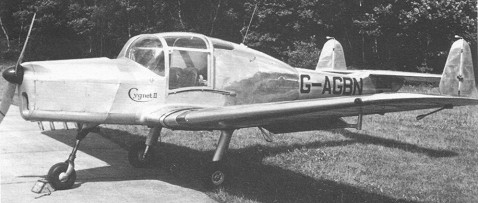
CW Aircraft was established in 1936 by C R. Chronander and J. I. Waddington to design and develop Cygnet two-seat all-metal cabin monoplane, which first flew in 1937. Rights in Cygnet acquired by General Aircraft Ltd. in 1938.
General Aircraft GAL-42 Cygnet Article
This 1936 side by side two seat training and club aircraft was an attempt at a more robust and easily made machine than those of longeron, plywood and fabric construction. It was the first British light aeroplane to have both metal skinned wings and fuselage. The first version had a single fin and rudder and a tailwheel landing gear. The later Cygnets had twin fins and a tricycle landing gear making it easier to fly.
There was also an experimental open-cockpit version, the Owlet.
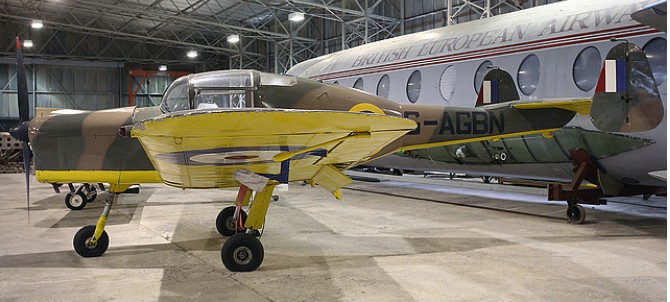
Cygnet
Engine: One 150 h.p. Blackburn Major II.
Length: 23.25 ft. (7.08 m.).
Wing span: 34.5 ft. (10.5 m).
Weight empty: 1,475 lb. (670 kg.).
Seats: 2.
Max cruise: 115 m.p.h. (185 km.p.h.).
Ceiling: 14,000 ft. (4,300 m.) fully loaded.
Range: 445 miles (720 km.).
In 1937 the British Admiralty issued a requirement for a novel type of aircraft to shadow enemy fleets, especially by night. The Air Ministry issued Specification S.22/37 calling for an aircraft compatible with aircraft carriers which would provide comfortable accommodation for a pilot, observer and radio operator, outstanding all round view and the ability to cruise at 40 knots for 11 hours. Two prototypes were built, the Airspeed A.S.39 (serial N1323) and the General Aircraft G.A.L.38 (P1758). These flew after the out break of the Second World War. Both were high wing aircraft with extensive slats, flaps and drooping ailerons all in the slipstream of four 130 hp Pobjoy Niagara V radials driving fixed pitch propellers. The G.A. aircraft was all wood, but the Airspeed Fleet Shadower, had a metal fuselage; the former had a nose¬ wheel and tall single fin, while the Airspeed had a tail wheel and three small fins. Each seated the observer in a panoramic nose, the pilot high and behind and the radio operator further aft. Both aircraft met the requirement but the Admiralty changed their minds about the desirability of such an air¬ craft and scrapped this programme in 1940.
Span: 17.02m (55ft 10in)
Length: 11 m (36 ft 1 in)
Gross weight: 3897 kg (8590 lb)
Maximum speed: 185 km/h (115 mph).
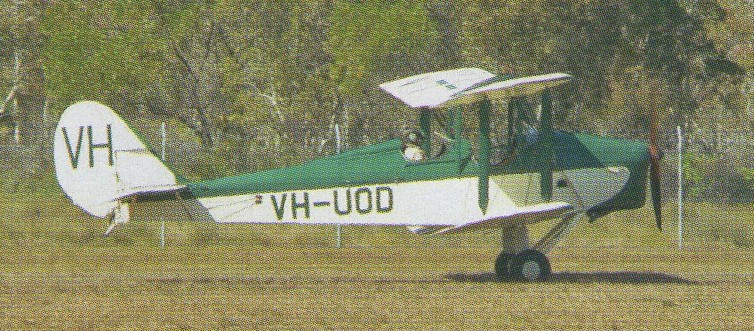
The first Genairco flew on December 20, 1929, and bore a marked similarity to the D.H.60, although it had a two-place front cockpit. The seventh and eighth aircraft produced were modified into cabin biplanes, resembling the D. H, 83 Fox Moth. The Depression and availability of D.H. types put General Aircraft out of business by early 1933.
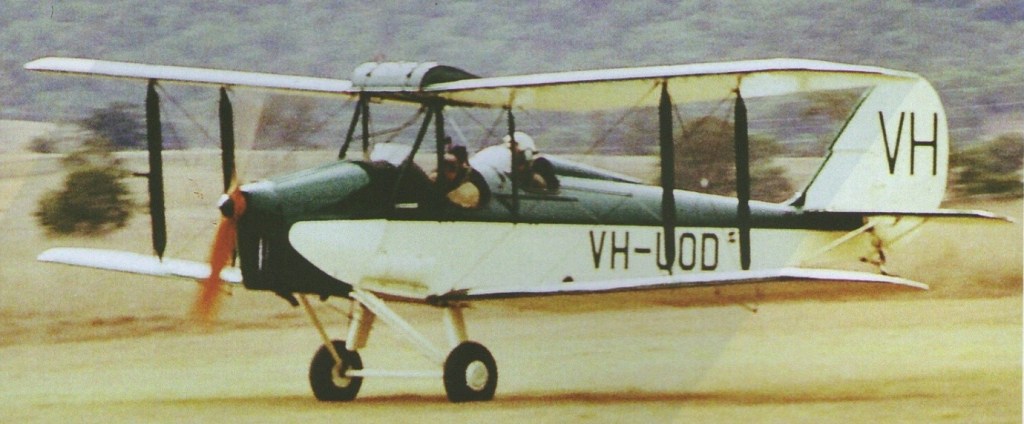
General Aircraft built about 12 Genaircos from late 1929 in ‘cabin’ and ‘open’ forms. A three-seater, two passengers are side-by-side in the front and pilot behind.
In 1916 General Aeronautic Co produced a 12-cyl “semi air-cooled” aero engine.
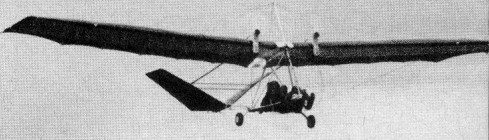
The Gemini Hummingbird 103 and Hummingbird Super 103 are single seat twin engined high wing mono¬plane with conventional three axis control. Wing has unswept leading edge, swept forward trailing edge and tapering chord; V tail. Pitch/yaw control by elevon; roll control by ailerons; control inputs through stick for pitch/roll and pedals for yaw. Wing braced from below by struts; wing profile; double surface. Undercarriage has three wheels in tricycle formation; no suspension on nosewheel and steel spring suspension on main wheels. Push right go right nosewheel steering connected to yaw control. Optional brake on nosewheel; optional brakes on main wheels. Aluminium tube framework, without pod (Hummingbird 103), totally enclosed (Hummingbird Super 103). Engines mounted at wing height driving tractor propellers. Two tractor Solo 210 engines, direct drive (two 20-hp Solos, 3:1 reduction unit, tuned exhaust optional). The Super 103 is the same basic configuration as the Standard 103 but POWERPLANT: Two Solo 210s, 3:1 reduction unit, tuned exhaust.
Gemini International Hummingbird Article
First year built: 1979. The 103 marks a change in marketing policy for the company, as it is the first kit built machine offered by the firm, taking two days to build. A wide range of options is available on the 103, including wheel spats and a fabric covering for the fuselage, with Lexan windows to make a fully enclosed cockpit. Thus modified, the aircraft is known as the Hummingbird Super 103 and costs $6185, as against $5495 for the Hummingbird 103, in 1982.
Other notable options are floats, amphibious floats into which the wheels retract, disc or drum brakes on the main wheels, a nosewheel brake, heavy duty 16 inch (41 cm) wheels and a ‘Super Wing’ high performance wing. Reduction drive is optional.
Units delivered by June 1981 48.
The Hummingbird Prospector had the wing braced from above by kingpost and cables, from below by cables. Aluminium tube framework, without pod (total enclosure optional). The Hummingbird Prospector was the flagship of the Gemini range in that it came complete and test flown from the factory, unlike the Hummingbird 103 and Hummingbird Super 103. It was an older design, easily distinguished from the 103s by its retention of kingpost and cable bracing. The Prospector was sold with two Solo 335 engines. However, there were plenty of Prospectors around with Limbach 275 cc engines. Latest power units for the Hummingbird Prospector were reduction drive Solos.
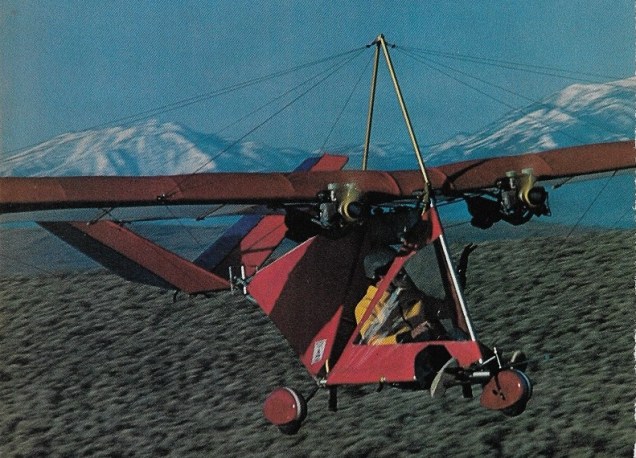
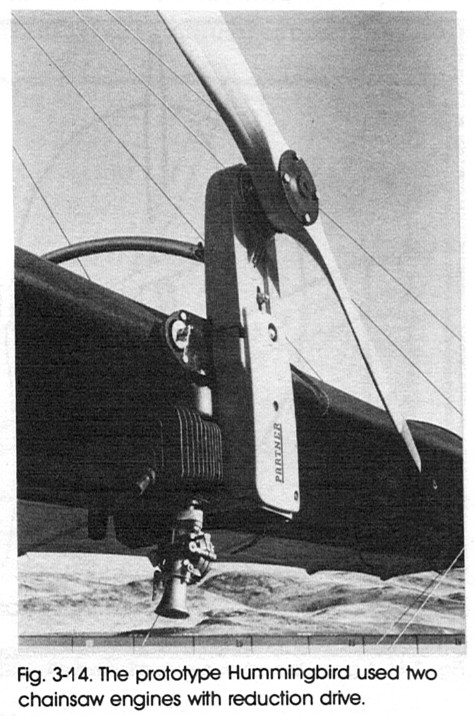
The Tractorplane is a utility ultralight version of Prospector. The Sport Hummingbird is a mono-wing with upright V-tail. Mixed three-axis controls make use of true ailerons for roll control and a separate elevator on the V-tail for pitch control. Construction is aluminum-tubing frame with the wings and tail surfaces covered with presewn 3.8-ounce Dacron. The engines are mounted in tractor position on the leading edge of each wing, and operated separately. Reduction drive turns each two-blade wooden Gemini propeller. Fuel tank is polypropylene. LANDING GEAR: Solid tricycle with steerable nosewheel. Wheels measure 16 inches.
Hummingbird
3-axis conventional (rudder, aileron, elevator).
Gross weight 415 lb.
Empty weight 163 lb (can be modified to 155).
Max pilot weight 230 lbs.
First year built 1979.
Hummingbird Standard 103
Engines: 2 x Solo 335, 20 hp at 7200 rpm.
Propeller diameter and pitch 52 x 27 inch, 1.32 x 0.69 m.
V belt reduction, ratio 3.0/1.
Max static thrust 340 lb, 154 kg.
Power per unit area 0.24 hp/sq.ft, 2.6 hp/sq.m.
Fuel capacity 4.4 US gal, 3.7 Imp gal, 16.6 litre.
Length overall 21.0 ft, 6.40 m.
Height overall 5.0ft, 1.52m.
Wing span 36.0ft, 10.97m.
Chord at root 5.0ft, 1.52m.
Chord at tip 3.9ft, 1.16m.
Dihedral 4 deg.
Sweepback 0 deg
Tailplane span 5.0ft, 1.52m.
Height of in¬clined fixed surface 5.0 ft, 1.52 m.
Total wing area 163 sq.ft, 15.1sq.m.
Total aileron area 18.0sq.ft, 1.67sq.m.
Inclined fixed area 18.0sq.ft, 1.67 sq.m.
Total elevon area 14.0 sq.ft, 1.30 sq.m.
Wing aspect ratio 7.9/1.
Wheel track 6.0ft, 1.82m.
Wheelbase 5.0ft, 1.52m.
Nosewheel diameter overall 6 inch, 15cm.
Main wheels diameter overall 6 inch, 15cm.
Optional floats: length 8.0ft, 2.43m.
Optional skis: length x width 6.0 ft x 3.5 inch, 1.82 x 0.08 m.
Empty weight 240 lb, 109 kg.
Max take off weight 560 lb, 254 kg.
Payload 320 lb, 145
Max wing loading 3.43 lb/sq.ft, 16.7 kg/sq.m.
Max power loading 14.0 lb/hp, 6.3kg/hp.
Load factors +4.5, 3.5 design; +5.0, 4.0 ulti¬mate.
Max level speed 62 mph, 100 kph.
Never exceed speed 70 mph, 113 kph.
Max cruising speed 57 mph, 92 kph.
Economic cruising speed 45 mph, 72 kph.
Stalling speed 22 mph, 35 kph.
Max climb rate at sea level 941 ft/min, 4.8 m/s.
Min sink rate 207 ft/min at 30 mph, 1.0 m/s at 48 kph.
Best glide ratio with power off 11/1 at 42mph, 67 kph.
Take off distance 100 ft, 30 m.
Land¬ing distance 120ft, 38m.
Service ceiling 27,000ft, 8235m.
Range at average cruising speed 100 mile, 160km.
Hummingbird Super 103
Engines: 2 x Solo 335, 20 hp at 7200 rpm.
Propeller diameter and pitch 52 x 27 inch, 1.32 x 0.69 m.
V belt reduction, ratio 3.0/1.
Max static thrust 340 lb, 154 kg.
Power per unit area 0.24 hp/sq.ft, 2.6 hp/sq.m.
Fuel capacity 4.4 US gal, 3.7 Imp gal, 16.6 litre.
Length overall 21.0 ft, 6.40 m.
Height overall 5.0ft, 1.52m.
Wing span 36.0ft, 10.97m.
Chord at root 5.0ft, 1.52m.
Chord at tip 3.9ft, 1.16m.
Dihedral 4 degs.
Sweepback 0 deg.
Tailplane span 5.0ft, 1.52m.
Height of in¬clined fixed surface 5.0 ft, 1.52 m.
Total wing area 163 sq.ft, 15.1sq.m.
Total aileron area 18.0sq.ft, 1.67sq.m.
Inclined fixed area 18.0sq.ft, 1.67 sq.m.
Total elevon area 14.0 sq.ft, 1.30 sq.m.
Wing aspect ratio 7.9/1.
Wheel track 6.0ft, 1.82m.
Wheelbase 5.0ft, 1.52m.
Nosewheel diameter overall 6 inch, 15cm.
Main wheels diameter overall 6 inch, 15cm.
Optional floats: length 8.0ft, 2.43m.
Optional skis: length x width 6.0 ft x 3.5 inch, 1.82 x 0.08 m.
Empty weight 240 lb, 109 kg.
Max take off weight 560 lb, 254 kg.
Payload 320 lb, 145
Max wing loading 3.43 lb/sq.ft, 16.7 kg/sq.m.
Max power loading 14.0 lb/hp, 6.3kg/hp.
Load factors +4.5, 3.5 design; +5.0, 4.0 ulti¬mate.
Max level speed 62 mph, 100 kph.
Never exceed speed 70 mph, 113 kph.
Max cruising speed 57 mph, 92 kph.
Economic cruising speed 45 mph, 72 kph.
Stalling speed 22 mph, 35 kph.
Max climb rate at sea level 941 ft/min, 4.8 m/s.
Min sink rate 207 ft/min at 30 mph, 1.0 m/s at 48 kph.
Best glide ratio with power off 11/1 at 42mph, 67 kph.
Take off distance 100 ft, 30 m.
Land¬ing distance 120ft, 38m.
Service ceiling 27,000ft, 8235m.
Range at average cruising speed 100 mile, 160km.
Hummingbird Prospector
Engines: Twin Solo 210 cc , 12.5 hp, 3:1 reduction unit, tuned exhaust.
Undercarriage: Standard tricycle, steerable nosewheel.
Wingspan 34 ft.
Wing area 153 sq.ft.
Aspect ratio 7.5:1.
Length 22 ft.
Empty weight: 240 lbs.
Payload 400 lbs.
Gross weight 640 lbs.
Wing loading 4.18 lbs/sq.ft.
L/D 10:1.
Cruise speed 33 mph.
Stall speed 21 mph.
Vmax 63 mph.
Takeoff/landing roll 75 ft.
Climb rate 600 fpm.
Fuel capacity 4.5 USG.
Engines: 2 x Yamaha KT1005, 30 hp, 3.0 reduction
Undercarriage: Tricycle 10-inch mains and steerable nosewheel.
Wingspan, 30 ft.
Wing area, 153 sq.ft.
Empty weight, 198 lbs.
Wing loading, 2.37 lbs/sq.ft.
Fuel capacity, 3.5 USG.
Hummingbird Tractorplane
Engines: Two Solo 210s, 3:1 reduction unit, tuned exhaust.
Undercarriage: Standard tricycle, steerable nose-wheel
Wingspan 34 ft.
Wing area 153 sq.ft.
Aspect ratio 7.5:1.
Length 22 ft.
Empty weight: 163 lbs. (can be modified to 155).
Max pilot wt: 230 lbs.
Payload 420 lbs.
Wing loading 4.18 lbs/sq.ft.
L/D 10:1.
Sport Hummingbird
Engine: Twin Gemini/Partner K-1200 100cc, 7 hp
Static thrust, 51 lbs each.
Wingspan, 34 ft.
Wing area: 186 sq.ft.
Aspect ratio, 7.5:1.
Empty weight, 138 lbs.
Usable payload (include fuel), 200 lbs.
Wing loading, 1.07 lbs/sq.ft.
L/D power-off glide ratio, 11:1.
Cruise speed (85% power), 30 mph.
Stall speed, 15 mph.
Approach speed, 25 mph.
Flair speed, 20 mph.
Liftoff speed, 17 mph.
Takeoff roll distance, 150 ft.
Rate of climb, 250 fpm.
Fuel capacity, 1.75 USG.
Range at cruise, 50 sm.
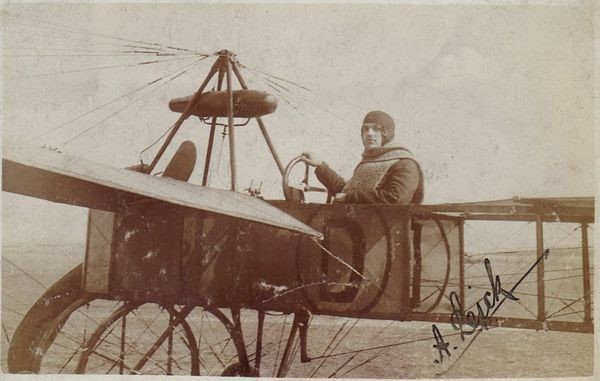
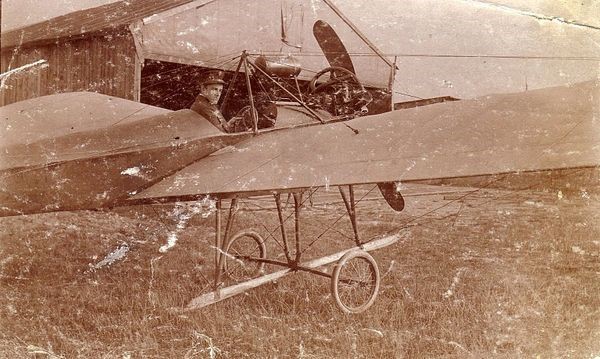
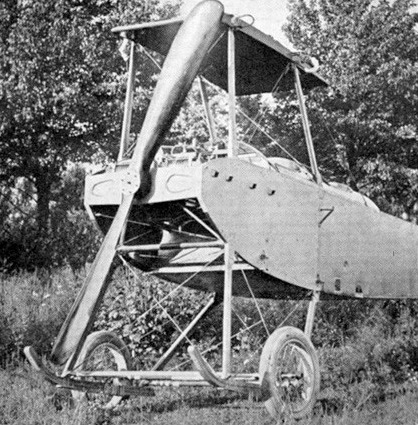
A construction of “Gesellschaft für Flugmaschinen- und Apparatenbau” at Bonn-Hangelar; designed and built by Dr. Josef Hoos – a “Kölner” – and a flyer since 1911. Similar monoplanes were built in “some” numbers during 1910-13, with various engines and used by the Hoos flying school up until 1914 – at first in Cologne and from December 1913 in Bonn-Hangelar.
The earlier G.E.F.A. eindeckers (of 1911/12) had a small rudder, the later rudders were larger. This example, probably a later model with a partially covered fuselage, is shown at Hangelar Flugplatz in early 1914 with flight-student Albert Leick seated.