Hanriot VII

The Type VII appeared in 1911, after Clément-Bayard had built a 100 hp engine for. I always thought that had three sets of wires for the wings. Only I can’t prove this with photographs and I might be mistaken.

A single-seater similar to the VI, but without the extra inverted-V brace in the undercarriage or tailwheel. There’s a small fuel or oil tank suspended from the wing warping/bracing pylon. Possibly this is the machine shown at the 2nd Exposition de Locomotion Aerienne in Paris, Oct – Nov 1910, and also pictured on at least two postcards with Henri Lefargue.

Hanriot VI

This single-seat machine was introduced by Louis Wagner at the Budapest meet (No.3) in June 1910. Later that month Marcel Hanriot piloted such a type at the meeting of Rouen (No.20).

The VI seems to be the most successful and popular of all the Hanriots. A triangular-section fuse that is wood planked in front and fabric-covered in rear, six-legged undercarriage with an auxiliary diagonal inverted-V brace in the forward bay, no tank suspended from the pylon and what appears to be a small wheel at the end of the tailskid.

But the Type VI was then the high praised machine and entered to most of the important and less important meetings. The type V and type VI were used in 1910 by Marcel Hanriot in air meets.

The 1910-type Hanriot was flown by Georges Bathiat at the September 1910 Maubeuge meeting.

By the end of 1910 the Type VI had lost its tiny tailwheel and was eventually fitted with an 8-cylinder ENV (60 hp).

Engine: Grégoire-Gyp / 8-cylinder ENV, 60 hp
Wingspan: 43 feet
Wing area: 300 square feet
Total weight: 1,120 pounds

Hanriot V

The type V and type VI were used in 1910 by Marcel Hanriot in air meets.
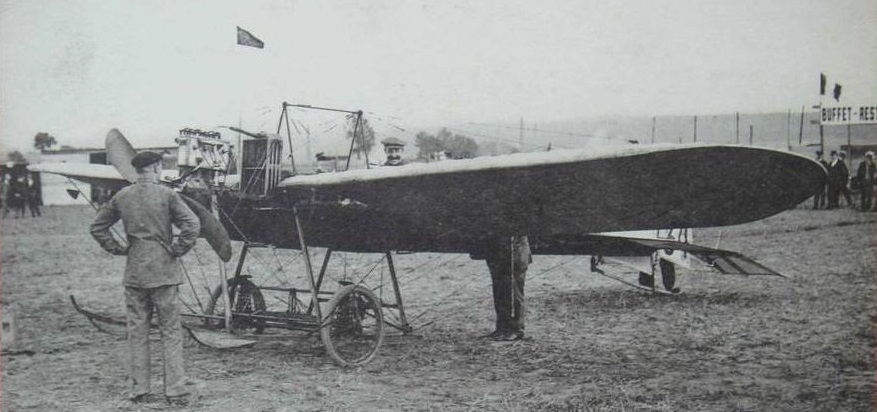
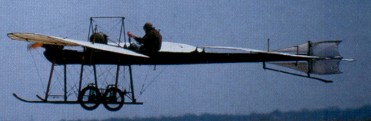
There is a postcard titled “Marcel HANRIOT – Monoplan № 5.” Unfortunately, it’s a closeup of Marcel in the cockpit and doesn’t show any identifiable features of the aeroplane. There are also a few photos of a machine with an all-wood fuselage and six-legged undercarriage (matching the Old Rhinebeck repro in most respects) marked with a large “5” on the fuse.

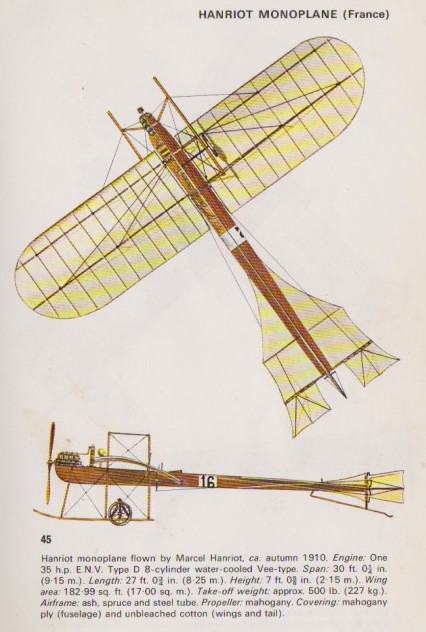
Although Hanriots first airframe had sustained damage during landing, it had nevertheless provided the foundation for a smaller, but similar monoplane which had sported a simple, elegant, aerodynamically-clean configuration when it had appeared in July of 1910. Constructed of ash, spruce, and steel tubes, the aircraft had a mahogany ply-covered, inverted, A-frame, and racing skiff-like fuselage.
On June 4, 1910, a sixteen year boy, Marcel Hanriot, takes off in a graceful aeroplane designed by his father, Rene Hanriot.
The light, but strong structure eliminated the need for the number and complexity of bracing wires traditionally required by box frame or girder build-up assembly. The main spars for the planes are made of wood in three layers and are 3 inches deep. The skids are fixed at the bottom of an A-type frame, the upper part of the A forming a triangular frame above the planes, to which the latter are fastened by stout wires.

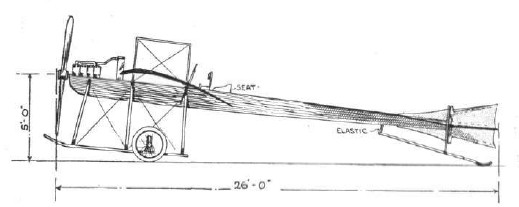
The landing gear is mainly on two strong skids at the front supported by three uprights of the A-type frame work; the axles of the two wheels are carried on vertical guides, and are suspended by rubber springs anchored to the skids. There is a small skid at the rear.

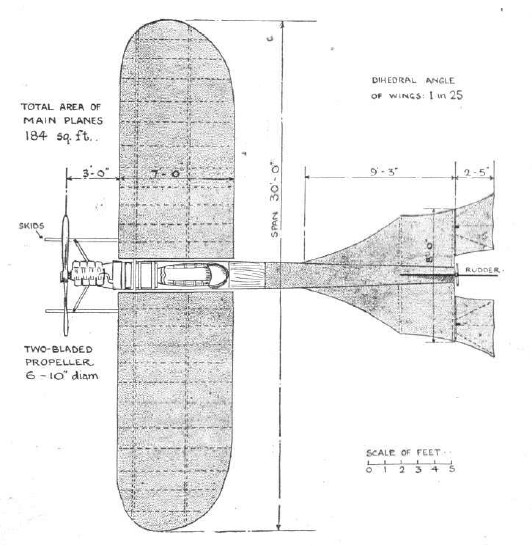
Cambered, rounded-tip wings, formed by two laminated spars and multiple ribs and covered with unbleached cotton fabric, were steel tape lashed to the fuselage and hinged, like those of the Wright Flyer and the Bleriot XI, to induce in-flight banking by means of wing-warping. The 30.5-foot span and seven-foot chord resulted in a 183 square foot area.

The large, triangular-shaped, fixed horizontal tail, measuring 9.3 feet long by eight feet wide and was also covered with unbleached cotton, extended to two separate, longitudinal-controlling elevators, while the fixed surface had been tightly stretched with the aid of two transverse spars and sported both unmoveable, dorsal and ventral, triangular-shaped fins to increase stability.

The laced fabric, scalloped, vertical tail was hinged to provide control about the yaw axis.

Power was provided by a 35-hp, eight-cylinder, water-cooled, V-type, E.N.V. engine, mounted on, and partially supported by, the A-frame struts, its two rows of cylinders set at 45-degree angles to the vertical and sharing a common crankshaft. It drove a single-bladed, mahogany propeller. The type also flew with a Clerget engine.
A four-cylinder 50 horse-power Clerget at 1.203 r.p.m with a Chauviere propeller, 7.2 feet in diameter and 3.8 feet pitch.

With a 27-foot, 3/4-inch airframe and a seven-foot, 5/8-inch height, the pioneer aircraft had a 500-pound gross weight.

The shallow cockpit featured little more than engine and axis-control levers. The right side stick moved forward and aft to actuate the hinged, fabric-covered elevators for pitch control, while the left side stick, moveable in a sideways direction, activated the wing-warping mechanism for in-flight banking, or lateral axis control. The rear spars are hinged, to permit of this. The elevators are 2 feet deep. The coupe atop it, informally known as a “blip switch” provided engine control, usually replacing the left-located throttle, since a hand was seldom free to operate it.

Fuel, stored in the cylindrical, metal tank, directly behind, and on the same level as, the engine, often required pressure to ensure continued flow, initiated by the squeezable rubber ball mounted on top of the right, pitch-control stick.

The scalloped single surface rudder, ensuring yaw-axis stability, was moved by means of a foot-depressed bar.
Initial taxi and direction were usually aided by the ground crew, who lifted the tail from the grass, but a significant power application made the vertical and horizontal tail surfaces effective.

Although there were no incremental throttle settings and the aircraft therefore flew at full, continuous power, its original, 35-hp engine had been inadequate to exert other than a sluggish, wing-warping created banking response.

Descent, induced by a combination of blip switch power interruptions and backward-stick, downward pitch, enabled the Hanriot to return to the ground.

The Old Rhinebeck Aerodrome has a reproduction constructed by Cole Palen, Mike Lockhart, and Andy Keefe with the aid of drawings published in Flight during the winter of 1974 in Florida, had originally been powered by a 1910, two-cycle, water-cooled Elbridge Featherweight engine, but it had later been retrofitted with a more capable, water-cooled, 50-hp Franklin after it had sustained connecting rod damage.

Reproduction:
Old Rhinebeck Aerodrome Hanriot V

Wingspan: 30.5-foot
Length: 27-foot, 3/4-in
Height: 7-foot, 5/8-inch
Wing chord: 7-foot
Wing area: 183 square foot
Tailplane span: 8 ft
Tailplane length: 9.3 feet
Gross weight: 500-pound
Speed: 51 mph approx
Total weight: 760 pounds
Aspect ratio: 4.2 to 1.
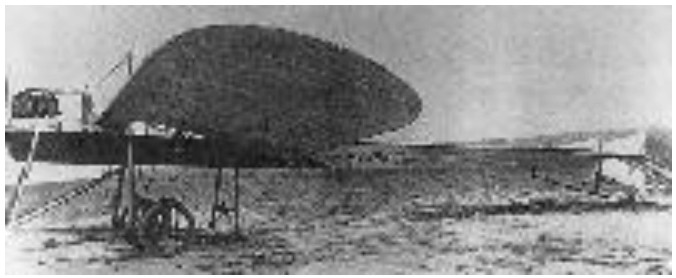
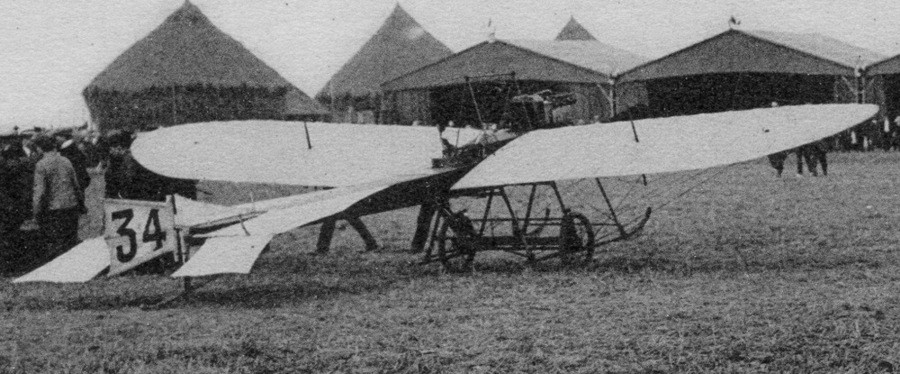
Hanriot I / 1907 Monoplane

In 1908, while the automobile races are in full swing, René Hanriot wins the World Championship (unofficial) in a Benz of 150 hp. In May he bought one of Léon Levasseur’s Antoinette monoplanes with a 25 hp motor. But by the end of 1908, the monoplane was not yet delivered and René Hanriot lost patience. This was when he decided to make his own machine. In February 1909 he creates the Hanriot Monoplane Corporation with 500,000 Francs capital. A shed was used as a hangar, workshop and office. His son assisted with the building of the aeroplane. In the summer of 1909, the first Hanriot I proudly left the workshop for its first flight. The motor seemed questionable as early as the departure. Hanriot bought a 6-cyl Buchet, that develops 45 hp and weighs 155 kg.
The machine was subsequently displayed at the Salon de la Aeronautique in 1909.

The aircraft, powered by a single, 50-hp Buchet engine, featured an open framework fuselage mated to two rectangular wings of 31.2 feet span.
Its slender lines and good looks instill confidence and Hanriot receives orders for about twenty of his machines, although it did not again fly. In October, the flights to Bétheny and those carried out at Reims by René and Marcel show that the motor is too heavy! The machine is unable to do more than short hops. He looks for another motor. A virtually unknown engineer by the name of Pierre Clerget, from la Maison Clément-Bayard, that he knows from his auto racing days designs a four cylinder in-line engine of 40 hp.
Although Hanriots first airframe had sustained damage during landing, it had nevertheless provided the foundation for a smaller, but similar monoplane which had sported a simple, elegant, aerodynamically-clean configuration when it had appeared in July of 1910.

Hannover CL.I / CL.II / CL.III / CL.IV / CL.V / Kjeller Flyvernaskinsfabrik F.F.7 Hauk (Hawk)

CL.III

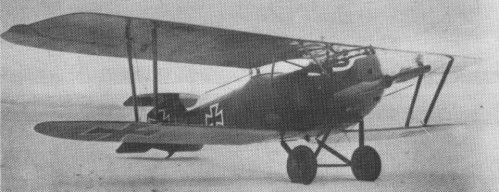
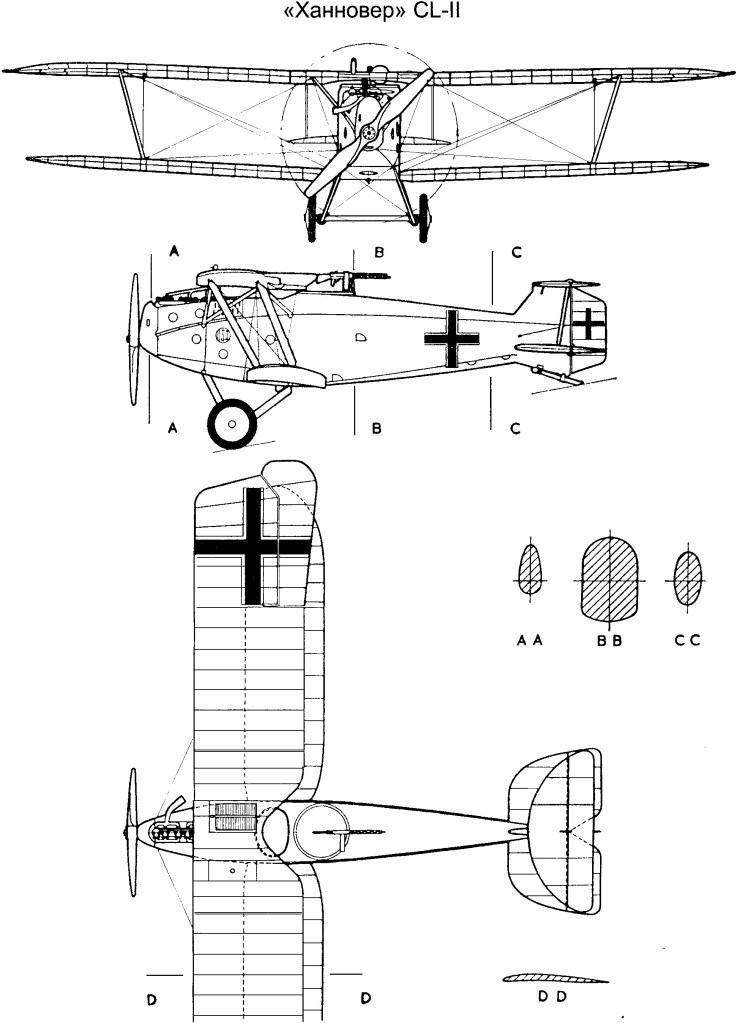
Designed by the Hannoversche Wag¬gonfabrik AG, the Hannover CL.II was produced in mid 1917 in response to an official requirement for a high performance two seat fighter for mainly low level tactical support of ground troops. The CL.II, which first went into operational service in late 1917, was unique for a single engined design in having a biplane tail assembly for greater field of fire by the observer/gunner and for a two seater was relatively small in overall dimensions. Its deep, ply covered fuselage gave the machine great strength, while the close set upper wing and narrow lower wings offered its crew an excellent field of vision both above and below.

A single-bay biplane, the two spar wooden wings were fabric covered. Both elevators, ailerons (on top wings only) and rudder were fabric covered steel tube structures.

In combat the Hannover proved itself as a formidable opponent to the Allied figh¬ters, able to manoeuvre with reasonable agil¬ity at most combat altitudes, and able to absorb battle damage to a high degree with¬out serious results.

A total of 439 Cl.II were built before production switched to an improved version, the CL.III, with a 160 hp Mercedes D.III engine, and incorpo¬rated modifications to the wingtips and ailerons, but only 80 machines were built due to the outstanding demands for Mercedes engines for single seat fighters.

Returning to the original 180 hp Argus engine, the next variant was designated CL.IIIa and saw large quantity production.

First production CL.IIs arrived on the Western Front in October 1917 and, along with the Halberstadt CL.II, became the backbone of the German Schutz¬staffeln (protection flights), escorting, the slower two seat reconnaissance machines. As such Hannovers were initially employed in a variety of roles, including artillery spot¬ting, reconnaissance, and photo sorties, apart from their nominal role of providing fighter cover for the older machines of the patrol flights.
Though extremely well constructed, the CL.II was temporarily grounded in May June 1918 due to a rash of wing failures, but after the safety factors of the wing fitting had been improved to double their former figure.

A progressive development of the Cl II designed by Hermann Dorner, the Cl III was intended to offer improved altitude capability with the 160 hp Mercedes D III water cooled engine. Despite some airframe strengthening, the Cl III possessed a slightly reduced structural weight and marginally smaller overall dimensions. The Typenprufung was success¬fully passed on 23 February 1918, and an order placed for 200 aircraft with deliveries to commence in the following month. In the event, as a result of shortages of the Mercedes engine, only 80 Cl IIIs were delivered, the remainder of the order being completed with 180 hp Argus As III(O) licence built by Opel as the Cl IIIa. A total of 537 Argus-powered Cl.IIIa were built, with the biplane tailplane span reduced to give the rear gunner a better field of fire. This version was to remain in production until the end of hostilities, 573 being delivered.

Cl.IIIa

The designation Cl IIIb was allocated to the version that was to have been powered by the 185 hp NAG C III engine, and the Cl IIIc was a twin bay version built specifically as a test bed for the NAG engine. The Cl III and IIIa entered service in April 1918, serving primarily with the Schlachtstaffeln operating in the ground attack fighter role. Oddly, the Hannoversche Waggonfabrik completed a further 100 Cl IIIs and 38 Cl IIIa’s after the Armistice.

Hannovers continued to equip first line units throughout late 1918. A total of 293 CL.IIs and CL.IIIs were in service on September 1 of that year.
The C.IV, the next development, did not go into production, but from it was evolved the CL.V. In mid 1918, the Idflieg prepared a specification calling for a Jagdzweisitzer a two seat fighter intended to engage the newer Allied single seaters on even terms, emphasising high speed, diving capability and manoeuvrability, and carrying a fixed forward firing armament of twin synchronised machine guns plus a third gun in the rear cockpit. To meet this requirement, which called for the aircraft to be tested to single¬ seat fighter load requirements, Hermann Dorner produced an extremely rugged and compact airframe. Designated Cl V, the prototype was powered by a 185 hp BMW IIIa engine and, tested against a similarly powered Fokker D VII, demonstrated comparable speed and climb. Twenty examples were ordered for operational evalu¬ation, but instead of being ordered into large production, Hannover’s chief designer, Her¬mann Dorner, was requested to develop the CL.V for a new category of two seat fighter (Jagdzweisitzer) specification. With the original biplane tail replaced by one of monoplane configuration, the Cl V was ordered into production, a contract for 100 aircraft being placed in September 1918, over 80 CL.Vs were thus built and tested to the new specification each armed with two forward and one rear firing machine guns although it is doubtful if any of the 46 completed before the end of hostilities reached the Front, a further 62 being completed after the Armistice. A stripped down example of the Cl V was to establish a world altitude record of 27,355 ft (8 340 m) on 22 November 1919. During 1923 24, the Kjeller Flyvernaskinsfabrik at Halden, Norway, built 14 Cl Vs under licence for the Norwegian Army as the F.F.7 Hauk (Hawk), these remaining in service until 1929.

Kjeller Flyvernaskinsfabrik F.F.7 Hauk (Hawk)

After the war Hannovers continued to be built, mainly as civil passenger machines or for export to other countries.

CL.II
Engine: 180 hp Argus As III
Seats: 2
Span: 11.70 m (38 ft 4.75 in)
Length: 7.58 m (24 ft 10.5 in)
Maximum speed: 166 km/h (103 mph) at 5000 m (16400 ft)
Service ceiling: 7500 m (24 600 ft)

CL.III
Engine: 160 hp Mercedes D.III

Cl. IIIa
Engine: 180 hp Argus As III(O)
Max speed, 103 mph (165 km/h) at 16,405 ft (5 000 m).
Time to 3,280 ft (1000 m), 5.3 min.
Endurance, 3 hrs.
Empty weight, 1,653 lb (750 kg).
Loaded weight, 2,447 lb (1110 kg).
Span, 38 ft 4.5 in (11,70 m).
Length, 24 ft 10.25 in (7,58 m).
Height, 9 ft 2.25in (2,80 m).
Wing area, 351.97 sq ft (32,70 sq.m).

CL IIIb
Engine: 185 hp NAG C III

Cl. V
Engine: 185 hp BMW IIIa
Max speed, 109 mph (175 km/h) at 6,560 ft (2 000 m).
Time to 9,840 ft (3 000 m). 12 min.
Range, 211 mls (340 km).
Empty weight. 1588 lb (720 kg).
Loaded weight, 2,381 lb (1080 kg).
Span, 34 ft 5 in (10,49 m).
Length, 22 ft 11.5 in (7,00 m).
Height, 9 ft 3.25 in (2,84 m).
Wing area, 306.76 sq ft (28,50 sq.m).
Seats: 2
Armament: 3 mg

Handley Page (Reading) HPR-3 Herald / HPR-7 Herald

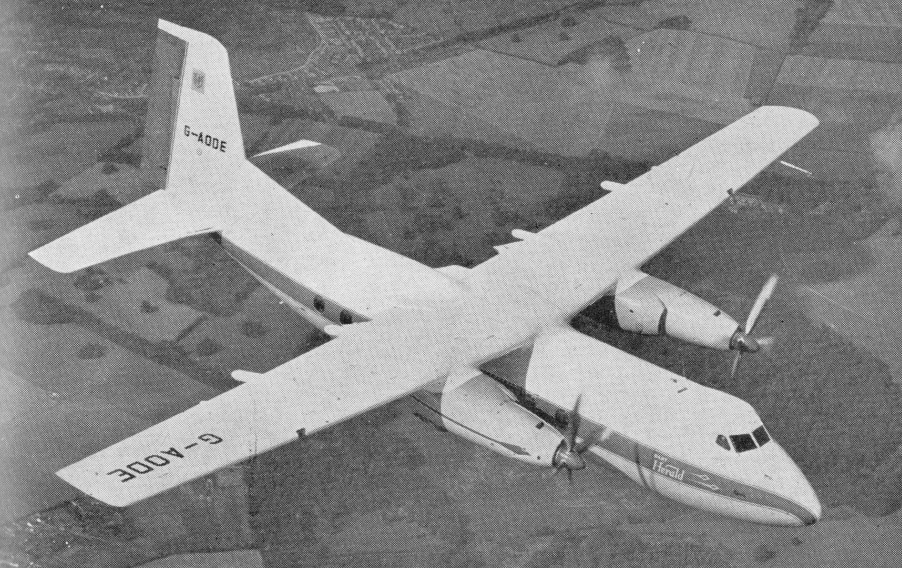
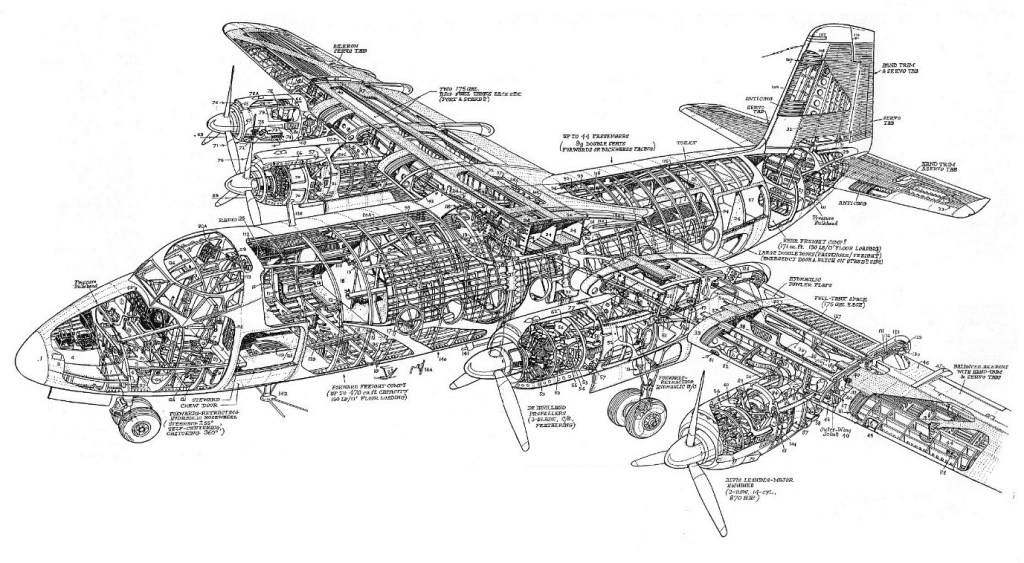
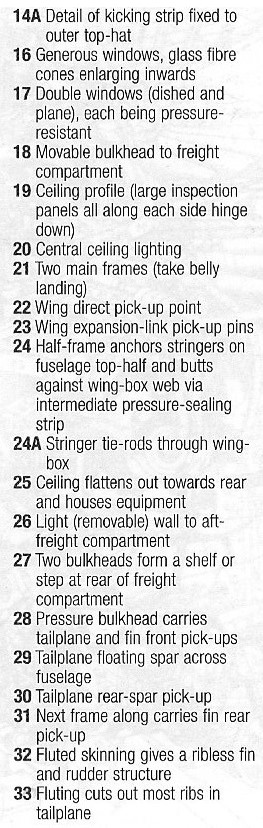
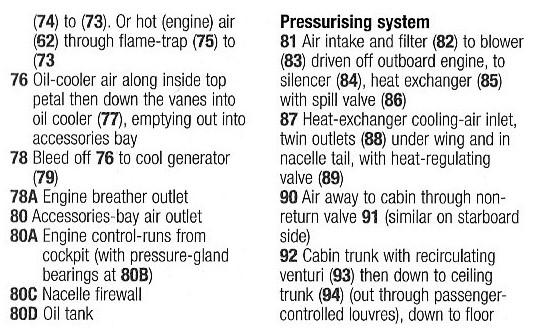
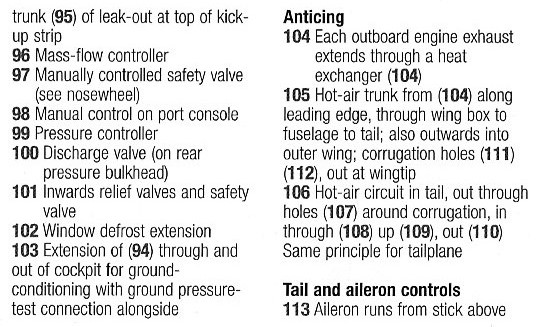
A medium sized transport designed to take the place of the DC 3, the Handley Page HPR 3 Herald design shows an essentially straight forward approach ¬with four piston engines, a high wing layout and a fuselage designed to carry 44 passengers, freight, or mixed loads. It is to be pressurized to a relatively low differential, and will carry a full payload of 10,705 lb. for a no reserve range of 350 st. miles, or 4,650 lb. for a full tank range of 2,050 miles.

Two prototypes were being built in 1954.

Handley Page (Reading) HPR-3 Herald / HPR-7 Herald Article

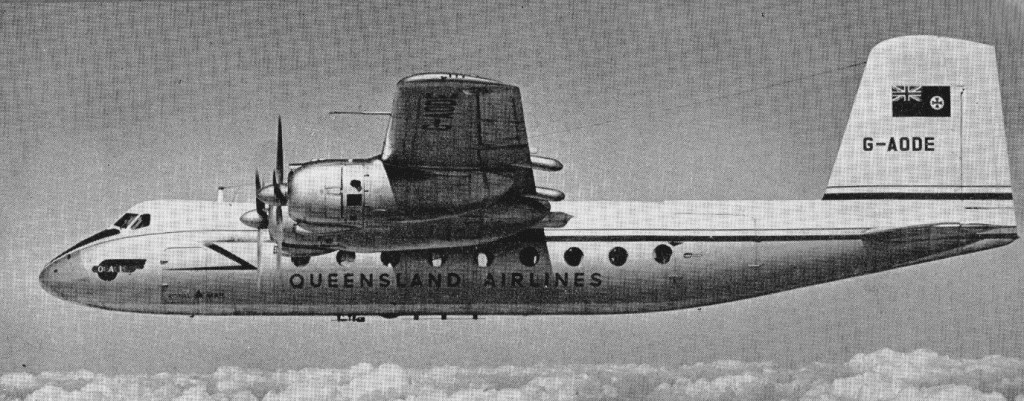
The first Herald, G-AODE, flew on 25 August 1955 from Radlett, powered by four Alvis Leonides piston engines. Airborne for 30 minutes, the pilot was H.G.Hazelden. It appeared at that years SBAC Display.

Handley Page HPR.3 Herald

The first Handley Page Herald completed 125 hours flying in a year and received a Special Category of C of A in 1956.

By 1956 the Herald had been ordered by Queensland Airlines, Australian National Airways, Lloyd Aereo Colombiano and Air Kruise.

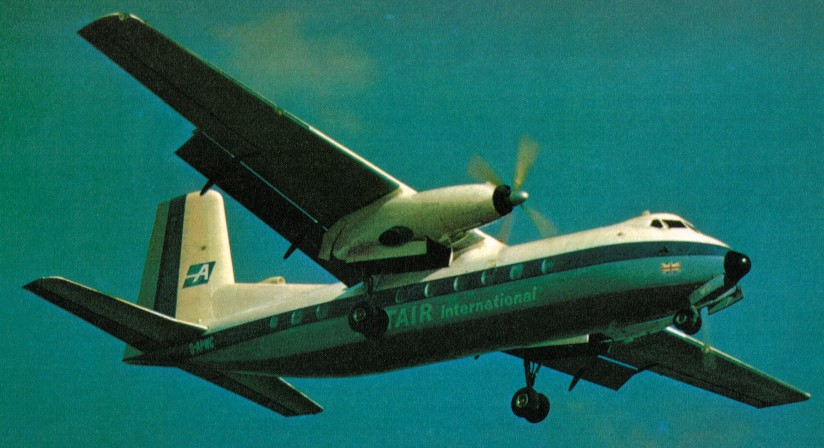
The prototype Dart-engined Herald made its first flight on 11 March 1958 and the first production Herald Series 100 flew on 30 October 1959. The Series 100 accommodated between 38 and 47 passengers. The Series 200 was the main production version with a forward fuselage 1.07m longer than that of the Series 100. Accommodation was provided for 50-56 passengers. Powered by two Rolls-Royce Dart 527 turboprops of 2,150 shaft hp, its maximum cruise speed is 274 mph.

In 1960 Handley Page were offering both the Leonides Major and Dart powered versions.

The Series 300 (a modified Series 200 developed to meet US airworthiness requirements) was followed by the Series 400 military transport with a side loading door and accommodation for 50 troops, paratroops, 24 stretchers or freight, eight of which went to the Royal Malaysian Air Force. The projected Series 500 was followed by the Dart 532/9 turboprop-engined Series 600.

The final two versions were the Series 700 long-range version of the Series 600, accommodating up to 60 passengers or 52 passengers and baggage over 1,980km stages, and the Series 800 military version of the 700.
By 1958, when they offered an alternative version powered by Rolls-Royce Dart turboprops, the Fokker F 27 had cornered the market. Only 48 aircraft were produced.

Gallery

HP(R) HP.3 Herald
Engines: 4 x Alvis Leonides Major, 850 bhp
Wingspan: 95 ft
Length: 70 ft 3 in
Mauw: 34,000 lb
Max speed: 263 mph

HP Herald Srs 200
Powerplant: two Rolls-Royce Dart RDa.7 M1k. 527 turboprops, 1570kW / 2105 ehp
Propellers: Rotol four-blade, fully feathering 12 ft 6 in diameter
Wingspan, 94 ft 9 in / 28.88 m
Length, 75 ft 6 in / 23.01 m
Height, 24 ft 1 in / 7.34 m
Gross wing area, 82.31 sq.m / 886 sq.ft
Max. usable floor area, 283 sq.ft
Max. usable volume, 1802 cu.ft
Max. cabin length, 54 ft 0 in
Max. width, 8 ft 8.25 in
Max. height, 6 ft 3.75 in
Accommodation: 50 passengers at 30.5 in pitch; 56 at 30 in pitch.
Basic operational 25,758 lb
Total fuel, 8640 1b
Max. take-off with 5 deg flap, 41000 lb
Max. landing, 39,500 lb
Max. payload, 11,242 lb
Max. zero fuel, 37,500 lb
Power loading (max. take-off weight), 10.2 lb/ehp
Wing loading (max. take-off weight), 48.5 lb/sq.ft
Wing loading (max. landing weight), 44.5 lb/sq.ft
Max level speed: 275 mph / 443 kph
High-speed cruise, 237 kt. at 15,000 ft
Long-range cruise, 230 kt. at 23,000 ft
Approach speed, 89 kt
Ceiling: 8500 m / 27900 ft
Take-off field length, ISA at sea level, 5000 ft
Landing field length, ISA at sea level, 3575 ft
Range, no reserves, ISA with max fuel, 8602 lb payload, 1 500 nm
Range w/max.payload: 1786 km / 1110 miles
Crew: 2
Passengers: 50-56

Handley Page HP.95 Hastings

Hastings Met.1

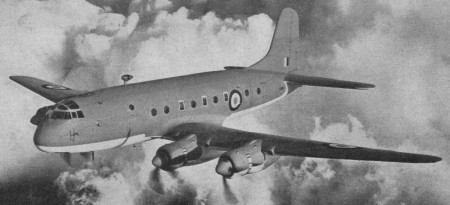
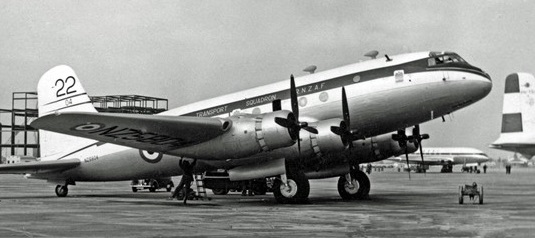
The Hastings was a general-purpose long-range transport flown by the RAF and RNZAF. Its roles included those of freighter, paratroop-transport, ambulance, troop-carrier, supply-dropper, jeep-carrier and glider-tug, first flown on May 7, 1946.

Handley Page HP.95 Hastings Article

Hastings C.1 at Cricklewood 1949

The initial production version was the C.1, first flown on 25 April 1947 and powered by four Bristol Hercules 101 engines. All C.1s were subsequently modified to Mk 2 standard and redesignated C.1As. The C.2 was powered by four Hercules 106 engines, had the tailplane lowered to the centreline of the fuselage and increased in area, extra fuel tanks, and the crew rest station replaced by an air-quartermaster post. The Hercules 737-powered C.3 was similar to the Mk 2 – and four were supplied to the RNZAF.

Hasting C.3

Two RAF squadrons of eight aircraft each went into service on the Berlin Airlift.

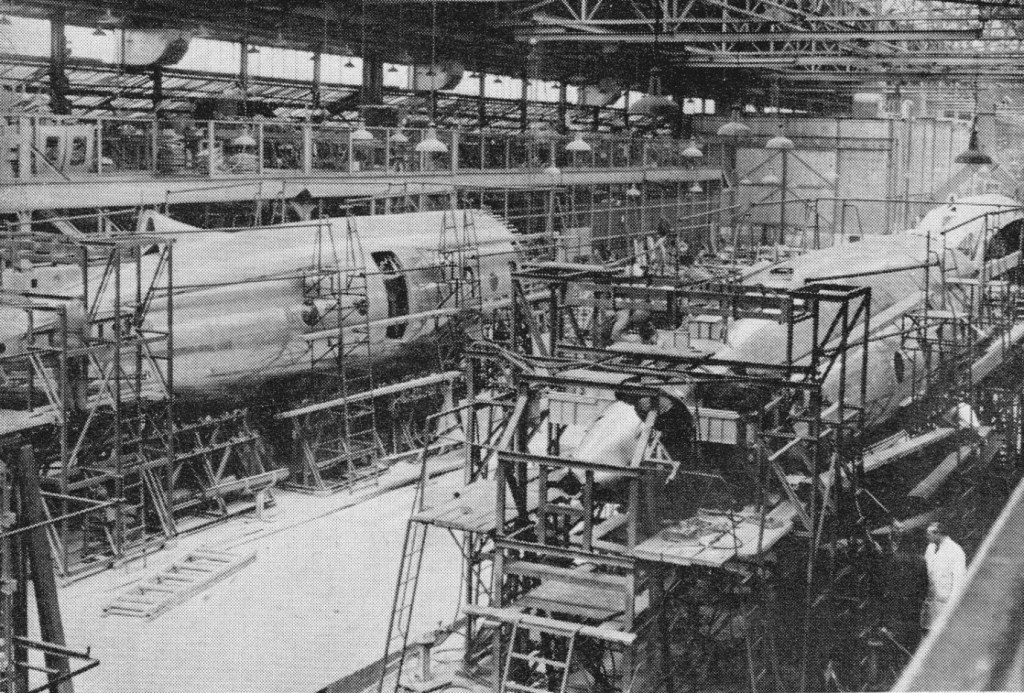
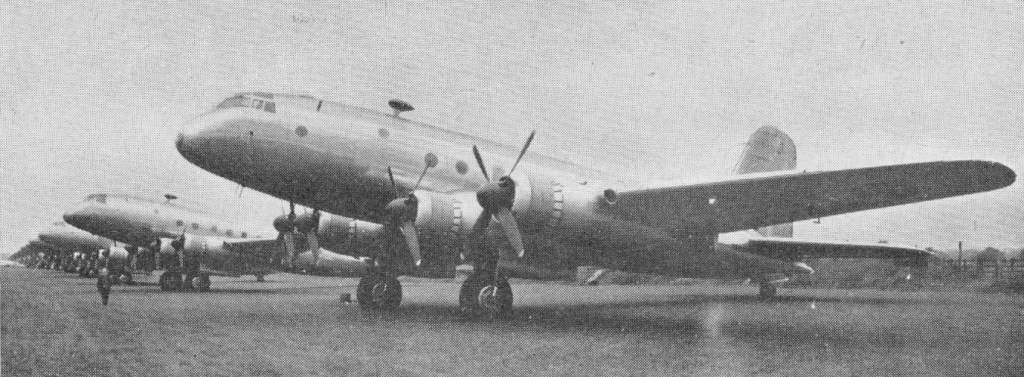
RAF Hastings assembled at Radlett in 1948

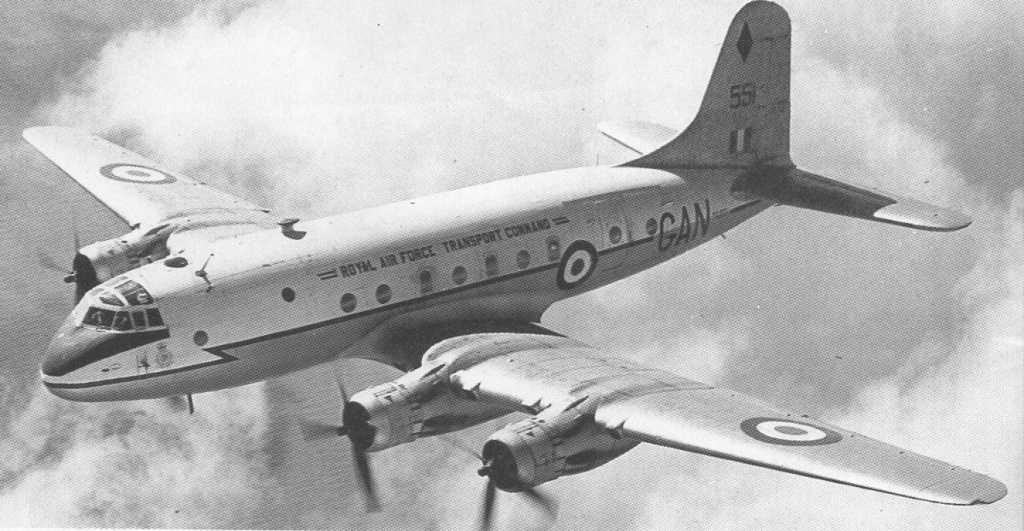
The final version was the C.4, a VIP version of the Mk 2 with accommodation for four VIPs and staff. Four were delivered to RAF Transport Command, bringing the total number of Hastings operated by the RAF up to 147. The last Hastings were withdrawn from service in 1968.

Gallery

C.1

C.2

Hastings C.2
Engines: 4 x Bristol Hercules 106, 1249kW
Max take-off weight: 36280 kg / 79984 lb
Empty weight: 21960 kg / 48414 lb
Wingspan: 34.44 m / 112 ft 12 in
Length: 25.20 m / 82 ft 8 in
Height: 6.86 m / 22 ft 6 in
Wing area: 130.80 sq.m / 1407.92 sq ft
Max. speed: 560 km/h / 348 mph
Cruise speed: 486 km/h / 302 mph
Ceiling: 8075 m / 26500 ft
Range: 2720 km / 1690 miles

C.3
Engines: 4 x Bristol Hercules 737, 2040 hp.
MAUW: 83,000 lbs.
Max speed: 350 mph.