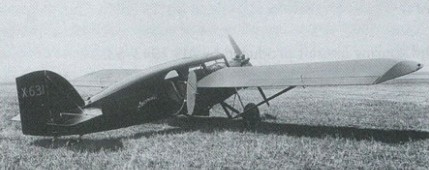
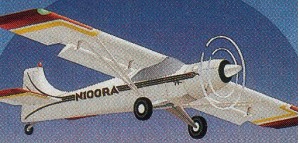
Ireland Meteor / Curtiss-Ireland Meteor

The Ireland Meteor is often refered to as the Curtiss-Ireland Meteor.

The Ireland Meteor, often referred to as the Curtiss-Ireland Meteor, was created by G. Sumner Ireland, who worked as a salesman for the Curtiss company.

With wings in production and the supply of Curtiss Oriole fuselages ended, G. Sunner Ireland created a new fuselage. Seating was for four in tandem open cockpits, each seating two side by side.
The Meteor never received a US Doc Type Certificate.
At least eight Meteors were built.

Engine: OX-5

Ireland Comet

G. S. Ireland founded his company to manufacture an aircraft known as the Ireland Comet, which combined surplus-Curtiss Oriole fuselages with new wings and tail unit.
With the closure of the Curtiss Oriole production line, a number of completed fuselages became available and Ireland was able to obtain them. With help from friends in the Curtiss design office new wings were created. These had a deeper rib section, and single bay bracing. Following initial flights in 1925, some 40 of these Comets are thought to have been produced before the fuselages ran out.

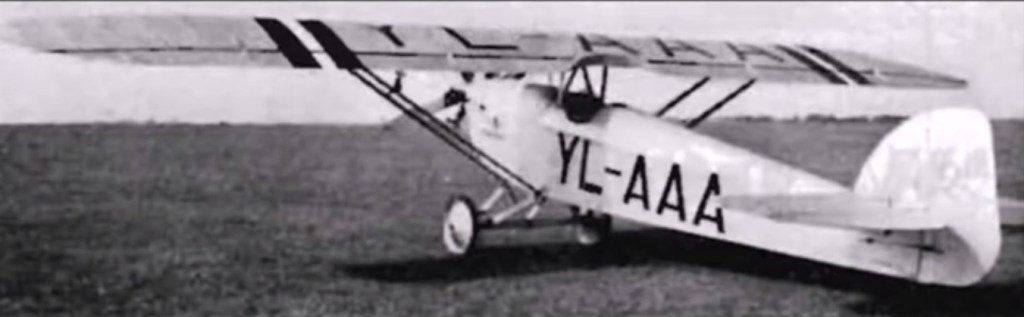
Irbitis I-1 / I-2 Ikarus

In 1925 Irbitis met Nicholas Pulins. Mr. Pulins had an interest in light aviation and Irbitis influences him to start building a high wing monoplane with Anzani engine. Previously Pulins have interest in biplanes. With the financial support, Irbitris made his first aircraft, the I-1 and it had its maiden flight on 13th June 1925. I-1 was single seat airplane and follow to this is I-2, two seat aircraft and name Ikarus. On I-2 both, Irbitis and Pulins learn to fly.

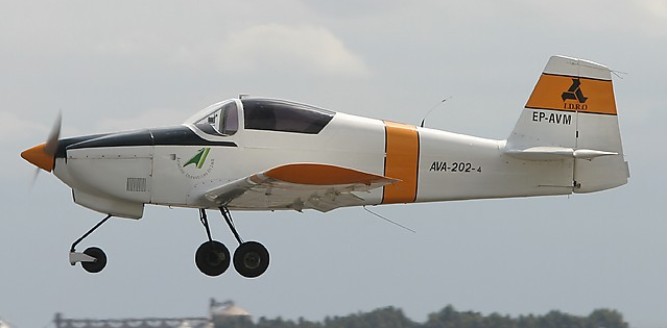
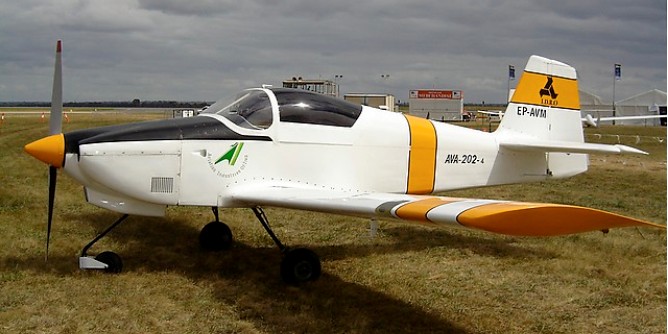
Iranian Aviation AVA-202

The Aviation Industries of Iran AVA-202 is an Iranian two-seat, light aircraft designed as a trainer and sporting aircraft. It was intended for the Iranian domestic market to avoid dependence on imports.

The AVA-202 was based on the Van’s Aircraft RV-6A and was designed to comply with European JAR-22 and JAR-VLA aircraft certification rules. It features a cantilever low-wing, a two-seats-in-side-by-side configuration enclosed cockpit under a bubble canopy, fixed tricycle landing gear and a single engine in tractor configuration.

The aircraft is made from aluminum sheet. Its 8.74 m (28.7 ft) span wing employs a NACA 63-215 airfoil and the wing root and a NACA 63-015 airfoil at the wing tip. The wingspan is greater than the RV-6’s wingspan of 7.01 m (23.0 ft) from which it is derived. The AVA-202’s wing has an area of 10.87 sq.m (117.0 sq ft) and is equipped with flaps. The standard engine fitted is the 160 hp (119 kW) Lycoming AEIO-320-B2B four-stroke aerobatic powerplant.

First flown on 3 June 1997, four had been built by 2002.

Engine: 1 × Textron Lycoming AEIO-320-B2B, 120 kW (160 hp)
Length: 6.02 m (19 ft 9 in)
Wingspan: 8.74 m (28 ft 8 in)
Height: 2.04 m (6 ft 8 in)
Wing area: 10.87 sq.m (117.0 sq ft)
Aspect ratio: 7.0:0
Airfoil: NASA 632-215
Empty weight: 500 kg (1,102 lb)
Max takeoff weight: 750 kg (1,653 lb)
Maximum speed: 259 km/h (161 mph; 140 kn) at sea level
Cruising speed: 250 km/h (155 mph; 135 kn) (75% power)
Stall speed: 84 km/h (52 mph; 45 kn) (flaps down)
Range: 1,000 km (621 mi; 540 nmi)
Service ceiling: 6,400 m (20,997 ft)
Rate of climb: 7.6 m/s (1,500 ft/min)
Crew: 2

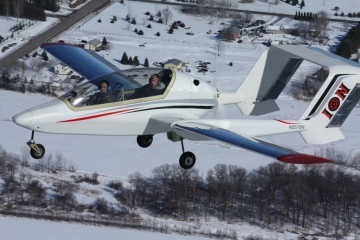
Ion Aircraft Ion 100 / 105 / 110 / 120

Ion Aircraft is developing a line of light, two-seat (tandem) airplanes suitable for training, sightseeing, cross-country cruising, and generally having fun. All of Ion Aircraft’s engineering is being done by AirBoss Aerospace of Reno, Nevada.
The Ion 100 is a kit aircraft being designed from the ground up to be Light Sport Aircraft (LSA) compliant.

The Ion 105 is a non-LSA variant of the 100, with better cruise performance. The 105 version is meant for the US Experimental category.

The Ion 110 is the export version, intended to comply with upcoming European rules.
All three versions feature easily removable wings for trailer storage and two sets of interchangeable wings to meet differing performance requirements.

The majority of the plane is carbon fiber/epoxy composite material. Specifically;
The cowl is fiberglass. Although it is very slightly heavier than carbon fiber would have been, the cowl is not structural and the fiberglass is much less expensive.
The wings are bonded aluminum as the bonded aluminum process is actually calculated to be a little lighter than composite would have been.
Tthe Ion 120 has a 10 inch (25 cm) removable nose cone to allow access to the nose gear and the batteries. It will also allow it to fit in a 24 foot trailer.

Ion 100
Cruise: 156 mph
Stall: 45 mph
Range: 920 sm
Rate of climb: 1600 fpm
Takeoff dist: 394 ft
Engine: Jabiru 3300, 120 hp
HP range: 100-150
Fuel capacity: 25 USG
Empty weight: 890 lb
Gross weight: 1320 lb
Length: 24 ft
Wing span: 29 ft
Wing area: 113.5 sq.ft
Seats: 2
Cockpit width: 31 in
Landing gear: nose wheel

Ion 120
Engine; 100 hp
Length: 24 ft (7.3 meters)
Wing span / LSA wings: 30 ft, 4 in (9.25 m)
Wing span / cruise wings: 26 ft 10 in (8.2 m)
Cockpit width: 30 in (76 cm)
Cruise 75% SL: 132 kt / 152 mph
Cruise 75% 3000 ft: 135 kt / 155 kt
Cruise 75% 9000 ft: 138 kt / 159 mph
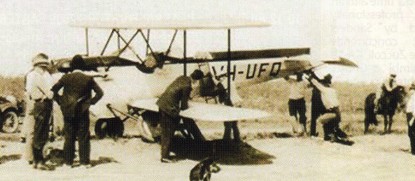
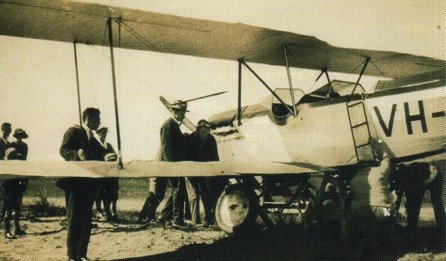
Inter-Tech Raptor

Various aspects of this design have been tested and flown on approximately six previous dates. First flown in September 1997.
Kit price in 1997 was US$22,950.

Top speed: 155 mph
Cruise: 130 mph
Stall: 37 mph
Range: 600 sm
Engine: Continental IO-520, 300 hp
HP range: 200-300
Fuel capacity: 60 USG
Empty weight: 1500 lb
Gross weight: 3000 lb
Height: 6.7 ft
Length: 25.8 ft
Wing span: 37 ft
Wing area: 194 sq.ft
Seats: 4
Landing gear: tailwheel