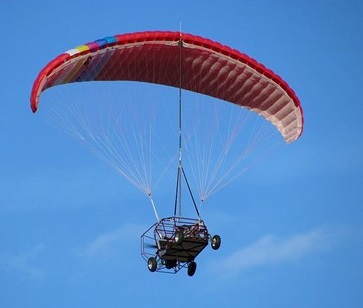
Itoh Emi 16 Fuji-go / Emi 18 / Emi 19 / Emi 20

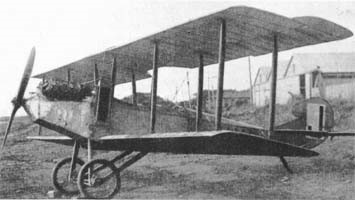
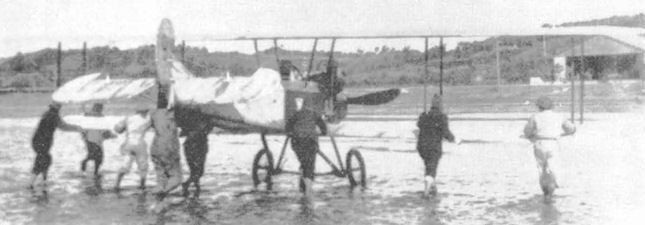
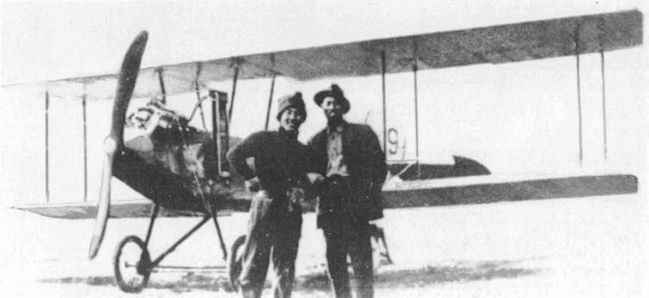
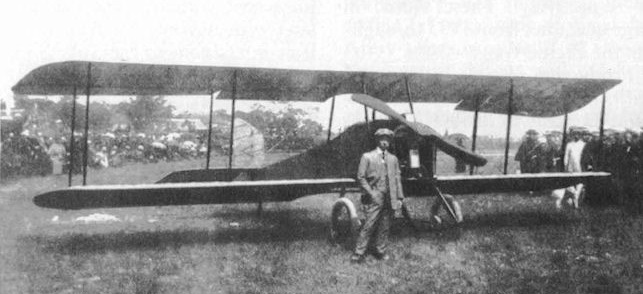
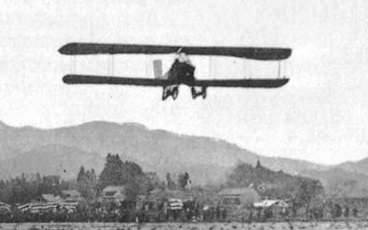
The Itoh Emi 16 Fuji-go (Fuji) designed by Tomotari Inagaki and built in 1920, was intended as a cheap and simple general purpose civil biplane but gained publicity with exhibition flights and successful speed and altitude contests against higher-powered fighter aircraft.

Though the Fuji-go was best known for its successes in speed contests, it was designed as a multi-purpose, economical civil aircraft, powered by a war-surplus Le Rhône rotary engine and with a cost kept low by structural simplicities such as wings without sweep or stagger.

It was a two-bay biplane with a wooden structure and fabric covering. Its wings had rectangular plans apart from blunted tips, braced together with pairs of parallel interplane struts. Behind the engine the fuselage was rectangular in section with two open cockpits, one under the upper wing and the other for the pilot under its trailing edge, which had a small cut-out to improve the upward field of view. The forward cockpit could carry a passenger or an extra fuel tank to increase the range.

The tail was conventional with a tailplane mounted on top of the fuselage carrying elevators with a cut-out for rudder movement. Both the small fin and generous balanced rudder had polyangular profiles.

The Fuji-go had fixed, conventional landing gear with wheels on an axle between pairs of V-struts mounted on the lower fuselage longerons and a long tailskid mounted below the fin leading edge.

Its first flight was on 22 July 1920.

The Fuji-go was soon into competitions, beginning with the First Prize-winning Flight Competition held in August. Flown by Yutichi Goto, it won first prize for altitude and came second in a speed race, covering a route between Funabashi and Chiba at 128 km/h (80 mph; 69 kn). It went on to perform publicity flights over Kyoto and Osaka. It also competed in the Imperial Flying Association’s Second Airmail Flying Contest which involved a race between Osaka and Kurume. Since several competitors had much more powerful engines it was decided to reduce drag by cropping the lower wings beyond the first bay, leaving a span of 7.04 m (23.1 ft). This increased the maximum speed by 21%. Goto and the Fuji-go came second, gaining an 8,000 yen prize and beaten only by a SPAD XIII fighter with a 220 hp (160 kW) engine.

After a period of further promotional flights the aircraft returned to competition in May in the 1921 Second Prize-winning Flight Competition. It was flown into third place by Komayoshi Yasuoka.

One Emi 18 was built in 1921 powered by a 120 hp (89 kW) Clerget nine-cylinder rotary engine. The wing area was greater and airframe was shorter than the original.

The 1921 Emi 19 was the same as the Emi 18 but powered by a 120 hp (89 kW) Turrin nine-cylinder rotary engine.

The 1921 Emi 20 had shorter span and length and was powered by an 80 hp (60 kW) Le Rhône rotary engine.
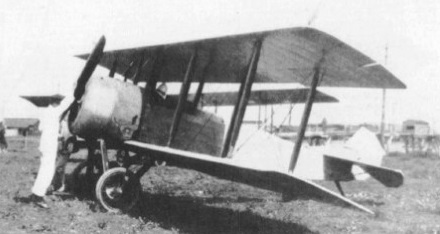
Itoh Emi 20 Oguri-go

Emi 16 Fuji-go
Powerplant: 1 × Le Rhône, 89 kW (120 hp)
Propeller: 2-blade
Wingspan: 9.34 m (30 ft 8 in)
Wing area: 23.5 m2 (253 sq ft)
Length: 6.05 m (19 ft 10 in)
Height: 2.52 m (8 ft 3 in)
Gross weight: 740 kg (1,631 lb)
Maximum speed: 167 km/h (104 mph, 90 kn)
Time to 1,000 m (3,300 ft): 3 min 30 s
Crew: One
Capacity: one passenger

Emi 18
Engine: 120 hp (89 kW) Clerget
Span: 9.50 m (31.2 ft

Emi 19
Engine: 120 hp (89 kW) Turrin
Span: 9.34 m (30.6 ft)

Emi 20
Engine: 80 hp (60 kW) Le Rhône
Span: 9.0 m (29.5 ft)
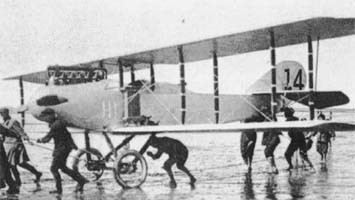
Itoh Emi 14

Stimulated by 1920 reports of flights from Italy to Japan the Imperial Flying Association launched a long-distance contest for Japanese aircraft with a non-stop return trip from Tokyo to Osaka and back, a distance of just over 1,000 km (620 mi; 540 nmi). Four companies prepared designs but only the Nakajama Type 7 and the Itoh Emi 14 were ready when the race was due.

For many early, long-distance flights the main design challenge was to ensure the aircraft, heavily loaded with fuel, could become airborne in the distance available. At Susaki the runway was only 600 m (2,000 ft) long, so Tomotari Inagaki gave the wings an aspect ratio of eight, at the time unusually high, to minimize induced drag. Otherwise the Emi 14 was a conventional two bay biplane with rectangular plan wings braced together with pairs of vertical, parallel interplane struts. Two parallel pairs of short cabane struts braced the central upper wing to the upper fuselage longerons. The Emi 14, like some other Itoh designs, had overhung ailerons, placed only on the upper wing.

The Emi 14 was powered by a 110 kW (150 hp) Gorham engine in a smoothly-tapered cowling but with its upper half exposed. Its flat, narrow, rectangular radiator was attached edge on and vertically just behind on the port side, where the engine cowling joined a flat-sided fuselage. It was originally designed with two open cockpits and flown from the rear seat, but for the long round trip the forward cockpit was used to hold extra fuel. There was a small, central trailing edge cut-out to improve the pilot’s upward field of view. The tailplane was mounted on top of the fuselage and the fin was triangular, with a rounded rudder.

Its fixed undercarriage was of the single axle type, mounted on V-struts from the lower fuselage longerons. During development the Emi 14 had a conventional tailskid but for the challenging contest flight takeoff the tail was raised on a wheeled dolly, dropped as the Emi 14 became airborne.

The date of the Emi 14’s first flight is not known but it was ready on 21 April 1920, the preset contest date. Both it and the Nakajama Type 7, piloted by Kintaro Iinuma, took off successfully and began the outward leg but Iinuma soon ran into thick fog, became lost and crashed into Mount Tanzawa. He was badly injured but survived. Toyotaro Yamagata, in the Emi 14, continued and completed the 1,013.67 km (629.87 mi; 547.34 nmi) circuit in 6 hr 43, an average speed of 151 km/h (94 mph). The flight was seen as a big step forward in Japan’s aeronautical progress. The Itoh Aeroplane Research Studio were awarded a 5000 yen prize and Yamagata received the same amount as a personal reward plus another 600 yen a month for three years, though he did not live to collect much of it.

There was one more competitive flight to come: on 2-3 August 1920 Yamagata flew the Emi 14 in another Imperial Flying Association contest, this time over a route between Funabashi and Chiba, about 16 km (9.9 mi; 8.6 nmi) apart. The Emi 14 won the speed first prize at 137 km/h (74 kn; 85 mph) and the altitude second prize with 3,375 m (11,073 ft). Together these prizes were worth 8000 yen.

At the end of August Yamagata was practising loops for an upcoming display when a wing detached, killing him. No more Emi 14s were built.

Powerplant: 1 × Gorham, 110 kW (150 hp)
Propeller: 2-bladed
Wingspan: 11 m (36 ft 1 in)
Wing area: 32 m2 (340 sq ft)
Aspect ratio: 8
Airfoil: U.S.A.-1
Length: 7.17 m (23 ft 6 in)
Height: 2.74 m (9 ft 0 in)
Empty weight: 760 kg (1,676 lb)
Gross weight: 1,150 kg (2,535 lb)
Maximum speed: 146 km/h (91 mph, 79 kn)
Endurance: 8 hr
Time to 1,000 m (3,300 ft): 4 min 30 s
Cruise: 115 km/h
Crew: one or two, according to flight

Itoh Emi 13

From mid-1919 Otojiro Itoh’s flying school at Itoh Airfield at Tsudanuma had relied heavily on the Itoh Emi 9, its only two-seat trainer. Its designer, Tomotari Inagaki, had already designed a similar but improved successor, powered by the same Hall-Scott V-8 engine. This, the Emi 13, was built between the summer of 1919 and the following spring.

The Emi 13 was a wooden-framed, fabric covered two bay biplane with pairs of parallel interplane struts. Its wings were rectangular in plan, with overhung ailerons only on the upper wing. Tall, outward-leaning cabane struts braced the wing over the fuselage, where there was a broad trailing edge cut-out to increase the field of view from the rear seat. The lower wings were mounted on the lower fuselage longeron.

Its V-8 engine was nose-mounted with its upper parts exposed and a flat, narrow, rectangular radiator attached vertically just behind it on the port side where the engine cowling joined a flat-sided fuselage. The two separate cockpits of the Emi 5 were replaced by tandem seats in a single open cockpit, with the student under the central wing and the tutor under the trailing edge. This change was made to ease communication between them. Behind them the fuselage had rounded upper decking. The tail was conventional, with the horizontal surfaces mounted on top of the fuselage and the tailplane strut-braced from below. The fin was small and triangular in profile but carried a large rounded rudder with a prominent horn balance.

The Emi 13 had a single axle undercarriage with large wheels. The axle was rubber-sprung on a cross-braced frame with forward legs and trailing drag struts to the lower fuselage longerons. Its tall tailskid was mounted below the tailplane leading edge.

First flying c. May 1920, to demonstrate its abilities the Emi 13 took part in a competition sponsored by the Imperial Flying Association held In August 1920 in Tokyo. It gained the fourth prizes for both speed, at 109 km/h (68 mph; 59 kn) and altitude 1,370 m (4,490 ft).

By late 1920 the Hall-Scott engine was reaching the end of its life so Inagaki revised the design to take a 90 hp (67 kW) Curtiss OX-5, another water-cooled V-8. Itoh completed this aircraft, referred to as the Emi 13 no.2, in 1921 and it became the principal trainer at the flying school.

Engine: Hall-Scott V-8, 80 hp
Propeller: 2-bladed wooden
Wingspan: 10.37 m (34 ft 0 in)
Wing area: 29 m2 (310 sq ft)
Length: 6.40 m (21 ft 0 in)
Height: 2.50 m (8 ft 2 in)
Empty weight: 450 kg (992 lb)
Gross weight: 600 kg (1,323 lb)
Maximum speed: 106 km/h (66 mph, 57 kn)
Cruise speed: 95 km/h
Endurance: 2 hr
Time to1,000 m (3,300 ft): 7 min
Crew: one tutor
Capacity: one student

Itoh Emi 9

After the destruction of Itoh’s hangar at Inage Beach by a tidal wave at the end of September 1917 his works and flying school moved to Tsudanuma Beach, otherwise known as Itoh Airfield. The move led a significant increase in student numbers and a new, two seat trainer was needed; until then they had relied on single-seaters. The solution was provided not by Itoh or his employees but by a regular visitor to the airfield, Tomotari Inagaki. He designed a simple and stable two seat trainer around the water-cooled 80 hp (60 kW) Hall-Scott V-8 engine taken from the Emi 3. It became known as the Itoh Emi 9.

The Emi 9, typical of its time, had a wooden frame and fabric covering. It was a straightforward two bay biplane, with two parallel pairs of interplane struts on each side. The wings were rectangular in plan and manufacture was further simplified by the absence of dihedral or stagger.

Its upright V-8 engine was installed in the nose with most of the upper part exposed and its rectangular radiator mounted edge-on just behind the engine on the fuselage port side. Pupil and instructor had separate open cockpits in a fuselage rather similar to that of the Emi 5. Its tail was with a triangular fin, a rudder with a straight leading edge which continued that of the fin and a deep, rounded trailing edge, though the control surfaces had horn balances, the first to be used on a Japanese civil aircraft.

The Emi 9 had a simple, single axle undercarriage with legs on the lower fuselage longerons and trailing drag struts to the fuselage centre line.

Built in 1918 the Emi 9 served the Itoh school as intended, though details of its history are lacking.

Powerplant: 1 × Hall-Scott, 60 kW (80 hp)
Propeller: 2-bladed
Wingspan: 9.80 m (32 ft 2 in)
Length: 7.45 m (24 ft 5 in)
Height: 2.30 m (7 ft 7 in)
Empty weight: 350 kg (772 lb)
Maximum speed: 111 km/h (69 mph, 60 kn)
Crew: one instructor
Capacity: one student

Itoh Emi 3

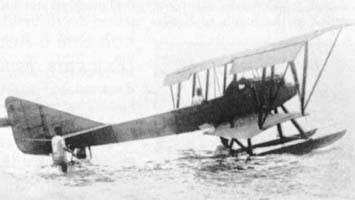
Though by around 1916 demonstration flights by early Japanese aircraft were beginning to be commercially viable, there were no suitable seaplanes. Otojiiro Otoh, who had designed and built Japan’s second commercial landplane, the Itoh Emi 1, was encouraged to fill the gap. The result was the Emi 3, completed in August 1917.

Like most aircraft of its time, it was a wooden-framed and fabric covered biplane. It was a two-bay design with wings braced by two pairs of parallel, vertical interplane struts on each side but, as the upper wing had a significantly longer span, there was also pairs of parallel, outward- leaning struts to brace the overhang. Only the upper wings carried ailerons.

Its water-cooled 80 hp (60 kW) Hall-Scott V-8 engine drove a two-bladed propeller. Close behind it there was an open cockpit for one passenger; the pilot’s cockpit was just aft of the upper wing trailing edge. The Emi 3’s fuselage was flat-sided and quite slender, with the horizontal tail mounted on its top. Its fin had a triangular profile and carried a rudder of roughly parallelogram profile.

It had twin floats, mounted with a pair of single struts to the fuselage forward and a transverse W-form strut to the fuselage and lower wing aft.

The Emi 3 was built at Itoh’s Inage Beach site and, assisted by Toyokichi Daiguchi and Toyotaro Yamagata, and with the help of student pilots, the aeroplane was completed in August 1917. Flight tests by several pilots found its performance, stability and handling were good.

Test flights over, the Emi 3 was taken by rail to Osaka. In preparation for demonstration flights, the Emi 3 Seaplane was assembled and maintained in a hangar located on the beach at Nishinomiya, just west of Osaka. Spectators’ fees made these flights a commercial success for Japan’s first passenger-carrying floatplane. Itoh named the only example Seagull (Kamome, かもめ).

Powerplant: 1 × Hall-Scott water-cooled V8, 60 kW (80 hp)
Propeller: 2-bladed wooden
Upper wingspan: 15.41 m (50 ft 7 in)
Wing area: 46.5 sq m (501 sq ft)
Length: 7.27 m (23 ft 10 in)
Height: 4.51 m (14 ft 10 in)
Empty weight: 580 kg (1,279 lb)
Maximum speed: 43kt (50mph)
Crew: one
Capacity: one passenger

Itoh Emi 2

Itoh Emi 2

By early 1917 Itoh had begun the design of a new aircraft. The Emi 2 owed much to its predecessor, both biplanes with wooden structures and fabric covering. Rectangular plan wings, shorter in span by 2.50 m (8.2 ft) and using a lower drag profile than before, were braced with pairs of parallel interplane struts, though the Emi 2, a two-bay biplane, had one less bay on each side. The Emi 2’s upper wing had a slightly greater span than the lower one, which had more rounded tips. The centre of the upper wing was supported over the fuselage by four parallel cabane struts. As on the Emi 1 there were ailerons, with chords which increased outwards, only on the upper wings.

The Emi 2 also inherited its predecessor’s engine, the 26–34 kW (35–46 hp) Grégoire Gyp. The flat-side fuselage had an open cockpit for the pilot; a semi-circular cut-out in the upper trailing edge increased the pilot’s upward field of view. The long span horizontal tail was roughly rectangular in plan and mounted on the upper fuselage and the vertical tail also was also parallel-sided, though with a sloping top.

The Emi 2’s wide track landing gear had two, rather than four wheels, each on a landing leg with bungee cord shock absorbers.

It flew for the first time in April 1917.

From May 1917 Itoh gave a series of demonstration flights from his east Inage Beach base, culminating in a visit to his home town of Osaka in September. His timing was fortunate, as his Inage Beach hangar was flattened by a typhoon-related tidal wave at the end of the month, while t Emi 2he was away. Demonstration flights resumed until the Emi 2 began use as a trainer from Itoh’s new base at Tsudanuma Beach.

Its last operations were under new owners based near Hammamatsu. It was again used for demonstration flights, piloted by the inexperienced Asao Fikunaga aound Osaka from August 1919. One flight took him to his home town of Toyonaka but the Emi 2 overturned on landing and was badly damaged. It was rapidly repaired but in May 1920, leaving Osaka, the aircraft hit a house roof, ending its career.

Powerplant: 1 × Grégoire Gyp, 26–34 kW (35–45 hp)
Propeller: 2-bladed
Maximum speed: 85 km/h (53 mph, 46 kn)
Wingspan: 9 m (29 ft 6 in)
Wing area: 25 m2 (270 sq ft)
Height: 2.25 m (7 ft 5 in)
Empty weight: 250 kg (551 lb)
Crew: one

Itoh Emi 1

By early 1915 Otijiro Itoh had established the Itoh Aeroplane Research Studio and an associated flying school and by that autumn had completed his first design, the Emi 1. The “Emi” was a respectful nod to the district of Osaka where he grew up.

The sole Emi 1 was a three-bay biplane with a fabric covered wooden structure. Its wings were of equal span and joined by parallel pairs of interplane struts. The upper wing was well above the fuselage and the lower ones mounted on the lower fuselage longerons. The Hyabusa-go’s French, 35–45 hp (26–34 kW) Grégoire Gyp four cylinder, water-cooled inline engine powered it. Its pilot had an open cockpit. At a time when there were few prepared airstrips, landing gear needed to be robust and the Emi 1’s gear had two wheels on each leg.

Its first flight was on 11 November 1915.

On 8 January 1916, not long after the first flight, Itoh flew the Emi 1 from his base at Inage Bay to Tokyo. This took 55 minutes and was the first flight to Tokyo. He later flew it to 58 Japanese cities, partly to advertise his aircraft and partly to raise air-mindedness in Japan. The Emi 1 was the second successful Japanese aircraft, following the Narahara 4 ”Ohtori-go”.

Later the Emi 1 was re-engined at Inage Bay with a 50 hp (37 kW) Hino Type, remaining in use with the flying school.

Emi 1
Powerplant: 1 × Grégoire Gyp 26–34 kW (35–45 hp)
Propeller: 2-bladed fixed-pitch
Wingspan: 11.50 m (37 ft 9 in)
Wing area: 33 m2 (360 sq ft)
Length: 6.65 m (21 ft 10 in)
Height: 2.50 m (8 ft 2 in)
Empty weight: 350 kg (772 lb)
Maximum speed: 76 km/h (47 mph, 41 kn)
Crew: one

I-TEC Maverick

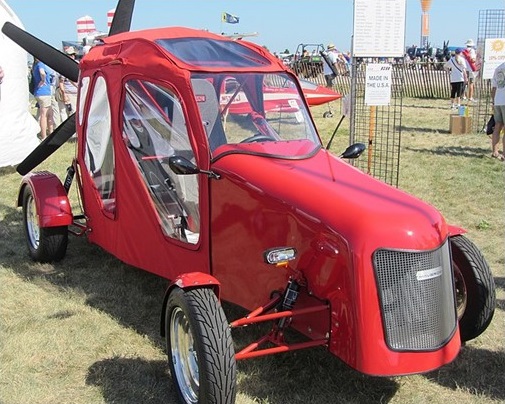
The I-TEC Maverick is a powered parachute aircraft with a roadable fuselage. Equipped with the largest powered parachute certified by the FAA, the Maverick received experimental aircraft airworthiness certification on April 14, 2008, with N-Number 356MV.

prototype flight

Capable of interstate speeds on pavement, the Maverick’s dune buggy-like frame of chromoly tubing gives it the ability to be used off-road. Additionally, the vehicle can deploy a parafoil and fly as a powered parachute, it weighs about 1100 pounds and has a useful carrying capacity equivalent to a Cessna 172 (fuel and 550 pounds cargo). With a 22-foot mast, the Maverick can take off and land in weather conditions that other powered parachutes would not be able to safely operate in. Steve Saint has said he envisions the Maverick being useful to the Huaorani and other Indian groups, farmers and ranchers, pipeline inspection crews and anyone else with a requirement to traverse rough, roadless ground. Popular Mechanics gave it their Breakthrough Award in 2009. In 2012, the Maverick was accepted by the United States FAA to operate as an Experimental homebuilt, S-LSA, or E-LSA.

Variants:

Maverick URVATV (Ultimate Roadable, All-Terrain, Aerial Vehicle)
Initial model

Maverick HPAV (High Performance Aerial Vehicle)
Transaxle removed, fan drive only

Maverick HPRATV (High-Performance, Roadable, All-Terrain Vehicle)
Wheel drive only, convertible to flight.

Maverick XTRV (Xtreme Roadable Vehicle)
300 hp (224 kW) wheel drive only.

Specifications:
Engine: 1 × 2.5l Subaru Four cylinder, 190 hp (140 kW)
Propeller: 5-bladed Warp Drive
Cruise speed: 35 kn; 64 km/h (40 mph)
Endurance: 3 hours
Service ceiling: 10,000 ft (3,000 m)
Rate of climb Crew: 1
Capacity: 1
ROC: 600 ft/min (3.0 m/s)