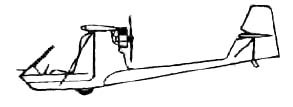
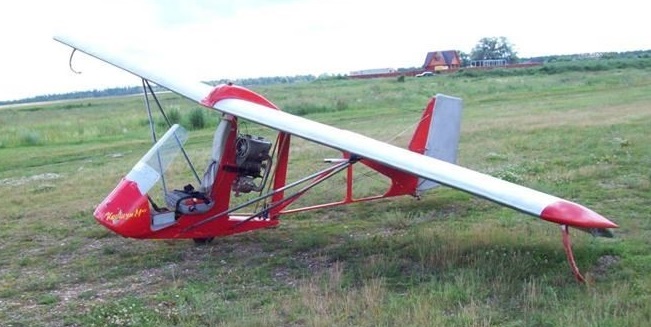
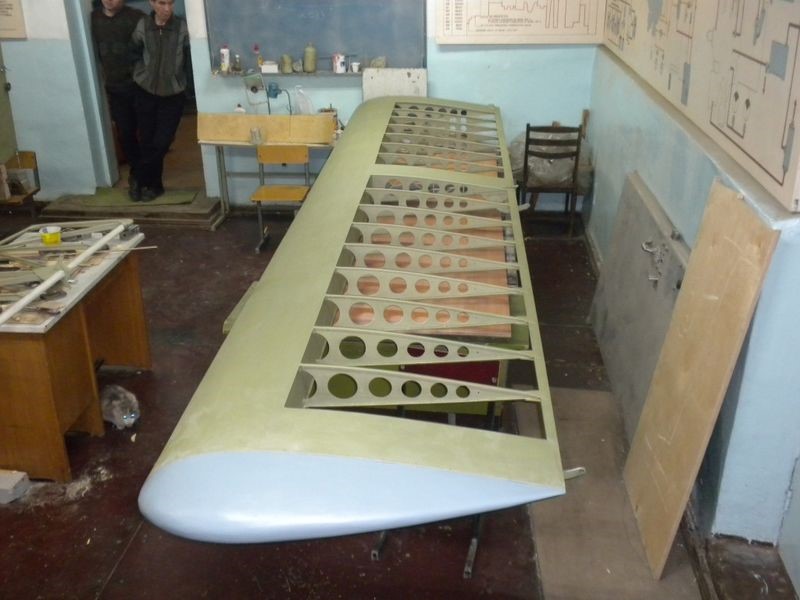
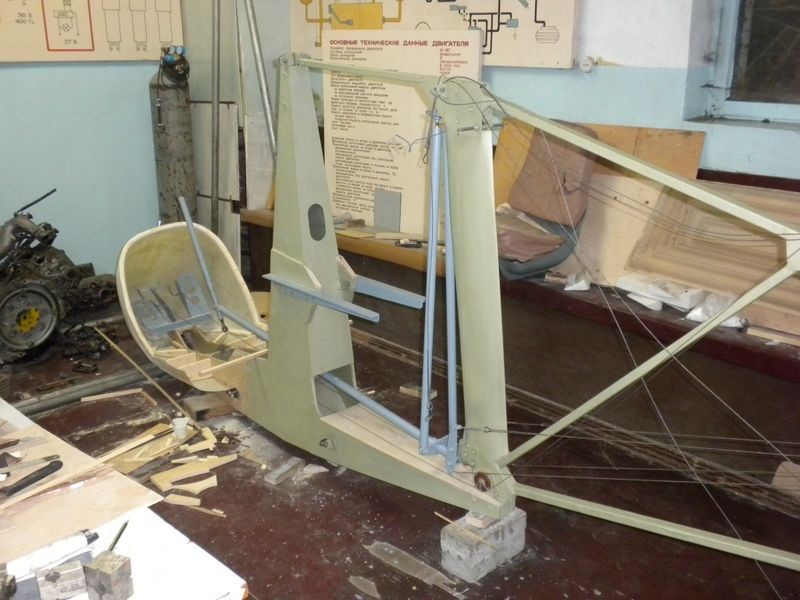
In 1983, in the SKB JAI piloted model development group, designed and built, JAI-38 (Russian: ХАИ-38) multifunctional delta. In charge of the design was fourth-year student SI Kanivolotski.
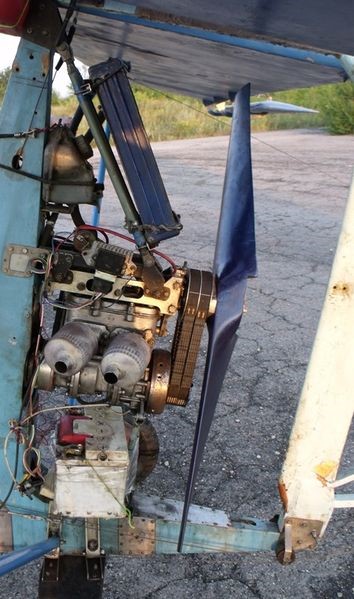
The delta was powered by a 40 hp Vulcan V-40 engine, designed and built at the institute itself. With a takeoff weight of 210 kg, the device managed to develop a speed of 75 km / h.
The JAI-38 participated in the second edition of the competition for amateur ultralight aircraft developed in Kiev. The 28 of July of 1984 during the aviation festival dedicated to the 100th anniversary of the renowned SV Grizodubova pilot, SI Kanibolovski demonstrated in the JHA-38 a take off and landing from the racecourse school.
JAI-38 Engine: Vulcan V-40, a 40-hp Wingspan: 10.0 m Wing area: 16,6 m² Length: 3.6 m Empty weight: 120 kg Maximum takeoff weight: 220 kg Maximum speed at sea level: 70 km / h Landing speed: 40 km / h Range: 160 km Take-off run: 30 m Accommodation: 1
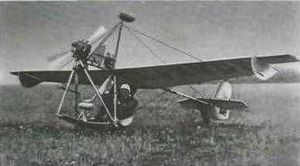
JAI-37 “Mikhail Yefimov” (Russian: ХАИ-37 “Михаил Ефимов”) was an ultralight aircraft developed at the AKA of the JAI.
Structurally, the JAI-37 was conceived as a high-wing braced monoplane of mixed construction. The ailerons were located at the wing tips. These ailerons appeared as increases to the wingspan.
A modified “Vijr-30” naval engine with air cooling was used as the power plant for this implementation and with a takeoff power of about 28 hp.
The JAI-37, named Mikhail Yefimov, was built in 1982 by a group of JAI students from a project developed by V. Dombrov, who also directed the construction. In this process, V. Kozhushnov, S. Kurinni, R. Sielix, M. Boiko and I. Tkach stood out.
First flying in 1980, as a glider, and August 1981 powered, tests were not good due to the lack of effectiveness of the wingtip ailerons.
Based on JAI-37, the improved JAI-37M model was developed with modified wings and tail and more standard placement of the ailerons. Later another model would be built, known as JAI-37M2.
The JAI-37M participated in the First SLA-85 Light Aviation Competition, but in this competition it did not fly.
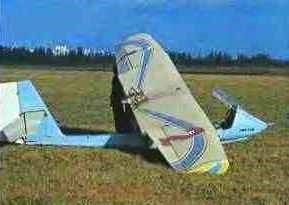
In 1972 at the request of a group of students of the KAK JAI institute and under the direction of the head of the aeronautical construction laboratory A. Barannikov, within the structure of the OSKB JAI the Aviation Construction Club (KAK) designed the JAI-35 “Entusiast” (Russian: ХАИ-35М «Энтузиаст») motor glider.
The JAI-35 “Entusiast” training motor glider was created on the diploma work of student N. Labrov, an active member of KAK since its foundation. In the construction of JAI-35 and under the direction of A. Barannikov, V. Silyukov, S. Alexandrov, A. Jomich, A. Mosalienko and S. Kovaliov stood out.
The JAI-35 was conceived as a wooden construction motor glider with some use of composite materials. As a power plant, a “Vijr-30” outboard boat motor was selected, modified to work with air cooling. This engine developed about 28 hp at takeoff.
The first flight in a non-powered configuration was performed by N. Lavrov in 1980. With the power plant the first flight would take place in August 1981. At the controls was the head of the KAK A. Barannikov.
Under the direction of Natalia Labrova, students from the “A. Barannikov” of the JAI worked on a modified and improved version of the JAI-35 that was named JAI-35M. This version was powered by a 36 hp engine, showing better overall performance.
This JAI-35M participated in the SLA-87 Light Aviation Competition.
Between 1991 and 1992 studies were conducted to investigate the use of ultralight aerial photography tasks. JAI-29S and JAI-35M2 participated in these experiments. The results demonstrated the feasibility of using AFA cameras in this type of apparatus.
At least three JAI-35 were built.
JAI-35M Engine: 36 hp Empty weight: 170 kg MTOW: 260 kg Velocity at sea level: 2 m / s Minimum descent speed: 1.5 m / s Ascent speed: 2.4 m / s Accommodation: 1
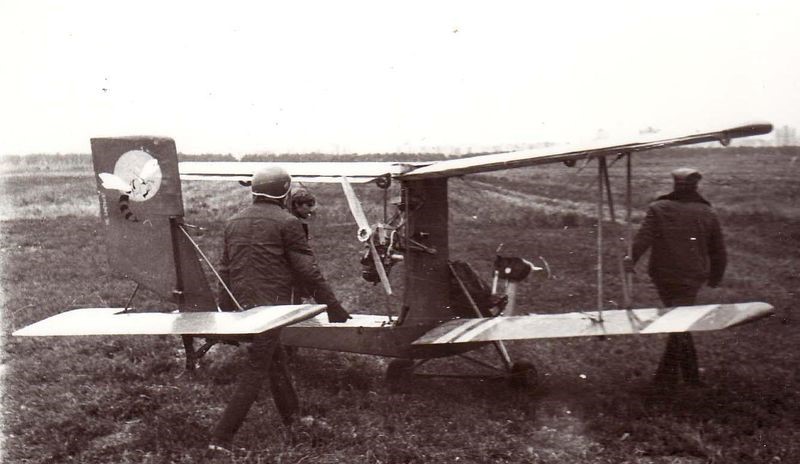
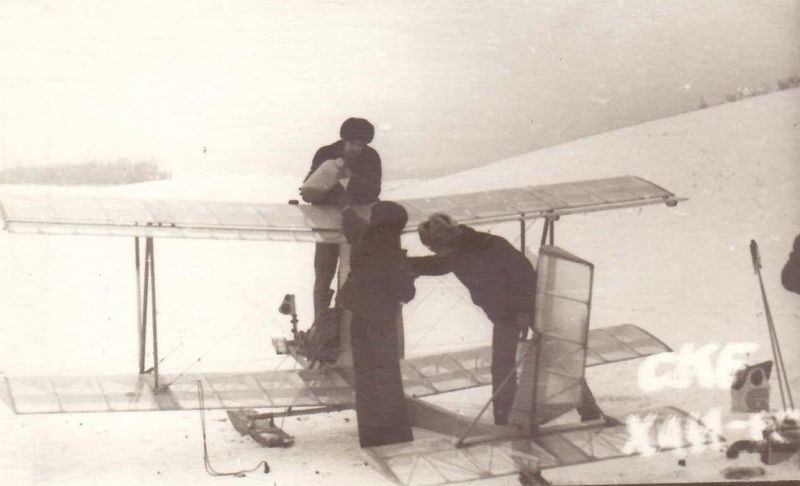
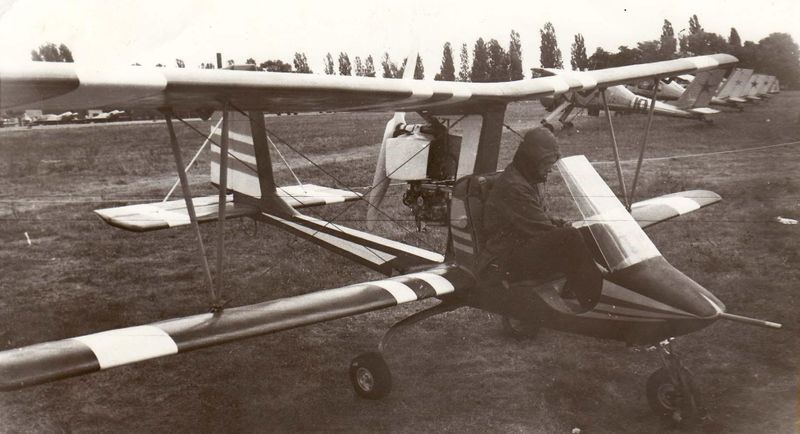
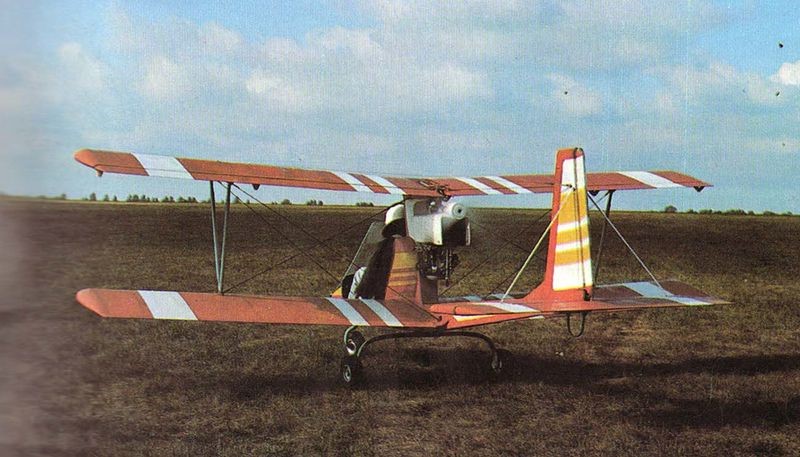
In 1980 a group of JAI students led by S. Shevko built the JAI-34 (Russian: ХАИ-34) biplane.
This model was designed as a biplane training aircraft and its design was influenced by the North American publication of the plans for the Wing-Ding ultralight aircraft.
The construction was led by students S. Shevchenko and V. Mielnik.
The JAI-34 was designed as a single-seater light aircraft with a biplane wing structure. The entire construction was made of wood, with the use of some metal structural elements. The wing featured an R-IIIA profile.
The control surfaces had a wooden frame with a percale coating and several layers of enamel. The landing gear was tricycle, with steerable front wheel.
Originally the JAI-34 was equipped with a Jupiter engine, but it would not fly, limiting its use to ground running. Later an Izh-PZ engine was installed with which only a few jumps were made, due to the lack of power. With this engine the climb speed was only 0.5 m / s and flying in a circle was a real feat.
Finally, a Vijr-30 motor with an angle reducer would be installed, which gave it about 28 hp. The fuel system included a tank in the flat center with gravity feed from the engine. The type of fuel used was A-76 and MS-20 oil.
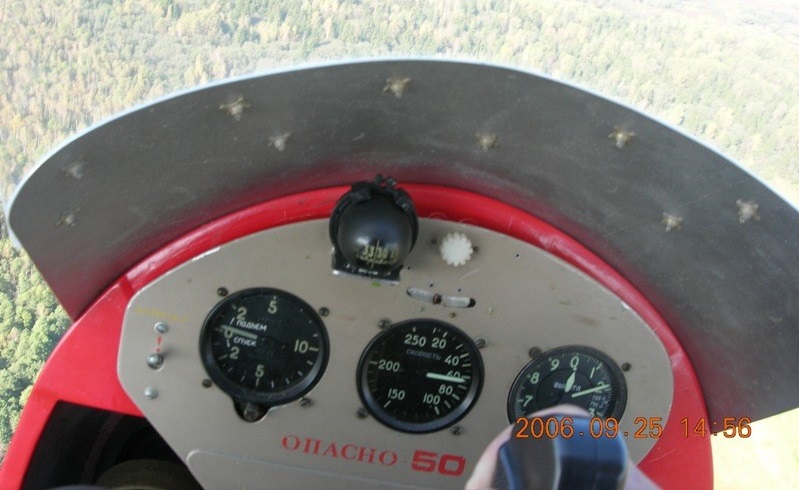
The pilot sat in a forward seat in the open cockpit. Behind, under the wing, was the engine. The instrument panel equipment included US-250 speedometer, VD-1 altimeter, VR-10 barometer, KI-13 compass, 2TTsT-47 thermometer.
The JAI-34’s first flight took place in July 1984 with student N. Krikunienko at the controls.
The JAI-34 successfully participated in the first SLA-85 light aviation competition. The JHA command, led by B.Virski, received the “OK Antonov” grand prize awarded by this event for solving complex problems in the independent creation, professional orientation and organization of ultralight aircraft flights.
JAI-34 would participate in many other regional and national events.
Refuelling JAI-34 for a ski train flight.
The JAI-34M was built by the JAI SKB “Experiment”, led by VA Mielnik and made its maiden flight in September 1985.
The JAI-34M featured improved lines and greater comfort for the pilot.
The JAI-34M received flight approval in May 1991 and by June 1992, when it was destroyed, it accumulated 26 hours and 19 minutes of flight time. This specimen was entered in the register of the Federation of Aviation Lovers of the Kharkov Oblast on May 23, 1991, receiving registration number 16009.
This example was originally designed to use an MT-9 engine, but later it was re-powered by an RMZ-640 air-cooled piston engine capable of developing 28 hp at takeoff, moving a 1.6 meter diameter propeller. Unlike the original model, the wing consoles were designed with a D-16T duralumin light tube structure.
The JAI-34M featured notable improvements in aerodynamics.
The JAI-34M was delivered to the “Vzliet” Sports-Technical Center, directed by Vladimir Leontievich Goryunov.
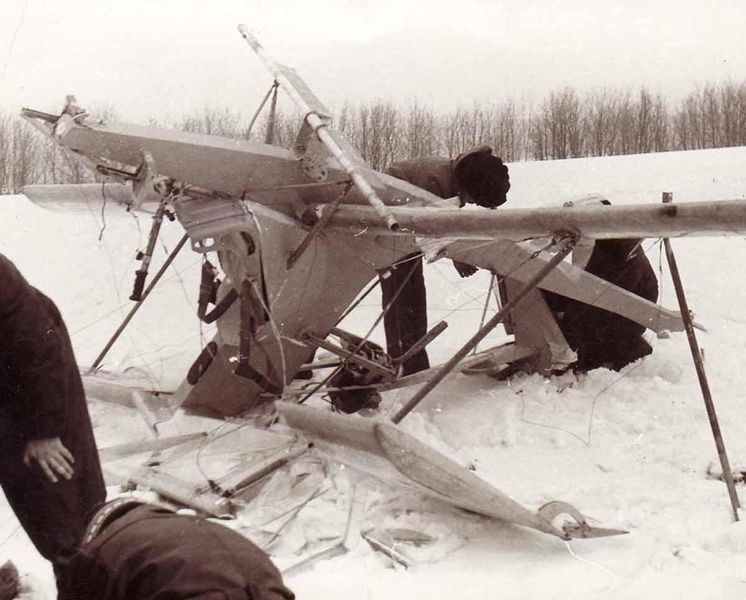
On 7 June 1992 at 12:08 pm the plane was destroyed in a crash at the airfield Tomarovka, Goryunov losing his life.
During a flight in good weather and during a third turn, at a speed of about 80 km / h, the aircraft lost speed and entered a circular spin. After making 1.5 turns, the plane hit the ground.
According to the people who were at the scene, the engine never stopped working. The impact was made at about 100-120 km / h and the pilot died.
Remains of the JAI-34 crashed in 1992.
The commission that investigated the accident determined that the cause was attributable to the pilot, but prohibited the Federation of Aviation Lovers from allowing flights in this model until the spin tests were carried out.
JAI-34 Powerplant: 1 x 28 hp Vijr-30 Propeller Diameter: 1.3m Propeller pitch: 600mm Wingspan: 5.81 m Wing area: 8.8 m² Length: 4.8 m Empty weight: 172 kg Maximum takeoff weight: 237 kg Maximum speed: 120 km / h Cruising speed: 90 km / h Crash speed: 62 km / h Range: 100 km Seats: 1
In 1976, after the development of the JAI-28, based on the Okshinis BRO-11 glider, the collective of the Student Bureau of Construction of the JAI decided to move towards a version motorized.
The need to power the glider was motivated by the desire of the Aviation Construction Club (KAK) students to fly higher and farther. The operating peculiarities of the BRO-11 had already been mastered, but the short flights from the hills were no longer interesting. The simplest variant was to put a motor in the BRO, but given the simplicity of the structure it did not seem like an easy task. The development team of this device was made up of about 20 students, among whom were V. Silokov, S. Alexandrov and N. Lavrov, under the direction of Anatoli Barannikov.
In the original design stage, the JAI-29 Korshun (in Russian: ХАИ-29 Коршун) differed slightly from the BRO-11, both in its external appearance and in the materials used in its construction. The main difference was seen in the front area: instead of the wooden ski, a structure of three radial bars was installed in this area that served as landing gear and base for the pilot’s position, the engine mounting and the wing mounting.
The Korshun was capable of flying from any level field without the need for a runway, tug or any other special condition.
Originally the PD-10 “Kolibri” engine was selected as the power plant. To avoid complications, the engine was located above the center of gravity. This decision also allowed, in case of failure, to withdraw the engine and continue using the device as a glider. Thus, in this way, the engine was located under the wing, which constituted the fundamental cause of the successes and mistakes of the model.
The JAI-29 “Korshun” was approved by the technical commission and took flight for the first time in 1977.
Powered flights showed a lot of design flaws. During takeoffs, the powered BRO constantly drifted off course and tended to pit the wing, damaging the ends and caps. Soon there was not a single “pilot” who had not suffered these mishaps. It was clear that the engine power was insufficient and changes were necessary in the design of the aircraft.
Despite these problems, the JAI-29 would be used for the preparation of 13 pilots with a total accumulated of 47 hours.
The next development of the JAI-19 was known as Korshun-M and was projected and built in 1980.
Another BRO-11 glider was taken and the nose was lengthened, modifying the landing ski. The skeletal structure of the tail bar was moved downwards, the surface of the horizontal plane was increased and a fixed skid was added in the tail area, soon replaced by a steerable wheel. Instead of a bracket with cable tensioners in the nose of the cabin they installed two brackets from the ski to the wing spar.
In the absence of a more powerful engine, it was decided to increase the wing area by increasing the wingspan. The initial value of the wingspan was 9 meters, later reduced to 8.4 meters. The increase in mass made it necessary to recalculate the structural resistance of the apparatus and reinforce several points of the beams and the structure. In this way the classic form of the “Korshun-M” appeared.
The wing of the JAI-29 was similar in construction to that of the BRO-11 and had a single variable section spar. The stringer was built with duralumin angles and walls with supports. In the middle section of the stringer there was a duralumin plate to which the wing supports made of 30 XGSA chrome-moly steel were fixed. At the end of the spar were the fixings for the wing tips.
Due to the lack of pine, the ribs were made of fir and the reinforcement points with 1 mm plywood. The three force ribs were constructed of 8mm plywood with circular holes to lighten them. At the rear of these ribs the fixings for the ailerons were installed. Fir ribbons were glued to the partitions of the stringers to complete the profile up to the theoretical contour between the ribs.
The trailing edge of the wing was constructed of spruce and secured to the ribs with 1mm pieces of plywood. The leading edge was protected with 1.5 mm plywood sheets up to 2/3 of the span. The spaces between the force ribs and their neighbors were protected above and below with 1 mm sheets.
Wing structure of the Korshun.
The ailerons were made of wood with plywood ribs fixed to the side member using screws. The leading edge was protected with an acrylic layer. The spaces between ribs were covered with 1 mm plywood.
The stabilizer was constructed of wood and was generally similar in shape to the BRO-11, but with increased surface area and some structural reinforcement. The glider’s wooden supports were replaced by others made of duralumin with a circular section. The elevator and steering rudders also featured a glider-like construction and were covered with glued calico.
All Korshun surfaces were coated with glued calico and then AK-113F aluminum powder paint.
The landing gear varied from model to model. Originally it was composed of a central wheel under the seat and a small one in the tail, with runners fixed to the side member on the wing intrados. Variants with two front wheels in pyramidal structure and skid or tail wheel were built and in at least one example a tricycle train with wide span main wheels was tested.
The cabin was designed for a standard size person and lacked regulations. The weight of the pilot could vary between 45 and 70 kg, but flights were made with pilots up to 100 kg. As the weight increased, the center of gravity moved forward, so it was necessary to compensate by placing a weight in the tail area.
The cockpit instrumentation included a US-250 speedometer, VD-10 altimeter, VR-10 barometer, KI-13 compass, two TTsT-13 thermocouples for measuring engine temperature, a tachometer, and a mechanical fuel level gauge.
The powerplant was also variable. The JAI-29M Korshum was powered by a gearless RMZ-640 piston engine capable of developing 5500 revolutions per minute driving a 1 meter diameter two-bladed propeller. The fuel system incorporated a tank with a capacity for 22 liters of gasoline, located in the wing center plane, feeding the engine by gravity.
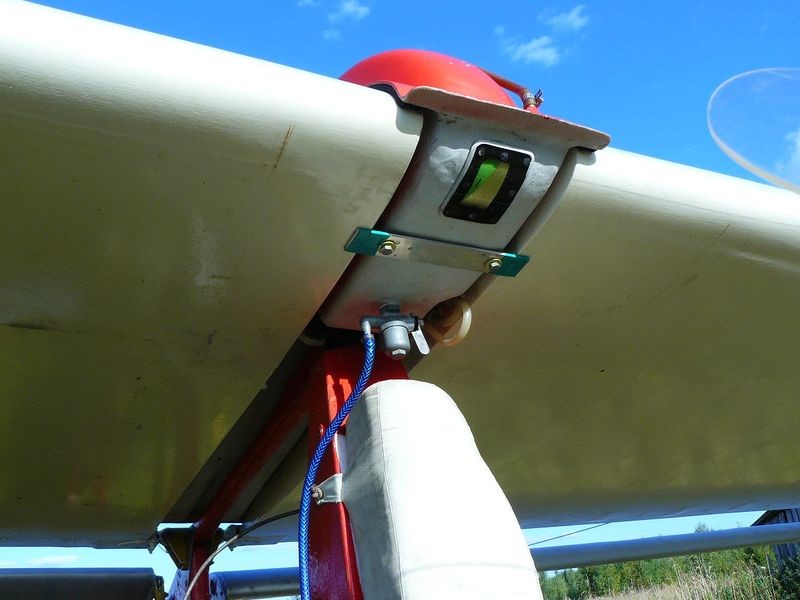
Detail of the connection to the fuel tank.
The test flights showed that the modifications were effective. Generally the flights on the JAI-29 reached up to 100 km in distance. Repairs, and there was a need for several, were carried out directly in the field. The simplicity of the construction allowed to carry out these interventions with ease.
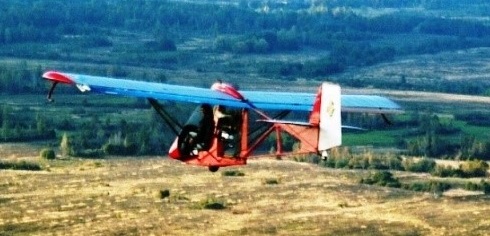
The JAI-29M in flight.
The flights were carried out without authorization from the institute, since the prohibition was maintained, but the almost 25 students managed to accumulate in each flight season from 4 to 6 hours. The total accumulated flight time was 90 hours.
The JAI-29M “Korshun-M” exhibited at SLA-84.
The JAI-29M Korshun-M was shown in the III light aviation competition in Kiev together with the JAI-37 “Mikhail Yefimov” models and the JAI-36 seaplane.
The Korshun-5 was a refined version of the model.
The JAI-29S version introduced minor modifications. This model participated in several meetings of the Soviet SLA (Light Aviation Consortium).
In an experimental way the JAI-29S was used in aerial photography tasks, using an AFA camera. The experiences obtained allowed to develop the technical task for a light aerial photography aircraft. Projection work for this type of device began at the JAI .
The actual number of aircraft produced is unknown. At the JAI the students assembled various devices. A series production was planned and documentation for this process was prepared, but finally the model could not be introduced.
JAI-29M Korshun Engine: RMZ-640 Propeller: 2-blade Propeller diameter: 1m Wingspan: 7.89-8.4 m Wing area with ailerons: 11.83 m² Wing profile: Р-2-14% Wing chord: 1.1 m Wing dihedral: + 3º-5º Length: 5.24 m Height: 1.86 m Empty weight: 167.5 kg Fuel Weight: 20kg Pilot weight: 40 – 110 kg Take-off speed: 55 km / h Descent speed: 45 km / h Cruising speed: 65 km / h Maximum speed in horizontal flight: 75 km / h Maximum speed: 120 km / h Maximum ROC at 62 km / h: 1.5 m / s Minimum descent speed without motor at 65 km / h: 1.8 m / s Run and take off: 100 m Maximum range: 150 km Maximum ceiling reached: 3000 m Maximum load: +3 and -2g Aileron chord: 0.35 m. Spoiler area: 2.7 m² Stabilizer span: 2.35 m. Horizontal plane surface: 1.9 m² Angle of implantation of the horizontal plane: -1.5º Elevator area: 0.82 m² Elevator working angle: +29º to -32º Empennage surface: 1.32 m² Rudder surface area: 0.77 m² Span between wheels: 3.44 m. Front wheel dimensions: 300х125 mm. Rear wheel dimensions: 90х30 mm Seats: 1
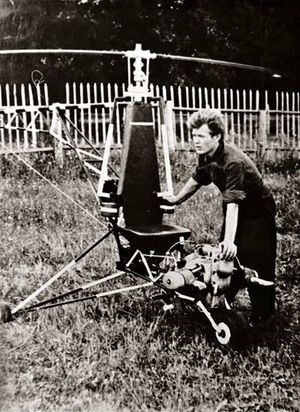
The JAI-22 helicopter (Russian: ХАИ-22) was developed by the Bureau Student Building (SKB) of the JAI between 1966 and 1968 as light experimental. V. Revinov was in charge of the design and construction.
This helicopter was designed from a tubular structure attached to a seat, installed on a tricycle skeleton train. The main rotor and transmission system were attached to this seat.
The main rotor featured two parallel, counterbalanced chord blades. The landing gear had small wheels.
The powerplant consisted of a 36-hp M-62 motorcycle engine, located at the front, under the pilot’s feet. The angular momentum of the crankshaft axis was transmitted through a double level reducer to a cardan system, an angle reducer, to the vertical axis and from there to the rotor blades. To compensate for the reactive moment at the end of the tail bar, a small 1.1 meter diameter two-bladed anti-torque rotor was placed, moved in the test bed by a small “Druzhba” motor and then in the JAI-22A by a transmission system from the main rotor.
The JAI-22 was built as an experimental test bed with the aim of developing the lift system to be used in the future construction of light helicopters. The 5.4 meter diameter main rotor blades, constructed of fiberglass, were tested on this test bed. The tests were carried out at the JAI aerodrome, where a special test station was set up.
After some modifications, the JAI-22 test bed was converted into the JAI-22A light helicopter operational model with a take-off weight of 220 kg.
The JAI-22A was tested in a captive configuration in 1968, showing low motive power, so free flight was not authorized at low ground level.
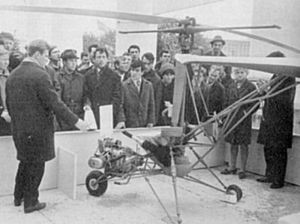
Despite this, in 1968 itself it was shown at the Exhibition of Economic Achievements (VDNJ) of the USSR and its authors were awarded.
The JAI-22A is shown in the Soviet VDNJ.
In 1969 the production of a small pre-production series was studied, which would never be carried out.
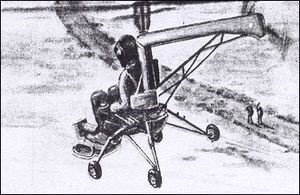
Drawing of the JAI-22A in flight published in the magazine “Texnika Molodiozhi”.
JAI-22A Engine: 36 hp M-62 motorcycle Main rotor span: 5.40 m Rotor disc: 22.90 m² Tail rotor span: 1.10 m Empty weight: 90 kg Loaded weight: 220 kg Fuel Weight: 40kg Maximum speed at 500 m: 100 km / h Cruising speed: 70 km / h Static ceiling: 1000 m Range: 200 km Rotor load: 9.61 kg / m² Power load: 5.85 kg / hp Seats: 1
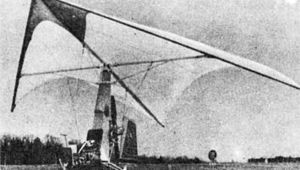
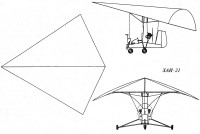
The JAI-21 (Russian: ХАИ-21) deltaplane was the first Soviet experiment using Rogallo-type wings. At the beginning of the 1960s, works on ultralight flying machines with “elastic” wings of the Rogallo type began to appear in scientific and popular literature around the world. The concept of deltaplane with “elastic” wing in the USSR was known by the terms Gibkolet and Deltalet.
In the USSR the first experiments with such a wing were developed at the Kharkov Aviation Institute in the form of JHA-21.
The JAI-21 was created at the SKB JAI between 1969 and 1972.
To check the flight characteristics of the motorized gibkolets the students AP Klimenko and V. Moiseyev under the direction of AF Pilnik initially built a model.
Constructively, the JAI-21 was made up of two independent components: the elastic wing and the motorized nacelle. Behind the pilot’s seat was a 32 hp MT-9 engine moving a wooden propeller.
At the rear of the tail bar was located the tail unit. The landing gear was of the tricycle type with the front wheel of the steerable type.
The direction of the apparatus was carried out by means of a lever similar to that used in airplanes.
Construction of the model was completed by spring 1972 and first flown that year. With a take-off weight of 320 kg and a cruising speed of 90 km / h, a flight range of 150 km was calculated.
The JAI-21 was shown at the VDNJ of the USSR, as well as at international exhibitions in Canada and the United States, causing a good impression among specialists.
In 1986 the JAI-21 had a renaissance when students transformed it into the JAI-40 light aircraft.
JAI-21 Engine: 1 x 32hp MT-9 Wingspan: 8.00 m Wing area: 2 m² Length: 2.80 m Maximum takeoff weight: 320 kg Maximum speed: 90 km / h Practical range: 150 km Seats: 1
The experience gained with the first devices conceived at SKB JAI showed the need not only to design them, but also to build them. In a period of three months the students under the direction of VV Reshetnikov and BL Zaslavski designed and built a second model that was named JAI-19 (Russian: ХАИ-19) in 1962.
In the design and construction of JAI-19, the students B. Zaslavski, S. Gotenkov, A. Sazonkin, V. Lyushnin and S. Reshetnikova stood out among others. Components and parts of the previous JAI-17 were used to build the aircraft.
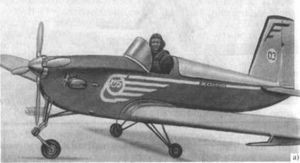
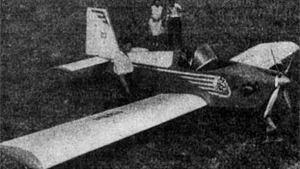
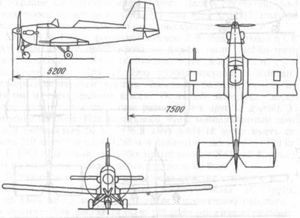
The JAI-19 was a cantilever low-wing monoplane. The entire construction was made of wood. The fuselage was made up of a wooden structure with fabric covering.
The wings were rectangular in plane. The single-stringer construction was wood with fabric covering. The wingtips were made of plywood. The trailing edge featured conventional ailerons and flaps. The tail unit was of the conventional type, with a trapezoidal tail and a rectangular stabilizer.
The landing gear was a fixed tricycle type with a 1.20m span between the main landings. The front wheel was steerable.
The 30.5 hp M-61K motor with a gearbox was selected as the power plant, removed from the crashed JAI-17, with a 4-blade, variable pitch propeller. The fuel was stored in two 27-liter tanks and fed to the carburetor by gravity. Behind the engine was an open cabin for the crew member, protected by a small windshield.
Construction began in 1961 and lasted for three months. The first test flight was carried out by SKB director JAI V. Reshetnikov.
Between 1962 and 1963 VV Reshetnikov carried out several successful flights on the JAI-19, but completing the tests proved impossible and only achieved flight heights of 50 – 70 meters. The JAI-19 was shown at the RS Ukraine Achievement Exhibition.
JAI-19 Engine: a 30.5 hp M-61K Wingspan: 7.50 m Length: 5.20 m Wing area: 9.50 m² Empty weight: 200 kg Maximum takeoff weight: 312 kg Maximum speed: 140 km / h Cruising speed: 120 km / h Landing speed: 60 km / h Practical range: 600 km Practical ceiling: 2000 m Take-off run: 200 m Landing run: 120 m Accommodation: 1
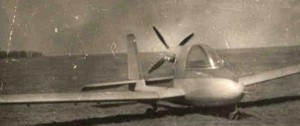
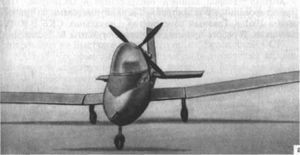
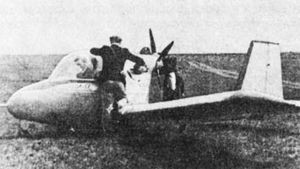
The first aircraft built at the Kharkov Aviation Institute after the war was the JAI-17 (Russian: ХАИ-17). In 1957 a group of JHA students under the leadership of VV Reshetnikov decided to test their strength in the construction of a small sports plane. A circle of interest was created under the direction of teacher LD Arson to develop this project. OK Antonov decided to support the group. In his aviation factory an area was dedicated for production and in this place the students began to work on the construction of the aircraft.
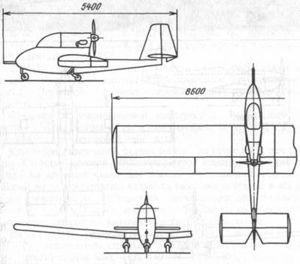
The JAI-17 was conceived as a low-wing cantilever monoplane with a driving propeller, which considerably increased the effectiveness of the empennage and stabilizers.
The wings were straight, with a rectangular shape on the plane and slightly rounded ends. The wing consoles had a slight positive dihedral.
The tail unit was of the conventional type and was located at the end of a beam connected to the fuselage. As the power plant, a 30.5 hp M-61K motorcycle engine was selected driving a four-bladed propeller with variable pitch. The engine was located just behind the cockpit.
The landing gear selected was a tricycle, with low height landing gear and a steerable front wheel. The pilot was located in a closed cabin forward.
On 29 April 1959 the JAI-17, with VV Reshetnikov at the controls, made the first flight.
The tests showed that with a flight weight of 352 kg the aircraft reached 148 km / h and reached a ceiling of 2300 m.
On the second flight, the plane suffered an accident due to the inexperience of the pilot. The elements of the plane were used for the construction of the improved JAI-19.
The work of the students on this plane motivated the institute council to organize a Student Construction Bureau (SKB) at the JAI . The task of its creation was assigned to the teacher PV Dybski. VV Reshetnikov, who worked on the drafting of the statutes and the structure of the organization, was selected for the leadership of the bureau. In May 1959 the first SKB of Ukraine began operations. Ten students, participants in the projection and construction of the JAI-17 plane, received the medal “For the best scientific-student work in the USSR”.
Engine: 30.5 hp M-61K engine Wingspan: 8.60 m Length: 5.40 m Wing area: 10.50 m² Maximum takeoff weight: 350 kg Maximum speed: 148 km / h Cruising speed: 115 km / h Landing speed: 50 km / h Range: 510 km Ceiling: 2300 m Accommodation: 1
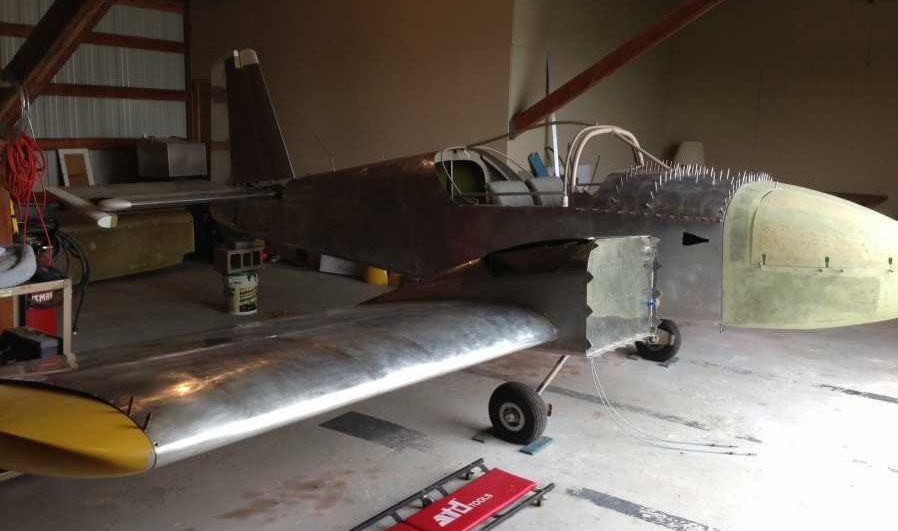
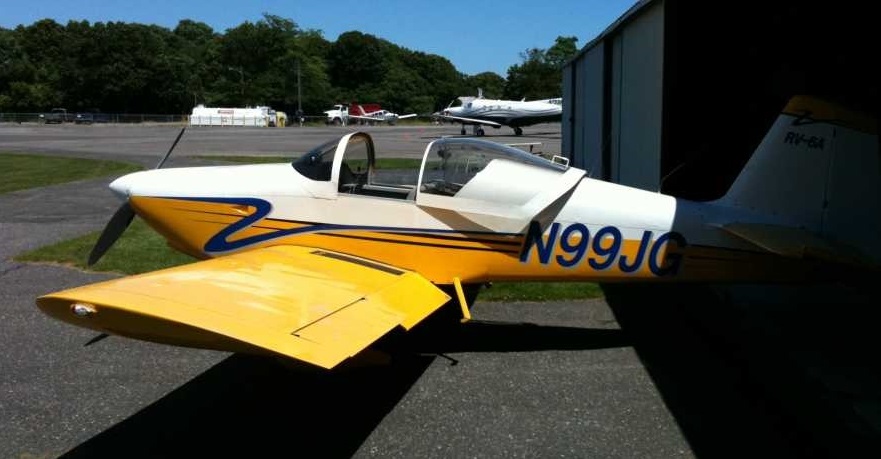
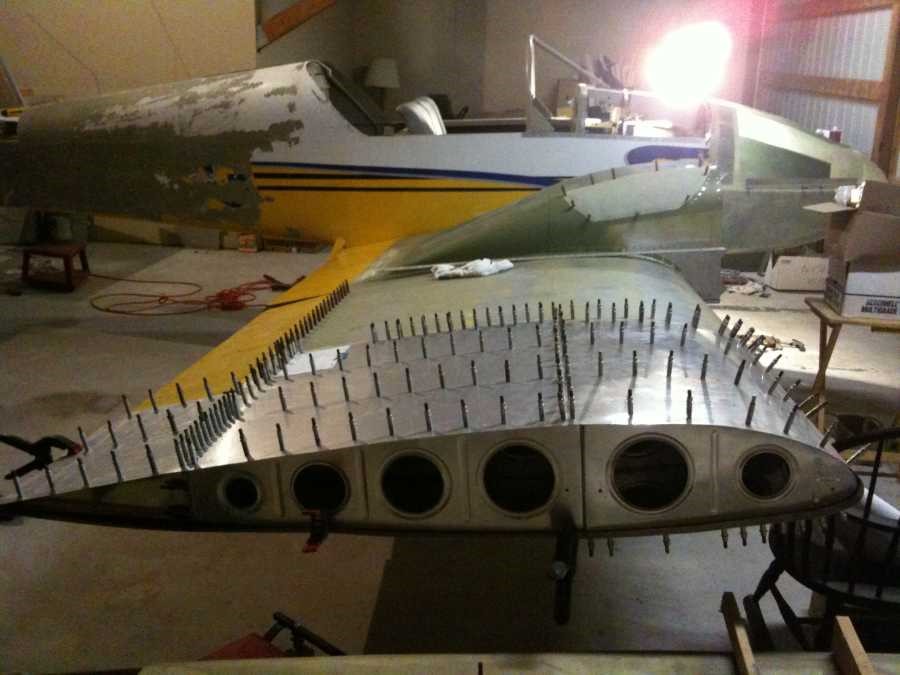
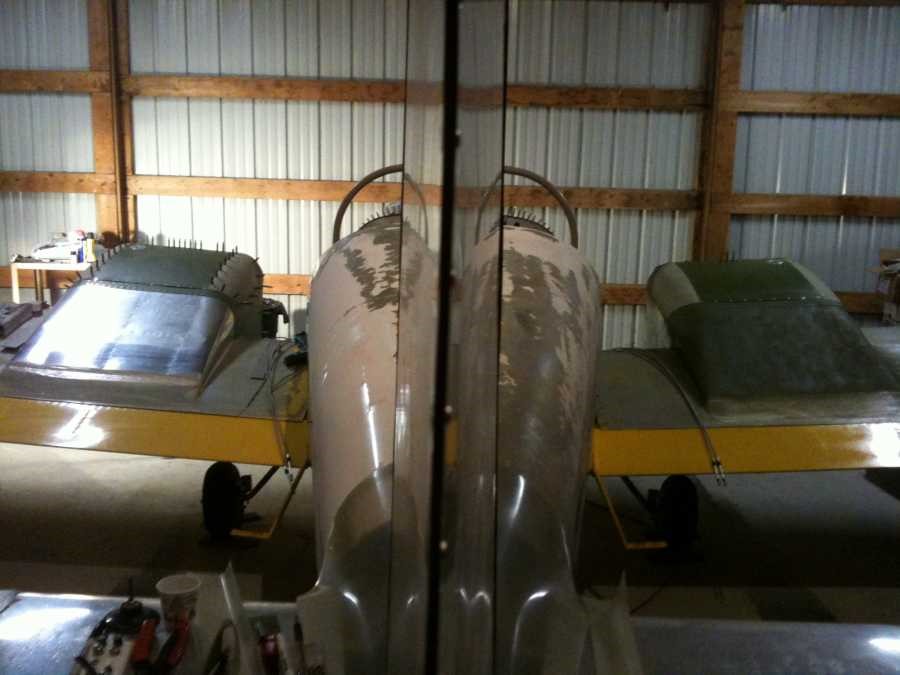
The Twin Jag project started life as a completed RV-6A, which was built and flew for 250 hours. Some modifications include, but not limited to:
Installing 2 Corvair 3000cc 120hp direct drive with Weseman 5th bearings. Weseman billet crankshafts.
Custom made carbon fiber props.
Unique prop brake system in lieu of constant speed feathering props.
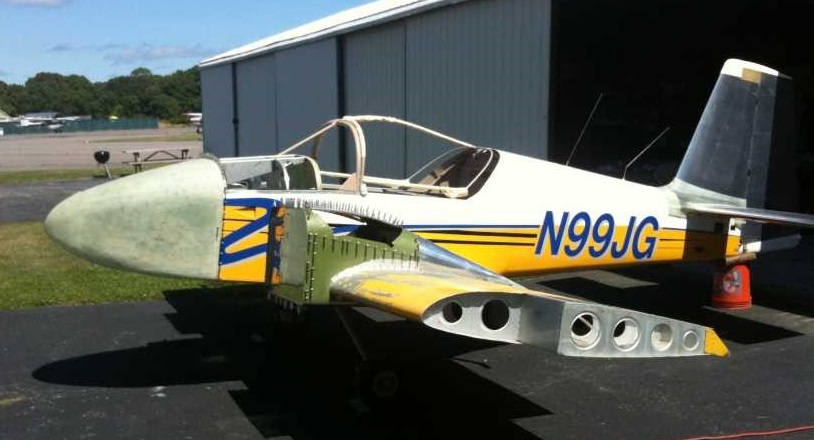
Increased wingspan by 40″.
Installed RV-9 tail.
Re-designing nose gear with 4130 tubular gear & urethane dampening (similar to RV-10).
Many more mods.
The Twin Jag is a side-by-side 2 seat twin-engine cross country aircraft. It will be IFR capable with dual Dynon Skyview EFIS.
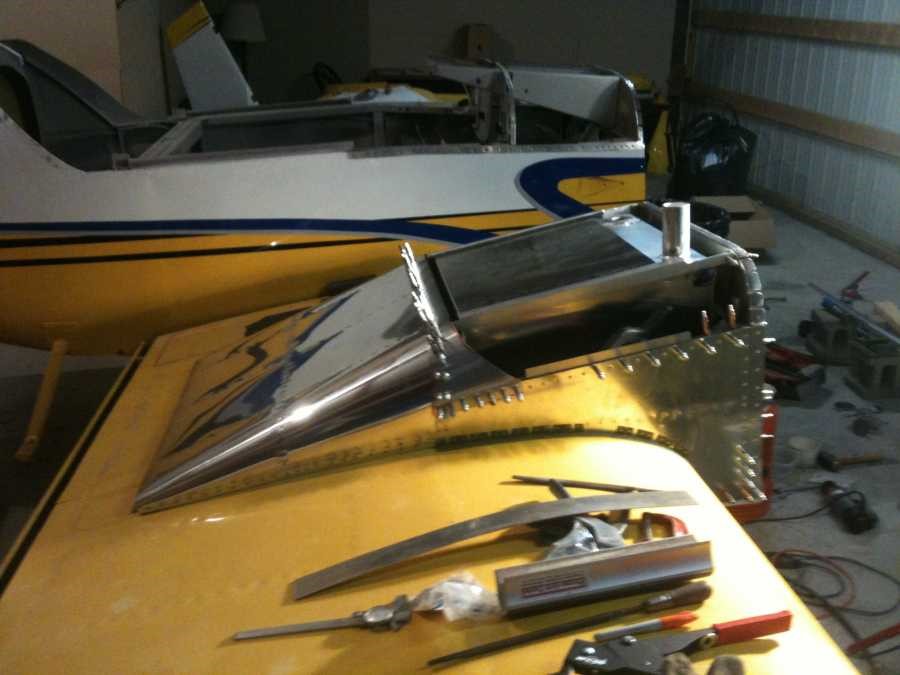
By January 2013, both nacelles complete. Custom motor mounts being fabricated. Riveting right wing extension now, left wing extension riveting to follow. Center console 75% complete. Fabricating nose gear/baggage shelf in next few weeks. All fibreglass work still in rough stages of completion…lots of filling & sanding ahead.