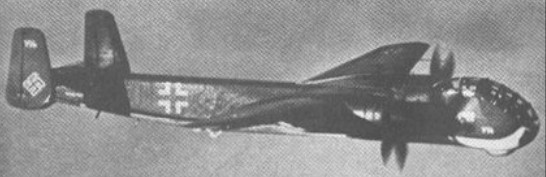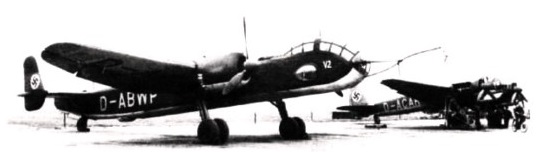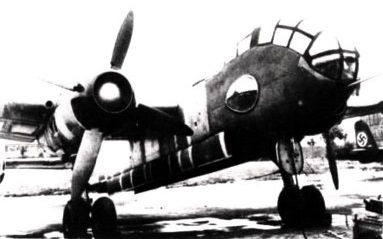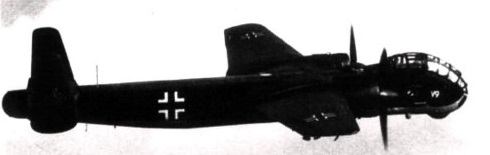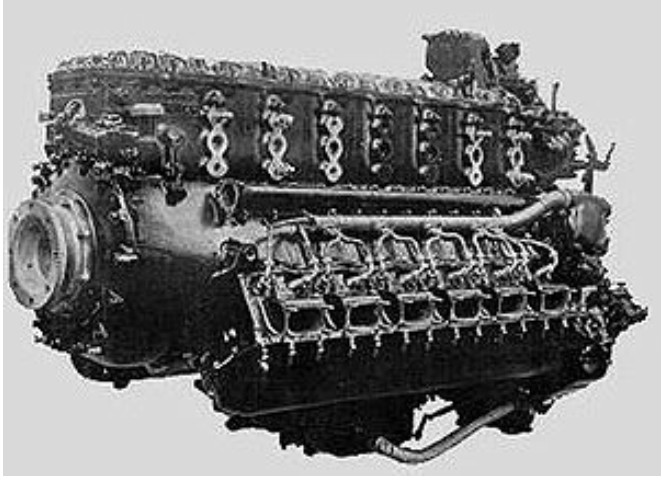
Junkers Jumo 210 / L10

Jumo 210

Development of the V12 Jumo 210 itself started in 1931 under the designation L10. The L10 was Germany’s first truly modern engine design, featuring three valves per cylinder, an inverted-V layout, a supercharger as standard equipment, and a cast cylinder block. The 210 was odd in that the cylinders were machined into a block along with one side of the crankcase, two such parts being bolted together side-by-side to form the engine. Normal construction techniques used three parts, two cylinder blocks and a separate crankcase.

The L10 was first ran in static tests on October 22, 1932. With the official formation of the RLM in 1933, engine naming was rationalized with Junkers receiving the “200 block”, the L10 becoming the 210. Type approval was achieved in March 1934, and it first flew on July 5, 1934 installed in a Junkers W33. The design had initially aimed for 700 PS, but the prototypes delivered only about 600 PS, so there was some disappointment in the industry. Nevertheless almost all German aircraft designs of the era were based on the 210, which is why they were so small compared to other country’s efforts.

Initial production of the 610 PS (602 hp, 449 kW) Jumo 210A started in late 1934. Further development led in 1935 to the 640 PS (631 hp, 471 kW) 210B and 210C. Both added a new supercharger for improved performance, along with a dump valve to avoid overboost. The B model had its propeller geared at 1:1.55 (prop:engine rpm) for high-speed use, while the C model was geared at 1:1.63 for slower flying speeds. In 1936 the new 670 PS (661 hp, 493 kW) 210D and 210E were introduced, which had the same gearing as the B/C but used a new two-speed supercharger to increase takeoff power and altitude performance.

The Jumo 210G had a direct injection system developed by Dr. Lichte. The Jumo system used a small pump piston positioned beside each of the main cylinders, driven off the crank shaft. The injector used a simple check valve to prevent internal pressure from blowing back into the fuel line, and the pump was timed to inject at the proper point in the intake cycle. Inclusion of the injection system increased takeoff performance by about 20 PS without increasing boost rates and it also reduced fuel consumption. For those reasons most newer German engine types were set up with fuel injection systems. The Jumo 210G was rated at 700 PS (690 hp, 515 kW) and was only available for fast aircraft like the Bf 109 or Bf 110 but not for slow aircraft like the Ju 87.

Further developments were planned as Jumo 210F and 210H, but never built. In 1935 the Jumo 210H was used for development of the Jumo 211. A Jumo 210S was a special development by the DVL with special regulation mechanisms. Production of the Jumo 210 came to an end in about 1938.

Applications:
Arado Ar 68 – only in Ar 98E
Focke-Wulf Fw 159
Focke-Wulf Fw 187
Heinkel He 112
Junkers Ju 87 – only in Ju 87A
Messerschmitt Bf 109 – only in Bf 109 A-D
Messerschmitt Bf 110 – only in Bf 110 A/B
Messerschmitt Me 262 V1 – Only in first test flight, prototype’s BMW 003 axial-flow jet engines failed shortly after takeoff, aircraft brought around and back on the nose-mounted Jumo 210’s power alone.

Specifications:
Jumo 210
Type: Twelve-cylinder supercharged liquid-cooled inverted V aircraft engine
Bore: 124 mm (4.88 in)
Stroke: 136 mm (5.35 in)
Displacement: 19.7 l (1,202 in³)
Length: 1,478 mm (58.19 in)
Width: 686 mm (27.01 in)
Height: 960 mm (37.8 in)
Dry weight: 442 kg (974 lb)
Valvetrain: Overhead camshaft
Supercharger: Two-speed centrifugal type supercharger with automatic boost control
Fuel system: Carburetor
Fuel type: 87 octane rating gasoline
Cooling system: Liquid-cooled, ethylene glycol
Reduction gear: Spur, 1.75:1 or 1.59:1
Power output:
508 kW (690 PS or 681 hp) at 2,700 rpm for takeoff
515 kW (700 PS or 690 hp) at 2,700 rpm at 1,500 m (4,920 ft), first supercharger speed
501 kW (680 PS or 671 hp) at 2,700 rpm at 3,700 m (12,140 ft), second supercharger speed
Specific power: 26.14 kW/l (0.57 hp/in³)
Compression ratio: 6.5:1
Specific fuel consumption: 322-335 g/(kW•h) (0.53-0.55 lb/(hp•h))
Power-to-weight ratio: 1.17 kW/kg (0.71 hp/lb)

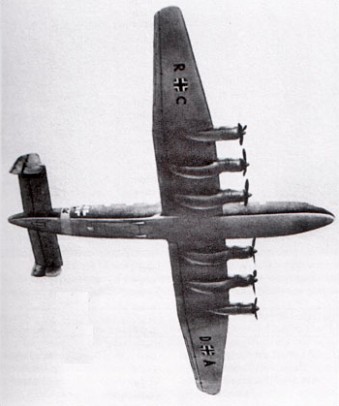
Junkers Ju.488

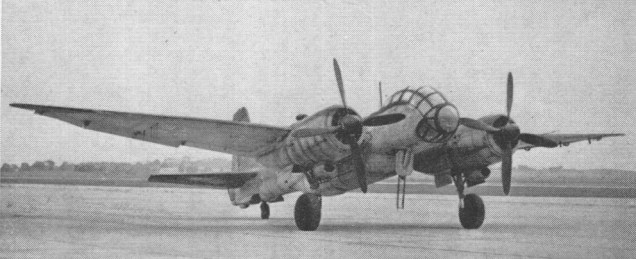
Some sources claim that this was a development of the Ju 388, but it actually was a four-engined long-range bomber, built of Ju 188, Ju 288 and Ju 388 parts. The development of the Ju 488 was ordered from manufacturers in occupied France, who were not very motivated. When the prototype finally neared completion in 1944, it was destroyed by the French resistance with sten guns and grenades.

Junkers Ju.390

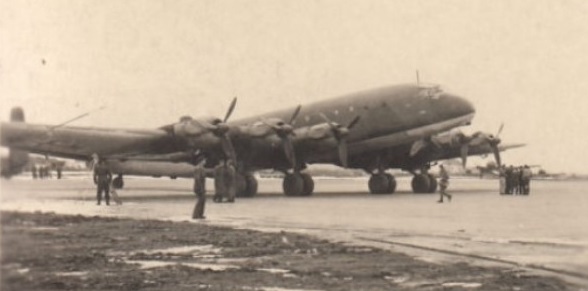
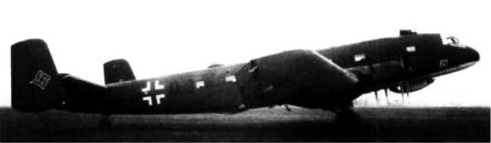
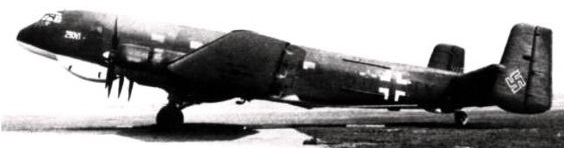
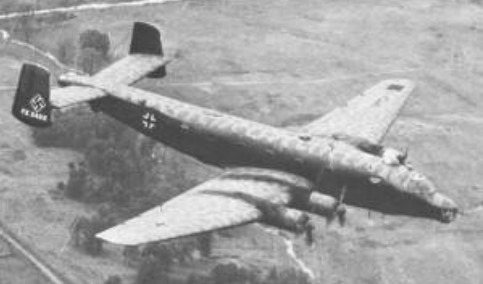
The German Junkers Ju 390 long range heavy bomber aircraft design was intended to be able to strike at locations along the east coast of the United States during World War 2. The Ju 390 itself was a further development of the Junkers Ju 290 and was also tasked to fulfill the roles of maritime reconnaissance and transport in addition to its bombing duties. The Ju 390 – also known under the unofficial name of “New York Bomber” – was developed as two working prototypes, effectively making the idea of transatlantic bombing theoretically possible for Hitler and his Luftwaffe. The Ju 390 was part of the failed “Amerika Bomber” project considered by the Germans, this including the Messerschmitt Me 264 and Focke-Wulf Ta 400 designs.

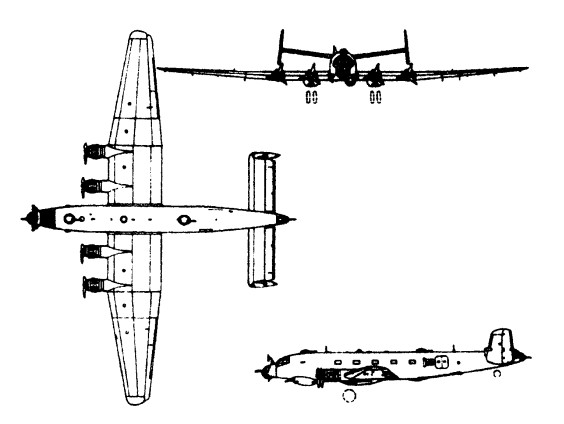
The Junkers Ju 390 heavy bomber appeared when general German wartime philosophy was still centered around medium-class bomber aircraft. Full developmental resources were never really delegated to the Ju 390 project en mass and the entire program was slow. With origins in the Ju 290 airframe, the Ju 390 basically saw its wings lengthened via extensions fitted to help accommodate the additional engines (three to a wing for a total of six installations). The fuselage was also applicably lengthened for the long-range bombing role. Defense was supplied by a pair of 13mm machine guns in a gondola position as well as 2 x 13mm machine guns in beam positions. A pair of 20mm cannons would have been mounted to a dorsal turret and a single 20mm cannon would have been installed in the tail. Crew accommodations would have amounted to ten personnel made up of the flight crew and dedicated gunners. The heavy transport model was given the proposed designation of Ju 390A-1 while the maritime patrol and long-range heavy bombers would have been assigned Ju 390B and Ju 390C respectively.

Ju.390 V-1 GH+UK

Power for the Ju 390 V01 prototype was supplied by 6 x BMW 801D radial piston engines, of 1,730 hp. Maximum speed was listed at 314 miles per hour with a range of approximately 6,030 miles. The service ceiling was a reported 19,700 feet. Empty weight was in the vicinity of 87,100lbs while maximum take-off weight topped at 166,400lbs. The Ju 390 maintained a length of 112 feet, 2 inches with a span of 165 feet, 1 inch. Her height was 22 feet, 7 inches.

First flight for a Ju 390 V1 prototype occurred on October 20, 1943, and Ju 390 V2 was also flown in October of 1943 with testing believed having gone into 1945.

An initial order of 26 Ju 390s were ordered for serial production, however, the program was cancelled in June of 1944 to allocate critical wartime resources and development to other more pressing projects. Pparticularly those of defensive in nature. The Ju 390 was officially strickened from Luftwaffe contention in 1945. Ju 390 V1 was destroyed on the ground by the Germans as the American Army closed in on the development facility.

A test flight of a Ju 390 is said to have taken the aircraft from Brest, France, to within 200 miles of New York city, and returned.

In the fall of 1944, Japanese authorities were granted local production rights to the Ju 390, though none were ever started before the Empire capitulated in August of 1945.

Junkers Ju 390 V1 (New York Bomber)
Engines: 6 x BMW 801D radial, 1268kW.
Length: 112.20ft (34.2m)
Width: 165.03ft (50.30m)
Height: 22.60ft (6.89m)
Empty Weight: 87,083lbs (39,500kg)
Maximum Take-Off Weight: 166,449lbs (75,500kg)
Maximum Speed: 314mph (505kmh; 273kts)
Maximum Range: 6,027miles (9,700km)
Service Ceiling: 19,685ft (6,000m)
Armament proposed:
2 x 13mm MG 131 machine gun in gondola
2 x 13mm MG 131 machine guns in waist beam positions.
2 x 20mm MG 151/20 cannons in dorsal turret
1 x 20mm MG 151/20 cannon in tail gun position
Crew: 10

Junkers Ju.388

Ju.388J

The Junkers Ju 388 was a 1944 development of the Junkers Ju 188. There were three versions, J (hunter), K (bomber) and L (reconnaissance aircraft).
The first prototype, the Ju 388 L-0 V 7 with the factory serial number 300,001, PG+YA, developed using of major components of the Ju 188 and flew for the first time in December 1943.
The prototypes built were V 1 to V 6 (2 each of the J-1, K-1 and L-1) during 1944. Structural areas and the horizontal tail unit of all versions were taken completely from the Ju 188, the chassis from the Ju 88. In contrast to the Ju 188 the Ju 388 possessed a pressurized cabin for three man crew.
In order to improve the aerodynamics and speed, the portion of the cockpit were omitted but a remote controlled tail FHL 131 Z was inserted. The wings were defrosted as with the Ju 188 by warm air by the engines, the snow and ice removal of the horizontal stabilizers took place via a gasoline Kaercher furnace.
The only version of this Ju 188 development to enter production before the end of the war was the Ju 388L reconnaissance aircraft, a small number of which were built. Power was provided by two 1,349kW BMW 801TJ engines.

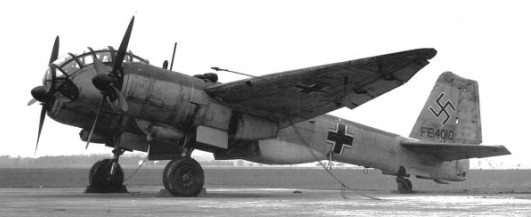
One Ju 388 L-1, 560,049 was captured by the Americans in the Merseburg works. It originated from production from Weser flight in Liegnitz/Schlesien, and parts were manufactured by ATG.
It was brought with other German airplanes on the aircraft carrier HMS Reaper in Operation Sea Horse for tests into the USA. These took place in Wright Field, Ohio. The machine carried the identification FE-4010 (later T2-4010).

In 1947 the tests finished, and 560,049 / FE-4010 found its way to the National Air & Space Museum. Unrestored, the cockpit of the Ju is 388 L is nearly in the original state.

Engines: 2 x Junkers Jumo 222E
Wingspan 22 m (72 ft. 2.125 in.)
Length 14.95 m (49 ft. 1 in.)
Height 4.9m (16 ft 1 in)
Weight 10,565 kg (23,296 lb.) empty
Top speed: 414 mph @ 37,700 ft.
Range: 1100 miles
Ceiling: 42,200 ft
Armament: 3 x 13mm mg

Junkers Ju.352

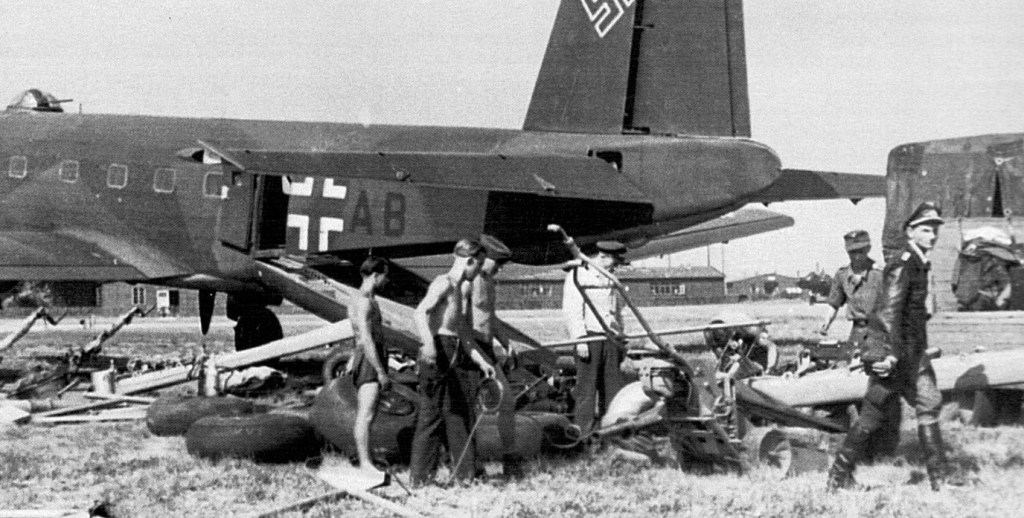
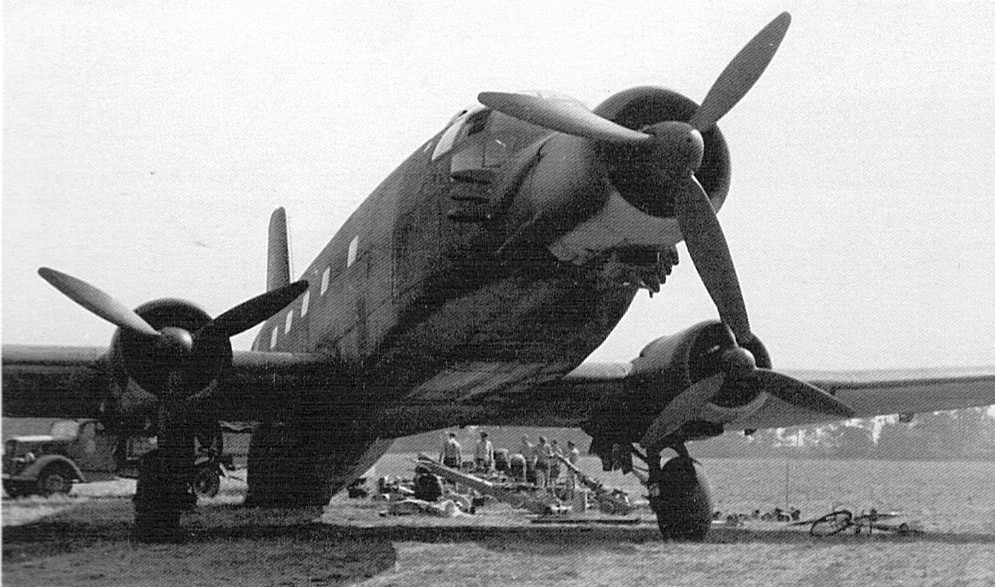
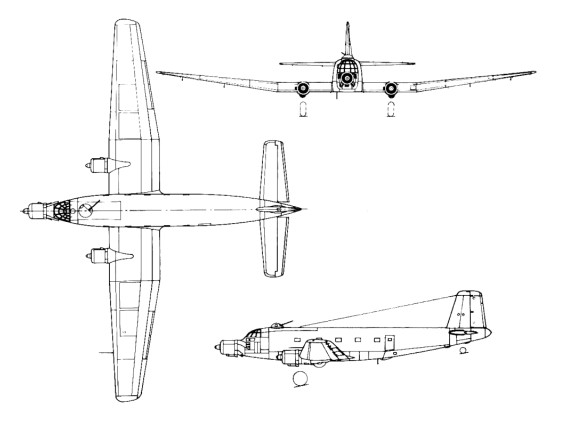
The Ju 352 development was based on wood in order not to use strategic materials. Power was provided by three 894kW Bramo 323R-2 engines. Production of this version totalled 43 or 44.

Ju 352 T9+AB at Juvincourt unloading AR234 equipment – Erich Sommer at right

One of the features of the Ju 352 was its Trapoklappe hydraulically-operated loading ramp. Incorporating its own central stairway, this ramp, when lowered, raised the aircraft to a near horizontal position which facilitated easy loading and unloading. Another feature were its reversible pitch propellers.

T9+AB

A total of ten pre-production Ju 352 A-0s and 33 A-1 production aircraft were completed before construction was halted in September 1944.

A number of Ju 352 were delivered to Versuchsverband including T9+AB, T9+MB and T9+AL.

Gallery

Junkers Ju.290

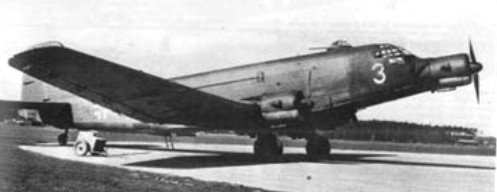
The Ju 290 was originally designed as a development of the Ju 90 transport and was test flown in 1941. Subsequent development was undertaken to enable it ultimately to supersede the Fw 200C for long-range over-sea anti-shipping and U-boat cooperation work, but it failed to achieve this.

Nevertheless seven versions of the A series were produced as transport (A-1 with BMW 801D engines), reconnaissance (A-2, A-3 and A-5), transport (A-6), reconnaissance-bombing (A-7), and reconnaissance (A-8) aircraft – the latter with provision for carrying two Hs 293 anti-shipping glider missiles.

Ju.290 V-3

Production totalled about 55 aircraft.

The Ju 290B was a projected heavily armed long-range bomber. It was followed by the Ju 290C reconnaissance and transport aircraft, Ju 290D long-range bomber and Ju 290E night bomber: all of which failed to enter production.

In April 1944 three Ju-290A-9 of KG200 had been stripped of their armament, except for their nose and tail machine-gun turrets, so they could carry auxiliary fuel tanks containing thousands of gallons of fuel. They now had a range of almost 5500 miles. Flying at an altitude of about 38,000 ft, they crossed the Soviet Union and Mongolia undetected, and after some 20 hours of flight they landed at a base near Mukden, Manchuria. On their incoming flight the Ju 290s carried some four tons of essential munitions to the Japanese. Things like weapon sights and other optical equipment. The next day they would make their return flight, with cargo including molybdenum raw material, back to Germany. They landed back at Mielec northeast of Krakow.
On 10 April 1944 the Germans were forced to evacuate Odessa and shifted their take-off base to Mielec too.

Gallery

Ju.290 V-1
Ju.90 W/no 4918/0011 / BD+TX re-engined and fitted with a loading ramp.
First flew 16 July 1942
Crashed Stalingrad 19 January 1943.

Ju.290 V-2
W/no 0151 / CE+YZ / SB+QA
First flew 7 December 1942

Ju.290 V-3
W/no 0152 / GF+GH / SB+QB
The rebuilt Ju.90 V-7
Crashed and destroyed 5 October 1944

Ju.290 A-0
Two pre-production aircraft
Engines: 4 x BMW 801L-2, 1600 hp
Props: 3 blade
Armament: 3 x 20mm MG151 cannon, 2 x 7.9mm MG81 mg
Bombload: 2 x Henschel Hs 293 glider bombs
Troop capacity: 40
Transport load: 18,700 lb
Winch loading ramp: 15ft 9in long x 7fyt 8in wide

Ju.290A-1
Five aircraft similar to the V-8
W/no 0152 SB+QC / Wno 0153 T9+FK – to Luftwaffe March 1943
W/no 0154 / J4+AH – to Luftwaffe May 1943
W/no 0155 & 0156 – to Luftwaffe for structural testing purposes

Ju.290A-2
Three aircraft as long range maritime patrol aircraft
First flew Summer 1943
W/no 0157 SB+QG
Went to Britain as AM-57
Scrapped 1950

W/no 0158 SB+GH / 9V+AH
Armament: 20mm MG151 cannon in dorsal turret

Ju.290A-3
Five armed maritime / reconnaissance types during 1943
Engines: 4 x BMW 801D, 1700 hp
Fitted with extra dorsal turret and a 20mm MG 151 cannon, + another in tail position.
2 x 13mm MG 131 in each waist position + 1 in forward firing gondola.

W/no 0160 & W/no 0161

W/no 0162 9V+GK
Shot down 20 November 1943 by a DH Mosquito

W/no 0163
Destroyed 3 May 1945

W/no 0154

Ju 290A-4
Five long range reconnaissance types
W/nos 0165 – 0169
Engine: 4 x BMW DB 801 L-2, 1,500 hp
Max speed: 243 mph at 18,000 ft
Service ceiling: 19,000 ft
Max range: 790 miles
Weight loaded: 90,000 lb
Wingspan: 138 ft
Armament: one forward-firing 20-mm MG 151 cannon in forward fuselage; one 20-mm MG 151 cannon in dorsal position; two MG 131 13-mm machine guns in lateral emplacements; one MG 131 13-mm machine gun in forward ventral position; one MG 151 20-mm cannon in rear ventral position; one MG 151 20-mm cannon in tail; bomb load of 19,000 lbs or 90 men.

W/no 0165
Used in testing the Hs 293 guided bomb, fitted with Fritz X radio controlled equipment.

Ju-290A-7
Engine: 4 x BMW 801D, 1268kW
Max take-off weight: 46000 kg / 101413 lb
Empty weight: 33005 kg / 72764 lb
Wingspan: 42.0 m / 137 ft 10 in
Length: 29.15 m / 95 ft 8 in
Height: 6.83 m / 22 ft 5 in
Wing area: 203.60 sq.m / 2191.53 sq ft
Max. speed: 440 km/h / 273 mph
Ceiling: 6000 m / 19700 ft
Range w/max.fuel: 6090 km / 3784 miles
Armament: 7 x 20mm cannon, 1 x 13mm machine-guns, 3000kg bombs or 3 missiles
Crew: 3

Junkers Ju.288

The Ju 288 was not a development of the Ju 88 or Ju 188. It was designed as a twin-engined (Daimler-Benz DB 610) medium bomber and was test flown in 1940. Development was slow but a long series of prototypes had been completed by 1943.

Ju.288 V2
V-5
V-9
V-11
V-107

Only 21 test aircraft had been produced and none of them saw operational service.

Gallery

Ju.288 V-2
Wingspan: 66 ft 3.75 in

Ju.288 V-6
Wingspan: 74 ft 4 in

Ju.288 V-14
W/no 0014
DF+CT
The B series prototype
Junkers Jumo 222 engines
First flew August 1942

Ju.288 V-15 to V-21
Another major redesign
Engines: 2 x Daimler-Benz DB 610, 2950 hp
C series prototypes

Ju.288 V-101
W/no 0101
BG+GX
C series prototype
First flew 5 November 1943
Engines: 2 x Daimlr-Benz DB 606

Ju.288 V-102
W/no 0102
BG+BY
Similar to the V-101
Engines: 2 x Daimler-Benz DB 610

Ju.288 V-103
W/no 0103
DE+ZZ
C series prototype, re-designed and strengthened
First flew 13 August 1943
Engines: 2 x Daimler-Benz DB 610 A/B, 2950 hp
Armed with an additional dorsal barbette

Ju.288 V-104
W/no 0104
Similar to the V-103
First flew 12 Novemver 1943

Ju.288 V-105
W/no 0105
Similar to the V-103
Later broken up

Ju.288 V-106
W/no 0106
BS+CA
First flew 17 May 1942

Ju.288 V-107
W/no 0107
BS+CB
First flew June 1943

Ju.288 V-108
W/no 0108
BS+CC
First flew 9 Octover 1943

Ju.288A
First 7 prototypes
Engines: BMW
Wingspan: 60 ft
Length: 52 ft

Ju.288A-1
Pressurised cabin
Max speed at 32,800ft: 416 mph
Range: 2235 miles
Crew: 3
Armament: 4 x remotely controlled 13mm MG 131 MG in barbettes, 2 x fixed forward firing 7.92mm MG 81 mg
Internal bombload: 8800 lb

Ju.288A-2
An all round gun position at the side of the nose

Ju.288A-3
Remotely controlled barbette armament

Series abandoned

Ju.288B
Wingspan: 75 ft 5 in
Length: 59 ft 5.25 in
Height: 14 ft 9 in
Wing area: 696 sq.ft
Max speed: 401 mph
ROC: 1420 fpm
Service ceiling: 30,500 ft
Range: 2200 miles

Ju.288B-1
Enlagred cabin, wider forward section, increased wingspan
Engines: 2 x Junkers Jumo 222 24-cyl
Remotely controlled MG 131 mgs in nose & dorsal turret
Crew: 6
Bombload: 6615 lb
One prototype completed then stored.

Ju.288C
Wingspan: 74 ft 4 in
Length: 59 ft 6.75 in
Height: 16 ft 4.75 in
Wing area: 699.4 sq.ft
Empty weight: 29,547 lb
Loaded weight: 50,700 lb
Normal weight: 47,165 lb
Max speed at 22,300ft: 407 mph
Cruise speed: 320 mph
Landing speed: 93 mph
Service ceiling: 34,110 ft
Max range: 1615 miles

Ju.288C-0
Modified with an extended canopy and strengthened airframe
Engines: 2 x Daimler-Benz 610, 2950 hp
Crew: 4
Armament: 2 x 7.92mm mg or 20mm MG 151 cannon in remotely controlled dorsal barbette / 2 x 7.92mm mg or 20mm MG 151 cannon in ventral barbette aft of bomb bay / Twin MG 131 mg in chin turret / 1 x MG 151 or 2 x MG 131 in remotely controlled tail turret
Bombload: 11,000 lb

Ju.288C-1
W/no 31051
First flew 4 December 1943
Armament: twin MG 131 in ventral barbette

Ju.288 V5

Junkers Ju.188

Ju.188E-2

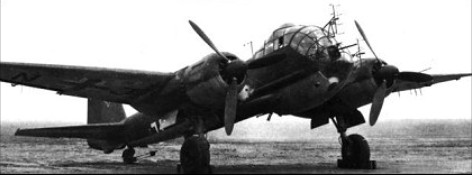
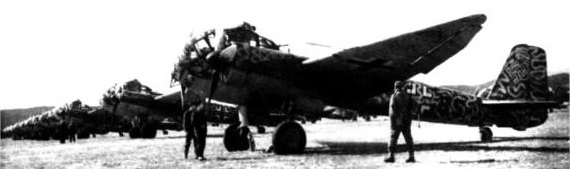
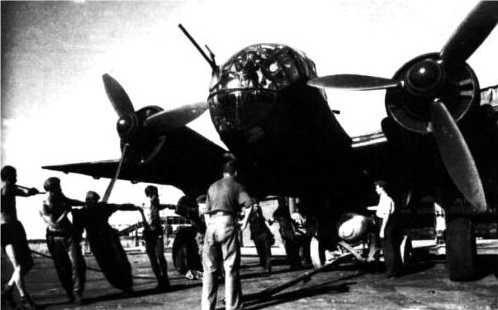
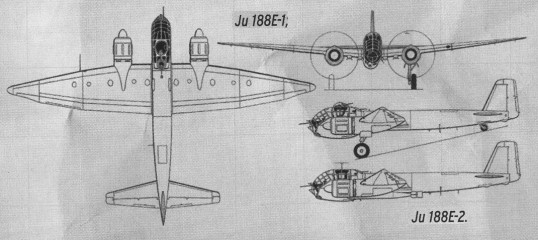
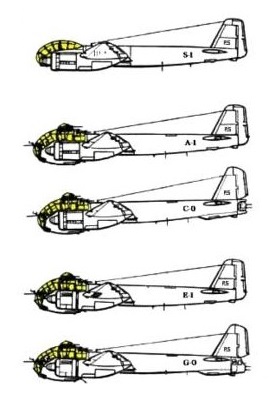
The Ju 188 was a development of the Ju 88. It had a redesigned nose, new wings of greater span with pointed tips, and heavier armament.

Ju.188D-2

The first major versions were the Ju 188E and Ju 188F of 1941, which entered service before the Ju 188A and were bombing and reconnaissance types respectively. Power was provided by two 1,267kW BMW 801D and G engines. Next came the Ju 188A, which had been held up by the slow delivery of the 1,323kW Jumo 213A engines. One version of the A was adapted to carry two torpedoes. The Ju 188D was a reconnaissance version of the A, fitted with the same engines and armament.

Projected versions of the Ju 188 included the C bomber (with a remotely controlled tail turret); G (development of the G); H reconnaissance aircraft (developed from the G); R night fighter; and the T photographic reconnaissance aircraft with a pressure cabin.

Ju.188A-2

The only other version to enter service was the Ju 188S, a three-seat high-altitude bomber powered by Jumo 213E engines and with a pressurised crew cabin. The priority for low-level attack aircraft caused an abrupt end to Ju 188S production, all remaining airframes being converted into unpressurised aircraft mounting a 50mm BK 5 cannon. It is believed that around one thousand and seventy six of the type were delivered.

Some of the captured aircraft at the end of the war were used by Frances’s Aeronavale.

Ju.188 A-1
Wingspan: 72 ft 2 in
Length: 49 ft 0.5 in
Height: 14 ft 6.5 in
Wing area: 602.8 sq.ft
Loaded weight: 33,730 lb
Max speed: 325 mph at 20,500 ft
Cruise speed: 232 mph
Range: 1000-1550 mi

Ju.188 A-2
Wingspan: 72 ft 2 in
Length: 49 ft 0.5 in
Height: 14 ft 6.5 in
Wing area: 602.8 sq.ft
Loaded weight: 33,730 lb
Cruise speed: 295 mph
Landing speed: 109 mph
Time to 19,666 ft: 17 min
Service ceiling: 31,160 ft
Range: 1500 mi

Ju.188 B
Wingspan: 65 ft 10.5 in
Length: 49 ft 0.5 in
Height: 14 ft 6.5 in
Wing area: 602.8 sq.ft
Loaded weight: 31,970-31,989 lb

Ju.188 D
Wingspan: 72 ft 2 in
Length: 49 ft 0.5 in
Height: 14 ft 6.5 in
Wing area: 602.8 sq.ft
Empty weight: 21,825 lb
Loaded weight: 31,970-31,989 lb
Max speed: 350 mph at 27,000 ft
Cruise speed: 232 mph
Service ceiling: 36,090 ft

Ju.188 D-1
Loaded weight: 31,510 lb

Ju.188 D-2
Wingspan: 72 ft 2 in
Length: 49 ft 0.5 in
Height: 14 ft 6.5 in
Loaded weight: 31,510 lb
Wing area: 602.8 sq.ft
Max speed: 336 mph
Cruise speed: 232 mph
Service ceiling: 32,800 ft
Range w/drop tanks: 2200 mi

Ju.188 E
Wingspan: 72 ft 2 in
Length: 49 ft 0.5 in
Height: 14 ft 6.5 in
Wing area: 602.8 sq.ft
Max speed: 314 mph at 19,685 ft
Cruise speed: 232 mph
Loaded weight: 31,970-31,989 lb

Ju 188 E-1
Engine: 2 x 1194kW/1700 hp BMW 801D-2
Wingspan: 22.00 m / 72 ft 2 in
Length: 15.06 m / 49 ft 0.5 in
Height: 4.44 m / 14 ft 7 in
Wing area: 602 sq. ft / 55.92 sq.m
Empty weight: 9859 kg / 21,737 lb
Max take-off weight: 14570 kg / 32122 lb
Max speed: 500 km/h / 311 mph at 20,000 ft / 6096m
Cruise speed: 248 mph
Landing speed: 99 mph
Service ceiling: 9300 m / 30500 ft
Time to 19,666 ft: 17 min 35 sec
Range: 1947 km / 1210 miles
Armament: 1 x 20mm MG151 cannon, 2 x 13mm + 1 x 7.92mm mg, 3000kg / 6614 lb bombs
Crew: 4

Ju.188R
Experimental night fighter. Three prototypes built.
The first two were armed with four fixed forward firing 20m MG 151 cannon and eg radar.
The third was armed with two fixed forward firing 30mm MK 103 cannon.
Production was abandoned.

Ju.188 S
An unarmed fast high altitude intruder / bomber tpe, fitted with a pressurised cabin for the crew of three.
Began being delivered into service during the Summer of 1944.
Engnes: 2 x 175 hp Junkers Jumo 213E-1 engins with nitrous oxide fuel injection.
Wingspan: 72 ft 2 in
Length: 49 ft 0.5 in
Height: 14 ft 6.5 in
Wing area: 602.8 sq.ft
Loaded weight: 31,970-31,989 lb
Max speed: 428 mph
Cruise speed: 232 mph
Service ceiling: 38,400 ft
Bombload: 1763 lb internally

Ju.188S-1
An adapted grond attack version armed with a single ventrally mounted 50mm BK.5 cannon
Pressurisation equipment and engine boost system removed.

Ju.188S-1/U
Intended to be used as a close support type with additional armour protection for the crew of two.
Armed with 50mm BK.5 cannon.
Pressurisation equipment and engine boost system removed.

Ju.188 T
Unarmed photographic reconnaissance type.
Powered as the S series.
Wingspan: 72 ft 2 in
Length: 49 ft 0.5 in
Height: 14 ft 6.5 in
Wing area: 602.8 sq.ft
Loaded weight: 31,970-31,989 lb
Max speed: 435 mph
Cruise speed: 232 mph
Abandoned

Junkers Ju.160

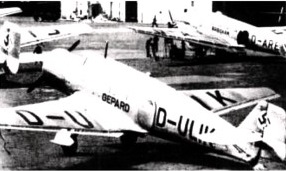
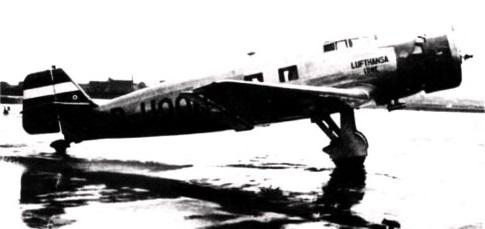
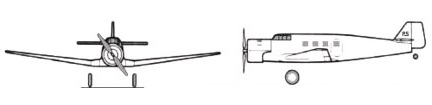
Only two of the 1932 Ju 60s were built, but in 1934 an improved version, the Ju 160, made its appearance. The single engined, high speed transport, featured a new wing configuateion, fully retractable undercarriage and was fitted with three cabin side windows.

V-1
C/no 4202
‘Luchs’ (Lynx) D-UNOR
First flew 30 January 1934

V-2
Military version prototype

V-3
Wider chord wings, passenger door changes & other minor modifications

Ju.160A
Modified rudder and faired tailwheel
Eleven served with Lufthansa

Ju.160D
Improved version
Ten served with Luftwaffe

Forty-eight Ju 160s were built, entering service with Lufthansa during 1935-36.

As well as operating on domestic routes, the Ju 160s also flew on the Breslau-Prague-Munich route. Most were commandeered by the Luftwaffe on the outbreak of World War II and were widely used for communications and training.

C/no 4206 ‘Panther’ D-UMEX
C/no 4207’Wolf’ D-UPOZ
C/no 4208 ‘Lucha’ (used again) D-UFIR
C/no 4219 ‘Jaguar’ D-UFAL
‘Gepard’ D-ULIK

Engine: 1 x 600hp BMW Hornet
Prop: 2 blade metal
Wingspan: 14.32 m / 46 ft 11 in
Length: 38 ft 10 in
Height: 3.92 m / 12 ft 10 in
Wing area: 366 sq.ft
Empty weight: 4996 lb
Loaded weight: 6836 lb
Max. speed: 177 mph
Cruise speed: 150 mph
Landing speed: 59 mph
Service Ceiling: 5200 m / 17050 ft
Range: 620-750 mi
Endurance: 3 hrs 12 mins
Crew: 2 in tandem
Passengers: 6

Engine: 1 x 600hp BMW 132E
Wingspan: 14.32 m / 46 ft 11 in
Length: 12.00 m / 39 ft 4 in
Wing area: 377 sq.ft
Empty weight: 5556 lb
Loaded weight: 7820 lb
Max. speed: 340 km/h / 211 mph
Cruise speed: 196 mph
Landing speed: 62 mph
Service Ceiling: 5200 m / 17050 ft
Range: 620-750 mi
Endurance: 3 hrs 12 mins