Kawanishi N1K1-J / N1K2 Shiden-Kai

N1K1-J

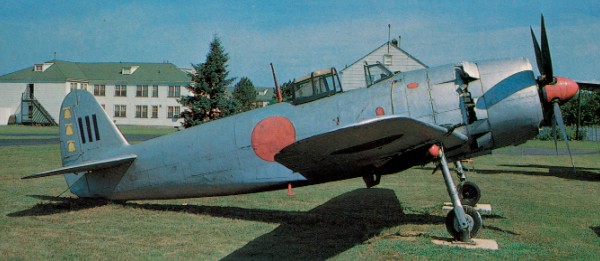
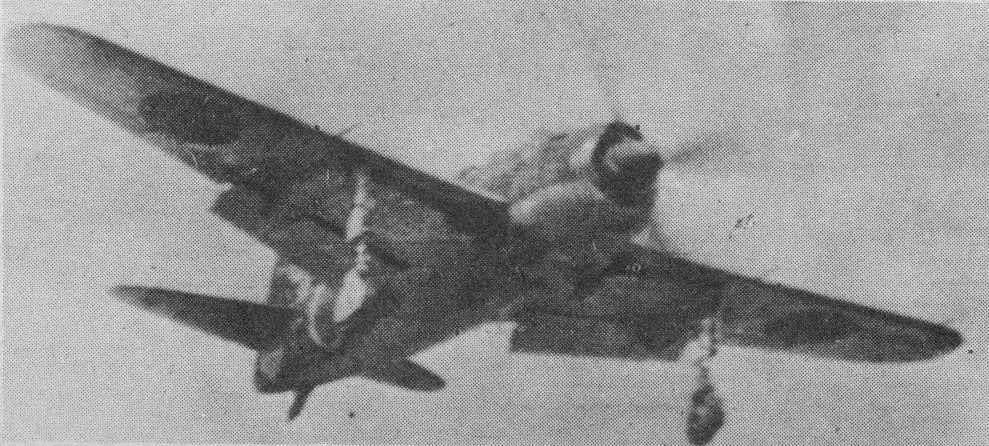
In 1941 Kawanishi was still designing the float-equipped N1K1, and Kawanishi undertook a wheel-landing gear version, designated the N1K1-J Shiden (Violet Lightning). The prototype of the new fighter was flown on 27 December 1942 powered by the new 18-cylinder Nakajima Homare radial.

Kawanishi N1K1-J Article

Production got under way in 1943 of the N1K1-J with Homare 21 radial and an armament of two 7.7-mm nose guns and four 20-mm wing cannon (two of which were carried in underwing fairings). Despite being plagued by constant engine troubles and an inherently weak landing gear, the Shiden was an excellent aircraft in combat, proving an equal match for the Grumman F6F Hellcat. Given the reporting name ‘George’ by the Allies, three other main production versions were produced: the N1K1-Ja with nose guns deleted and all cannon mounted inside the wings; the N1K1-Jb with underwmg racks for two 250-kg bombs; and the N1K1-Jc with racks for four 250-kg bombs.

Kawanishi and Himeji combined to produce 1007 machines of this model, with one of three standard armaments: two 7.7, fuselage guns and four 20mm cannon (two in, two under, the wings) in the N1K1-J; the four cannon only in the –Ja; and four cannon within the wings of the –Jb. Later modifications included a ventral bomb attachment, and a few aircraft were experimentally equipped with a booster rocket.
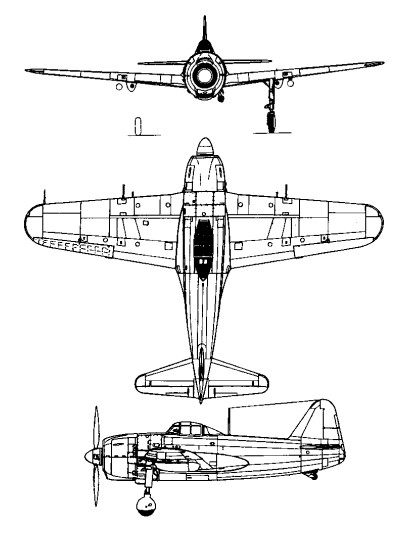
Meanwhile the parent company had recast and simplified the original design, resulting in the N1K2-J Shiden-Kai (George 21) which possessed an extremely rapid climb rate and first class manoeuvrability. It employed only two-thirds as many constructional parts as the N1K1-J, reducing the all-up weight by nearly 500 lb, and differed considerably in appearance from its predecessor with improved landing gear and cleaner engine cowling. The latter’s mid-wing gave way to a low-mounted one, the fuselage was streamlined and extended, and the fin and rudder re-shaped.

Orders for a small prototype batch quickly materialised and the first flew on 31 December 1943.
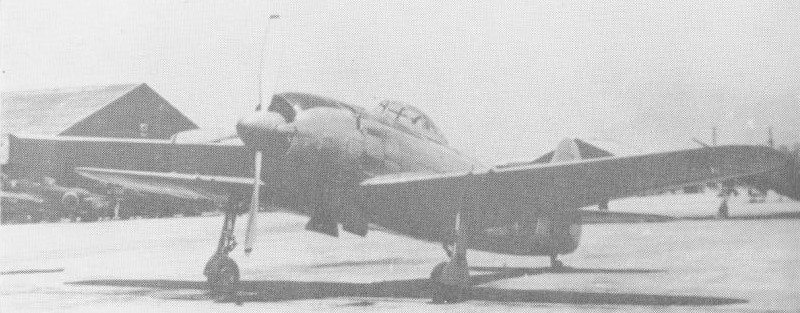
N1K2-J

Despite the sharing of production among eight different assembly plants, B-29 raids on Japanese industry restricted the number of Shiden-Kais completed to 428. An instance occurred when a single Japanese pilot, Warrant Officer Konsuke Muto, fought off 12 Hellcats, shooting down four.

A total of 1,435 N1K Shiden landplane fighters were produced. A few N1K2-K two-seat trainers were completed.

N1K2-J
Engine: 1 x Nakajima NK9H “Homare 21”, 1990 hp / 1365kW
Wingspan: 12.0 m / 39 ft 4 in
Length: 9.35 m / 30 ft 8 in
Height: 3.96 m / 13 ft 0 in
Wing area: 23.5 sq.m / 252.95 sq ft
Max take-off weight: 4000-4860 kg / 8819 – 10715 lb
Empty weight: 2657 kg / 5858 lb
Max. Speed: 585 km/h / 364 mph at 1,370 ft
Cruise speed: 365 km/h / 227 mph
Service ceiling: 10760 m / 35300 ft
Range: 1700 km / 1056 miles
Crew: 1
Armament: 4 x 20mm cannon
Bombload: 2 x 550 lb
N1K2-J

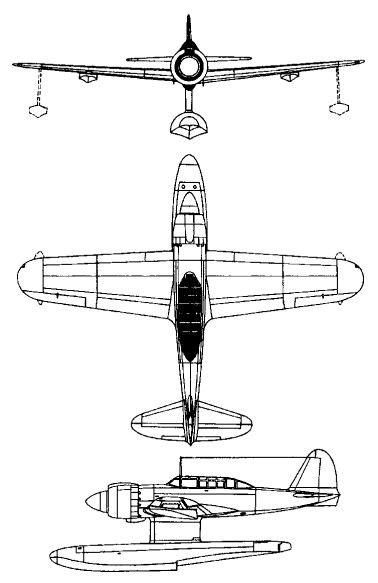
Kawanishi N1K1 Kyofu

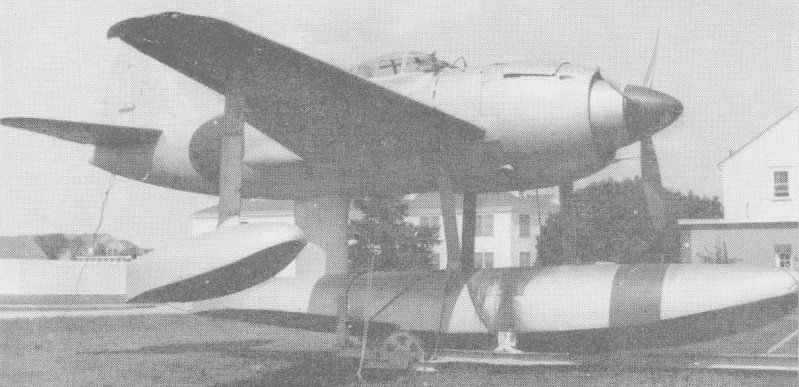
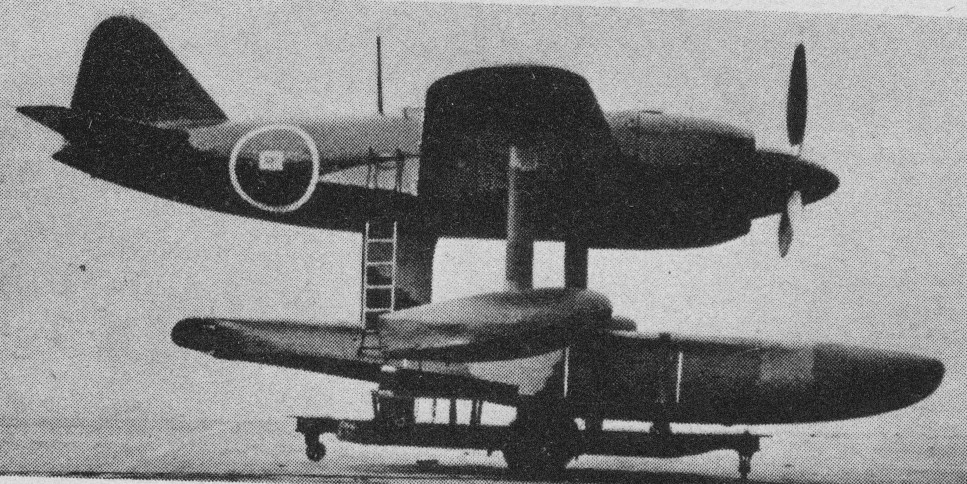
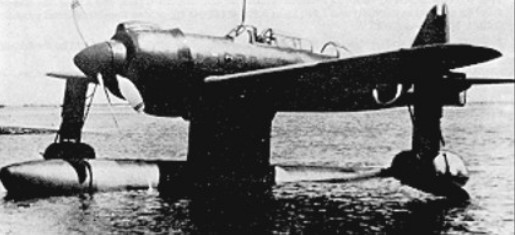
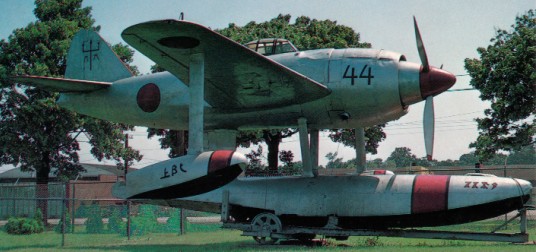
Anticipation of a need for single-seat float-equipped interceptor seaplanes prompted the Japanese navy to initiate a development programme for such aircraft in 1940, the Nakajima A6M2-N floatplane adaptation of the famous Mitsubishi A6M2 Zero being intended as a stopgap until a purpose-designed aircraft could be introduced. This was to be the Kawanishi N1K Kyofu (mighty wind), whose design was started in September of that year.

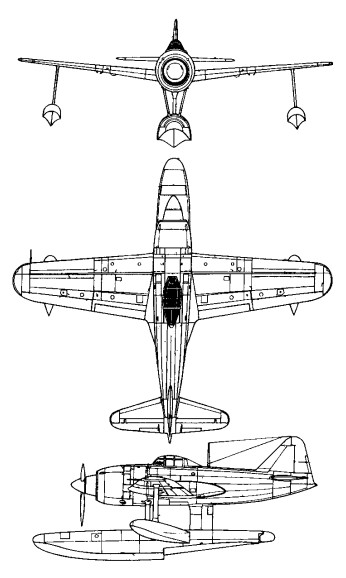
Featuring a central float and twin wing-mounted stabilizing floats, the new prototype retained the same gun armament as the A6M2 but was powered by a 1089kW Kasei 14 radial engine driving two-blade contraprops in an attempt to counter the torque-induced swing on take-off. The wing-mounted floats were originally intended to be retractable but design problems led to these being fixed before the aircraft’s first flight. Persistent trouble with the contraprop gearbox resulted in a change to the Kasei 13 engine driving a single three blade propeller from the second prototype onwards.

First flown on 6 May 1942, the N1K1 went on to trials with the navy, although with tricky take-off characteristics, in the air, with its combat flaps, the Kyofu handled and manoeuvred well. The N1K1 Kyofu reached the Imperial Navy in August 1942. At a time (the end of 1942), the N1K1 was ordered into production, but the delivery rate was slow to accelerate and fortunes changed rapidly during 1943. By December 1942, with only 15 aircraft being completed each month and Japanese offensive initiative dwindling, it was decided to end production of the aircraft, and in March 1944 the last of 89 Kyofus was delivered to the service.

Codenamed ‘Rex’ by the Allies, the N1K1 was first deployed for the defence of Balikpapan in Borneo. In the final weeks of the war N1K1s flew alongside the ‘Rufes’ of the Otsu Kokutai from Lake Biwa in defence of central Honshu against the increasing American raids on Japan.

In 1941 Kawanishi was still engaged in design of the N1K1, and while their design was still in progress Kawanishi undertook a wheel-landing gear version, designated the N1K1-J Shiden (Violet Lightning).

N1K1
Engine: 1 x Mitsubishi MK4E “Kasei-15”, 1150kW / 1460 hp
Wingspan: 12 m / 39 ft 4 in
Length: 10.59 m / 34 ft 9 in
Height: 4.75 m / 15 ft 7 in
Wing area: 23.5 sq.m / 252.95 sq ft
Max take-off weight: 3500-3712 kg / 7716 – 8184 lb
Empty weight: 2752 kg / 6067 lb
Max. speed: 480 km/h / 298 mph at 18,680 ft
Cruise speed: 365 km/h / 227 mph
Ceiling: 10560 m / 34650 ft
Range w/max.fuel: 1650 km / 1025 miles
Crew: 1
Armament: 2 x 20mm cannons, 2 x 7.7mm machine-guns

Kawanishi E15K Shiun / Norm

The first prototype flew on December 5, 1941.
The central float was jettisonable (in order to increase speed in case of being pursued by fighters), and the wing floats were retractable. In an event of jettisoning the main float, wing floats were to stay retracted during landing on water, and would then keep the plane afloat.
15 were built.

E15K1
Engine: 1 x Mitsubishi MK4S “Kasei-24”, 1390kW
Max take-off weight: 4100-4900 kg / 9039 – 10803 lb
Empty weight: 3165 kg / 6978 lb
Wingspan: 14 m / 45 ft 11 in
Length: 11.59 m / 38 ft 0 in
Height: 4.95 m / 16 ft 3 in
Wing area: 30 sq.m / 322.92 sq ft
Max. Speed: 460 km/h / 286 mph
Cruise speed: 290 km/h / 180 mph
Ceiling: 9830 m / 32250 ft
Range: 3320 km / 2063 miles
Crew: 2

Kawanishi H8K Emily

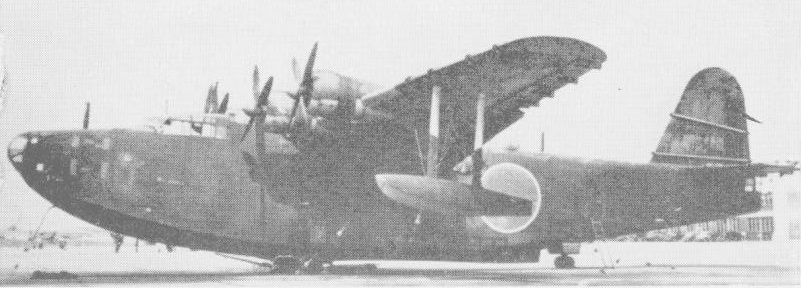
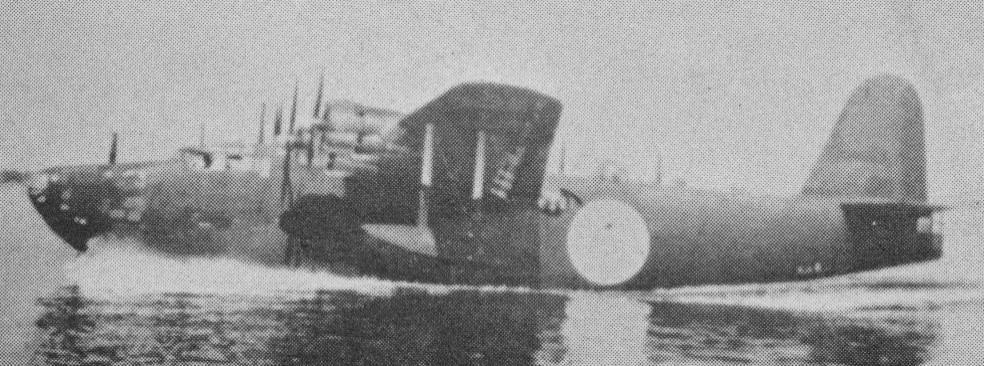
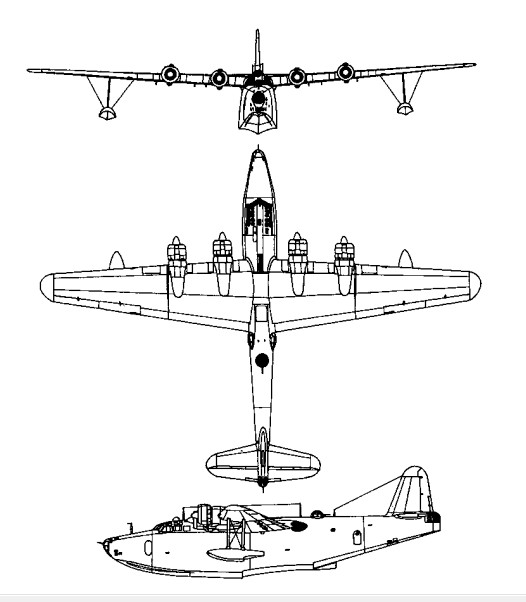
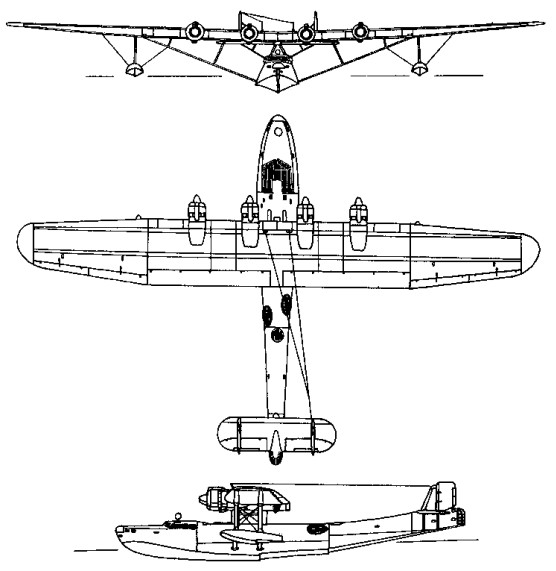
Although only 167 examples were produced, the Kawanishi H8K was the most advanced flying-boat to achieve production status during World War II. Designed to meet a requirement issued in 1938 for a four-engine maritime reconnaissance flying-boat superior in all respects to the British Short Sunderland, the H8K1 prototype was first flown in January 1941, but initially possessed very poor water handling qualities. Extensive modifications were made and after successfully completing its service trials the aircraft was ordered into production as the Navy Type 2 Flying Boat Model 11, powered by four 1141kW Mitsubishsi Kasei 11 or 12 radials. Armament of these early aircraft was two 20mm cannon and four 7.7mm machine guns. With armour protection, selfsealing fuel tanks and a maximum speed of 433km/h, the new flying-boat was a considerable advance over the H6K.

H8K1

It carried out its first operational mission in March 1942 when two aircraft of the Yokohama Kokutai set out from Wotje Atoll in the Marshalls to bomb Oahu Island (Pearl Harbor), putting down at French Frigate Shoals to refuel from a submarine. Arriving over the American base, the Japanese crews found heavy cloud and the raid was ineffective. As a longrange maritime reconnaissance aircraft, the H8K1 (codenamed ‘Emily’ by the Allies) with its 7,200km range, heavy armament and good performance proved a highly competent aircraft. 112 improved H8K2, with 1380kW Kasei 22 radials and armament increased to five 20mm cannon and four 7.7mm machine-guns, were built between 1943 and 1945. It was also equipped with ASV radar, being responsible for the sinking of at least three American submarines in the area north of the Philippines during the last 18 months of the war.

Additional to the maritime reconnaissance version, 36 H8K2-L boats were built in the last two years of the war, these being equipped as naval staff and troop transports capable of accommodating either 29 staff passengers or 64 fully armed troops. The progressively deteriorating war situation for Japan led to a run-down in production of flying boats during 1945 in favour of fighters for home defence, and later versions of the H8K were accordingly abandoned. Nevertheless this excellent aircraft saw considerable service, being flown by the 14th, 801st, 851st, 1001st, 1021st, Takuma, Toko, Yokohama and Yokosuka Chinjufu Kokutais.

H8K2
Engine: 4 x Mitsubishi MK4Q “Kasei-22”, 1380kW / 1850 hp
Max take-off weight: 24500-32500 kg / 54014 – 71651 lb
Empty weight: 18380 kg / 40521 lb
Wingspan: 38 m / 124 ft 8 in
Length: 28.13 m / 92 ft 3 in
Height: 9.15 m / 30 ft 0 in
Wing area: 160 sq.m / 1722.22 sq ft
Max. Speed: 460 km/h / 286 mph at 15,485 ft
Cruise speed: 290 km/h / 180 mph
Ceiling: 8850 m / 29050 ft
Range w/max.fuel: 7050 km / 4381 miles
Crew: 9
Armament: 3 x 20mm cannons, 4 x 7.7mm machine-guns, 2 x 800-kg torpedos or 2000kg of bomb

Kawanishi H6K Mavis

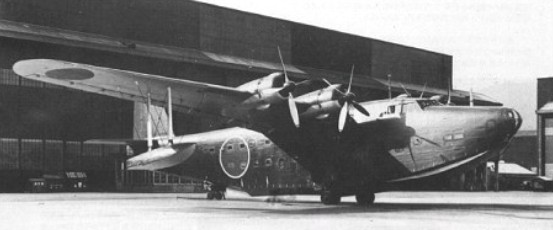
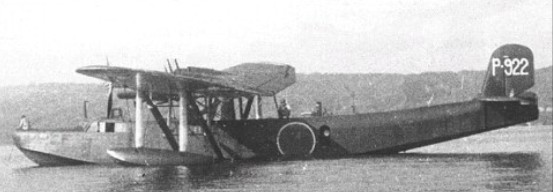
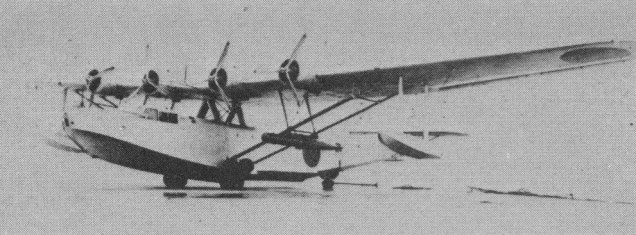
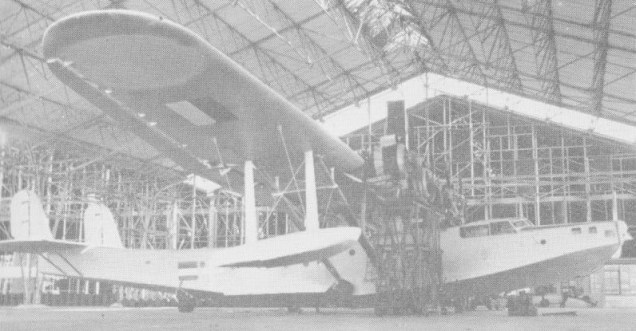
Owing much to American and French flying-boat design of the mid-1930s, the large four engine Kawanishi Type 97 parasol monoplane flying boat. When first flown in July 1936, The Type 97 was Japan’s only in-service long-range reconnaissance flying-boat when that nation went to war in December 1941. The H6K1 initial military version entered limited service with the Imperial Japanese Navy in 1938, and was followed by 10 H6K2 flying-boats.

The first major production version, the H6K4, was powered by four Mitsubishsi Kinsei 43 radiais and armed with four 7.7mm machine-guns in bow and midships positions and a 20mm cannon in a tail turret, and was capable of carrying two 800kg bombs or torpedoes. A total of 66 were in service at the time of Pearl Harbor, later aircraft powered by Kinsei 46 engines. These boats were widely employed, although the initial heavy defeats inflicted on the Allies in the Pacific rendered maritime reconnaissance duties subordinate to the need for air transportation of Japanese troops during the swift conquests in the East Indies and elsewhere. A number of aircraft, designated H6K4-L, were converted for transport duties and were each able to accommodate about 18 fully-armed troops. Lacking armour and self-sealing fuel tanks, they were extremely vulnerable to fighter attacks and, after a number had been shot down, a new version entered production as the H6K5 in August 1942. By that time the maritime reconnaissance version had been given the reporting codename ‘Mavis’ by the Allies, the transport derivative being named ‘Tillie’.

Powered by either Kinsei 51 or 53 radials, the H6K5 was intended to eliminate the shortcomings of the earlier versions, but although the open bow gun position was replaced by a single-gun turret immediately aft of the pilot’s cockpit, the overall armament was not increased. Only 36 H6K5s were completed by 1943, when production gave place to the greatly superior H8K.

H6K4

Kawanishi H6K Article

H6Ks served with the 8th, 14th, 801st, Toko and Yokohama Kokutais, and some of the H6K5s were employed as naval staff transports throughout the Pacific in 1943. Eighteen aircraft served on the quasicommercial courier services in South East Asia, a number of them being destroyed by Allied aircraft both in the air and at their moorings.

H6K5
Engine: 4 x Mitsubishi “Kinsei-51”, 975kW
Take-off weight: 17500-23000 kg / 38581 – 50707 lb
Empty weight: 12380 kg / 27293 lb
Wingspan: 40 m / 131 ft 3 in
Length: 25.63 m / 84 ft 1 in
Height: 6.27 m / 20 ft 7 in
Wing area: 170 sq.m / 1829.86 sq ft
Max. Speed: 380 km/h / 236 mph
Cruise speed: 255 km/h / 158 mph
Ceiling: 9560 m / 31350 ft
Range: 4870 km / 3026 miles
Range w/max.fuel: 6670 km / 4145 miles
Crew: 10
Armament: 1 x 20mm cannon, 4 x 7.7mm machine-guns, 2 x 800-kg torpedos or 1000kg of bombs

H6K5
Engines: 4 x Mitsubishi Kinsei 46, 1070 hp
Span: 131 ft 3 in
Max speed: 211 mph at 13,120 ft
Range: 3107 miles
Max bombload: 3527 lb

Kawanishi E7K Alf / Navy Type 94

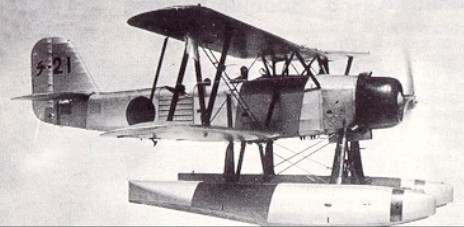
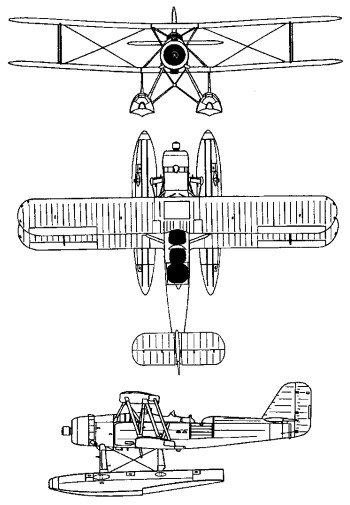
In 1932 the Imperial Japanese Navy sought a replacement for the Navy Type 90-3 Reconnaissance Seaplane which had been built as the Kawanishi E5K. The resulting three-seat Kawanishi E7K1 was an equal-span biplane, powered by a 462kW HiroType91 engine. First flown on 6 February 1933, the prototype was handed over to the Japanese navy three months later for service trials, being flown in competition against the Aichi AB-6 developed to meet the same requirement. The E7K1 was ordered into production as the Navy Type 94 Reconnaissance Seaplane in May 1934, entering service in early 1935. However, its Hiro engine was unreliable, and although late production E7K1s had a more powerful version of the Hiro 91, this offered no improvement.
During 1938 Kawanishi built an E7K2 prototype which, generally similar to the E7K1, replaced the Hiro engine with a Mitsubishi Zuisei 11 radial. Flown for the first time in August 1938, the E7K2 was ordered into production three months later under the designation Navy Type 94 Reconnaissance Seaplane Model 2, the original version then becoming the Navy Type 94 Reconnaissance Seaplane Model 1. Production of the E7K1 totalled 183 (57 built by Nippon), and of the E7K2 about 350 (some 60 built by Nippon).
As a type, the E7Ks saw extensive use from 1935 until the beginning of the Pacific war, when the E7K1s were relegated to second-line duties. The E7K2s continued in first-line service until 1943, and both versions were used in kamikaze operations in the closing stages of the war. When, in the second half of 1942, Allied code names were allocated to Japanese aircraft, the E7K2 became known as ‘Alf’.

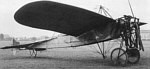
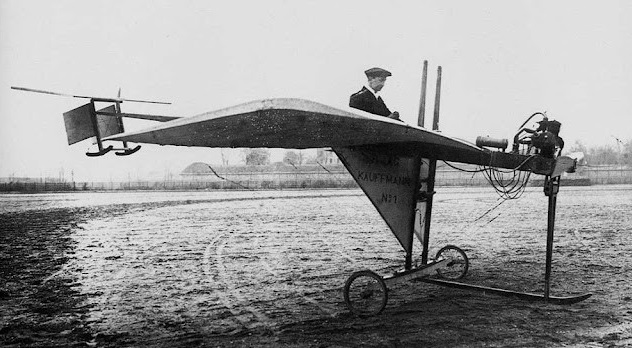
Kauffmann No.4

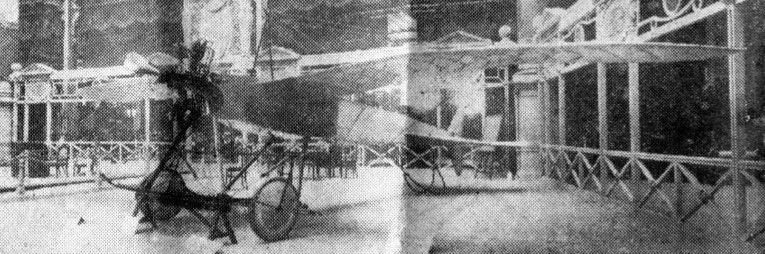
The Kauffmann No. 4 with its pointed wings and a 6-cylinder radial Anzani engine was displayed at the 1911-1912 “Salon”. It was designed and built by Paul Kauffmann (1893-1959), at the time only 18 years old. He had built his first airplane two years earlier, at the same time starting “Le Cerf-Volant”, a kite-flying magazine. He would continue in aviation, filing several patents, until wounded in action in 1915.

Span: 38’1″
Length: 24’11”
Empty weight: 616 lb