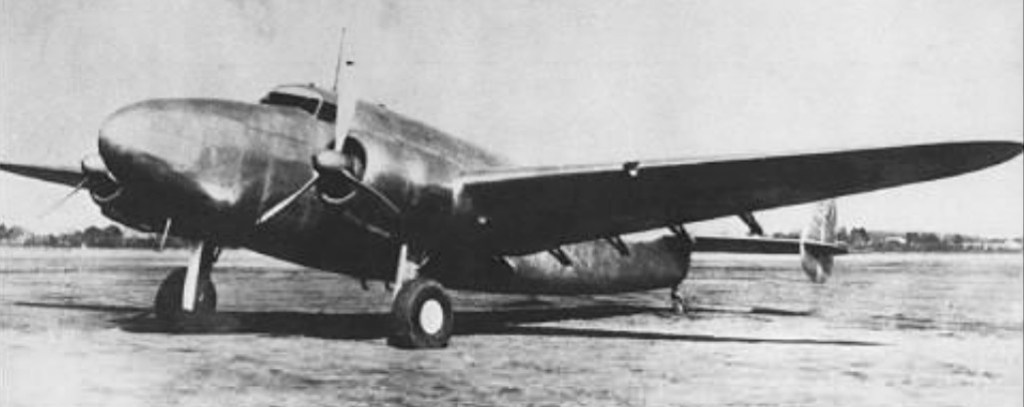
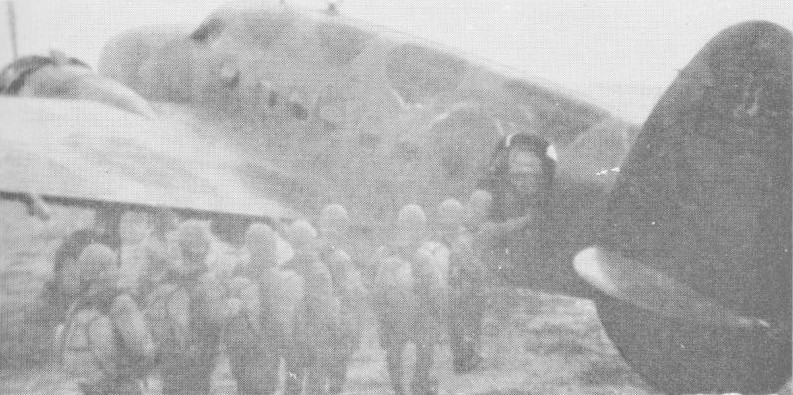
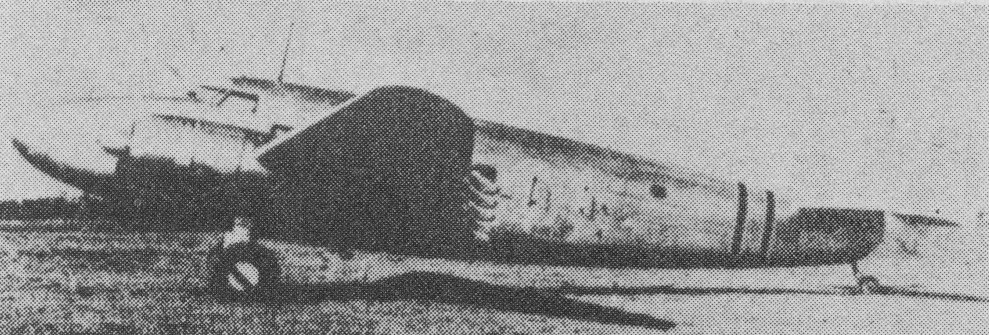
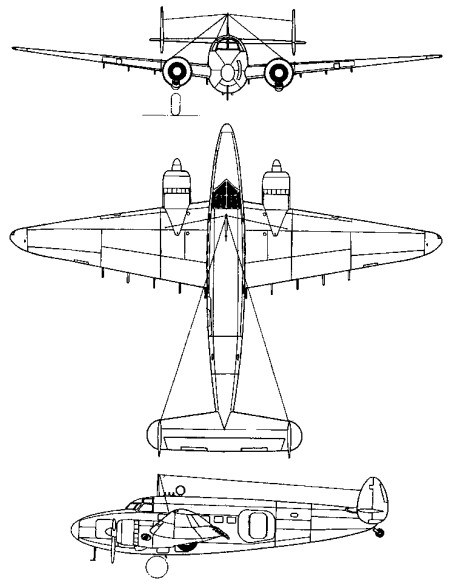
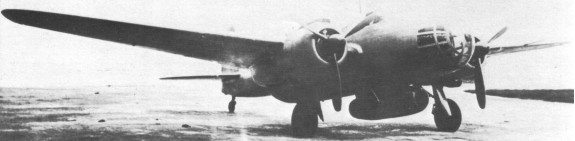
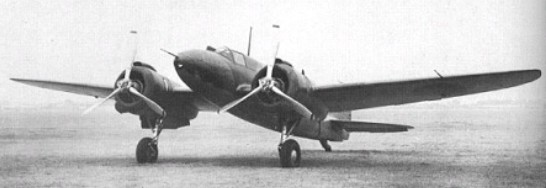
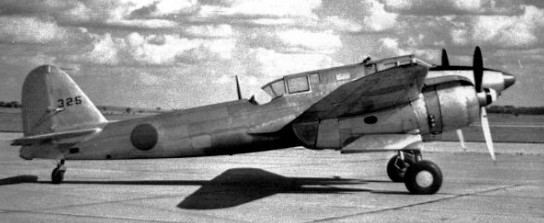
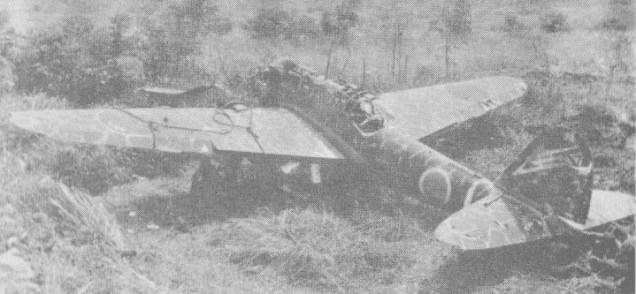
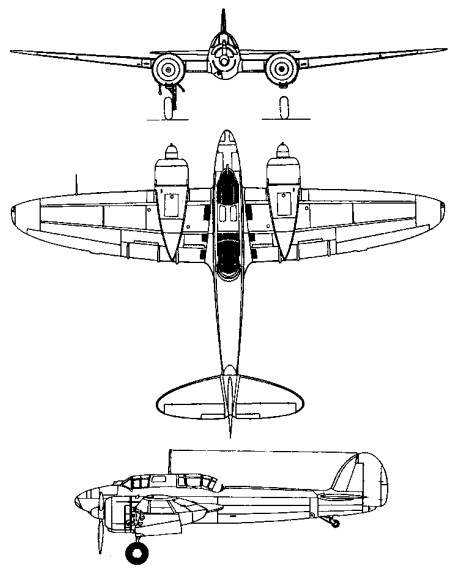
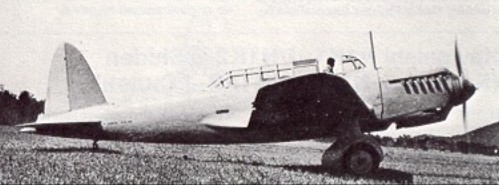
Developed from the Lockheed 14 transport built by the Kawasaki Company under licence, the Ki-56 had an enlarged fuselage with a large freight loading door in the port rear-fuselage side. Powered by two 671kW Ha-26-II radial engines, two prototypes were followed by 119 series-built machines designated Army Type 1 Freight Transport (assembled between 1941 and 1943).
56 were manufactured for the army by Kawasaki before production was handed over to Tachikawa who built a further 688.
Widely used in the Pacific war, the Ki-56 was coded Thalia by the Allies.
Engines: 2 x Nakajima Ha-25, 740kW / 990 hp Take-off weight: 8025 kg / 17692 lb Empty weight: 4895 kg / 10792 lb Wingspan: 19.96 m / 64 ft 6 in Length: 14.9 m / 48 ft 11 in Height: 3.6 m / 11 ft 10 in Wing area: 51.2 sq.m / 551.11 sq ft Max. speed: 400 km/h / 249 mph at 11,155 ft Ceiling: 8000 m / 26250 ft
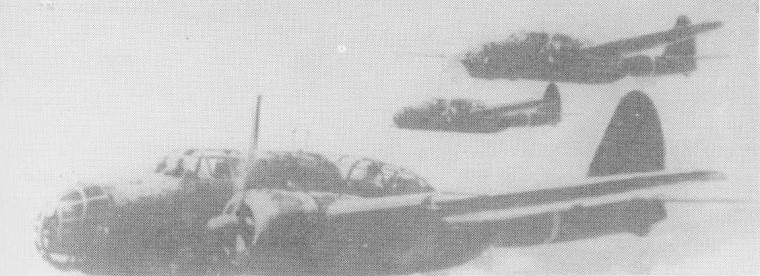
In 1937, at the beginning of the Sino Japanese war, Chinese air force units were equipped with twin engined Soviet Tupolev SB 2 bombers. The Japanese army air staff, impressed by the high performance of the Soviet aircraft, instructed the Kawasaki company in December 1937 to produce a twin engined bomber. It was to be powered by two Nakajima Ha 25 radial engines and to be able to fly at a maximum 480 km/h (298 mph) at 3000 m (9850 ft), and cruise at 350 km/h (217 mph) at the same altitude. It had also to reach 5000 m (16 400 ft) in ten minutes and carry a 400 kg (880 lb) bombload. At that time army strategy was based on a war with the USSR, so it was further stipulated that the aircraft must be capable of operating under Siberian winter conditions.
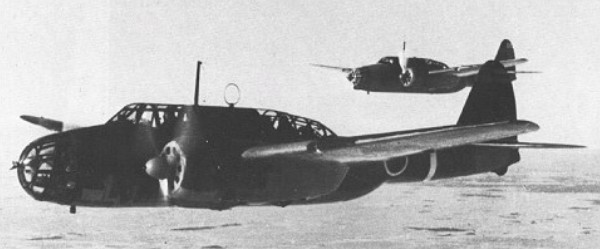
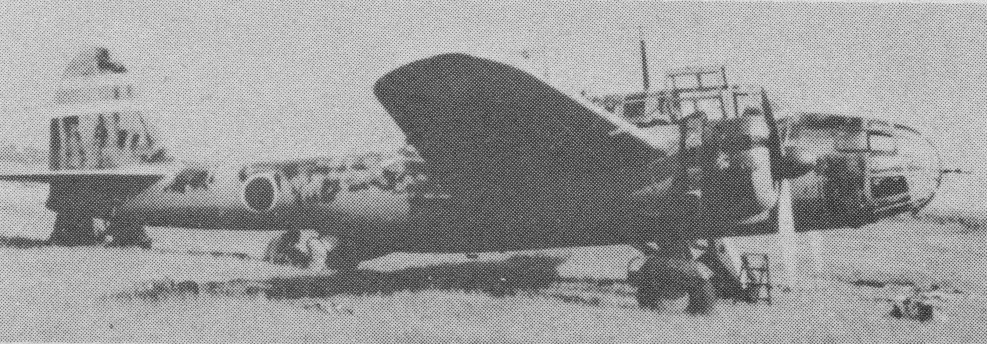
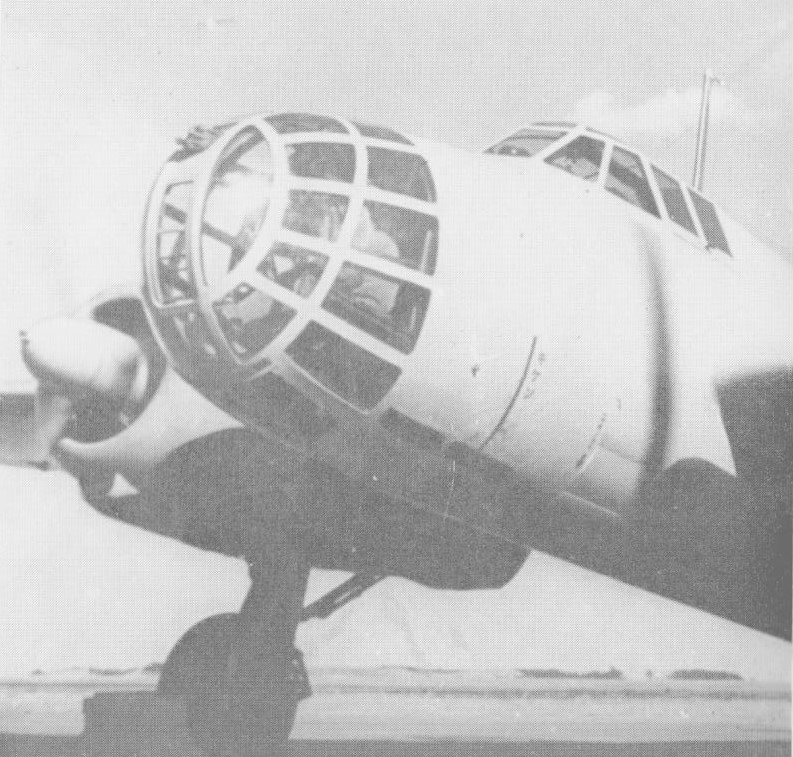
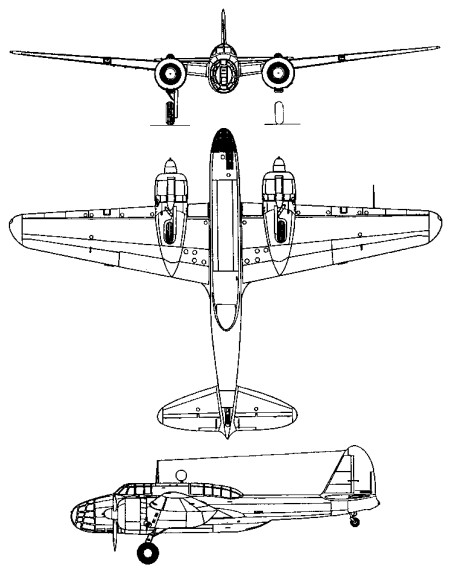
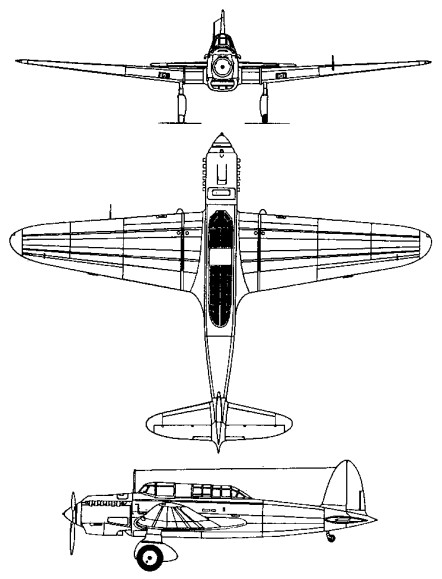
Takeo Doi began design work in January 1938. The Ki 48 was a mid wing all metal cantilever monoplane, the wing position being adopted to provide an internal bomb bay. The fuselage was cut down aft of the dorsal gunner’s cockpit and the ventral gunner’s stepped position. The bomb aimer/nose gunner’s position was fully glazed. There was a single curved fin and rudder, and the main undercarriage legs retracted backwards to lie fully enclosed in the engine nacelles. In the type’s prototype form, two 708kW Nakajima Ha-25 radial engines mounted in nacelles at the wing leading edges.
Takeo Doi’s design team was forced to divide its time between the extremely complex Ki 45 Kai fighter and the Ki 48. Consequently the first Ki 48 did not fly until July 1939. Three more prototypes and five evaluation machines were soon completed. During development, tail flutter problems were overcome and the rear fuselage strengthened. The new type met a favourable reception and series production started late in 1939, under the designation Army Type 99 Twin engined Light Bomber. All the criteria laid down by the army had been met except that the bomb bay only accommodated 300 kg (660 lb) of bombs.
Ki 48 Ia aircraft first went into action in northern China with the 45th Sentai and did well against indifferent Chinese opposition. They were used at night, as well as for short-range daylight operations. The Ki-48 Ib was only slightly modified, and a total of 557 of both initial versions were built up to June 1942. With the Japanese attack on the United States and the British Empire, Ki 48s were deployed in Burma, Malaya and the Philippines, moving on with the advancing land forces into the Dutch East Indies and New Guinea. After a few months their defects became obvious: there was minimal protection for crew and fuel, and despite the Ki-48’s good speed the better Allied fighters could outstrip it and had little trouble dealing with its defensive armament of single 7.7 mm (0.303 in) Type 89 machine guns flexibly mounted in nose, dorsal and ventral positions. Night raids became the rule.
Three Ki 48 II prototypes were built by February 1942, powered by twin 1150 hp Nakajima Ha 115 radials and outwardly resembling the Ki 48A. They had a slightly lengthened fuselage and had fuel tank protection in addition to armour plating for the crew positions. Production aircraft also featured further fuselage strengthening. Ki 48 IIb was a dive bomber variant with fence type under-wing dive brakes. Late production machines had dorsal fin extensions to improve stability. The maximum bombload was increased to 800 kg (1764 lb). Maximum speed rose by 24 km/h (15 mph).
Ki-48
During the fighting over New Guinea, large numbers of Ki 48s, codenamed Lily by the Allies, were destroyed on the ground. The Ki 48 remained in production until October 1944. The late versions were designated Ki- 48 IIc and had a 12.7 mm (0.5 in) Type 1 machine gun in the dorsal position in place of the previous rifle calibre weapon, in addition to one more nose mounted 7.7 mm Type 89 gun. The Ki 48 II fought against odds in the Philippines and over Okinawa in day and night operations. A specially modified suicide version, Ki 48 II Kai, carried an unchanged bombload, its bombs being triggered on impact by a nose probe. Ki 48s were used for tests of the Igo Ib guided missile and the Ne0 turbojet unit.
The total of all variants built 1977.
The Air to Surface Guided Missile was called I-Go Type1-Otsu or Ki-148. At the Ki-148 test, it struck an Onsen hotel. At last Ki-148 was complete.
Some of the Ki.48-IIb featured a small dorsal extension to the fin.
A number of Ki.48s were modified for experimental duties, one becoming a testbed for a ramjet engine.
Ki 48 I Engines: 2 x Nakajima Ha 25, 950 hp Span: 17.47 m (57 ft 4 in) Length: 12.60 m (41 ft 4 in) Height: 3.80 m / 12 ft 6 in Wing area: 40 sq.m / 430.56 sq ft Empty weight: 4050 kg Gross weight: 5900 kg (13000 lb) Maximum speed: 480 km/h (298 mph) Range: 2400 km Service ceiling: 9500 m Crew: 4 Armament: 4 x 7.7mm mg or 3 x 7.92mm mg Bomb load: 300-400 kg
Ki-48-II Engines: 2 x Nakajima Ha115 (1,130hp) Length: 12.75m Wing Span: 17.47m Height: 4.32m Wing Area: 40.0 sq.m All-Up Weight: 6,750Kg Empty Weight: 4,550Kg Max Speed: 505Km/h Range: 2,400Km Service Ceiling: 10,000m Crew: 4 Armament: 7.92mm Machine Gun X 4 Bomb load: 300 or 500Kg
Ki.48-IIa Engines: 2 x Mitsubishi Ha.115, 1150 hp Span: 57 ft 3.75 in Max speed: 314 mph at 18,372 ft
Ki-48-IIb Engines: 2 x Nakajima Ha-115, 850kW Max take-off weight: 6500-6750 kg / 14330 – 14881 lb Empty weight: 4550 kg / 10031 lb Wingspan: 17.45 m / 57 ft 3 in Length: 12.75 m / 41 ft 10 in Height: 3.80 m / 12 ft 6 in Wing area: 40 sq.m / 430.56 sq ft Max. speed: 505 km/h / 314 mph Ceiling: 10100 m / 33150 ft Range: 2050 km / 1274 miles Range w/max.fuel: 2400 km / 1491 miles Armament: 3 x 7.7mm machine-guns, 400kg of bombs Crew: 4
Developed as a result of an official specification issued in March 1937, this two seat twin engined fighter did not go into service until August 1942. The intervening five years saw strenuous development and testing interspersed with periods of total inactivity caused by the Japanese army’s equivocal attitude to the type of fighter typified by the German Bf 110.
The original requirement was for a fighter capable of 540 km/h (335 mph) at 3500 m (11480 ft), and able to operate at altitudes between 2000 m (6660 ft) and 5000 m (16400 ft). It was to have a range of some 1800 km (1100 miles) and the selected engines were 820 hp Nakajima Ha 20b radials. Engineer Takeo Doi struggled with the difficult concept, and the first prototype was ready to fly in January 1939.
The Ki.45 origins can be traced back to the Ki.38 design produced by Kawasaki at the JAAF’s requed in 1937, althought so many modifications were called for by the Army that the revised design was re-titled Ki-45.
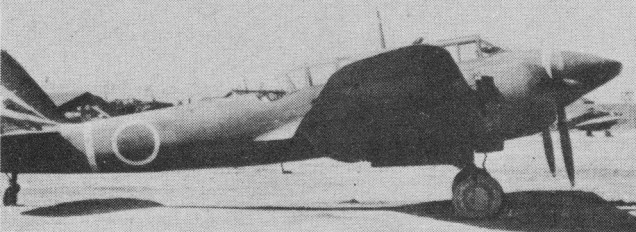
The first Kawasaki Ki-45 Toryu (dragon killer) prototype was a cantilever mid-wing monoplane with retractable tailwheel landing gear. A slender fuselage provided enclosed accommodation for two in tandem. Armament was heavier than originally specified: a forward-firing 20 mm (0.79 in) Ho 3 cannon and two 7.7 mm (0.303 in) Type 89 machine guns were fixed to fire forward, and there was a flexibly mounted rear 7.7 mm Type 89 machine gun. There was also provision to carry two drop tanks or two 250kg bombs on underwing racks. As flight trials continued, the Ki 45 was found to achieve a rather poor performance and the engines continually gave trouble. The third prototype featured major refinements. Drag was considerably reduced, but maximum speed was still only 480 km/h (298 mph). There was some instability and a tendency to nacelle stall. Yet the Ki 45 prototypes were externally attractive, with curved, oval fuselages and elliptical wings and tail surfaces. The main undercarriage legs retracted backwards into the engine nacelles leaving the wheels partially exposed. At first, the undercarriage retraction mechanism was hand operated, but an electrically operated mechanism was installed on the third prototype.
With so many difficulties and no pressing need for the type, the army suspended further flight trials, leaving six further prototypes partly finished. Six months later, in April 1940, work was restarted, and 1000 hp Nakajima Ha 25 14 cylinder double row radials were installed in one of the airframes, which was completed the following July. The five other airframes were similarly modified, and two more machines were built from scratch. A maximum speed of 520 km/h (323 mph) at 3500 m (11500 ft) was attained.
The design team had meanwhile been reviewing the whole project and proposed that the Ki 45 Kai of simplified design was suited for mass production. The army accepted the proposal, and the first of three Ki 45 Kai prototypes flew in May 1941.
Twelve pre-production aircraft followed. With tests successfully completed, Ki-45 KAIa series production as the Army Type 2 Two seat Fighter began early in September 1941, and soon the Ki-45 Kai was given the popular name Toryti (dragon slayer) while the Allies called it Nick. Effective crew and fuel tank protection was incorporated in the design. Power was provided by two 1050 hp Nakajima Ha 25 radials, but late production Model B aircraft had Mitsubishi Ha 120s.
Model A, the first series version, went to the 5th Sentai in Japan in August 1942. The next Sentais to equip with the type were the 16th in China and the 21st in Burma. It was effective in attacks on enemy shipping and troop concentrations, a specialized attack version being built as Ki-45 KAIb Model B. Original armament had comprised two 12.7 mm (0.5¬in) Type 1 machine guns in the nose, one forward firing 20 mm (0.79 in) Ho 5 cannon in a ventral tunnel in the starboard nose section, and a single 7.92 mm (0.312 in) Type 98 machine gun on a flexible mounting operated by the observer. In the Model B a 37 mm (1.46 in) Type 98 cannon was installed in the ventral tunnel and the nose guns were replaced by a single 20 mm Ho 3 cannon.
A number of alternative weapon installations were tried experimentally, including the use of a 75mm cannon for attacks on shipping.
Production aircraft had straight contoured fuselage and wings. The range of Model A was 2260 km, (1400 miles) and it could climb to 5000 m (16 400 ft) in just over six minutes. Models A and B flew operationally in many theatres of war, not least in the New Guinea region, where they inflicted heavy losses on US motor torpedo boats.
The Ki-45 KAIa was, for its day, heavily armed and proved effective against the USAF’s Consoldiated B-24 Liberators and, when these bombers were used more extensively for night operations, the Ki-45 was adapted to attack them. Thus the night-fighting capability of the type was discovered, leading to development of the Ki-45 KAIc night-fighter.
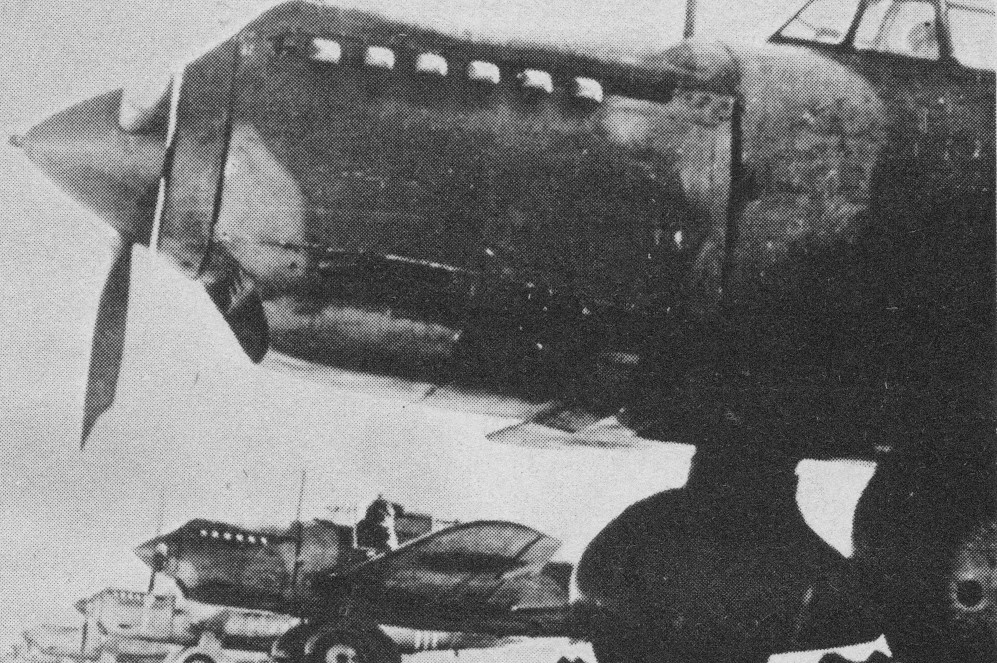
It was not until 1944 that the night-fighter version, the Ki-45 KAIc, became operational as the only army night-fighter of the war. Retaining the two 805kW Mitsubishi Ha-102 radials of the Ki-45 KAIb heavy day fighter, the Ki-45 KAIc was armed with a single forward-firing semi-automatic 37mm Ho 203 Type 98 cannon in a fairing under the fuselage, two oblique/upward-firing 20mm Ho-5 cannon in the centre fuselage, and a single hand-held machine-gun in the rear cockpit. It had been intended to fit airborne radar in the nose, and therefore no nose guns were included. Production difficulties seriously delayed the radar equipment and it did not enter service, although a single aircraft flew with centimetric radar shortly before the end of the war. Production of the Ki-45 KAIc got underway at Kawasaki’s Akashi plant in March 1944, the first aircraft being completed the following month. By then Kawasaki had transferred Ki 45 Kai manufacture from its Gifu plant to the works at Akashi.
On 15 June American Boeing B-29s of XX Bomber Command launched their first raid on the Japanese homeland, and were intercepted by eight Toryus whose pilots shot down eight of the big bombers. At that time about 40 Ki-45 KAIc fighters had been completed, and the aircraft went on to serve with the 4th Sentai at Usuki in the Oita prefecture, the 5th Sentai at Usuki and Komachi in the Aichi prefecture, the 53rd Sentai at Matsudo in the Chiba prefecture, and the 70th Sentai at Kashiwa. Toryus shared the night defence of Japan with the navy’s J1N1-S and Yokosuka P1Y1-S, and were probably the most successful in action against the massive American raids in the last six months of the war; the 4th Sentai alone was credited with 150 kills, of which 26 were gained by one pilot, Captain Isamu Kashiide, all despite the lack of any AI radar. Away from the homeland Ki-45 KAIc nightfighters also served with the 45th Sentai in the Philippines and New Guinea late in 1944, and with the 71st Dokuritsu Hiko Chutai at Singapore in August 1945. Production of the Ki-45 KAIc reached 477 aircraft before being terminated in December 1944. The type was codenamed ‘Nick’ by the Allies.
An improved model, with uprated engined, was begun in 1942 under the designation Ki.45-II, subsequently developed into the Ki.96 heavy fighter, which was eventually abandoned although components of it were later utilised in the Ki.102.
Total production, including original Ki 45 prototypes, and evaluation aircraft, was 1701, including 477 Model Cs.
Major Revisions:
Ki-45 Prototype 1 Nakajima Ha-20b Engine Two 7.7 mm Type 89 machine guns mounted in the upper fuselage nose 20 mm Ho-3 cannon mounted in a ventral tunnel One flexible rear-firing 7.7mm Type 89 machine-gun 298 mph @ 13,125 ft
Experimental Improved Type 1 Ki-45 Ha-25 fourteen-cylinder double-row radials with single stage superchangers. 323 mph @ 11,480 ft
Ki-45 KAI – Type 2 Slimmer fuselage with straight contours and redesinged tail surfaces Straight tapered wing of increased span and area New engine nacelles of smaller diameter mounted lower on the wings Replacement of the 7.7 mm type 89 machine-guns by two 12.7 mm Type 1 (Ho-103) machine guns in the nose and one flexible rear firing7.9mm Type 98 machine-gun Replacement of the telescopic gunsight by a reflector gunsight. 340 mph at 22,965 ft
Ki-45 KAIa Slimmer fuselage with straight contours and redesinged tail surfaces Straight tapered wing of increased span and area New engine nacelles of smaller diameter mounted lower on the wings Replacement of the 7.7 mm type 89 machine-guns by two 12.7 mm Type 1 (Ho-103) machine guns in the nose and one flexible rear firing7.9mm Type 98 machine-gun Replacement of the telescopic gunsight by a reflector gunsight. 340 mph at 22,965 ft
Ki-45 KAIb Ground attack modifications made Forward-firing armament was revised to include one 20mm Ho-3 cannon mounted centrally in the nose One hand-loaded 37mm Type 98 cannon in the ventral tunnel Late production b’s were powered by a pair of 1050 hp Army Type 101 fourteen-cylinder radials. Note: Some of these aircraft were modified in the filed by replaceing the upper fuselage petrol tank with a pair of 12.7mm Type 1 machine-guns mounted obliquely to fire upward.
Ki-45 KAIc Engines: 2 x Mitsubishi Ha-102 Type I, 1080 hp Wingspan: 49 ft 5.25 in Length: 36 ft 1 in Height: 12 ft 1.75 in Empty weight: 8818 lb Loaded weight; 12,125 lb Max speed: 340 mph at 22,965 ft Service ceiling: 32,810 ft Semi-automatic 37mm Ho-203 cannon in the ventral tunnel Two obliquely-mounted upward 20 mm Ho-5 cannon in the center fuselage Crew: 2
Ki-45 KAId Anti-shipping version Two 20 mm Ho-5 cannon in the nose One 37 mm Ho-203 cannon in the ventral tunnel One flexible 7.9 mm Type 98 machine-gun in the rear cockpit Ki-45 KAIc airframe
Ki-45 KAI-II (Never produced, changed to the Ki-96) 1500 hp Mitsubishi Ha-112-II
Production:
Gifu Plant 3 Ki-45 Prototypes Jan – May 1939 8 Improved Type 1 Ki-45 Prototypes July 1940 – Feb 1941 3 Ki-45 KAI prototypes Auguest- October 1941 12 Ki-45 KAI pre-production aircraft October – December 1941 305 Ki-45 KAIa and KAIb production aircraft January 1942 – September 1943
Akashi Plant 893 Ki-45 KAIa, b & d production aircraft September 1942 – July 1945 477 Ki-45 KAIc production aircraft April – December 1944
Specifications
Ki.45-KAI-Ko Engines: 2 x 1080hp Mitsubishi Ha-102 Wing Span: 15.05m Length: 11.00m Height: 3.70m Wing Area: 32sq.m Empty Weight: Max.Weight: Speed: 540km/h Ceiling: 10730m Range: 2260km Armament: 1 x 20mm, 2 x mg12.7mm, 1 x mg7.92mm Crew: 2
Model A Span: 15.02 m (49tt 3 in) Length: 10.6 m (34 ft 9 in) Gross weight: 5276 kg (11632 lb) Maximum speed: 547 km/h (340 mph)
Model B Span:15.02 m (49 ft 3 in) Length: 111 m (36 ft 1 in) Gross weight. 5500 kg (12125 lb)
Kawasaki Ki 45 KAIc ‘Nick’ Engines Two Nakajima Ha-102 nine-cylinder radials, 810kW Wingspan: 15.02 m / 49 ft 3 in Length: 11 m / 36 ft 1 in Height: 3.7 m / 12 ft 2 in Wing area: 32 sq.m / 344.44 sq ft Max take-off weight: 5500 kg / 12125 lb Empty weight: 4000 kg / 8819 lb Maximum speed 540 km/h / 336 mph Operating altitude 6,560 ft to 16,405ft Ceiling: 10000 m / 32800 ft Range: 2000 km / 1243 miles Endurance 4 hours & 40 minutes at 217 m/hr Armament: 1 x 37mm cannon, 2 x 20mm cannons, 1 x 7.92mm machine-guns, 2 x 250kg bombs Crew: 2
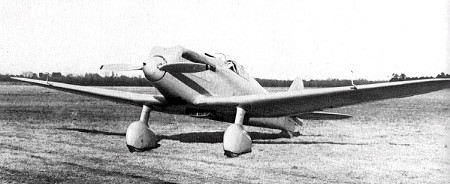
Kawasaki proposed a 708kW / 950 hp Ha 9 IIb water-cooled engine of its own design in 1936 for the new Ki 32 light bomber, a mid wing all metal cantilever monoplane. A wooden mock up was constructed in the summer of 1936, followed by eight prototypes, the first of which flew in March 1937. There were problems with the engine, and development was protracted, but the Kawasaki design team of Imashi and Ota was rewarded in July 1938 with a production contract. Its wide-track fixed cantilever undercarriage featured open-sided wheel fairings. Wing and tail surfaces were finely tapered. The two-man crew were accommodated beneath a long raised canopy. Armament comprised one fixed cowling 7.7mm Type 89 machine-gun and another of the same type on a flexible mounting operated by the observer. An internal bomb bay accommodated a 300kg offensive load, supplemented by 150kg of bombs on external racks. Designated Army Type 98 Light Bomber, the Ki 32 entered service late in 1938 to supplement the Mitsubishi Ki 30.
Apart from prototypes, Kawasaki delivered 846 Ki 32s up to May 1940. They flew with considerable success with seven operational Sentais (groups) in China, where they made many low level sorties, particularly in the campaigns to capture the cities of Hangchow and Wuchang during 1938 39. They equipped two operational Sentais during the fierce fighting over the Khalkin Gol and Nomonhan on the border of Manchuria and Outer Mongolia against Soviet ground and air units in 1939.
Ki 32s were still in the army’s first line inventory when Japan attacked Pearl Harbor, and were prominent in the heavy attacks on Hong Kong which preceded the British surrender of Hong Kong in December 1941, but during 1942 they were nearly all relegated to training duties. The type received the Allied codename Mary. Armament and bombload were identical with that of Ki 30. Like its Mitsubishi contemporary the Ki 32 carried its normal bombload internally in a fuselage bomb bay.
Ki-32 Engine: 1 x Kawasaki Ha-9-IIb, 640kW Span: 15m (49 ft3 in) Length: 11.64m (38ft2 in) Height: 2.9 m (9 ft 6 in) Wing area: 34.0 sq.m (365.97 sq ft) Max take-off weight: 3539-3762 kg (7802-8294 lb) Empty weight: 2349 kg (5179 lb) Maximum speed: 423 km/h (263 mph) Cruise speed: 300 km/h (186 mph) Ceiling: 8920 m (29250 ft) Range w/max.fuel: 1960 km (1218 miles) Range w/max.payload: 1300 km (808 miles) Armament: 2 x 7.7mm machine-guns, 300-350kg of bombs Crew: 2
The Ki-28 was Kawasaki’s competitor for a replacement fighter in 1935 for the Japanese Army Air Force (JAAF). Conpeting against the Mitsubishi Ki-33 and the Nakajima Ki-27, all three aircraft were low wing monoplane design and similar in performance but the Ki-27 won due to its manoeuverability. The Ki-28 was powered by an 800 hp Kawasaki Ha-9-IIa liquid cooled engine.
Ki-28 Engine 1 x Kawasaki Ha-9-IIa 800hp 12 cyl Length 12 m. Wingspan 7.9 m Wing area 19 sq.m Height 2.6 m Empty weight 1420 kg Max Take off Weight 1760 kg Max Speed 485 km/hr. Range 1000 km. Ceiling 11000 m Crew 1.
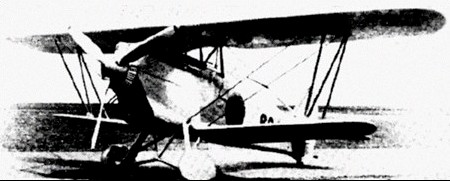
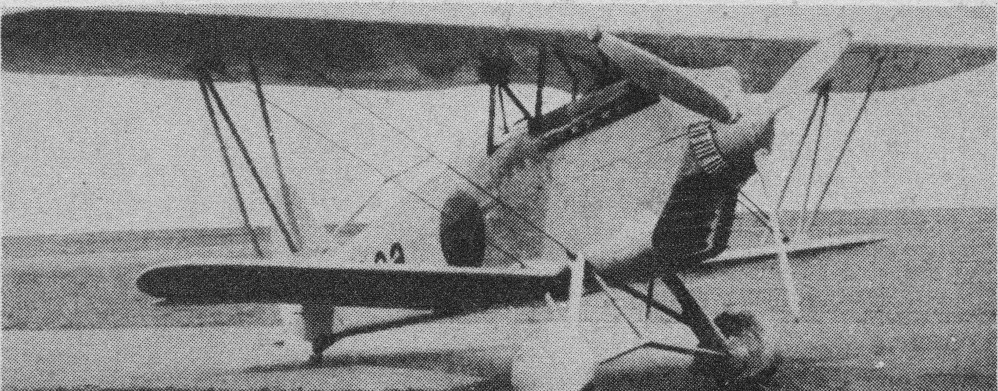
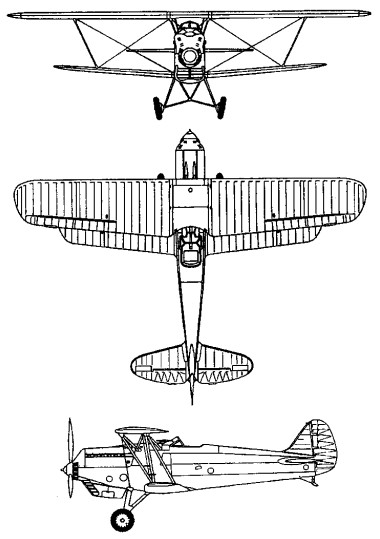
The single seat Ki-10 was Kawasaki’s second attempt to evolve a replacement for the Japanese army air force’s Type 92 Intercepter Fighter. The first had been the Ki 5 monoplane which proved to have a performance and manoeuvrability below that specified by the army air force. A fighter competition was held in 1934 to evaluate new designs from Kawasaki, Mitsubishi and Nakajima, designated Ki 10, Ki-8 and Ki 11 respectively. This time the manoeuvrability of the Kawasaki design won the day, and it was ordered into production as the Army Type 95 Fighter. It proved to be the last biplane combat aircraft to serve with the army air force.
Designed by Takeo Doi (who had succeeded Richard Vogt as Kawasaki’s chief designer), the Ki 10 closely resembled the earlier Type 92 in appearance, but powered by an 850 hp Kawasaki Ha 9 11a 12 cylinder V type engine. The first of four prototypes was flown in the spring of 1935, and production aircraft were based on the third prototype which had a three blade metal propeller, and a flush riveted light alloy skin over the forward fuselage. The Ki-10 was selected in competition with Nakajima’s Ki-11 low-wing monoplane, the Japanese Army preferring the Ki-10 biplane’s manoeuvrability to its opponent’s slightly superior speed.
Production Ki-10-1 aircraft were powered by the 633kW Kawasaki Ha-9-IIa liquid-cooled engines, and 300 built between December 1935 and October 1937 went into service as the Army Type 95 Fighter. The biplane wings of unequal span were braced by N-struts and with ailerons on the upper wing only. The divided undercarriage had wheel spats. The all-metal structure was alloy sheet and fabric-covered. Armament was two synchronised 7.7mm Type 89 machine-guns.
The improved Type 95 Model 2, flown in prototype form in May 1936, differed primarily in having slightly larger wings of 10.02 m (32 ft 10 in) span, a fuselage lengthened to 7.55 m (24 ft 9 in), and a gross weight increased to 1740 kg (3836 lb), and vertical tail surfaces of greater area. The powerplant and performance remained es¬sentially unchanged, but stability was greatly improved and the service ceiling was increased from 10 000 m (32,810 ft) to 11500 m (37,730 ft). This version was built between June 1937 and December 1938, 280 completed.
Standard armament of both models was a pair of 7.7 mm (0.303 in) Type 89 machine guns mounted in the upper engine decking.
Over the period in which they were in service Ki 10s equipped seven, different Rentais (wings) and six other Sentais (corps) of the army air force. They operated in China, Formosa, Korea, and Manchuria, as well as at home bases, before and during the Second World War. By the time that conflict began, however, most Ki 10s (codenamed Perry by the Allies) had been reallocated to training or other second line duties.
One Ki-¬10 1 Kai and two Ki 10 11 Kai prototypes appeared in 1936 and 1937 respectively, embodying aerodynamic, structural and powerplant improvements, but neither of these models entered production.
Ki¬-10 Prototype Engine: 850 hp Kawasaki Ha 9 11a Seats: 1 No built: 4
Ki¬-10 Type 95 Fighter 1 Engine: 633kW Kawasaki Ha-9-IIa Span: 9.55 m (31 ft 4 in) Length: 7.2 m (23 ft 7 in) Gross weight: 1650 kg (3638 1b) Maximum speed: 400 km/h (249 mph) Service ceiling: 10 000 m (32,810 ft) Seats: 1 Armament: 2 x 7.7mm Type 89 machine-guns No built: 300
Ki¬-10 Type 95 Fighter 2 Engine: 633kW Kawasaki Ha-9-IIa Wingspan: 10.02 m (32 ft 10 in) Length: 7.55 m (24 ft 9 in), Height: 3.0 m / 9 ft 10 in Wing area: 23.0 sq.m / 247.57 sq ft Empty weight: 1360 kg / 2998 lb Max take-off weight: 1740 kg (3836 lb) Max. speed: 400 km/h / 249 mph Service ceiling 11500 m (37,730 ft) Range: 1100 km / 684 miles Seats: 1 Armament: 2 x 7.7mm Type 89 machine-guns No built: 280
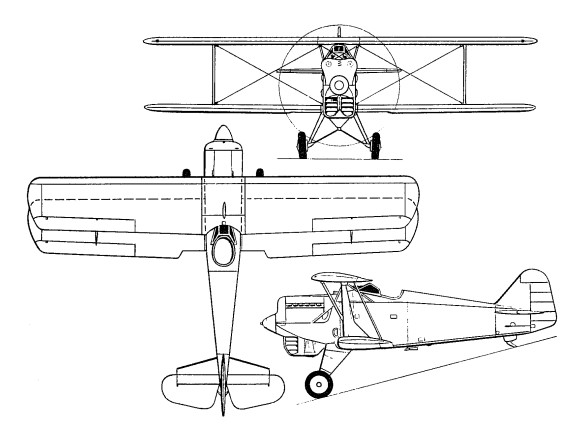
A single engined biplane light bomber, the Ki 3 was designed by Dr Richard Vogt. Developed from the experimental KDA 6 reconnaissance biplane, the Ki 3 first flew in March 1933, going into service with the Imperial Japanese Army early in 1934. These prototypes were followed by 200 series aircraft built by Kawasaki between January 1934 and March 1935, and a further 40 machines being manufactured under licence by Tachikawa. The first prototype had a BMW VI in line engine with nose radiator and annular cowling, while series machines had more conventional chin radiators for their 800 hp Ha 2 engines (BMW IXs built under licence by Mitsubishi and Kawasaki). The Ki 3 carried up to 500 kg (1100 lb) of bombs on ten underwing racks. Defensive armament comprised one fixed forward firing synchronized 7.7 mm (0.303 in) machine gun in the cowling and another on a Scarff type mounting over the observer’s cockpit. The metal structured, fabric covered Ki 3 had a pointed spinner for its two bladed propeller, con¬toured single I type wing struts, and spatted main undercarriage wheels. It was also fitted with a tail wheel while most contemporaries had a tail skid. Ki 3s served with the 3rd, 5th, 7th and 9th Army Hiko Daitai (air battalions) when hostilities between Japan and China were renewed in summer 1937. Heavily engaged in bombing attacks and troop support until replaced by monoplanes in 1939, they were subsequently widely employed for dropping supplies to isolated troop positions. A number were still in service at the time of the heavy air fighting between the Soviet Union and Japan at Nomonhan in summer 1939 but were used only in supporting roles.
Span: 13 m (42 ft 8 in) Length: 10 m (32 ft 10 in) Gross weight, 3100 kg (6830 lb) Maximum speed: 260 km/h (162 mph)
A designer of Kawasaki landplanes was German Dr. Richard Vogt, with the company 1923-1933. Vogt designed the Type 92 single-seat biplane fighter. The first prototype flew in 1932. 380 built.
Type 92 Engine: 1 x BMW VI, 440kW Max take-off weight: 1700 kg / 3748 lb Empty weight: 1280 kg / 2822 lb Wingspan: 9.6 m / 31 ft 6 in Length: 7.2 m / 23 ft 7 in Height: 3.1 m / 10 ft 2 in Wing area: 24.0 sq.m / 258.33 sq ft Max. Speed: 330 km/h / 205 mph Cruise speed: 280 km/h / 174 mph Ceiling: 9500 m / 31150 ft Range w/max.fuel: 850 km / 528 miles Range w/max.payload: 600 km / 373 miles Crew: 1 Armament: 2 x 7.7mm machine-guns
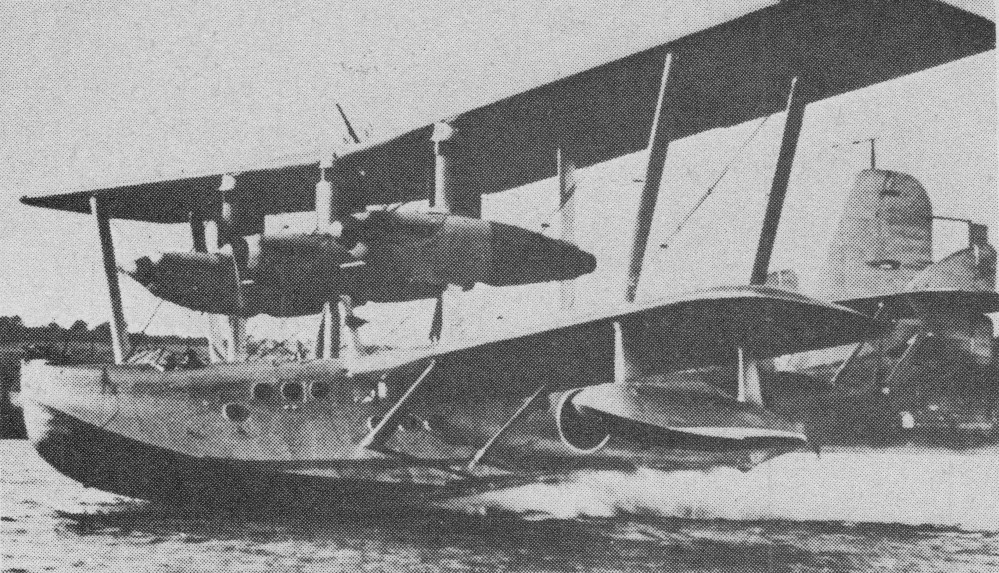
Designed by Short as the KF.1, the prototype was built by Short and delivered to the Japanese Naval Air Force.
Five were built in Japan and at least one saw service in World War II as the Kawanishi H3K1 Type 90-2, a troop and supply transport assigned the code name Belle.
Later models produced by Kawanishi versions had enclosed cockpits and remained active until replaced by H6K2 Type 97 flying boats in 1938-39.