Kellett O-60

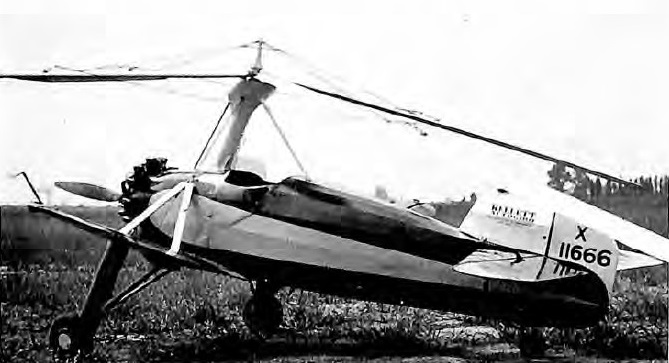
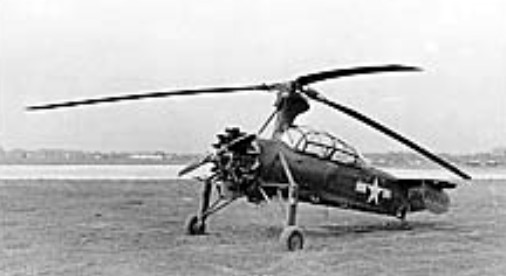
The Kellett O-60 was built and tested as an observation aircraft for the US Army in 1942 while the helicopter was still in development. The aircraft had a free-turning 43 ft 2 in rotor which provided lift in place of a conventional wing. A 285 horsepower radial engine turning a two-blade propeller gave the O-60 its forward thrust.
The two-place YO-60 was designed by Richard O. Prewitt and could do jump take-offs. The rotor was spun up to about 280 rpm (rotations per minute) at a no-lift angle using the power of the radial engine. When ready for take-off, the pilot would release a clutch mechanism which changed the blade angle to 8 degrees. This caused the aircraft to ‘jump’ about 10 feet into the air. The engine and propeller then pulled the YO-60 into forward flight as the rotor angle was decreased to a normal flight pitch of 3 degrees. The engine was only used to spin the rotor up to flight speeds on the ground, while in flight the rotor was free spinning.
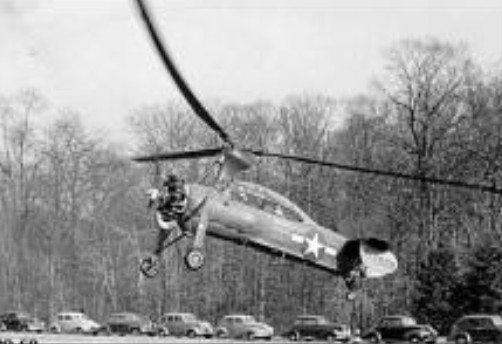
The YO-60 never got past the service test phase. Seven aircraft were built as XO-60 (S/N 42-13604 to 42-13610) with 225 hp radial engines and later re-engined with 285 hp. radials and redesignated YO-60.

YO-60
Engine: Jacobs R-915-3 of 285 hp.
Fuselage length: 20 ft. 9 in.
Fuselage width: 9 ft. 6 in. (at landing gear); 10 ft. at horizontal stabilizer
Height: 10 ft. 3 in.
Rotor diameter: 43 ft. 2 in.
No of blades: 3
Weight: 2,640 lbs. (gross)
Crew: 2
Top speed: 122 mph
Kellett YG-1

YG-1B

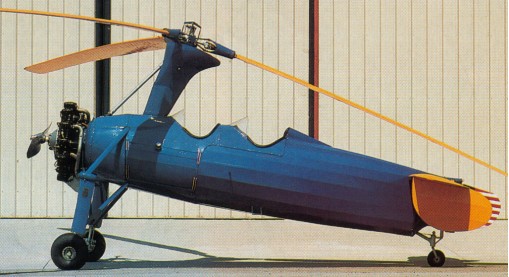
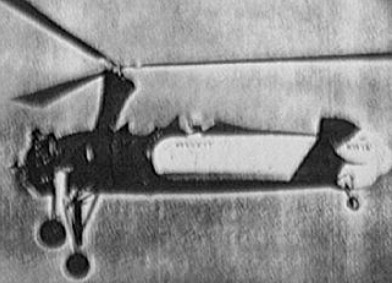
Cierva and Pitcairn licensed the Kellett Autogiro Corporation of Philadelphia to build autogiros and the developed Kellett YG-1 of the late 1930s became the US Army’s first rotary-winged aircraft.
Seven YG-1B autogyro were procured by the US army in 1937 for observation duties.

YG-1A
Year: 1936.
Seats: 2.
Engine: Jacobs L4MA7, 225 hp.
Gross wt: 2205 lbs.
Empty wt: 1586 lbs.
Rotor dia: 40 ft.
No of blades: 3.

YG-1B
Year: 1937.
Seats: 2.
Engine: Jacobs L4MA7, 225 hp.
Gross wt: 2400 lbs.
Empty wt: 1617 lbs.
Rotor dia: 40 ft.
No of blades: 3.

Kellett KD-1

KD-1B

Cierva’s C30 series and Pitcairn’s PA-22 and Luscombe-built aluminum body PA-36, and the KD-1 series constructed by Kellett Autogiro Company of Philadelphia were capable of jump take-offs and direct-control without wings.

KD-1
Year: 1935.
Seats: 2.
Engine: Jacobs L4MA7, 225 hp.
Gross wt: 2050 lbs.
Empty wt: 1345 lbs.
Rotor dia: 40 ft.
No of blades: 3.

KD-1A
Seats: 2.
Engine: Jacobs L4M4 seven-cylinder radial

KD-1B
Year: 1939.
Seats: 1.
Engine: Jacobs L4MA7, 2225 hp.
Gross wt: 2295 lbs.
Empty wt: 1670 lbs.
Rotor dia: 40 ft.
No of blades: 3.

Kellett K-4

Dr.Wynn Laurence LePage designed the first line of autogiros, K-2, K-3, and K-4, establishing Kellet as manufacturer of good performing autogiros.

The K-4 was developed in 1933.

Year: 1934.
Seats: 2.
Engine: Continental R-670, 210 hp.
Gross wt: 2400 lbs.
Empty wt: 1620 lbs.
Rotor dia: 40 ft 6 in.
No of blades: 4.

Keleher Lark-IK-1

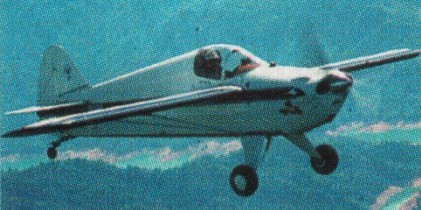
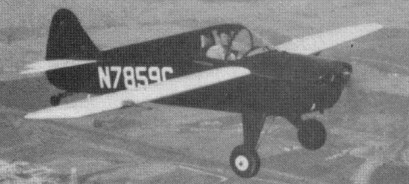
The Lark is an enclosed cabin cockpit midwing monoplane. This single-seat taildragger is relatively unusual with its strut-braced mid-wing configuration. The fuselage is of steel-tube construction, and the wing uses wood spars and ribs. The whole aircraft is fabric covered. Engines vary from 65 to 100 hp.

Gross Wt. 855 lb
Empty Wt. 555 lb
Fuel capacity 12 USG
Wingspan 23 ft
Length 17 ft
Top 135 mph.
Cruise 122 mph
Stall 55 mph
Climb rate 1000 fpm
Takeoff run 550 ft
Landing roll 700 ft
Range 300 miles