In the summer of 1917 Kondor followed the lead of Fokker’s Dr.I July 1917 triplane with one of their own. Known only as the Kondor Dreidekker this aircraft, first flown in October 1917, was not a success; its development programme was soon abandoned because of severe vibrational problems. Instead, Kondor used the fuselage, empennage and lower wing of the Dreidekker to produce a biplane or sesquiplane called the D.7.
The common fuselage was a tube steel internal structure with plywood skin, rounded in cross-section.
Piston
Konchus Antis
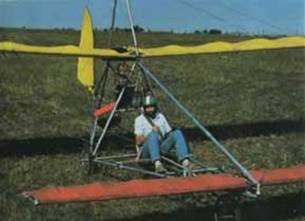
The Lithuania Konchus Antis is a single-seat monoplane with cable braced wing plus canard. 25 hp pusher engine. Tricycle landing gear. Length 20’, wing span 31.3’, wing area 170 sq/ft. with canard. Empty weight 220 lbs. Gross weight 400 lbs. Top speed 38 mph and stall speed 26 mph. Wing and tail structure from tubing and fabric. Fuselage is tubing.

Komta Komta
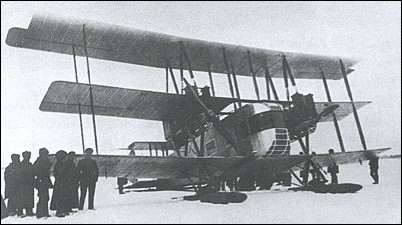
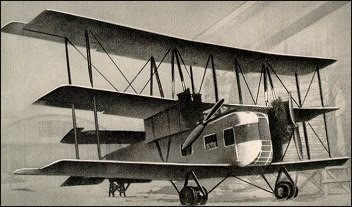
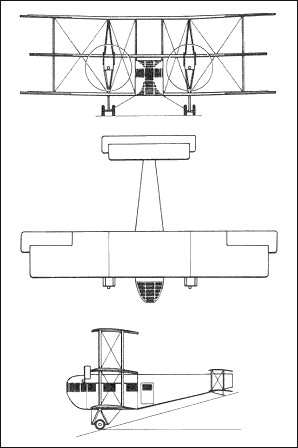
The Komta was not only the name of the aeroplane but also the name of the organisation set up to build it in the first place, under the chairmanship of Zhukovskii he of the ANT, Central Aero and Hydronamic Institute. The name comes from the “KOMissia po Tiazholot Aviatsii or the Commission for a Heavy Aircraft. The plane did not take to the air until late 1923 and by 1924 it had just about had it with the engines worn out. By this time Zhukovskii’s protogee, A.N.Tupolev, had taken over the design of large aircraft at the institute and so the Komta was no more.
Kolbanyi 60hp 6-cylinder
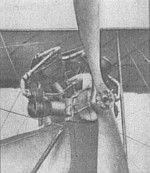
Geza Kolbanyi, together with Sylvester Golcsek designed and built an innovative 6 cylinder engine producing 60 HP and weighing only 230 lb.
The engine powered the 1910 Kolbanyi I biplane in Hungary.
Kokusai Ki-76 / Nippon Ki-76
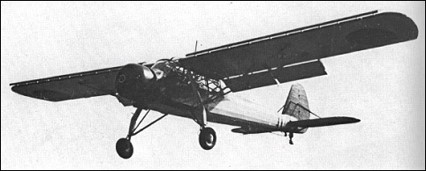
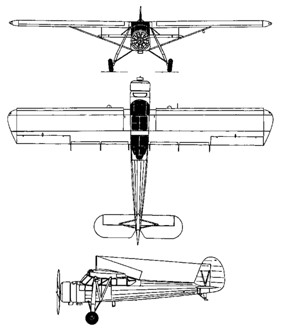
In 1940, the Imperial Japanese Army Air Force ordered the Nippon Kokusai Koku Kogyo to produce an artillery spotting and liaison aircraft. The resulting Ki-76, or Liaison Aircraft Type 3 (in Japanese: 三式指揮連絡機), was inspired by, and similar to, the German Fieseler Fi 156 “Storch”, although not a direct copy. A high-winged monoplane with a fixed tailwheel undercarriage, the Ki-76 used Fowler flaps, and was powered by Hitachi Ha-42 radial engine.
First flying in May 1941, the Ki-76 proved successful when evaluated against an example of the Fi-156, and was ordered into production as the Army Type 3 Command Liaison Plane in November 1942. 937 including a single prototype were built.
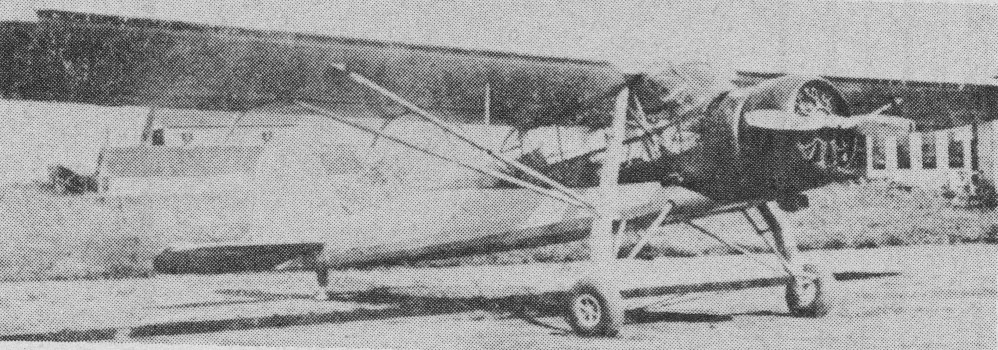
The Ki-76 remained in service as an artillery spotter and liaison aircraft until the end of the war. Ki-76s were also used as anti-submarine aircraft, operating from the Japanese Army’s escort carrier, the Akitsu Maru, being fitted with an arrestor hook and carrying two 60 kg (132 lb) depth charges.
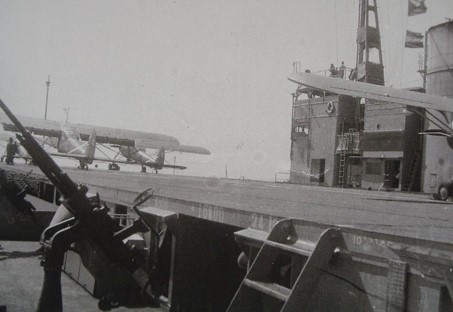
The Allied reporting name was “Stella”.
Some were used by the Royal Thai Air Force.
Ki-76
Engine: 1 × Hitachi Ha42, 231 kW (310 hp)
Propeller: 2-bladed fixed-pitch
Wingspan: 15 m (49 ft 3 in)
Wing area: 29.4 m2 (316 sq ft)
Length: 9.65 m (31 ft 8 in)
Height: 2.9 m (9 ft 6 in)
Empty weight: 1,110 kg (2,447 lb)
Gross weight: 1,530 kg (3,373 lb)
Max takeoff weight: 1,623 kg (3,578 lb)
Maximum speed: 178 km/h (111 mph, 96 kn) at sea level
Range: 750 km (470 mi, 400 nmi)
Service ceiling: 5,630 m (18,470 ft)
Guns: 1× 7.7 mm (0.303 in) machine gun in rear cockpit
Bombs: 2× 60 kg (132 lb) depth charges (some variants)
Crew: 2
Kokusai Ki.105
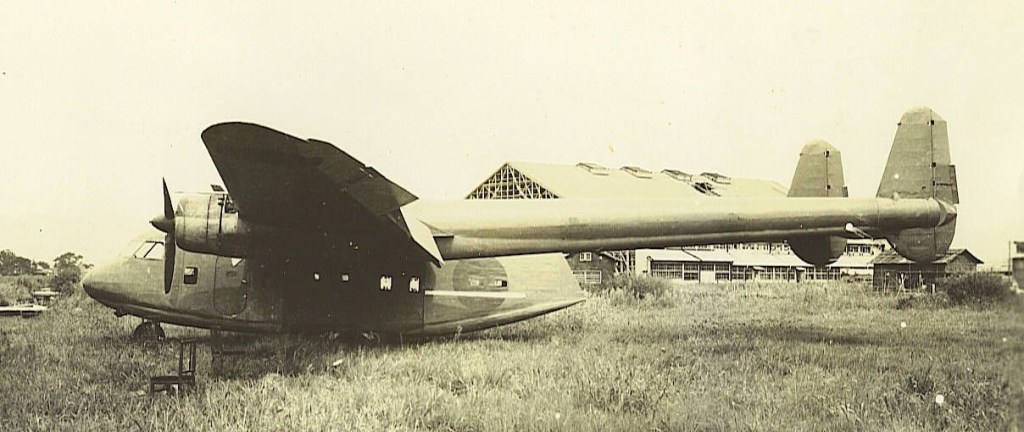
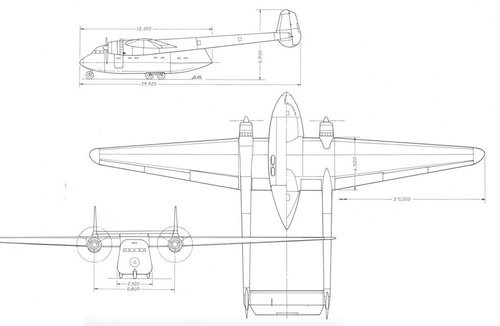
The Ki-105 Ohtori, (‘Phoenix’, allied codename Crane) was a project in the last months of the Pacific War. With Allied attacks on ports and shipping, Japan’s sources of oil to fuel its defensive fighters were drying up. To meet the demand for aviation fuel, the experimental Kokusai Ku-7 transport glider was developed into a powered version for use in transporting fuel from the oilfields still held in Sumatra to Japan.

This required a range of 2500km, and to achieve this the Ki-105’s engines drew on the transported fuel, and used 80% of it to reach Japan (plus what it used to reach Sumatra unloaded). Japan developed a process to make gasoline from pine tree oil, which saw whole forests destroyed to fill the tanks of a few fighter aircraft.
The Ku-7 Manazuru were modified by fitting them with engines, which were designated the Ki-105 Otori (鳳 “Phoenix”). Ku-7-II was the original designation for the Ki-105. Intended for use as fuel transports, only nine, of 300 ordered, were produced before development priorities were shifted elsewhere.
Engines: 2 x Mitsubishi Ha-26-Il, 940 hp (700 kW)
Wingspan: 35.00 m / 115 ft 10 in
Length: 19.92 m / 65 ft 4 in
Height: 5.56 m / 18 ft 3 in
Max take-off weight: 12,500 kg / 27,558 lb
Normal payload: 3,300 kg / 7,300 lb
Cruising speed: 220 km/h / 137 mph / 120 kn
Maximum range: 2,500 km / 1,600 mi / 1,300 nmi
Crew: 3
Koenig Engineering AK.09 Faucon / Junkers Profly Ultima
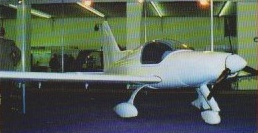
Classed as a microlight under the FAI definition, the all carbonfibre Ultima two seater was at the point of being marketed in 1998.
Koenig Engineering offers kit to construct AK.09 Faucon two-seat composites monoplane, also available from Germany as Junkers Ultima.
Engine: Rotax 912, 80 hp
Wing span: 8.20 m
Wing area: 10.5 sq.m
MAUW: 450 kg
Empty weight: 250 kg
Fuel capacity: 90 lt
Max speed: 260 kph
Cruise speed: 230 kph
Minimum speed: 65 kph
Climb rate: 6.2 m/s
Seats: 2
Fuel consumption: 12 lt/hr
Price (1998): 98 000 DM
Kit price (1998): 52 270 DM
Koehler 1947 Goodyear
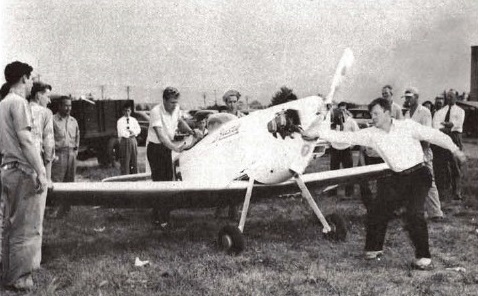
Owner-builder Harold Koehler started his Goodyear racer only to have the engine develop serious trouble on take off during the 1947 race. Pilot Bob Gaffney was not injured.
Koechling No. 1 biplane
In France in 1907, Paul Koechling designed and built the Koechling No. 1 biplane.
Koechlin Type A
The 1909 Koechlin Type A monoplane was designed and built by Paul Koechlin in France.
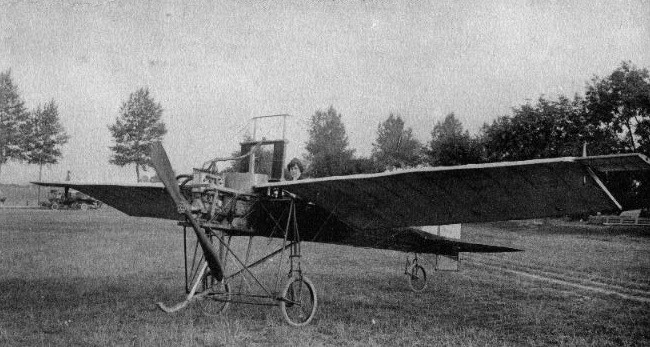
The 1910 monoplane, flown by Marthe Niel, was powered by a water-cooled Grégoire Gyp engine of 35 hp, with the radiators were fitted standing on the fuselage right in front of the pilot. This incarnation has the ailerons at the wing tips. A later incarnation had the ailerons built in the wing
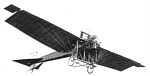
Type A
Span: 27’11”
Weight: 570 lb
Speed: 44 mph

