Arthur Lardin, W A McCurdy, E Smith, of New Castle DE, USA were all by employees of Bellanca Corp who in 1934 built the AL-1 NX12Y c/n 1 as an off-hours project.
A single place, open cockpit monoplane, power was an 85hp DH Gypsy.
Arthur Lardin, W A McCurdy, E Smith, of New Castle DE, USA were all by employees of Bellanca Corp who in 1934 built the AL-1 NX12Y c/n 1 as an off-hours project.
A single place, open cockpit monoplane, power was an 85hp DH Gypsy.
In 1938 the La Porte Aircraft Co built a two place, high wing, cabin monoplane designed by Vernon Payne.
Power was a 45hp Continental A-45.
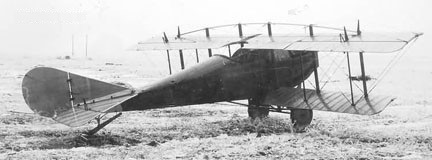
Two Lanzius L II were built in 1919 to the Air Service for evaluation (AS40034 and 40036). Contracts for two more (AS40036 and 40037) were assigned but not built.
Engine: Packard 1A, 350hp
Seats: 1
The 1917 L I Variable Speed Aeroplane was a two-place open cockpit biplane powered by a 140hp Duesenberg.
The 1918 Variable Speed Aeroplane was a single-place open cockpit biplane and a monocoque fuselage and a three-quarter-span beam-type bracing on the top wing. Likely an OX-5 or Hisso for power, or with a less-rounded fuselage and with that truss arrangement duplicated on the underside of the lower wing.
This Argentine single-seater motor glider was designed and is being built by Senor Augusto Lanzalone of Rosario in Santa Fe province, who has also formed the Asociacion Argentina de Constructores de Aviones Experimentales – Avex for aircraft like the Aulanz. Not only has Senor Lanzalone designed and built the engine for it – a 30hp Lanzalone two-cylinder two-stroke inverted inline motor of 700cc – he has evolved his own special alloy for the construction of the airframe. This is known as Alcusing, and consists of aluminium with portions of copper, nickel, magnesium, silicon and chrome; the two-blade variable pitch propeller is also made of this material.
The Aulanz is a conventional low-wing monoplane of semi-monocoque Alcusing structure, with the engine in the nose and a retractable rubber-sprung monowheel under the wing leading edge, plus a tailskid. The total fuel capacity is 20 litres (4.4 Imp gallons). By the spring of 1973 the prototype’s fuselage and tail unit were completed, and construction of the remainder had been proceeding slowly.
Span: 40 ft 8.25 in
Length: 17 ft 8.5 in
Height: 6 ft 1.75 in
Wing area: 125.9 sqft
Aspect ratio: 13.1
Max weight: 617 lb

The 1910 Lanyi biplane was designed and built by Antal Lanyi in Hungary.
Span: 29’6″
Length: 28’3″
Weight empty: 617 lbs
Speed: 31 mph
The Lanitz 3W 342 iB2 TS (sometimes written 3W-342iB2 TS) is a German aircraft engine, designed and produced by Lanitz Aviation of Leipzig for use in ultralight aircraft.
The engine is a twin-cylinder two-stroke, horizontally-opposed, 342 cc (20.9 cu in) displacement, air-cooled, gasoline engine design, with a poly V belt reduction drive. It employs dual electronic ignition and produces 32 hp (24 kW) at 6500 rpm.
The 3W 342 iB2 TS engine was used to power the Lanitz Escapade One.
By March 2018, the engine was no longer advertised on the company website and seems to be out of production.
3W 342 iB2 TS
Type: Twin cylinder, two stroke aircraft engine
Bore: 66 mm (2.6 in)
Stroke: 50 mm (2.0 in)
Displacement: 342 cc (20.9 cu in)
Dry weight: 8.7 kg (19.2 lb)
Fuel type: gasoline
Cooling system: air
Reduction gear: poly V belt
Power output: 32 hp (24 kW)
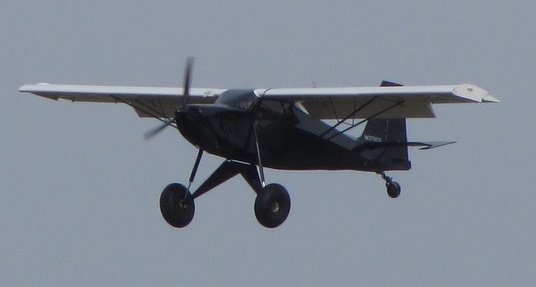
The Lanitz Escapade Two is a German ultralight aircraft, derived from the Just Escapade and produced by Lanitz Aviation of Leipzig. The aircraft was supplied as a complete ready-to-fly-aircraft.
In 1931 C R Lansing built a two place open cockpit monoplane powered by a 40hp Ford engine, registered N12830.
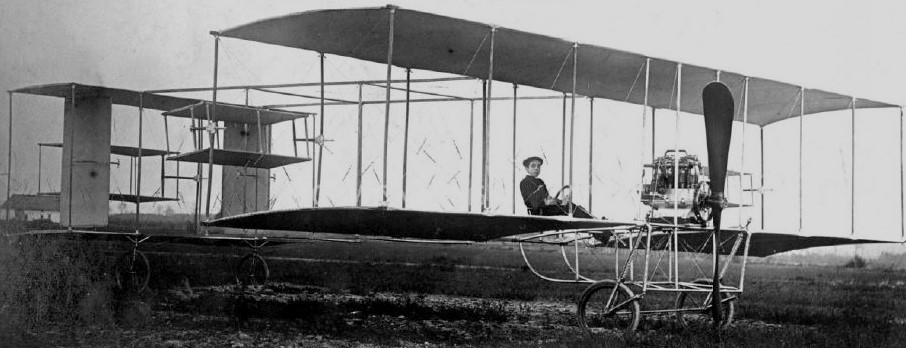
After studying mechanics, Alfred Lanser (1886-1960), like a lot of young men of the time was attracted by aviation. In 1909, he found an adequate engine and began to build a plane around it, a big tractor biplane. He tested it at the Kiewit airfield north of Hasselt, Belgium, but didn’t manage to make it fly. In 1910 Lanser bought a Farman and was granted Belgian license number 16. After frequent appearances at aviation meetings in 1910-1912 he started building planes of his own design, but he also invented self-sealing tanks for airplanes, before a long career in industry and business in several countries.

