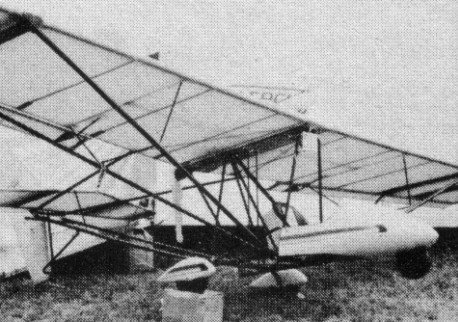
Leach Calypso

Centre mounted joy stick, rudder pedals, nosewheel steerable through rudder pedals.
Construction: Aluminium, Dacron.

Engine: Cuyuna ULII-02 (429cc) 35hp.
Static thrust: 225 lbs.
Empty wt: 278 lbs.
Wing span: 33ft.
Wing area: 160 sq.ft.
Height: 6 ft 7 in.
Length: 19ft.
Fuel cap; 5 USG.
Max wt: 500 lbs.
Stall speed: 27 mph.
Max speed: 63 mph.
Vne: 88 mph.
Climb rate: 800 fpm @ 32 mph.
Design limit: +6, -4g.
Glide ratio: 9-1.
Wing loading: 3.13 lbs/sq.ft.
Power loading: 14.19 lbs/hp.

Lea Kestrel Kermit

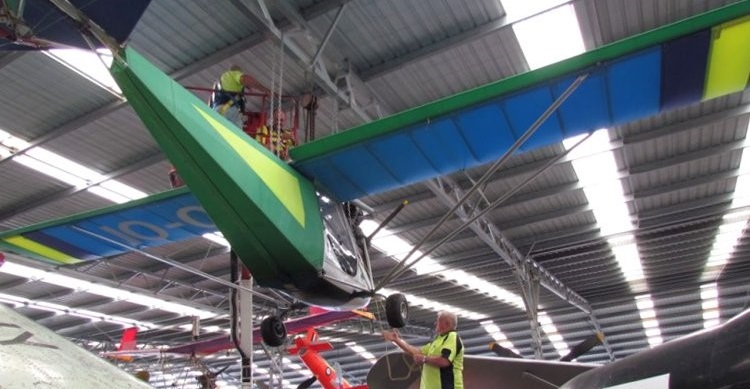
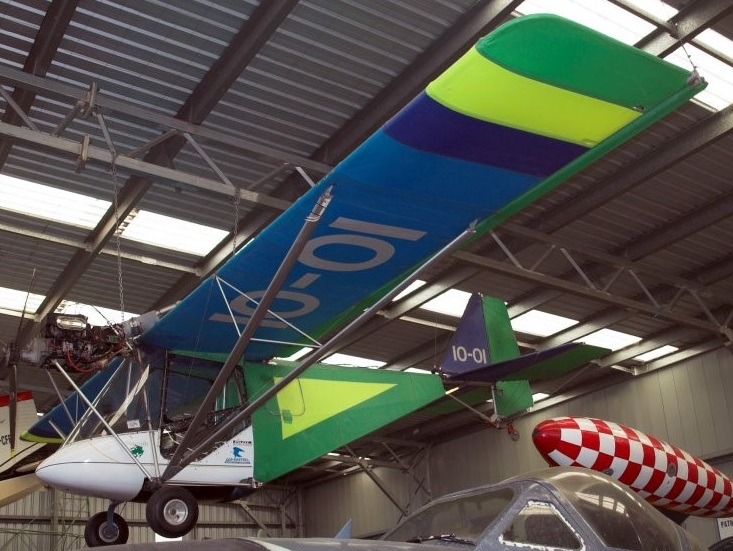
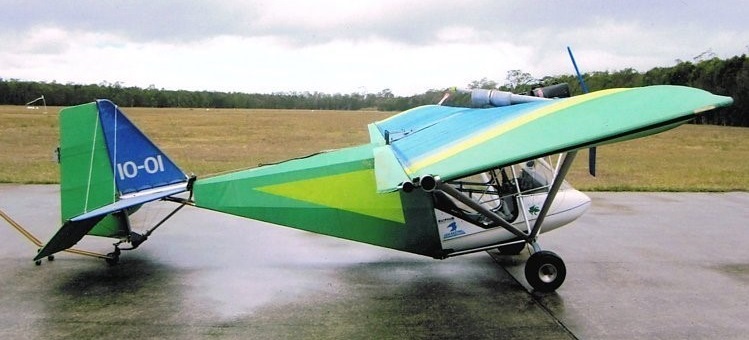
Lea Kestrel Kermit 10-001 C/N 1

The design and production of the ultralight Kestrel was the product of the efforts of Cec Lea, one of the pioneers of ultralight aircraft design and construction in Australia. A single seat, high wing, tractor engine aircraft it first appeared about 1990 and a number of examples were registered in the 95.10 registration series as late as mid-2000.

Lea Kestrel Kermit 10-001 C/N 1

Lea sold both completed aircraft and kits for owner construction. All were powered by the Austrian Rotax 503 engine and many, if not all, were fitted with a Brolga three blade carbon/glass composite propeller. Some 16 Kestrels were built.

Lea Kestrel Kermit 10-001 C/N 1

Lea Kestrel Kermit
Engine: Rotax 503, 37kW (50hp)
Cruising Speed: 100km/hr / 67mph
Range: 280km / 175mile

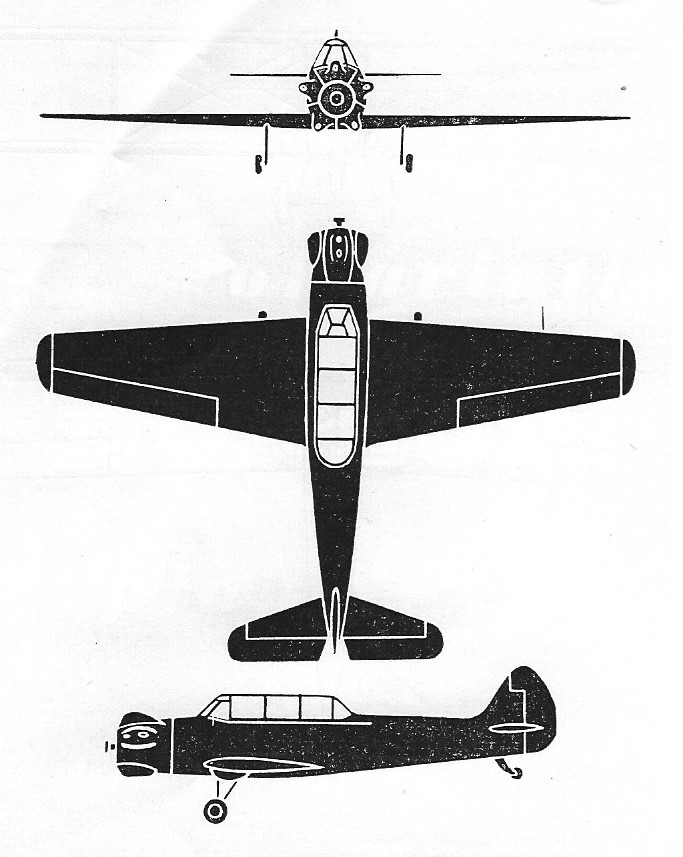
Lazarow LAZ-7 / LAZ-7M

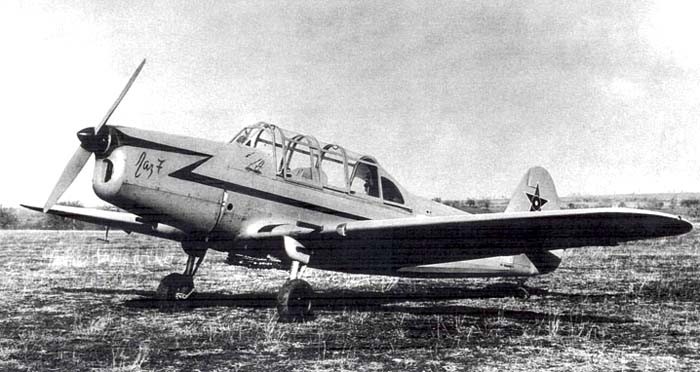
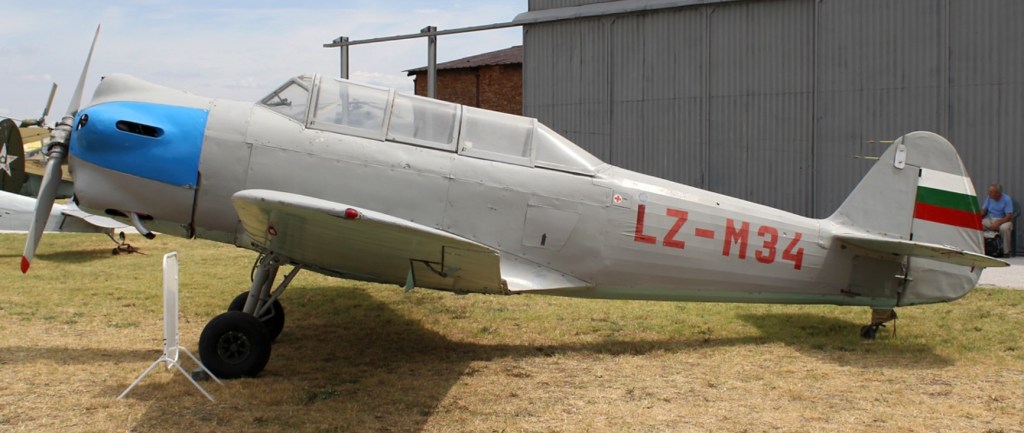
The prototype of the Bulgarian LAZ-7 two-seat primary trainer of 1946 was the first post-war design to be built in Bulgaria. The LAZ-7 was matched against the Yugoslavian Aero 2.

Both the LAZ-7 and Aero 2S were powered by the Czech 160 hp Walter Minor 6-III and in the eliminating trials the LAZ-7 was successful. The decision was taken to build the LAZ-7 in series production at the Bulgarian State Aircraft Works, and to replace the Walter engine with a Russian-designed M-11FR radial driving a controllable pitch, two blade Visch V-501 prop.

The LAZ-7M production type fuselage construction is of welded steel tube and wood, and covered with fabric. Both the wing and tailplane are fully cantilever, of mixed wood and metal construction, and fabric covered. No flaps are fitted. Both the main undercarriage and tailwheel are fixed.

LAZ-7
Engine: 160 hp Walter Minor 6-III

LAZ-7M
Engine: M-11FR
Prop: controllable pitch, two blade Visch V-501
Max speed: 149 mph
Cruise: 133 mph
AUW: 2039 lb
Landing speed: 53 mph
Service ceiling: 17,220 ft
Range: 525 mi
Endurance: 3 hr 56 min
Time to 3280 ft: 4 mn 47 sec
Lawrance J-1

After the end of World War I, the Lawrance engineers worked with both the Army and the Navy in developing their L-1 onto a nine-cylinder radial engine, which became the 200 hp Model J-1. It was the best American air-cooled engine at the time and passed its 50-hour test in 1922.

The U.S. Navy badly needed light, reliable engines for its carrierborne aircraft. As a means of pressuring Wright and other companies into developing radial engines, it gave a contract to Lawrance for 200 of the J-1 radial and ceased buying the liquid-cooled Wright-Hispano engines. At the urging of the Army and Navy the Wright Aeronautical Corporation bought the Lawrance Company, and subsequent engines were known as Wright radials. The Wright Whirlwind had essentially the same lower end (crankcase, cam, and crankshaft) as the J-1.

Applications:
Dayton-Wright XPS-1
Naval Aircraft Factory N2N
Naval Aircraft Factory TS-1
Huff-Daland TA-2 trainer prototype – one example only re-engined
Huff-Daland TA-5 trainer prototype
Huff-Daland TA-6 trainer prototype
Huff-Daland HN-2 naval trainer

J-1
Type: 9-cylinder air-cooled radial engine
Bore: 4.5 in (114 mm)
Stroke: 5.5 in (144 mm)
Displacement: 787 cu.in (12.9 lt)
Dry weight: 476 lb (216 kg)
Cooling system: Air-cooled
Power output: 200 hp (150 kW)
Power-to-weight ratio: 1:2.38

Lawrance A-3 / Model A

Lawrance Model A

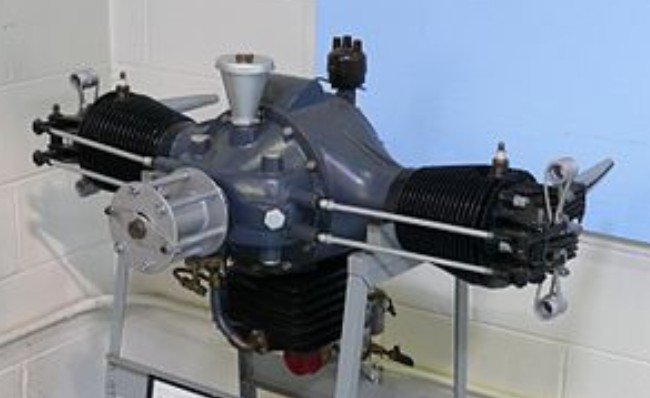
The Lawrance A-3 or Lawrance Model A was an American twin-cylinder aircraft piston engine. Designed by Charles Lawrance in the mid-1910s the engine was produced by the Lawrance Aero Engine Company and under license by Excelsior. Weighing 200 lb (90 kg) the engine produced 28 horsepower (21 kW). A feature of this engine was the shared use of a single crankpin for both cylinders, this caused vibration as the pistons moved in the same direction.

First run circa 1916, around 450 were built.

Applications:
Breese Penguin (flightless ground training aircraft)
Driggs Dart
Waco Cootie
Shinnecock lightplane

Specifications:
Type: Two-cylinder, air-cooled horizontally opposed piston aircraft engine
Dry weight: 200 lb (91 kg)
Cooling system: Air-cooled
Power output: 28 hp (21 kW)