Lioré-et-Olivier LeO.122 / LeO.20 / LeO.201

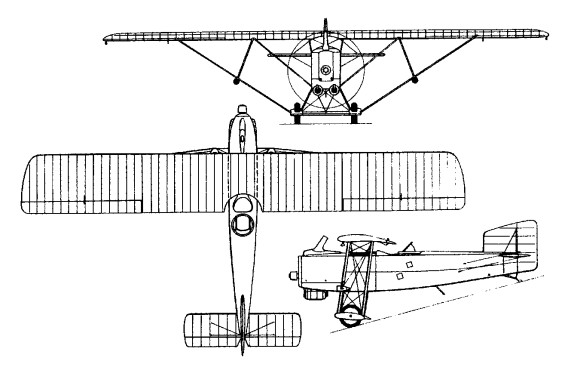
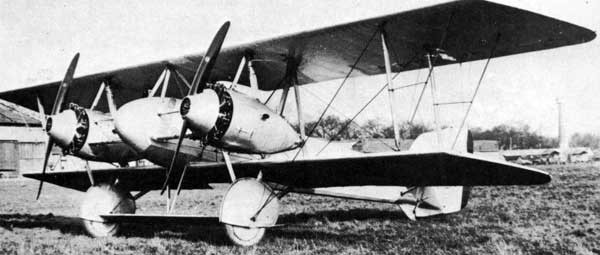
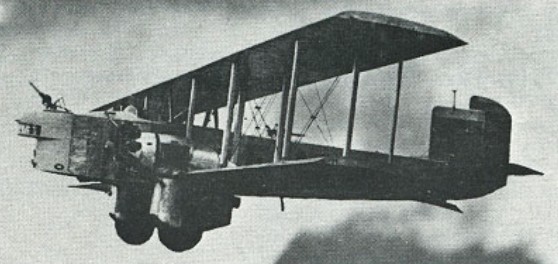
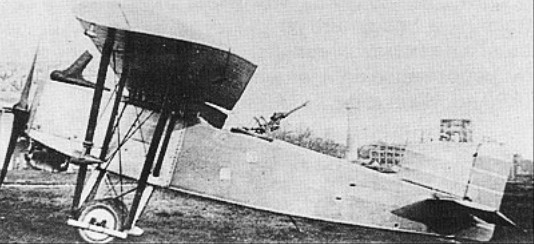
A three-seat version of the LeO 122 prototype, the Liore-et-Olivier 20 won the 1926 French ministry of war competition for a new night bomber, and in September of that year the prototype established world distance records with a 2000kg payload.
The first order for 50 aircraft, for the French Aeronautique Militaire, was received at the end of 1926, the first LeO 20s being flight-tested at Villacoublay in 1927. Further orders followed, and the last of the 311 machines taken on charge by the French air arm was accepted in December 1932. The LeO 20s equipped the 12 escadrilles of the 21e and 22e Regiments d’Aviation based at Nancy and Chartres respectively. A considerable number went to the multi-engined training school of the Aeronautique Militaire at Etampes. LeO 20s were supplied later to the 12e Regiment d’Aviation at Reims and to the 34e Regiment d’Aviation at Le Bourget. The type remained the backbone of the French night-bomber force for a decade.
Nine LeO 20s were exported in 1928-29, seven to Romania and two to Brazil, as a result of demonstration flights abroad by a LeO 20 registered F-AIFI, which was later delivered to the Armee de I’Air. At the beginning of 1937 224 LeO 20s were still in French service, although by that time its relatively low speed meant that the type was obsolete. On the eve of World War II, 92 LeO 20s were still in flying condition, many as target tugs or trainers with flying schools in France and North Africa, and a further 23 were in storage. Earlier, a number had been re-designated LeO 201 when adapted for parachute training.

Engine: 2 x Gnome-Rhone 9Ady (Jupiter) radial, 313kW
Max take-off weight: 5460 kg / 12037 lb
Empty weight: 2725 kg / 6008 lb
Wingspan: 22.25 m / 72 ft 12 in
Length: 13.81 m / 45 ft 4 in
Height: 4.26 m / 13 ft 12 in
Wing area: 105 sq.m / 1130.21 sq ft
Max. speed: 198 km/h / 123 mph
Ceiling: 5760 m / 18900 ft
Range: 1000 km / 621 miles
Armament: 5 x 7.7mm machine-guns, 1000kg of bombs
Lioré-et-Olivier LeO.9

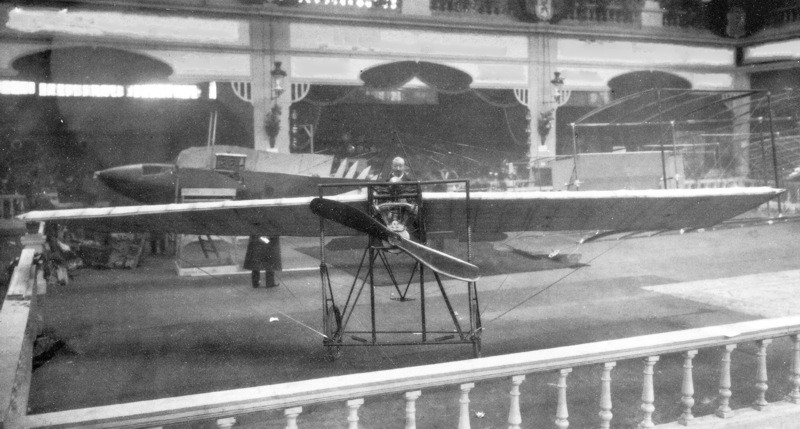
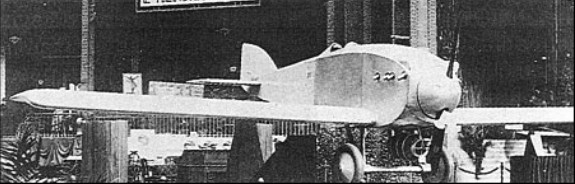
Derived from a 1917 project designated LeO 3, the LeO 9 single-seat cantilever monoplane fighter was of metal construction and of advanced aerodynamic concept. Powered by a 300hp Hispano-Suiza 8Fb eight-cylinder water-cooled engine, the LeO 9 was exhibited, prior to first flight at the Paris Salon in 1921. Flight testing was initiated in the following year, but, on 24 September 1923, the wing folded during a very sharp turn and the aircraft crashed at Villacoublay with the death of the pilot, Gaston Martin. Further development of the LeO 9 was then discontinued.

Engine: 300hp Hispano-Suiza 8Fb
Empty weight: 1175 kg / 2590 lb
Wingspan: 10.94 m / 35 ft 11 in
Length: 6.59 m / 21 ft 7 in
Height: 2.18 m / 7 ft 2 in
Wing area: 17.20 sq.m / 185.14 sq ft

Lioré-et-Olivier LeO.8

In April 1919, the Direction de l’Aeronautique established a new programme for the development of successors for the World War I aircraft types then equipping the Aeronautique Militaire. Among several categories of fighter included in this programme was a two-seat night fighter and reconnaissance aircraft (CAN 2), the specification for which demanded a max speed of at least 200km/h at 3000m.
To meet this requirement, Liore et Olivier developed a large, angular parasol monoplane powered by a 300hp Renault 12F 12-cylinder water-cooled engine and designated LeO 8 CAN 2. Of metal construction and with provision for two forward-firing Vickers guns and two Lewis guns in the rear cockpit, the LeO 8 was flown for the first time at Villacoublay in April 1923.
Although no production order was placed, the prototype was prepared for an attempt on the world altitude record with a 500kg payload. This attempt, which took place in 1925, ended in a tragedy with the death of the pilot.

Engine: 300hp Renault 12F
Max take-off weight: 1877 kg / 4138 lb
Empty weight: 1274 kg / 2809 lb
Wingspan: 15.50 m / 50 ft 10 in
Length: 8.70 m / 28 ft 7 in
Height: 3.00 m / 9 ft 10 in
Wing area: 32.00 sq.m / 344.44 sq ft
Max. speed: 215 km/h / 134 mph

Linon 1910 monoplane

After a visit to the Grande Semaine de Reims in 1909 Linon became interesting in flying and constructed a full scale model, which was exposed on the Brussels salon in the beginning of 1910. After tests of the machine it was modified and fitted with a more powerful three-cylinder Delfosse engine. The machine was shown and flown during the “Semaine de Verviers” from 11 to 17 September 1910, likely by the Italian aviator Darioli.

Linn Mini-Mustang

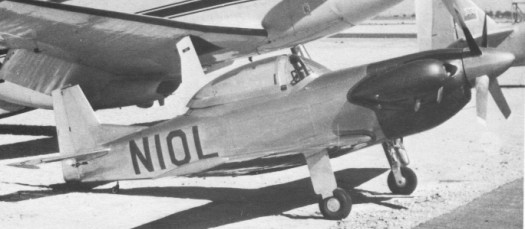
The Mini Mustang was designed and built by Mr. Charles C. Linn and despite the small dimensions, the aircraft featured a retractable undercarriage. The Mini Mustang was built to approximately 45-50% scale of the P-51. The L-1 was the first example built by Mr. Linn and it first flew on 14 January 1962. It won the 1962 EAA Most Popular Aircraft award, but was lost in an accident. To replace the L-1, Mr. Linn then constructed a second example, the L-2 (also named Linns Mustang) with the same N10L registration. This second aircraft differed slightly in having a 4-bladed (instead of 3-bladed) propeller, larger tail surfaces, a smaller engine air intake, longer canopy and it was also a bit shorter with 13.5ft (against 13.833ft). Both aircraft were powered by a 125hp Lycoming O-290-G engine. Plans were marketed for amateur construction, but maybe 2? were built.

Linke-Hoffmann R.I

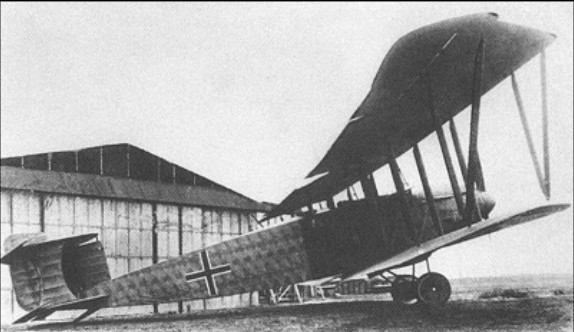
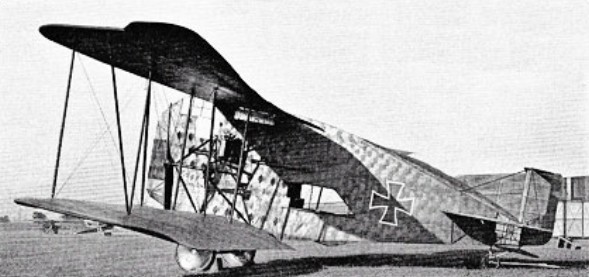
Both R.I prototypes used four 260hp Mercedes D.IVa engines, carried inside the fuselage, powering two chain-driven propellers.

The Linke-Hoffmann R.I was half covered with transparent Cellon in an attempt at partial invisibility. It achieved the opposite effect, partly because the Cellon discoloured rapidly, but mainly because it reflected the sun so strongly.

R.I serial R.8/15

The two built were R.I serial R.8/15 and the improved R.I serial R.8/16. The first was burnt out in an accident in May 1917and the second was destroyed when the pilot misjudged his height during a normal landing.

Further experimentation with unorthodox propulsion configurations would lead to the R.II.