Macchi M.B.323

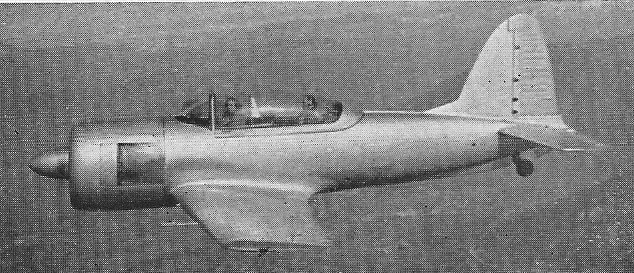
The 1952 Macchi MB.323 was designed to meet an Italian Air Force specification for a two-seat basic trainer. The first prototype was powered by a 610 hp Pratt & Whitney Wasp, and the second had an Alvis Leonides 502/5 Mk.24.

Engine: 610 hp Pratt & Whitney Wasp
Max speed: 242 mph at 5905 ft
Cruise: 199 mph at 9842 ft
ROC: 1436 fpm
Service ceiling: 21,325 ft
Range: 808 mi
Empty weight: 4409 lb
Loaded weight: 5575 lb
Wingspan: 39 ft 4.5 in
Length: 29 ft 11.5 in
Height: 13 ft 1.5 in
Wing area: 217u sq.ft

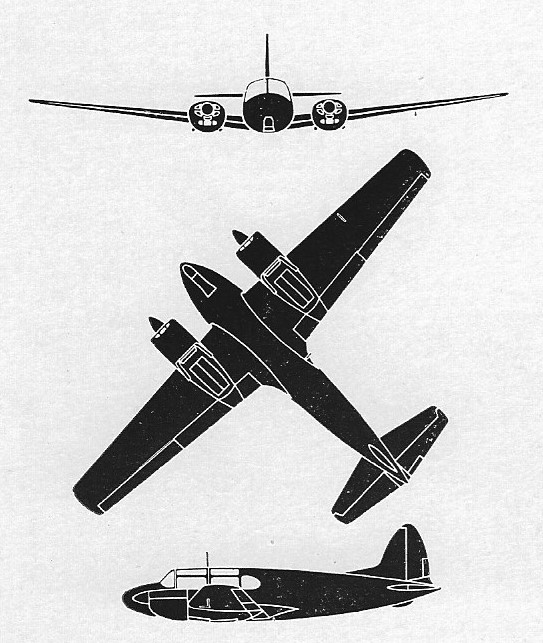
Macchi M.B.320

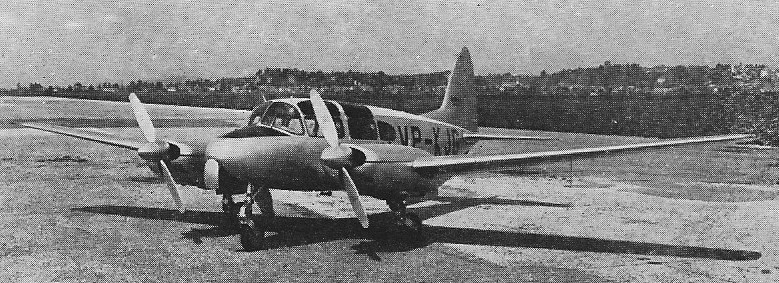
The MB.320 is a development of the post-war MB.314. Powered by two Continental E.185 engines of 185 hp driving Piaggio mechanical variable pitch or Aeromatic automatic constant speed propellers.
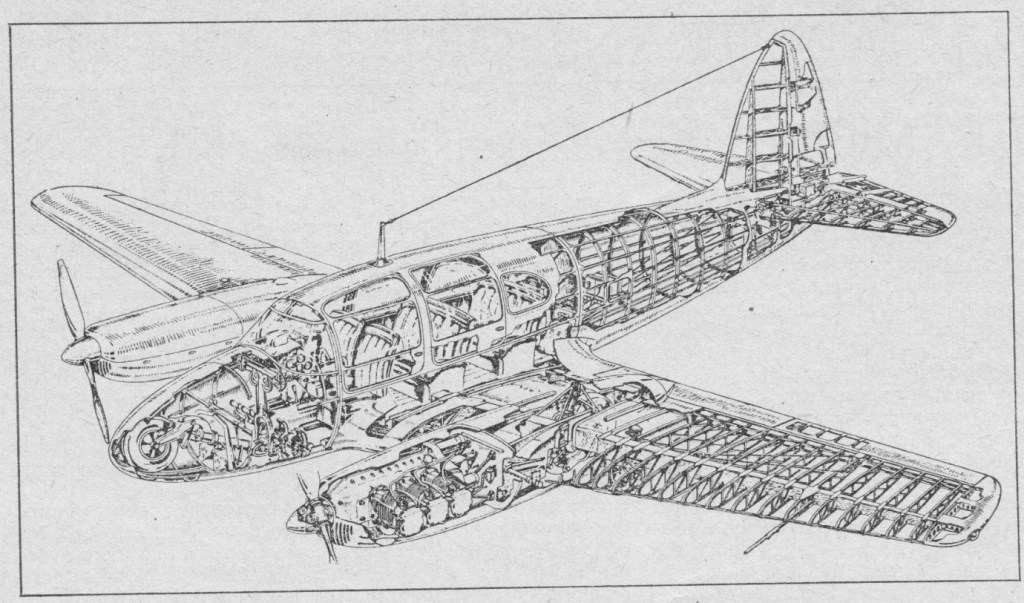
The cantilever low-wing has a NACA 2300 section and wooden single-spar covered by plywood, fitted with differential slotted ailerons and flaps. The fuselage is built in three sections with a detachable metal e cone and woo centre and rear with plywood skins. The centre section contains the cabin and baggage compartments. The wood tail section has trim tabs in the starboard elevator and rudder. The undercarriage is retractable with the fully swivelling nose wheel retracting backwards into the nacelles.
Sound proofed and air conditioned, the cabin seats six, two pilots side-by-side, and four passengers. A baggage compartment is aft of the rear seats.

Introduced in 1949, the MB.320 was produced in limited numbers.

A manufacturing licence was acquired by Societe Francaise de Constructions Aeronautiques Lignel, which planned manufacture as the VEMA-51. This licence was not taken up.

In addition to various Italian commercial concerns, three were sold to East African Airways.

One of three supplied to East African Airways.

Engines: 2 x Continental E-185, 185 hp
Wingspan: 42 ft 7 in
Wing area: 226 sq.ft
Length: 28 ft 4 in
Height: 10 ft 6 in
Empty weight: 3670 lb
Loaded weight: 5511 lb
Max speed: 186 mph at SL
Cruise: 156.6 mph
Min speed: 65 mph
ROC: 925 mph
Climb to 6500 ft: 5 min 5 sec
Service ceiling: 24,930 ft
Range: 665 mph
Seats: 6

MB.320

Macchi M.16

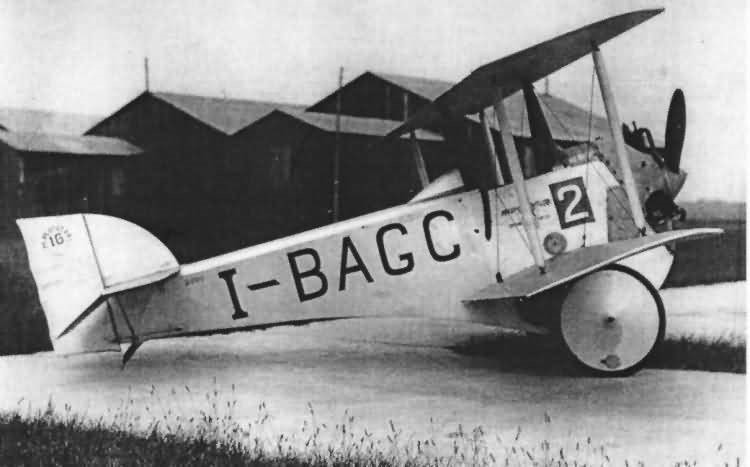
The Macchi M.16 was a light, single-seat aircraft designed by Alessandro Tonini and produced by Macchi in Italy in 1919.

It was a single-bay biplane with unstaggered wings and a largely conventional design except for an unusually deep fuselage that extended in a bulge below the lower wing. The landing gear axle being sprung directly on the bottom longerons with shock cord. The plane could also be fitted with pontoons.

The M.16 was developed in parallel with the Macchi M.20, a two-seat civil trainer aircraft which it resembled and with which it shared many common features.

The M.16 proved a successful sporting type, setting an altitude record of 3,770 m (12,370 ft) in 1920 while competing for the Coppa Mappelli (“Mapelli Cup”), and winning first prize in the competition in 1921.

The United States Navy purchased three float-equipped examples for evaluation as communication floatplanes.

Powerplant: 1 × Anzani, 22 kW (30 hp)
Wingspan: 6.00 m (19 ft 8 in)
Wing area: 11.3 m2 (122 sq ft)
Length: 4.43 m (14 ft 6 in)
Height: 2.12 m (7 ft 0 in)
Empty weight: 160 kg (350 lb)
Gross weight: 260 kg (570 lb)
Maximum speed: 165 km/h (103 mph, 90 kn)
Landing speed: 25 mph
Range: 420 km (260 mi, 230 nmi)
Crew: 1, pilot

M7 Orlikan

The Orlikan has a welded spaceframe fuselage with Dacron covered wooden wings.

Engine: Walter M-202, 65 hp
Wing span: 10.42 m
Wing area: 13.55 sq.m
MAUW: 450 kg
Empty weight: 250 kg
Max speed: 160 kph
Cruise speed: 135 kph
Minimum speed: 55 kph
Climb rate: 3.5 m/s
Seats: 2
Fuel consumption: 13.25 lt/hr
Price (1998): 50 000 DM

Lycoming XR-7755

Lycoming XR-7755-3

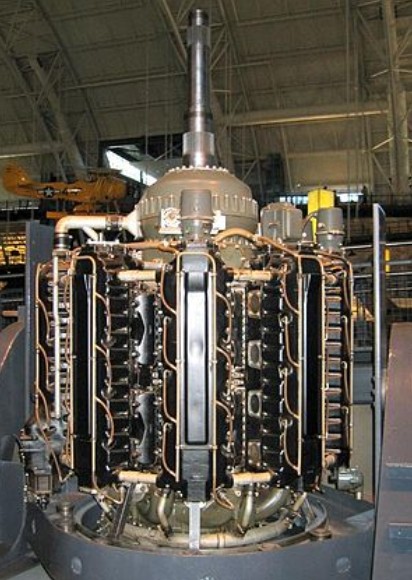
Lycoming had not been successful in designing a high-power engine. They had started with an attempt to make a hyper engine that led to the 1,200 hp (890 kW) O-1230; by the time the engine was ready, however, new aircraft designs were all calling for more power. They tried again by “twinning” the engine to produce the H block H-2470, which saw some interest in the Vultee XP-54 “Swoose Goose” project. Work on the H-2470 ended when the XP-54 was cancelled.

In one final attempt, Lycoming decided to go all out and build the largest engine in the world. They put together a team under the direction of VP of Engineering Clarence Wiegman at their main Williamsport factory in the summer of 1943 and started work.

The resulting design used 9 banks of 4 cylinders arranged around a central crankshaft with each cylinder bank at a 40 degrees angle to each adjacent bank, to form a four-row radial engine. Unlike most multi-row radials, which “spiral” the cylinders to allow cooling air to reach them, the R-7755 was water-cooled, and so each of the cylinder heads in a cylinder bank were in-line within a cooling jacket. Contrast this with the 24-cylinder Junkers Jumo 222, which looked similar from the outside, as both engines used banks of four cylinders each, but ran on a V-style cycle instead of a radial and only used six banks of cylinders. The XR-7755 was 10 ft (3 m) long, 5 ft (1.5 m) in diameter, and weighed 6,050 lb (2,740 kg). At full power it was to produce 5,000 hp (3,700 kW) at 2,600 rpm, maintaining that with a turbocharger to a critical altitude that was apparently never published.

Each cylinder bank had a single overhead cam powering the poppet valves. The camshaft included two sets of cams, one for full takeoff power, and another for economical cruise. The pilot could select between the two settings, which would shift the camshaft along its axis to bring the other set of cams over the valve stems. Interestingly, the design mounted some of the accessories on the “front side” of the camshafts, namely two magnetos and four distributors. The seventh camshaft was not used in this fashion, its location on the front of the engine was used to feed oil to the propeller reduction gearing.
The original XR-7755-1 design drove a single propeller, but even on the largest aircraft the propeller needed to absorb the power would have been ridiculously large. This led to a minor redesign that produced the XR-7755-3, using a new propeller gearing system driving a set of coaxial shafts to power a set of contra-rotating propellers. The propeller reduction gearing also had two speed settings to allow for a greater range of operating power than adjustable props alone could deliver. Another minor modification resulted in the XR-7755-5, the only change being the replacement of carburetors with a new fuel injection system.

The engine first started testing at 5,000 hp (3,700 kW) in 1944 with the XR-7755-3, but demonstrated terrible reliability problems. A second example was provided, as planned, to the United States Army Air Forces at Wright Field in 1946. However, by this time the Air Force had lost interest in new piston designs due to the introduction of jet engines, and the Lycoming delivery team was instructed to simply “dump it on the ground”. This engine has since disappeared. The original test engine was later delivered to the Smithsonian Institution, where it was restored.

Specifications:
Type: 36-cylinder turbosupercharged liquid-cooled “star” (9 banks at 40 deg angles, 4 cylinders in each bank) aircraft piston engine
Bore: 6 3⁄8 in (161.9 mm)
Stroke: 6 3⁄4 in (171.4 mm)
Displacement: 7,756.3 cu.in (127.1 L)
Length: 120 in (3,050 mm)
Diameter: 60 in (1,525 mm)
Dry weight: 6,050 lb (2,745 kg)
Valvetrain: Single overhead camshaft with separate cams for takeoff and economical cruise (Variable valve timing)
Cooling system: Liquid-cooled
Power output:
5,000 hp (3,730 kW) at 2,600 rpm takeoff
4,000 hp (2,985 kW) at 2,300 rpm cruise
Specific power: 0.64 hp/cu.in (29.3 kW/L)
Specific fuel consumption:
0.70 lb/(hp·h) (0.43 kg/(kW·h)) at takeoff power
0.485 lb/(hp·h) (0.29 kg/(kW·h)) at 70% power
0.37 lb/(hp·h) (0.22 kg/(kW·h)) at minimum cruise power
Power-to-weight ratio: 0.82 hp/lb (1.36 kW/kg)

Lycoming R-680

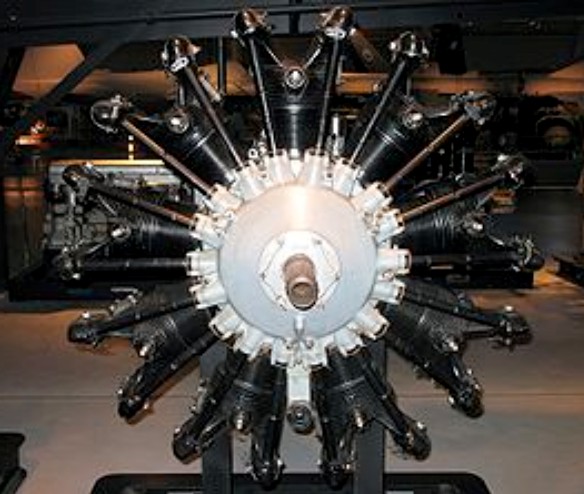
The Lycoming R-680 is a nine-cylinder air-cooled radial engine, the first aero engine produced by Lycoming.

Pressure lubrication is to the crankshaft, master rod, link pins, cam drive gears, and main accessories drive shaft and gears.

First run in 1929, the engine was produced in two types the E and B series both are essentially the same, the B4E was available in a trainer version with a front exhaust collector for use without cylinder air baffles.

Equipment was a tachometer drive at ½ canshaft speed, exhaust ring, cowling and air cleaner.

Accessories available were a generator and starter,

Variants:
R-680-B4E
Rated at 225 hp at 2100 rpm.

R-680-E3A
Rated at 285 hp at 2200 rpm.

R-680-13
Rated at 300 hp at 2200 rpm.

Applications:
Beech AT-10 Wichita
Boeing-Stearman PT-13
Cessna AT-8/AT-17
Curtiss-Wright AT-9
Fleetwings BQ-2
Spartan NP-1
Stinson Airliner
Stinson Reliant
Stinson Vigilant
Waco S Series (very rare facory authorization)

Specifications:

Type: 9 cylinder air cooled radial
Rating: 210 hp at 2000 rpm
Displacement: 680 cu.in
Compression ratio: 5.2-1
Bore: 4 5/8 in
Stroke: 4 1/2 in
Length: 43 1/8 in
Diameter: 43 1/4 in
Weight: 465 lb dry
Fuel consumption: not more than .55 lb/hp/hr
Oil consumption: not more than .035 lb/hp/hr
Lubrication: 1 pressure pump, 2 scavenger pumps (in one unit)
Ignition: Scintilla dual magneto type SC-A
Carburation: 1 Stromberg NA-R7
Spark plugs: 2 per cylinder

R-680-E3A
Type: Nine cylinder air-cooled radial
Bore: 4 5⁄8 in (117 mm)
Stroke: 4 1⁄2 in (114 mm)
Displacement: 680 cu.in (11.15 litres)
Length: 37.5 in (953.1 mm)
Diameter: 43.5 in (1104 mm)
Dry weight: 515.46 lb (233.9 kg)
Valvetrain: One inlet and one exhaust valve per cylinder at 30 degrees.
Fuel system: single-barrel carburetor
Fuel type: 87 octane rating gasoline
Oil system: Full pressure type
Cooling system: Air-cooled
Power output: 330 hp (246 kW) at 2,300 rpm at sea level
Compression ratio: 7:1
Power-to-weight ratio: 0.64 hp/lb (1.05 kW/kg)

Lycoming O-1230

In 1932, the engineers at Lycoming Engines became aware that the United States Army Air Corps (USAAC) wanted a high performance engine that could produce at least one horsepower per cubic inch (46 kW/L) of engine displacement and that a contract had been made with Continental Motors, Inc., Lycoming’s main rival in the general aviation engine market. Lycoming’s management wanted to be considered for development of the next generation engine, but no USAAC development contract was signed. Still determined to become known as a high performance engine manufacturer, Lycoming began an experimental, high-performance engine of its own. After spending US $500,000, and after many attempts to develop a successful engine, it finally came close to the USAAC specifications with the 1,200 hp (895 kW) O-1230 engine.

Lycoming’s O-1230 engine design was a 12-cylinder liquid-cooled horizontally-opposed low-profile piston engine that could be mounted either horizontally, buried in the wing of a multi-engine aircraft; or vertically, in the fuselage of a single engine fighter. From 1935 the engine design proceeded at a faster pace after a number of former Continental engineers, who had become unhappy with the working conditions there, joined Lycoming.

The same year the USAAC became interested in the O-1230, and began supporting the engine development program. In 1936, the single-cylinder development tests exceeded expectations, passing its 50 hour test requirement. The full-size engine was ready for testing in 1937, and was rated at 1,000 hp.

The last Vultee A-19 that had been ordered by the USAAC was delivered as the XA-19A, fitted with an O-1230-1 offering 1200 hp. It first flew on May 22, 1940. This aircraft was subsequently re-engined with a Pratt & Whitney R-1830-51 and redesignated.

Continued development of the O-1230 reached its peak when the engine was rated at over 1200 hp. It was as powerful as the Allison V-1710, but with a narrower cowling than the Allison V12 engine. The O-1230 was not well received by aircraft manufacturers, because it was not very reliable at that power setting.

Specifications:
O-1230-1
Type: 12-cylinder, Geared, liquid-cooled, horizontally-opposed piston engine
Bore: 5.25 in (133.4 mm)
Stroke: 4.75 in (120.7 mm)
Displacement: 1233.9 cu.in (20.219 L)
Dry weight: 1342 lb
Valvetrain: Overhead camshaft
Cooling system: Liquid
Reduction gear: 0.40
separate cylinders
hemispheric cylinder head design
one-piece cylinder head for each bank
Power output: 1000 hp@3100 rpm, 1200 hp@3400 rpm, 1,275 hp (951 kW)
Specific power: 1.03 hp/cu.in
Power-to-weight ratio: .95 hp/lb

Lycoming IO-720

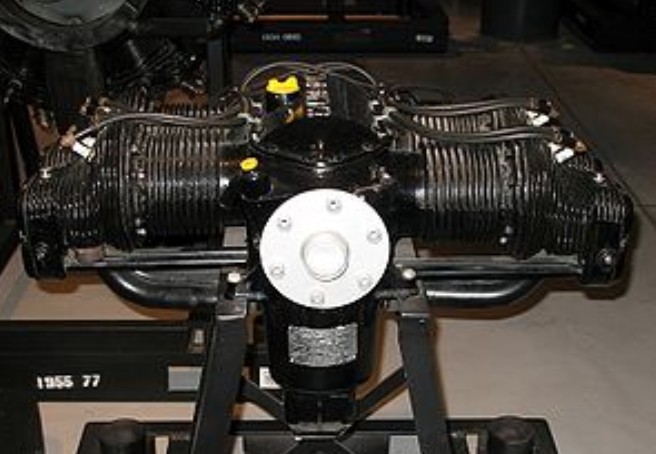
The Lycoming IO-720 engine is a large displacement, horizontally opposed, eight-cylinder aircraft engine featuring four cylinders per side, first run in 1961, manufactured by Lycoming Engines.

There is no carburetted version of the engine, which would have been designated O-720 and therefore the base model is the IO-720. The IO-720 and the Jabiru 5100 were the only flat-eight configuration aircraft engines in production in 2012.

The engine has a fuel injection system which schedules fuel flow proportionally to the airflow, with fuel vaporization occurring at the intake ports. The engine has a displacement of 722 cubic inches (11.8 litres) and produces 400 hp (298 kW). The cylinders have air-cooled heads cast from aluminum alloy with a fully machined combustion chamber.

The first IO-720 was type certified on 25 October 1961 to the CAR 13 standard as amended to 15 June 1956 including 13-1, 13-2, 13-3, 13-4.

In 2009 a new IO-720-A1B cost US$113,621, with a rebuilt engine retailing for US$75,435 and a factory overhaul priced at US$66,289.

Variants:
IO-720-A1A
Eight-cylinder, horizontally opposed, air-cooled direct drive, fuel injection, internal oil jet piston cooling, 722 cubic inches (11.8 litres), 400 hp (298 kW), certified 25 October 1961

IO-720-A1B
fuel-injected, 722 cubic inches (11.8 litres), 400 hp (298 kW), same as -A1A except equipped with Bendix S8LN-1208 and S8LN-1209 magnetos, certified 22 February 1971

IO-720-A1BD
fuel-injected, 722 cubic inches (11.8 litres), 400 hp (298 kW), same as -A1B except has a dual magneto, certified 30 December 1976

IO-720-B1A
fuel-injected, 722 cubic inches (11.8 litres), 400 hp (298 kW), same as -A1A except for top exhaust cylinders and offset exhaust valve shroud tubes, certified 4 November 1965

IO-720-B1B
fuel-injected, 722 cubic inches (11.8 litres), 400 hp (298 kW), same as -B1A except equipped with Bendix S8LN-1208 and S8LN-1209 magnetos and Bendix RSA-10ED1 fuel injection, certified 22 February 1971

IO-720-B1BD
fuel-injected, 722 cubic inches (11.8 litres), 400 hp (298 kW), same as -B1B except has a dual magneto, certified 30 December 1976

IO-720-C1B
fuel-injected, 722 cubic inches (11.8 litres), 400 hp (298 kW), same as -A1B except that it has up-exhaust cylinder heads, certified 22 December 1971

IO-720-C1BD
fuel-injected, 722 cubic inches (11.8 litres), 400 hp (298 kW), same as -C1B except has a dual magneto, certified 28 January 1977

IO-720-D1B
fuel-injected, 722 cubic inches (11.8 litres), 400 hp (298 kW), same as -A1B except has a rear type air inlet housing instead of a front inlet, certified 29 October 1973

IO-720-D1BD
fuel-injected, 722 cubic inches (11.8 litres), 400 hp (298 kW), same as -D1B except has a dual magneto, certified 28 January 1977

IO-720-D1C
fuel-injected, 722 cubic inches (11.8 litres), 400 hp (298 kW), same as -D1B except equipped with an angled fuel injector adapter, certified 15 April 1982

IO-720-D1CD
fuel-injected, 722 cubic inches (11.8 litres), 400 hp (298 kW), same as -D1C except has a dual magneto, certified 10 June 1977

Applications:
IO-720-A1A
Northwest Ranger – factory installation
Piper Comanche 400 – factory installation

IO-720-A1B
Beechcraft 80 – Excalibur and Queen Air conversions
Pacific Aerospace FU-24-954
Piper PA-36 Pawnee Brave – Johnson Aircraft conversion

IO-720-A1BD
Barr 6

IO-720-B1A
Northwest Ranger C-6 – factory installation

IO-720-B1B
Aero Commander – MR. R.P.M. conversion

IO-720-B1BD
Aero Commander – MR. R.P.M. conversion

IO-720-D1B
Embraer EMB 202 Ipanema – factory installation

IO-720-D1C
Piper PA-36 Pawnee Brave – Johnson Aircraft conversion

IO-720-D1CD
Piper PA-36 Pawnee Brave – Johnson Aircraft conversion

Specifications:
IO-720A
Type: 8-cylinder fuel-injected horizontally opposed aircraft engine
Bore: 5.125 in (130 mm)
Stroke: 4.375 (111 mm)
Displacement: 722 cu.in (11.8 litres)
Length: 46.41 In (117.88 cm)
Width: 34.25 in (87.00 cm)
Height: 22.53 in (57.23 cm)
Dry weight: 597 lb (271 kg) dry
Fuel system: Bendix RSA-10AD1 fuel-injection
Fuel type: 100LL avgas
Cooling system: air-cooled
Power output: 400 hp (297 kW) at 2650 rpm
Specific power: 0.55 hp/cu.in (25.2 kW/L)
Compression ratio: 8.70:1
Power-to-weight ratio: 0.67 hp/lb (1.10 kW/kg)
Lycoming O-145

The Lycoming O-145 is a family of small, low-horsepower, four-cylinder, air-cooled horizontally opposed aircraft engine produced from 1938 until the late 1940s by Lycoming Engines. The family includes the reduction-geared GO-145.

The O-145 was produced in three major versions, the O-145-A rated at 55 hp (41 kW), the -B rated at 65 hp (48 kW), and -C rated at 75 hp (56 kW). The “B” model was the major production model, with the “A” and “C” produced in much smaller quantities.

All models of the series had the same bore, stroke and displacement, additional horsepower being generated by increasing compression ratio and maximum rpm. All use a Stromberg NA-S2 or NA-S2A or Marvel MA-2 or MA-2-A carburetor. The dual ignition versions use two Scintilla SF-4L, SN4LN-20 or -21, Superior SMA-4 or Edison-Splitdorf RMA-4 magnetos.

The original O-145-A produced 55 hp (41 kW) at 2300 rpm, weighed 165.5 lb (75 kg) and featured single ignition. In an attempt to compete with the Continental A-65 Lycoming boosted the rpm and power output to 65 hp (48 kW) at 2550 rpm and finally 75 hp (56 kW) at 3100 rpm. The O-145 had a hard time competing with the same horsepower Continentals due to its smaller displacement, which resulted in a steeper torque curve.

The GO-145 is a geared model, introduced in 1938, that uses a 27:17 reduction ratio (1.59:1) gearbox to produce 75 hp (56 kW) at 3200 crankshaft rpm, giving 2013 propeller rpm. The engine employs a gearbox bolted to the front of the engine and the resulting engine weighs 193 lb (88 kg) without starter or generator. The GO-145 suffered from a poor reputation for reliability, because pilots mis-handled the engine, running it at too low a cruising rpm and causing gearbox wear as a result.

The series’ type certificate expired on 2 November 1950 and no O-145-B1 or -C1 or GO-145-C1s engines produced after 1 August 1941 and O-145-B2, -B3 or -C2 or GO-145-C2 or -C3s produced after 24 August 1949 are eligible for certification. The single ignition O-145-A series, O-145-B1 and -C1 are not covered by the original type certificate.

Lycoming ended production of the O-145 and replaced it with the O-235 series.

Variants:
O-145-A
Four-cylinder, direct drive, 55 hp (41 kW), single ignition

0-145-A3
Four-cylinder, direct drive, 55 hp (41 kW), single ignition, with starter and generator installed

O-145-B1
Four-cylinder, direct drive, 65 hp (48 kW), single ignition

O-145-B2
Four-cylinder, direct drive, 65 hp (48 kW), dual ignition

O-145-B3
Four-cylinder, direct drive, 65 hp (48 kW), dual ignition

O-145-C1
Four-cylinder, direct drive, 75 hp (56 kW), single ignition

O-145-C2
Four-cylinder, direct drive, 75 hp (56 kW), dual ignition

GO-145-C1
Four-cylinder, reduction gearbox, 75 hp (56 kW), single ignition

GO-145-C2
Four-cylinder, reduction gearbox, 75 hp (56 kW), dual ignition

GO-145-C3
Four-cylinder, reduction gearbox, 75 hp (56 kW), dual ignition

Applications:
O-145
Airdrome Fokker D-VIII
Piper J-3L Cub, most often the 65 hp version
Carlson Skycycle
Piper PA-8 Skycycle

GO-145
Piper J-5 Cruiser
Funk B75L
General Skyfarer
Rich Twin 1-X-2
Shirlen Big Cootie

Specifications:
GO-145-C2
Type: Four-cylinder, reduction-geared engine
Bore: 3.625 in (92 mm)
Stroke: 3.500 in (89 mm)
Displacement: 144.5 cu.in (2.4 L)
Dry weight: 193 lb (87.5 kg)
Fuel system: Stromberg NA-S2 or NA-S2A or Marvel MA-2 or MA-2-A carburetor
Fuel type: minimum 73 octane
Cooling system: air-cooled
Power output: 75 hp at 3200 rpm (56 kW)
Specific power: 0.52 hp/cu.in (23.3 kW/L)
Compression ratio: 6.5:1
Power-to-weight ratio: 0.39 hp/lb (0.64 kW/kg)

Lycoming IO-580

The Lycoming IO-580 engine is a horizontally opposed, six-cylinder aircraft engine featuring three cylinders per side, manufactured by Lycoming Engines.

There is no carburetted version of the engine, which would have been designated O-580 and therefore the base model is the IO-580.

This engine family competes with the Continental IO-550 series which are also six-cylinder engines with similar power output and weight.

First run in 1996, the IO-580 family of engines covers a range from 300 to 315 hp (224 to 235 kW). The engine has a fuel injection system which meters fuel in proportion to the induction airflow through air-bled nozzles at the individual cylinder intake ports. The engine has a displacement of 583 cubic inches (9.56 litres) and produces a maximum of 315 hp (235 kW) in its B1A version. The cylinders have air-cooled heads cast from aluminum-alloy with a fully machined combustion chamber.

The first IO-580 was type certified on 12 August 1997 on the regulatory basis of FAR 33 effective February 1, 1965 as amended to 33-1 through 33-18. The engine is certified for use in either tractor or pusher configuration installations.

Variants:
IO-580-A1A
Six-cylinder, horizontally opposed, air-cooled direct drive, 583 cubic inches (9.56 litres), 300 hp (224 kW) at 2500 rpm, dry weight 444 lb (201 kg), PAC-RSA-10ED1 fuel-injection system, certified 12 August 1997

IO-580-B1A
Six-cylinder, horizontally opposed, air-cooled direct drive, 583 cubic inches (9.56 litres), 315 hp (235 kW) at 2700 rpm, dry weight 434 lb (197 kg), PAC-RSA-10ED1 fuel-injection system, certified 23 March 2001

AEIO-580-B1A
Six-cylinder, horizontally opposed, air-cooled direct drive, 583 cubic inches (9.56 litres), 315 hp (235 kW) at 2500 rpm, dry weight 446 lb (202 kg), certified 13 August 2007. This model has an aerobatic fuel and oil system. It may be equipped with either the PAC-RSA-10ED1 fuel-injection system or a Lycoming FM-250 system.

Applications:
Cessna NGP
MSW Votec 252T

IO-580-B1A
Expedition E350 – factory installation

AEIO-580-B1A
Evektor VUT100-131i SuperCobra
Extra 330
XtremeAir Sbach 342 (XA 42)
XtremeAir XA41

Specifications
IO-580-A1A
Type: 6-cylinder fuel-injected horizontally opposed aircraft engine
Bore: 5.319 in (135 mm)
Stroke: 4.375 (111 mm)
Displacement: 583 c.in (9.56 litres)
Length: 39.34 in (999 mm)
Width: 34.25 in (870 mm)
Height: 21.04 in (534 mm)
Dry weight: 444 lb (201 kg) dry
Fuel system: PAC-RSA-10ED1 fuel-injection
Fuel type: 100LL avgas
Cooling system: air-cooled
Power output: 300 hp (223 kW) at 2500 rpm
Specific power: 0.51 hp/cu.in (24.7 kW/L)
Compression ratio: 8.90:1
Power-to-weight ratio: 0.68 hp/lb (1.11 kW/kg)