The 1968 Seamaster was a single place, open cockpit, midwing monoplane pontoon floatplane registered N90522.
Engine: Continental O-200, 100hp
Wingspan: 20 ft 0 in
Length: 25 ft 0 in
Empty wt: 728 lb
Seats: 1
The 1968 Seamaster was a single place, open cockpit, midwing monoplane pontoon floatplane registered N90522.
Engine: Continental O-200, 100hp
Wingspan: 20 ft 0 in
Length: 25 ft 0 in
Empty wt: 728 lb
Seats: 1
The 1970 R-2 Shark was a single place cabin, low wing monoplane registered N711HM.
Engine: Continental O-200A, 100hp
Wingspan: 16 ft 0 in
Length: 18 ft 6 in
Useful load: 240 lb
Max speed: 245 mph
Stall: 70 mph
Empty wt: 540 lb
Seats: 1
The 1969 R-1 Mr B was a single place cabin, low wing monoplane registered N73658, then reregistered N98BP in 1974.
Wingspan: 16 ft 6 in
Length: 16 ft 7 in
Empty wt: 502#.
Speed: 225 mph
Seats: 1
The 1980 M-102 Scorchy single place cabin, low wing monoplane made use of many parts from a Bede BD-5B, including retractable undercarriage. Only one was built, registered N5588N.
Engine: Revmaster 2100-D, 52hp
Wingspan: 21 ft 6 in
Length: 14 ft 2 in
Useful load: 177 lb
Max speed: 161 mph
Cruise speed: 149 mph
Stall: 58 mph
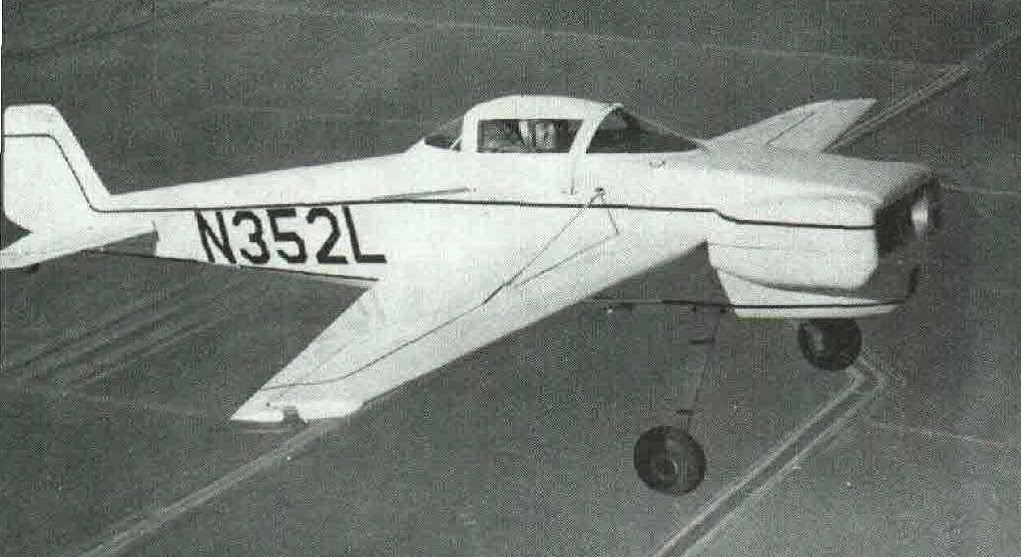
The 1959 M-101 Macerschmitt aka Could-Bee, designed by Harvey Mace, was a single place cabin, low wing monoplane.
From the outset, Mace was determined to design and build it completely on his own. This was done, with the sole exception of the paint job — George Pereira helped with that. Final assembly and weight and balance were completed on July 14, 1959.

The first flight was to leave Sacramento Municipal Airport to proceed to an abandoned auxiliary field the following morning. Registered N352L, the M-101 first flew on 15 July 1959. The scrap pile tail wheel tire decided it had had enough. It didn’t have adequate aileron control. The tip ailerons could have been made to work with a little more area, as they worked at higher speeds Mace had plans all laid out for conventionals, but all this took another two months.
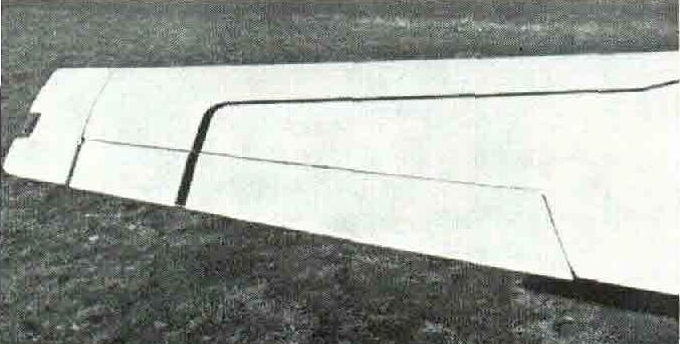
After more flights, Macess wife flew it and dropped a wing in with superficial damage. The dinged prop was shortened and repitched to 65 pitch, 65 in. diameter, which was a fair compromise prop, and in actual practice, by stop watch, the “Macerschmitt” does 139 mph at 2350 rpm.
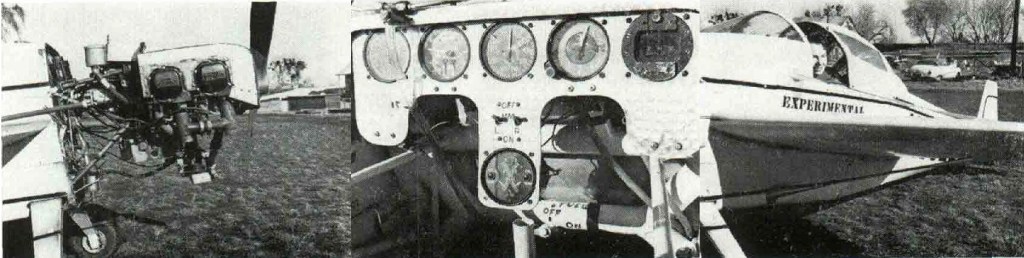
It still climbs at 1000 ft/min. at 6000 ft. at normal climb power, and 650+/min. at 11,000 ft.
The adjustable seat was excellent, as well as the sliding canopy. The variable incidence adjustment proved unnecessary. The adjustable stabilizer is needed in this airplane to compensate for weight differences. The 3.5 degree incidence was helping the landing and takeoff speed.
Only the one was built.
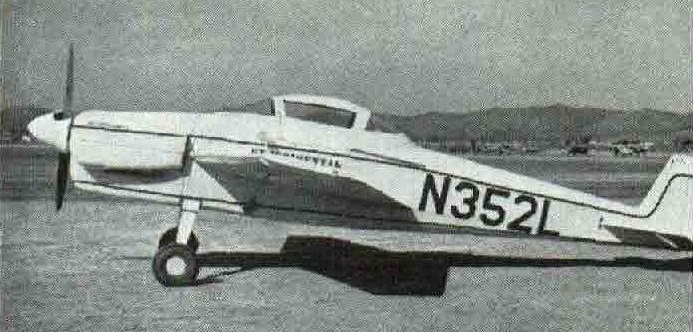
Engine: Lycoming O-290, 125hp / 93 kW
Propeller: 65 in. dia/65 in. pitch, 2 blade
Wingspan: 16 ft 6 in / 5.03 m
Wing area: 65.5 sq. ft / 6.09 sq.m
Airfoil: NACA 0009
Length: 17 ft 9 in / 5.41 m
Gross weight: 1000 lb
Empty weight: 685 lb / 311 kg
Max speed: 170 mph
Cruise speed: 150 mph
Stall: 80 mph
ROC SL: 2000 fpm / 10 m/s
ROC 12,000 ft: 650+ fpm
Seats: 1
A 1930 two place high wing cabin monoplane. Power was a 90hp LeBlond. Registered N14105 c/n 1.
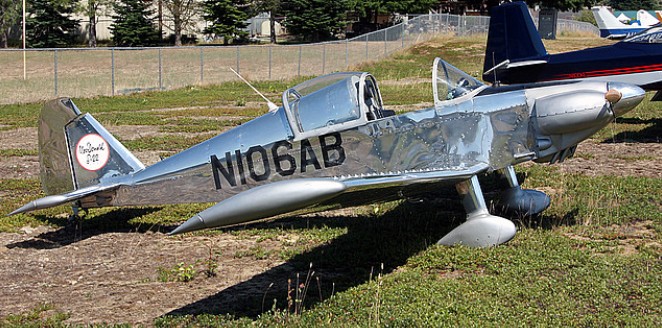
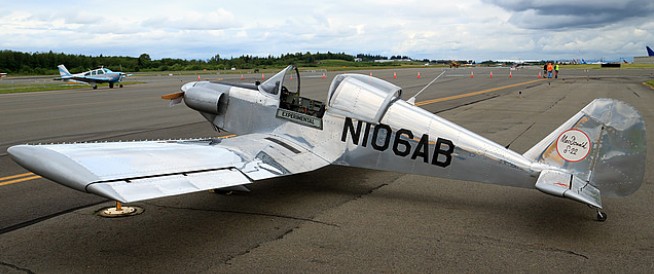
An all metal, low wing, fixed taildragger. The S-21 was designed to be easy to build and fly with good economy. Construction is all metal using pop riveting. Prototype designated S-20, plans built versions the S-21.
Gross Wt. 720 lb
Empty Wt. 456 lb
Wingspan 25’
Length 18’6”
Engine 1500cc Volkswagen.
Vmax 110 mph
Cruise 90 mph
Climb rate 850 fpm
Range 250 miles
The S-20 utilizes all-metal construction but keeps it simple by the extensive use of pop rivets. It features open-cockpit seating for one, low wings and conventional tail-wheel landing gear. The fuselage is of steel-tube truss construction with a light alloy skin. The constant-chord wings are also covered with the same light alloy skin.
First flight was made on March 9, 1972 by N106AB. S-21 was the designation for plan-built aircraft by home-builders.
Engine Volkswagen 1500cc, 53-hp
Wingspan 25 ft 0 in
Length 18 ft 6 in
Gross Wt. 720 lb
Empty Wt. 456 lb
Fuel capacity 10 USG
Top speed 162 mph
Cruise 90 mph.
Stall 38 mph.
Climb rate 850 fpm
Takeoff run 300 ft
Landing roll 300 ft
Range 250 miles
Seats: 1
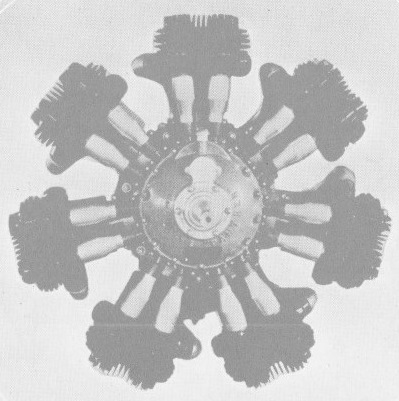
The cylinder heads are L-shaped combustion chambers allowing the valves to be actuated by direct contact with the cams eliminating rockers and rods.
The valves can be reground without removing the cylinders. The port pluga are unscrewed, and the valves can be removed through the ports.
Type: 7 cylinder radial, L-head, air cooled 4 stroke
Rating: 150 hp at 1900 rpm
Displacement: 612.15 cu.in
Compression ratio: 5-1
Bore: 4 1/2 in
Stroke: 5 1/2 in
Length: 35 in
Diameter: 36 in
Weight: 400 lb
Fuel consumption: not more than .56 lb/hp/hr
Oil consumption: not more than .023 lb/hp/hr
Lubrication: pressure system
Ignition: dual Scintlla
Carburation: Stromberg NAR-5A
Spark plugs: 2 per cylinder

