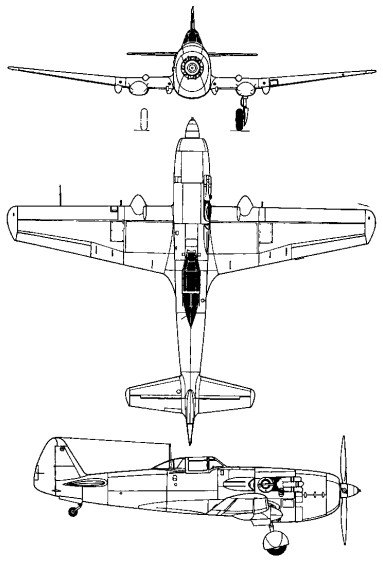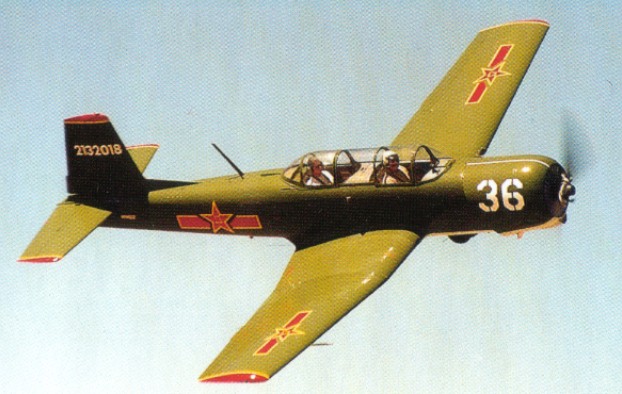
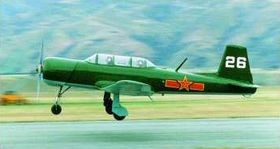
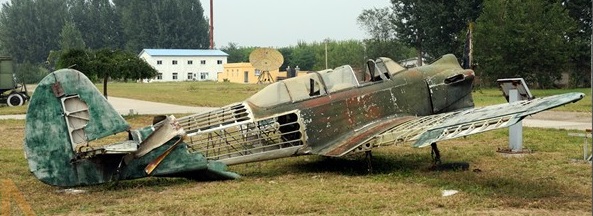
Nanchang CJ-6 / Shengyang Chujiao 6 / BT-6

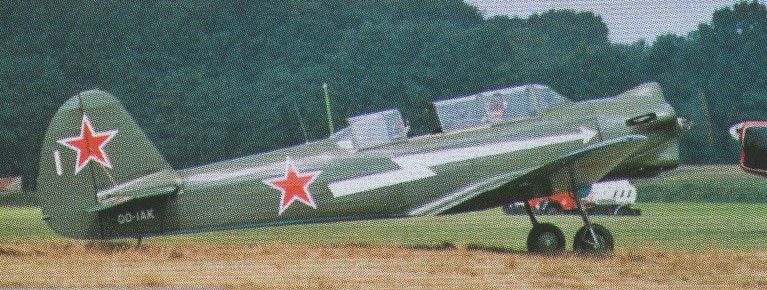
In the early 1950s, the primary trainer aircraft used by the Air Force was the Soviet Yak-18. At that time, the Nanchang Aircraft Factory was able to independently produce the aircraft in accordance with Soviet drawings. The steel frame of the Yak 18 type of steel frame, the structure of the outer cover was relatively backward, and the airborne power supply was insufficient. Designers such as Xu Shunshou believe that it is no longer necessary to introduce the improved Yak 18A, and it is entirely possible to independently develop a primary trainer based on domestic technical strength.

Nanchang CJ-6 Article

In July 1957, the Chujiao 6 design was begun, and the prototype flew for the first time in August of the following year. On January 5, 1962, Chujiao-6 completed the design finalization. After the successful test flight of the Chujiao 6 in Nanchang, many people in the aviation industry system and the air force still believed in the Soviet aircraft and advocated the production of the Yak 18A. Until a new leader of the Aviation Industry System took office, he decided to continue to improve the elementary trainer 6.
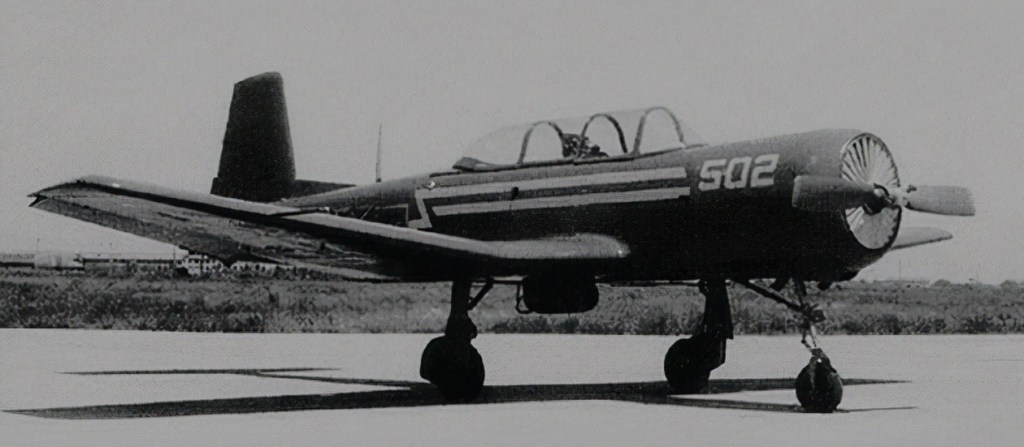
The body of Chujiao 6 adopts an all-metal thin-skinned shell structure, which is similar to the Yak 18 in appearance. The actual fuselage, wings and front three-point landing gear are all new designs.
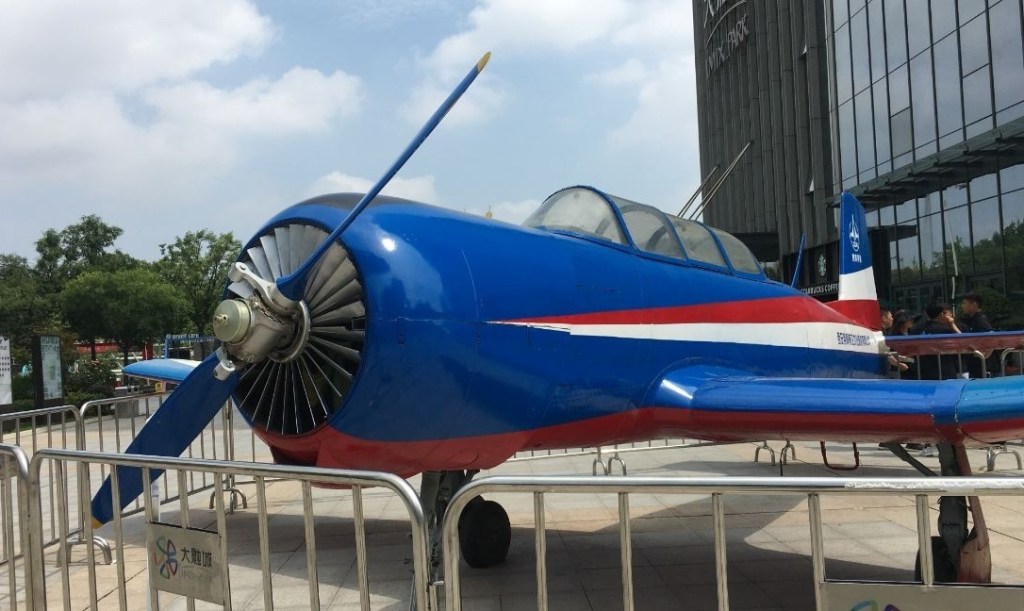
A Chinese derivative of the Yak-18, and development of the CJ-5, the CJ-6 is aerobatic, with a fully retracting undercarriage.

A military primary trainer, approximately 2000 were built for the Peoples Liberation Army Air Force from 1962. It has also served with the air forces of Albania, Bangladesh, Cambodia, Tanzania and Zambia.

The improved CJ-6A still being built in the late 1990s in very low volume for the same radial piston-engined primary training role.
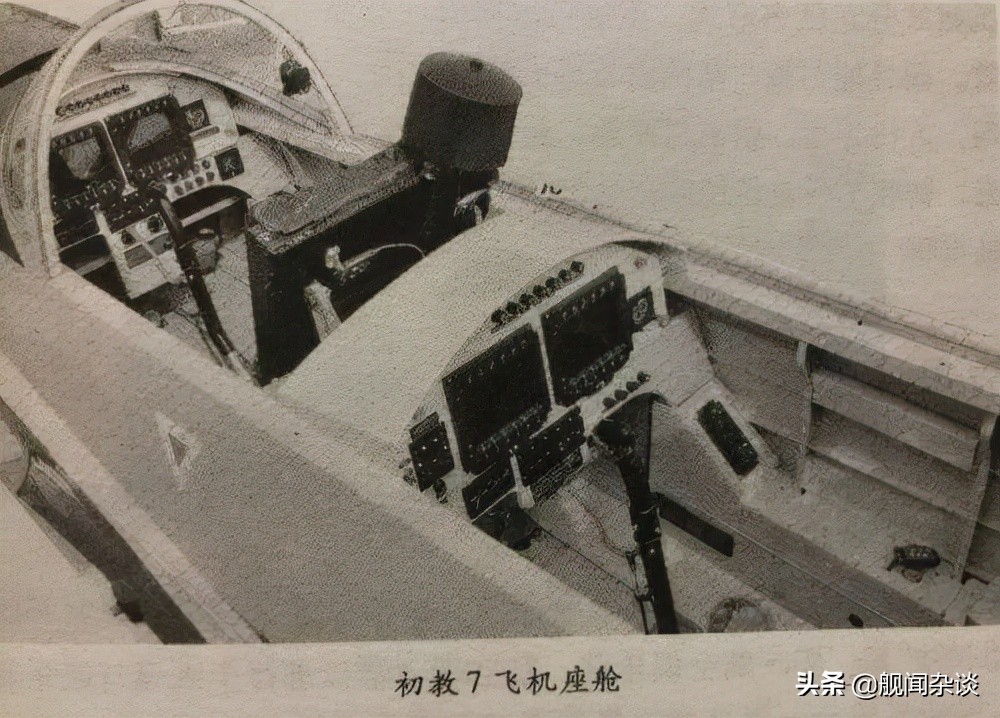
Elementary Education 6 also has many shortcomings: the onboard equipment is backward, there is no ejection rescue system, the cockpit is not sealed, the noise is loud, and the operating environment is not good in cold weather. Therefore, the domestic development of a new generation of primary trainers has been brewing since the 1990s. In August 2007, Chujiao 7 was formally established, and the first flight was successful in 2010, and it was publicly unveiled at the Zhuhai Air Show.
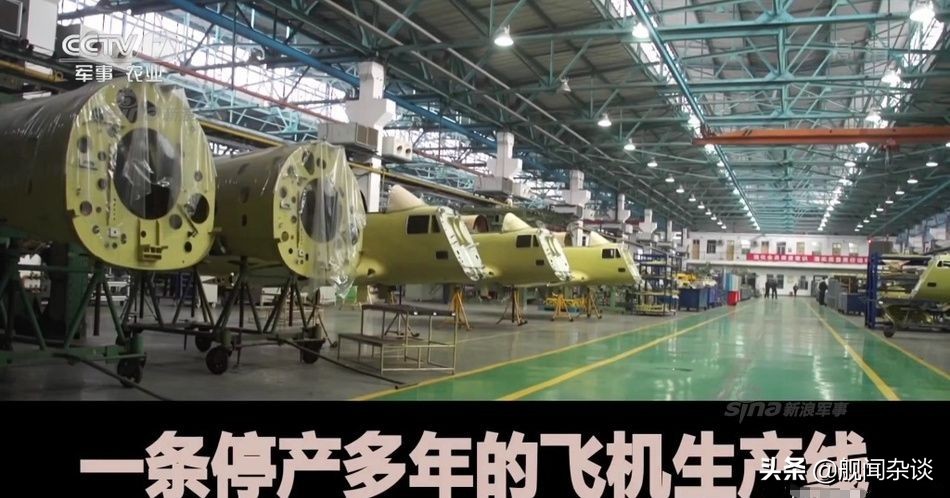
In 2015, Hongdu Company officially began to resume primary education 6. It can be seen in the news that there are a large number of newly manufactured Chujia 6 in the Hongdu Aviation Workshop. The production number of the fuselage shows that the output is at least dozens of aircraft. The Air Force has resumed bulk purchase of Chujia 6, and Chujia 7 is completely yellow.
Gallery

CJ-6A
Engine: Huosai-6 9 cyl radial, 285 hp
ROC: 1500 fpm
Cruise: 135 kt
Length: 8.46m
Wingspan: 10.22m
Wing area: 17sq.m
Loading: +6/-3G
Empty wt: 1095 kg
MAUW: 1400 kg
Max speed: 350 kph
Range: 625 km
Endurance: 2.5 hr
Nakajima Sakae / Ha-25 / Ha-35 Model 11 / Ha105 / Ha-115-I / Army Type 99 / NK1

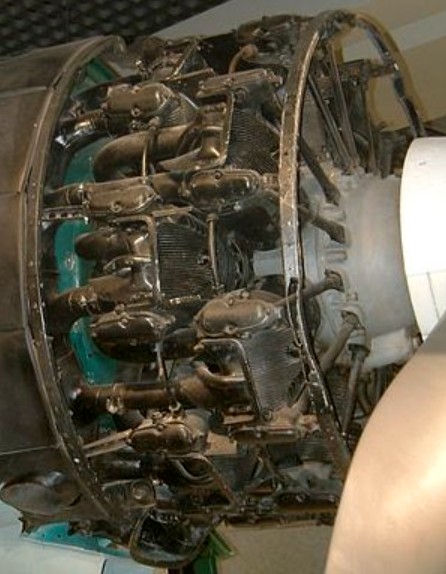
The Nakajima Sakae (栄, Prosperity) was a two-row, 14-cylinder air-cooled radial engine used in a number of combat aircraft of the Imperial Japanese Navy and Imperial Japanese Army before and during World War II.

The engine was designed by Nakajima Aircraft Company after acquiring a license for the French Gnome-Rhone 14K. The Imperial Japanese Army Air Force called the first of the series the Ha-25 (ハ25) and later versions were designated Ha35, Ha105 and Ha115, while the Imperial Japanese Navy Air Service designation was Nakajima NK1, with sub-types identified by Model numbers; thus Nakajima NK1 Sakae 10, 20 and 30 series.

A total of 21,166 were made by Nakajima; 9,067 were manufactured by other firms.

Variants:
Army Type 99 975 hp Air-cooled Radial
Long Army designation for the Nakajima NK1 radial engine named Sakae.

Nakajima Ha25
Short Army designation for the initial production version of the Nakajima NK1 radial engine named Sakae.

Nakajima Ha35
Nakajima Ha35 Model 11
Nakajima Ha35 Model 12
Nakajima Ha35 Model 23 – 1,150 hp (858 kW)

Nakajima Ha105

Nakajima Ha115
Nakajima Ha115-I
Nakajima Ha115-II

Nakajima NK1
NK1C Sakae 12 – 925 hp (690 kW), 940 hp (701 kW), 975 hp (727 kW)
NK1D Sakae 11 – 970 hp (723 kW), 985 hp (735 kW)
NK1F Sakae 21 – 1,115 hp (831 kW), 1,130 hp (843 kW)
NK1E Sakae 31 – 1,130 hp (843 kW), boosted to 1,210 hp (902 kW) with water-methanol injection

Applications:
Kawasaki Ki-48
Mitsubishi A6M
Mitsubishi C5M
Nakajima B5N
Nakajima J1N
Nakajima Ki-43
Nakajima Ki-115
Kawasaki Ki-56

Specifications:
Sakae 21
Type: 14-cylinder air-cooled two-row radial engine
Bore: 130 mm (5.1 in)
Stroke: 150 mm (5.9 in)
Displacement: 27.8 L (1,700 cu.in)
Length: 1,600 mm (63 in)
Diameter: 1,144 mm (45.0 in)
Dry weight: 533 kg (1,175 lb)
Valvetrain: Overhead valve
Supercharger: Gear driven, two speed.
Fuel system: Nakajima twin choke carburettor, automatic mixture and boost control.
Cooling system: Air-cooled
Power output: 761 kW (1,020 hp) at 2,600 rpm at 6,400 ft (1,950 m)
Specific power: 30.2 kW/L (0.66 hp/cu.in)
Compression ratio: 7:1
Power-to-weight ratio: 1.43 kW/kg (0.87 hp/lb)

Nakajima Hikari

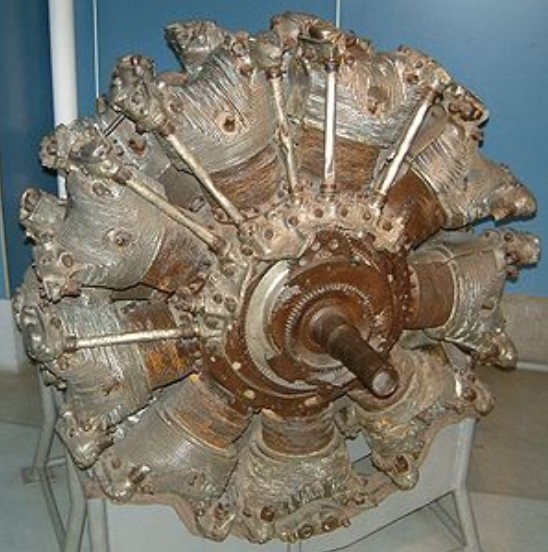
The Nakajima Hikari (Japanese: 光 “Light”) was a nine-cylinder, air-cooled, radial aircraft engine developed in Japan for Navy use during World War II by the Nakajima Aircraft Company. It was a development of the Nakajima Kotobuki and Wright Cyclone.

Variants:
Hikari 3 – 770 hp (574 kW)
Hikari 1 – 820 hp (611 kW)

Applications:
Aichi D1A
Aichi D3A (prototype only)
Mitsubishi F1M
Nakajima A4N
Nakajima B5N1 (B5N1 only)
Nakajima C3N
Yokosuka B4Y

Specifications:
Type: 9-cylinder air-cooled radial aircraft piston engine
Bore: 160 mm (6.30 in)
Stroke: 180 mm (7.09 in)
Displacement: 32.57 lt (1,987.7 cu.in)
Cooling system: Air-cooled
Power output: 611 kW (820 hp)

Nakajima Ha-5 / Ha-41 / Ha-109

The “Kotobuki” air-cooled aircraft engine was improved and developed into the “Hikari (light)” engine with the bore and stroke expanded to the limit of the cylinder (160 × 180 mm for a displacement of 32.6 L), with the power was increased to 720 PS. The “Hikari” was used in Type 95 carrier fighters and Type 96 Carrier Attack Plane.

Nakajima knew that engines of higher power would be needed and began work on a new two-row, 14 cylinder design that was based on the 160 × 180 mm cylinder design of the Hikari. The Ha-5 prototype engine was completed in 1933, producing 1,000 PS, combining features of the Bristol Jupiter and Pratt & Whitney R-1340 Wasp designs. The Ha-5 had separate camshafts for the front and rear rows of cylinders like American designs, rather than using a single, front-mounted camshaft and long pushrods to operate both rows of cylinder valves. An improved Ha-5 was developed as a 1,500 PS engine. In all about 5,500 Ha-5 engines were produced for the military.

Later on, as the weights of aircraft rose and higher speeds were required, Nakajima continued to improve the Ha-5 design, creating the “Ha-41” and “Ha 109”, which shared the same 146mm x 160mm bore and stroke as the Ha-5, but were increased from the 950 hp of the Ha-5 to 1,260 hp and 1,440 hp, respectively. The unified code for the Ha-41 was “Ha-34”. Later the engine was developed into an 18 cylinder, twin-row engine called the “Ha-219”, but this never got past the development phase. All these engines used essentially the same cylinder heads, the differences being in supercharging and engine revolutions per minute. The Ha-5 and Ha-41 shared the same weight of 630 kg, while the Ha-109 weighed 720 kg due to its larger, twin-stage supercharger system. The Ha-41 was the primary engine of early variants of the Nakajima Ki-49 “Helen” bomber, and the Nakajima Ki-44 “Tojo” fighter, later versions of both planes using the more powerful Ha-109 engine. Early versions of the Mitsubishi Ki-21 “Sally” used the Ha-5. The Ha-41 would have been an ideal powerplant in aircraft that used the Mitsubishi Kasei, being of smaller dimensions and displacement, yet making equivalent power levels.

About 7,000 civilian and 5,500 military Ha-5’s were built during World War II.

Variants:
Ha-5 634 kW (850 hp), Base design, (used on Mitsubishi Ki-21 Army Type 97 Heavy Bomber)
Ha-5 KAI 634 kW (850 hp), (used on Mitsubishi Ki-30)
Ha-5 660 kW (890 hp) (used on Nakajima Ki-19)
Ha-5 KAI 708 kW (950 hp), (used on Mitsubishi Ki-57 and Ki-57-I Army Type 100 Transport Model 1)
Ha-5-KAI 708 kW (950 hp) take-off, 805 kW (960 hp) at 3,000 m (11,810 ft), (used on Mitsubishi Ki-30 and on first prototype Nakajima Ki-49 Donryu)
Ha-5 KAI 708 kW (950 hp) take-off, 805 kW (1,080 hp) at 3334 m (13,125 ft), (used on Mitsubishi Ki-21-I Army Type 97 Heavy Bomber Model 1 and Ki-21-Ia, Army Type 97 Heavy Bomber Model 1A)
Ha-41 1,260 hp@2,500rpm takeoff, 1,260 hp@2,450rpm @ 3,700m
Ha-109 1,500 hp@2,650rpm takeoff, 1,440 hp@2,600rpm @ 5,200m

Applications:
The Ha-5 engine was used to power:
Mitsubishi Ki-21 “Sally”
Mitsubishi Ki-30
Mitsubishi Ki-57

The Ha-41 engine was used to power:
Nakajima Ki-49-I ‘Donryu’ (“Helen”)
Nakajima Ki-44-I ‘Shoki’ (“Tojo”)

The Ha-109 engine was used to power:
Nakajima Ki-49-II
Nakajima Ki-44-II

Specifications:

Nakajima Ha-5
Type: 14-cylinder, air-cooled, two-row radial piston engine
Bore: 146 mm (5.75 in)
Stroke: 160 mm (6.3 in)
Displacement: 37.5 L (2,288 cu.in)
Diameter: 1,260 mm (49.6 in)
Dry weight: 625kg (1,378 lb) (720kg Ha-109)
Valvetrain: four-valve intake and exhaust pushrod-operated overhead valve system
Supercharger: Centrifugal, 280mm impeller at 8.39:1 reduction (Ha-5 and Ha-41), 6.55:1 and 8.55:1 for Ha-109 (twin stage supercharger)
Cooling system: Air-cooled
Reduction gear: 0.6875:1 (11/16)
Power output:
890hp (663.7 kW) at 2,200 rpm at 4700m (15,490 ft) with -50mm boost (Nominal Power)
950hp (708.4 kW) at 2,200 rpm with +50mm boost (Takeoff Power)
Specific power: ( to ) 0.58 hp/ cu.in to 1.02 hp/ cu.in
Compression ratio: 6.7:1

Nakajima Kotobuki / Ha-1 / Army Type 97

In 1917, Chikuhei Nakajima set up the “Airplane Institute” at Ojima Town in Gunma Prefecture. In 1918 they built their first airplane; the “Nakajima Type 1” with a U.S.A. made engine. In 1920 the company sent Kimihei Nakajima to France to study European advances, and in 1922 started their own engine factory in Tokyo. This led to production of engines based on the Lawrence A-3 two-cylinder air-cooled horizontally opposed engine.

At the time the Lawrence was an oddity. Most air-cooled engines at that time were using cylinders that rotated together with the propeller, but Kimihei overheard that an engine with good cooling capability with fixed cylinders was being developed in England. He observed the English Gloster Gamecock fighter with its Bristol Jupiter engine, which was an advanced design for the era with an automatic adjustment device for tappet clearance, spiral piping for even intake distribution, and a four-valve intake and exhaust system. He acquired a manufacturing license for the Jupiter in 1925. In 1927, after inviting two production engineer instructors from the Bristol company, the Jupiter Type 6 of 420 PS and Type 7 of 450 PS with a turbocharger were put into production at the Nakajima factory.

After studying the Pratt & Whitney Wasp 9-cylinder radial, Nakajima tried to combine the good points found in Jupiter design with the rational design of the Wasp. Nakajima then produced a series of engine types, named “AA”, “AB”, “AC”, and “AD”, as engineering exercises. The next engine design, the “AE”, was innovative, with a bore of 160 mm and a stroke of 170 mm.

Prototypes were made and performance tests were done, but this engine was not adopted due to its very complex engineering. Nakajima continued testing different cylinder designs. In 1929, the “AH” design, with bore and stroke of 146 × 160 mm and a total displacement of 24.1 L, was completed. This was to be the final version of this basic engine design.

In June 1930 the first prototype of was completed and it passed the durability test for the type approval in the summer. Then flight tests were started using a Nakajima A2N carrier plane. Nakajima had designed the first Japanese originally designed air-cooled 9-cylinder engine, the 450 PS “Kotobuki”.

In December 1931, this engine was approved and adopted by the Navy as the Ha-1 Ko for the Type 97 carrier fighter. The engine was named, in connection with the Jupiter engine, “Kotobuki” (寿, “Longevity”).

The “Kotobuki” engine was improved and developed into the “Hikari (light)” engine with the bore and stroke expanded to the limit of the cylinder (160 × 180 mm for a displacement of 32.6 L), with the power was increased to 720 PS. The “Hikari” was used in Type 95 carrier fighters and Type 96 Carrier Attack Plane.

In search of more power the basic design was extended into a 14-cylinder 2-row engine, the “Ha-5 Ha-41 Ha-109” series.

Variants:
2-Kai-1 – 585 hp (436 kW)
2-Kai-3 – 610 hp (455 kW)
3-Kai – 710 hp (529 kW)

Applications:
Mitsubishi A5M
Mitsubishi Ki-18
Nakajima A1N2
Nakajima A2N
Nakajima Ki-8
Nakajima Ki-27
Nakajima E4N
Nakajima E8N
Nakajima Ki-34
Nakajima Type 91

Specifications:
Type: 9-cylinder radial piston engine
Bore: 146 mm (5.75 in)
Stroke: 160 mm (6.3 in)
Displacement: 24.1 L (1,471.2 cu in)
Dry weight: 350 kg (772 lb)
Cooling system: Air-cooled
Power output: 550-780 hp

Nakajima NK7 Mamoru / Mamoru-Kai / Ha-103

The Mamoru was Nakajima’s seventh air-cooled design, which lead to its designation: N for Nakajima, K for air-cooled, 7 for the 7th design, and A for the major model number. Designed by Kiyoshi Tanaka, the Nakajima Mamoru engine was a 14-cylinder, air-cooled, two-row radial engine of 1870 hp. It was one of the largest 14-cyl. engines in the world and was to compete with early 18-cyl engines. The Nakajima model designation for this engine was NAK while it was an experimental project, in service it was known as the NK7, and known as the Ha-103 by the Army and “Mamori” or “Mamoru” by the Navy. According to unified designation code it was Ha-36. The meanings of these two Japanese words are very similar, Mamori translates as protection and Mamoru, translates as to guard, protect, defend and obey.

First run in 1941, the first application of the Mamoru was on the first prototype of the G5N1 Genzan. The G5N1 had been designed on the basis of the Douglas DC-4E as Japan’s first four-engine bomber, and proved to be a disappointment. These problems were compounded by the unreliability of the early Mamoru engines, which had to be de-tuned and left the G5N1 underpowered. The G5N1’s maiden flight was on 10 April 1941, and a further four prototypes were built with the Mamoru. In an attempt to salvage the project, two additional airframes were fitted with 1,530 hp Mitsubishi MK4B 12 “Kasei” engines and redesignated G5N2s. Although the Mitsubishi engines were more reliable than the original Mamoru 11s, further development was halted. Of the six completed Shinzans, four of them (two G5N2s and two G5N1s re-engined with the Kasei 12) were relegated for use as long-range Navy transports under the designation Shinzan-Kai Model 12 Transport G5N2-L.

The Nakajima Mamoru was also used on the Nakajima B6N Tenzan (heavenly mountain) carrier based attack aircraft. The Navy requested this aircraft based on the Kasei, but Nakajima’s Kenichi Matsumara insisted on using their Mamoru. The B6N first flew on 14 March 1941, demonstrating several problems, notably the poor engine reliability. With the delay of 2 years, by 1943 the engine had improved to the point where serial production was allowed to start, but after only 133 B6N1s had been delivered the Navy ordered the switch to the 1,850 hp (1380 kW) Mitsubishi MK4T Kasei 25. The rest of the 1,268 B6N2s were Kasei powered.

Two sub-models were built with minor changes, the Model 11 for the Navy, and the Model 12 for the Army. Both produced 1,850 hp. Production of the Mamoru was ended by the Navy after only a few hundred production examples were built.

Variants:
Mamori 11 NK7A (for IJN aircraft)
1,870 horsepower (1,390 kW) at 2600 rpm (take-off)
1,750 horsepower (1,300 kW), 2500 rpm at 1,400 metres (4,600 ft)
1,600 horsepower (1,200 kW), 2500 rpm at 4,900 metres (16,100 ft)

Mamori 12 Ha-103 (for IJA aircraft)
1,870 horsepower (1,390 kW) at 2600 rpm (take-off)
1,750 horsepower (1,300 kW), 2500 rpm at 1,400 metres (4,600 ft)
1,600 horsepower (1,200 kW), 2500 rpm at 4,900 metres (16,100 ft)

Applications:
Nakajima B6N 1 X 1,870 hp (1395 kW) Nakajima NK7A Mamoru 11
Nakajima G5N 4 X 1,870 hp (1395 kW) Nakajima NK7A Mamoru 11
Nakajima Ki-49 2 X 1,870 hp Nakajima Ha-103
Mitsubishi Ki-67 (prototype) 2 X 1,870 hp Nakajima Ha-103

Specifications:
Nakajima NK7A Mamoru type 11, 12
Type: 14-cylinder supercharged, air-cooled two-row radial piston engine
Bore: 155 mm (6.1 in.)
Stroke: 170 mm (6.7 in.)
Displacement: 44.9 lt (2,740 cu.in)
Diameter: 1380 mm (54.3 in.)
Dry weight: 870-903 kg (1,918-1,991 lb.)
Valvetrain: push rod operated overhead-valve
Supercharger: Two-speed single stage centrifugal
Cooling system: Air-cooled
Reduction gear: 0.578
Power output: takeoff: 1870 hp at 2600 rpm, cruise: 1750 hp at 2500 rpm at 1400 m
Compression ratio: 6.5

Nakajima Ha-45 Homare / NK9 / NBA / Type 4

The Nakajima Homare (誉, “praise” or, more usually, “honour”) was an air-cooled twin-row 18 cylinder radial Japanese aircraft engine. Given the Navy service designation NK9, the “Homare” was also given the company designation NBA, Army experimental designation Ha-45 (ハ45) or, Army long designation Nakajima Army Type 4 1,900 hp Air-Cooled Radial and, (coincidentally), unified designation code of Ha-45.

Development of the Homare was started in 1940 by Ryoichi Nakagawa, and certification was completed in 1941. It succeeded Nakajima’s previous 14 cylinder Sakae (Ha-25) engine, with its forward seven cylinders staggered from the rear seven for efficient cooling.

The design was compact, with an external diameter of 118 cm. With a bore and stroke of 130 mm x 150 mm, it was classified as a short-stroke engine. It was designed to output around 1800 hp (1340 kW), or 100 hp (75 kW) per cylinder. However, the tight design of the engine made it difficult to maintain quality in manufacturing, and unreliability in the field was a significant problem; actual output of early models at altitude was in the range of 1300 hp (970 kW), far below the designed capability. Later models had improved performance, and it became one of the predominant powerplants of Japanese military aircraft in the latter part of the war. A total of 8,747 were produced.

Variants:
Homare 11 – 1,650 hp (1,230 kW), 1,820 hp (1,357 kW), 1,900 hp (1,417 kW)
Homare 12 – 1,825 hp (1,361 kW)
Homare 21 – 1,990 hp (1,484 kW)

Applications:
Aichi B7A
Kawanishi N1K-J
Mitsubishi A7M
Nakajima C6N
Nakajima G8N
Nakajima Ki-84
Yokosuka P1Y1

Specifications:
Type: 18-cylinder air-cooled twin-row radial engine
Bore: 130 mm (5.12 in)
Stroke: 150 mm (5.91 in)
Displacement: 32 lt (1,940 cu.in)
Length: 1,778 mm (70 in)
Diameter: 1,182 mm (46.5 in)
Dry weight: 830 kg (1,830 lb)
Valvetrain: push rod operated overhead-valve system with 2 valves per cylinder
Supercharger: Two-speed single stage centrifugal
Fuel system: Water-methanol injection
Cooling system: Air-cooled
Power output: 1,485 kW (1,990 hp) at altitude
Specific power: 46.4 kW/L (1.02 hp/cu.in)
Compression ratio: 7.0
Power-to-weight ratio: 1.79 kW/kg (1.09 hp/lb)

Nakajima Ki-115 Tsurugi

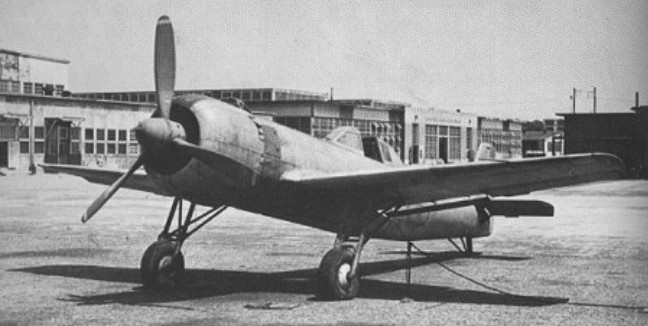
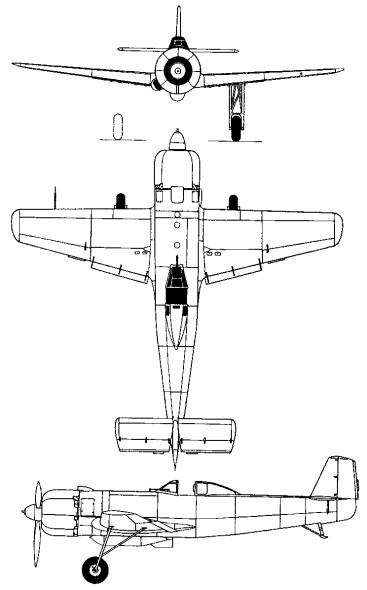
In January 1945 Nakajima was ordered by the Imperial Japanese Army to design and develop, as quickly as possible, a basic aircraft that could carry a bomb of up to 800kg weight for use in kamikaze attacks. The resulting Nakajima Ki-115 low-wing monoplane prototype was of mixed construction, powered by a Nakajima Ha-35 radial engine and had welded steel-tube main landing gear units, without any form of shock absorption, which were intended to be jettisoned after take-off on a kamikaze mission. Flight tests showed that ground handling was unacceptable in this configuration, leading to the introduction of main landing gear units with simple shock absorbers. In this form, and incorporating some minor modifications, the aircraft entered production as the Ki-115a Tsurugi (Sabre). However, Nakajima had built only 104 production aircraft by the time the war ended, and none of these was used operationally.

Ki-115
Engine: 1 x Nakajima Ha-35, 843kW
Wingspan: 8.6 m / 28 ft 3 in
Length: 8.55 m / 28 ft 1 in
Height: 3.3 m / 10 ft 10 in
Wing area: 12.4 sq.m / 133.47 sq ft
Max take-off weight: 2880 kg / 6349 lb
Empty weight: 1640 kg / 3616 lb
Max. speed: 550 km/h / 342 mph
Range: 1200 km / 746 miles
Armament: 800-kg bomb
Crew: 1

Nakajima Ki-115 Tsurugi

Nakajima Ki-87

The Nakajima Ki 87 was an experimental high altitude fighter. The first and only example flew in April 1945.

Engine: 1 x Nakajima Ha-44 Model 11, 1800kW
Wingspan: 13.42 m / 44 ft 0 in
Length: 11.82 m / 38 ft 9 in
Height: 4.5 m / 14 ft 9 in
Wing area: 26 sq.m / 279.86 sq ft
Max take-off weight: 5632 kg / 12416 lb
Empty weight: 4387 kg / 9672 lb
Max. speed: 706 km/h / 439 mph
Ceiling: 12850 m / 42150 ft
Armament: 2 x 30mm cannons, 2 x 20mm cannons, 250-kg bomb
Crew: 1

Nakajima Ki-87