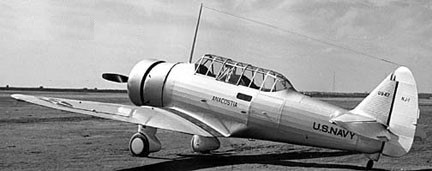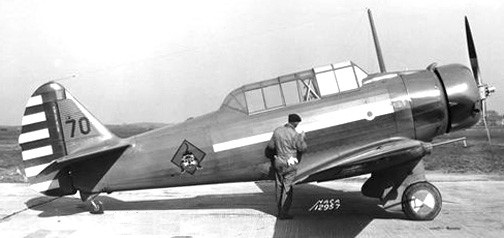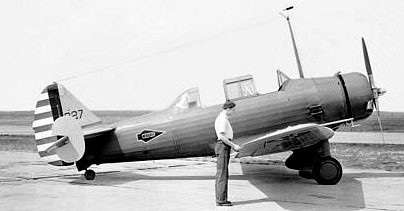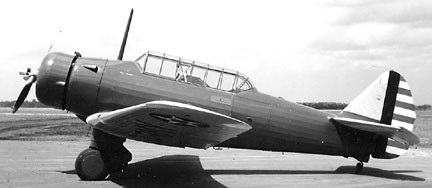
North American NA-26 / BC-1 / T-6 / Harvard / SNJ

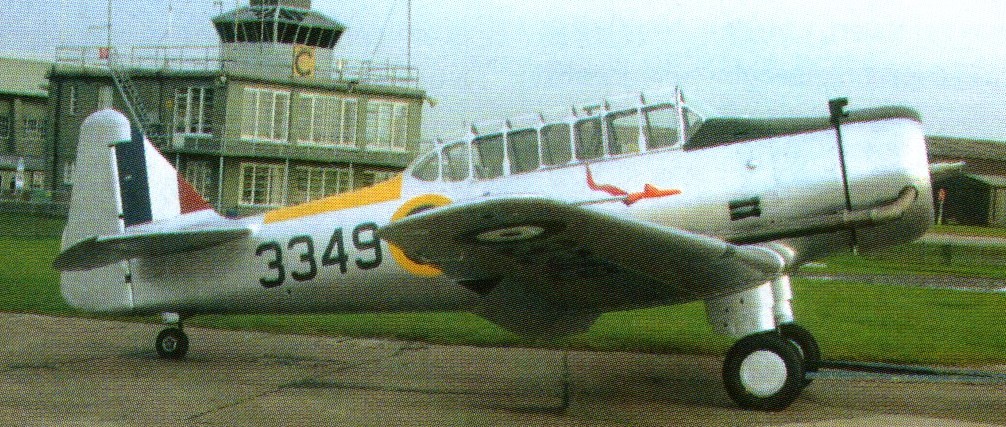
Harvard Mk.II

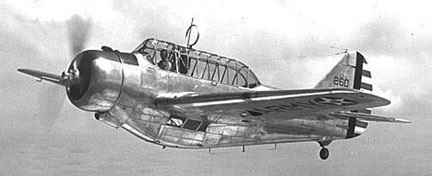
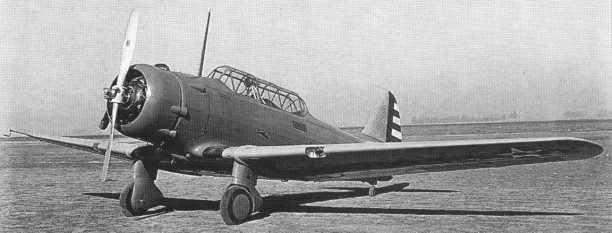
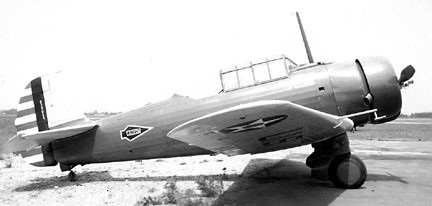
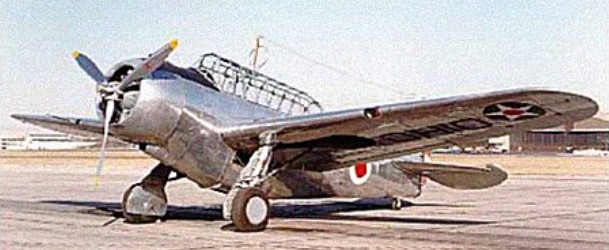
Derived from the 1935 NA-16 prototype, the North American NA-26 design was first flown in 1938. This aircraft was designated the Basic Combat Trainer, BC-1. The BC-1 (basic combat, type 1) had the same basic airframe design as the BT-9 but with a retractable main landing gear and more power. It was equipped with one nose-mounted .30-caliber machine gun that fired through the propeller and a second .30-caliber gun on a flexible mount in the rear cockpit.

The first one flew on February 11, 1938. The Edward G. Budd Manufacturing Co. was subcontracted to experiment with stainless steel in the wing panels to determine its structural feasibility in the aircraft. It had seven inches more wing span, larger tanks and a higher gross weight (by approx 155 pounds) when compared to the later T-6.

NA Harvard Article

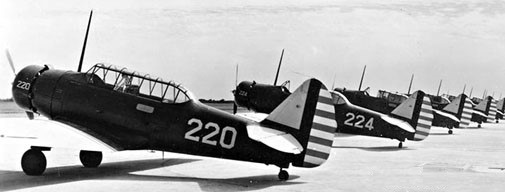
In 1939, the U.S. Army Air Corps ordered an additional 200 of the advanced BC-1A type, and the U.S. Navy a number of the same type but designated as SNJ-1.

The Navy had been searching for a trainer for pilots destined to fly its scout aircraft, such as the Douglas SBD dive bomber, and it chose the BC-1. The BC-1 was ordered in 1937 to the extent of 41 aircraft with the R-1340-45 radial. Blunt wing tips and a straight-edged rudder characterised the BC-lA, of which 92 were ordered and the last six delivered as AT-6s after a change in designation policy during 1940. AT-6 orders covered an extra 85 aircraft, and production then switched to 1,429 AT-6As with the R-1340-49 engine and modified fuel tankage. The full production flood now saw 400 AT-6B gunnery trainers with the R-1340-AN-1, 2,970 AT-6Cs with a high proportion of non-strategic materials, 3,713 AT-6Ds with the original structure and 24-volt electrics, and 25 AT-6Fs with a strengthened airframe. US Navy variants equivalent to the BC-1, AT-6, AT-6A, AT-6C, AT-6D and AT-6F were the SNJ-1 to -6 respectively, of which 4,765 were delivered.
SNJ-1

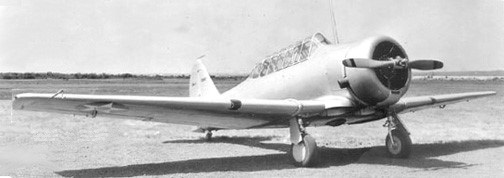
The 1937 SNJ-1 was as the Army BC-1A with retractable gear and metal-covered fuselage. Sixteen very operated a 1552-1567.

A total of 2,068 wartime aircraft were remanufactured as T 6G.

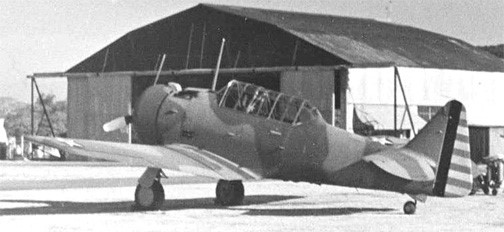
North American engineers designed two variants of the BC-1 to sell to overseas buyers as fighters and attack planes. One was a single-seat fighter and the other a two-seater; both had five .30-caliber ma¬chine guns in the wings and nose. The attack version (NA-44, -69, -72) also had a flexible machine gun in the rear cockpit. The first order, from the Siamese air force, was for 10 A-27 (NA-69), including both versions.
North American A-27

Brazil, Peru and Chile ordered 49 single-seat fighters. Brazil received 30 NA-72 with P&W R-1340 in 1940 and one armed prototype NA-44 went to the RCAF in 1940.

Siam never received any of the aircraft, however. Tension was increasing at the time between Siam and French Indochina, and the State Department prohibited the transfer. The aircraft were diverted to the Philippines, where they were taken over by the U.S. Army Air Corps, re-designated A-27 (41-18890/18899), where they were destroyed in Japanese bombings during Dec 1941. Several A-27s saw action in the Philippines on December 8, 1941, against invading Japanese forces. The single-seat version was stripped of armament, returned to the States for fighter-pilot training and designated the P-64.

The Navy later requested several modifications to the SNJ-1, including a more powerful engine. That changed the designation to SNJ-2.

Sixty-one 1940 SNJ-2 were operated as 2008-2043 and 2548-2572.
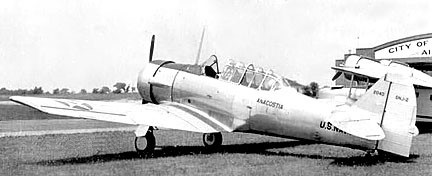
North American SNJ-2 2040

The 1940 AT-6 (NA-59) first flew on 6 February 1930 and 85 were built, plus 9 from BC-1B (40-717/725, -2080/2164).

A total of 1549 of the 1941 AT-6A (NA-77) were built: 41-148/785, -15824/16228, 16259/16403, -16439/16457, 41-16474/16578, -16616/16653, -16693/16778, -16821/16878, -16924/16939, -16994/17033.
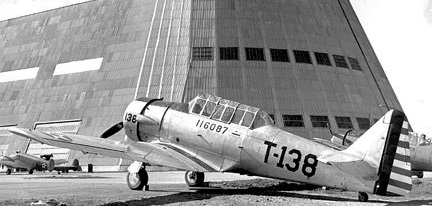
North American AT-6A 41-16087 from Mather Field at Moffett Field CA.

The Air Corps asked for other modifications, and the AT¬6A/SNJ-3 emerged as the standard advanced single-engine trainer for both services. (It was used for basic pilot training and even for primary training toward the end of World War II, when Nationalist Chinese students were sent to the States for pilot instruction.)

North American SNJ-3

270 SNJ-3 were produced in 1941 (6755-7024) plus 296 AT-6 obtained from the USAAF (01771-01976, and 05435-05526). Fifty-five SNJ-3 were converted to SNJ-3C deck-landing trainers.

The SNJ-4 (NA-88) of 1942 were the same as USAAF AT-6C, 2,400 produced (05527-05674, 09817-10316, 26427-27851, and 51350-51676). 85 were converted in 1942 to SNJ-4C deck-landing trainers.
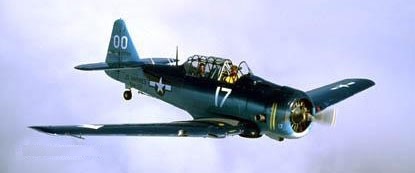
North American SNJ-4

The SNJ-5 (NA-88) of 1943 were 1,573 USAAF AT-6D transferred to the USN (43638-44037, 51677-52049, 84819-85093, and 90582-91101). Some were converted to SNJ-5C deck-landing trainers.
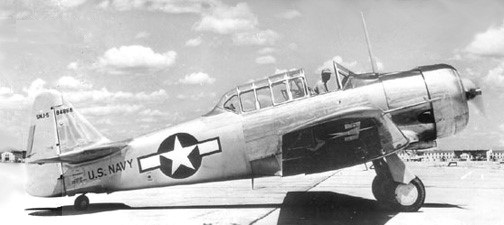
North American SNJ-5 84968

The 411 SNJ-6 of 1944 were from USAAF production of AT-6F (111949-112359).

In 1952 earlier models were modernised to T-6G standards as SNJ-7s. The SNJ-7B was an armed version.
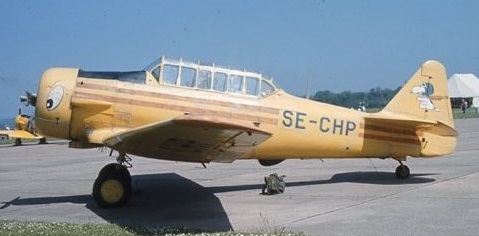
AT-6A SE-CHP

To accommodate orders that amounted to more than 600 aircraft when war began, North American opened a new plant in Dallas in 1942 to supplement the aircraft being turned out in the Los Angeles area.

The Dallas plant became the main point of manufacture – hence the name ‘Texan.” New model suffixes were assigned as minor changes were made. To save alu¬minum, some of the AT-6/SNJs were turned out with plywood fuselages and internal stringers made from spruce. The Navy added tail hooks for carrier train¬ing. Bomb racks and belly fuel tanks were also added.

A number of Texans were either built or modified for experimental purposes. The Army Air Forces ordered one XAT-6E in 1944 with an in-line, air-cooled engine installed. On test flights it reached a top speed of 244 mph and climbed to 30,000 feet – 50 mph faster and 6,000 feet higher than the Texans flying with radial en¬gines. Unfortunately, the in-line engine proved to be a maintenance headache, and only one XAT-6E was built.
Another experimental Texan was des¬ignated the ET-6F in 1950, when a swivel landing gear was installed to assist in making crosswind landings. The Northrop Co. experimented with automatic pilots in the T-6. Cameras were installed aft of the rear seat in a few aircraft for aerial photography; flares were added to make photography possible at night as well.

When the British realized they could not build enough trainers in the United Kingdom at the beginning of World War II, they ordered the BC-1, which they designated the Harvard Mark I. A single British machine gun for the right wing was specified, as well as British instru¬ments and a circular control stick called a “spade.” The Canadians also ordered the Mark I, and one variant was labeled the AT-16. Since British engine mixture controls were reversed as far as Americans and Canadians were concerned, a warn-ing plaque was installed that read: “This airplane has British carburetor mixture control. Lean—forward. Rich—back.”

The Harvard II was the equivalent to the USAAC’s AT-6A. The Harvard IIA was the equivalent to the USAAC’s AT-6C. Some were overhauled to a Mk.II* standard. This differed from the Mk.II in having a plywood and low alloy steel rear fuselage instead of the previous light alloy monocoque construction. This was said to save over 1200 lb of aluminium. The Mk.IIB was a version of the Mk.II built in Canada by the Noorduyn Aircraft Company, and known in the USA as the AT-16. The Harvard Mk.III reverted to all metal construction and had a 24volt electrical system. Two hundred and thirty five AT-6s were operated by Sweden and designated Sk-16.

The Harvard II (AT-6C), North American NA-16-1A, or North American NA-16-3 has a low-wing cantilever monoplane, the wing section varies from N.A.C.A. 2215 to 2209, in five sections, consisting of centre-section, two outer-sections and two wing-tips. The centre-section has parallel chord and thickness, outer-sections have back-swept leading-edge and straight trailing-edge and taper in thickness. Single-spar structure with spaced ribs and covered with a stressed aluminum alloy skin. Dynamically balanced ailerons, with aluminum-alloy frames and fabric covering. Split trailing-edge flaps inside ailerons and under fuselage. The fuselage is a welded chrome-molybdenum steel-tube framework with fittings integrally welded. The fuselage is constructed in four sections, engine-mounting, control-section, tail-section and monocoque bottom aft of wing. All sections bolted together. Side covering in form of fabric-covered aluminum-alloy frames bolted to fuselage. Cowling all metal and quickly removable.

Fitted with a cantilever tailplane and fin of metal, with sheet covering, the rudder and elevators have light-alloy frames, with fabric covering. Right and left sides of tail-plane and elevators are interchangeable. Metal surfaces are removable by externally-accessible bolts for internal inspection. Non-reversible trimming tabs on elevators. Fixed tab, adjustable of ground only, on rudder.

The undercarriage consists of two cantilever oleo struts, with the upper ends built into the ends of the centre-section by sleeves held by four bolts. The right and left units are interchangeable. Each unit enclosed in duralumin fairing, which does not enclose the streamline wheel, so that it is accessible for brake adjustment or removal. Hydraulically-operated wheel-brakes. Oleo-sprung steerable tail-wheel.

Power is from a Pratt & Whitney 600 hp radial, 9 cylinder or one Pratt & Whitney Wasp S3H1 nine-cylinder radial air-cooled engine, developing 550 hp at 5,000 ft (1,525 m) on welded chrome-molybdenum steel-tube mounting. NACA cowling. Fuel tanks (two), of welded aluminum alloy, in centre-section, one on each side of fuselage. Normal fuel capacity 104 U.S. gallons. Oil tank (9.5 U.S. gallons) in engine compartment and detachable with it. Alternative engines are the Pratt & Whitney Wasp R-1340-S1H1, Pratt & Whitney Wasp-Junior R-985 or the Wright Whirlwind R-975-E3.

Accommodation: Tandem cockpits, with sliding enclosures. Dual controls, with rear control quickly removable. Equipment may be installed to suit machine for training, fighting or light bombing. Provision made for installation of two fixed guns firing forward through airscrew and one gun on a movable mounting in back cockpit, bomb-rack below fuselage.

When it took over Noorduyn Aviation in 1946, CCF also acquired the production rights to the North American AT 16 Harvard trainer. Between 1941 and 1945 Noorduyn produced Harvard IIBs as advanced trainers, used to allow those who had become proficient on elementary trainers to graduate to single engined operational aircraft. At the peak of production 83 Harvards per month were leaving the Noorduyn works and by the end of the war 2,800 had been completed, most being used by the RAF and RCAF, but some going as far afield as India, Australia and New Zealand.
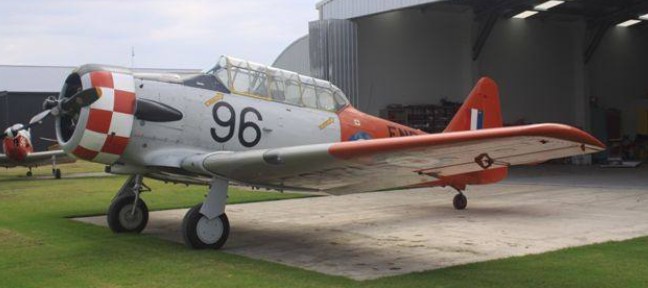
North American Harvard 3*

In 1951, after a gap of six years, the Harvard was again put into production when Can Car’s Fort William plant began to turn out the Harvard 4 to be used in training the pilots who might be needed in the Korean War or its aftermath. In total, 555 were built between 1951 and 1955, initially for the RCAF, but later for the USAF where they were designated T 6J. Some of the T 6Js were subsequently released for service with the West German Air Force.
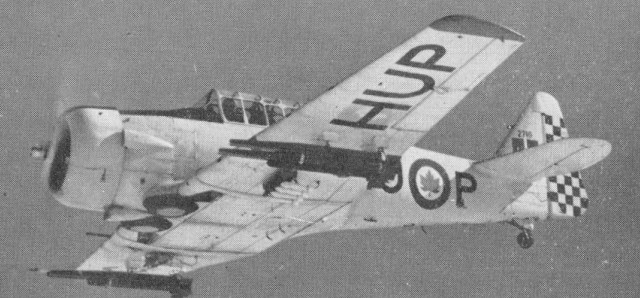
Harvard 4 / T.6J

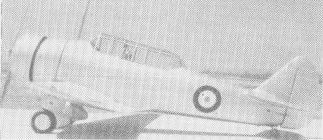
The North American Aviation Co. granted rights to the Australians to man¬ufacture the two-seat BC-1, which they called the “Wirraway,” a native word meaning “challenge.” It had twin ma¬chine guns in the nose, a flexible gun in the rear cockpit and could carry up to 500 pounds of bombs on underwing racks. The first Wirraways were rolled out in 1939. They saw heavy service during the first days of World War II as interceptors, fighter-bombers and long-range patrol aircraft, as well as observation craft.

After World War II, the U.S. Air Force changed many of its plane designations, and the “A” was dropped from the Texan’s identification. The T-6s were extremely active during the Korean War as spotter planes. Their pilots were officially known as forward air controllers, but their planes were popularly called “Mosqui¬toes,” since they harassed the Communist forces and specialized in locating enemy targets and guiding fighter-bombers in for airstrikes. They were also flown for air rescues and leaflet-dropping missions. Several were used as interceptors against the North Koreans, who were flying Soviet-made Polikarpov PO-2 night raiders. Numbers of T-6G’s were being converted to LT-6G liaison aircraft by Ternco Corp in 1955. When remanufactured T-6s ar¬rived with improved radios, underwing bomb and smoke-rocket racks and two pod-mounted machine guns, they were designated LT-6Gs. By the end of hostil¬ities, the LT-6Gs had flown more than 40,000 sorties and logged about 117,500 combat hours.

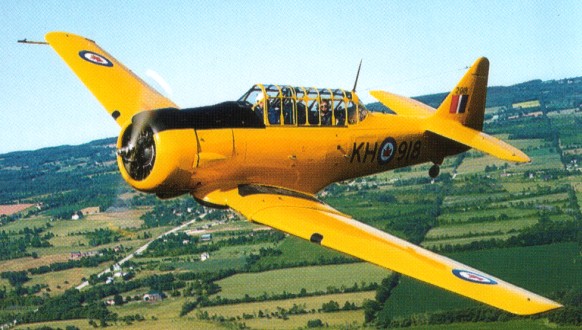
The first Harvard Mk II used by the RCAF was delivered to Camp Borden in the summer of 1940. It was an anglicized version of the AT-6A, the differences being a lengthened exhaust stack, a fixed rear canopy section, an altered instrument panel and a British style control column. The Mk II was also fitted with the capability to hold a .303 calibre air operated machine gun on the starboard wing and a cine-camera in the port wing, with a gun-sight for the front cockpit. The plane was equipped with hardpoints under the wings in order to carry 8 practice bombs. The N.A. Harvard Mk.II was one of the most important single engine training aircraft of the British Commonwealth Air Training Plan. It was known as “the pilot maker” because of its important role in preparing pilots for combat.

After World War 2 the Mk.II Harvard was relegated to armament training and reserve squadron use, as the more modern Mk.IV came along. At the end of WW2, Harvard Mk.II’s were used for Naval training in Nova Scotia. The approval for a Canadian Fleet Air Arm was not given by the government of the day until 1946. In January of 1947 Harvard Mk.II’s began arriving in Dartmouth Nova Scotia for their stint as training aircraft for the newly formed Canadian Naval Air Arm. Much of the training was on gunnery exercises to prepare pilots for the deflection shots necessary with the gyro gun-sight of the Supermarine Seafire. Harvard Mk.II’s were the planes chosen again for the training task. The course was similar to the one used to train RCAF pilots, with the exception of gunnery and formation training which was done on Seafires.

In December 1939, the RNZAF was allocated 105 Harvards, but the first aircraft didn’t arrive until March 1941. The Harvard served in a wide variety of roles with the RNZAF, including flight training schools (2 FTS at Woodbourne being the biggest user), fighter squadrons, fighter operational training units, army co operation squadrons, the Central Flying School and the Fighter Gunnery School. The RNZAF operated Harvard II, IIA, IIB and III as NZ901 to NZ1102 until 1977.

After World War II, T-6s and SNJs were supplied to NATO nations such as France, West Germany, Italy and Bel¬gium. Latin American pilots ferried many of the trainers home after they completed their training in the United States. For use in brush-fire wars, Texans were remanufactured with rocket and bomb racks and designated FT-6Gs. They were sent to such nations as Spain, Por¬tugal, France and Brazil for counterin¬surgency missions.

The Texan was phased out of U.S. Air Force and Navy inventories in 1958, but a number of T-6s were flown by the Civil Air Patrol into the 1960s. Although the American inventory during the Vietnam War showed no T-6s, armed Texans were flown briefly by Laotian and Cambodian pilots against Viet Cong targets along the Ho Chi Minh Trail.

A total of 17,096 of all models were built by North American in California, Texas, Montreal (by Noorduyn), Fort Frances, Ontario (by Canadian Car and Foundry), and in Australia as the Wirraway.

The aircraft is stressed for aerobatics and is capable of most maneuvers with the exception of sustained inverted flight, snap rolls, outside loops, and inverted spins.

The T-6/SNJ/Harvard aircraft have been produced in a number of model designations. Most of the changes are small. Fuel Capacity – The T-6 has 110 gallons on all models except the T-6G and Harvard MK IV, which have 140 gallons. With a cruise fuel burn of 30 GPH, 110 gallons is adequate for most operators. Tail wheel steering/locking systems- The Navy type is lockable only. The pilot is able to lock the tailwheel to a straight-ahead position for take-off and landing. Steering is accomplished by differential braking. The steerable type system (also called P-51 type) uses an inter-connect from the rudder pedals to the tailwheel steering system. This system allows the pilot to steer the aircraft by use of the rudder pedals. Full forward stick movement unlocks this system. When unlocked the tailwheel becomes full swivel and steering is again by differential braking. Either of these systems is adequate for most civilian operators. Hydraulic system – The original system incorporated a pilot controlled bypass. In order to use the gear or flaps, a small button must first be pushed before activation of the system. This button pressurizes the system and a time delay circuit depressurizes the system after approximately 45 seconds. Later aircraft (T6-G/Harvard MK-4) had a modified linkage that engaged the system automatically. For practical purposes, either system is satisfactory. There are several variations in other areas such as instrument panel layout and cockpit glass. Many aircraft have been modified to incorporate various combinations of the above systems.

Variation:
Stroop AT-6
Bacon Super T-6

Gallery

Specifications:

BC-1A
Engine: R-1340-45
Wingspan: 47 ft
Length: 27 ft
Max speed: 209 mph @ 5000 ft

A-27
Engine: 775hp Wright R-1820F
Wingspan: 42’0″
Length: 29’0″
Useful load: 1486 lb
Max speed: 250 mph
Cruise speed: 220 mph
Stall: 70 mph
Ceiling: 28,000′
Armament: 2x .30 nose guns and one flexible .30 rear cockpit
Bombload: 4 x 100 lb bombs underwing

AT-6A (NA-77)
Engine: Pratt & Whitney R-1340-49 Wasp, 600 hp
Wingspan: 42’0″
Length: 29’0″
Useful load: 1255 lb
Max speed: 230 mph / 205 kt
Cruise: 120-145 kt
Range: 630 mi
Ceiling: 24,200′
Seats: 2

Harvard II / AT-6C / NA-16-1A / NA-16-3
Span 42 ft (12.8 m)
Length 27 ft. 5 3/16 in (8.38 m)
Height 8 ft 9 in (2.67 m)
Wing area 248 sq. ft (23 sq. m)
Weight empty 3,340 lb (1,515 kg)
Fuel and oil: 695 lb (315 kg)
Armament 141 lb (64 kg)
Weight loaded 4,556 lbs (2,065 kg)
Wing loading 185 lbs./sq. ft. (90 kg./sq. m)
Power loading 8.3 lbs./h.p. (3.71 kg./hp)
Speed at sea level 200 m.p.h. (324 kph)
Cruising speed at 12,000 ft. (3,660 m.) 185 mph. (298 kph)
Landing speed 61 mph (98 kph)
Maximum rate of climb 1,800 fpm (590 m/min.)
Service ceiling 26,000 ft. (7,930 m.)
Cruising range 680 miles (1,102 km)

T 6 / AT-6 Texan / Harvard
Engine: Pratt & Whitney Wasp R-1340 AN1, 542 hp
Length: 29.003 ft / 8.84 m
Height: 11.483 ft / 3.5 m
Wingspan: 41.995 ft / 12.8 m
Wing area: 252.954 sq.ft / 23.5 sq.m
Max take off weight: 5578.7 lb / 2530.0 kg
Weight empty: 4101.3 lb / 1860.0 kg
Max. weight carried: 1477.4 lb / 670.0 kg
Redline speed: 230 mph / 205 kt
Max. speed: 181 kt / 335 km/h
Initial climb rate: 1358.27 ft/min / 6.9 m/s
Service ceiling : 21654 ft / 6600 m
Ceiling: 24,200′
Wing load: 22.14 lb/sq.ft / 108.0 kg/sq.m
Range: 405 nm / 750 km
Endurance: 3 h
Crew: 2
Armament: 2 MG
Loading: +5.67 / – 2.33G

T-6G
Engine: Pratt and Whitney R 1340 AN 1, 550 hp
Max speed, 212 mph (341 kph) at 5,000 ft (1524 m)
Cruise, 146 mph (235 kph)
Initial climb, 1,643 fpm. (8.3 m/sec)
Ceiling, 24,750ft (7 544 m)
Range, 870 mls (1400 km)
Empty weight, 4,271 lb (1937 kg)
Loaded weight, 5617 lb (2548 kg)
Span, 42 ft 0.25 in (12.8 m)
Length 29 ft 6 in (9 m)
Wing area 253.7 sq.ft (23.56 sq.m)

Harvard II
Engine: P&W R-1340-AN 1 Wasp, 550 hp
Span: 42ft (12.8m)
Length: 29ft(8.8m)
Max wt: 5617 lb (2547kg)
Speed: 212mph (341 kph)
Range: 870 sm(1400 km).

Harvard IIA
Engine: P&W R-1340-AN 1 Wasp, 550 hp.

Noorduyn Harvard Mk IIB
Engine: 600 hp Pratt & Whitney Wasp R-1340-AN-1
Maximum speed: 212 mph (341 km/h)
Service ceiling: 21,500 ft (6553 m)
Empty weight: 4,158 lb (1,886 kg)
Loaded weight: 5,617 lb (2,548 kg)
Span: 42 ft (12.8 m)
Length: 29 ft (8.8 m)
Height: 11 ft 8 in (3.5 m)
Wing area: 253.7 sq ft (23.6 sq m)

Harvard IIB
Engine: P&W R-1340-AN 1 Wasp, 550 hp.

Harvard III
Engine: P&W R-1340-AN 1 Wasp, 550 hp.

Harvard IV
Engine : Pratt & Whitney R-1340-AN-1, 600 hp
Wing Span : 42 ft 4 in
Length : 27 ft 11 in
Speed : 180 Mph (289 km/h)

Canadian Car and Foundry Harvard IV
Engine: Pratt & Whitney R-1340AN-1, 600 HP
Propeller: Hamilton Standard Two Blade 12D40
Wing Span: 42′ 5″
Length: 29′ 6″
Height: 11′ 9″
Normal Gross Weight: 5300 lb
G Loading: +5.67, -2.33
Controls: Dual
Normal cruise: 155 MPH at 8000 ft
Fuel flow at cruise: 30 USGPH

Harvard 4 / T.6J
Basic trainer
Engine: 550 h.p. Pratt & Whitney R1340-ANI
Wingspan: 42 ft
Length: 29 ft.
Loaded weight: 5,617 lb.
Max. speed: 212 m.p.h.
Ceiling: 21,500 ft.
Range: 870 miles at 146 m.p.h.
Crew: 2.

SNJ-5 Texan
Powerplant: l x Pratt & Whitney R-1340-AN-1 Wasp, 410kW (550 hp)
Span: 12.81 m (42ft 0.25 in)
Length: 8.99m (29ft 6in)
Height: 3.58 m / 11 ft 9 in
Wing area: 23.57 sq.m / 253.71 sq ft
Armament: 2 or 3 x 7.62-mm (0.3-in) mg
Empty weight: 1886 kg / 4158 lb
Max T/O weight: 2404 kg (5,300 lb)
Max speed: 330 km/h / 205 mph at 5,000 ft
Ceiling: 6555 m / 21500 ft
Max range: 1200 km / 746 miles
Operational range: 750 miles
Crew: 2
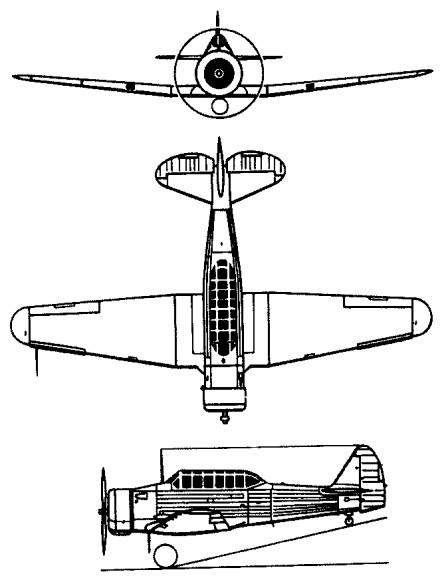
North American NA-25 / O-47 / General Aviation GA-15

Developed by General Aviation (the precursor of North American Aviation) to meet a US Army specification for an observation aircraft, the GA-15 represented a radical change in design for such a role in that, unlike its predecessors, it was a low-wing monoplane with an enclosed cockpit, seating a three-man crew.

Powered by a 634kW Wright Cyclone engine, the prototype GA-15 / XO-47 36-145, built at Dundalk MD, flew in mid-1935 and to provide an acceptable field of view for the observer a glazed nose position was located under the fuselage. North American put the type into production to meet a USAAC contract for 109 North American O-47A aircraft ordered in February 1937, later increased to 164. They were powered by 727kW Cyclones, while 74 O-47B aircraft had 790kW engines and additional fuel capacity. During World War II they served as trainers and target tugs.

North American O-47A 37-260

The O-47A model was released for export in 1939 and is known as the NA-25. 164 of the 1937 O-47A (NA-25, NA-60) were built: 37-260 to 37-368 and 38-271 to 38-325.

Seventy-four 1939 O-47B (NA-51) were built: 39-139 to 39-141.

GA-15 / XO-47
Engine: Wright R-1820 Cyclone, 850hp

O-47
Engine: Wright R-1820
Wingspan: 46’4″
Length: 33’7″
Useful load: 1656 lb
Max speed: 221 mph
Cruise speed: 200 mph
Range: 400 mi
Ceiling: 23,200′
Crew: 2

O-47A
NA-25, NA-60
Engine: 975hp R-1820

O-47B
NA-51
Engine: 1060hp R-1820

North American BT-9 / NJ-1 / BT-10 / BT-16 / NA-64 / Yale

The Texan began life in 1935 as the NA-16, a prototype trainer designed by James H. “Dutch” Kindelberger, president of North American Aviation, Inc. It had two open cockpits and a fixed gear and was powered by a 400-hp engine.

In 1934, the U.S. Army Air Corps had issued specifications for an airplane “to provide a means of command liaison and command reconnaissance for Corps and Divisions, and to provide for the maintenance of the combat flying proficiency of pilots and observers.” Kindelberger and North American worked to secure the contract, and the NA-16 flew for the first time on April 1,1935. The NA-16 was chosen over the competitors’ designs, but before ordering any NA-16s, the Air Corps required North American to enclose the cockpits with a sliding canopy, install streamlined fairings over the wheel struts and add wheel pants.

When the modifications were complete, the Air Corps ordered 42 (36-028 to 36-069) under the company design number NA-19; the Air Corps called it the BT-9 (basic trainer, type 9). The first production model was flown on April 15, 1936.

North American BT-9

The Navy or¬dered 40 (0910-0949) of them after the existing engine was replaced with a 600hp P&W R-1340 version. That 1937 model was designated the NJ-1 (NA-28, N for trainer and J for North American). The last one was temporarily powered with a 1000hp Ranger XV-770 as NJ-2.

North American NJ-1 0947

The 40 BT-9As (NA-19A) armed version for Reserve units that followed introduced a fixed forward gun (with gun camera) and a trainable gun in the rear cockpit. Forty were built in 1936, 36-088 to 36-127.

North American BT-9A

Only small changes were made in the 117 BT-9Bs and 67 BT-9Ds. 117 BT-9B (NA-23) were built in 1937 (37-115 to 37-231) with one modified with new wings and tail as the BT-9D (NA-26) in 1938.

North American BT-9B

The 1937 BT-9C (NA-29) was an armed version of which sixty-seven were built (37-383 to 37-415). One was modified as the Y1BT-10.

North American BT-9C

One BT-9C, 37-383, was repowered with a 600hp P&W R-1340 in 1938 as the Y1BT-10 (NA-29).

North American Y1BT-10 37-383

The Australian Commonwealth Aircraft Corporation was formed in 1936 by several of the largest industrial concerns in Australia. To gain manufacturing experience, it had been decided to acquire a licence to produce an aircraft suitable for advanced training and as a replacement for RAAF Hawker Demons. An Australian Air Board Technical Commission visited the USA and evaluated the North American NA-16, ordered into production for the USAAC as the BT-9 (NA-19) basic trainer.

At the time of the Australian Commission’s visit, North American was working on a development of the BT-99 with a 600 hp Pratt & Whitney R-1340, retractable undercarriage and armament provision as a basic combat trainer. Designated NA-26, this aircraft fulfilled the Australian requirements, although there was disagreement over the need for retractable undercarriage.

As a result, two versions of the A-26 were offered to the Australians, the NA-32 (NA-16-1A) with fixed undercarriage, and the NA-33 (NA-16-2K) with a retractable undercarriage, and in 1937, negotiations for manufacturing rights in both the NA-32 and NA-33 were completed, and an order placed for one of each.

NA-32 / NA-16-1A

The NA-32 was completed in July 1937, although it was not taken on charge by the RAAF until 8 November 1938, and by that time, the NA-33 / NA-16-2K, which had been completed in September 1937 and taken on charge by the RAAF on 2 February 1938, had already been selected for Australian production.

NA-33 / NA16-2K

The NA-16-2K was with a few subtle changes in design to suit it more closely to RAAF requirements and Australian operating conditions, these including a reinforced sub-structure consistent with the rigors of the bombing role and improved offensive/defensive capabilities by the inclusion of 2 x 7.7mm machine guns as opposed to the NA-16’s sole gun.

With the changes, the NA-33 was ordered into production for the RAAF as the A20, the Commonwealth Aircraft Corporation applying the designation CA-1 to the type, and the name Wirraway being adopted. Production of the initial aircraft was handled out of the Commonwealth Aircraft Corporation (CAC) facility at Fisherman’s Bend in Melbourne, Victoria in 1938.

In 1938, Noorduyn acquired the manufacturing rights to the BT-9.

The basic type was then improved with the flying surfaces of the BC-lA and a metal-covered fuselage to produce the BT-14, of which 251 were built with the 336-kW (450-hp) Pratt & Whitney R-985-25 radial. Some 27 were later converted to BT-14A standard with the 298-kW (400-hp) R-985-11 engine.

Concurrently, the French ordered 230 of the BT-9/BT-14 models and called them Tomcats. When France was overrun by the Germans in 1940, Tomcats not yet delivered were given to the Royal Canadian Air Force and designated Yale Mark Is.

BT-9 (NA-19)
Engine: R-975-7 radial, 298-kW (400-hp)
Wingspan: 42’0″
Length: 27’7″
Useful load: 1157 lb
Max speed: 170 mph
Cruise speed: 147 mph
Range: 880 mi
Seats: 2

NJ-1
Engine: Pratt & Whitney R-1340, 373-kW (500-hp)

BT-9A

BT-9B
Powerplant: l x Wright 8-975-7, 298kW (400 hp)
Span: 12.8m (42 ft)
Length: 8.41 m (27ft 7in)
Armament: 2 x 7.62-mm (0.3-in) mg
Max T/O weight: 2028 kg (4,471 lb)
Max speed: 170 mph at sea level
Operational range: 882 miles
Seats: 2

BT-9D

BT-14 / Yale Mk I
Engine: Pratt & Whitney R-985-25, 336-kW (450-hp)

BT-14A
Engine: R-985-11, 298-kW (400-hp)

NA-64 Yale
Engine: Wright R-975-E3 Whirlwind, 440 hp
Wing Span: 42ft 4in
Length: 27ft 11in
Speed: 170mph (273km/h)

North Tui

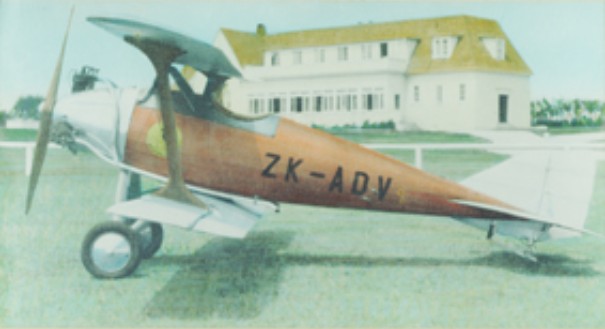
Fred North’s motorcycle business suffered when the depression came so he began to build the Tui. He used Lincoln Standard Sportsplane plans from the USA adapting them for New Zealand regulations. The modifications classed the Tui as a different model to the parent.

He intended it to be the prototype for a New Zealand aircraft manufacturing business. “I thought that if a fellow could build something like that there might be a market for it.” Unfortunately the outbreak of war in 1939 halted the venture.

The fuselage sat in the window of Mr. North’s motorcycle garage and passersby watched the progress. When Mr North moved to Dannevirke he took the Tui with him. He later moved back to Auckland after spending little time on the Tui, but much time repairing aircraft which flew into Dannevirke, and learning about aircraft design.

Mr. North wanted to see the plane in flight so Alan McGruer performed the test flight on 4 January 1934 at Hobsonville. Its top speed was 100 mph, and it stalled at 45 mph. Later, the Tui was used by men wanting to get experience to gain commercial pilots’ licenses. The Tui was cheap to fly at 30 miles to the gallon (10.7 km to the litre).

In 1934 Charles Kingsford Smith flew it from the Auckland aerodrome and, impressed with the construction, declared “You’ll never break her in the air”.

Registered ZK-ADV, after a 1941 crash it was not repaired by the owner.

Manufacturer: Fred A.N. North
Type: One-Seat Acrobatic Sportsplane
Engine: 1 three cylinder radial Szekeley SR3
Weight: 450lb (empty), 750lb (fuelled)
Top Speed: 100mph (160.93km)
Wingspan: 6.09m (20 ft)
Length: 4.87m (16 ft)
Accommodation: Pilot in open cockpit

Norris Pendulum

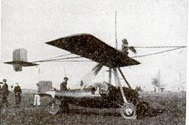
Built in 1930 by designer R.V.Norris of San Franciso, California, the Pendulum plane was to be ‘fool-proof’. It underwent tests at the Redwood City Airport, California, the radial motor is attached to the wing, from which is suspended the fuselage which remains on an even keel during flight. The wing may be tilted in any direction at the will of the pilot, by means of control wires from his seat in the cockpit.

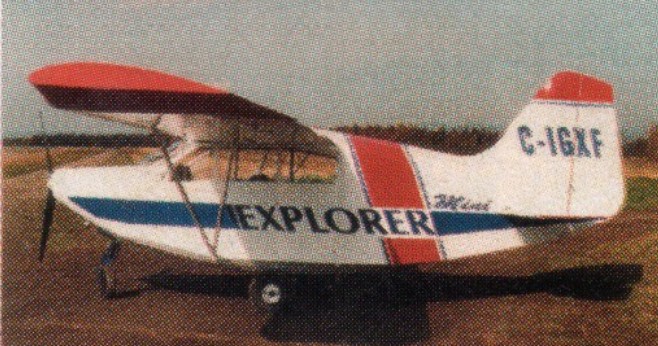
Norman Aviation Mini Explorer Nordic 8

A side by side 2 seater, with room for a bed for 2 at the back. Made of wood, tubing and fabric, no flaps are fitted. Wheel, skis or floats. 2009 Price: 34500 US$

Engine: Rotax 912, 80 hp
Length: 21 ft
Wingspan: 36 ft
Wing area: 180 sq.ft
Empty Weight: 297 kg / 654 lbs
MTOW Weight: 559 kg / 1232 lbs
Fuel capacity: 28 USG
VNE: 113 kt / 130 mph / 209 kmh
Cruise: 78 kt / 90 mph / 145 kmh
Stall: 30 kt / 35 mph / 56 kmh
Range: 780 sm
Climb Ratio: 850 ft/min / 4 m/s
Take-off distance: 250 ft
Landing distance: 350 ft
Take-off distance (50ft obstacle): 400 ft / 122 m
Landing distance (50ft obstacle): 500 ft / 152 m
Seats: 2
Cabin width: 48 in
Landing gear: nosewheel

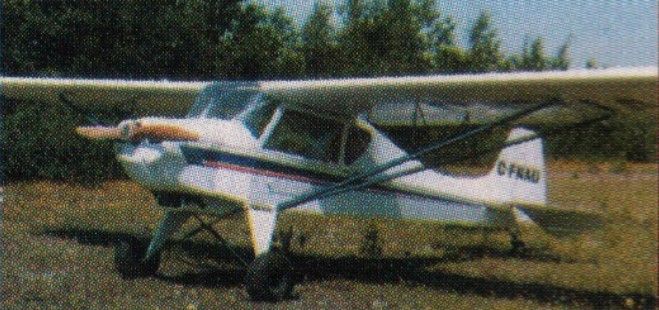
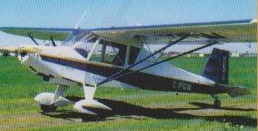
Norman Aviation Nordic

Nordic VI

Designed by Jacques Norman, the fuselage is made from 4130 Chromoly steel and all parts are joined with high quality weldings. Wings are made of lightweight wood with full length I-beams as well as geodesic ribs. The material of choice for the skin is Ceconite 102, known for its resistance and fire retardant properties. One notable feature is the long range wing tank with a 16 gallon fuel capacity, and hydraulic brakes.

The maximum allowed weight in the category “Ultra-light advanced type” is 1058lbs for the Nordic VI-912 and 914. The maximum allowed weight in the experimental category is 1200lbs.

A two seater side-by-side, wheels, floats and skis were available. The landing gear is Titanium. Nordic 6 2009 Price was US$19895.

Nordic VI

Nordic II
Length: 19 ft
Height: 5.6 ft
Wingspan: 33.8 ft
Wing area: 154 sq.ft
Weight empty: 600 lbs
Maximum weight: 1058 lbs
Useful load: 438 lbs
Fuel capacity: 16 US
Optional fuel capacity: 20 USG
Maximum speed: 130 mph
Manouvering speed: 70-90 mph
Stall speed at full flaps: 35 mph
Maximum speed with flaps: 70 mph
Crusing speed at 75% power: 85 mph
Maximum climb rate: 600 fpm
Landing distance: 200′ ft
Take-off distance: 150 ft
Operating range: 400 mls
Ceiling: 10 000′ ft
Maximum cross wind: 25 mph
Cabin width: 39 in
Baggage weight: 60 lbs
Seats: 2

Nordic II
Engine: Subaru EA-81, 71 hp
HP range: 71-90
Length: 19 ft
Height: 5.6 ft
Wingspan: 33.8 ft
Wing area: 154 sq.ft
Weight empty: 620 lbs
Gross: 1058 lbs
Speed max: 100 mph
Cruise: 85 mph
Range: 340 sm
Stall: 35 mph
ROC: 600 fpm
Take-off dist: 150 ft
Landing dist: 300 ft
Service ceiling: 10,000 ft
Landing gear: tail wheel

Nordic VI
Engine: Subaru EA-81, 71 hp
HP range: 71-90
Height: 5.5 ft
Length: 19 ft
Wing span: 33 ft
Wing area: 154 sq.ft
Weight empty: 620 lbs
Gross: 1058 lbs
Fuel cap: 10 USG
VNE: 117 kt / 135 mph / 217 kmh
Speed max: 100 mph
Cruise: 90 mph
Range: 360 sm
Stall: 33 kt / 38 mph / 61 kmh
ROC: 500 fpm
Take-off dist: 200 ft
Landing dist: 350 ft
Service ceiling: 10,000 ft
Seats: 2
Landing gear: tail wheel

Nordic VI
Engine: Subaru EA81, 71 hp
Wing span: 10 m
Wing area: 15.5 sq.m
MAUW: 400 kg
Empty weight: 272 kg
Fuel capacity: 37 lt
Max speed: 210 kph
Cruise speed: 145 kph
Minimum speed: 61 kph
Climb rate: 2.5 m/s
Fuel consumption: 9.5 lt/hr
Seats: 2
Plan price (1998): Can$450
Kit price (1998): Can$7,750

Nordic VI-912
Engine: Rotax 912, 82 hp
Length: 20 ft 2 in
Height: 7 ft 1 in
Wing span: 33 ft 6 in ‘
Wing area: 152 sq.ft
Max speed: 110 mph
Weight empty: 586 lbs
Maximum weight: 1058 lbs
Useful load: 472 lbs
Fuel tank capacity: 16 USG
Cruising speed: 103 mph (5000 rpm)
Stall speed at full flaps: 34 mph
Stall speed without flaps: 42 mph
Range: 400 sm
Landing distance: 350 ft
Take-off distance: 250 ft
Ceiling: 10 000 ft
Maximum climb rate: 1100 fpm (solo)
Endurance: 5 hours
Loading limit: +6 / -4 G
Cabin width: 39 in
Baggage weight: 60 lbs
Baggage space: 9 cu.ft
Seats: 2

Nordic VI-914
Engine: Rotax 914, 100 hp
Length: 20.1 ft
Wing span: 29.6 ft
Wing area: 132 sq.ft
Empty weight: 594 lb
Gross weight: 1320 lb
Fuel capacity: 16 USG
Cruise: 110 mph
Stall: 38 mph
Range: 460 sm
Rate of climb: 2200 fpm
Takeoff dist: 150 ft
Landing dist: 300 ft
Cockpit width: 39 in
Landing gear: tailwheel

Nordic VI-914 Turbo
Engine: Rotax 914, 115 hp
Length: 20 ft 2 in
Height: 7 ft 1 in
Weight empty: 594 lbs
Maximum weight: 1058 lbs
Payload: 464 lbs
Fuel capacity: 16 USG
Cruising speed: 110 mph (5000 rpm)
Stall speed at full flaps: 34 mph
Stall speed without flaps: 42 mph
Maximum climb rate: 2200+ fpm (solo)
Landing distance: 350 ft
Take-off distance: 150 ft
Endurance: 4.5 hours / heures
Load limit: +6 / -4 G
Baggage weight: 60 lbs
Baggage space: 9 cu.ft
Seats: 2

Nordic VI-912-SW
Engine: Rotax 912, 80 hp
Length: 20.1 ft
Wing span: 29.6 ft
Wing area: 132 sq.ft
Empty weight: 582 lb
Gross weight: 1232 lb
Fuel capacity: 16 USG
Cruise: 115 mph
Stall: 38 mph
Range: 460 sm
Rate of climb: 1200 fpm
Takeoff dist: 250 ft
Landing dist: 350 ft
Seats: 2
Cockpit width: 39 in
Landing gear: Tailwheel

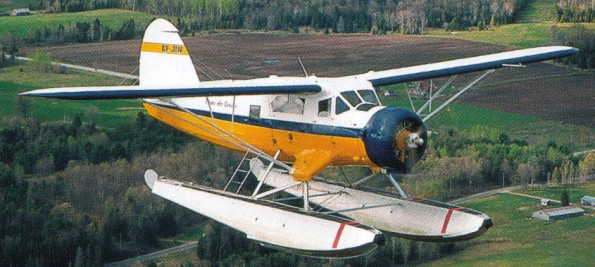
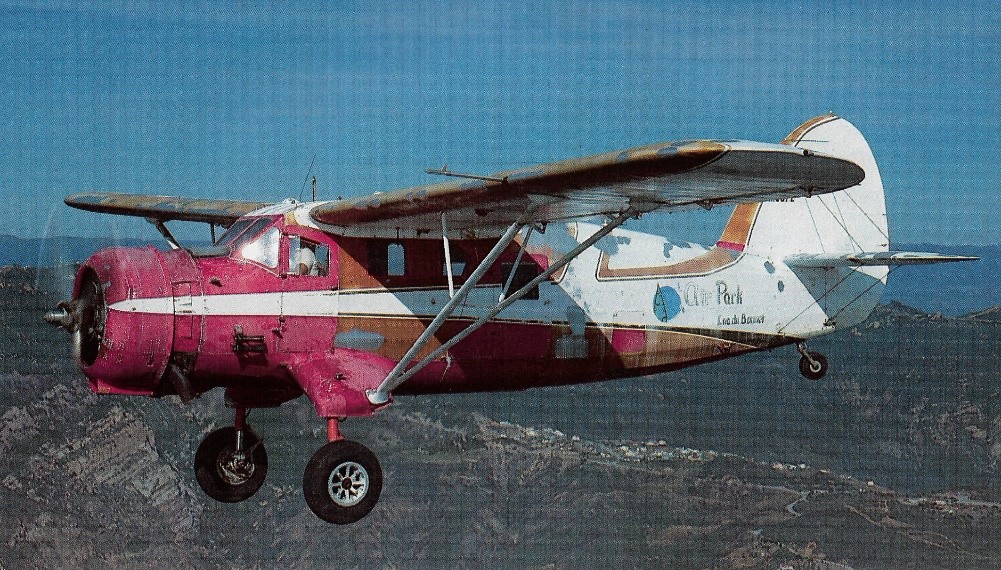
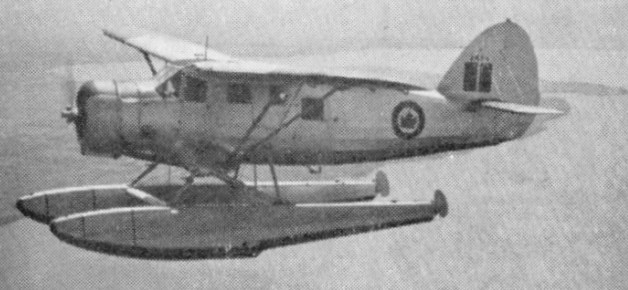
Noordyun Norseman / C-64

Norseman

With the help of bush operators, Noorduyn set about studying the peculiar needs of the people who flew into the mining areas. Noorduyn built the airplane to be convertible from wheels to skis and floats without penalties in handling. He designed it with generous fuel capacity for the extended endurance that bush flying demanded. He built in a simple, gravity fed fuel system, and he developed an arrangement whereby fuel could be injected into the lubricating oil in the crankcase to dilute it. That meant the airplane would not have to be warmed with stoves in order to be started in the frozen North.

Noordyun Norseman Article

In addition, the pitot static system could be blown out by a clever pressure system to clear it of moisture that might freeze and render it useless. The passenger/cargo compartment was austere but comparatively cavernous for an airplane in its weight class. As a tribute to Noorduyn’s design, it can be said that no AD notes have ever been written on the land-plane version of the Norseman.

The plane was well proportioned, especially on floats and with the Wright engine, the cowl of which continued the gentle, slightly swollen curve of the fuselage all the way through to the nose. The more powerful Pratt & Whitney engine imposed upon the nose a squared cowl. On wheels, the Norseman lost the counterpoint that the floats provided to the shape of the fuselage. The bandy legged struts for the mains only looked funny once the floats had been removed and the vertical members for the wheels bolted on; on floats, the two short stubs at the bottom of the fuselage were scarcely noticeable, seeming a part of the fuselage or a fairing around a float strut.
In 1935, Noorduyn Aircraft rolled out the prototype, which was a product of Canada, financed completely by Canadian money. The company had inherited the old Curtiss-Reid Aircraft factory, built in 1929 on Cartierville Airport, about eight miles northwest of Montreal. The Norseman first flew on 14 November 1935 as the Norseman 1. The Norseman was the only one of his aircraft to be built in quantity.

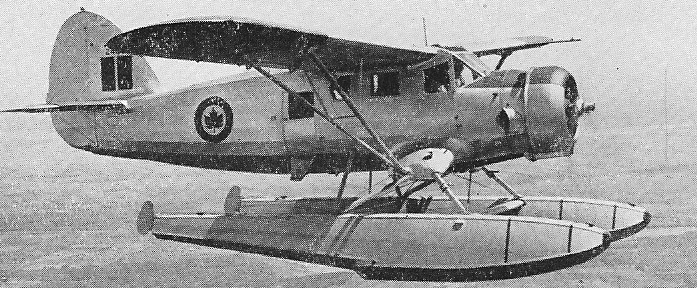
By the time the Mark III arrived, the Norseman was powered by a 450-hp Pratt & Whitney. It was the first true Canadian bushplane, with a large, eight-seat cabin, and could be equipped with wheels, skies or floats. In 1937 the Norseman IV was flown, now fitted with a 600-hp Pratt & Whitney R¬1340. In common with aircraft of the day, the fuselage was built of tube and covered with fabric. At just over 10 feet high it was a big aircraft. The Royal Canadian Air Force ordered thirty Norseman IV for radio and navigational training. The crew sat at desks in the passenger compartment, where seats had once been bolted down in proper rows.

Following the entry of the United States into World War Two, the USAAF trialed a ten-seat Norseman and seven were purchased for further evaluation trials as the YC-64. This was followed by 749 UC-64A utility aircraft delivered between 1942 and 1945.

Noorduyn UC-64A Norseman OO-AAR c/n 612, ex USAF 44-70347

At 1:45pm on Friday 15 December 1944, a Noorduyn C-64 took off from the US base at Twinwood Farms near the English city of Bedford. With a two-man crew and eight passengers it set course for Paris. Shortly after the C-64 flew over Newhaven and began to cross the English Channel, radio contact with it was lost. On board was Major Glenn Miller, world-famous jazz musician, trombonist and leader of the Moonlight Serenade US Air Force band. He was never seen again.

Manufacturing rights were purchased by the Canadian Car Foundry who produced the improved Norseman V and the metal wing and lengthened fuselage Norseman VII. At the end of hostilities, production continued with the Norseman V. The Mark V and VI carried on where the IV had left off, offering improvements learned by experiences in the war years, plus some new ones of their own. The Mark VI also saw service with the RCAF as a communication and rescue aircraft. Production finally stopped in 1959 after 928 airplanes had been turned out. The Noorduyn company and Robert Noorduyn himself never built another airplane. The company still existed in 1976 repairing Norsemans for resale.

The Norseman V 8-seat transport was still used by the RCAF in 1955 on both wheels and floats.

Norseman V

In Quebec particularly, Can Car closed down and eventually sold most of its facilities, but it was in Quebec also that it showed its interest in continuing in the aviation field. In 1946, it bought the production rights to the Noorduyn Norseman, an aircraft which since its introduction in 1936 had become almost legendary as a bushplane on wheels, floats and skis in the Canadian north. Some 800 Norsemen were built, mostly during the war years, for the RCAF and the USAAF (where they were designated C 64A).

In the years between 1946 and 1953, when CCF held the rights, only 33 aircraft were constructed. Although it was still suitable for the utility transport role for which it had been designed, sales were limited immediately after the war by the general availability of surplus Norseman VIs or C 64As and later, into the 1950s, by competition from the new generation of bushplanes such as the DHC Beaver.

All Norseman aircraft can be fitted with interchangeable wheel, ski of float landing gear.

The construction of the Norseman was conventional. Sitka spruce was routed to make the spar, which mated with ribs of the same wood, Walnut was used for certain packing pieces in the wings, and more spruce appeared in the aft fuselage stringers. Chrome moly tubing made up the fuselage cage, which was covered by aluminium in the front portion and in the belly as far back as the rear of the cabin; the rest was fabric and aluminium dope. Noorduyn took pains to maintain a clearance between the fabric and the structure in order to minimize the opportunities for corrosion. It also made for easier inspection and maintenance. The rear of the fuselage was proudly advertised as “snowtight.” Flaps and ailerons were interconnected to provide 15 degrees of aileron droop with the flaps at 40 degrees, while retaining the full angle of movement of the ailerons. The aileron hinges and cable pulleys used sealed ball bearings, and despite the aileron’s weight (fabric covered surfaces could be heavy if there were enough steel inside them), it doesn’t take any great effort to move the wheel from lock to lock laterally.

Norseman V

Vee struts ran from a point at about two¬-thirds span to the short stubs that also sup¬ported the main gear. On the ground, the weight of the wing and the upward force of the gear on those stubs tended to cancel each other; in the air, the reverse was the case, as the gear acted against the lift force imposed by the Vee strut. The arrangement made the most of the available structure and was particularly important in view of the plane’s convertibility to floats.

Inside, the cabin measured 15 feet long, including the cockpit, which made it large for a single. The plywood floor was solid. There was a section in the doorframe that could be removed for a 46¬inch wide opening for extra wide cargo. The space between the outer skin and the inner panelling of the cabin was filled with an insulating material to retain as much of the warmth from the cabin heater as possible.

Standard fuel capacity was 125 USG, but an auxiliary fuselage tank was available to boost that to 178.5 USG. With the less powerful Wright R 975 E3 engine, which pro¬duced only 450 hp at takeoff and 420 hp at maximum cruise, that much fuel could keep a Norseman going for 7.6 hours and cover 1,060 miles. With all that fuel, the airplane was capable of hauling 1,420 pounds. 148 knots was the absolute quickest the 550 hp landplane version could muster. Noorduyn advertised its cruise speeds at two thirds of rated power, and the company claimed 130 knots with the Wasp powered version at 31 USG/hr; the less powerful but more economical Wright pulled 121 knots on a lit¬tle over 23 USG/hr. Noorduyn guar¬anteed his speeds within three percent and his climb and ceiling figures within five per¬cent, so chances are the advertised perform¬ance figures were fairly reasonable.

Climb and altitude performance were good. and Noorduyn made a special effort to draw attention to the airplane’s merits as a high altitude camera plane. At a reduced gross weight of 5,200 pounds and with a controllable pitch prop and a mixture meter telling you the exhaust gas temperature, it could be coaxed up to 25,000 feet.

The unusual landing gear was built under license at the factory, and the reason for its odd appearance was strictly functional. Loos¬ening and removing two bolts on each side caused the wheels simply to drop off the fu¬selage, stubs to allow either skis or floats to slip into place. Noorduyn was particularly proud of the easy convertibility of his air¬plane. “With reference to the feature of convertibility from wheels to skis and floats, it should be emphasized that the Norseman is not a landplane equipped with floats as an afterthought, but that the seaplane and ski requirements were studied as part of the original design. On floats, the balance and the relative angles are so perfect that the takeoff is made easily with full load, without touching the controls and with a strong sense of reserve power.”

Cleveland Aerol gear legs on the Norse¬man had a nine inch shock absorber stroke, and the brakes were all hydraulic. Noorduyn even went to the trouble of designing his own tailwheel unit around a principle his catalogue described as “oil damped spring action.” The skis were built by the Elliott Brothers Company, and the floats were Edo Ys, each with more than 6.000 pounds of flotation, so that the plane could stay up even with the equivalent of one float gone.

When the conversion of the aircraft to military specifications was made, floats took second place to wheels and skis. In terms of performance, the float version and the ski version were quite similar except for useful loads the skis were lighter. An air¬speed penalty of 13 knots could be expected along with a decrease in range, and service ceilings were reduced with wheels off and ei¬ther skis or floats on.

As happens, the engine option with the greater horsepower did not offer the greatest useful loads. The Wasp powered Norseman grossed out at 6,450 pounds, but it offered a useful load of 2,775 pounds. The 420 hp Wright version had a gross weight of 6,235 pounds, and yet its useful load was 10 pounds higher.

Norseman 1
Length: 32 ft 4 in
Wingspan: 51 ft 8 in
Wing area: 325 sq.ft

Norseman III
Engine: Pratt & Whitney, 450-hp
Length: 32 ft 4 in
Wingspan: 51 ft 8 in
Wing area: 325 sq.ft

Norseman III
Engine: Pratt & Whitney R-1340, 600-hp
Cruise: 119 mph
Length: 32 ft 4 in
Wingspan: 51 ft 8 in
Wing area: 325 sq.ft

Norseman V
Engine: One Pratt & Whitney R 1340 S3H1 Wasp, 600 hp
Prop: 2-blade
Wing span: 51 ft 8 in (15.75 m)
Wing area: 325 sq ft (30.2 sq.m)
Length: 31 ft 9 in (9.68 m)
Height: 10 ft 1 in
Empty wt: 4250 lbs
Gross weight: 7400 lb (3357 kg)
Max. Speed: 155 m.p.h.
Max cruising speed: 148 mph (237 kph) at 5,000 ft (1525m)
Max range: 1,150 miles (1840 km)
Service ceiling: 17,000 ft
Range MAUW: 464 miles at 141 mph
Accommodation: Crew of 1 and up to 9 passengers and 595 lb (270 kg) of baggage and freight.

Nord 260 Super / Max Holste MH-260 Super Broussard

Development of a 17-seat light commuter airliner, known as the M.H.250 Super Broussard started in 1957. The prototype of the MH250, powered by two Pratt & Whitney Wasp-1830 piston engines, flew first on 20 May 1959. It was soon realised that turboprops should be employed and further development resulted in the MH260 with enlarged fuselage and powered by Turboméca Bastan turboprops. In October 1959, Avions Max Holste entered into a co-production arrangement with Nord Aviation so that the new aircraft could be manufactured. The prototype of the M.H.260, the F-WJDV, flew on 29 July 1960. Ten MH260 with its rectangular section fuselage were built by Nord Aviation as the Nord 260. In 1961 started a significant redesign of the Nord 260. This resulted in the Nord 262.

MH-260 Super Broussard Article

Air Inter, the French domestic airline, was expected to be the first operator of the Nord 262 pressurized version of the Nord 260, formerly known as the Super Broussard. Four Nord 262s were ordered by Air Inter.

Production of the Nord 260 was virtually complete in 1963, having totalled ten in addition to the prototype F WJDV. The first eight of the production batch were registered as follows:
No. 1 F-WJSN trials aircraft
No. 2 F BKRB Nord demonstrator
No. 3 F BKRH Air Inter trials, 1963
No. 4 F BKSS Air Inter trials, 1963
No. 5 LN LMB Leased to Wideroe
No. 6 F BLGP
No. 7 F BLHN
No. 8 LN LME Leased to Wideroe