Produced in 1984 as a very light two-seat monoplane with pusher propeller.
Piston
NWT Spruce Coupe
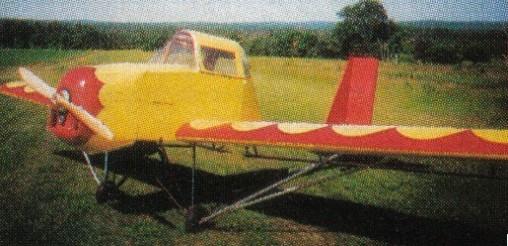
Fits Rotax or Kawasaki engines, and two wing lengths were available.
Top speed: 75 mph
Cruise: 60 mph
Stall: 35mph
Range: 80 sm
Rate of climb: 1200 fpm
Takeoff dist: 75 ft
Landing dist: 100 ft
Engine: Zenoah, 42 hp
HP range: 22-50
Fuel capacity: 6 USG
Empty weight: 300 lb
Gross weight: 600 lb
Height: 6 ft 3 in
Length: 16.9 ft
Wing span: 22 ft
Wing area: 88 sq.ft
Seats: 1
Landing gear: tailwheel
Nurtanio NU-85 / NU-90 Belalang
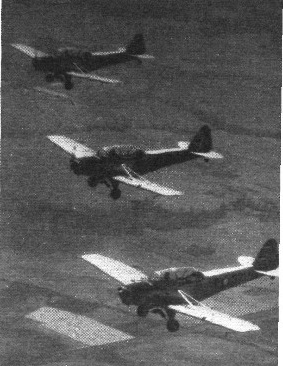
This aircraft is a low-wing conversion of the Piper Cub L-4J.
The prototype, designated NU-85, flew on April 17, 1958, and proved to be such an improvement over the original L-4J that the Indonesian Air Force was having all its L-4Js converted into Belalangs, with the production designation NU-90.
The programme was started in 1959 and the NU-90 became the standard primary trainer at the Air Force Flying School.
Engine: Continental C90-12F, 90 hp
Span: 31 ft l in
Length: 25 ft 3 in
Height: 6 ft 8 in
Wing area: 161.5 sq.ft
Gross weight: l,500 lb
Empty weight: l,038 lb
Max speed: 115 mph
Cruising speed: 90 mph
Max rate of climb at SL: 600 ft/min
Service ceilmg: 12,000 ft
TO run: 500 ft
Landing run: 400 ft
Range: 350 miles
Nurtanio NU-25 Kunang / NU-35 Kunang / Lipnur NU-25 Kunang / NU-35 Kunang
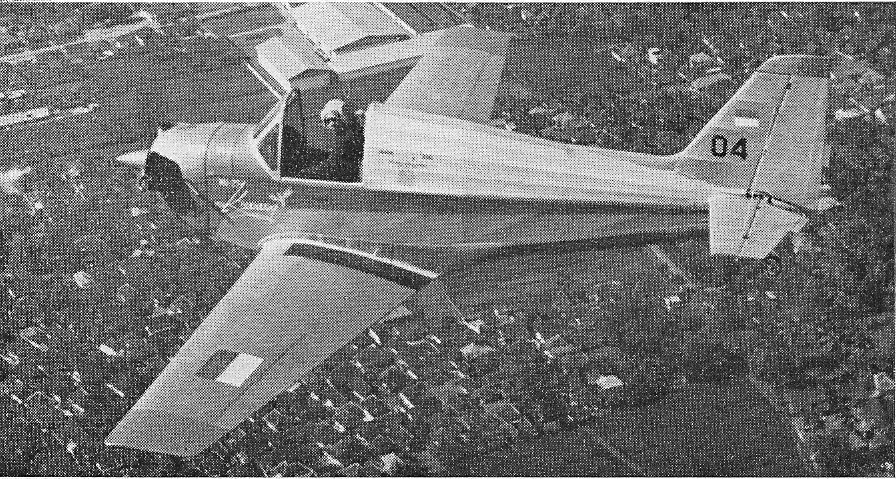
Development of the original NU-25 Kunang was started in 1957, to provide Indonesian flying clubs with an economical single-seat ultra-light trainer.
The original tapered wing, with fixed slots, was replaced by a constant-chord wing of 25 percent greater area during 1960. At the same time, the Volkswagen engine has been uprated from 25 to 35 h.p. and a cockpit canopy has been fitted. Now designated NU-35, the Kunang is of conventional wooden construction, with fabric covering.
NU-35 Kunang
Engine: Volkswagen, 35 hp
Span: 23 ft ll in
Height: 5 ft 11 in
Wing area: 102.6 sq.ft
Gross weight: 743 1b
Empty weight: 504 lb
Cruising speed: 80 mph
Max rate of climb at SL: 300 ft/min
NUD NU D.38
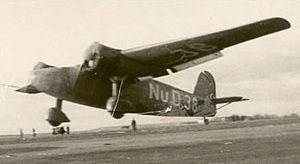
The Nuri Demirağ Nu.D.38 was a Turkish light civil transport, with twin engines and seating for four passengers, built in the early 1940s. Only one was constructed and flown.
Design work on the Nu.D.38 twin engine light transport began about 1938 and the aircraft was largely completed by 1941, but the first flight was delayed until 1944. Turkey remained neutral through most of World War II, only entering the war in 1945, after the first flight.
The Nu.D.38, manufactured by Nuri Demirağ in Istanbul, was a high cantilever wing aircraft. The wing, of tapered plan and all aluminium alloy stressed skin construction had a built up main spar and a secondary spar. There were pairs of split flaps inboard of the fabric covered ailerons. The fixed surfaces of the tail unit were also aluminium alloy structures with stressed metal skin. The tailplane, set at the top of the fuselage, was strut-braced from below. Control surfaces were fabric covered, with trim tabs.
The fuselage of the Nu.D.38 was an oval cross-section aluminium alloy monocoque, with stressed skin over frames and longitudinal stringers. The crew sat side by side at dual controls in a cabin with side access doors. The passenger compartment seated four, each with their own window, and was accessed through a starboard side door. There was a compartment for luggage or mail in the nose.
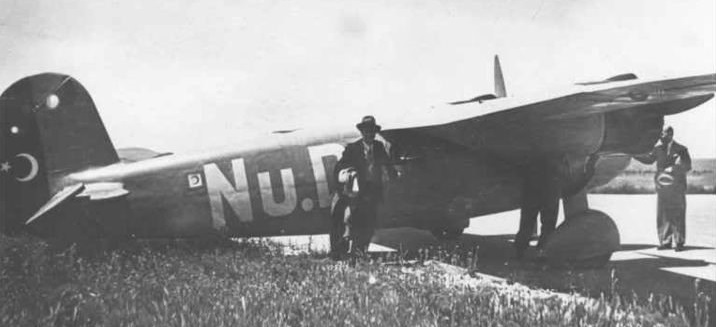
The Nu.D.38 was powered by two 160 hp (120 kW) Bramo Sh 14-A4 radial engines, mounted to the main wing spar on steel frames. It had a fixed, conventional undercarriage. A main shock absorber leg was attached to each of the steel engine frames, braced rearwards by a short auxiliary strut. Legs and wheels were enclosed in fairings.
The Nu.D.38 was first flown on 11 February 1944. No further aircraft were produced.
Engines: 2 × Siemens-Halske (Bramo) Sh 14-A4, 120 kW (160 hp) each
Propellers: 2-bladed
Wingspan: 13.56 m (44 ft 6 in)
Wing area: 22.34 sq.m (240.5 sq ft)
Length: 8.30 m (27 ft 3 in)
Height: 2.20 m (7 ft 3 in)
Empty weight: 1,108 kg (2,443 lb)
Gross weight: 1,850 kg (4,079 lb)
Maximum speed: 271 km/h (168 mph; 146 kn) at sea level
Cruise speed: 250 km/h (155 mph; 135 kn)
Service ceiling: 6,650 m (21,820 ft)
Rate of climb: 3.40 m/s (669 ft/min) to 4,000m (13,120 ft)
Crew: 2
Capacity: 4 passengers
NUD NU D.36
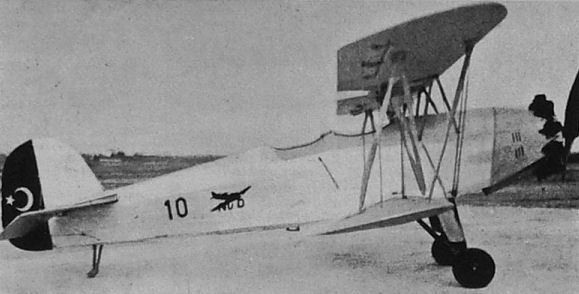
The Nuri Demirağ Nu D.36 was a 1930s Turkish two-seat training biplane built by the Nuri Demirağ Aircraft Works in Istanbul for the Turkish military.
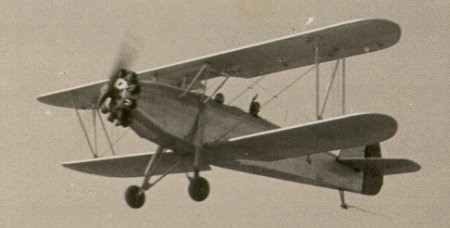
The Nu D.36 is an unequal-span single-bay staggered biplane with a fixed conventional landing gear with a tailskid. It was powered by a 150 hp (112 kW) Walter Gemma I nine-cylinder radial engine. It had two open tandem cockpits for the pilot and trainee.
Engine: 1 × Walter Gemma I, 110 kW (150 hp)
Propeller: 2-bladed fixed pitch wooden propeller
Wingspan: 9.74 m (31 ft 11 in)
Wing area: 21.8 sq.m (235 sq ft)
Length: 7.3 m (23 ft 11 in)
Height: 2.44 m (8 ft 0 in)
Empty weight: 650 kg (1,433 lb)
Max takeoff weight: 1,000 kg (2,205 lb)
Maximum speed: 182 km/h (113 mph; 98 kn)
Range: 500 km (311 mi; 270 nmi)
Endurance: 3 hours 30 minutes
Service ceiling: 3,350 m (10,990 ft)
Time to altitude: 500 m (1,600 ft) in 2 minutes; 1,500 m (4,900 ft) in 10 minutes
Crew: 2
NST Schwarze Aerostar Chronos 12
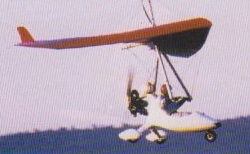
From the Czech Republic and designed by Norbert Schwarze, the engine is an American four stroke twin. A variety of wings can be fitted.
Aerostar Chronos 12
Empty weight: 90 kg
Wing span: 9.8 m
Wing area: 13.4 sq.m
Fuel capacity: 20 lt
Certification: Vz
Engine: NS 600, 30 hp
MAUW: 200 kg
Seats: 1
Max speed: 130 kph
Cruise speed: 90 kph
Minimum speed: 35 kph
Climb rate: 2.5 m/s
Fuel consumption: 4 lt/hr
Price (1998): 19 500 DM
NST Schwarze Oronus
Paraglider power unit
Empty weight: 25kg
Engine: NS/Hirth, 34 hp
Reduction: 1:3
Prop diameter: 150 cm
Price (1998): 6800 DM
NST Schwarze Minimum
The West German built NST Minimum design is basically a hang glider with an 18 hp Solo engine hung underneath. However, the engine mount position is designed to be at the aircraft’s centre of gravity in normal flight.
Minimum
Empty weight: 22 kg
Engine: Solo, 15 / 20 hp
Certification: vz
Reduction: 1:3
Prop diameter: 150 cm
Fuel capacity: 10 lt
Price (1998): 5380 DM
NST Schwarze Engine
Cycle: 4 stroke
No cylinders: V 2
Compression: 8.9
Displacement: 580 cc
Cooling: Air
Ignition: Electronic
Reduction: Poly V 3/1
Dimension: 400 x 500 x 250 mm
Weight: 28 kg
Max pwr: 30 hp at 4200 rpm
Price 1998: 3500 DM

