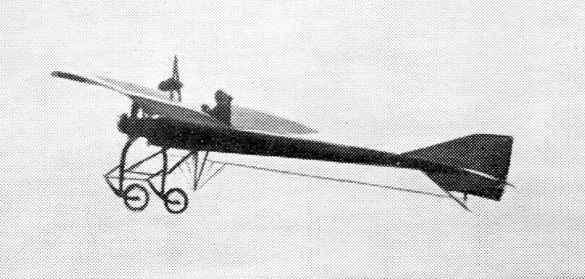
The Vendôme or Odier-Vendôme tractor monoplane with Viale engine and Antoine Odier’s typical gull wings, which were intended to provide stability in sidewinds, and arched landing gear. Built in France in 1911.
The Vendôme or Odier-Vendôme tractor monoplane with Viale engine and Antoine Odier’s typical gull wings, which were intended to provide stability in sidewinds, and arched landing gear. Built in France in 1911.
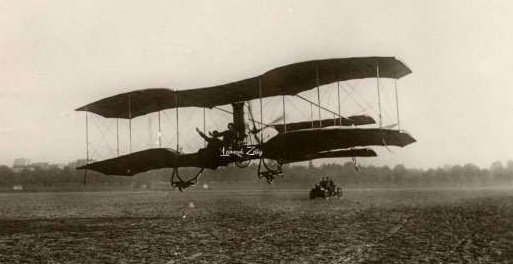
Carrying the names of its designer (Antoine Odier) and ordered by Turcat-Méry race car driver Henri Rougier, this pusher biplane was built by the Vendôme company. It appeared in 1909 and was (under)powered by one of Rougier’s employers 18hp Turcat-Méry engines.
The designer also made the first flight of this, his first aircraft in May 27, 1909, which was also Odier’s first flight, ever.
A later improved tractor biplane followed in 1910, with less arched wings.
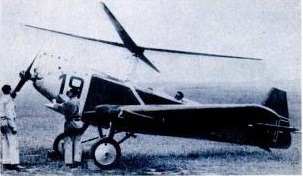
French engineers Odier and Bessiere flew their combination airplane and autogyro, dubbed the “Clino-giro”, in 1931, at Guyancourt. The foundation of the craft is a revamped Caudron C-193 with a rotor smaller and stiffer than normal for an autogyro attached. Th engineers claimed that the craft had a climb angle three times that of an ordinary airplane and a radius of action much better than that of a conventional autogyro.
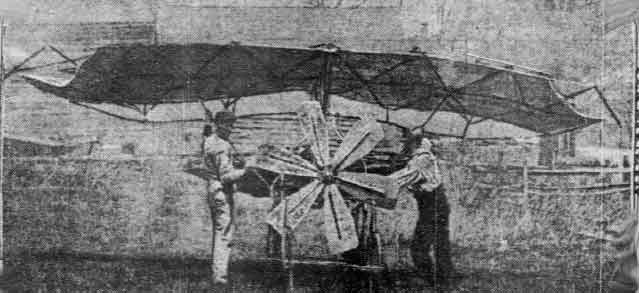
The “Jersey Devil”, also known as the “Jersey Mosquito” or “Ochoaplane” built by Victor Leaton Ochoa, and datable to 1908-09 in the USA. Based on two bicycle frames between which was mounted a six-horse power motor and below that a seat for the operator. The whole machine weighs about 250 pounds. The craft is notable for having several ‘interesting’ design features, such as the retractable truss-work wing structure, and the wing surface being concave, not convex.
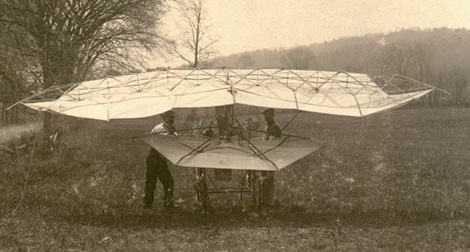
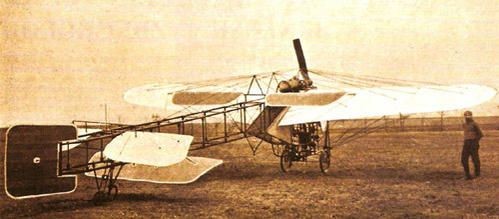
Built by the Bohemian pioneer Ludvík Očenášek (1872-1949) in 1910. It was powered by a 50 hp rotary and is sometimes mentioned as “2-seater monoplane” – derived from a Blériot.
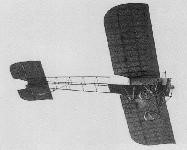
Designed and built by Emile Obre in 1911 in France.
Note inner-wing or covering bracing pattern.
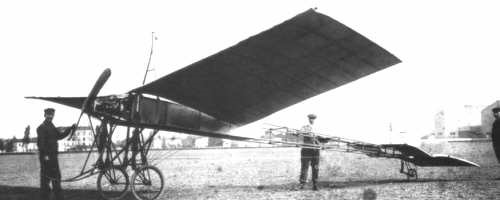
The Obre Monoplane of 1910 was the third machine built by Emile Obre after two biplanes in 1909, designated, for some unexplained reason, Obre No.1 and No.3. Probably photographed at Issy-les-Moulineaux.
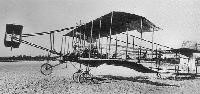
The second Obre built in 1909. Note reflex airfoil contours.
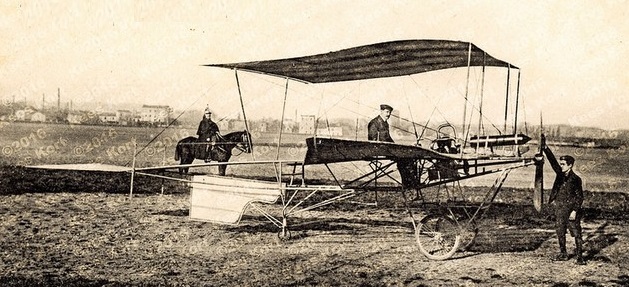
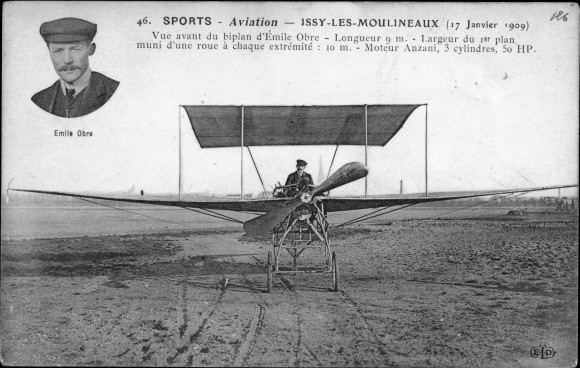
Émile Obre designed his biplane as a tractor with the Anzani 3-cylinder air cooled engine was fitted about 1,5 meter from the nose. The top wing consisted of a rectangular form with a special curve form. The span of the lower deck is 10 metres.
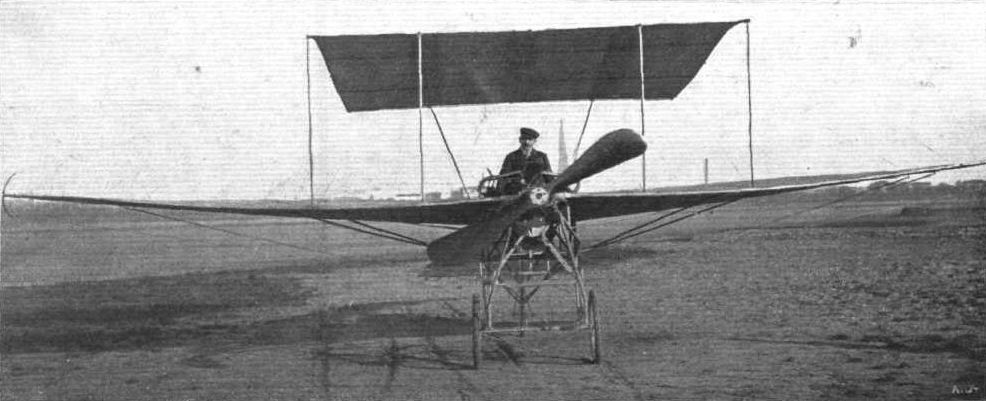
The power given (50 hp) for the 3-cylinder Anzani is very optimistic.
When testing the machine on 18 January 1909 at Issy-les-Moulineaux the machine crashed and was demolished. It was not repaired.
The machine was not a success but Obre went on and designed a completely new pusher biplane.
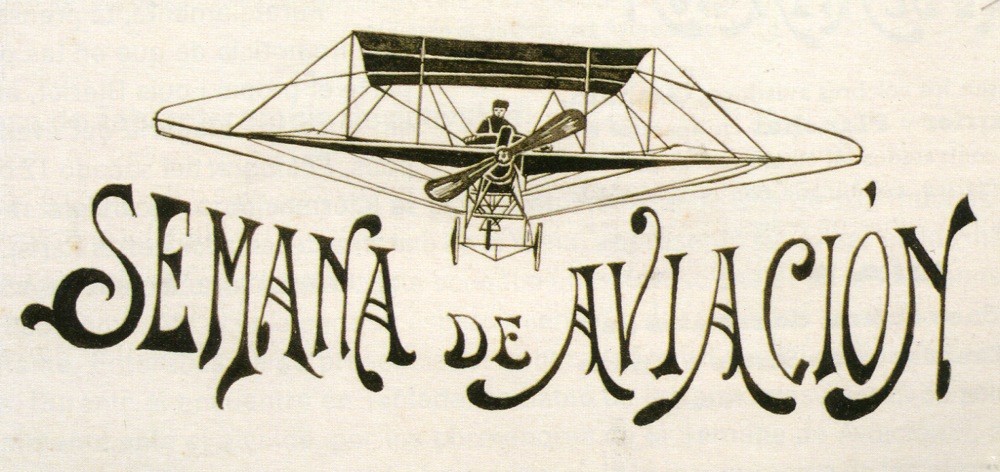
A drawing of the plane figured in a standing heading in “Flugsport” and in the logo of the 1910 Seville aviation week.
The developed JOB 15 four-seater, which had metal/wood/glassfibre construction, entered production in 1961, powered by a Lycoming engine. It remained in service with Austrian and other European aero clubs, especially as a glider tug.

