Pipistrel Spider

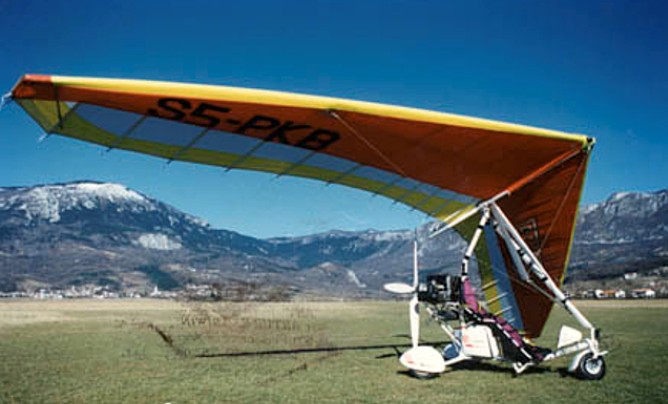
Pipistrel Trikes are light, two seat, weight shift UL aircraft. The Italian army chose Pipistrel trikes for training special army troops. For the same reason the Pipistrel Trikes were used by the Army of Croatia in the independence war, but the trikes are mostly built for sport and school purpose.

The Spider has all wheel fairing, larger front wheel and stronger brakes, and it includes an electric starter, 3-point seat belts, running light and parking brake. It has a 4-blade ground adjustable composite low noise propeller and gear ratio 1:4,00. The BRS, GRS, USH and Paradelta rescue systems are easy to mount.

In Germany the Spider trike has been fitted with Hazard, XP, Mild, Falcon and Fun wings.The two seat tandem Spider is made of composite materials and electrostatic powder coated hot paint protected steel, and provided ready to fly, certified like UL aircraft in various countries. There is a 1 year warranty.
The standard engine is a Rotax 582, 64 hp, and a 4 blade composite ground adjustable propeller.

All models have:

  • spring front fork suspension and glass-carbon back suspension,
  • engine support on double set of anti vibration shock absorbers,
  • seat belts,
  • auto stabile front fork with foothold and fast tire change system,
  • 4 ply 4.00 x 100 back wheels,
  • big composite instrument panel for 8 instruments mounted on shock absorbers,
  • complete electrics installation with 2 engine check switches,
  • complete fuel installation with fuel pump support on shock absorbers,
  • all engine cables in auto lubricated Teflon bowdens,
  • Mount for rescue system: Yes
  • Empty Weight without wing: 231 lbs (105 kg)
  • Fuel Capacity: 11 gal (43 l)

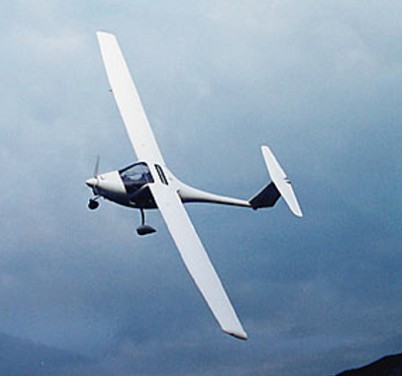
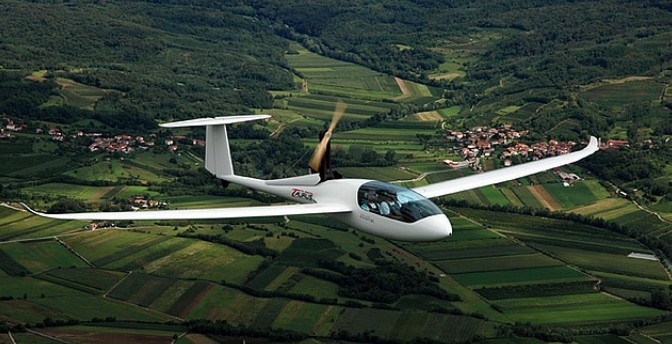
After the success of the Sinus it was quite realistic to expect there is also a market niche for a real microlight two-seat glider, as well as it’s version with an auxiliary, fully retractable engine. Hard-core glider pilots were not convinced by the glide ratio of 1:30 that Sinus has to offer. The ‘real’ quality gliding goes together with glide ratios of 1:40 and more.

This time, the main idea of construction was different from the Sinus, but the aims were a side-by-side microlight motorglider, with a self-lauchable version with an auxiliary, yet fully retractable engine and glide ratio of at least 1:40.
by providing two main wheels in parallel configuration complete independence could be achieved dispensing with a helper holding the wing tip during take-off.

The fuselage of Taurus uses a lifting body shape concept and features enough room for an auxiliary, yet fully retractable engine.
Taurus is also intended for training, therefore all controls must be within reach of both pilots. Both pilots have individual control sticks and rudder pedals. The landing gear operation lever, flaps, airbrakes, tow rope release and trim levers are there for common for both pilots and are found in the middle, between both seats. For added comfort pilots enjoy adjustable headrests, in-flight adjustable rudder pedals, separate vent window and a central ventilation system for efficient de-fogging of glass surfaces. There are side pockets for each pilot and a baggage compartment behind the seats with space for an oxygen system as well.

The version of Taurus with an auxiliary retractable engine comes with a ROTAX 503 which is modified and redesigned by Pipistrel. The engine is twin carbureted engine and drives Pipistrel’s own developed propeller. The system for extending and retracting the engine and propeller is fully automated. The pilot takes advantage of a dedicated interface on the instrument column and all they have to do is to flick the switch to ‘engine IN’ or ‘engine OUT’ position – everything else is done completely automatically. When retracting, the propeller is first positioned vertically, the engine then gets retracted and the engine bay covers close. To restart the engine on ground or in-flight the pilot selects the ‘engine OUT’ option and the engine extends and is ready for start-up in only 12 seconds. The entire engine retraction system is incredibly light and reliable, all switches and sensor used to monitor the operations are electromagnetic-induction type and as such not sensitive to vibration, mechanical damage and/or dirt. This system has also been developed in-house by the Pipistrel team. Built-in safety will prevent inadvertent start-up or retractions of the engine.

The same goes for the undercarriage retracting system, which is fully mechanic but needs very light force on the cockpit lever during operation. There are two main wheels in parallel configuration. The tail wheel is not retractable but fully stearable. The airbrakes, flaps and the elevator trim are all mechanical pushrod type. A tow-rope release mechanism can be fitted as well. Gliding has a 1:41 glide ratio coupled with 5 flaperon settings.

The LSA Taurus has a 15-meter wing-span which can be removed. Taurus has automatic control connections and one wing weighs 40 kg (90 lbs). From take-off to 500 m (1650 ft) needs only 3 minutes, 6 minutes to 1000 m (3300 ft) and 10 minutes to 1500 m (5000 ft).

Taurus entire cabin area is encased with energy absorbing structures made from Kevlar fibre. The Taurus can also be equipped with the ballistic parachute rescue system. Taurus is made in highest technology composites (epoxy resin, glass fibre, carbon fibre, kevlar fibre and honeycomb structures). The airfoil used on wings is ORL 170, (F. Orlando).

2009 Price: 70000 EURO

First announced in December 2007, the Taurus Electro matches the performance of the petrol powered Taurus 503 and, it weighs the same and sells for the exact same price. Taurus Electro has a tailor-developed 30 kW electric motor.

The electric-motor propulsion has been tested successfully on four light aircraft before the Taurus Electro – as an auxiliary engine on self launching gliders Apis, Antares and Silent and on the MCR light aircraft where a full-cell based propulsion was used.

Pipistrel’s Taurus is a two-seat glider with higher approved take-off weight than the single seat gliders where the electric-motor propulsion has been tested so far. Therefore the Taurus requires a more powerful electric motor.

The goals when designing the Taurus Electro were mainly to:

  • develop a system, that will enable the aircraft to climb to altitudes in excess of 2000 meters on a single battery charge;
  • keep the current market price of the aircraft;
  • keep the current take-off distance;
  • keep the empty weight of the aircraft within the values of the internal combustion engine powered Taurus 503 with fuel;
  • keep the current climb profile of the aircraft.

This required modify the existing system for extension / retraction of the engine, developing a purpose-built propeller to maximize the efficiency at given constant torque, useing high-performance Lithium-polymer batteries with specific capacity touching 200Wh/Kg, and developing a system to charge the batteries in flight.

Developmental costs of the Taurus Electro project were over 1 Million Euro, partially funded by the EU for the sum of 354,824.89 EUR.

TAURUS 503
Engine: Rotax 503 UL DCDI 2V, 53 hp at 6600 rpm
Propeller: 2 blade Pipistrel 1600 mm diam
Wing span: 14.97 m
Length: 7.27 m
Height: 1.41 m
Wing area: 12.33 sq.m
Rudder area: 0.9 sq.m
Horizontal tail area: 1.36 sq.m
Aspect ratio: 18.6
Positive flaps: 5 deg, 9 deg, 18 deg
Negative flaps: -5 deg
Center of gravity: 23% – 41%
Empty weight: 285 kg
Minimum pilot weight: 60 kg
Maximum total pilots weight: 220 kg
Max take off weight (MTOW): 450 kg / 472.5 kg
Fuel tank capacity in the wing: 30 lt
Useful fuel: 27 lt
Stall with flaps: 63 km/h
Stall without flaps: 71 km/h
Manoeuvring speed: 163 km/h
Max. Speed with flaps extended: 130 km/h
Max. Speed with airbrakes extended: 225 km/h (extend at or below 160 km/h)
Max. Speed with powerplant extended: 160 km/h
Vne: 121 kt / 140 mph / 225 km/h
Min.sink: 0.70 m/sec
Min.sink speed: 94 km/h
Max. Sink with airbrakes: 6.0 m/sec @ 100 km/h
Best glide: 1: 41
Best glide ratio speed: 107 km/h
Best glide at 150 km/h: 1: 33
Best glide at 180 km/h: 1: 23
Max towing speed: 150 km/h
45°-45° roll time: 3.9 sec
Take off run MTOW: 180 m
Take off over 15 m MTOW: 265 m
Cruising speed with 75% power: 120 km/h
Best climb speed: 100 km/h
Max climb rate (MOW): 2.9 m/sec
Service ceiling MTOW: 3,900 m
Max load factor permitted (x1,8): +5.3g -2.65g
Max load factor tested: + 7.2g – 7.2g
Fuel consum. At full power:: 18 lph
Seat: 2
Cockpit width: 50 in

Taurus Electro
Empty weight (incl. Batteries): 320 kg
Top-of-climb: 2000 m / 6500 ft AGL
Take-off distance at MTOW (472.5 kg): 170 m / 560 ft
Climb rate at MTOW (472.5 kg): 2.8 m/sec / 560 fpm
Electric motor type: permament magnet synchronus three-phaes brushless
Electric motor dimensions (excl. propeller flange): diam. 250 mm x 150 mm
Electric motor mass (excl. propeller flange): 14 kg
Max. continous shaft power: 30 kW at 1800 RPM
Efficienty at max. continous power: 95%
Max. continous torque: 160 Nm
Peak torque: 200 Nm (0 – 1500 RPM)
Max. motor RPM: 1800 RPM
Nominal voltage: 140 V
Propeller diameter: 2040 mm
Batteries: Lithium-polymere: 42 cells, 3.7 V each
Storage capacity: 6 kWh
Battery weight: 46 kg
Charger / battery voltage balancer: Built into aircraft
Power / RPM controller: SAC 40 modified for aviation use
Pipistrel Virus

The LSA Virus 912 is a cruise aircraft suited for cross-country flying and aero-clubs and training flights. Full composite construction, 12.4-meter wing span and a glide ratio of 1:24 put Virus alongside motorgliders, with features such as 4-stage flaperons, airbrakes, and a variable pitch propeller with feathering capability. Undercarriage can be tricycle (nose wheel) of tail-dragger type. The engine is the four-stroke Rotax 912.

Virus won the 2007 Personal Air Vehicle Challenge and the 2008 General Aviation Technology Challenge, both events sponsored by NASA.

The Virus equipped with a 12- or 10-meter wingpan. The 12-meter version is a touring motorglider, enabling you to switch off the engine and glide alongside ridges, while the 10-meter fits in every hangar and is faster and more maneouvrable.

The entire cabin area is encased with energy absorbing structures made from Kevlar fibre, and the Virus can also be equipped with the ballistic parachute rescue system.

The Virus meets even the strictest of the noise regulations. Technologies, including honeycomb techniques, are used to build the composites and metal alloys, including Titanium and Magnesium, which are used on parts of the aircraft. The Virus can be disassembled in 15 minutes with all the controls self-fitting.

The ventilated side-by-side cockpit has optional leather interior and adjustable rudder pedals. The choice of either a small or large instrument panel can make the cockpit feel like a glider or fully equipped long-range cruising aircraft.

2009 Price: 57900 EURO

Pipistrel has delivered more than 1,000 aircraft worldwide and registered 7 Virus SW (Short Wing) aircraft in the US in 2012. All Virus models can be had as 51% EAB (Amateur-Built Experimental) kits (400 hours est.). 2014 Price: US$97,450

VIRUS 912
Engine: Rotax 912 UL, 80 hp at 5800 rpm
Propeller: Pipistrel VARIO
Wing span: 12,46 m
Length: 6,5 m
Height: 1,85 m
Wing area: 11,0 sq.m
Rudder area: 1,1 sq.m
Tail area: 1,63 sq.m
Aspect ratio: 13,1
Positive flaps: 9 deg, 18 deg
Negative flaps: 5 deg
Center of gravity: 20% – 38%
Empty weight: 284 kg
Max take off weight: 450kg / 472.5kg / 544kg
Fuel tanks capacity: 2 x 30 l / 2 x 50 l
Useful fuel: 2 x 27 l / 2 x 45 l
Stall with flaps: 62 km/h
Stall without flaps: 72 km/h
Cruising speed (75% power): 225 km/h
Max. Horizontal speed: 240 km/h
Vne: 249 km/h
Max speed with airbrakes out: 160 km/h
Max speed with flaps down: 130 km/h
turbulence penetration speed Vb: 141 km/h
Best climb speed: 130 km/h
Max climb rate (450 kg): 6,2 m/sec
Best glide ratio speed: 110 km/h
Best glide: 1:24
Take off run (450 kg): 90 m
Service ceiling (450 kg): 8100 m
45° – 45° roll time: 3,1 sec
Fuel burn at cruise: 9,5 l/hour
Endurance: 5,7 hours
Range: 1280 km
Max load factor permitted: +4 g – 2 g
Design safety factors & tested: minumum 1.875
Seats: 2
Cockpit width: 44 in

VIRUS 912 SW 80
Engine: Rotax 912 UL, 80 hp at 5800 rpm
Propeller: Pipistrel VARIO
Wing span: 10,71 m
Length: 6,5 m
Height: 1,85 m
Wing area: 9,51 sq.m
Rudder area: 1,1 sq.m
Tail area: 1,08 sq.m
Aspect ratio: 11,3
Positive flaps: 9 deg, 19 deg
Negative flaps: 5 deg
Center of gravity: 25% – 37%
Empty weight: 287 kg
Max take off weight: 472.5 kg / 544 kg
Fuel tanks capacity: 2 x 50 l
Useful fuel: 2 x 47 l
Stall with flaps: 64 km/h
Stall without flaps: 79 km/h
Cruising speed (75% power): 246 km/h
Max. Horizontal speed: 264 km/h
Vne: 302 km/h
Max speed with airbrakes out: 205 km/h
Max speed with flaps down: 130 km/h
turbulence penetration speed Vb: 250 km/h
Best climb speed: 140 km/h
Max climb rate (450 kg): 6,1 m/sec
Best glide ratio speed: 118 km/h
Best glide: 1:17
Take off run (450 kg): 140 m
Take off over 15 m obstacle: 225 m
Service ceiling (450 kg): 6200 m
45° – 45° roll time: 1,6 sec
Fuel burn at cruise: 13,6 l/hour
Endurance: 6,9 hours
Range: 1650 km
Max load factor permitted: +4g -2g
Design safety factors & tested: minimum 1.875
Seats: 2
Cockpit width: 44 in

VIRUS 912 SW 100
Engine: Rotax 912 ULS, 100 hp at 5800 rpm
Propeller: Variable pitch
Wing span: 10,71 m
Length: 6,5 m
Height: 1,85 m
Wing area: 9,51 sq.m
Rudder area: 1,1 sq.m
Tail area: 1,08 sq.m
Aspect ratio: 11,3
Positive flaps: 9 deg, 19 deg
Negative flaps: 5 deg
Center of gravity: 25% – 37%
Empty weight: 289 kg
Max take off weight: 472.5 kg / 544 kg
Fuel tanks capacity: 2 x 50 l
Useful fuel: 2 x 47 l
Stall with flaps: 64 km/h
Stall without flaps: 79 km/h
Cruising speed (75% power): 273 km/h
Max. Horizontal speed: 283 km/h
Vne: 302 km/h
Max speed with airbrakes out: 205 km/h
Max speed with flaps down: 130 km/h
turbulence penetration speed Vb: 250 km/h
Best climb speed: 140 km/h
Max climb rate (450 kg): 8,4 m/sec
Best glide ratio speed: 118 km/h
Best glide: 1:15
Take off run (450 kg): 95 m
Take off over 15 m obstacle: 175 m
Service ceiling (450 kg): 6800 m
45° – 45° roll time: 1,6 sec
Fuel burn at cruise: 17,8 l/hour
Endurance: 5,3 hours
Range: 1450 km
Max load factor permitted: +4g -2g
Design safety factors & tested: minimum 1.875
Seats: 2
Cockpit width: 44 in

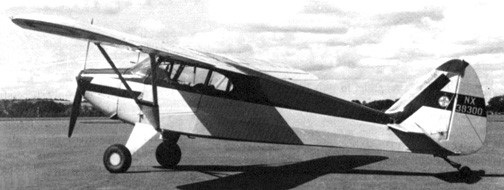
Piper-Marriott Gyro

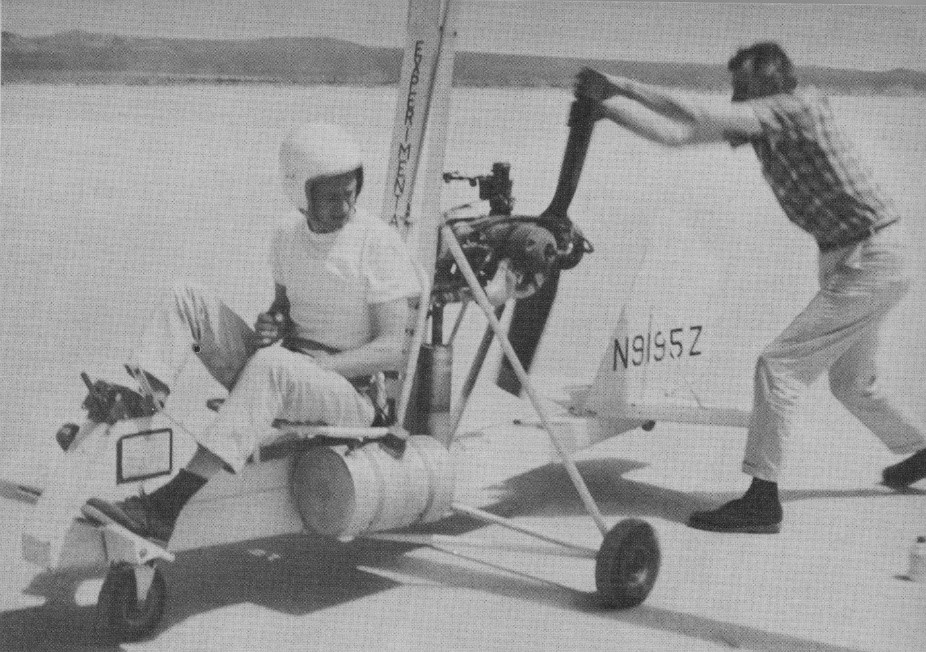
Mechanical engineer Bill Piper, of Los Angeles, California, props the 72 hp McCulloch engine on the Piper-Marriott autogyro as aeronautical engineer Ed Marriott prepares for a flight in early 1964.

The rotor blades have a steel spar and plywood skin.

Engine: 72 hp McCulloch
Rotor diameter: 20 ft
Length: 9 ft 9 in
Empty weight: 225 lb
Gross weight: 450 lb
Top speed: 85 mph
Cruise: 60 mph
Range: 120 mi

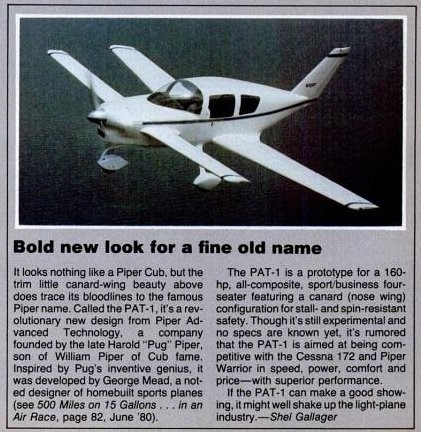
Piper Advanced Technology PAT-1 Pugmobile

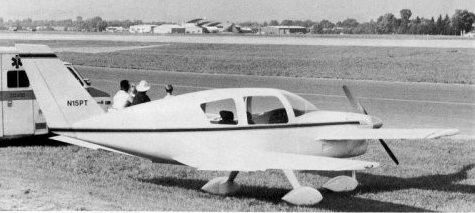
Designed by George Mead, the 1981 Piper Advanced Technology Inc PAT-1 Pugmobile was a four-place cabin, canard monoplane. Powered by a 160hp Lycoming O-320, the prototype, N15PT, had an approach speed of 75 mph.

The prototype crashed on 19 Nowember 1981 killing designer Mead and two passengers.

November 20, 1981
An experimental, single-engine airplane, designed for enhanced safety, crashed yesterday during a demonstration flight over the Chesapeake Bay, killing the aircraft’s designer and two employees of the National Aeronautics and Space Administration’s Langley Research Center.
The propeller-driven, four-seater plane, outfitted with an unusual wing near its nose, plunged into the bay shortly before 11:25 a.m. near Gwynn Island, below the mouth of the Rappahannock River about 30 miles north of Hampton, Va. A NASA spokesman said the cause of the crash was not known.
Among those killed was George Mead, an aeronautical engineer in his early 30s who designed the novel general aviation craft for Piper Advanced Technology Inc., a Kansas company established last year to build, test and market the plane. The firm, based in Wichita, was started by a son of the founder of the well-known Piper Aircraft Corp. but has no corporate relationship to the older enterprise, a company official said.
The others who died in the crash were identified as Wendell Kelley, 41, of Newport News, Va., a NASA research pilot, and Paul F. Coy, 23, of Hampton, Va., a NASA engineer. The two men were aboard to “see how the plane handled,” Langley spokesman Maurice Parker said.
A spokesman for the National Transportation Safety Board, which is expected to start investigating the crash today, said initial reports indicated the plane may have broken up in flight.
Dennis Harms, one of the craft’s builders, said in a telephone interview from Wichita that the plane destroyed yesterday was the only existing prototype, designated PAT-1. The company has not yet decided whether to rebuild the aircraft, estimated to cost $75,000 to $100,000, and resume testing, he said.
The small wing near the plane’s nose, known as a canard, was designed as a safety feature, Harms said. It was intended to prevent stall spin, an often fatal aviation phenomenon that may occur when a plane climbs too steeply, loses its upward lifting force and pitches back, spinning. There was no indication of stall spin in yesterday’s accident.
Harms said the 160 horsepower plane — previously flown, chiefly by Mead, for 70 to 80 hours — was also designed for higher speeds than normally achieved by light planes without loss of fuel efficiency or cabin space. Its cruising speed, he said, was 165 miles an hour.
NASA researchers were primarily interested in the aircraft’s canard feature, a subject of study for possible use in passenger and military planes, officials said.
NASA spokesman Parker said the plane took off from Langley at 10:40 a.m. yesterday on its second day of demonstration flights for officials of the aeronautics agency. No distress call was received from the craft, whose crash was reported to a county sheriff in eastern Virginia. The Coast Guard recovered the three bodies and towed the plane ashore in two pieces, he said.