The 1909 Pischoff & Koechlin monoplane was designed and built by De Pischoff and Koechlin in France.
The 1909 Pischoff & Koechlin monoplane was designed and built by De Pischoff and Koechlin in France.
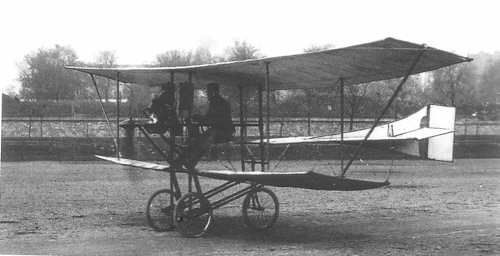
Built by L.Chauviere, the 1907 tractor biplane of Alfred de Pischoff, powered by a 25 hp Anzani 3-cylinder engine. Although tried, the machine did not fly. A French sounding name, de Pischoff was from Austria (Austro-Hungary) where he was known as Alfred Ritter von Pischoff.
Span: 32’10”
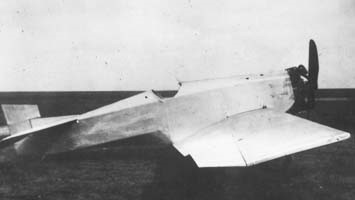
By 1923 Victor Pisarenko had become one of the best Soviet flight instructors, but in the fall of that year he also made his debut as an aircraft builder and became the first Soviet amateur builder.
With the help of several students, Pisarenko built a single-seater light aircraft in the workshops of the Kacha Flight School, Sevastopol, which had the privilege of being the first Soviet aircraft with a low cantilever wing. This plane received the name VOP-1, an acronym for Victor Osipovich Pisarenko – 1 (Russian: Писаренко ВОП-1).
The VOP-1 was conceived as a cantilever low-wing monoplane built in wood. The one-piece wing with a trapezoidal shape on the plane used a profile selected by the author himself. With a surface area of 10 square metres, it had a double-beam structure and was completely covered by a thin layer of plywood.
The fuselage was built with a wooden structure and had a plywood covering with angular lines. In its central part, behind the engine, the open cockpit for the pilot was located.
The tail was of the monoplane type with the rudders covered in fabric.
The landing gear was conventional, fixed and had a tail skid.
A 35 hp Anzani engine obtained in the workshops themselves was used as the power plant.
The VOP-1 was built in the school’s workshops in Sevastopol and many of its parts were taken from old discontinued models. On November 27, 1923 Pisarenko flew for the first time. This flight was followed by several others.
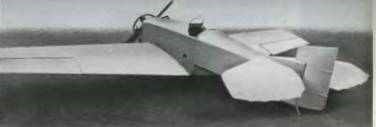
During the test flights, carried out by Pisarenko himself, the plane was stable in flight and responded well to the controls. With its 35 hp engine, the plane reached a speed of 120 km/h.
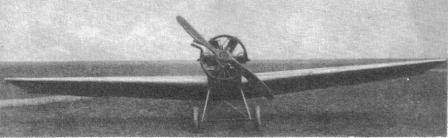
Powerplant: One 35 hp Anzani
Wingspan: 7.50 m
Wing area: 10.00 m²
Length: 5.00m
Empty weight: 222 kg
Normal takeoff weight: 322 kg
Weight of fuel + lubricant: 20 kg
Wing loading: 32 kg/sq.m
Power load: 9.2 kg/hp
Total load capacity: 100 kg
Top speed: 120km/h
Cruising speed: 100 km/h
Practical ceiling: 1200 m
Accommodation. 1
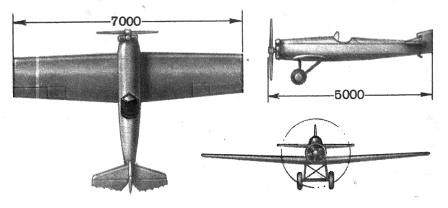
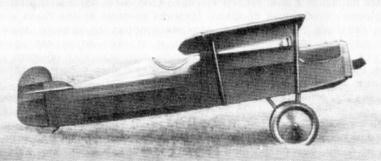
After moving to the Serpukhov Higher School of Air Combat, Shooting and Bombing (Strelbom), Pisarenko, with the help of cadets, began construction of his second aircraft. This model was called VOP-T (Víctor Osípovich Pisarenko – Trenirovochni (coach)) (Russian: Писаренко-Т or ВОП-Т).
The Pisarenko-T was conceived as a parasol-braced wing single-seat monoplane. As a distinctive feature of this model we can point out its unconventional wing profile, with flat upper and lower surfaces, a curved leading edge and a flattened tail. In general, a strange wing with a sharp leading edge was obtained.
The wing, with a double spar structure, had parallel wooden supports that fixed it to the sides of the fuselage. The covering was plywood.
The Pisarenko-T was powered by a 150-hp Hispano-Suiza engine driving a two-blade wooden propeller.
The plane was built at the Serpukhov school and was ready in 1925.
Pisarenko prepared the plane for its first flight and when it was ready, he went to the head of the school for permission. The plane had been built with hardly any calculations and its pilot was only authorized to race down the runway. Pisarenko disobeying, took the flight back and headed for Moscow, landing at the Central Aerodrome in Jodinka. Once there, before the authorities could react and ban him, he made a second flight, executing several high school piloting tricks that included inverted flight and several rolls.
Once the second flight was completed, Pisarenko never flew his plane again, nor did he request permission to do so.
The success of his model led to Pisarenko soon receiving an application to build a training aircraft with funds from the VVS leadership. He began to work in this direction, but the appearance of the excellent trainer Polikarpov U-2 soon made him leave the company.
Powerplant: One 150 hp Hispano-Suiza engine
Accommodation. 1
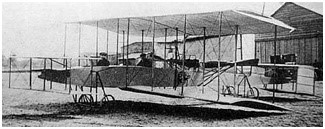
Charles de Piquerez was an explorer who asked de Pischoff and Koechlin in December 1908 to build him a large biplane. The design had an engine in the middle of the fuselage, driving two pusher propellers via chains. Elevator(s) were mounted in the front and the end of the fuselage. Crew one pilot and a passenger. The biplane flew in at Issy-les-Moulineaux, France, in April and May 1909 but not very successfully, so it was radically redesigned as a monoplane (also with two pusher propellers), but alas this was not a great success too.
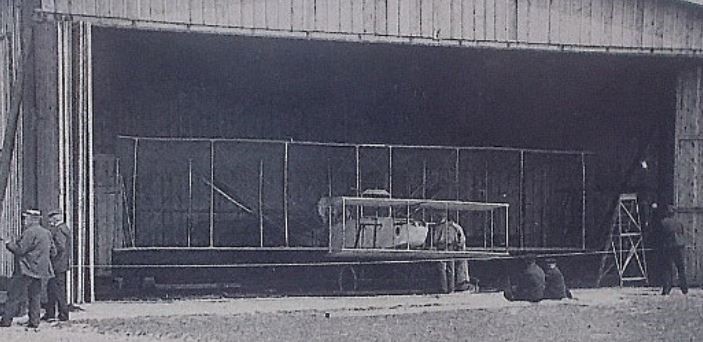
Powerplant: 1 x 40 hp 4-cylinder Dutheil and Chalmers engine.
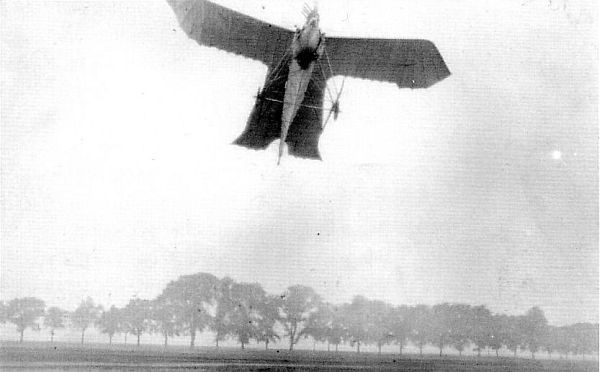
Presented in October 1912 at the “Süddeutschland Flug” that started in Mannheim, Germany. It was nicknamed “the flying nightdress”. Apart from the long stabilizing areas a more or less conventional Taube-design, powered by a 70 hp Argus.
Germany
Based in Mannheim, built several Taube monoplanes in 1914 using steel cables below the wings in place of the normal bracing structure.
Pipistrel has a four-seat GA airplane under development in 2012. The Panthera, that’s already flown and was to be offered with three power packages: traditional gas, hybrid gas/electric…and all electric.
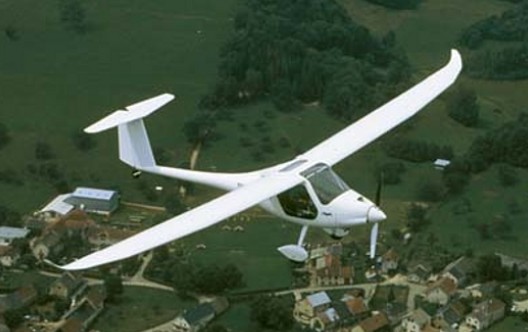
In 1995, Pipistrel d.o.o. Ajdovščina presented a two-seat ultralight aircraft with a wing-span of 15 meters, aimed also at glider pilots. The aircraft was the Sinus.
The Sinus team aimed at a two-seat composite-built aircraft with 15 meters of wingspan, which requires 100 meters of runway to take-off and reaches 200 km/h in horizontal flight, all on a 50 HP engine. The aircraft was is constructed according to EASA CS-22 rules (classic gliders), although it fits into the microlight category, with seats in side-by-side configuration.
The L/D ratio of the aircraft was be close to 1:30, which makes it a decent glider and provides extra safety in case of engine failure, since the engines for microlights are not certified, and must present Short Take-off and Landing (STOL) characteristicts. The aircraft is equipped with airbrakes, which enable the pilot do descent rapidly and use a high angle of approach onto typical ultralight airfields. The empty weight of the whole aircraft was not to exceed 285 kgs.
The small Pipistrel team developed their own airfoil and wing shape as well as a propeller with feathering capability, all drastically decreasing the drag and providing for a satisfactory glide ratio.
When the Sinus flew for the first time she was a subject of aviation magazines around the World and glider pilots began placing orders. They were willing to trade the imperfect glide ratio for the low cost of flying, freedom and independence from glider tow.
Sinus took the World Champion 2001 title, triggered a wave of imitators.
Fully composite construction with a 15-meter wing span, which provide for a glide ratio touching 1:30, the Sinus is equipped with high-tech features such as flaperons, airbrakes and variable-pitch propeller, and can be had in both tricycle or tail dragger undercarriage configuration. Sinus comes in two variants, the 503 and 912 with corresponding Rotax two- and four- stroke engines. Fast cross country flights to destinations 1000 km and further away doing more than 200 km/h (110 kts) are a reality with Sinus, even while burning around 10 liters of automotive fuel (mogas) or avgas per hour.
The Pipistrel Sinus is a ULM certified composite two seater motorglider. The vario propeller with in flight adjustable pitch and possibility to set it in the feather position transform the Pipistrel Sinus in a real low resistance glider. All options are included in the basic 2009 price: 46900 EURO.
Electric starter, recycling fuel pump to fill the wing tanks, warning lights for fuel minimum level, cockpit hot air heating system, main wheel fairings, all engine and flight instruments, etc. The cabin is properly insulated from noise and very comfortable. The seats are ergonomic with an adjustable head rest. The pedals have wheel brake levers on them, are adjustable in flight and made in stainless steel. All controls are easy to use and reach from both seats, and both seats have pedals and sticks.
Sinus was the absolute winner of the World Championship in 2001 and came runner-up in 2005. In 2004 Sinus was the first light aircraft to fly around the World. Since then, our owners have performed remarkable long-range flights including a non-stop flight from Pisa to Lisbon, Athens – Nordkapp flight and the first ever light aircraft Australia – New Zealand crossing!
The Sinus entire cabin area is encased with energy absorbing structures made from Kevlar fibre. The Sinus can also be equipped with the ballistic parachute rescue system. Including honeycomb techniques, Titanium and Magnesium are used on parts of the aircraft.
The wing tanks have the fuel cap on top, as well as a visual check for the fuel level. The main landing gear is profiled, made of composite. The main wheels have strong hydraulic disk brakes. Back wheel is controlled by pedals. The airbrakes allow landing the Sinus in very short distances over high obstacles. Disassembling and assembling is very simple like on normal gliders, all wing control connections are automatically locked on annexation of the wings.
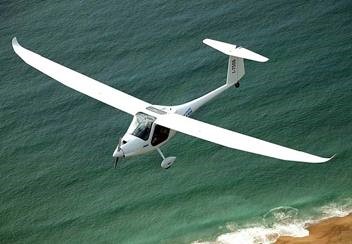
Pipistrel has delivered more than 1,000 aircraft worldwide. All Sinus models can be had as 51% EAB (Amateur-Built Experimental) kits (400 hours est.) too. Price 2014 US$97,450.
Sinus 503
Engine: Rotex 503 UL DCDI 2V 50hp at 6000 rpm
Wing span: 14.97 m
Wing area: 12.26 sq.m
Aspect ratio: 18.3
Airfoil: IMD 029-b, (Orlando, Venuti)
Empty Weight: 265 kg / 584 lb
MTOW Weight: 472 kg / 1041 lb
Stall: 34 kt / 39 mph / 63 kmh
Cruise: 92 kt / 106 mph / 170 kmh
VNE: 121 kt / 140 mph / 225 kmh
Climb Ratie: 600 ft/min / 3.2 m/s
Glide Ratio: 1:28
Take-off distance (50ft obstacle): 710 ft / 215 m
Landing distance (50ft obstacle): 660 ft / 200 m
Cockpit width: 44 in
Seats: 2
Sinus 912
Engine: Rotax 912 UL2, 80 hp at 5800 rpm
Propeller: Pipistrel VARIO
Wing span: 14,97 m
Length: 6,6 m
Height: 1,70 m
Wing area: 12,26 sq.m
Airfoil: IMD 029-b, (Orlando, Venuti)
Rudder area: 1,1 sq.m
Tail area: 1,63 sq.m
Aspect ratio: 18,3
Positive flaps: 9 deg, 18 deg
Negative flaps: 5 deg
Center of gravity: 20% – 39%
Empty weight: 285 kg
Empty weight light version: 275 kg
Max take off weight (MTOW): 450 kg / 472.5 kg / 544kg
Fuel tanks capacity: 2 x 30 l / 2 x 50 l
Useful fuel: 2 x 27 l / 2 x 45 l
Stall with flaps: 34 kt / 39 mph / 63 km/h
Stall without flaps: 66 km/h
Cruising speed (75% power): 108 kt / 124 mph / 200 km/h
Max. Horizontal speed : 220 km/h
Vne: 121 kt / 140 mph / 225 km/h
Max speed with airbrakes out: 160 km/h
Max speed with flaps down: 130 km/h
Manoeuvring speed: 141 km/h
Best climb speed: 120 km/h
Max climb rate (450 kg): 6,5 m/sec
Climb rate at 140 km/h: 1300 ft/min / 6,3 m/sec
Min.sink speed: 90 km/h
Min.sink (prop. 90 deg.): 1,03 m/sec
Max. Sink with airbrakes: 5,5 m/sec
Best glide ratio speed: 95 km/h
Best glide (prop. 90 deg.): 1:27
Glide at 150 km/h (prop 90 deg): 1:18
Take off run ( 450 kg): 88 m
Take off over 15 m obstacle (450 kg): 148 m
Service ceiling ( 450 kg): 8800 m
45° – 45° roll time: 4,2 sec
Fuel consum. At cruis. Speed: 9,2 l/hour
Endurance (std tanks): 5,8 hours
Range distance: 1200 km
Max load factor permitted ( x 1,8): +4 g – 2 g
Max load factor tested: + 7,2 g – 7,2 g
Cockpit width: 44 in
Seats: 2
2009 Price: 57900 EURO
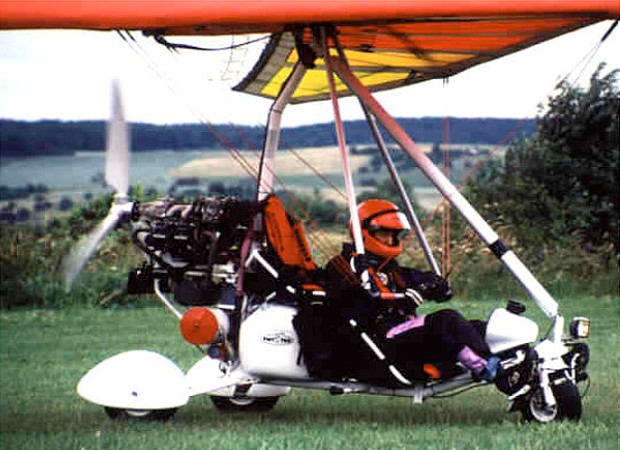
With 4-stroke Rotax 912 UL powerful engine, and composite profiled landing gear, Twister has a Pipistrel Vario (variable pitch in the air) prop. A two seat tandem trikes, it is made in long life composite materials and electrostatic powder coated hot paint protected steel.
Ready to fly, and certified as an UL aircraft in various countries, with a 1 year warranty.
All models have:

