The Praga D was a four-cylinder, air-cooled, horizontally opposed aircraft engine first produced in Czechoslovakia in 1936 but which enjoyed its greatest success after World War II due to the explosion in popularity of sports flying. A version for helicopters was produced post WWII as the Praga DH.
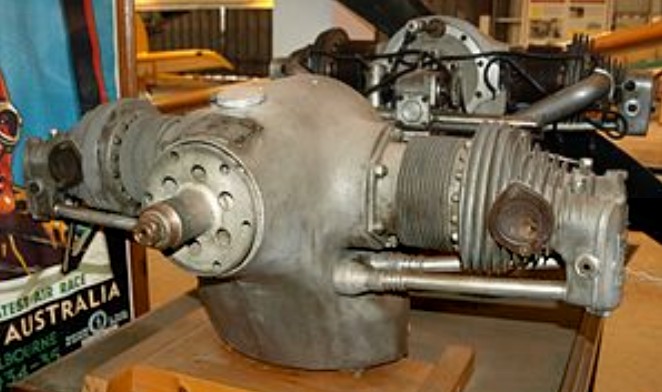
The Praga B2 was a low powered air-cooled flat twin aero engine suitable for very light aircraft. Dating from the mid-1930s, it was manufactured by Praga, Ceskomoravska-Kolben-Danek Co., Czechoslovakia.
The Praga B2 was a dual ignition, air-cooled horizontal twin producing 40 horsepower (30 kW) aimed at lightweight aircraft. It was a higher compression version (6.7:1 from the earlier 5.72:1) of the original and otherwise very similar Praga B, which provided 36 hp (27 kW). Its cylinders were machined from alloy steel forgings and had aluminium alloy heads. The pistons were of aluminium alloy, with three compression rings and one scraper ring. The connecting rods were of nitrided steel, with divided big ends and bronze bushes at the little ends. The one piece crankshaft was also formed from nitrided steel and had two main roller bearings and a single ball thrust bearing. The single piece crankcase was cast from an aluminium alloy.
135 units in all, including B and B2 variants were built. Jowett Cars Ltd. of Idle, Bradford in the UK obtained a licence in 1936 to build the Praga B engine, for installation into the licence built Hillson Praga. Immediately after the end of World War II the Praga B2 was on display at the 1946 Paris Air Show.
Specifications: B2 Type: 2-cylinder horizontally opposed Bore: 105 mm (4.13 in) Stroke: 110 mm (4.49 in) Displacement: 1.906 L (116 cu in ) Length: 610 mm (24.0 in) Width: 854 mm (33.6 in) Height: 515 mm (20.3 in) Dry weight: 48 kg (106 lb) (with airscrew hub) Valvetrain: Two alloy steel valves per cylinder at 50°, aluminium-nickel-bronze valve seats. Two ball bearings to each rocker arm, grease gun lubricated in oil tight rocker-box. Push-rods and tappets in aluminium sleeves. Fuel system: Zenith 42M, mixture passing through sump in pipe to avoid condensation. Two BTH magnetos supplying two plugs/cylinder. Oil system: Integral with 4.5 L (7.9 pt) sump. Pressure and scavenge pumps, filtered; pressure feed to big and little ends. Cooling system: Air-cooled, finned cylinders Reduction gear: Direct, right hand tractor. Power output: 31.1 kW (41.7 hp) at 2,440 rpm Specific power: 16.3 kW/L (0.36 hp/cu in) Compression ratio: 6.7:1 Fuel consumption: at 2,440 rpm 9.38 kg/h (20.68 1b/h) Specific fuel consumption: 0.225 kg/hp/h (0.495 lb/hp/h) Oil consumption: 0.2-0.3 kg/hp/h (0.44-0.66 lb/hp/h) Power-to-weight ratio: 0.65 kW/kg (0.4 hp/lb)
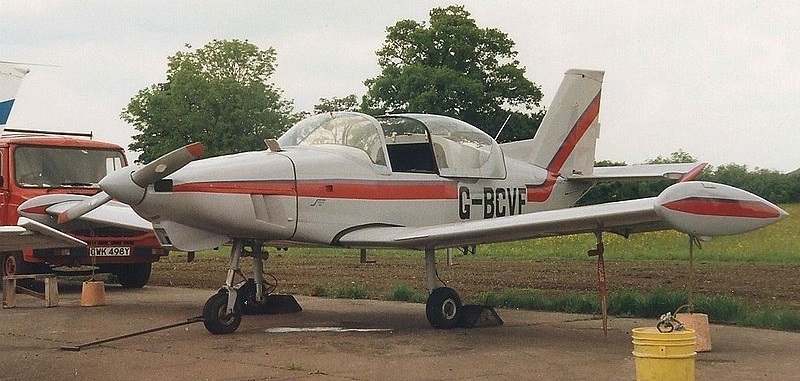
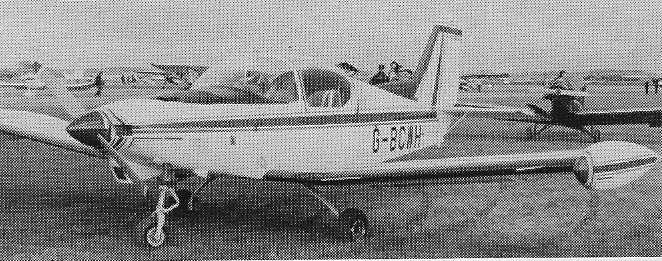
The prototype Sprite, named the Pilot Sprite, was designed by a team at Loughborough University as a British two-seat homebuilt training or touring monoplane for amateur construction. The design had been begun as a magazine-sponsored project by Peter Garrison, who worked for Pilot at the time; when the project did not move forward rapidly enough to suit him, he returned to the United States, where he modified his design into what would become his first Melmoth.
An all-metal side-by-side low-wing cantilever monoplanes with tricycle landing gear. The Sprite was powered by a Rolls-Royce Continental O-240-A piston engine.
It was the winning entry in a competition sponsored by Pilot magazine in 1968.
Plans for amateur building were marketed by Practavia Ltd as the Practavia Sprite.
First flying in 1971, eight are known to have been built.
Engine: 1 × Rolls-Royce Continental O-240-A, 130 hp (97 kW) Wingspan: 24 ft 0 in (7.32 m) Length: 20 ft 0 in (6.09 m) Height: 8 ft 3 in (2.51 m) Empty weight: 850 lb (386 kg) Gross weight: 1,400 lb (635 kg) Cruise speed: 128 mph (205 km/h, 111 kn) Crew: 1 (pilot) Capacity: 1 (passenger)
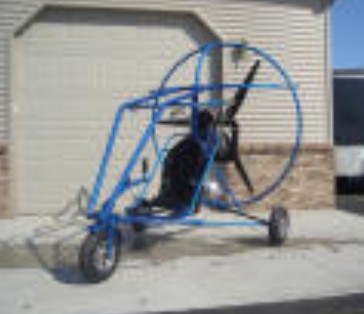
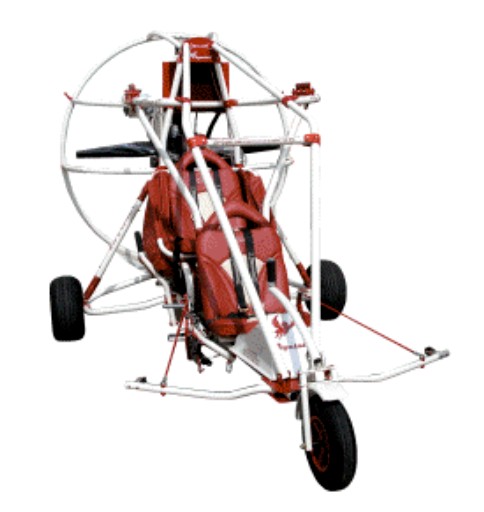
The 912 model AirWolf has either an 80 or 100 horsepower Rotax engine with a 4-cyclinder, 4-stroke, 1500 hour TBO power. It is suited for high altitudes, carrying high payloads, or extended fuel range.
AirWolf 912ULS 4-Stroke Basic Standard Factory Built features – 100 H.P. 912 ULS Electric Start 912 Throttle Quadrant w/ Choke 4 Point Seatbelts Oil Cooler Quick Connect Wiring Harness Standard extended Footbars Electric Fuel Pump Spun Aluminum Wheels Dual Hydraulic Spring Over suspension 4-Blade Warp Drive Prop w/ Super Hub Stainless Steel Exhaust Strobe Line Socks Tundra Tires Odyssey Dry Cell Battery 500 or 550 Sq. Ft. Chute 912 Engine Support
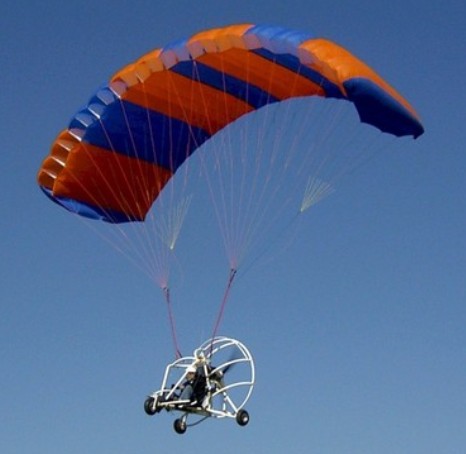
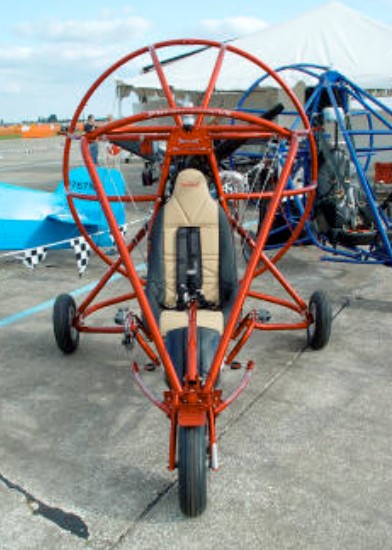
The Powrachute Sky Rascal is a single place sport machine circa 2006. It has a lightweight design, integral frontal fuselage bars, and Rotax engine. With in-House powder coating, the Sky Rascal features an instrument pod, and spun aluminum wheels.
Sky rascal standard features include – Frontal fuselage bars Front fender 3-blade composite prop analogue cht-tach/hour meter (standard for 447-(103 legal only) hydraulic spring-over strut suspension 5 gallon aluminum fuel tank Chute Bag & Line Ceramic Exhaust Basic EIS (Standard for 503) 4-Point Seat Belt Fuel capacity: 6-7 Gal
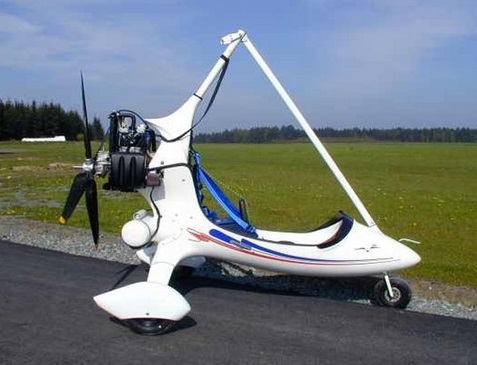
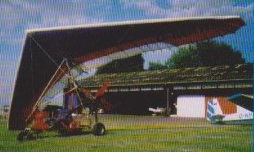
The PowerTrike Evolution is a German ultralight trike, designed and produced by PowerTrike of Mackenbach. The aircraft is supplied as a complete ready-to-fly-aircraft. As of 2014 the design was no longer available.