Remos G-3 Mirage

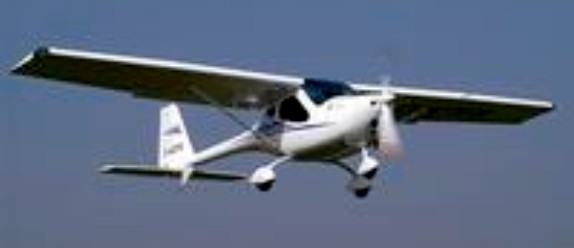
The Remos G3 is an FAA approved, German manufactured Light Sport Aircraft. Made mostly of carbon fibre, including the landing gear, the Remos weighs 626 lb empty, leaving a useful load of 695 lb. The cockpit is reinforced with Kevlar. Structural composite wing parts are covered with Ceconite fabric to reduce weight. The strutted wings fold back in 5 minutes.

The Remos G3 is approved to tow gliders up to 625 lb gross and banners up to 1633 sq.ft.

Ailerons and elevator are mass balanced, and there is some rudder surface forward of the hinge. Aileron differential is about 1.5:1. Electric trim and flaps are fitted. Flaps extend to 40 degrees. The fuel tank is high in the aft fuselage. Shoulder width in the cabin is 45.8 in. Doors, which are hinged on top, may be opened in flight to 66 kt. They can be removed before flight.

First flown in 1997, the Remos was introduced in 1998 and proclaimed Aircraft of the year at the biennial AERO sport aviation show in Friedrichshafen, Germany, in 2000.

1998

2007 base price: US$99,500
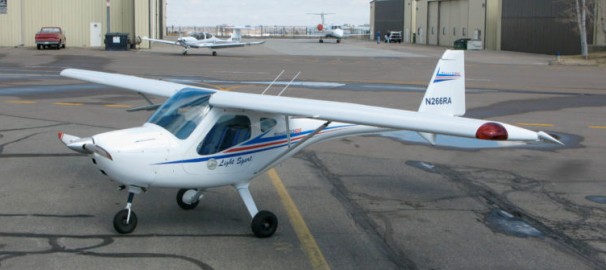
2008 REMOS G3 AVIATOR II

Gallery

Remos G-3 LSA
Engine: Rotax 912 ULS, 100 hp
TBO: 1500 hr
Prop: 2 blade wood
Fuel type: 100/100LL & auto
Wingspan: 32 ft. 4 in
Overall length: 21 ft. 5 in
Height: 5 ft. 6 in
Wing area: 131 sq. ft
Wing loading: 10.1 lbs./sq. ft
Power loading: 13.2 lbs./hp
Max ramp weight: 1320 lb
Gross weight: 1320 lb
Landing weight: 1320 lb
Empty weight, std: 625 lb
Useful load, std: 695 lb
Payload, full std. fuel: 578 lb
Useful fuel, std: 21 USgals
Seating capacity: 2
Cabin doors: 2
Cabin width: 47 in
VNE: 121 kt / 140 mph / 225 kmh
Cruise speed: 75% power: 113 kt
Vso: 39 kt
Best rate of climb (SL): 1300 fpm / 6.5 m/s
Max operating altitude: 20,000 ft
Takeoff ground roll: 330 ft
Landing ground roll: 590 ft
Take-off distance (50ft obstacle): 450 ft / 137 m
Landing distance (50ft obstacle): 450 ft / 137 m

Engine: Rotax 912, 80 hp
Empty weight: 260 kg
Wing span: 9.8 m
Wing area: 13.31 sq.m
MAUW: 450 kg
Fuel capacity: 60 lt
Max speed: 145 kph
Cruise speed: 140 kph
Minimum speed: 62 kph
Climb rate: 5.8 m/s
Certification: Allemande
Seats: 2
Fuel consumption: 9.5 lt/hr
Price (1998): 114 000 DM
Reissner Ente / Wellblech Ente

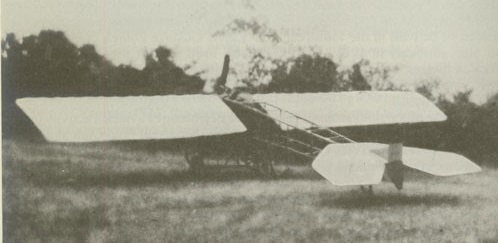
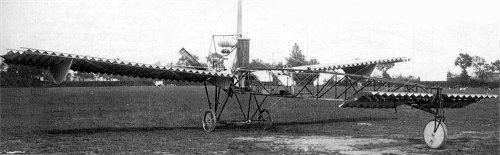
Prof. Dr. Hans Reißner built this canard in the experimental workshop of Junkers that was connected to the “Technische Hochschule Aachen”.

First flying on 23 May, 1912, in second form after having been rebuilt (in the third form, it got four fins under the mainplane).

According to G. Schmitt several versions were built and also flown. The Swiss Robert Gesell presented the machine over a few weeks in Johannisthal at the end of 1912.

Reifschneider Eagle

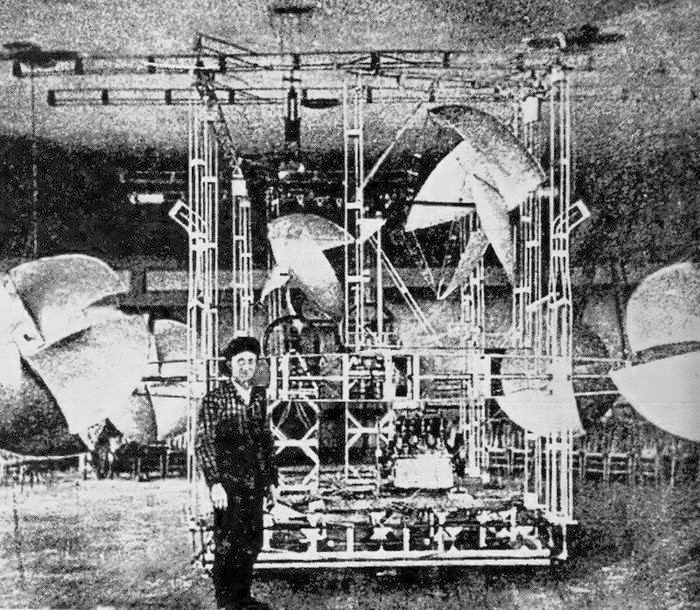
A contrivance consisting of two major parts, a cigar-shaped balloon, to which was attached a frame, on which were six propellers. Four propellers were used for ascending and two for steering. The power was supplied by a gasoline engine. The Streator, Illinois inventor declared that his ship could be driven from Chicago to New York at the rate of 100 miles an hour, and that it could be sailed around a tower with its side touching the structure at all times. It was planned to construct the machine at an expense of $ 10,000.

Reid & Sigrist R.S.1 Snargasher

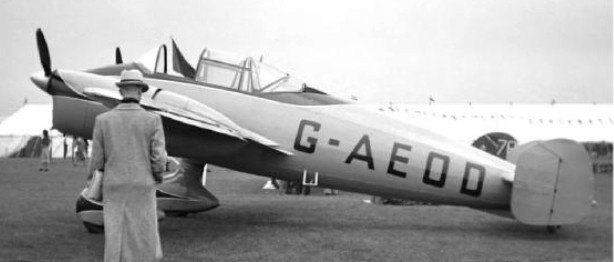
Reid & Sigrist Ltd built a twin-engined advanced trainer popularly known as the Snargasher, of which only a prototype (G-AEOD) was built.

A three seat trainer built at Desford shortly before the Second World War, power was by two de Havilland Gipsy Six engines. The aircraft’s first public appearance was at the Royal Aeronautical Society garden party at Heathrow in May 1939.

During the war the Snargasher flew as the maker’s communication aircraft until scrapped in 1944.

Reid Flub / Reid Flying Submarine / RFS-1

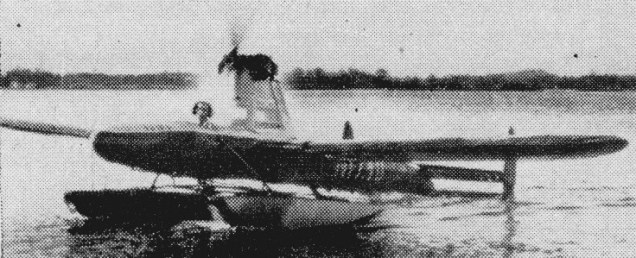
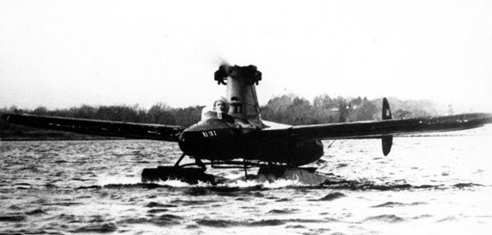
Donald Reid was developing a flying sub using his own money. The “flub” would use one jet engine for both flying and underwater propulsion.

The last five models have been man-size, and his son, Bruce, has been his chief test pilot. Bruce has had the flub, in the air on short, straight-ahead flights, and underwater for short periods. In 1965 they hoped to put the two together and take off from water, land and submerge.

The 1965 model is scrounged mostly from parts of crashed airplanes. It has a 65-hp Lycoming engine with propeller mounted above the fuselage/hull for flying and an electric-powered screw for underwater propulsion.

Reid says he was laughed out of Washington when he proposed such a vehicle to the Navy 10 years ago. “Now,” he says, “I’ll just finish it and give it to the Air Force.”

The RFS-1 sort of worked. The airplane was incredibly heavy, so it could only do slight hops in the air, but it could dive, at least a little bit. Before diving, the pilot had to remove the propeller, and cover the engine in rubber. Since the airplane had an open cockpit, the pilot used an aqualung while under water. The RFS-1 dived down to 12 feet during a test.