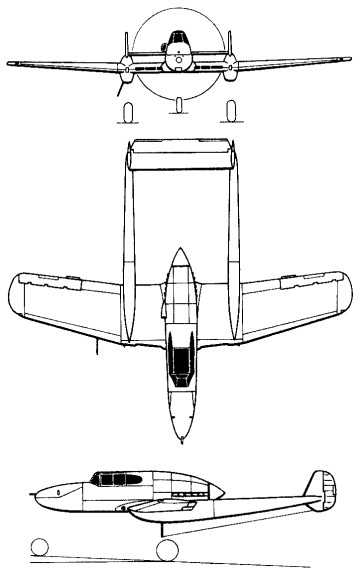
The SABCA S.11 was a prototype Belgian 20 passenger airliner of 1928, developed from the S.3. It was a three-engined 420 hp Jupiter powered high-winged monoplane intended for service in the Belgian Congo, but only a single example was built.
The SABCA S.11 was a prototype Belgian 20 passenger airliner of 1928, developed from the S.3. It was a three-engined 420 hp Jupiter powered high-winged monoplane intended for service in the Belgian Congo, but only a single example was built.
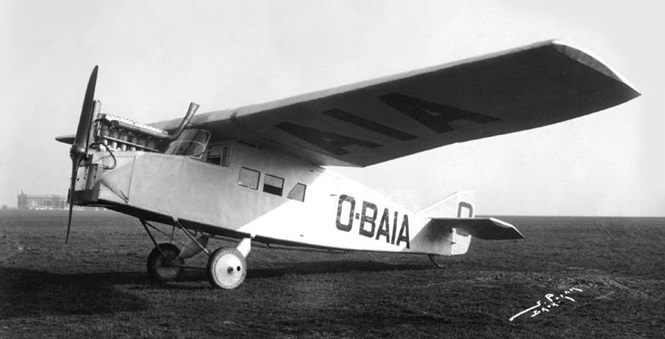
The SABCA S.2 was an airliner built in Belgium in 1926. It was a conventional, high-wing cantilever monoplane with fixed, tailskid undercarriage. The flight deck was open, but the passenger cabin was fully enclosed. Power was provided by a single 240 hp Siddeley Puma engine in the nose, driving a two-blade propeller, and whose exhaust was collected in a single stack that extended up over the wing. Metal was construction throughout, with corrugated skin. Only a single example was built, which served with SABENA.
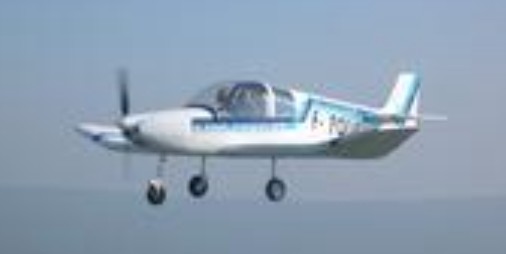
2009 Price: 85000 EURO
Stall: 34 kt / 39 mph / 63 kmh
Cruise: 100 kt / 115 mph / 185 kmh
VNE: 157 kt / 180 mph / 290 kmh
Empty Weight: 290 kg / 639 lbs
MTOW Weight: 450 kg / 992 lbs
Climb Ratio: 1100 ft/min / 6 m/s
Take-off distance (50ft obstacle): 720 ft / 220 m
Landing distance (50ft obstacle): 720 ft / 220 m
Finland
Founded 1928. Built two-seat biplane for wheels, skis or floats which was convertible for ambulance work and was developed into cabin type.

The 1960 Saalfield Aircraft Co Skyskootor, with a molded fiberglass fuselage, was sold either as a complete aircraft or in component form. $3,495-3,995 assembled with motor, $1,995 as a kit less motor.
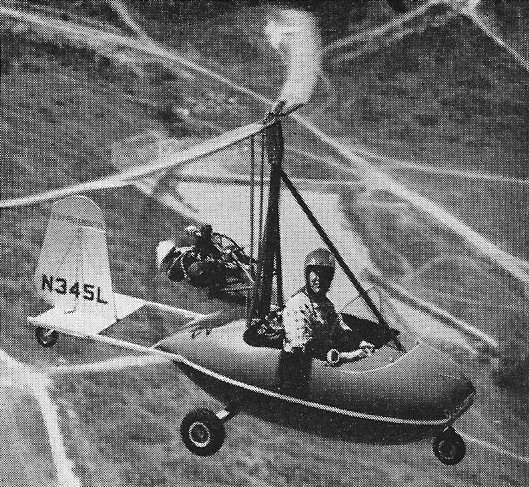
Engine: 72hp McCulloch 4318A (factory overhauled) or 4318E (new)
Rotor: 21’4″
Length: 10’0″
Useful load: 440 lb
Max speed: 85 mph
Cruise speed: 65 mph
Min speed: 25 mph
Range: 250 mi
Ceiling: 12,000 ft
Seats: 2
The SAAB 202 was a SAAB 91 Safir fitted with half sized A32 wings, used for aerodynamic research.
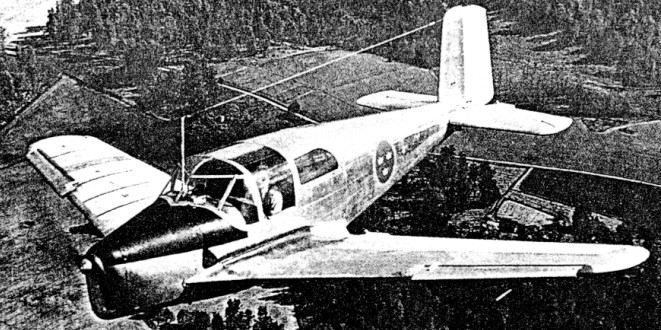
The SAAB 201 was a SAAB 91 Safir fitted with half sized J29 wings, used for aerodynamic research.
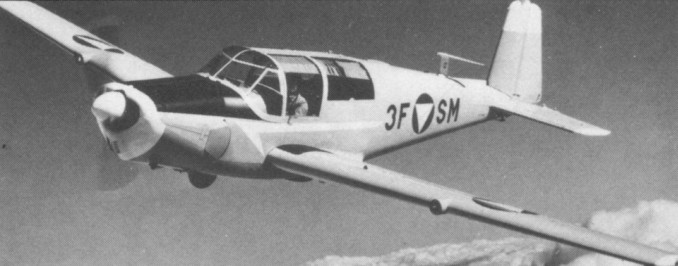
Design work was started in winter 1944-45 and the first prototype. A three-seat cabin monoplane of cantilever low-wing configuration which had retractable tricycle landing gear and was powered by a 147-hp / 97kW de Havilland Gipsy Major 1C inline engine.
Saab flew on 20 November 1945 the prototype, with a top speed of 265 km/h (165 mph).
Successful testing led to the first production version, the Saab-91A, commenced in Spring 1946, which differed primarily by having the more powerful de Havilland Gipsy Major 10 engine. 48 aircraft were built between then and 1950. Ten of these were bought by the Swedish Air Force for liaison and light transport duties.
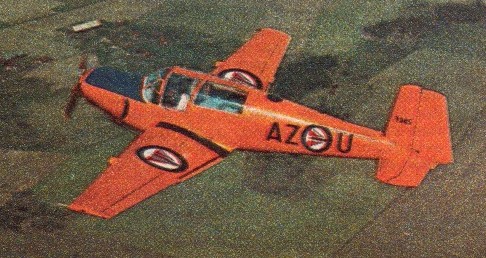
The SAAB 91B, which appeared in 1951, differed primarily in having a 190 hp Lycoming O-435-A engine. This model was ordered by the Swedish Air Force and was largely built by “de Schelde” in Dordrecht, the Netherlands, as the SAAB factories were fully committed at that time. In the Spring 1952 the first SAAB Safir training aircraft for which De Schelde had received a large licensed production order, left the factory. The 91B had a top speed of 275 km/h (171 mph. This model (which was also used as a trainer from 1952 on) was followed by a 4-seater version designated the 91C. Safir production returned to Sweden in 1954 and the company announced the Model 91C which had been modified to include a fourth seat.
Swedish airforce interest in this aircraft as a primary trainer led to a prototype powered by a 142kW Avco Lycoming O-435-A flat-six engine, first flown on 18 January 1949. This was adopted by the Flygvapen as a standard trainer under the designation Sk 50, built by Saab with the same powerplant as the Saab-91B It could be equipped to carry guns, practice bombs or rockets, and served also with the air forces of Ethiopia and Norway; in a pure training sub-variant this version was also adopted by a number of European airlines.
The Saab-91C, first flown in September 1949 having four-seat accommodation. The final production version was the Saab-91D, which introduced a number of improvements, including a new Avco Lycoming O-360-A1A engine, disc brakes and other advanced equipment that offered weight saving.
In 1957, the SAAB 91D with the smaller 180 hp Lycoming O-360-A1A four-cylinder air-cooled engine, joined the 91C at the production line.
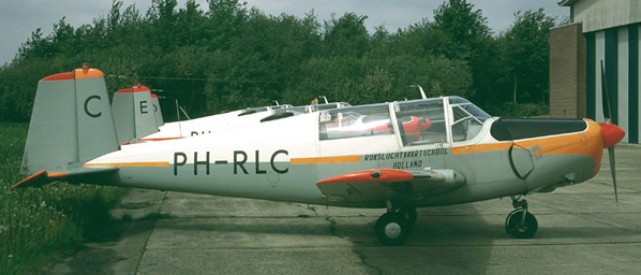
A total of 323 Safirs were built, 120 under licence by de Schelde in Dordrecht, the Netherlands, and examples had been sold to operators in 21 countries and 6 air forces.

Variation:
Japan Aircraft Manufacturing Co Z1G3
91A
Engine: 1 x De Havilland Gipsy Major 10,147 hp
Span: 10.6 m (34’9.25”)
Length: 7.80 m (25’10.25”)
Take-off weight: 1075 kg (2370 lb)
Maximum speed, km/h (mph): 265 kph (165 mph)
Cruising speed: 248 kph (154 mph)
Landing speed: 85 kph (53 mph)
Range: 960 km (597 miles)
Max. altitude: 4600 m (15090 ft)
91B
Engine: 1 x Lycoming O-435A, 190 hp
Span: 10.6 m (34’9.25”)
Length: 7.95 m (26’l’)
Take-off weight: 1215 kg (2472 lb)
Maximum speed: 275 kph (171 mph)
Cruising speed: 240 kph (149 mph)
Landing speed: 90 kph (56 mph)
Range: 1075 km (668 miles)
Max. altitude: 6200m (20340 ft)
91C
Engine: 1 x Lycoming O-435A, 190 hp
Span: 10.6 m (34’9.25”)
Length: 7.95m (26’l’)
Take-off weight: 1215 kg (2472 lb)
Maximum speed: 275 kph (171 mph)
Cruising speed: 240 kph (149 mph)
Landing speed: 90 kph (56 mph)
Range: 1075 km (668 miles)
Max. altitude: 6200 m (20340 ft)
91D
Engine: 1 x Lycoming O-360-A1A, 180 hp / 134kW
Span: 34 ft 9 in (10.6 m)
Length: 26 ft 4 in (8.03 m)
Wing area, 146.3 sq.ft (13.6 sq.m)
Height: 2.2 m / 7 ft 3 in
Empty wt: 1,570 lb (710 kg)
Take-off weight: 1205 kg (2657 lb)
Maximum speed: 165 mph (265 kph)
Cruising speed: 235 kph (146 mph)
Initial climb: 800 fpm (4.06 m/sec)
Landing speed: 90 kph (56 mph)
Range: 660 mls (1060 km)
Max. altitude: 6100 m (20010 ft)
Service ceiling: 16,400 ft (5000 m)
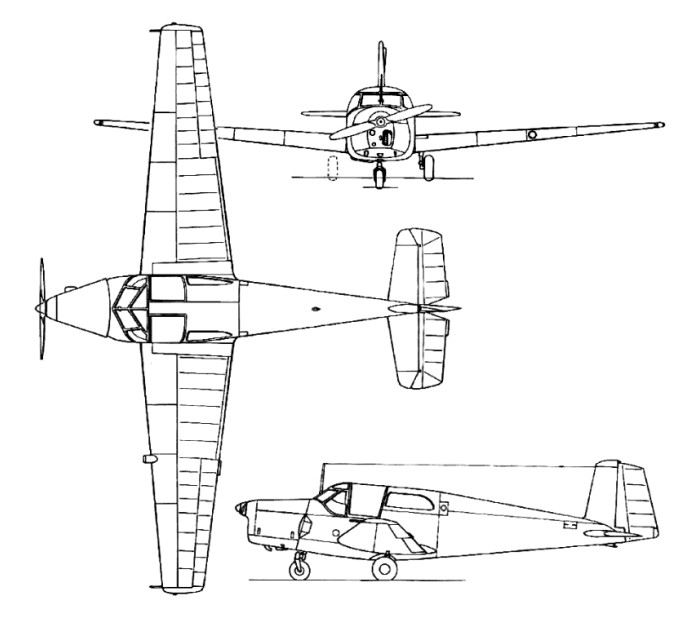

In 1944 Saab em¬barked on two civil aircraft projects — the Saab 90 Scandia, a twin-engined airliner, and the Saab 91 Safir, a single-engined trainer and private plane. The Saab-90 Scandia represented the company’s attempt to join the post-World War II hunt for a Douglas DC-3 replacement.
A cantilever low-wing monoplane of all-metal construction, with retractable tricycle landing gear and powered by two wing-mounted 1081kW Pratt & Whitney Twin Wasp radial engines, and accommodation was provided for a flight crew of four or five and 24 to 36 passengers, according to cabin layout. The 14-cylinder R-2180 radial drove a four-bladed variable-pitch propeller. The Scandia was the only civil use for the R-2180 (also known as the Twin Wasp E1) engine, although a military version was used in rhe prototype Piasecki H-16 helicopter. The elevators and ailerons were fabric-covered and interchangeable port and starboard. After landing a support strut could be deployed from the cockpit to keep the aircraft from tipping backwards during passenger and baggage loading and unloading.
The results of the SAAB 90 first test flight, on 16 November 1946 were sufficient to encourage the Swedish airline, AB Aero¬transport, to sign a contract for 10 aircraft at a value of SKr 15 million. The first plane was delivered in October 1950. When Swedish airline AB Aerotransport this was absorbed into SAS (Scandinavian Airlines System) the order was reduced to six. The remaining four aircraft were then sold to Aerovias Brasil (later VASP). Both airlines found them efficient aircraft to operate, resulting in production of two more for SAS and five for VASP, but that was all.

When Saab was told by the Swedish Air Force to focus on Saab 29 “Tunnan” deliveries, Scandia production was transferred to Fokker in 1951, who in turn used Aviolanda and de Schelde to finish the aircraft. Saab received compensation from the Swedish Air Force for the abandonment of the project.
At this point, the Company had delivered 8 aircraft to ABA and exported 10 to Brazil. In time, the ABA planes were also sold to Brazil, where they remained in service until 1969. Only those 18 were ever built, between 1948 and 1954, including the prototype.
A Saab-90B with a pressurised cabin was planned, but with no demand for the type it was not built.
Saab 90A Scandia
Engines: 2 x Pratt & Whitney R-2180-E1 radial, 1342kW
Wingspan: 28 m / 92 ft 10 in
Length: 21.3 m / 70 ft 11 in
Height: 7.1 m / 23 ft 4 in
Wing area: 85.65 sq.m / 921.93 sq ft
Max take-off weight: 16000 kg / 35274 lb
Empty weight: 9960 kg / 21958 lb
Cruise speed: 390 km/h / 242 mph
Ceiling: 7500 m / 24600 ft
Range: 1480 km / 920 miles
Saab 90A-2 Scandia
Crew: 4-5
Engine: 2 x Pratt & Whitney Twin Wasp R-2180-E1, 1825 hp
Span: 28.0 m (91’10.5”)
Length: 21.3 m (69’10.5”)
Take-off weight: 15900 kg (35053 lb)
Range: 2650 km (1650 miles)
Maximum speed, km/h (mph) 455(283)
Cruising speed: 400 kph (249 mph)
Landing speed: 120 kph (75 mph)
Max. altitude: 8700 m (28540 ft)
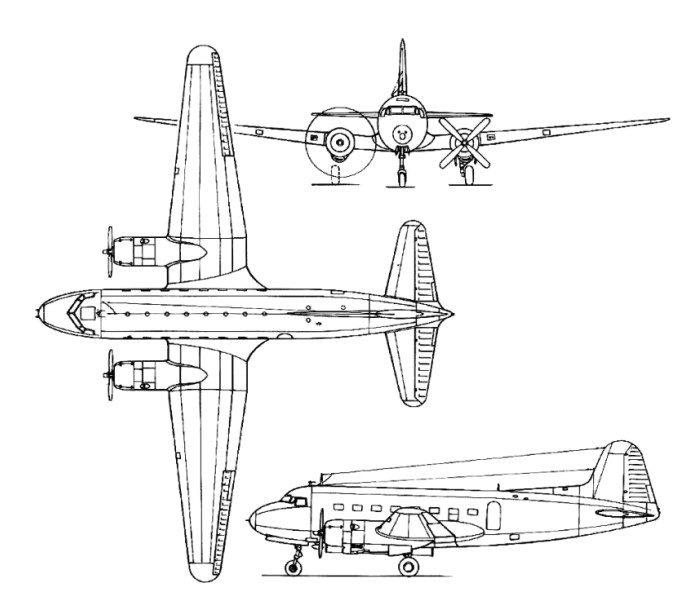

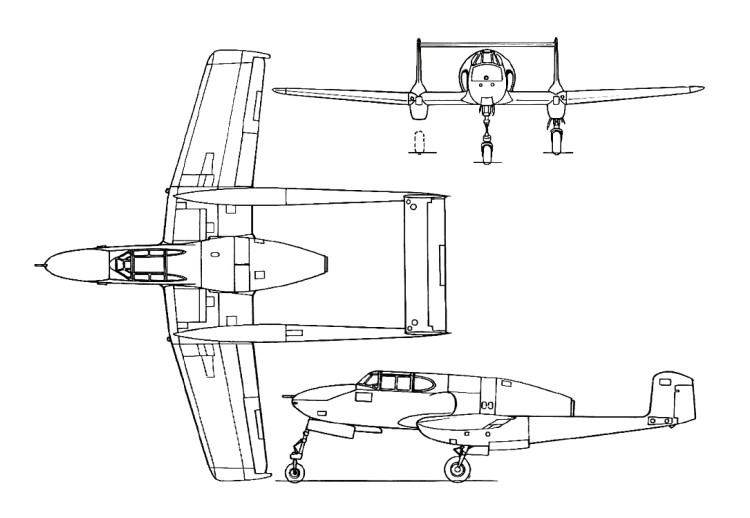
On 1 April 1939, the Air Force Materiel Administration invited AB Förenade Flygverkstäder to tender for a new fighter aircraft to be powered by the new Bristol Taurus engine, a sleeve-valve unit delivering 1,200 hp. The timetable was incredibly tight. Saab proposed a radical configuration (designated the Ll3) in which the engine was mounted behind the cockpit, offering the advantages of a twin-engined craft in terms of visibility and armament. Unfortunately, this proved to be impractical since the Taurus engine was air-cooled.
In March 1941, Saab was authorized to resume work on the fighter project. By this time, technology had outstripped the original Ll3 concept and a new liquid-cooled Daimler-Benz engine was available as though made to order. The modified design — the J21 — was presented to the Air Force chiefs on 1 April 1941.
The design was a cantilever low-wing monoplane having moderate wing sweep, with central fuselage nacelle to accommodate the pilot on an ejection seat. Power was a rear-mounted powerplant in pusher configuration, twin booms extending aft from the wings with twin fins and rudders united by the tailplane with elevator, and retractable tricycle landing gear.
The first of three Saab-21A prototypes was flown on 30 July 1943 and these, like a few early production aircraft, were powered by the imported Daimler-Benz DB 605; all subsequent production had a Swedish licence-built version of this engine.
The first operational aircraft was delivered to F8 Wing at Barkaby on 1 December 1945.
When introduced into service in late 1945 as the J21A-1 the new type was the only pusher-engined fighter to become operational during World War II, being followed by the generally similar J21A-2 and, finally, by the A21A attack aircraft, these three versions being built to a total of 299 before production ended in 1948.
Continuous improvements were made and a bomb-carrying version, the J21A-3, made its debut on 22 May 1947.
The A21A had the same armament as the J21A fighter, was equipped to carry rockets or light bombs on under-wing racks, and had provision for the installation of a ventral gun pack housing eight 13.2mm machine-guns.
Although increasing the speed was the first priority of the plane’s designers at this time, all attempts to achieve this aim using piston engines were abandoned with the advent of the jet engine in late 1945, and four J21A-ls were modified in an initial attempt to adopt the new technology.
Svenska Aeroplan adapted its Saab-21 design to accept the installation of a de Havilland Goblin gas turbine. This seemed a simple way to gain experience with this form of powerplant and, at the same time, extend the performance capability of the proven Saab-21 design; however, it was to prove rather more difficult a process than had been anticipated. The redesign affected 50% of the airframe rather than 20% as had been anticipated. The first requirement was for the aft fuselage nacelle to be widened to accept the new engine and the tailplane moved to the top of the fin to be clear of the jet efflux. It was also decided that because of the higher performance of this aircraft some structural strengthening was essential, and as there was no longer any need to be concerned about propeller ground clearance the landing gear struts were shortened. In this form the first Saab-21R prototype was flown initially on 10 March 1947.
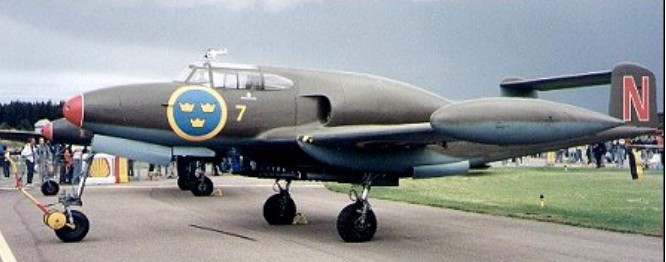
Almost two years elapsed before all development-problem fixes had been finalised, the first deliveries of production aircraft starting during February 1949.
The original Saab-21 production order had been for 120 aircraft, but because of delay in its development, a programme for the specially-designed turbojet-powered Saab-29 was well advanced, with a result that the Saab-21R order was reduced to only 60 aircraft. These were produced as the J21RA with a 1361kg thrust de Havilland Goblin 2 engine, and J21RB with a licence-built Goblin turbojet, 30 of each being built. After comparatively short service in the fighter role, all were converted as attack aircraft, redesignated A21R and A21RB respectively, and carrying 10 100mm or five 180mm Bofors rocket projectiles, or 10 80mm anti-tank rockets.
In all, 298 J21s were built. The last of these was retired from service on 23 July 1954, al¬though the J21R continued to fly until 4 April 1957.
J21A
Engine: Daimler Benz 605B, 1475 hp / 1100kW
Span: 11.64 m (38 ft 2.25 in)
Length: 10.45 m (34 ft 3.5 in)
Height: 3.96 m / 13 ft 0 in
Wing area: 22.2 sq.m / 238.96 sq ft
Take-off weight: 4150 kg (13615 lb)
Empty weight: 3250 kg / 7165 lb
Maximum speed: 640 kph (398 mph)
Cruising speed: 495 kph (308 mph)
Landing speed: 145 kph (90 mph)
Range: 1500 km (930 miles)
Max. altitude: 11000 m (36090 ft)
Armament: 1 x 20mm cannon, 4 x 13.2mm machine-guns
Crew: 1
A21A
Engine: Daimler Benz 605B, 1475 hp
Span: 11.64 m (38 ft 2.25 in)
Length: 10.45 m (34 ft 3.5 in)
Take-off weight: 4413 kg (14478 lb)
Maximum speed: 640 kph (398 mph)
Cruising speed: 495 kph (308 mph)
Landing speed: 145 kph (90 mph)
Range: 1500 km (930 miles)
Max. altitude: 11000 m (36090 ft)
21RA
Engine: De Havilland Goblin 2 (2998 lb)
Span: 11.37 m (37 ft 3.75 in)
Length: 10.56 m (34 ft 7.75 in)
Take-off weight: 5033 kg (16512 lb)
Maximum speed: 800 kph (497 mph)
Cruising speed: 700 kph (435 mph)
Landing speed: 155 kph (96 mph)
Range: 900 km (560 miles)
Max. altitude: 12500 m (41010 ft)
21RB
Engine: De Havilland Goblin 3, 3307 lb / 1500kg
Span: 11.37 m (37 ft 3.75 in)
Length: 10.56 m (34 ft 7.75 in)
Height: 2.95 m / 10 ft 8 in
Take-off weight: 5033 kg (16512 lb)
Maximum speed: 800 kph (497 mph)
Cruising speed: 700 kph (435 mph)
Landing speed: 155 kph (96 mph)
Range: 900 km (560 miles)
Max. altitude: 12500 m (41010 ft)
Armament: 1 x 20mm cannon, 4 x 13.2mm machine-guns
Crew: 1