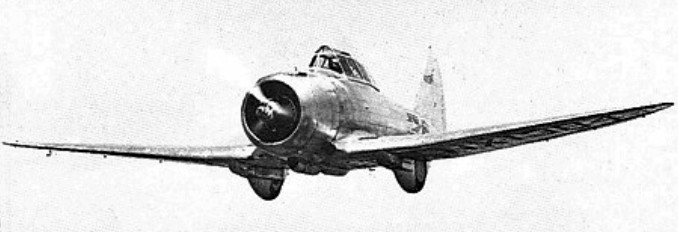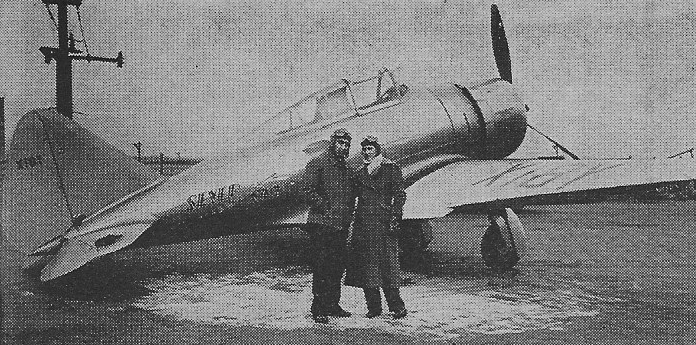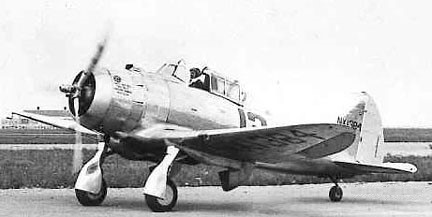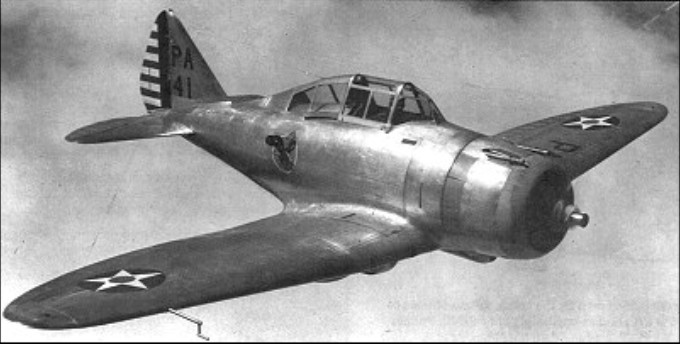
Seversky P-35 / EP-106

The type began as the company SEV-1XP, one of several machines flown as pursuit prototypes and racers in the 1930s by Major Alexander P. de Seversky, Jacqueline Cochran and others. The P-35 won out over the Curtiss Hawk Model 75 (later P-36) for a 16 June 1936 US Army contract for 77 airframes (36-354 to 430), powered by the 708kW Pratt & Whitney R-1830-9 Twin Wasp 14-cylinder radial engine. The first unit was rejected and modified as the AP-1 and the final airframe in this batch was diverted to become the sole Seversky XP-41.
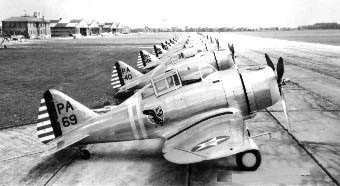
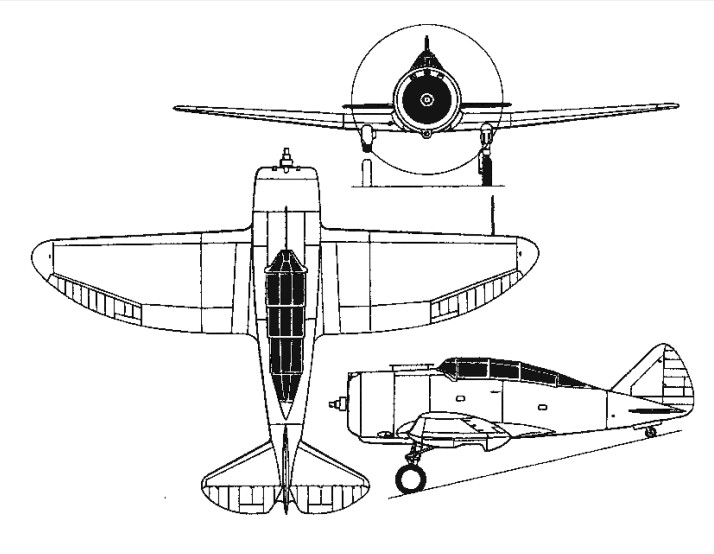
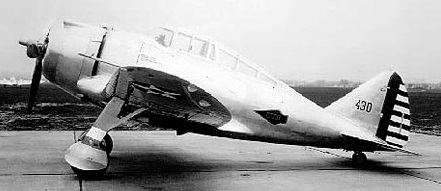
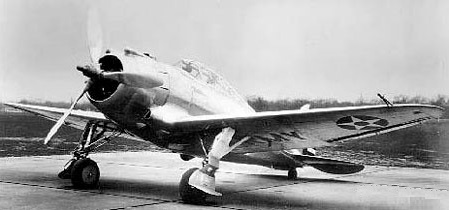
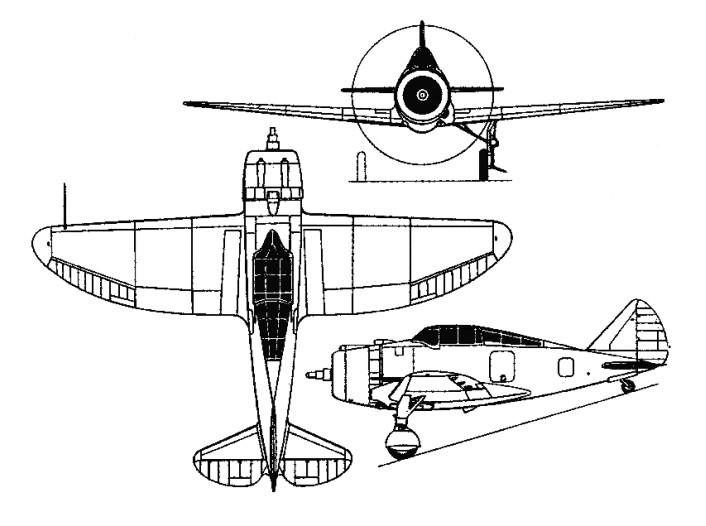
Seversky P-35

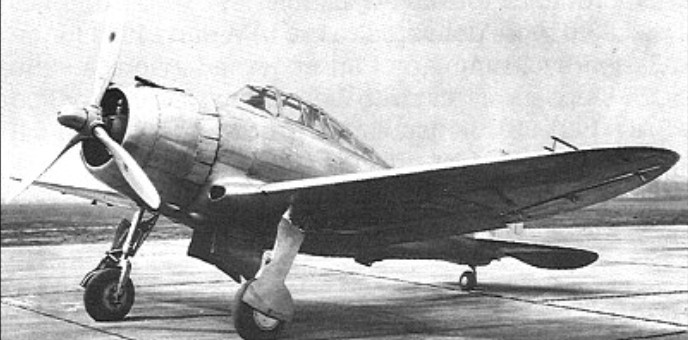
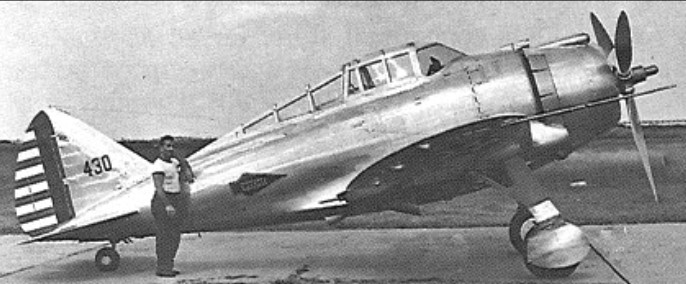
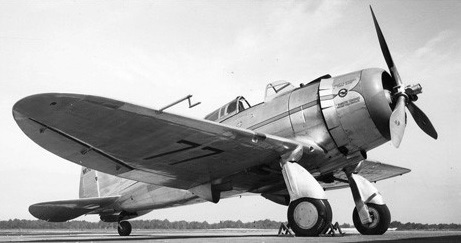
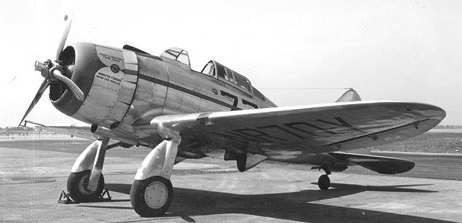
The Seversky P-35 was the first single-seat all-metal pursuit plane with retractable landing gear and enclosed cockpit to go into service with the US Army Air Corps. It was a major step forward, albeit one which was short-lived as war approached.

The P-35 marks the debut of Seversky (later Republic) of Farmingdale, Long Island, as a major builder of fighters and introduces the work of the firm’s chief designer, Alexander Kartveli. The first P-35 was delivered to Wright Field, Ohio, for tests, and the remaining 75 went initially to the 1st Pursuit Group at Selfridge Field, Michigan. There, the type was received with considerable enthusiasm which lingered even after six machines had been lost in accidents during 1938. Only by later, wartime standards would it become evident that the P-35 was unstable, underarmed, and lacking both armour protection for the pilot and self-sealing fuel tanks.

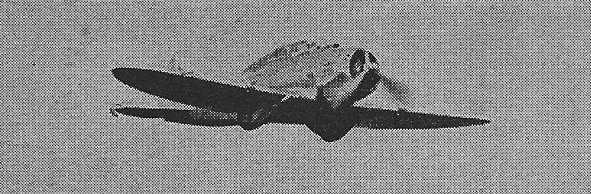
The company EP-106 export variant attracted Sweden’s attention and 120 machines were ordered with the Flygvapen designation J9. These were powered by the 783kW Pratt & Whitney R-1830-45 Twin Wasp radial. When President Roosevelt announced his 10 October 1940 embargo on fighter shipments to Scandinavia, only half had been delivered. Sixty were seized by the US Army as the P-35A (41-17434 to 17493).
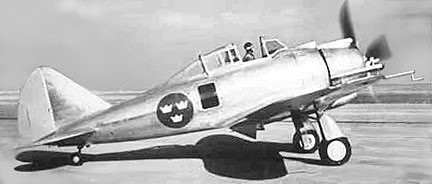
Seversky EP-106 Swedish test

P-35A pursuit ships served with various USAAC units, but by late 1941 about 50 were with First Lieutenant Joseph H. Moore’s 20th Pursuit Squadron, 24th Pursuit Group, at Clark Field in the Philippines. Second Lieutenant Max Louk wrote to his parents in mid-1941 that the squadron was undergoing ‘a very strenuous programme’ of flying ‘up to eight hours a day’ in the P-35A. Incredibly, some P-35As arrived at Clark still painted in Swedish markings and still wore them during the 8 December 1941 Japanese assault, which was synchronised with the attack on Pearl Harbor.
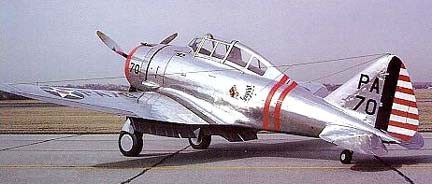
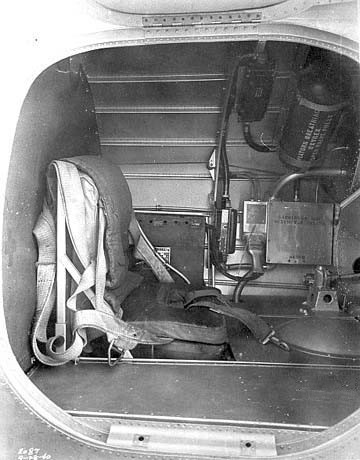
Seversky P-35A
Seversky P-35A “Buddy” seat

The P-35 was flown by a few memorable pilots, including First Lieutenant ‘Buzz’ Wagner, commander of the 17th Pursuit Squadron, Nichols Field, Philippines, the first American ace of the war. But by December 1941 the type had become dated and inadequate. Pilots of the P-35 started with the disadvantage of an unforgiving mount. 1939 Technical Order No. 01-65 BA-1 had imposed mind-boggling limitations on the P-35, proscribing inverted flight, inverted spins, and outside loops, and similar caveats applied to the slightly more powerful P-35A. Group Captain Christopher Clarkson, the UK’s Royal Air Force test pilot on the US east coast in 1940, logged six hours on P-35 variants and utterly rejected the machine for the RAF. Americans in P-35As in the Philippines simply could not stay with or effectively fight the Mitsubishi and Nakajima fighters that swarmed down on them. Some died ignominiously: First Lieutenant Samuel W. Marrett, commander of the 34th Pursuit Squadron at Del Carmen Field, Philippines, was killed 10 December 1941 when an ammunition barge he was strafing exploded beneath him over Lingayen Gulf, Northern Luzon.

Swedish pilots guarding their nation’s neutrality faced a different problem. Hans Westerberg, flew the J9 (P-35A) and, in 1944, intercepted a crippled American B-24 Liberator struggling away from a target in Germany. “I could just keep speed with the bomber. I closed in to use hand signals to tell him that his crew could land and be interned in Sweden. All of his guns turned towards me and he was an instant away from opening fire before he understood. The problem was that from some angles my P-35A looked exactly like a Focke-Wulf Fw 190.”

Gallery

P-35 / EP-106
Engine: 1050hp P&W R-1830
Wingspan: 36’0″
Length: 26’10”
Useful load: 2148 lb
Max speed: 290 mph
Cruise: 260 mph
Range: 950 mi
Seats: 1

P-35A
Wingspan: 10.97 m / 36 ft 0 in
Length: 8.18 m / 27 ft 10 in
Height: 2.97 m / 10 ft 9 in
Wing area: 20.44 sq.m / 220.01 sq ft
Max take-off weight: 3050 kg / 6724 lb
Empty weight: 2075 kg / 4575 lb
Max. speed: 499 km/h / 310 mph
Ceiling: 9570 m / 31400 ft
Range: 1529 km / 950 miles
Armament: 2 x 12.7mm + 2 x 7.62mm machine guns
Bomb load: 160kg

EP-106
Engine: P&W R-1830-45, 1050hp
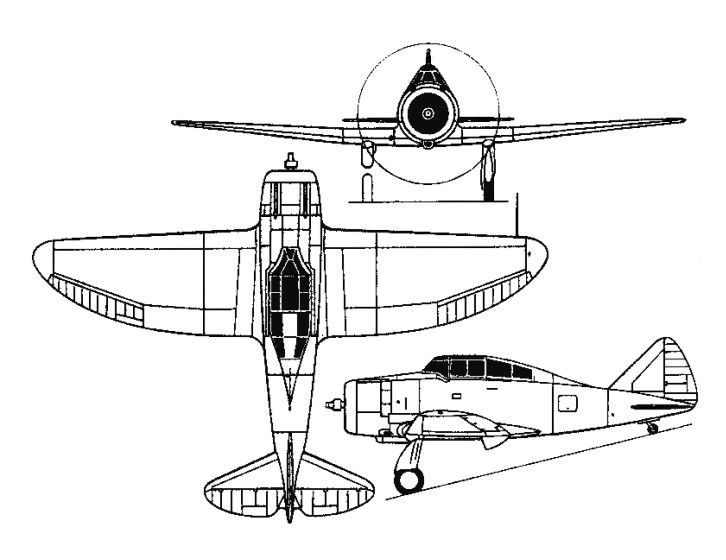
Seversky P-35

Seversky 2PA / AT-12 Guardsman

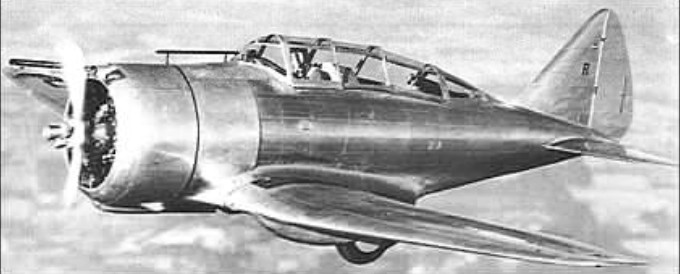
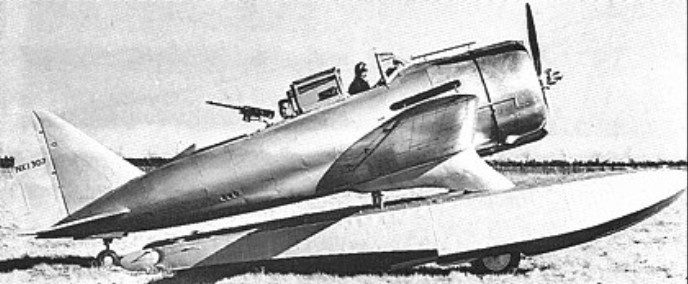
Evolved in parallel with the P-35, the 2PA was a two-seat fighter and fighter-bomber with a fundamentally similar airframe and offered with either a similar undercarriage to that of the single-seater as the 2PA-L (Land) or with an amphibious float undercarriage as the 2PA-A (Amphibian). Dubbed “Convoy Fighter” by the manufacturer, the 2PA was powered by a Wright R-1820-G2 or G3 Cyclone nine-cylinder radial engine, the former rated at 1,000hp for take-off and the latter at 875hp.

One 2PA in 1937 first flew on 8 July 1937 piloted by Frank Sinclair. Powered with an 875hp Wright R-1820-G3 Cyclone engine, it was registered NX/NR189M c/n 6 (1938 registration conflict with SEV-X-BT; possibly a transfer). Demonstrated in South America, it was reportedly abandoned in Brazil after engine failure.

Armament comprised two wing-mounted 7.62mm or 12.7mm Browning guns, one 7.62mm Browning on a flexible mount in the rear cockpit, plus two forward-firing fuselage-mounted 7.62mm or 12.7mm Browning guns. Provision was made for a bomb load of up to 227kg on internal wing racks.

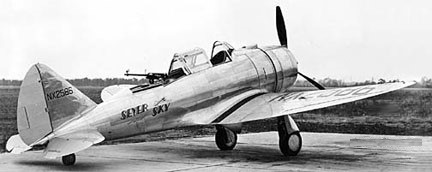
Two 2PA-BX, NX2586 c/n 146 and NX2587, were used as European demonstrators, which brought a substantial order from Sweden. First flown on 23 October 1938 piloted by Frank Sinclair, early in 1939, Major Seversky embarked upon a European sales tour in a 2PA-202 or 2PA-BX which was fitted with a 1,100hp Pratt & Whitney R-1830-S3C Twin Wasp. This aircraft was tested at the A&AEE Martlesham Heath, in March 1939, at the instigation of the Air Ministry.

Fifty-two 2PA-BXs were ordered by Sweden as dive-bombers (the Seversky company having meanwhile become the Republic Aviation Corporation), but only two of these were delivered to Sweden, the remainder being taken over by the USAAC as AT-12 Guardsman advanced trainers.

Seversky 2PA-BX NX2586

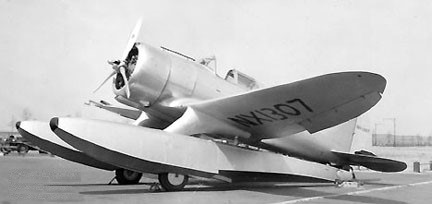
The one amphibian 2PA-A, NX1307, and one 2PA-L were procured by the Soviet Union in March 1938, together with a manufacturing licence, which, in the event, was not to be utilised. The 1937 2PA-L was built from SEV-X-BT components as a potential military export and first flown on 2 November 1937, by C H Miller. Refitted with 850hp R-1820-G2 engine, it was unregistered and ended up in the Spanish Civil War.

Seversky 2PA-A NX1307

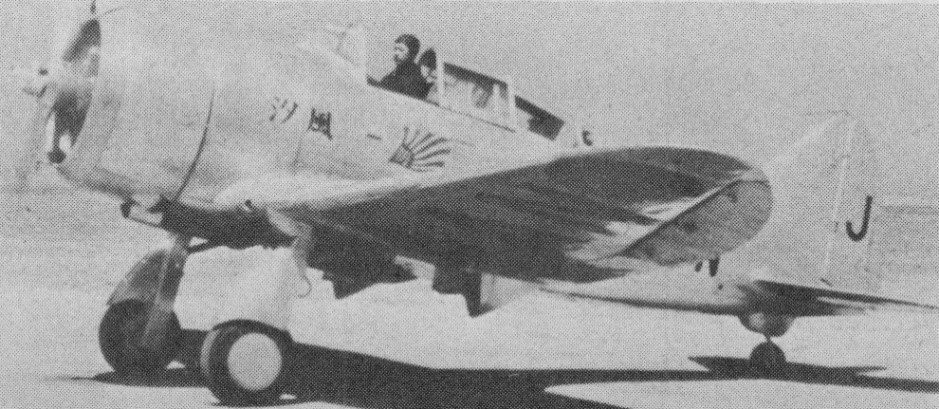
Twenty R-1820-G2-powered examples were ordered clandestinely by the Japanese Imperial Navy for use over China as long-range escort fighters. Designated 2PA-B3, these received an armament of two fuselage-mounted 7.62mm machine guns and a similar weapon in the rear cockpit. Assigned the Japanese designation A8V1, the 2PAs were found to possess unacceptable levels of manoeuvrability and climb rate for the escort fighter role and were therefore relegated to reconnaissance missions in Central China, two later being passed to the Asahi Shimbun newspaper group. The c/ns were 122 to 141. Found US regs were NX1321=J-BAAN c/n 126, NX1391 c/n 64-1, NX1388 c/n 64-2 and c/n 64-3, which flew to the West Coast for overseas shipment and left no tracks. The “64-” c/ns seen in some reports likely were Japanese registations.

Seversky 2PA-B3 Export to Japan

It was incorrectly thought the type was later produced in Japan as a Kawasaki or Mitsubishi Type 98 and given the allied code ‘Disk’ on that basis.

2PA
Engine: 875hp Wright R-1820-G3 Cyclone
Seats: 2

SEV-2PA
Engine: 1,100hp Pratt & Whitney R-1830-S3C Twin Wasp
Max take-off weight: 3474 kg / 7659 lb
Empty weight: 2078 kg / 4581 lb
Wingspan: 10.97 m / 36 ft 0 in
Length: 8.20 m / 27 ft 11 in
Height: 2.99 m / 10 ft 10 in
Wing area: 20.44 sq.m / 220.01 sq ft
Max. speed: 508 km/h / 316 mph
Range: 3138 km / 1950 miles
Seats: 2

2PA-A
Engine: 1000hp Wright R-1820-G5 Cyclone
Seats: 2

2PA-B / 2PA-BX / 2PA-202 / SEV-1-68
Engine: 1200hp P&W P-1830-S1C Wasp
Seats: 2

2PA-L
Engine: 1000hp Wright R-1820-G7
Wingspan: 41’0″
Length: 30’5″
Speed: 250 mph
Seats: 2

Seversky 2PA

Seversky NF-1 / XFN-1

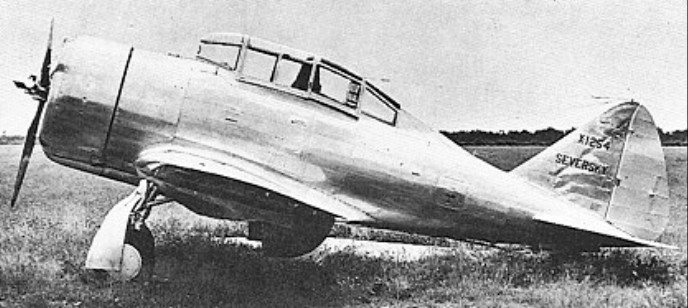
As a contender in the 1937 US Navy shipboard single-seat fighter competition, the Seversky-designated NF-1 (Naval Fighter No 1) was derived from the basic P-35. Wssentially a P-35 with a Cyclone instead of P&W R-1830, arrestor hook, bomb racks, and AP-1’s rearward-retracting gear.

The design was flown for the first time on 3 May 1937 piloted by C H Miller, registered NX1254. Powered by a Wright R-1820-22 Cyclone nine-cylinder radial rated at 950hp for take-off and having provision for one 7.62mm and one 12.7mm gun in the forward fuselage, the NF-1 was delivered to Anacostia NAS for evaluation under the US Navy designation XFN-1 on 24 September 1937 on some USN records as A8978. This designation was actually applied for “book-keeping purposes”, no Navy contract being issued.

The NF-1 had initially flown with a vertical windscreen similar to that first fitted to the AP-1, but this had been replaced by a more conventional windscreen prior to delivery to Anacostia. At an early phase in the evaluation the fairings attached to the main oleo legs, which fully enclosed the undercarriage when retracted, were removed.

By consensus, the XFN-1 lacked the low-speed handling characteristics demanded for shipboard operation and the fighter was rejected by the Navy, further development being discontinued.

Engine: Wright R-1820-22 Cyclone, 950hp
Wingspan: 10.97 m / 36 ft 0 in
Wing area: 20.44 sq.m / 220.01 sq ft
Length: 7.44 m / 24 ft 5 in
Height: 2.77 m / 9 ft 1 in
Max take-off weight: 2373 kg / 5232 lb
Empty weight: 1823 kg / 4019 lb
Max. speed: 430 km/h / 267 mph
Stall: 69 mph
Range: 1570 km / 976 miles
Ceiling: 30,700’
seats: 1

Seversky AP-2 / AP-7 / AP-9

AP-2

A progressive development of the basic SEV-1XP, the AP-2 (Army Pursuit No 2) differed essentially in having a modified centre wing structure incorporating wells for an entirely new flush-housed inward-retracting undercarriage. Together with a shallower cockpit canopy, these refinements were expected to raise maximum speed above the 483km/h mark. The AP-2 NX1250 c/n 39 was powered by a 1,050hp Pratt & Whitney R-1830-9 Twin Wasp engine and armament was proposed to comprise the standard combination of one 7.62mm and one 12.7mm machine gun. It was ascertained that the flush-retracting undercarriage did not result in as much drag reduction as anticipated, but performance was still markedly superior to that of the P-35. Seversky’s bid price was considered too high, however, and the AP-2 was rejected by the USAAC. It had been entered in the September 1937 Bendix Trophy contest as NR1250, but prior to this event suffered an undercarriage failure while landing at Floyd Bennett Field. Much of the airframe was re-used for the AP-7.

AP-7

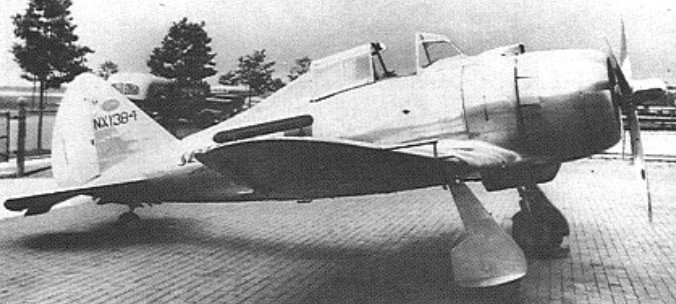
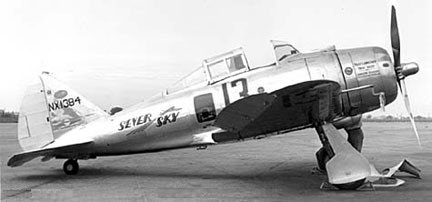
Representing an attempt to obtain maximum performance from the basic P-35 design without introducing radical changes, the AP-7 employed much of the airframe of the earlier AP-2 but was powered by a 1,200hp Pratt & Whitney R-1830 Twin Wasp engine. As first completed early in 1938, the AP-7 reverted to the semi-retractable main wheel arrangement of the P-35, and in this form NX1384 c/n 145 was used by the celebrated aviatrix Jacqueline Cochran to capture the 1938 Bendix Trophy, having been used by Maj Alexander P de Seversky two days prior to this event to establish a new US transcontinental record with an elapsed time of 10 hr 3 min 7 sec.

1938 Bendix Trophy
Seversky & Jacqueline Cochran after 4 hr 12 min Miami – New York record by Cochran
Seversky AP-7 NX1384 with original gear

The AP-7 was subsequently fitted with a new wing, with an improved leading-edge profile, and an inward-retracting undercarriage similar to that of the AP-2, as the AP-7A in 1939. It did set a speed record of 322mph piloted by Cochran. It was intended that the modified AP-7 should participate in the 1939 Bendix Trophy contest, but was withdrawn after two aborted take-offs.

Seversky AP-7A NX1384 early 1940

It is generally thought the AP-7 was destroyed in a hangar fire in Tampa FL, but one account claims it was sold in a somewhat irregular transaction to Ecuador’s Fuerza Aerea for $40,000 in 1941.

The 1937 AP-9 NX2598 c/n 148 sister ship to the AP-7 was for pursuit trials. It went to the Dominican Republic late in 1940.

AP-7 / AP-7A
Engine: 950hp P&W Twin Wasp
Wingspan: 36’0″
Length: 25’0″
Seats: 1

Seversky AP-4 / YP-43

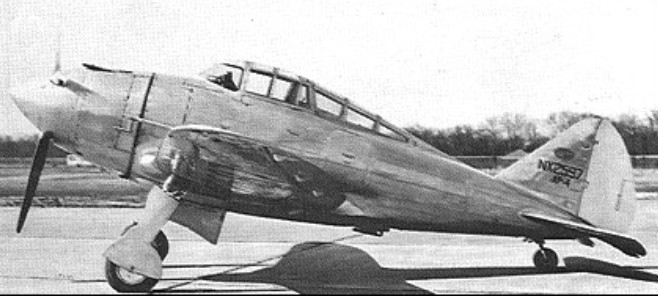
Preceded by the AP-7, the AP-4 possessed a superficial resemblance to the AP-2 and was intended as a high-altitude interceptor. The first Seversky fighter to feature flush-riveted skinning, the AP-4 was powered by a 1,200hp Pratt & Whitney R-1830-SC2G equipped with a belly-mounted turbo-supercharger. As a company- funded development, the AP-4 was intended to participate in a USAAC competition scheduled for 25 January 1939 and was expected to demonstrate the superior medium- and high-altitude performance obtainable with a turbo-supercharged R-1830. The same engine, fitted with a mechanical supercharger, had been specified by the USAAC for the XP-41.

First flying on 22 December 1938, piloted by Frank Sinclair, the AP-4 NX2597 c/n 144 was evaluated at Wright Field during February- March 1939, demonstrating exceptional climb and altitude performance.

Early 1939, it was fitted with a close-fitting, high-inlet-velocity engine cowling matched with an oversize propeller spinner as a continuation of a drag reduction programme supervised by the NACA and initiated earlier with the AP-1. The AP-4 was subsequently fitted with a modified engine cowling, without the spinner, but, on 22 March 1939, caught fire in the air, the pilot bailing out. On 12 May 1939, a contract was awarded for 13 service evaluation models under the designation YP-43.

Engine: P&W turbocharged R-1830-SC Twin Wasp, 1100hp
Wingspan: 10.97 m / 36 ft 0 in
Length: 8.23 m / 27 ft 0 in
Height: 3.81 m / 13 ft 6 in
Wing area: 20.44 sq.m / 220.01 sq ft
Max take-off weight: 3075 kg / 6779 lb
Empty weight: 2462 kg / 5428 lb
Max. speed: 534 km/h / 332 mph
Stall: 78 mph
Range: 1255 km / 780 miles

Seversky XP-41

When, in 1936, the USAAC Materiel Division placed an order for the SEV-1XP as the P-35, it had stipulated that the 77th and last series aircraft be fitted with a more powerful supercharged engine. The chosen engine was the Pratt & Whitney R-1830-19 of 1,200hp, fitted with an integral medium-altitude two-stage mechanical supercharger.

A contractual modification enabled Seversky to complete the airframe to a standard similar to that of the private-venture AP-4. The AP-9 was, in fact, used for competitive evaluation at Dayton in lieu of the XP-41 until the latter became available. Power plant apart, the aircraft was in virtually all respects similar to the AP-4.

The XP-41 36-430 was delivered to Wright Field for USAAC evaluation in February 1939, but the Air Corps preferred the turbo-supercharged AP-4 and further development of the XP-41 was discontinued, although trials continued at Langley. This was the last of the Kartveli-designed fighters to bear the Seversky appellation, as the company thereafter became the Republic Aviation Corporation.

Engine: P&W R-1830, 1200hp
Wingspan: 10.97 m / 36 ft 0 in
Wing area: 20.44 sq.m / 220.01 sq ft
Length: 8.23 m / 27 ft 0 in
Height: 3.78 m / 12 ft 5 in
Max take-off weight: 3175 kg / 7000 lb
Empty weight: 2445 kg / 5390 lb
Useful load: 1210 lb
Max. speed: 520 km/h / 323 mph
Cruise speed: 290 mph
Ceiling: 7000 m / 22950 ft
Range: 789 km / 490 miles
Armament: 1 x 7.62mm + 1 x 12.7mm machine-guns

Seversky XP-41

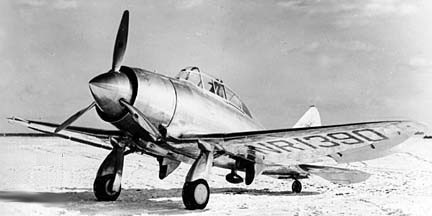
Seversky AP-1

Seversky AP-1 NR1390

The 1937 Seversky AP-1 was rejected P-35 36-354 refitted with a 750hp P&W R-1830 engine. First flown on 4 May 1937, piloted by A de Seversky, only the one was built, X/NR1390 c/n 44, for Wright Field and NACA testing. It was used as a company demonstrator until it was destroyed in a 1938 hangar fire.

Engine: 750hp P&W R-1830
Wingspan: 36’0″
Length: 25’4″
Top speed: 277 mph

Seversky SEV-S2

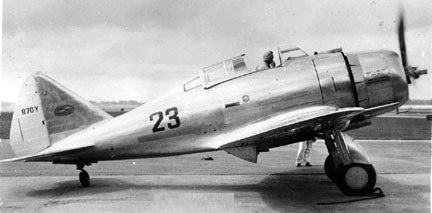
Seversky SEV-S2 #23 1937 NR70Y

The Alexander de Seversky SEV-S2 was a modified civil competition version of the Army P-35 for the Nationals.

Seversky SEV-S2 #77 1939 NR70Y

Registered NR70Y c/n 43 and piloted by Frank Fuller Jr, it raced in the 1937 and 1939 Bendix Trophy, and reached second place in the 1938 Bendix.

Seversky SEV-S2 #77 1939 NR70Y

SEV-S2 1937
Engine: 950hp P&W R-1830 Twin Wasp SC
Seats: 1

Seversky SEV-X-BT

Seversky SEV-X-BT NX189M

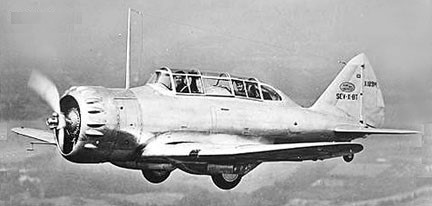
The 1936 Seversky SEV-X-BT NX189M c/n 6 was built for military evaluation as a basic trainer, but lost out to North American BT-9.

It was dismantled for parts, much of which went into the 2PA-L. The registration was possibly transferred to 2PA.

SEV-X-BT
Engine: 550hp P&W R-1340-S3H1
Wingspan: 36’0″
Length: 20’5″
Speed: 180 mph
Seats: 2