Short S.16 Alpha / Scion

Short decided that there was a need for an inexpensive light transport landplane and the high-wing Scion was developed using the small but effective Pobjoy engine. It was originally called “Alpha”, but this was changed to “Scion”.

The first of this twin engined high wing monoplane was flown in prototype form (G-ACJI) on 18 August 1933, at Gravesend Aerodrome. Later deliveries were flown from the new grass aerodrome near the works at Rochester.

The first production machine was delivered to Gandar Dower for his Aberdeen-Glasgow service, taking delivery of G-ACUV at Rochester on 27 July 1934 at Rochester.

The rest of the production batch of five were registered G-ACUW to UZ. The last was converted to a Scion II with six passenger seats.

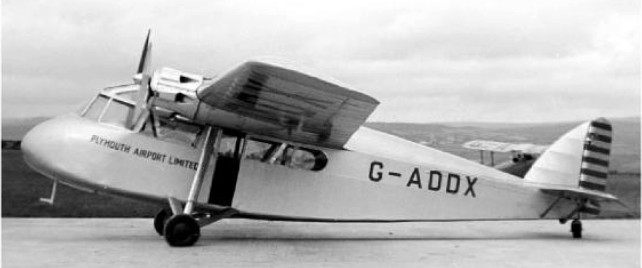
Short S.16 Scion 2 G-ADDX – 12 August 1936

It sold in modest numbers (for approx £2500), and the Scion was joined by the four-engined Scion Senior (capable of carrying nine passengers) in 1935. Short, however, wanted to turn its resources back to the flying-boat market. Douglas Pobjoy purchased the Scion rights in 1936, but the list price then limited sales potential and Pobjoy only built a further six in 1936 to add to Short’s 16, plus another six Scion Senior’s built by Short.

The Scion series served all over the British empire and for the RAF during World War II, one example surviving in Australia until 1965.

Short S.16 Scion I
Engines: 2 x Pobjoy Niagara III 7 cyl radial, 90 hp
Max level speed: 128 mph
Cruise: 116 mph
Ceiling: 13,000 ft
Passenger seats: 5
Crew: 1
Range: 390 miles

Short Scion 2
Engines: 2 x 90hp Pobjoy Niagara III
Max take-off weight: 1451 kg / 3199 lb
Wingspan: 12.80 m / 42 ft 0 in
Length: 9.60 m / 32 ft 6 in
Height: 3.16 m / 10 ft 4 in
Max. speed: 206 km/h / 128 mph
Ceiling: 9144 m / 30000 ft
Range: 628 km / 390 miles
Crew: 1
Passengers: 6

Short L.17 Scylla / Syrinx

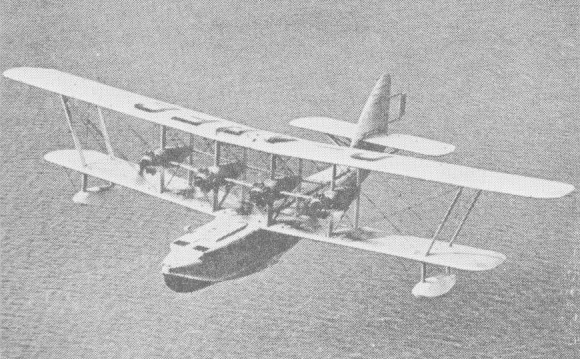
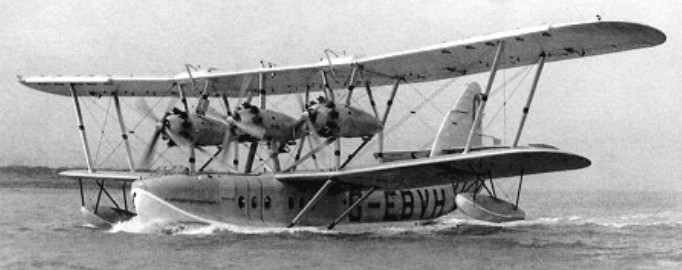
The closure of Italian and Italian colonial seaports to Imperial Airways in the Mediterranean in 1929 brought a need for a longer range flying boat, with mail carriage a priority. The Kent biplane flying boat was Short’s response, and three were built.

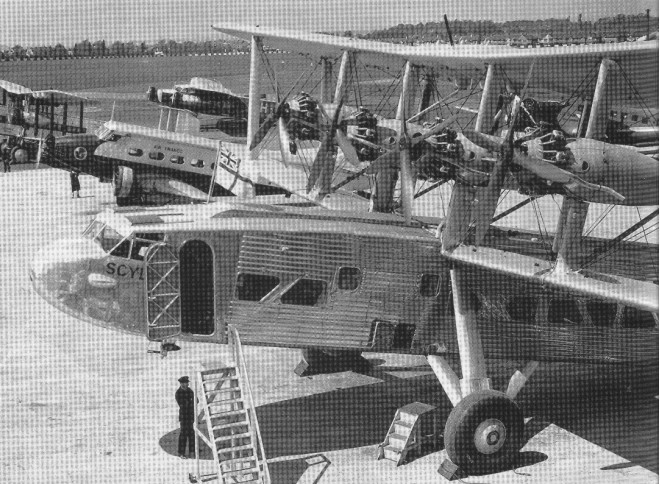
During the spring of 1933, Imperial Airways asked Short Brothers to develop a landplane version of its Kent flying boat. Differing little from the Kent, apart from the wheeled undercarriage and principally different in having a rectangular fuselage and a fixed undercarriage., Scylla and Syrinx were constructed outdoors since Shorts had no means of building and flying a landplane at its own facilities and was forced to use Rochester airport due to the urgency of the requirement.

Both of the new aircraft entered scheduled service on 7 June 1934, on the Paris route. The cabins featured three passenger compartments, two toilets and a buffet. The average cabin width was almost 11 ft / 3.35 m.

Scylla did suffer a minor accident at Paris Le Bourget on 3 August 1934.

The two Scylla examples stayed in service longer, and had very short RAF careers in 1939-40. They were the last of Short’s biplane designs and the last in service.

Gallery

Short S.18 Knuckleduster / R.24/31

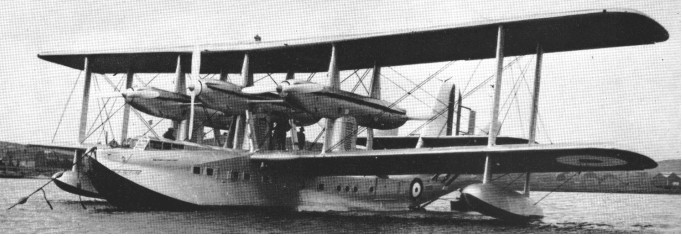
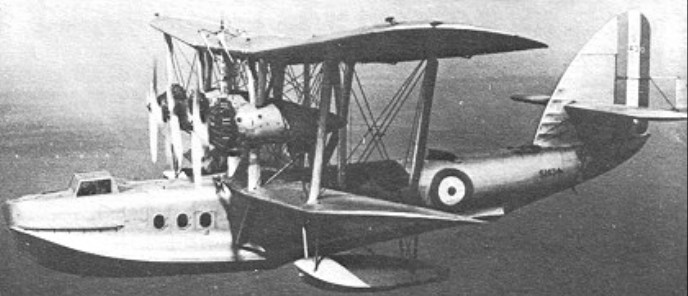
The British Air Ministry issued its Specification R.24/31 for a “General Purpose Open Sea Patrol Flying Boat” in 1931 and ordered one prototype from each of Saunders-Roe, Supermarine and Shorts. The contract specified the use of the experimental Rolls-Royce Goshawk engine. Whereas the other two companies opted for traditional biplane designs, Shorts decided to produce a more modern, all-metal monoplane aircraft with the experimental steam-cooled, cast block Rolls-Royce Goshawk engine, itself a development of the smaller Kestrel engine.

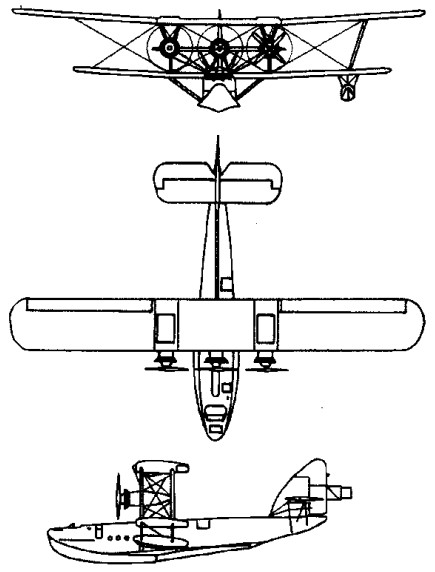
Designed by Arthur Gouge, the Knuckleduster’s straight-sided hull was of all-metal (Alclad) box-section construction, from the bow as far as the pointed main step at the rear of the planing bottom; aft of the main step the fuselage was of monocoque construction. The central section of the hull was boxed and braced by diagonal frames to bear the loads from the wing-root attachments.

The wing sections inboard of the engines were attached at a 30° dihedral angle, thus providing sufficient clearance for the airscrews from water-spray during takeoff. The wings were designed for high torsional stiffness, each comprising a box-spar with four tapered stainless steel tubular booms. Fuel tanks were mounted within the wings; sprung and braced wingtip floats were fitted. The wing surfaces were of fabric.

The experimental 720hp Rolls-Royce Goshawk steam-cooled engine was specified for the “Knuckleduster,” which led to many problems due to the engine’s unreliability. The engines, with conspicuous condensers protruding vertically from the nacelles, were mounted at the “knuckle” between the dihedral inner and the horizontal outer wing sections.

The tail unit comprised a horizontal plane braced by struts with two vertical fins and rudders, also supported by diagonal bracing to the fuselage. As a result of early test results, fin area was increased; a major redesign of the tail unit was requested by John Parker and implemented at considerable cost.

In addition to the enclosed cockpit in which the pilot and the navigator sat side by side, there was a gunner’s cockpit in the bow, stations for the engineer and radio operator and a navigator station with a chart-table, sighting ports and two folding bunks. A third folding bunk and two fixed bunks were mounted in the crew’s living quarters, which also included a galley and, further aft, stowage space for drogues and a lavatory.

Further armament was provided by a midships gun mounting and a rear gunner’s cockpit in the tail; bombs could be mounted in underwing bomb racks and there was also provision for a torpedo to be transported (but not launched). All guns mountings carried a single Lewis Gun.

First launched the previous day, the first flight of the prosaically named R.24/31 (serial K3574) took place on 30 November 1933, piloted by Shorts’ Chief Test Pilot John Lankester Parker and crewed by George Cotton and W. Howard Bell. Parker noted that the fins were flexing so he landed immediately. After the fins had stiffening added the aircraft flew again successfully on the 15 December. Other problems found during testing were that the boat could not be trimmed straight and level, the fin area was increased by 18% and the tail was re-designed including fitting a cupola over the tail gun position.

On 12 June 1934 at the conclusion of test flying the Knuckleduster was flown to Felixstowe for official trials with the Marine Aircraft Experimental Establishment (MAEE). The aircraft was judged not to meet the specification particularly regarding top speed and range even though these were not a priority in the specification. In October 1934 the boat was returned to Rochester for repair following an accident, a collision with another flying-boat. It was repaired and several modification incorporated before it returned to Felixstowe in March 1935.

In April the Knuckleduster joined 209 Squadron at RAF Mount Batten, Plymouth for service trials alongside the Stranraer and London. This included an appearance at the Royal Air Force display at Hendon. It was returned to the MAEE in October 1935. Despite suffering engine problems it continued to carry out trial flights until September 1938, when it was retired from flying duties and assigned to No. 2 School of Technical Training at RAF Cosford for instructional purposes.

Although it was not ordered into production mainly hindered by the unreliable engines, a new Air Ministry Specification R.2/33 was released before it flew which would lead to the Short Sunderland. The Sunderland was another large monoplane flying-boat that had benefited from the work on the R.24/31.

Engine: 2 × Rolls-Royce Goshawk VIII, 775 hp (578 kW)
Wingspan: 90 ft 0 in ft (27.4 m)
Airfoil: Göttingen 436 (outer wing sections)
Wing area: 1,147 ft² (106.5 m²)
Length: 63 ft 3 in (19.3 m)
Height: 19 ft 6 in [6] (5.95 m)
Empty weight: 11,720 lb (5,320 kg)
Loaded weight: 18,500 lb (8,395 kg)
Maximum speed: 150 mph (130 knots, 240 km/h)
Range: 1,040 miles (904 NM, 1,675 km)
Service ceiling: 15,500 ft (5,030 m)
Armament: 3 x Lewis Guns
Crew: 5

Short L.12 Kent

The closure of Italian and Italian colonial seaports to Imperial Airways in the Mediterranean in 1929 brought a need for a longer range flying boat, with mail carriage a priority. The Kent biplane flying boat was Short’s response, and three were built. Imperial Airways also persuaded Short to produce a landplane version of the L.12 Kent – the Scylla.

Short Kent Satyrus

Gallery

Short L.12 Kent
Engines: 4 x 555hp Bristol Jupiter XFBM nine-cylinder radial
Max take-off weight: 14515 kg / 32000 lb
Wingspan: 34.44 m / 113 ft 0 in
Length: 23.90 m / 78 ft 5 in
Height: 8.53 m / 28 ft 0 in
Max. speed: 220 km/h / 137 mph
Ceiling: 5335 m / 17500 ft
Range: 724 km / 450 miles
Crew: 2
Passengers: 16

Short S.10 Gurnard

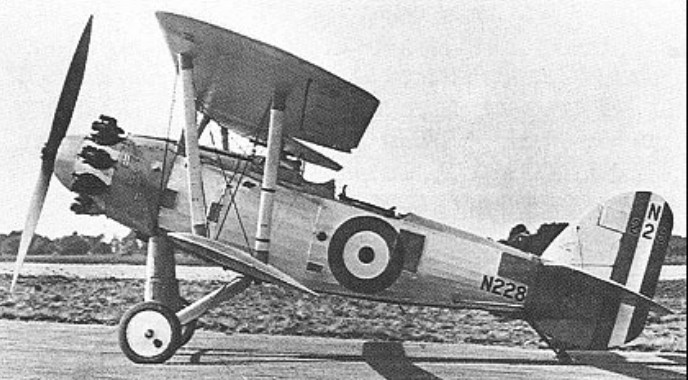
A contender to Specification 0.22/26 calling for a high-speed shipboard reconnaissance-fighter capable of being flown with either wheel or float undercarriage and suitable for catapult operation from cruisers and larger warships, the S.10 Gurnard was awarded a two-prototype contract.

One of the prototypes, the Gurnard I, was to be powered by a 525hp Bristol Jupiter X nine-cylinder air-cooled radial engine, and the other, the Gurnard II, was to have a 525hp Rolls-Royce Kestrel IIS water-cooled 12-cylinder Vee-type engine. A single-bay biplane of metal construction with fabric skinning, the Gurnard had an armament of one fixed forward-firing 7.7mm machine gun and a similar-calibre weapon on a Scarff ring for the second crew member.

The Gurnard II was the first to fly, on 16 April 1929, as a floatplane, the Gurnard I following in landplane form three weeks later, on 8 May.

Gurnard II

Both prototypes were tested at the A&AEE, but the Hawker Osprey was selected in preference and no production of the Gurnard was ordered. The Gurnard II was flown – commencing on 15 June 1931 – as an amphibian with a single main float.

Gurnard II
Wingspan: 11.27 m / 37 ft 0 in
Length: 9.60 m / 32 ft 6 in
Wing area: 39.85 sq.m / 428.94 sq ft
Max take-off weight: 2360 kg / 5203 lb
Empty weight: 1662 kg / 3664 lb
Max. speed: 213 km/h / 132 mph at 10,000 ft
Ladng speed: 54 mph / 87 kph
Endurance full pwr: 30min at SL / + 3 hr at 10,000 ft

Short S.10 Gurnard

Short Cromarty

1921

Cromarty
Crew: 4
Engines: 2 x 600hp Rolls-Royce Condor I
Max take-off weight: 8165 kg / 18001 lb
Empty weight: 5543 kg / 12220 lb
Wingspan: 34.59 m / 114 ft 6 in
Length: 17.98 m / 59 ft 0 in
Wing area: 208.38 sq.m / 2242.98 sq ft
Max. speed: 153 km/h / 95 mph
Cruise speed: 131 km/h / 81 mph
Ceiling: 4800 m / 15750 ft
Range: 1500 km / 932 miles
Armament: 1 x 37mm, 1 x 7.9mm

Short S.8 Calcutta / S.8/8 Rangoon

S.8 Calcutta

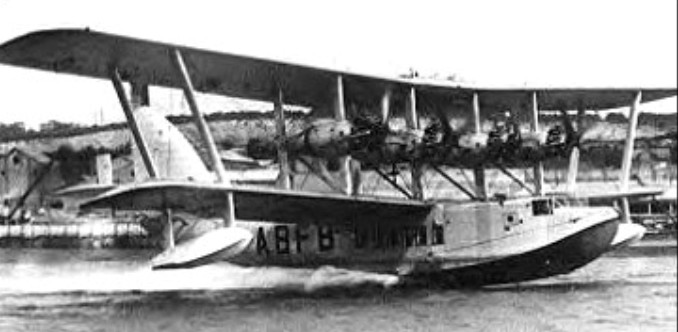
The 1928 15 passenger Calcutta biplane flying boat originated from an Imperial Airways requirement to service the Mediterranean legs of its services from and to India. The Calcutta itself was derived from the Short Singapore military flying boat. It was the first stressed skin, metal-hulled flying boat.

The Calcutta first flew on 15 February 1928 Imperial Airways operated five of the seven Calcuttas produced, and a single sale to the French government was followed by the French company Breguet licence-building four Calcuttas as the Bizerte. In 1931 Breguet secured a licence to build the Short Calcutta, and this was used as the basis for the company’s Bre.521 submission to meet a 1932 French Navy requirement for a long-range reconnaissance flying-boat.

Short S8/8 Rangoon

From the Calcutta Short developed the Rangoon as a long-range reconnaissance type for the RAF. Six were produced and went into service in 1931. These were basically similar to the Calcutta, except that the pilots were accommodated in an enclosed cockpit, in the nose was an open cockpit with Scarff gun-ring and aft of the biplane wings were staggered cockpits for two gunners. Maximum level speed of the Rangoon was 185km/h.

Gallery

Engines: 3 x Bristol Jupiter XI F, 390kW
Wingspan: 28.3 m / 93 ft 10 in
Length: 20.4 m / 67 ft 11 in
Height: 7.2 m / 24 ft 7 in
Wing area: 171.0 sq.m / 1840.63 sq ft
Max take-off weight: 10200 kg / 22487 lb
Empty weight: 6280 kg / 13845 lb
Max. speed: 190 km/h / 118 mph
Cruise speed: 156 km/h / 97 mph
Ceiling: 4000 m / 13100 ft
Range w/max.fuel: 1040 km / 646 miles
Crew: 4-5
Passengers: 12-15

Short S.8 Calcutta