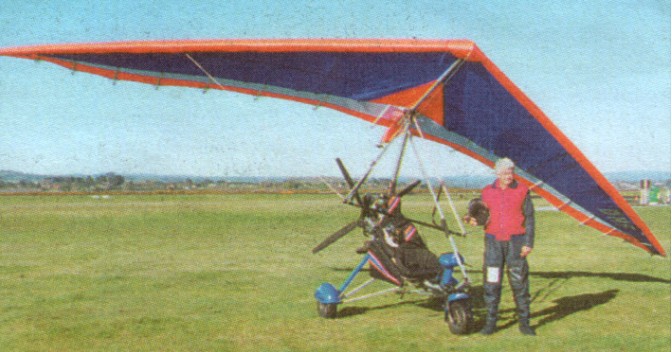
A trike and wing style ultralight from South Africa.
Engine: Rotax 582
Wing area: 14sq.m
Seats: 2
Cruise: 36-54 kts
Engine: Rotax 503
A trike and wing style ultralight from South Africa.
Engine: Rotax 582
Wing area: 14sq.m
Seats: 2
Cruise: 36-54 kts
Engine: Rotax 503

A two-stroke, two-cylinder, in-line air cooled light sport engine.
The Solo 2350 D features a mixture control via two diaphragm carburettors, CDI ignition. A crank-case pressure operated fuel pump and crankshaft mounted propeller. With no engine starter, the Solo 2350 D has Type Certificate LBA 4603.

Engine: Solo 2350 D
Without Muffler
Cruise power: 19.6 kW at 5,500 1/min
Max rpm: 6,000 1/min
Recommended rpm: 5,000 1/min
Cylinder head temp: Max. 275°C (measured at spark plug)
Fuel consump. at cruise: Approx 2,24 US gal./hr (8,5 l/h)
Engine: Solo 2350 D
With Muffler
Cruise power:
15.3 kW at 5,500 1/min
Max rpm: 6,500 1/min
Recommended rpm: 5,000 1/min
Cylinder head temp: Max. 275°C (measured at spark plug)
Fuel consump. at cruise: Approx 2,24 US gal./hr (8,5 l/h)
1998:
Stuttgarterstrasse 41
D-71069 Sindelfingen
Germany
Engine builder
Also available as a single seater, the two seater seats side-by-side.

The Solid Air Diamant LP (English: Diamond, Light Performance) is a German ultralight trike, designed and produced by Solid Air UL-Bau Franz of Hundheim, Rheinland-Pfalz. The aircraft was supplied as a complete ready-to-fly-aircraft.
The Solid Air Diamant Twin (English: Diamond) ultralight trike was supplied as a complete ready-to-fly-aircraft.
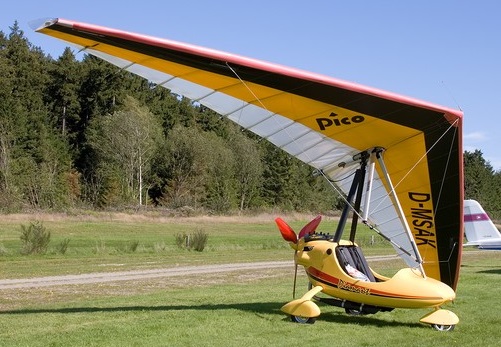
Diamant Twin Hazard
Empty weight: 170 kg
Wing span: 10.50 m
Wing area: 13 sq.m
Fuel capacity: 40-60 lt
Certification: Vz
Engine: Hirth F 30, 60 hp
MAUW: 383 kg
Seats: 2
Max speed: 120 kph
Cruise speed: 110 kph
Minimum speed: 50 kph
Climb rate: 3.5 m/s
Fuel consumption: 8 lt/hr
Price (1998): 41 000 DM
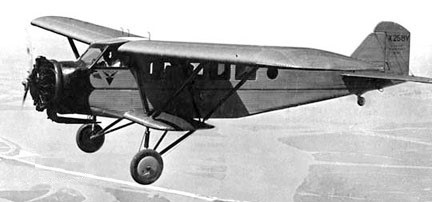
Designed by William L. Lewis, the 1930 Solar MS-1 (ATC 2-252) was a sesquiplane all-metal eight-passenger transport aircraft evolution of Prudden SE-1.
Its wings were braced to each other with warren truss-style struts. The lower stub wings carried the well separated legs of the fixed undercarriage. The fuselage was of rectangular cross-section and featured a fully enclosed flight deck and passenger cabin. The tail was of conventional design with strut-braced stabilizers and carrying a fixed tailwheel. Construction was of metal throughout with corrugated skins, and was powered by a single 420 hp (310 kW) Pratt & Whitney Wasp radial engine in the nose.
First flying on 21 January 1930, piloted by Doug Kelly, the one built was registered NX/NC258V. Kelly described it as “one of the finest closed planes I have ever flown”, and Charles Lindbergh also praised the MS-1 when he flew it a few days later. Despite this, the airlines did not order the type, although Northwest Airways and ten other airlines considered, and rejected buying examples due to the effect that the onset of the Great Depression was having on their traffic volumes.
A 6,000 mi (9,700 km) record flight from Los Angeles, California to Tokyo was planned, but never happened. The high point was a 7,000 mi (11,000 km) transcontinental flight over 25 states that the president of Solar took with his entire family, including his wife and three children, aged 9, 7 and 3, which attracted considerable interest from the media who dubbed it the “flying nursery”. A purchasing agent for a major airline then promised a substantial order, but dropped dead of a heart attack the day the order was to be signed, and his replacement called off the deal.
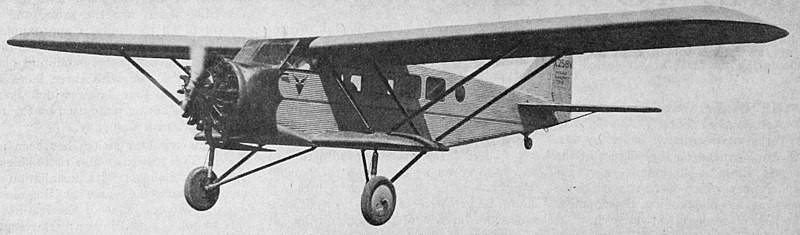
Solar made the prototype available for charter flights for a while, but in 1931 sold it to an operator in Mexico who used it to transport coffee beans. On the Mexican register as XB-AFK, the MS-1 was destroyed in a crash in 1936.
Solar would never build another aircraft after the MS-1, turning to saucepans to survive the depression, and later stainless-steel exhaust shrouds.
Solar MS-1
Powerplant: 1 × Pratt & Whitney R-1340 Wasp, 420 hp (310 kW)
Propeller: 2-bladed fixed pitch metal
Upper wingspan: 56 ft 6 in (17.22 m)
Upper wing chord: 100 in (2.54 m)
Upper wing dihedral: 2°
Lower wingspan: 18 ft 0 in (5.49 m)
Lower wing chord: 70 in (1.78 m)
Lower wing dihedral: 0°
Wing area: 496.5 sq ft (46.13 sq.m)
Airfoil: Göttingen 398
Length: 35 ft 11 in (10.95 m)
Height: 10 ft 2 in (3.10 m)
Empty weight: 3,650 lb (1,656 kg)
Gross weight: 7,000 lb (3,175 kg)
Fuel capacity: 135 US gal (112 imp gal; 510 l)
Oil Capacity: 8 US gal (30 l; 6.7 imp gal)
Maximum speed: 130 mph (210 km/h, 110 kn)
Cruise speed: 115 mph (185 km/h, 100 kn)
Landing speed: 60 mph (52 kn; 97 km/h)
Service ceiling: 15,000 ft (4,600 m)
Absolute ceiling: 18,400 ft (5,600 m)
Rate of climb: 750 ft/min (3.8 m/s) initial
Wing loading: 14 lb/sq ft (68 kg/sq.m)
Power/mass: 16.4 lb/hp (10.0 kg/kW)
Crew: Two
Capacity: Eight passengers
Undercarriage track: 9 ft 6 in (2.90 m)

Circa 1998, the entire power unit can be jettisoned in an emergency.
Falke 2001
Empty weight: 34 kg
Engine: Simonini, 27 hp
Reduction: 1:2.8
Thrust: 89 kg
Prop diameter: 135 cm
Fuel capacity: 32 / 45 lt

First flown in 1966, a total of thirty piston-engined P-2 Kraguj were built at Mostar, Yugoslavia, as a counterinsurgency aircraft.
Engine: Lycoming IO-540, 340 hp
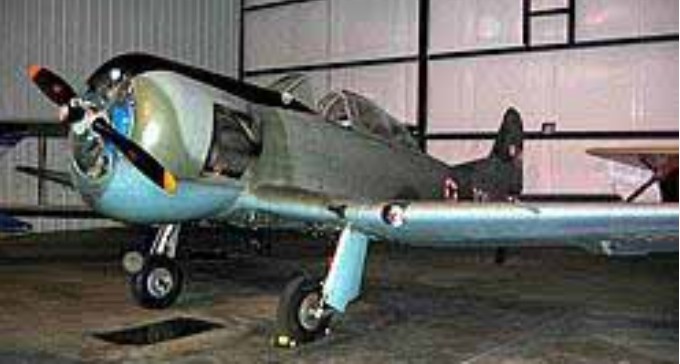
Ground attack aircraft
Dual Controls. 2 place tandem cockpit
Engine: Pratt & Whitney 600 hp
Cruise: 165 mph
Seats: 2
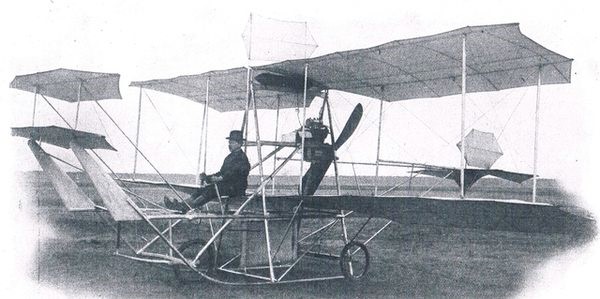
German flight-technician Emil Sohn seated on his doppeldecker during one of his trials at Johannisthal 1909. Sohn’s machine was a Wright-like biplane with a Haake motor. The engine didn’t work and Sohn was left without enough money to purchase a better one.
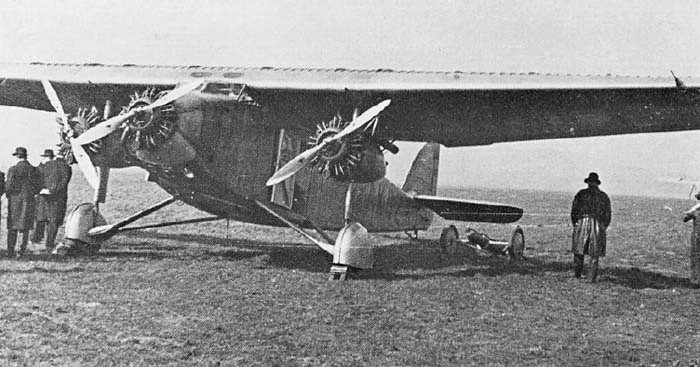
Type 40T was three-engined all-metal airliner which gave good service in early 1930s.

