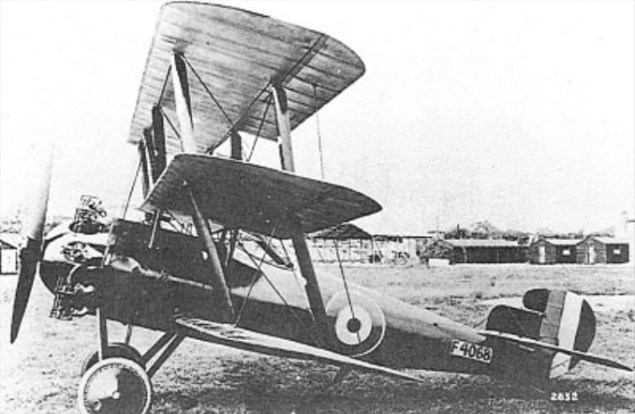
Sorrell SNS-9 EXP II

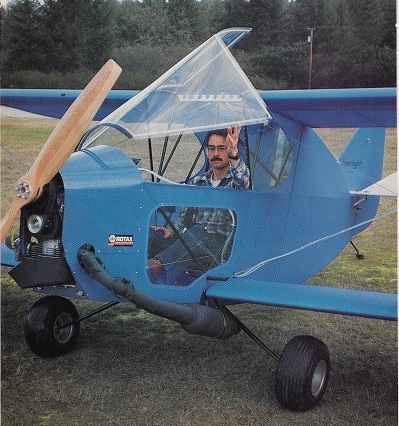
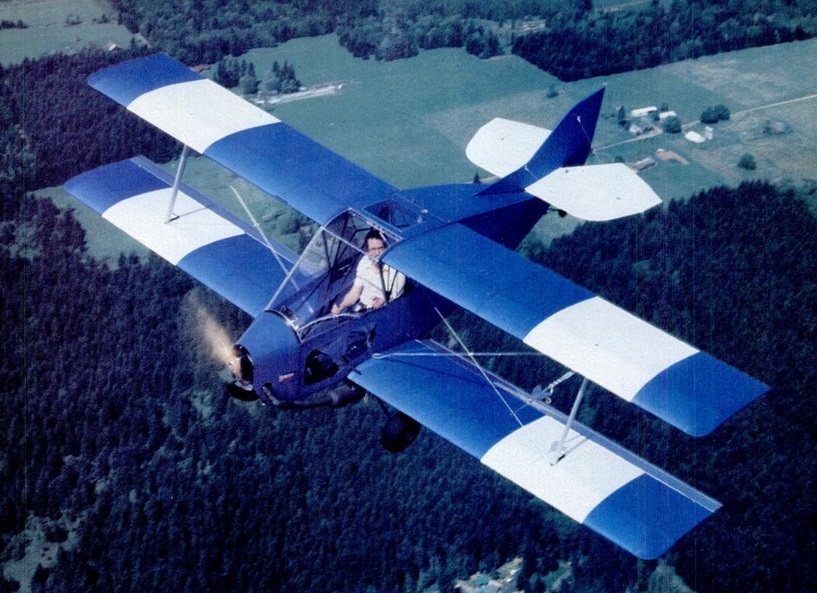
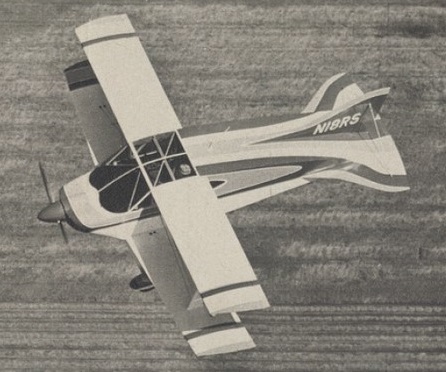
The SNS-9 is a two-seat, side-by-side version of the SNS-8, powered by a Rotax 503 or Rotax 447.

The first, N9EX, first flew on 22 May 1985.

The SNS-9 airframe kit price was US$19,900. 2009 Price: US$24900

SNS-9
Engine: 42hp Rotax 447
Wingspan: 23’4″
Length: 18’0″
Useful load: 454 lb
Cruise: 85 mph
Stall: 39 mph
Range: 255 mi
Seats: 2

Engine: Rotax 503, 52 hp
Height: 5.3 ft
Length: 18 ft
Wing span: 23.3 ft
Wing area: 148 sq.ft
Weight empty: 360 lb
Gross: 810 lb
Fuel cap: 10 USG
Speed max: 105 mph
Cruise: 80 mph
Range: 300 sm
Stall: 39 mph
ROC: 600 fpm
Take-off dist: 300 ft
Landing dist: 300 ft
Service ceiling: 12,000 ft
Seats: 2
Landing gear: tail wheel

Thunderbird Aviation Hiperlight SNS-9
Engine: Rotax 503
HP range: 50-100
Length: 18 ft
Wing span: 23.4 ft
Wing area: 148 sq.ft
Empty weight: 163 kg / 360 lb
Gross weight: 369 kg / 814 lb
Fuel capacity: 10 USG
VNE: 98 kt / 113 mph / 182 kmh
Cruise: 74 kt / 85 mph / 137 kmh
Stall: 34 kt / 39 mph / 63 kmh
Range: 350 sm
Rate of climb: 600 fpm / 3 m/s
Glide Ratio: 12:1
Takeoff dist: 300 ft / 91 m
Landing dist: 300 ft / 91 m
Seats: 2
Cockpit width: 40 in
Landing gear: tailwheel

Sorrell SNS-8 Hyperlight

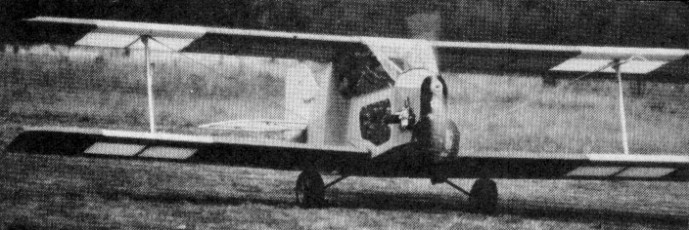
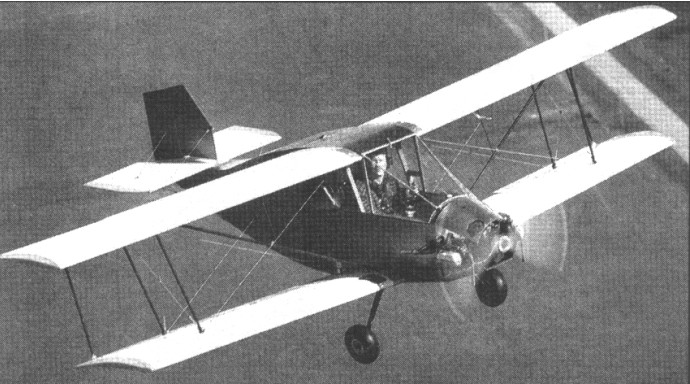
In the early ’80s—at the height of the ultralight boom—one of Hobie’s sons, Tim Sorrell, designed a lighter, all-metal ultralight version of the Guppy and named it the SNS-8 Hiperlight. Siblings Mark, John and Lisa joined Tim in a company that marketed the all-metal, single-seat negative stagger biplane Hiperlight, which was quite different from other ultralights.

The kit can be licensed it in the Experimental/Amateur-Built or ultralight category LSA. The kit features a finished and powder-coated 4130 welded-tube forward fuselage and a welded 6061-T6 aluminum aft fuselage. The strut braced equal span wings and tail were built from premade welded aluminium alloy tube parts, and presewn slip-on covering made finishing the airplane easy. Originally powered by a single-cylinder, 28-hp two-stroke Rotax 277 with a Hegar belt reduction drive, later kits features a 28-hp MZ 201 two-stroke engine.

Full span flaperons are fitted to the lower wing. Centre mounted joy stick, rudder pedals, tailwheel steerable through rudder pedals.

The Sorrells were able to convince the FAA to grant an exemption to the ultralight speed limit (55 knots level at full power) as the Hiperlight easily flew at 65 knots. The Hiperlight has full-span sheet-metal ailerons providing a snappy roll rate, and controls are nicely balanced. As with many ultralight designs, the stall is without a break; it is simply a mush easily controllable in all three axes.

In 1984 the Sorrell Hyperlight sold for $8500 pre-fabricated or for $6500 as a kit, both with a 28 hp engine.

The SNS-8 can be landed gracefully in any pitch attitude from a nose-really-high, tailwheel-first one-pointer to a fly-it-on-level wheels landing.

SNS-8
Engine: Rotax 277 (268 cc) 28 hp
Empty weight: 252 lbs
Wing span: 22 ft
Wing area: 140 sq.ft
Height: 5 ft 3 in
Length: 15 ft 6 in
Fuel cap; 5 USG
Construction: Aluminium, Dacron, Steel
Max wt: 500 lb
Stall: 27 mph
Max speed: 63 mph
Vne: 95 mph
Climb rate: 600 fpm @ 38 mph
Design limit: +6, -4g
Glide ratio: 10-1
Wing loading: 3.57 lbs/sq.ft
Power loading: 17.86 lbs/hp
Seats: 1
Takeoff run 175 ft
Landing roll 175 ft

SNS-8 EXP
Engine: Rotax 447, 42 hp
Speed max: 90 mph
Cruise: 75 mph
Range: 150 sm
Stall: 30 mph
ROC: 1200 fpm
Take-off dist: 125 ft
Landing dist: 150 ft
Service ceiling: 12,000 ft
Fuel cap: 5 USG
Weight empty: 300 lb
Gross: 550 lb
Height: 5.25 ft
Length: 15.6 ft
Wing span: 22 ft
Wing area: 140 sq.ft
Seats: 1
Landing gear: tail wheel

Thunderbird Aviation Hiperlight SNS-8
Cruise: 60 mph
Stall: 27 mph
Range: 210 sm
Rate of climb: 700 fpm
Takeoff dist: 175 ft
Landing dist: 175 ft
Engine: MZ 201, 28 hp
HP range: 28-45
Fuel capacity: 5 USG
Empty weight: 247 lb
Gross weight: 500 lb
Length: 15.6 ft
Wing span: 22 ft
Wing area: 140 sq.ft
Seats: 1
Cockpit width: 22 in
Landing gear: tailwheel

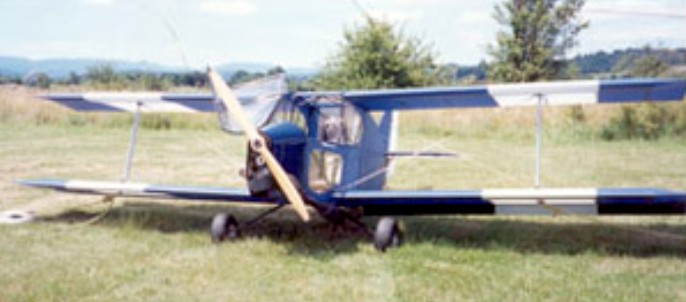
Sorrell SNS-6 / SNS-7 Hiperbipe

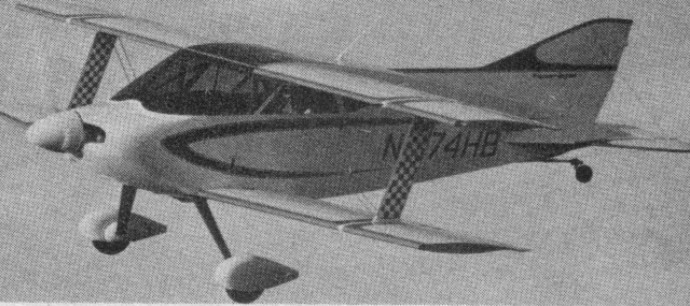
Designed in 1975, the fuselage, tail group, engine/landing gear mount, interplane struts and flight control systems are all welded steel tube. Wing construction is all-wood with a stressed skin. Landing gear is the Wittman type. The engine cowling and wheel fairings are fiberglass. Then, the entire air¬frame is fabric covered, including the plywood-covered wings.

The prototype was SNS-6 N66S. The design won the EAA’s Outstanding New Design Award in 1973.

Advanced aerobatic maneuvers are possible in the Hiperbipe, such as vertical eight point rolls, inside/outside vertical eights, etc, but the Hiperbipe doesn’t sacrifice the comforts such as complete carpeting, full electrical system, lights and radio.

Sorrell Hiperbipe – Aerobatic Cabin Cruiser Article

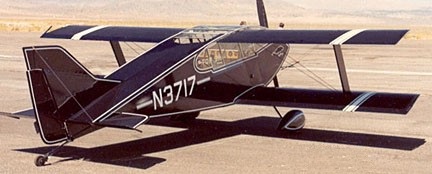
Sorrel SNS-7 Hiperbipe N3717

Basic kit includes fuselage sides, wings built, with wood and steel tubing and sheet steel. Price 1982: $4,950 basic kit, options to $19,000. Units delivered to June 1981: 87.

SNS-7

Engine: Lycoming IO-360, 180 hp
Speed max: 170 mph
Cruise: 160 mph
Range: 502 sm
Stall: 50 mph
ROC: 1500 fpm
Take-off dist: 400 ft
Landing dist: 595 ft
Service ceiling: 18,000 ft
Fuel cap: 39 USG
Weight empty: 1236 lb
Gross: 1911 lb
Height: 5.9 ft
Length: 20.8 ft
Wing span: 22.8 ft
Wing area: 129 sq.ft
Seats: 2
Landing gear: tail wheel

SNS-7
Engine: Lycoming O-360, 180 hp
Wingspan: 6.95 m
Length: 6.34 m
Height: 1.78 m
Empty weight: 521 kg
MTOW: 861 kg
Max speed: 330 kph
Cruise: 250 kph
ROC: 457 m/min

Sorrell SNS-1 / SNS-2 Guppy

Designed by Hobie Sorrell of Tenino, Washington, in 1966, Fred Chandler of Ferguson, Missouri constructed this homebuilt project. Chandler says that the Guppy’s success is the result of a clean design combined with large wing area and light weight. He says that the design is very controllable in spite of its low engine power and small size. It is a rudder aircraft, and low speed makes it easy to handle.

SNS-1

The first two built, N2976G c/n 1 and N2180 c/n 2, were powered by an 18hp OMC Cushman 200 HO2 outboard boat engine. The Sorrell SNS-1 was the first Guppy (N2976G) and, as such, it is usually just referred to as an ‘SNS-2’.

Kit version uses 25-hp Citroen engine. Price 1982: $4,500 (includes engine and prop).

Engine: 18hp OMC Cushman 200
Wingspan: 21’3″
Length: 15’5″
Useful load: 245 lb
Max speed: 80 mph
Cruise: 70 mph
Stall: 38 mph
Seats: 1

Engine: Citroen, 25-hp
Gross weight: 575 lb
Empty weight: 330 lb
Useful load: 245 lb

Engine 36-hp VW
Gross Wt. 640 lb
Empty Wt. 440 lb
Wingspan 21 ‘6”
Length 15’6”
Top speed 85 mph
Cruise 80 mph
Stall 29 mph
Climb rate 200 fpm
Takeoff run 350 ft
Landing roll 400 ft
Ceiling 10,000 ft
Range 200 miles

Engine: Rotax 377, 36 hp
Speed max: 90 mph
Cruise: 70 mph
Stall: 35 mph
ROC: 650 fpm
Take-off dist: 200 ft
Landing dist: 250 ft
Service ceiling: 12,000 ft
Fuel cap: 6.5 USG
Weight empty: 350 lb
Gross: 600 lb
Height: 5.2 ft
Length: 15.4 ft
Wing span: 21.2 ft
Wing area: 150 sq.ft
Seats: 1
Landing gear: tail wheel

Sorikin 1909-1914 helicopter

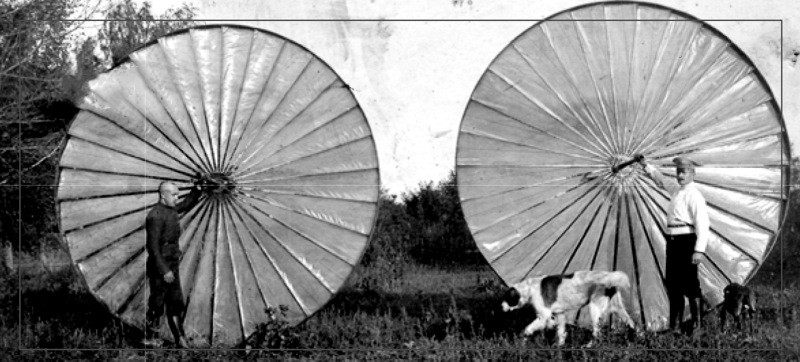
Most writers state that Sorikin failed to build a working (or complete) machine in St. Petersburg, mainly because of a low power engine. On the eve of WW1 Sorokin completed his (modified) helicopter design in his home place at Novgorod-Seversky (Ukraine) [Новгород–Северски] after a long development during 1911-1914. It is stated that the machine was tested and actually flew. The construction was based on the two rotors and a tractor propeller. There were rudders to steer the machine.

Sorenson Special

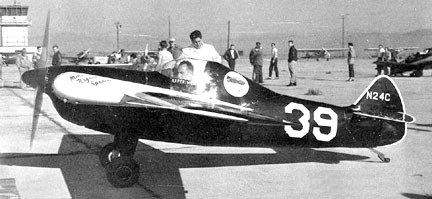
Sorenson Special Deer Fly N24C

In 1948 Keith Sorenson built two midget racers:

Deer Fly N24C
Piloted by K Sorenson and Mike Argander
Competed successfully under various owners until it crashed at Tampa FL in 1966, killing pilot Bill Stead.

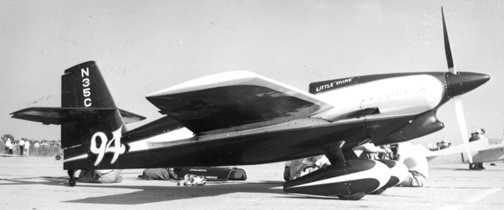
Sorenson Special Little Mike N35C

Little Mike N35C
Modified tail
Modified for 1949 competition as Foss Jinny

Sorenson Special
Engine: Continental C-85, 85hp
Wingspan: 18’6″
Length: 15’6″
Seats: 1

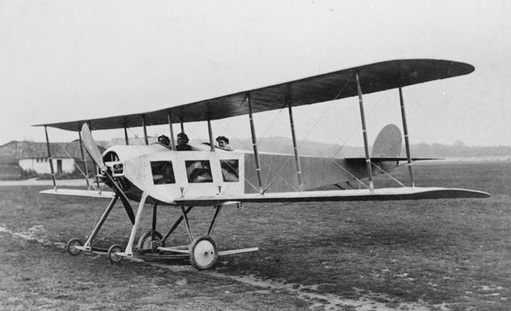
Sopwith Three-Seater / D1

A three-seat general purpose biplane, the Three-Seater / D1 set a number of British altitude records in June and July 1913, in the hands of the by then Sopwith Chief Test Pilot, “Harry” Hawker. Of these the highest reached was 12,900 feet with one passenger. The Three-Seater could carry a 450 lb payload at 70 mph.

At least seven of these machines were known to have been operated by the naval wing of the RFC.

Type D

Engine: Gnome, 80 hp
Span: 40′
Length: 29’6″
Weight: 1060/1810 lb
Speed range: 40-75 mph

Sopwith Snark

On 14 May 1918, Sopwith was awarded a contract for three prototypes of a new single-seat fighting triplane, conforming to the RAF Type I specification and named the Snark. Powered by a 320hp A.B.C. Dragonfly I nine cylinder radial and featuring a plywood monocoque fuselage, the Snark was an equi-span staggered triplane and its designed armament was two synchronised 7.7mm guns on the fuselage and four weapons of similar calibre mounted two per side under the bottom wing. The first Snark was passed for flight test in September 1918, but unavailability of a Dragonfly engine and the decision to make various minor modifications delayed manufacturer’s trials until September of the following year, the aircraft arriving at Martlesham Heath for official trials on 12 November 1919. The second prototype reached Martlesham on 17 March 1920, and the third prototype, with a 360hp Dragonfly la engine, late in the year. Apart from engine problems, the Snark triplanes suffered fuselage deterioration and all three were written off in 1921.

Engine: 320hp A.B.C. Dragonfly I
Max take-off weight: 1036 kg / 2284 lb
Wingspan: 8.08 m / 27 ft 6 in
Length: 6.25 m / 21 ft 6 in
Height: 3.30 m / 11 ft 10 in
Wing area: 29.91 sq.m / 321.95 sq ft
Max. speed: 209 km/h / 130 mph