The 1982 William H Statler Dos Equis Challenger was a single-place modified North American SNJ-5 as racer in the unlimited class.
Engine: 2100hp P&W R-2800-97
Wingspan: 31’7″
Length: 30’8″
Seats: 1
The 1982 William H Statler Dos Equis Challenger was a single-place modified North American SNJ-5 as racer in the unlimited class.
Engine: 2100hp P&W R-2800-97
Wingspan: 31’7″
Length: 30’8″
Seats: 1
Bill Statler was a former Lockheed engineer who designed an all-metal midwing racer, Little Mike, in the Goodyear 190-ci. Class.
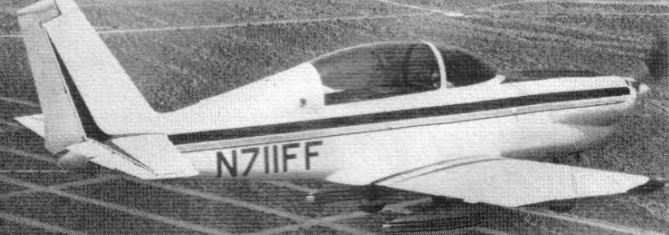
Firefly was designed by Bill Statler, former Lockheed engineer who earlier designed an all-metal midwing racer, Little Mike, in the Goodyear 190-ci. class, Firefly was designed to resemble a two-place For¬mula One racer, carries 80 sq.ft of wing instead of 66. Both cockpit places have complete controls; Firefly is soloed from front seat. Con¬struction is basically metal, with fiberglass cowl, wingtips, fairings, wheel pants. Flaps are electrically operated.
Offered with plans and construction manuals for home-builders, the Statler Firefly N711FF first flew on 8 October 1976, piloted by Al Foss.
Engine Continental C-85-12F
Wingspan 19’2”
Length 18’11”
Gross Wt. 1300 lb
Empty Wt. 835 lb
Fuel capacity 18 USG
Top speed 240 mph
Cruise 143 mph
Stall 63 mph clean, 56 mph flaps down
Climb rate 800 fpm
Ceiling 16,000 ft
Takeoff roll 600 ft
Landing roll 800 ft
Range 400 mi
Endurance 3 hrs. plus res
Seat 2
In 1913 Statax-Motor of Zurich, Switzerland introduced a swashplate engine design. Only a single prototype was produced, which is currently held in the Science Museum, London. In 1914 the company moved to London to become the Statax Engine Company and planned on introducing a series of rotary engines; a 3-cylinder of 10 hp, a 5-cylinder of 40 hp, a 7-cylinder of 80 hp, and a 10-cylinder of 100 hp.
It appears only the 40 hp design was ever produced, which was installed in a Caudron G.II for the British 1914 Aerial Derby but was withdrawn before the flight. Hansen introduced an all-aluminum version of this design in 1922, but it is not clear if they produced it in any quantity. Much improved versions were introduced by Statax’s German division in 1929, producing 42 hp in a new sleeve valve version known as the 29B. Greenwood and Raymond of San Francisco acquired the patent rights for the US, Canada, and Japan, and planned a 5-cylinder of 100 hp and a 9-cylinder of 350 hp.
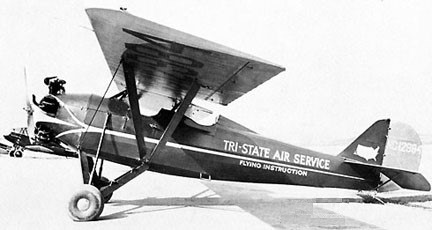
About five of the 1932 States Aircraft Co B-4 (ATC 477) were built, priced at $4,000. They included NC11984, NC12902, and NC12984, most of which were manufactured in Texas.
Engine: 125hp Kinner B-5
Wingspan: 32’0″
Length: 22’0″
Useful load: 555 lb
Max speed: 115 mph
Cruise: 97 mph
Stall: 38 mph
Range: 290 mi
Ceiling: 15,000′
Seats: 2
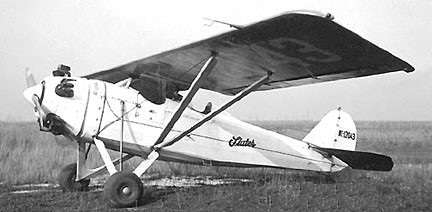
In 1930 States Aircraft Corp built, at Chicago Heights, Illinois, B-3 parasol monoplane, with two tandem seats.
Designed by Frederick Jolly, the B-3, or S-E-5 1930 (ATC 349 and ATC 2-438) was priced at $3,645.
Six were built; NC943N, NC10369, NC10556, NC10719, NC10723, and NC12043, and possibly a few more.
Engine: 100hp Kinner K-5
Wingspan: 32’0″
Length: 22’0″
Useful load: 552 lb
Max speed: 108 mph
Cruise: 90 mph
Stall: 35 mph
Range: 325 mi
Seat: 2
The 1930 States Aircraft Co B-2 (ATC 2-254) was a two-place, open cockpit, high wing monoplane, powered by a 75hp Michigan-Rover engine.
Two were built: NX541V and NC625W.
NC625W c/n 1 was registered as States Monoplane in 1930 by Mountain States Aircraft Co, Waynesville WV, which might have been a distributor.
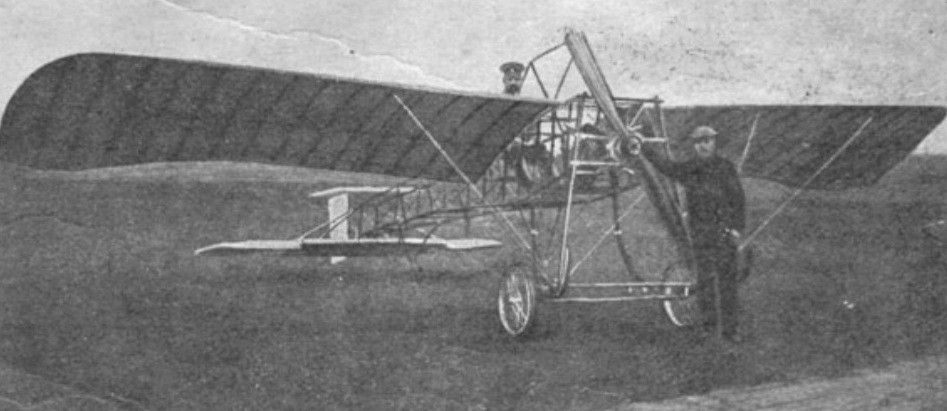
This monoplane of Captain N.P.Stasenko [Н.П.Стасенко] – a trained engineer – was built in 1910 in St. Petersburg and was financed from his own funds, it was not successful in intersting the Russian military.
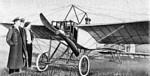
Span: 24′
Length: 24’6″
Weight loaded: 750 lb
Speed: 43 mph
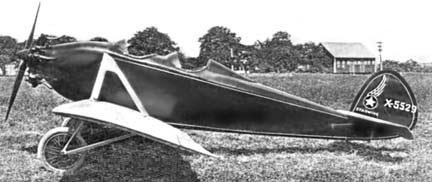
The 1928 Starwing G-4 was designed by Phil Goembel and sold for $2,885. A two-place monoplane, NX5529 and possibly one other were built.
Engine: 60hp LeBlond 5D
Wingspan: 29’0″
Length: 23’0″
Useful load: 306 lb
Max speed: 105 mph
Cruise: 95 mph
Stall: 35 mph
Seats: 2
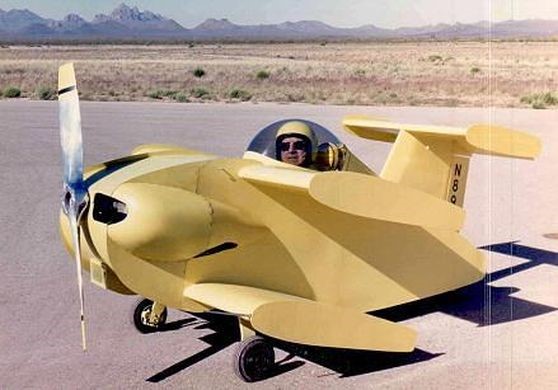
This 1988 plane had a wingspan of just 1.9-meters. and was powered by an 85hp engine. Unfortunately, the plane crashed on its maiden flight but the pilot Starr made a full recovery. The plane weighed 260kg with the pilot and could fly at a maximum speed of 190mph. This record has not yet been beaten.
Engine: 1 × Continental C85, 85 hp / 63 kW
Wingspan: 5 ft 6 in / 1.68 m
Length: 8 ft 10 in / 2.7 m
Empty weight: 396 lb / 180 kg
Max takeoff weight: 574 lb / 260 kg
Fuel capacity: 3 US gallons / 11.35 litres
Maximum speed: 165 knots / 190 mph / 305 km/h
Cruise speed: 130 knots / 150 mph/ 241 km/h
Stall speed: 75 knots / 86 mph / 139 km/h
Service ceiling: 14,000 ft / 4,270 m)
Rate of climb: 4,500 ft/min / 23 m/s
Crew: One
 All Aero