Built circa 1922, the Swanson SS-4 was a two-place side-by-side open cockpit biplane. With I-struts and powered by a 90hp Curtiss OX-5, the wingspan was 34’0″.
It was auctioned from a museum estate in 1995.
Built circa 1922, the Swanson SS-4 was a two-place side-by-side open cockpit biplane. With I-struts and powered by a 90hp Curtiss OX-5, the wingspan was 34’0″.
It was auctioned from a museum estate in 1995.
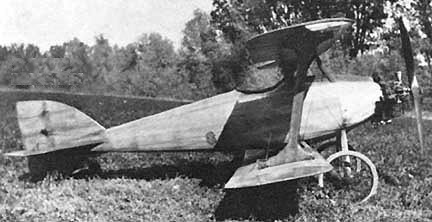
In 1922 Swen Swanson built the Swanson SS-3 single-place, open cockpit biplane with an all-wood monocoque fuselage.
The SS-3 first flew on 24 September 1922, piloted by Vern Roggers.
The design evolved into Lincoln Sportplane when Swanson went to Lincoln-Standard Co.
Engine: 28hp Lawrance
Wingspan: 18’9″
Length: 15’0″
Useful load: 200 lb
Max speed: 90 mph
Stall: 40 mph
Seats: 1
Designed by Swen Swanson the 1931 W-15 Coupe was a two-place cabin, high-wing monoplane, certified under ATC 2-312.
With a cantilever wing it was priced at $4,450, $4,985 with starter, battery and generator, lights, steel prop, added instrumentation.
One was built, registered NC10546 c/n 1.
The design carried on into the Swanson-Fahlin SF-1.
Engine: 110hp Warner Scarab
Wingspan: 34’4″ Length: 25’0″
Max speed: 125 mph
Cruise: 95 mph
Stall: 40 mph
Range: 625 mi
Seats: 2
In 1935 Carl Swanson built the Flyabout A-12 registered N14833 c/n 2505.
It was a single place, open cockpit, high wing monoplane, powered by a 30hp Heath-Henderson.
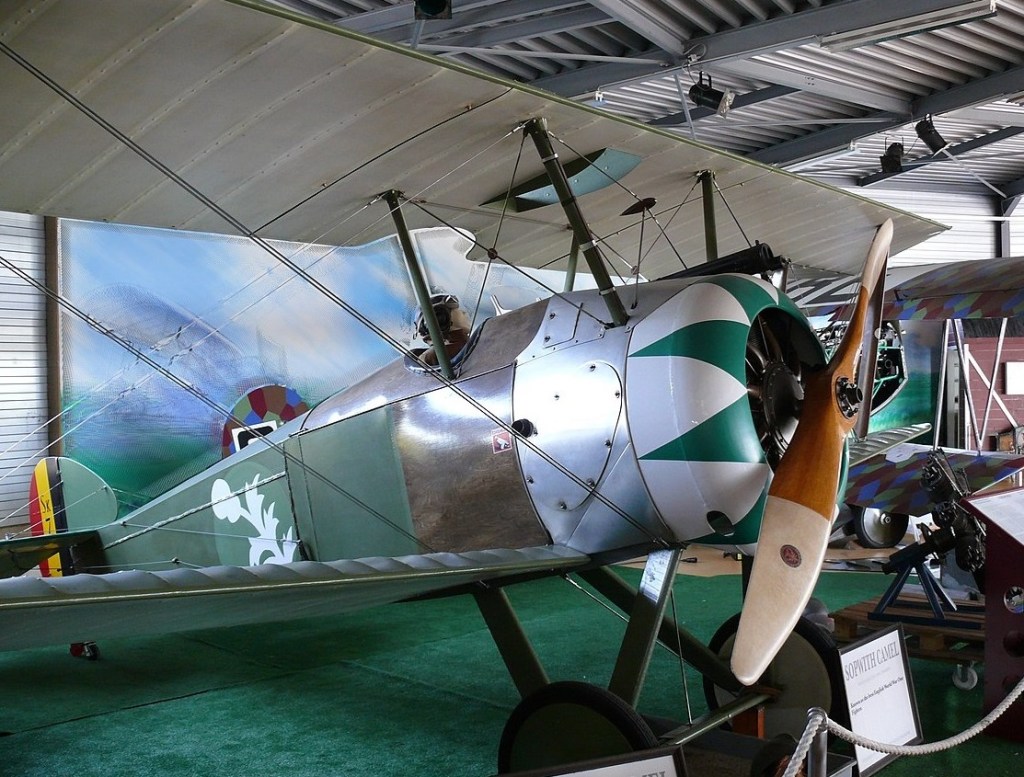
Replica of a Sopwith Camel (Registered N2257J) was built by Carl Swanson) is in the Stampe en Vertongen Museum. It is painted in the colours of the 1st squadron of the Belgian Air Force.

Completed in 1993 by Carl Swanson, the replica (N2262G) is powered by an 85 hp Gnome rotary.

Built by Carl Swanson during 1983 and registered as N1388J. It went on to the Ryders Replica Fighter Museum at Gunterville, Alabama, the assets of which were sold following the death of Frank Ryder. The US registration was cancelled on 22-4-2002 as exported to New Zealand, where it was registered ZK-JOW to the Omaka Collection on 4-4-2003.
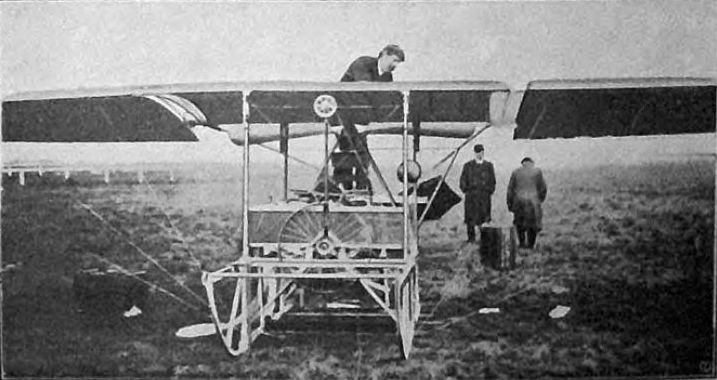
The shoulder-wing Swann monoplane was built by Austin Motor Co. for Reverend Sidney Swann of Ravensworth, Cumbria, UK. It was tested without success in November 1909. It was later modified with a lower wing, but still not successful. The engine was a 35 hp ENV, span 36 feet, length 39 feet.

Circa 1924 a single-place 180hp Hisso powered acer, named Miss Wichita, was built.
Each one of the first batch of New Swallows built by Stearman in late 1923 was different since there were no plans until Stearman put things on paper. At first they used Laird’s lofting method of laying out everything on the floor full-size, then modified and altered at will.
The Racer is a clipped-wing version, with plain ailerons (elephant-ears came later) and vertical cabanes. Engines were whatever was on hand and this appears to be the big Hisso.
It could be the very one used by Walt Beech to win the Efficiency Race.
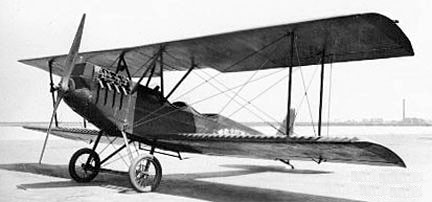
The 1924 New Swallow was designed by Lloyd and Waverly Stearman and Walter Beech as the first production of the new company, and differed from the Laird-Swallow in cowled motor, split axle, and single-bay wings. Price varies from $3,500 and $2,750 in 1925, and $2,485 in 1926. About 50 were built, production ending in 1926.
Engine: 90hp Curtiss OX-5
Wingspan: 32’8″
Length: 23’10”
Useful load: 753 lb
Max speed: 100 mph
Cruise: 85 mph
Stall: 40 mph
Range: 450 mi
Seats: 3
 All Aero