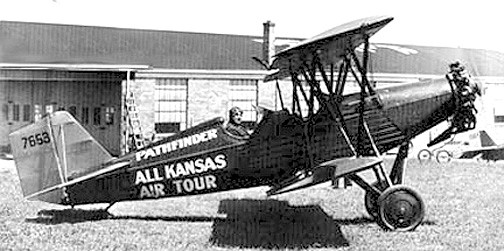
Designed by C B Bennett and Thomas Finney, the Swift 18 of 1928 was a Sport with a 120hp Quick engine. Three were built; N7653 c/n 1002, N8196 s/n 1003 (later reregistered as Swift 15 c/n 1005), and NX8863 c/n 5.
The 1929 Swift 19 was a Sport with a Wright J-6-5 engine. One was built registered NX8864 c/n 6.
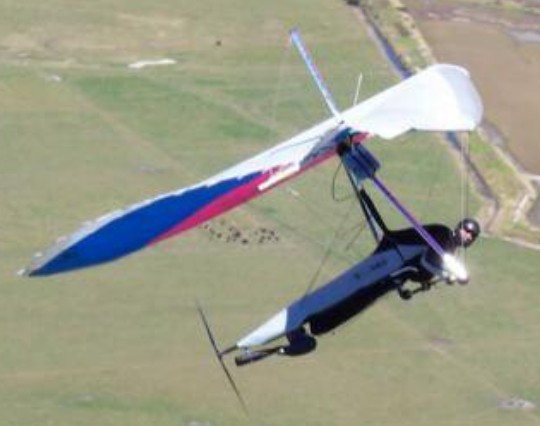
The Mosquito will fit most modern gliders with only one permanent modification. The keel has to be cut 1200 mm (47″) behind the hang point. The cut off section can be refitted to help rig the wing and for free flight. The 120 cc engine produces 15 Hp and will gives a climb rate of around 2 m/s (400 ft/m). A centrifugal clutch allows the propeller to stand still while the engine idles. This is a big safety factor and also reduces vibration. It has electric start and prop brake with foldable carbon prop. It also has intake silencer and after muffler.
Mosquito Empty weight: 24 kg Engine: Racket, 15 hp Reduction: 1:2.6 Prop diameter: 135 cm Fuel capacity: 4 lt Price (1998): £3000
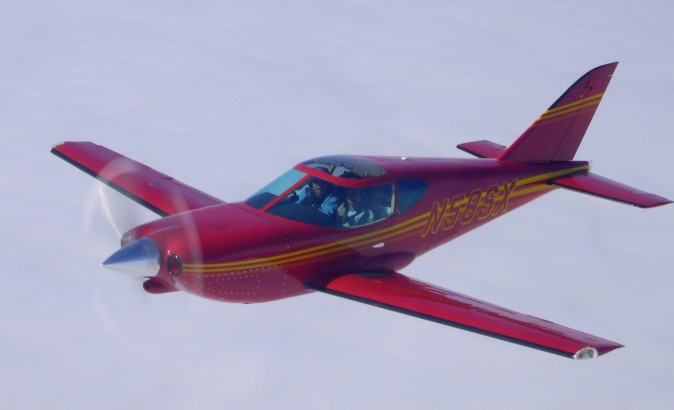
The SX300 was originally designed by Ed Swearingen in San Antonio, TX, as a two place, all metal, single engine low wing monoplane with fully enclosed retractable landing gear. First flown on 11 July 1984, the aircraft was marketed as a kit from 1984 to 1989.
By the end of 1989 approximately 80 kits had been sold, although there were only 48 sets of landing gear, which were built by the landing gear vendor, Airight Inc. in Wichita, KS.
The basic concept was to set new standards for Homebuilt or Amateur Built Aircraft as a dependable, fast mode of transportation; using all metal construction and proven techniques to provide an airframe that was equal to advanced jet aircraft. Fundamentally this was accomplished, however, the complexity and the labor intensive kit proved to be too challenging for the Homebuilt Market. The kit was high quality but the aircraft was never kit-proofed by the factory, so there were numerous glitches from the beginning. If the aircraft had been offered as a “fast build kit” it may well have survived.
In 1994, Jim Ryan, the owner of Airight, acquired the SX300 tooling, aircraft kit components and production/manufacturing rights (except military application). Jim planned to continue supporting the existing builders and to supply kits, fast build kits and possibly a fixed gear version which he called the SX200. Unfortunately Jim died in early 1996 before he could implement his new program.
The inventory of SX300 parts were bought by Bill Johns and now reside with Doug Poli at his facility in Ft. Worth, TX.
Engine: Lycoming IO-540-L1C-5, 300 hp Propeller: Hartzell Constant Speed 3-blade, 74 in. diameter Overall Length: 21 ft. 1.5 in. Overall Height: 7 ft. 6.5 in. Wing Span: 24 ft. 4.5 in. Wing Area: 70.73 sq. ft. Aspect Ratio: 8.4 Structural Cabin Width Inside: 41 in. Load Factor: 6G + 3G – Cruise Speed @ 75% Power, 8000 ft: 240 Kts. Stall Speed @ Gross Wt. (2400lbs.) flaps down: 75 Kts. Rate of Climb @ Gross Wt. Sea Level: 2400 ft./min Range (66 gal): 900 miles. Empty Weight: 1600 lbs. Baggage Capacity: 70 lbs. Power Loading: 8 lbs./hp Vne: 280 KIAS
In 1933 Darwin F Swanson built the Swanson B-4-T N13619. A single-place open cockpit monoplane, it was powered by a 55hp Swanson engine, later, a 50hp Ford.
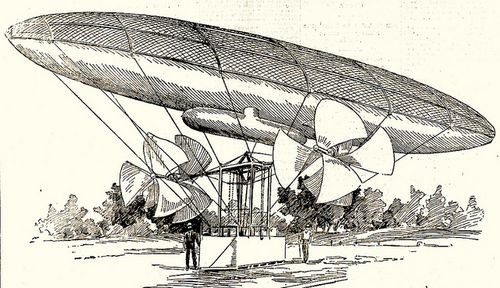
Non-rigid design with an external ballonet, from which was slung a car fitted with two sets of 6-bladed aluminium propellers that were to be driven by a 4 hp gasoline engine. However, the project at Green Island, California was never brought to its final construction. The designers had high hopes for their machine, and talked about making “a transcontinental journey to the national capital.” The envelope was described as circumscribed along its length with bicycle tubing to prevent it from collapsing. This tubing, a part of the suspension band, was probably inflated to pressure and thereby stiffened. This device was similar to an idea developed and demonstrated by the notable aeronaut Louis Capazza using a free balloon in the 1880s; that if the envelope were to suffer a catastrophic loss of lift gas during flight, the suspension band would keep the envelope from folding, or rather collapsing, and thus allow the gas bag to act as a parachute in slowing the descent of the airship.
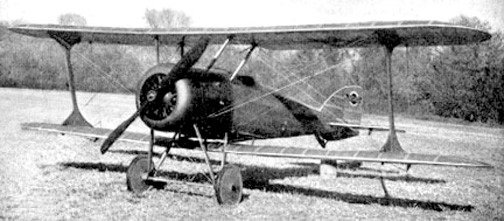
The 1923 Swanson-Freeman SS-4 N3522 c/n 4 was designed by Edgar Freeman and Swen Swanson as a two-place open cockpit biplane with I-struts and dual controls.
The first flight was on 11 November 1911, piloted by Ellred Callender.
It was still on the active register in 1936.
It was seen c.1928 as Span Wings 32 with a90hp Curtiss OX-5 engine and registered NX3522, but with no explanation for that model designation.
It was last known stored in a museum near the University of South Dakota.
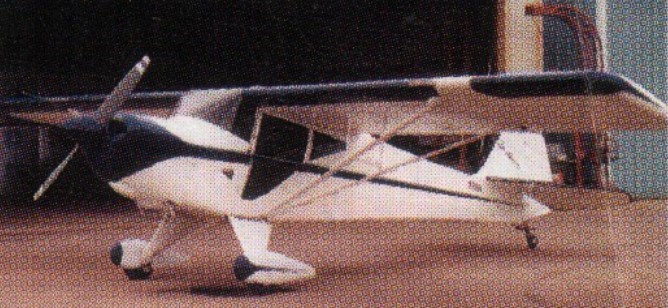
Designed by Swen Swanson and Ole Fahlin, the 1935 Swanson-Fahlin SF-2 was a two-place cabin, high wing monoplane, registered N365 c/n SF-2.
Powered by a Plymouth PJ auto engine (not inverted as often thought) with a geared propshaft, it became known as Fahlin after Swanson’s death from pneumonia in Feb 1935 during construction.
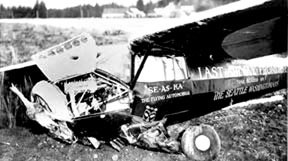
Sold in Novrmber 1935 after it failed to meet DoC contract specifications and, fitted with extra fuel tanks as Sea-Aska, it crash-landed in fog at Juneau AK in September 1936 during an attempted non-stop Anchorage-Seattle flight—pilot Russell Owens telegraphed his backers: “Sea-Aska on her asska in Alaska.”
Destroyed in a 1938 hangar fire in Juneau.
Although Plymocoupe is often thought to be an Nicholas-Beazley product, none was ever produced by that company. Fahlin went on to fame and fortune with his propeller business.
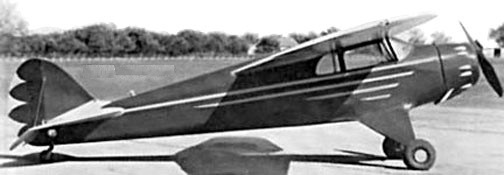
Based on Swanson W-15 design, the 1934 Swanson-Fahlin SF-1 was a two-place cabin, high-wing monoplane, powered by an 85hp Pobjoy R engine. It first flew in April 1934, registered NX271Y c/n 1.
It was repowered c.1937 with an 85hp Continental A-85.
Disposition after c.1940 is uncertain, reportedly was stored in a hangar on a field taken over by the military, who consigned it to the scrap pile. Despite many references to a trio of Swanson and Fahlin-designed planes built by Nicholas-Beazley Co, only the SF-1 and SF-2 were built at the N-B plant, and those by Swen Swanson in rented space.

 All Aero