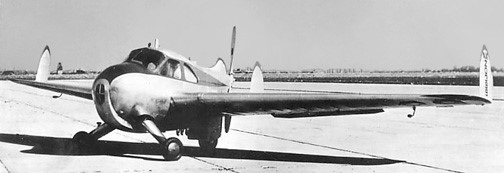
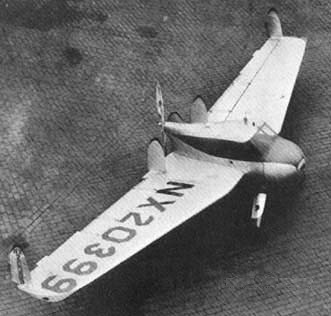
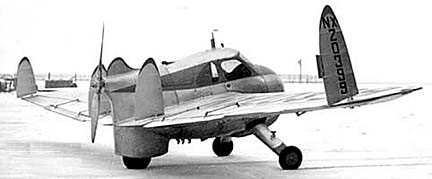
Designed by Thomas Hoff the H-70 two-place derivative of the Stearman-Hammond Y was a tailless (except for wingtip rudders), flying-wing with rudders mounted at the trailing edge and trailing-edge flap-type controllers, was originally built by Management & Research under a DoC program contract for lightplane development. Registered NX20399 and powered by a 95hp Menasco B-4 pusher engine, the one built did fly, although difficult to turn, but crashed in testing on 27 January 1938.
Tuscar H-71 NX20399
It was rebuilt by Tuscar as the H-71 and flown at Floyd Bennett Field for about 60 hours before crashing to finality in August 1945.
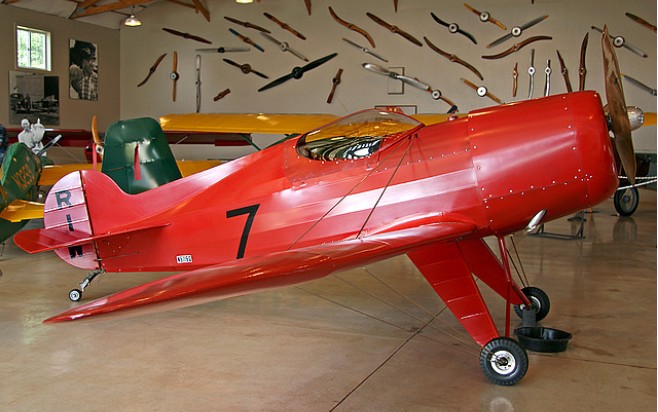
In 1998 former owner, Dick Sampson, commissioned an airworthy replica of the Pobjoy Special to be built by Bill Turner of Repeat Aviation. It is configured with the Wittman modifications, a cowled Pobjoy engine, and wooden wings. The aircraft is on display at the EAA Airventure Museum in Oshkosh, Wisconsin.
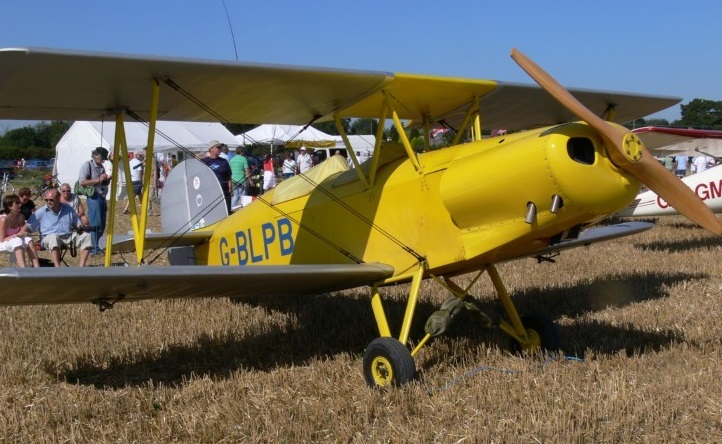
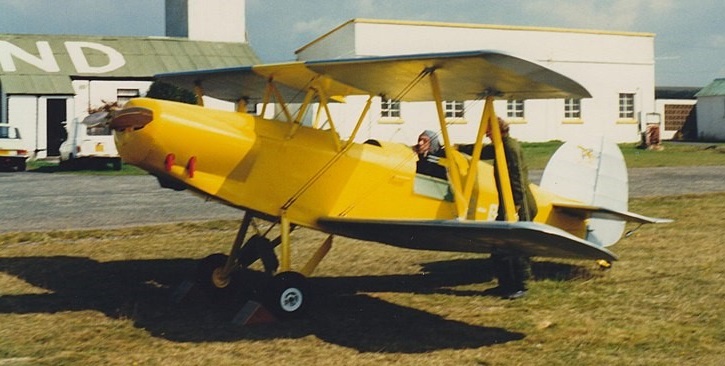
The Turner Two Seat Wot (TSW-2) is a biplane aircraft designed for amateur construction by Chris Turner in 1976. The aircraft was originally conceived as a two-seat version of the Currie Wot, however few component parts of the original Wot were retained by the time the design had been finalised. The Turner TSW-2 has a reduced wingspan, four ailerons and uses a different aerofoil section for the staggered wings. The aileron bellcrank fittings are made to the Currie Wot drawings.
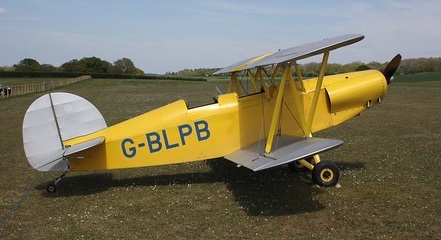
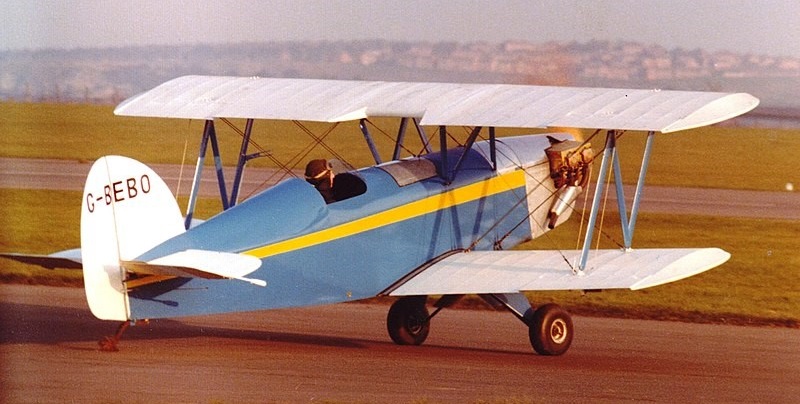
The Turner Two Seat Wot’s structure is primarily of wood with metal interplane struts, cabane struts, undercarriage and engine mount. Two examples were constructed G-BEBO and G-BLPB. The prototype G-BEBO was fitted with a 125 hp (93 kW) Lycoming O-290-3 engine and G-BLPB a 150 hp (112 kW) Lycoming 0-320-A1A engine.
Chris Turner was awarded the Best New Design Award at the 1987 Popular Flying Association Rally at Cranfield, Bedfordshire.
The prototype Turner TSW-2, G-BEBO, was built by its designer Chris Turner. It was registered with the Civil Aviation Authority on 30 June 1976 and first flown from Sunderland Airport in 1978. The aircraft was destroyed in a hangar fire at Hunday Farm and de-registered in January 2003.
This second example, G-BLPB, was built by James Woolford and Kingsley Thomas in Mullion Cornwall between 1980 and 1986. It first flew from Land’s End Airport on 31 August 1986. This aircraft is still airworthy and in 2017 was based on a farm strip in Wiltshire.
The Turner TSW-2 was the subject of a test flight report in Popular Flying by John Harper, who stated that the aircraft was capable of executing the Aerobatics Association’s Beginners Sequence of aerobatic manoeuvrers.
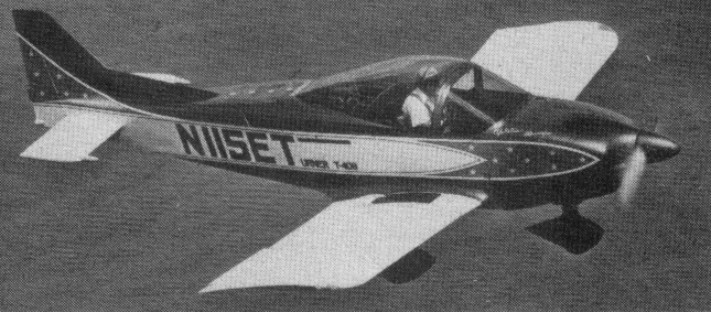
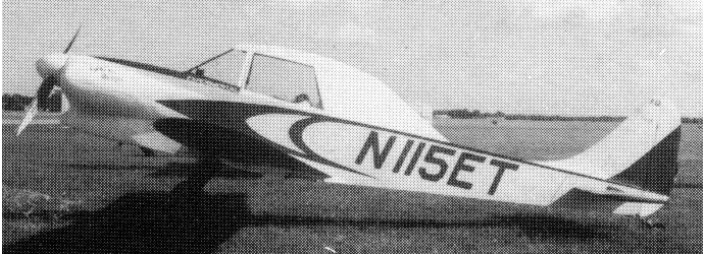
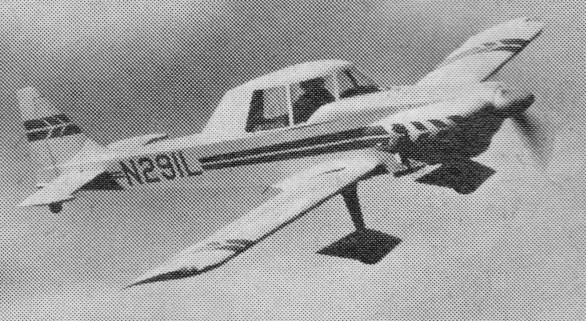
The Turner T-40B is basically the same as the T-40A, but with tricycle landing gear and other improvements. Development of the prototype began in 1966 and the first flight was made in 1969. Originally an 85-hp engine was used, but it was replaced by a 125-hp Lycoming in order to improve high altitude performance. Other refinements on the basic T-40A frame are: a bubble canopy, hydraulically-operated double-slotted flaps, and a fixed leading-edge droop.
Engine: Lycoming, 150 hp HP range: 100-150 Height: 6 ft Length: 20.8 ft Wing span: 29.6 ft Wing area: 106 sq.ft Weight empty: 1050 lbs Gross: 1640 lbs Fuel cap: 30 USG Speed max: 170 mph Cruise: 155 mph Range: 525 sm Stall: 62 mph ROC: 1200 fpm Take-off dist: 1100 ft Landing dist: 900 ft Service ceiling: 14,500 ft Seats: 2 Landing gear: nose or tail wheel
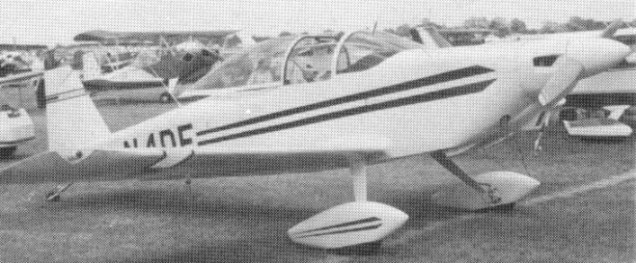
The T-40 was so successful that it collected 18 awards and convinced Turner that the only thing wrong with it was that nobody could ride along to enjoy the reading on the airspeed indicator; thus he created the T-40A. It is a two-place version of its predecessor. Turner simply divided the entire fuselage of the T-40 down the middle and in¬creased the cabin width from 24 to 40 inches. Flight tests showed that the 85-hp engine would still deliver 163 mph top speed with a fuselage nearly twice as wide as before and with considerably more airframe weight. Both Turners feature folding wings.
A Super T-40A with a 125hp motor appeared in 1972, and 1981 saw the entry of T-40C, or T-77, with a 150hp Lycoming.
T-40A Engine: Lycoming, 125 hp HP range: 100-125 Height: 6 ft Length: 20 ft Wing span: 25.4 ft Wing area: 96 sq.ft Empty weight: 1050 lb Gross weight: 1600 lb Fuel capacity: 22 USG Top speed: 160 mph Cruise: 147 mph Stall: 56 mph Range: 475 nm Rate of climb: 850 fpm Takeoff dist: 1250 ft Landing dist: 1200 ft Service ceiling: 12,000 ft Seats: 2 Landing gear: nose or tailwheel
“Super” T-40A Engine: Lycoming, 125 hp Height: 6 ft Length: 20 ft Wing span: 27.67 ft Wing area: 96 sq.ft Weight empty: 1050 lbs Gross: 1600 lbs Fuel cap: 22 USG Speed max: 170 mph Cruise: 147 mph Range: 475 sm Stall: 56 mph ROC: 850 fpm Take-off dist: 1250 ft Landing dist: 1200 ft Service ceiling: 12,000 ft Seats: 2 Landing gear: nose or tail wheel
The Turner airplane family got started in 1958. First aircraft in the series was the T-40, a sleek, hot little single-seater which won the 1961 Outstanding Design Trophy at the Experimental Aircraft Association Fly-In. Of all-wood construction and featuring a sliding hood canopy, the T-40 was first powered by a 65-hp engine and did without all the frills associated with an electrical system. First flying on 3 April 1961, in this form it cruised at 128 and blitzed along at 145 with the throttle firewalled. It featured folding wings for storage in a single-car garage. Later, an 85-hp package was added. Both Turners feature folding wings.
Engine: Continental, 85 hp HP range: 60-125 Height: 5.42 ft Length: 19.75 ft Wing span: 22.25 ft Wing area: 78 sq.ft Weight empty: 750 lbs Gross: 1060 lbs Fuel cap: 19 USG Speed max: 170 mph Cruise: 145 mph Range: 525 sm Stall: 55 mph ROC: 1100 fpm Take-off dist: 600 ft Landing dist: 400 ft Service ceiling: 12,500 ft Seats: 1 Landing gear: nose or tail wheel
The origins of aircraft construction in Turkey can be traced back to the first maintenance unit of the Turkish Air Force officially established on 1 June 1911, set up at the airport in Yesilköy / Istanbul. During the First World War maintenance facilities were established in Baghdad, Damascus, Izmir and Konya. They were under the umbrella of the 9th Department of Aviation Affairs (9 Hava Isleri Subesi), which was established on 15 Febuary 1915. The main task of this maintenance facilities was the maintenance of the aircraft of the German Air Force but due to the war situation could not always be guaranteed the supply of spare parts. The technicians at the front often no choice but to produce the items urgently needed themselves. In 1917 the Baghdad facility built a “new airplane”, the Baghdad first, which was built from parts of Albatros C III and from captured aircraft parts “redesigned”.
 All Aero