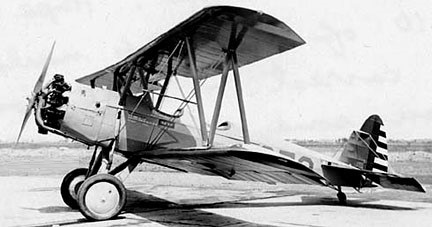
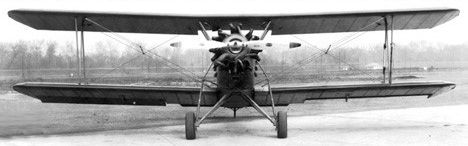
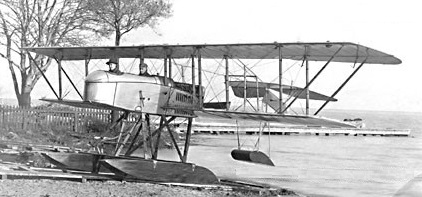
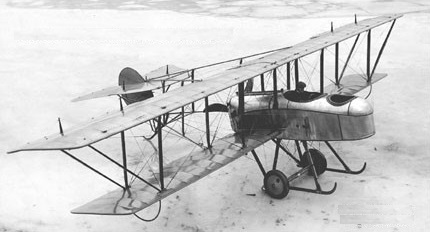
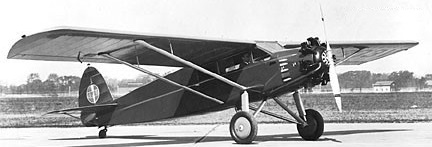
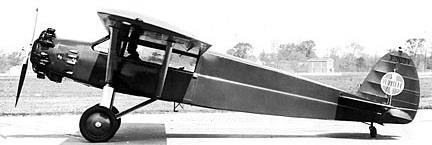
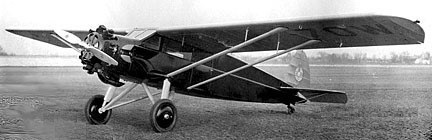
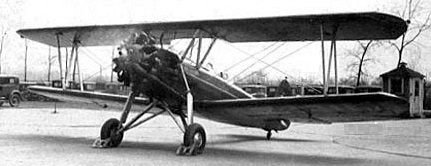
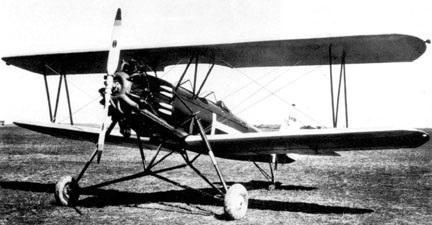
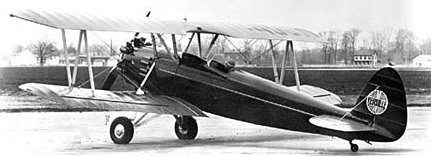
The 1931 PT-10 was an AT model foe Army Air Corp evaluation as YPT-10. Four were built as YPT-10 (31-519-522), first one was as “Training Plane” in prototypical stage (N479Y). The Training Plane first flew in February 1931.
Verville Training Plane Prototype N479Y
Verville Training Plane Prototype N479Y
Verville PT-10C 31-521
There was one conversion, 31-521, to a PT-10C. converted in 1931, it was powered by a Lycoming R-680.
One conversion to YPT-10D was completed in 1931, powered by a Kinner C-5.
The 104 Air Coach (ATC 267) was built from 1928. With a semi-cantilever wing, the Air Coach was priced at $7,500. Two were built as just Air Coach NX506 c/n 2 and NX151E c/n 1.
Six or seven 104-C Air Coach were built in 1929 at $12,000, including; NC68W=NS11, NC88Y=NS3, NX/NC303H (165hp Wright J-6), X/NC303V, NC356V, NC477Y. ATC 2-306 was for NC477Y, powered by a 240hp Wright R-760 engine.
Verville 104-C NX303V
There was one 104-A Air Coach, converted from 104-C NC68W, in 1933. Registered NS11 (ATC 2-454).
In 1930 104-C NC70W was modified to a 104-P Air Coach (ATC 316) with a 225hp Packard DR-980 diesel.
Verville 104-P NC70W
The 104-P Air Coach was priced at $11,000-12,000 but only the one was produced.
104-A Air Coach Engine: 220hp Wright J-5 Seats: 4
104-C Air Coach Engine: 110hp Warner Scarab Wingspan: 40’0″ Length: 28’0″ Useful load: 875 lb Max speed: 110 mph Stall: 45 mph Range: 600 mi Seats: 4
104-C Air Coach Engine: 225hp Wright J-6 Wingspan: 44’0″ Length: 28’9″ Useful load: 1234 lb Max speed: 130 mph Cruise speed:110 mph Stall: 50 mph Range: 650 mi Seats: 4
104-P Air Coach Engine: 225hp Packard DR-980 diesel Length: 28’8″ Useful load: 1100 lb Max speed: 130 mph Cruise speed:110 mph Stall: 50 mph Range: 640 mi Seats: 4
The 1930 AT Sportsman (ATC 323) was priced at $5,250. Eleven were built; NC450M-459M c/ns 1-5, 7-10; NC456M c/n 27 wasn’t licensed until 10 June 1931; NC476Y c/n 14; c/n 7 became c/n 27, c/n11 became c/n 20, c/ns 12 and 15/18 were not used, c/n 19 went to the LT.
Basic color scheme for ATs was green/orange for c/ns 1/3, black/orange for c/ns 4 and 27, blue/orange for c/ns 5/6, 8/10, and 19; c/n 13 as described below, others unrecorded. [NC476Y] was customized for Col Robert R McCormick with enlarged cockpits (McCormick weighed 225# stripped), and the ability of plane to be started and flown from both cockpits; special paint scheme: jet black wing and chassis struts; army yellow wings and tail surface; berry red (artillery red) fuselage; silver louvers.
The AT Sportsman design and production rights were sold to White Aircraft Co in 1939.
The sole AT-4 Sportsman of 1930 was for NACA testing. Registered NS478Y c/n 13, it had a modified wide landing gear with added fittings with structural bearing for EDO pontoons, which may or may not have been used, and steel interplane struts. Colors: Blue fuselage, silver wings, yellow stripe.
Verville AT-4 NS478Y
The single LT Sportsman of 1931 was an AT fitted with a 210hp Lycoming R-680 for Lycoming Mfg Co, Williamsport PA. It was registered NX10898 c/n 19.
Verville AT NC450M
AT Sportsman Engine: 165hp Continental A-70 Wingspan: 31’0″ Length: 24’3″ Useful load: 678 lb Max speed: 120 mph Cruise speed: 100 mph Stall: 50 mph Range: 370 mi Seats: 2
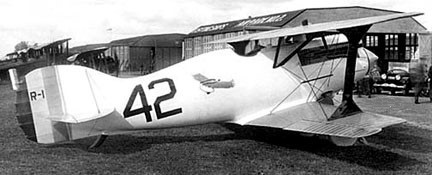
Alfred V. Verville is best known for his later Verville-Packard and Verville-Sperry racing aircraft of the early 1920s.
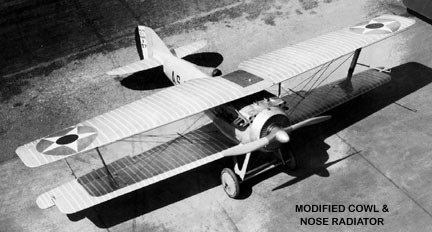
Verville-Packard R-1 AS-40126
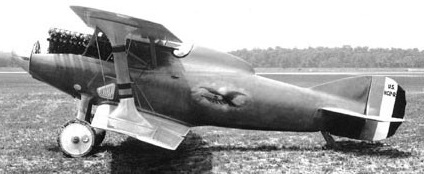
The Verville-Packard was modified from Engineering Division VCP-1 AS40126 by Alfred Verville in 1920 and was the 1921 Pulitzer race winner, redesignated R-1.
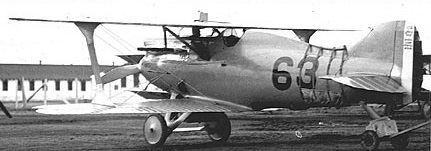
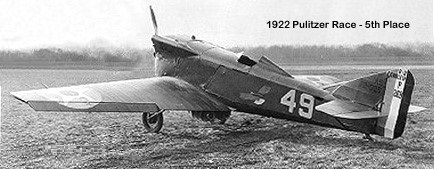
On 23 May 1922 Army contract #7388 was awarded to the Lawrence Sperry Aircraft Vo for three special Army Sir Service R-3 racing aircraft. The price was set at $25,000 per aircraft without powerplant. The special Wright H-3 High Compression engines were to be furnished by the Air Service, but installation was to be done by the builder. Serial numbers 22-326, 22-327 and 22-328 were assigned to the three racers. Three propellers were shipped from McCook Field to the Sperry plant in Farmingdale, Long Island, but these were never used. They were but the first of a long series of props designed to get the most out of the special Wright engines.
The Air Service contract with Wright Aeronautical called for modification of three engines originally designed for the MB-3, at $750 engine each. After the 1922 race, they were to be returned to Wright, re-modelled and re-consigned to Boeing Aircraft Co.
Alfred Verville had the R-3 design finalised, the work got underway at the Sperry plant. Things progressed normally except for a few items. There were no 200mph airspeed indicators. But Pioneer Instrument Company built enough for the planes entered in the Pulitzer race.
New birch propellers were ordered from the Hartzell Walnut Propeller outfit on 18 August. It was decided that several different props would afford a better test range, so two of the new props were 99 inch in diameter, 100 inc pitch, the other two 96 inch in diameter with 104.5 inch pitch. Whirl tests were to be conducted on all, and if they did not turn 2000 rpm, they would be trimmed until they did. Trhee props were delivered to Sperry on 15 September. But just three days before that, the Engineering Division at McCook Field notified the contractor that they had designed four different type of props and were building them at McCook Field.
Verville-Sperry R-3 Prep for 1923 St Louis Air Meet
The first was refitted with a 500hp Curtiss D-12 in 1923 and won the Pulitzer Trophy in 1924 at 216.5 mph.
In 1958 New York Airways introduced the Vertol 44 single engine, tandem rotor helicopter into scheduled service, in and around the New York metropolitan area.
1955 Royal Swedish Navy
Two were used by the French Government as VIP transport
The Hummingbird helicopter kit programme began in 1988. A 4 place helicopter based on a Sikorsky S-52. Of aluminium construction with carbon-graphite composite nose, powered by an aluminium 6.5 lt V8 of 260hp. Rotor mechanics remained the original.
Hummingbird
By 1995, equipped with an electric cyclic trim system and hydraulic driven radiator fan. This helicopter was still available in fit form in 2004.
After a break in production of six years the company produced a new and improved Hummingbird in 1991, the 260L. The Hummingbird 260L is a highly modified version of the four place Sikorsky S 52¬-3 with major changes to the nose, windshield, and powerplant installation turned into a kit. A modification has been the installation of a 260 h.p. Lycoming powerplant. The Hummingbird 260L is an FAA approved helicopter combined with an FAA approved powerplant. The Lycoming VO 435 A1F was designed to operate in an oblique position. One version can be turbo charged to 280 h.p. The Lycoming VO 435 A1F can be operated with automobile gasoline making it “fuel friendly”, where Avgas availability is limited. This entire powerplant installation was designed to meet the requirements of FAR 27 regulation standards for all helicopters in the Western world. Another change to the new Hummingbird is the composite cabin doors and vertical/ horizontal stabilisers. The tail stabilisers were designed to increase lateral and longitudinal stability, increase tail rotor effectiveness, and reduce weight on the tail of the helicopter. Most components have a time/life of 1200 hours. New blade design will most likely extend blade life to 2000 hrs. A set of three main rotor blades costs about a third of the price of those for a comparable four place piston engine helicopter, with the total aircraft price less than half. The Hummingbird has strength inherent in its basic design. With a payload of over 900lbs, it will take a good size sling load, and with a quick removal of the rear seats, the “utility” configuration means bulky cargo can be carried. Also long range fuel tanks have just been designed as an extra. As a Kit, the helicopter fits into the Amateur Built/Experimental Category and most of the maintenance can be done by the owner/assembler.
The Hummingbird is a single engine, single three-bladed main rotor type helicopter, with a tail rotor. The fuselage is made of aluminum and composites. The Hummingbird is powered by a FAA approved Lycoming aircraft engine. The transmission system consists of a clutch/freewheel unit between the engine and main gearbox, a main driveshaft extending from the top of the main gearbox to the main rotorhead, and a take-off drive from the main gearbox which drives the tail rotor driveshaft, intermediate gearbox and tail rotor assembly. These parts are manufactured to FAA design standards. The Hummingbird cabin sits four people. The cabin is 55 inches wide, 56 inches high from floor to ceiling, and 110 inches in length. Two baggage areas 15” L x 20” W x 13” H are located under the forward two seats. Fly two people, 375 miles, with 220 lbs. of camping gear. The many prefabricated components of the Hummingbird 260L make the kit an easy project for the first time builder. The average build time is 800 hours. There is no welding or composite work, only minor fabrication, and all major components are pre-assembled. The rotor blades for example come to you painted, balanced, and ready for installation. These blades have 7 degrees of twist to enhance performance. The Hummingbird helicopter kit is assembled in 14 easy to follow sections. The first section consists of building the lower cabin. In this section, you will learn about real aircraft sheet metal fabrication and aircraft assembly. In the next section you will receive the upper cabin assembled. After fitting the upper and lower cabin together, the landing gear is next, and then the nose. Flight controls, electrical components, instrumentation and fuel systems are next for installation. The tailcone section is supplied assembled to assure uniformity. The powerplant and gearboxes are assembled for installation when received. The main rotor blades and tail rotor blades will then come to you completely ready to install in the fully articulated rotor head. They will have been painted and pre-balanced at our factory. After rigging all the flight controls and cables, and calculating the Hummingbird’s weight and balance, it’s ready to fly. Because of its inherently long tail, forward flight is very stable but very agile. The flight control system incorporates electric trim with force gradient spring pressure. Stick forces are very light. An appealing characteristic is the landing gear that is able to taxi and not have to hover, with hydraulic brakes and shock absorbing struts. The three blade rotor system is very smooth and has a medium inertia rotor providing excellent autorotation characteristics. The clutch is automatic for engaging the rotor system and a rotorbrake is included to slow the rotor during shut down.
Hummingbird Engine: Aluminium V-8, 260 hp hp range 260-315 Empty wt: 1,800 lb Max wt: 2,700 lb Rotor span: 33ft Length: 30’6” Height: 8’2” Width: 8’7” Service Ceiling: 11,000 ft Max speed: 110 mph Cruise: 90-95 mph Range: 450 sm Seats: 4 ROC: 1200 fpm Fuel cap: 57 USG
Hummingbird Engine: V8 6.5 lt, 260 hp Rotor span: 10.05 m MAUW: 1223 kg Empty weight: 815 kg Fuel capacity: 215 lt Max speed: 176 kph Cruise speed: 150 kph Minimum speed: 0 kph Climb rate: 4.75 m/s Seats: 4 Fuel consumption: 50 lt/hr Kit price (1998): $140,500
Hummingbird 260L Engine: Lycoming V0-435 Rotor Blades: 3-blade Main rotor dimension 33′ 0″ Tail rotor dimension 5′ 9″ Fuselage length 30′ 6″ Height 8′ 7″ Width 5′ Empty Weight 1,800 lbs Useful Load 900 lbs Gross Weight 2,700 lbs Fuel 57 USG Min Speed Hover Vne 132 mph Cruise 90-95 mph Top Speed 110 mph Rate of climb 1250 fpm at 2300 lb Rate of climb 950 fpm at 2700 lb Service ceiling 14,000 ft Range 375 Miles Kit: $169,000 in 2009. Seats: 4
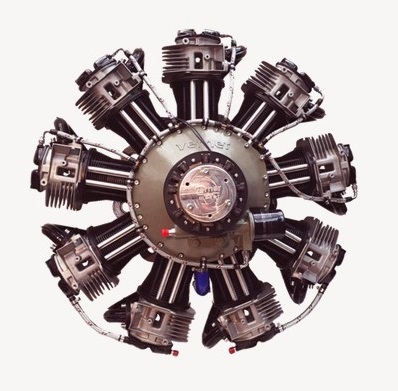
The Verner Scarlett 9S radial GA aircraft engine is a simple engine, the cylinders and pistons are supplied by VW and the heads by Honda, so spares are available world wide. The engines are all made to order, but delivery is set at a maximum of 3 months from order.
The engines are designed to run on mogas, use 20W60 motor oil and the filters are standard W712/22.
As at 2017 the 165hp 9 cylinder was priced at £24,980.00.
Scarlett 9S Displacement: 6094 cc / 372 cubic inch Pistons: 9 Cooled by: air Bore: 92 mm Stroke: 102 mm Compression ratio: 1:7,8 Propeller rotation: CCW, viewed from the front (tractor prop) Spark plugs: Brisk DR14YC-SUPER, Denso Q20PR-U Electric starter: 12 V/1000 W Alternator: 12 V/200 W Lubrication: Total 20W60, Aeroshell oil 15W50 Fuel: motor petrol, octane number 95 EFI, carburetor: 2 + 1 jets, IMF ECU/ weber carb Reduction drive: none Propeller hub: 101,6 x 6 x 13 holes – M8 Max propeller: 220 cm Installation: back Recommended TBO: 1000 hours Batteries: 12V 24Ah
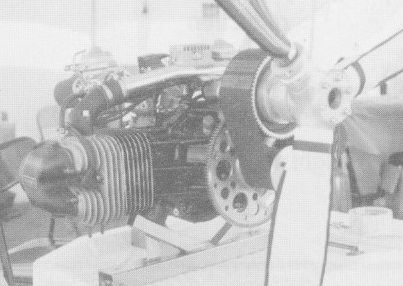
Cycle: 4 stroke No cylinders: 2 opposed Bore: 94 mm Stroke: 100 mm Compression: 8.9 Displacement: 1387 cc Cooling: air/oil Ignition: DCDI Reduction: Toothed belt 2.06/1 Weight: 70 kg Max pwr: 80 hp at 5000 rpm Fuel consumption: 7.6 lt/hr at 3500 rpm Price 1998: 52 700 Fttc