Vickers 285 Wellington

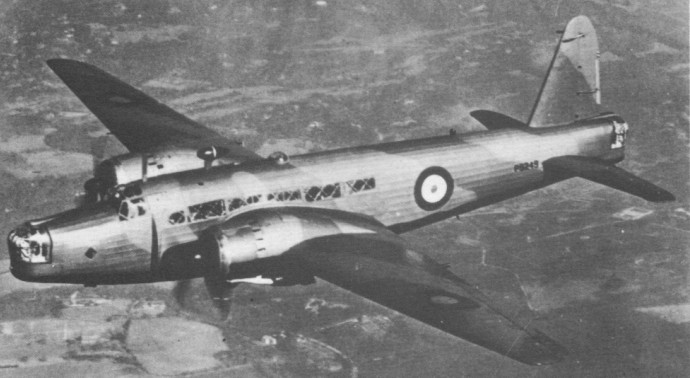
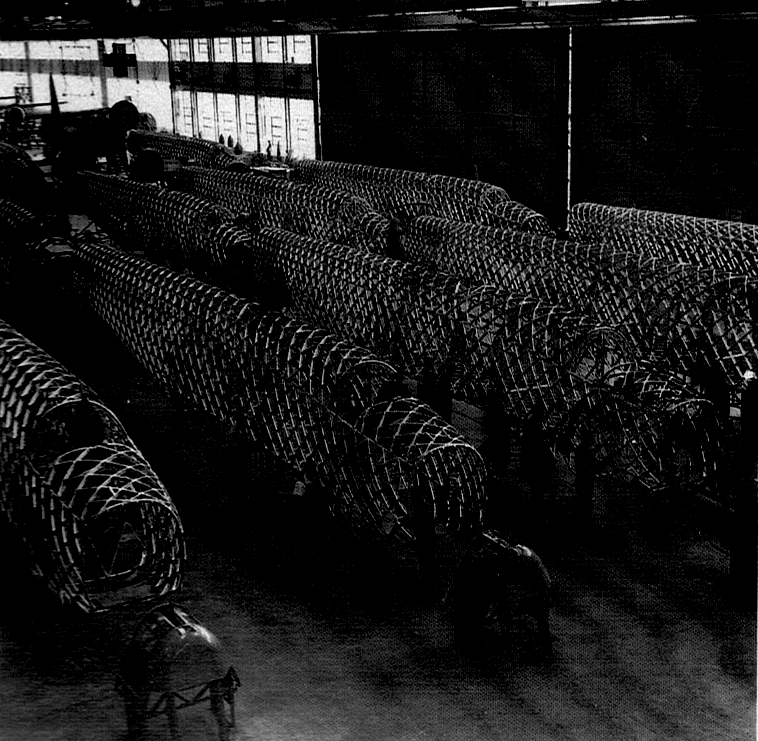
The Wellington was designed to meet an Air Ministry requirement for a long-range medium bomber under Specification B.9/32 and evolved as a mid-wing monoplane with a fuselage of oval cross-section. Both of these major structures were of the geodetic construction which Barnes Wallis had introduced in the Wellesley. But experience with the latter and development of the geodetic concept made it possible for the individual components (which were built up into the ‘basket-weave’ structure) to be smaller and lighter in weight without any loss of structural integrity by comparison with the Wellesley. Wings, fuselage and tail unit were fabric-covered; power plant comprised two wing-mounted engines; and the tailwheel-type landing-gear units were hydraulically retractable.

Vickers Wellington Article

‘Heavy’ defensive armament – comprising five machine-guns in nose and tail turrets and a ventral dustbin – would, it was believed, enable a flight of these aircraft to put up such a curtain of fire that fighter escort would be superfluous. Those who held such beliefs (as for the Boeing B-17 Fortress developed in America) were to discover their error very quickly.
Though it had been planned to fit Rolls-Royce Goshawk inlines or Bristol Mercury radials the engine selected was the Pegasus. The prototype Wellington made its first flight on 15 June 1936, but it was not until October 1938 that production aircraft began to enter RAF service. The variant that entered service with No. 99 Squadron in October 1938 was the Wellington Mk I, of which 181 were built with Pegasus XX radials. By the outbreak of war Bomber Command had six operational Wellington squadrons.

Less than one year later (on 4 September 1939) Wellingtons were in action against targets in Germany. Wellingtons and Blenheims shared the honour of being the first Royal Air Force aircraft to attack Germany when they bombed ships at Brunsbüttel on 4 September 1939. Early deployment on daylight raids showed that these and other British bomber aircraft were extremely vulnerable to fighter attack. Following the loss of ten Wellingtons from a force of 24 despatched on an armed reconnaissance of Wilhelmshaven on 18 December 1939, the type was withdrawn from daylight operations. As a night bomber, however, the Wellington proved an invaluable weapon during the early years of Bomber Command’s offensive against Germany.

Wellington production was to total 11,461 aircraft and embraced many versions. These included Mk I bombers (782kW Bristol Pegasus XVIIIs) and the DWI with degaussing ring to trigger magnetic mines. Other variants developed before the war were the Mk IA with a Nash and Thompson turret, the Mk IC with the ventral turret replaced by beam guns.

Differing engines distinguished the 853kW Rolls-Royce Merlin X-powered Mk II; 1,021kW Bristol Hercules XI Mk III; and Pratt & Whitney Twin Wasp Mk IV.
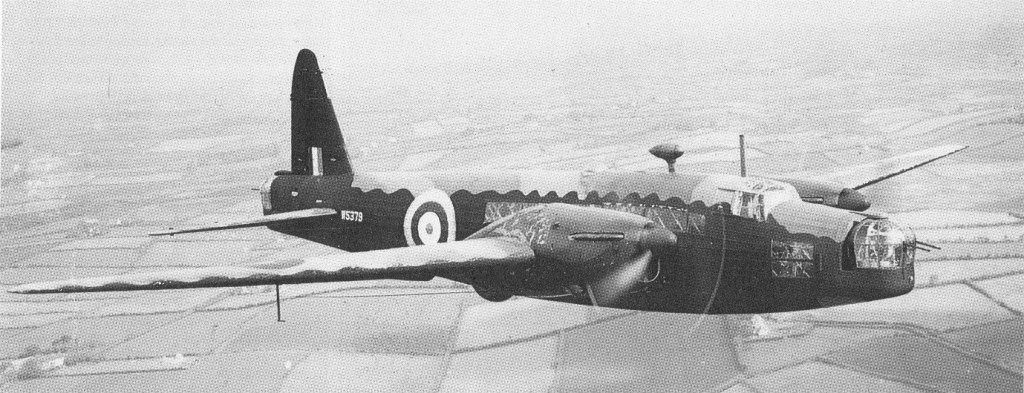
Wellington Mk.II

The Merlin engined Mk.II entered service in 1941.
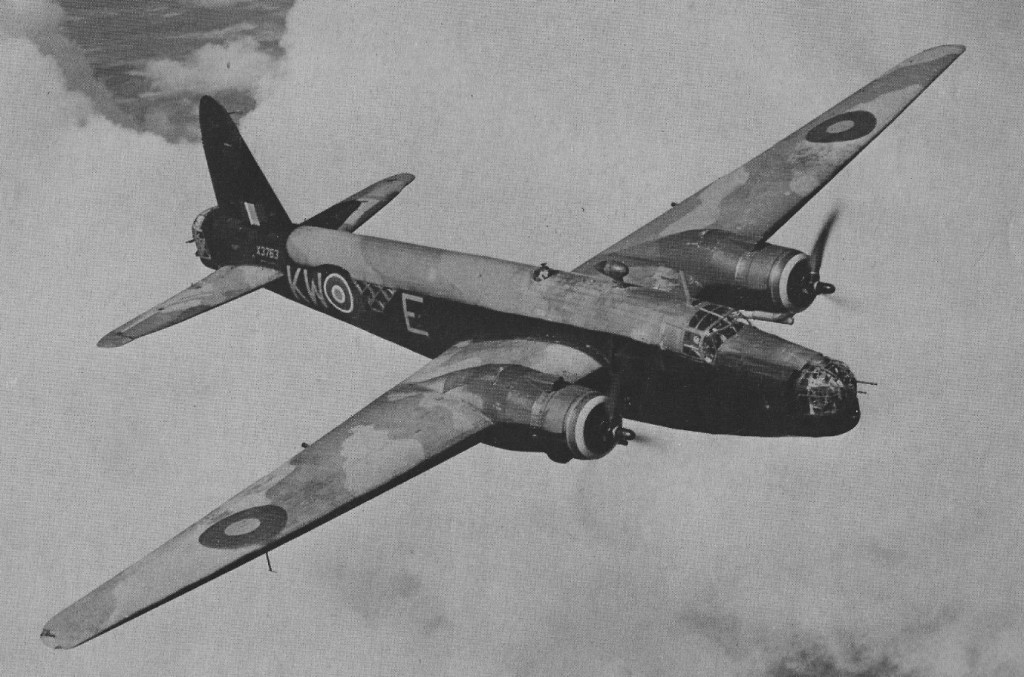
Vickers Wellington III

The Wellington Mk V was a high-altitude aircraft with pressurised cabin, no nose turret and increased wing span, followed by the high-altitude Mk VI with 1,192kW Rolls-Royce Merlin 60 or 62 R6SM engines. Mk VII was designated an experimental model and Mk VIII was the first of many reconnaissance versions. Mk IX aircraft were Mk Is modified as troop carriers. The Mk X with Hercules VI or XVI engines was the last bomber. Wellingtons Mk XI, XII and XIII were ASV radar-equipped aircraft for Coastal Command. The Mk XIV with Hercules XVII engines was the final reconnaissance version. In addition to these specific versions there were many variants, and Wellingtons were also used for training and transport.

The last Wellingtons produced, Mk X RP590 being delivered from Squires Gate on October 13, 1945.

The Vickers Wellington bomber provided the mainstay of Bomber Command’s night attacks on Germany in the early stages of the Second World War. To the extent that at one period it equipped no fewer than 21 squadrons, and when the first 1,000 bomber raid was mounted against Cologne, in May 1942, more than half of the aircraft involved were Wellingtons.

Wellingtons dropped 42,440 tons of bombs on sorties from Britain, including the first 4,000 lb (900 kg) block busters.

Designed as a bomber, it became an effective torpedo carrier and submarine killer in Coastal Command before going on to Transport and Training Commands.
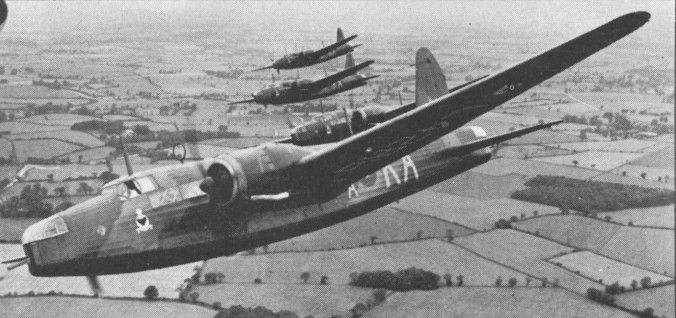
On 3 December 1942, Dr. R.V. Jones, chief of the scientific branch of the secret service in the British Air Ministry, obtained Churchill’s permission to send a Wellington bomber full of measuring instruments to Frankfort am Main. The plane, DV819, was to be used as a decoy in the hope that the crew could find out at least the megahertz frequency of new German target-locator system radar. The plane was shot down a short distance from the coast of Britain, but the crew were saved at the last minute and reported: ‘It was 490 megahertz’.

The Wellington Mk.XVI transport were conversions of the early IC model.
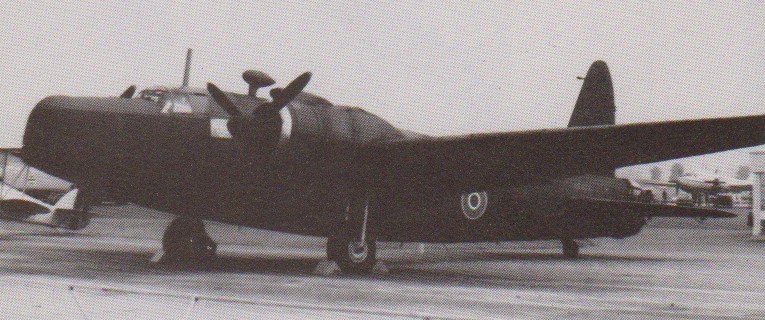
T.10

A total of 11,461 of all types were built.

Vickers Wellington Restoration Article

Gallery

Mk.1A
Engines: 2 x Bristol Pegasus, 1050 hp
Wingspan: 86 ft
Length: 61 ft 3 in
Height: 17 ft 6 in
MAUW: 31,500 lb

Mk IC
Type: five/six-seat long-range medium night bomber
Engines: 2 x Bristol Pegasus XVIII, 746kW (1,000 hp)
Span: 26.26m (86ft 2in)
Length: 19.68m (64ft 7in)
Armament: 6 x 7.7-mm 0.303-in) machine-guns
Bombload: 2041 kg (4,500 lb) internally
MTOW: 12928 kg (28,500 lb)
Max speed: 235 mph at 15,500ft
Operational range: 2,550 miles

406 Mk II
Engines: 2 x Rolls-Royce Merlin X, 853-kW (1,145-hp)

Mk III
Engines: 2 x Bristol Hercules III, 1025-kW (1,375-hp)
Length: 64.6 ft. (19.7 m)
Wing span: 86.1 ft. (26.2 m.)
Weight empty: 15,887 lb. (7,233 kg.)
Crew: 6
Armament: 8 mg
Max. bomb load: 4,500 lb. (2,000 kg.)
Max. Speed: 255 m.p.h. (410 km.p.h.)
Ceiling: 22,000 ft. (6,700 m.) fully loaded
Range: 1,470 miles (2,365 km.)

B Mk.III
Engines: 2 x Bristol Hercules XI, 1535 hp

Wellington Mk X
Engines: 2 x Bristol Hercules XI, 1119kW
Max take-off weight: 13381 kg / 29500 lb
Empty weight: 8417 kg / 18556 lb
Wingspan: 26.26 m / 86 ft 2 in
Length: 18.54 m / 61 ft 10 in
Height: 5.31 m / 17 ft 5 in
Wing area: 70.0 sq.m / 753.47 sq ft
Max. speed: 410 km/h / 255 mph
Ceiling: 5790 m / 19000 ft
Range w/max.payload: 2478 km / 1540 miles
Crew: 4
Armament: 8 x 7.7mm machine-guns
Bombload: 2041kg
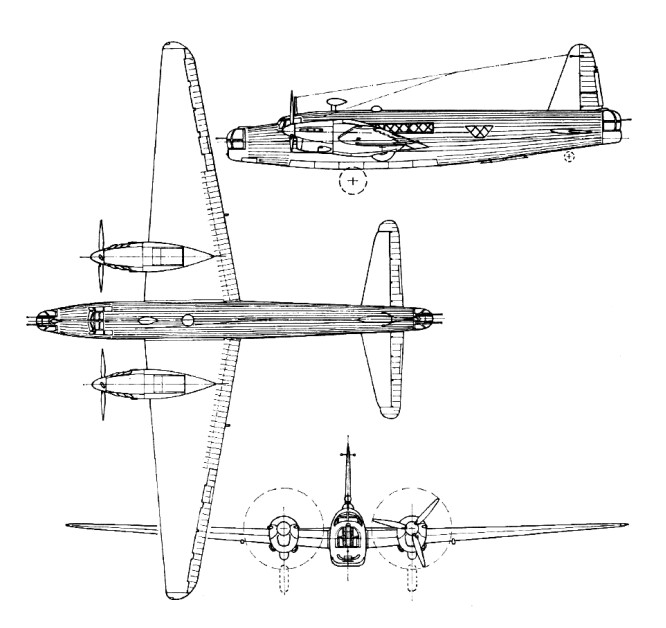
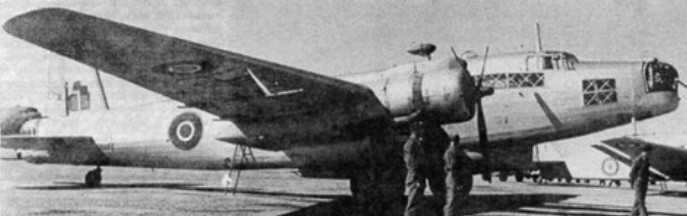
Vickers Wellington

Vickers 284 Warwick

The Warwick was a slightly enlarged version of the Wellington and employed the same geodetic form of construction. It was designed originally to Specification B. 1/35 to replace the Wellington. But because the generation of four-engined bombers was also being produced at the same time, it was subsequently adapted for reconnaissance duties with Coastal Command and first went into service in 1943. Other models were built for transport and air-sea rescue duties. The final version, the GR.V, entered service in 1945 and carried bombs, mines or depth-charges. About 840 production Warwicks were built.

Warwick GR Mk.II
Engines: 2 x Bristol “Centaur VI”, 1864kW / 2466 hp
Max take-off weight: 23247 kg / 51251 lb
Empty weight: 14118 kg / 31125 lb
Wing load: 51.05 lb/sq.ft / 249.0 kg/sq.m
Wingspan: 29.48 m / 96 ft 9 in
Wing area: 1006.003 sq.ft / 93.46 sq.m
Length: 20.88 m / 68 ft 6 in
Height: 5.64 m / 18 ft 6 in
Max. speed: 228 kts / 422 km/h / 262 mph
Service ceiling: 5790 m / 19000 ft
Range: 3460 km / 2150 miles
Bombload: 6900kg
Crew: 6

Vickers 284 Warwick

Vickers 447 / 457 / 480 Winsor

The Barnes Wallis geodetic construction, introduced on the Vickers Wellesley and used later on the Vickers Wellington and Vickers Warwick, was highly successful. To exploit its physical characteristics fully, however, a very big aeroplane was desirable.
Vickers’ designer, Rex Pierson, used geodetics in evolving a four-engined bomber to meet Specification B.13/36, but the Short Stirling was awarded the contract. Another opportunity came with Specification B.1/39, but this was again unsuccessful, and it was not until the submission to Specification B.5/41 that the Vickers tender was accepted.
The requirement was for a high-altitude heavy bomber with pressurized crew compartment, and an ability to fly at 555km/h at 9450m. Two prototypes of the new bomber were ordered, but changes resulted in a new specification, B.3/42, being drawn up. Vickers designated their design the Type 447, and the name Windsor was given to the aircraft. Various armament trials were carried out on a Warwick prototype, and the first Windsor flew from Farnborough, where it had been assembled, on 23 October 1943. It attained a speed of 486km/h at 7620m, and had completed almost 34 hours of flight testing before being written off in a forced landing, caused by problems with a propeller constant-speed unit. The second prototype, Type 457, contained armour plating and other modifications, and flew from Wisley on 15 February 1944, demonstrating similar performance to the first aircraft. This aircraft was grounded in June 1946, and broken up.
A third Windsor, Type 480, was flown on 11 July 1944, with some further changes incorporated. This aircraft was fitted later with defensive barbettes in the outboard engine nacelles, each barbette having two remotely-controlled rear-firing 20mm cannon.
Trials for these were carried out by a Lancaster, but although further tests continued for some 10 months, the Windsor programme was cancelled on 15 March 1946, with the third aircraft finishing its days as an instructional airframe. A fourth Windsor, originally Type 471 but later changed to Type 483, was almost complete when the programme finished.

Engines: 4 x Rolls Royce Merlin 65, 1613 hp
Max take-off weight: 24500 kg / 54014 lb
Empty weight: 17500 kg / 38581 lb
Wingspan: 35.71 m / 117 ft 2 in
Length: 23.42 m / 76 ft 10 in
Height: 7.01 m / 23 ft 0 in
Wing area: 115.94 sq.m / 1247.97 sq ft
Max. speed: 275 kts / 510 km/h / 317 mph
Ceiling: 8305 m / 27250 ft
Range: 2511 nm / 4650 km / 2889 miles
Armament: 2 x 7.7mm machine-guns, 2 x 20mm cannon
Bombload: 5500kg

Vickers Windsor

Vickers 279 Venom

In 1935, to meet Air Ministry Specification F5/34, calling for a single seat monoplane interceptor armed with six or eight machine guns, a retractable undercarriage was required and an enclosed cockpit; a speed of at least 275mph (442kph) at 15,000ft (4,572m) was stipulated. This requirement was taken up by a number of firms. Bristol produced the Type 146 (835hp/622kW Bristol Perseus). Vickers brought their Jockey Mk II into approximate line with the requirements as the Venom (625hp/466kW Bristol Aquila). Henry Folland produced his last design for Gloster, the G.38 (840hp/626kW Bristol Mercury IX). James Martin also looked at F5/34 and surprisingly found it to his taste. None of the aircraft built to this specification achieved production status.

Fundamentally a redesigned and improved Type 151 Jockey and, indeed, initially known as the Jockey II, the Type 279, for which Vickers adopted the name Venom, was intended to meet the requirements of Specification F.5/34. Powered by a 625hp Bristol Aquila AE.3S nine-cylinder sleeve-valve radial engine enclosed by a long-chord NACA cowling, the Venom was a highly sophisticated aircraft, with a metal monocoque fuselage, its stressed skin being affixed by countersunk rivets. It was unique at the time it entered flight test, on 17 June 1936, in having 90°-deflection flaps. The Venom retained the sideways-hinging engine feature of the Type 151, and a battery of eight 7.7mm machine guns was mounted in the wings from the start of test flying. The Venom proved exceptionally manoeuvrable, with outstanding roll rate and turning radius, but it lacked the power to compete seriously with its Rolls-Royce liquid-cooled Vee-type-engined contemporaries, and, as no sufficiently compact British air-cooled radial of adequate power was available for installation, it was scrapped in 1939.

Engine: Bristol Aquila, 625hp/466kW
Max take-off weight: 1885 kg / 4156 lb
Wingspan: 9.98 m / 33 ft 9 in
Length: 7.36 m / 24 ft 2 in
Height: 3.27 m / 11 ft 9 in
Wing area: 13.56 sq.m / 145.96 sq ft
Max. speed: 502 km/h / 312 mph
Ceiling: 9755 m / 32000 ft

Vickers 279 Venom

Vickers 253 Wellesley

Air Ministry Specification G.4/31 called for a General Purpose aircraft, capable of level bombing, army co-operation, dive bombing, reconnaissance, casualty evacuation and torpedo bombing. The Vickers Type 253 won against the Fairey G.4/31, Westland PV-7, Handley Page HP.47, Armstrong Whitworth AW.19, Blackburn B-7, Hawker PV-4 and the Parnell G.4/31.

Vickers Wellesley Article

Designed by Rex Pierson, the Type 253 was the first aircraft built which partly used the Barnes Wallis geodetic design in the fuselage. Despite an order for 150, Vickers offered their private venture monoplane design the Type 246. This used the same geodetic design principles for both the fuselage and the wings, and first flew on 19 June 1935. It had superior performance to the 246 but did not attempt to meet the multi-role requirement, being a day and night bomber only. First flown with PV 0-9 markings, the 253 showed a lower tare weight, better performance and larger payload, partly as a result of the 8.85 – 1 high aspect ratio wing.

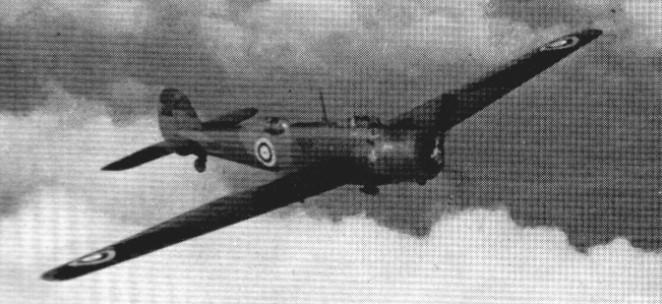
The Wellesley evolved from Vickers’ design for a general-purpose day and night bomber and coastal-defence torpedo-carrier biplane to satisfy Air Ministry Specification G.4/31, the company having decided to develop and build a monoplane aircraft to meet the same specification. When evaluated there was little doubt that the monoplane was superior, with the result that the Air Ministrv contract for the biplane was cancelled, being replaced on 10 September 1935 by one for 96 examples of the monoplane under a rewritten G.22/35 specification. The RAF ultimately ordered 176, named Wellesely, to a newly written specification 22/35, with a 14 month production run starting in March 1937.

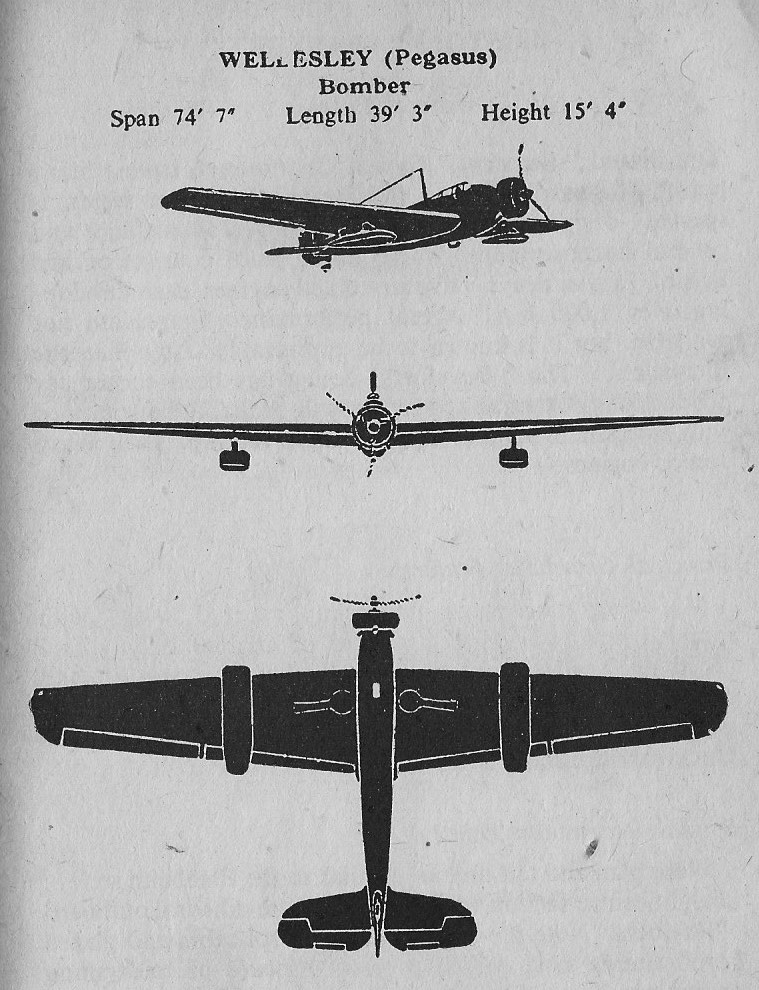
Named the Wellesley, it was the first RAF aircraft to utilise the geodetic form of construction devised by Barnes (later Sir Barnes) Wallis; offering a lightweight structure of great strength, it was adopted later for the Wellington. The other highly unusual feature was the provision of a pannier beneath each wing to serve as a bomb container. The low-set monoplane wing was also of geodetic construction, the main landing gear was hydraulically retractable, and power plant comprised a single Bristol Pegasus radial piston engine.

To avoid disrupting the geodetic structure, the bombload was carried in two streamlined panniers under the wings. The Wellesly Mk.1 had two separate cockpits, but this was changed in the Mk.II to a single piece cockpit canopy covering the pilot and navigator positions.

Wellesley Mk Is entered RAF service in April 1937 but by the outbreak of World War II most of them had been transferred to the Middle East, where they remained operational into 1941. The RAF received the first Welleselys in April 1937, for 76 Sqn at Finningley, and eventually equipped six RAF Bomber Command squadrons in the UK, Nos 35, 76, 77 and 148 Sqdns. Later a number were sent out to No.223 Sqdn, and as the home based machines were replaced, they too were sent out to the Middle East.

The primary use of the Wellesely during the econd World War was maily in the Middle East with only four examples remaining in Britain at the start of the war. Among its significant wartime operations was the bombing of Addis Ababa in August 1940, and Wellesleys of 223 Sqn were among aircraft that wiped out an Italian destroyer flotilla attack on Port Sudan in April 1941. Losses to Italian CR.42 fighters did occur when intecepted, as the Wellesley’s defensice armament of one fixed gun flexibly mounted firing aft was poor. They remained in the region until 1941 performing maritime reconnaissance duties.

No.14 Squadron based on Port Sudan, East Africa

The type is remembered especially in service with the RAF’s Long Range Development Flight, which was established at RAF Upper Heyford, Oxon, in January 1938. Equipment comprised six Wellesley Mk.Is modified by the installation of 28.7 lt 1010 hp / 753 kW Pegasus Mk XXII engines installed in NACA long-chord cowlings, and driving 3 blade Rotol ‘Incredible Hub’ constant-speed propellers; plus other changes which included strengthened landing gear, increased fuel capacity and the introduction of an autopilot. Adding a third crew member and a rest bunk and a folding pilot’s seat to allow mid-air pilot exchange. Between 5 and 7 November 1938, two of a flight of three of these aircraft (led by Sqn Ldr R. Kellett) succeeded in establishing a new world long-distance record, covering non-stop the 11,526km between Ismailia, Egypt, and Darwin, Australia, in just over 48 hours.

Gallery

Wellesley Mk.I
Engine: 1 x Bristol Pegasus XX, 690kW / 937 hp
Max take-off weight: 5035 kg / 11100 lb
Empty weight: 2889 kg / 6369 lb
Wingspan: 22.73 m / 74 ft 7 in
Length: 11.96 m / 39 ft 3 in
Height: 3.76 m / 12 ft 4 in
Wing area: 58.53 sq.m / 630.01 sq ft
Max. speed: 198 kts / 367 km/h / 228 mph
Service ceiling: 10600 m / 34,700 ft
Range: 964 nm / 1786 km / 1110 miles
Crew: 2
Armament: 2 x 7.7mm machine-guns
Bombload: 900kg

Vickers Wellesley

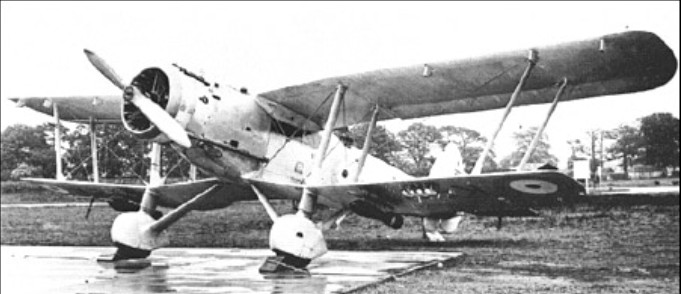
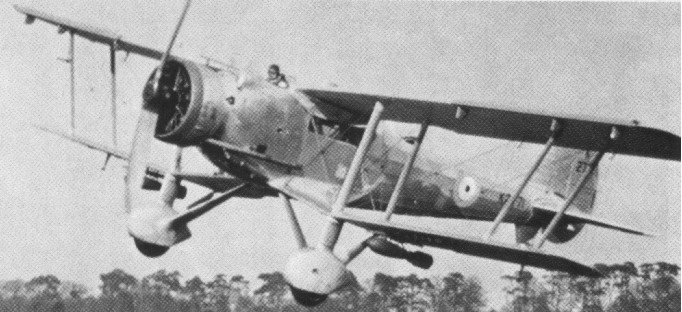
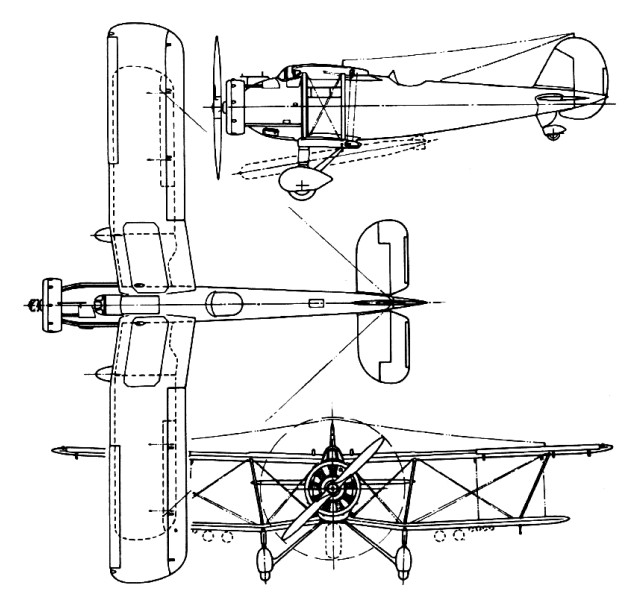
Vickers 246 / G.4/31

Air Ministry Specification G.4/31 called for a General Purpose aircraft, capable of level bombing, army co-operation, dive bombing, reconnaissance, casualty evacuation and torpedo bombing. The Vickers Type 253 won against the Fairey G.4/31, Westland PV-7, Handley Page HP.47, Armstrong Whitworth AW.19, Blackburn B-7, Hawker PV-4 and the Parnell G.4/31.

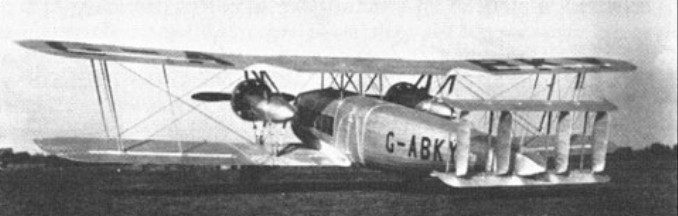
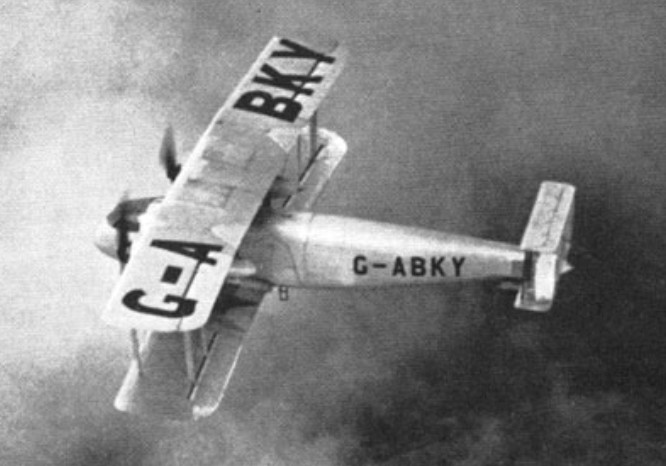
Designed by Rex Pierson, the Type 246 was the first aircraft built which partly used the Barnes Wallis geodetic design in the fuselage. Despite an order for 150, Vickers offered their private venture monoplane design the Type 253. This used the same geodetic design principles for both the fuselage and the wings, and first flew on 19 June 1935. It had superior performance to the 246 but did not attempt to meet the multi-role requirement, being a day and night bomber only. First flown with PV 0-9 markings, the 253 showed a lower tare weight, better performance and larger payload., partly as a result of the 8.85 – 1 high aspect ratio wing. An initial order for 96 Type 246s was substituted for the Type 253 order.

One prototype, first flown on 6 August 1934. No production.

Engine: 1 x 635hp Bristol Pegasus IIM.3
Max take-off weight: 3791 kg / 8358 lb
Empty weight: 1982 kg / 4370 lb
Wingspan: 16.03 m / 52 ft 7 in
Length: 11.28 m / 36 ft 0 in
Height: 3.81 m / 12 ft 6 in
Wing area: 53.79 sq.m / 578.99 sq ft
Max. speed: 259 km/h / 161 mph
Ceiling: 6614 m / 21700 ft
Crew: 2

Vickers G.4/31

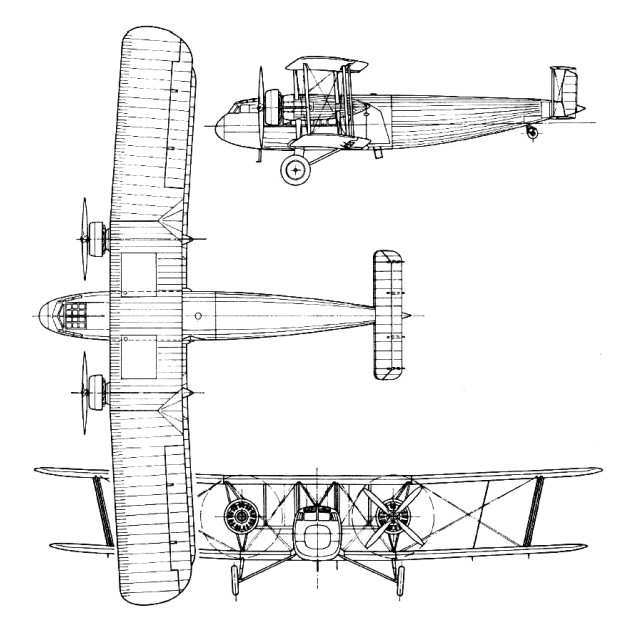
Vickers Valentia

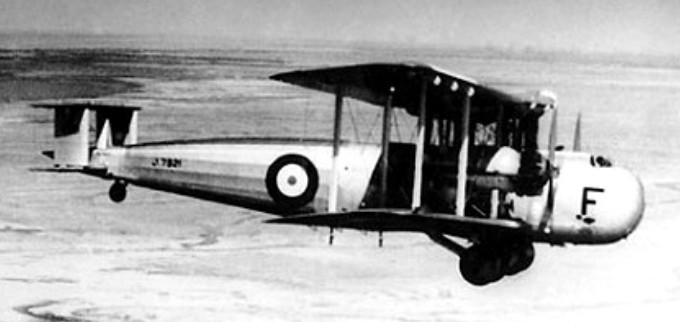
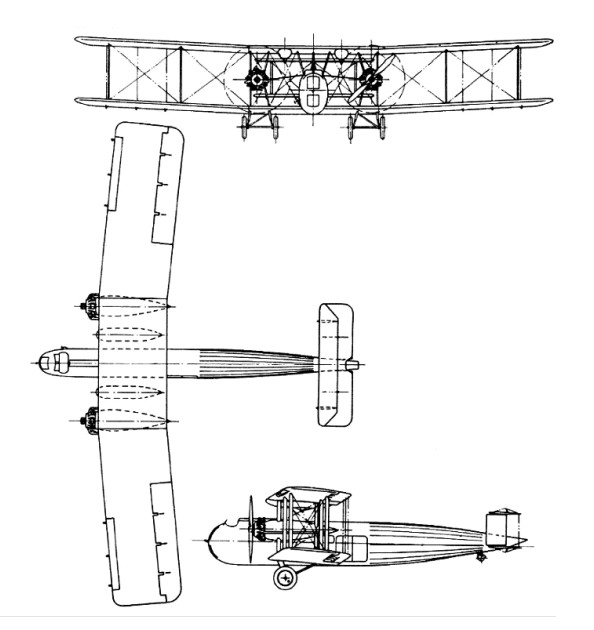
The Valentia was a development of the earlier Victoria troop-carrier, differing by having two 484kW Bristol Pegasus II.L3 or II.M3 engines (the latter for use in India) and an improved landing gear. Accommodation was for a crew of two and 22 troops; lockers were used for equipment and rifle-racks and stretcher supports were provided. Bomb racks could also be fitted if required. Twenty-eight were built as new and 54 Victorias were brought up to this standard.

Engines: 2 x Bristol II M3 Pegasus radials, 464kW / 626 hp
Wingspan: 26.62 m / 87 ft 4 in
Length: 18.14 m / 50 ft 6 in
Height: 5.41 m / 17 ft 9 in
Wing area: 2178 sq.ft / 202.34 sq.m
Max take-off weight: 8845 kg / 19500 lb
Empty weight: 4964 kg / 10944 lb
Wing load: 9.02 lb/sq.ft / 44.0 kg/sq.m
Max. speed: 104 kts / 193 km/h / 120 mph
Service ceiling: 4955 m / 16250 ft
Range: 695 nm / 1287 km / 800 miles
Crew: 2
Bombload: 1000kg

Vickers Valentia