3xtrim 3X55 Trener / 3X47 Ultra / Navigator 600

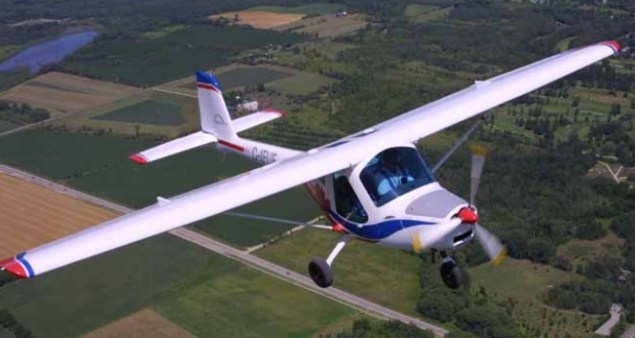
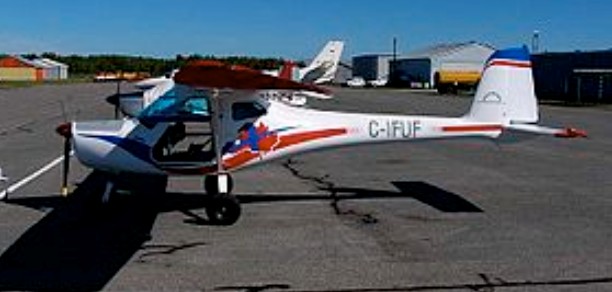
First flown in 1996, the 3X55 Trener (English: Trainer) and 3X47 Ultra are a family of ultralight civil aircraft produced in Poland by the 3Xtrim Aircraft Factory. Both are two-seat, high-wing, strut-braced monoplanes with fixed tricycle undercarriage and available only as completed aircraft. There are also 450 Ultra and 495 Ultra Plus sub-variants of the 3X47 Ultra, with gross weights adjusted for national ultralight regulations.

Former SZD sailplane engineer Adam Kurbiel designed the predecessor of 3X55, the EOL-VLA, to conform to European JAR-VLA rules. That plane was modified through the years to meet Canadian Advanced Ultralight and US Light Sport Aircraft rules. The 3X47 version is specifically for the European market to meet those standards.

The designation 3X55 means “3Xtrim Aircraft – 550 kg gross weight” while the 3X47 refers to its 470 kg gross weight.

The US light sport aircraft version of the 3X55 is known as the Navigator 600 and has a 1320 pound maximum gross take-off weight.

The European versions feature extensive structural use of carbon fibre to achieve lightness, while the 3X55 is predominantly of fibreglass construction. Otherwise the two aircraft are similar in appearance and performance.

The 3X55 powerplant options are the 80 hp (60 kW) Rotax 912UL, the 100 hp (75 kW) 912ULS or the 80 hp (60 kW) Jabiru 2200. The 3X55 can be equipped with either a three-bladed, fixed pitch Czech-made Woodcomp wood/fibreglass SR 200 propeller or an electrically adjustable Woodcomp SR 2000 propeller, with an optional constant speed unit.

The fuselage and vertical tail of the 3X55 is a one-piece structure made from fibreglass. The firewall is a Fiberfrax ceramic/aluminium sandwich. The cockpit is 47.5 inches (1.21 m) wide at the elbows. Crew access is via a door on each side of the cockpit that hinges upwards and is supported by a gas strut.

The control sticks are located conventionally in front of each seat. The standard throttle arrangement is one panel-mounted centre throttle, but a second throttle located on the left side of the panel is optional, allowing the left-seat pilot to fly with either hand on the throttle or stick.

The wings are strut-braced with a single spar and are made from fibreglass and foam with a 15.5% TsAGI.R3 airfoil. The wing has a span of 31 .5 feet and an area of 127.4 sq ft (11.84 m2), which gives it a wing loading of 9.5 lbs/sq ft at gross weight. The aircraft has removable wings, with single locking pins and quick-disconnect controls which can be easily hooked up and inspected from inside the cockpit.

The wings have conventional Frise ailerons and slotted flaps. The elevator and rudder are also conventional. Ailerons and elevator are controlled by dual centre-mounted sticks through push-pull tubes, while the rudder is controlled by cables. The rudder cables attach to the rudder by wrapping around the wide bottom diameter of the rudder itself. The pitot tube is mounted in the left-hand strut.

The flaps are operated by a ceiling-mounted flap handle with detents for 0, 15 and 30 degrees of deflection. The flaps are controlled directly with the handle attached to a flap centre-section behind the fuselage and the wing flaps plug into the flap centre-section. Flaps are normally set to 15 degrees for take-off and 30 degrees for landing.

The fuel tank is located behind the right-hand seat. The quantity can be read directly through a sight gauge behind the seat. The standard tank is 70 litres (18 US gallons) with 87 litres (23 US gallons) optional. The standard fuel is premium auto fuel, but it can run on 100LL as well. Behind the left-hand seat is a small baggage compartment, with additional baggage space above and behind both seats.

The main landing gear consists of sprung fibreglass gear legs with 5X5.00 tires as standard on graphite wheel rims. Larger 6X6.00 tires are optional. The nose gear is a single-fork design also made from fibreglass. Nose gear suspension is a compressed rubber donut system. The plane comes in one colour – white, but owners can add their own vinyl decals to finish the plane as desired.

The 3X55 first flew in 1996 and by the summer of 2006 about 60 aircraft of both types had been produced with a base price of US$99,900.
Krzysztof Wieczorek won the 16th FAI World Precision Flying Championship in 2004 and took the 3rd place in the 14th FAI World Rally Flying Championship in 2004 flying 3Xtrim aircraft. In the 17th FAI World Precision Flying Championship in 2006, 3Xtrim took the 1st (Krzysztof Wieczorek) and 3rd (Krzysztof Skrętowicz) places.

Specifications:

550 Trener
Engine: 1 × Rotax 912, 73.4 kW (98.6 hp)
Wingspan: 10.03 m (32 ft 11 in)
Length: 6.87 m (22 ft 6½ in)
Height: 2.40 m (7 ft 10¾ in)
Wing area: 12.40 sq.m (133.5 sq.ft)
Empty weight: 325 kg (717 lb)
Max. takeoff weight: 550 kg (1,212 lb)
Never exceed speed: 220 km/h (118 knots, 136 mph)
Cruise speed: 170 km/h (91 knots, 106 mph)
Stall speed: 70 km/h (38 knots, 44 mph)
Range: 750 km (405 nmi, 466 mi)
Service ceiling: 4,000 m (13,120 ft)
Rate of climb: 4.5 m/s (886 ft/min)
Crew: 1
Capacity: 1 passenger

3X55 Trainer
Engine: Rotax 912 ULS
Wing span: 9.60m / 31.5ft
Length: 6.87m / 22.5ft
Height: 2.4m / 7.9ft
Wing area: 11.84sq.m / 127.4sq.ft
Cabin width: 1.2m / 47.2in
Wing load: 46.5 kg/sq.m / 9.52lbs/sq.ft
Max. take-off weight: 550kg / 1212 lbs
Empty weight: 325 kg / 716lbs
Useful load: 225 kg / 496lbs
Fuel tank capacity std: 18.5Impg / 23.2 US gal
Never Exceed Speed (IAS) VNE: 109kts
Cruise speed max. cont. Power (IAS): 100kts
Cruise speed 75% power (IAS): 88kts
Stall speed (IAS) Vso: 39kts
Manoeuvering Speed (IAS) VA: 75kts
Maximum Flap Extended Speed (IAS) VFE full flaps: 62kts
Maximum Flap Extended Speed (IAS) VFE take-off flaps: 74kts
Maximum climb rate: 1000ft/min / 62kts IAS
Take-off distance 50ft obstacle: 918ft / 280m
Range: 388NM / 720km
3xtrim EOL-VLA

Former SZD sailplane engineer Adam Kurbiel designed the predecessor of 3X55, the EOL-VLA, to conform to European JAR-VLA rules. That plane was modified through the years to meet Canadian Advanced Ultralight and US Light Sport Aircraft rules. The 3X47 version is specifically for the European market to meet those standards.

3xtrim 450 Ultra / 3xtrim 495 Ultra Plus

The 3Xtrim is a single-engine, two-seater monoplane with braced high wing, conventional controls and fixed three-wheel landing gear. The front-mounted engine is coupled to a two-blade or three-blade (depending on version) adjustable pulling propeller. A heated and ventilated cockpit with seats in one row and a large baggage compartment make the airplane comfortable, silent and well furbished. Doors are on each side, opening upwards, and are supported in this position by gas springs. Fixed three-wheel landing gear with castoring front wheel, composite main spring and hydraulic disc brakes, allows for safe take-off and landing on all types of airport surfaces, grass included. The Ballistic Rescue System (BRS5) provides protection for the passengers and aircraft at altitudes above 30 m and speeds up to 235 kmph (145 mph). The entire aircraft structure is fabricated from composites based on epoxy resin with glass and carbon fibre, reducing necessary maintenance work to pre-flight inspection and cleaning. The aircraft fully complies with the JAR-VLA requirements and has a Type Certificate of Very Light Airplane. Flight characteristics make this aircraft suitable for primary training, cross-country, and recreation. The aircraft is also suitable for patrol flights and aerial photography. A three-year manufacturer’s warranty is standard. The aircraft is manufactured in three versions: ULA – Ultra Light Aircraft; ULA – Advanced Ultra Light Aircraft; VLA – Very Light Aircraft.

The 450 Ultra and 495 Ultra Plus are sub-variants of the 3X47 Ultra, with gross weights adjusted for national ultralight regulations.

Stall: 34 kt / 39 mph / 63 kph
Cruise: 94 kt / 109 mph / 175 kph
Vne: 117 kt / 134 mph / 216 kph
Empty Weight: 265 kg / 584 lbs
MTOW: 450 kg / 992 lbs
Take-off dist (50ft): 740 ft / 225 m

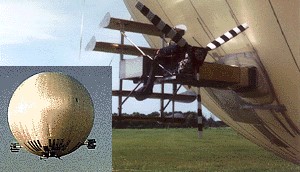
21st Century Airships SPAS 13

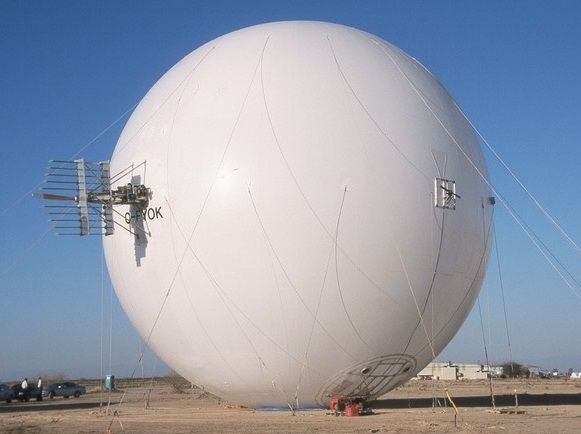
The semi-rigid helium SPAS 13 was a development of the earlier SPAS 1 and was designed to demonstrate the advantages of a spherical airship. The 43 ft (13.11 m) diameter spherical envelope is made of Spectra fabric with an inner helium containing envelope of Mylar film reinforced with Kevlar. The two-seat cockpit is internal to the envelope with panoramic windows in the envelope to provide an external view.

The SPAS 13 is powered by two 50 hp (37 kW) Rotax 503 piston engines on external struts, four vanes behind each engine are used to provide control by deflecting the thrust.

The first flight was on 13 May 1994.

Engines: 2 × Rotax 503, 50 hp (37 kW) each
Propellers: 3-bladed, 6 ft 0 in (1.83 m) diameter
Diameter: 43 ft 0 in (13.11 m)
Height: 45 ft 0 in (13.72 m) includes landing gear
Empty weight: 1,596 lb (724 kg)
Max takeoff weight: 2,403 lb (1,090 kg)
Maximum speed: 30 mph; 48 km/h (26 kn)
Cruise speed: 19 mph; 31 km/h (16.5 kn)
Crew: 1 pilot
Capacity: 1 passenger

2Si 808 / Cuyuna 808

The 2si 808 is a family of in-line three cylinder, liquid-cooled, two-stroke, dual ignition, aircraft engines that were designed for ultralight aircraft.
The basic engine was originally designed and produced by JLO of Germany and was later acquired by the AMW Cuyuna Engine Company of Beaufort, South Carolina and marketed under the Cuyuna brand name. Later the engine was marketed by Cuyuna under the Two Stroke International (2si) brand. Cuyuna no longer markets engines for aircraft use and the 808 is out of production.
The 808 is a conventional three-cylinder engine that weighs 130 lb (59 kg) in its L95 and L100 aircraft versions. The engine features dual capacitor discharge ignition, liquid cooling, fuel pump, a cast iron cylinder liner, ball, needle and roller bearings throughout. The aircraft version was offered with an optional gearbox reduction system. Starting is electric starter only.

Variants:

808 L95
Gasoline aircraft engine with three carburetors, 95 hp (71 kW) at 7000 rpm, weight 130 lb (59 kg), out of production.

808 L100
Gasoline aircraft engine with three carburetors, 100 hp (75 kW) at 7000 rpm, weight 130 lb (59 kg), out of production.

Specifications:

808L-95
Cycle: 2
No cylinders: 3
Bore: 75 mm
Stroke: 61 mm
Displacement: 808 cc
Cooling: Liquid
Ignition: Electronic
Reduction: Mechanical Integral damper
Reduction Ratio: 1.66-1 to 3.00-1
Dimensions: 710 x 465 x 390 mm
Weight: 59 kg
Max pwr: 95 hp at 7000 rpm
Max torque: 100 at 5000 rpm
Price 1998: 46,850 Fttc

808L-100
Cycle: 2
No cylinders: 3
Bore: 75 mm
Stroke: 61 mm
Displacement: 808 cc
Cooling: Liquid
Ignition: Electronic
Reduction gear: gearbox
Reduction: Mechanical Integral damper
Reduction Ratio: 1.66-1 to 3.00-1
Dimensions: 710 x 471 x 390 mm
Dry weight: 130 lb (59 kg)
Power output: 100 hp (75 kW) at 7000 rpm
Max torque: 103 at 6500 rpm
Fuel type: Minimum 92 octane
Oil system: premixed oil and fuel
Price 1998: 54,000 Fttc

2Si 690 / Cuyuna 690

The 2si 690 is a family of in-line three cylinder, liquid-cooled, two-stroke, dual ignition, aircraft engines that were designed for ultralight aircraft.
The basic engine was originally designed and produced by JLO of Germany and was later acquired by the AMW Cuyuna Engine Company of Beaufort, South Carolina and marketed under the Cuyuna brand name. Later the engine was marketed by Cuyuna under the Two Stroke International (2si) brand. Cuyuna no longer markets engines for aircraft use although the 690 was still in production as an industrial and marine engine.
The 690 is a conventional three-cylinder engine that weighs 89 lb (40 kg) in its L70 aircraft and marine versions. The aircraft engine features dual capacitor discharge ignition (single in the marine and industrial versions), reed valve porting, tuned exhaust system, three slide venturi-type carburetors, liquid cooling, fuel pumps, a cast iron cylinder liner, ball, needle and roller bearings throughout. The aircraft version was offered with an optional gearbox reduction dive system and a centrifugal clutch. The current industrial and marine version has an available gearbox with ratios of 2.04, 2.65 or 3.06:1. Starting is electric start only.

Variants:

690-L70 aircraft engine
Gasoline aircraft engine with triple carburetors, 70 hp (52 kW) at 6250 rpm, weight 89 lb (40 kg), out of production.

690L-70 industrial and marine engine
Gasoline industrial and marine engine, triple carburetors, 70 hp (52 kW) at 6250 rpm, weight 89 lb (40 kg), electric starter mounted on the accessory cover end.

690AL-70 industrial and marine engine
Gasoline industrial and marine engine, triple carburetors, 70 hp (52 kW) at 6250 rpm, weight 89 lb (40 kg), electric starter mounted on the power take-off end.

Specifications:

690-L70 aircraft engine
Type: Three-cylinder, two-stroke aircraft engine
Bore: 69.5 mm (2.74 in)
Stroke: 60 mm (2.36 in)
Displacement: 684 cc (41.7 cu in)
Length: 21.6 in (549 mm)
Width: 19.05 in (484 mm)
Height: 13.9 in (353 mm)
Dry weight: 89 lb (40 kg)
Valvetrain: reed valve porting
Ignition: Electronic
Fuel type: Minimum 92 octane
Oil system: premixed oil and fuel at 50:1
Cooling system: liquid cooled
Reduction gear: optional gearbox
Reduction: Mechanical Integral damper
Reduction Ratio: 2.04-1 to 3.06-1
Power output: 70 hp (52 kW) at 6250 rpm
Fuel consumption: 5.1 US gal/h (19.3 l/h) at 75% power
Max torque: 94 at 5250
Price 1998: US$2975

2si 500 / 540 / Cuyuna 500 / 540

The 2si 540 and 2si 500 are a family of in-line twin-cylinder, liquid-cooled, two-stroke, dual ignition, aircraft engines that were designed for ultralight aircraft.
The basic engine was originally designed and produced by JLO of Germany and was later acquired by the AMW Cuyuna Engine Company of Beaufort, South Carolina and marketed under the Cuyuna brand name. Later the engine was marketed by Cuyuna under the Two Stroke International (2si) brand. Cuyuna no longer markets engines for aircraft use although the 540 was still in production as a sport vehicle engine.
The 540 is a conventional twin-cylinder engine that weighs 90 lb (41 kg) in its L70 aircraft version. The engine features dual capacitor discharge ignition (single in the sport vehicle version), reed valve porting, tuned exhaust system, two slide venturi-type carburetors, liquid cooling, fuel pump, a cast iron cylinder liner, ball, needle and roller bearings throughout. The aircraft version was offered with an optional gearbox reduction system. Starting is electric starter or recoil starter.
The 500L85 is a special engine that was developed from the 540, by reducing the cylinder bore from 75 mm (2.953 in) to 72 mm (2.835 in). This was done to reduce the displacement to under 500 cc and allow the engine to be used for Formula 500 auto racing.

Variants:

500L-85
Gasoline sport vehicle engine for Formula 500 auto racing. Dual carburetors, 83 hp (62 kW) at 8000 rpm.

540-L70
Gasoline aircraft engine, dual carburetors, 70 hp (52 kW) at 7000 rpm, weight 90 lb (41 kg), out of production.

540L-90
Gasoline sport vehicle engine for auto racing, kart and all-terrain vehicle applications. Dual carburetors, 89 hp (66 kW) at 8000 rpm.

Specifications:

540-L70
Type: Twin-cylinder, two-stroke aircraft engine
Bore: 75 mm (2.95 in)
Stroke: 61 mm (2.40 in)
Displacement: 540 cc (32.95 cu in)
Length: 17.5 in (444.50 mm)
Width: 14.0 in (355.60 mm)
Height: 15.0 in (381.00 mm)
Dry weight: 90 lb (41 kg)
Valvetrain: reed valve porting
Ignition: Electronic
Fuel type: Minimum 92 octane
Oil system: premixed oil and fuel
Cooling system: liquid cooled
Reduction gear: optional gearbox
Reduction: Mechanical Integral damper
Reduction Ratio: 1.66-1 to 3.00-1
Power output: 70 hp (52 kW) at 7000 rpm
Max torque: 71 at 7000 rpm
Price 1998: 29,950 Fttc

2Si 460 / Cuyuna 460

The 2si 460 is a family of in-line twin-cylinder, two-stroke, single ignition, aircraft engines that were designed for ultralight aircraft.

The basic engine was originally designed and produced by JLO of Germany and was later acquired by the AMW Cuyuna Engine Company of Beaufort, South Carolina and marketed under the Cuyuna brand name. Later the engine was marketed by Cuyuna under the Two Stroke International (2si) brand. Cuyuna no longer markets engines for aircraft use although the 460 is still in production as a diesel/multifuel or gasoline industrial, marine and sport vehicle engine.

The 460 is a conventional twin-cylinder engine that weighs 59 lb (27 kg) in its F35 aircraft version. The engine features single capacitor discharge ignition, piston porting, tuned exhaust system, one or two slide venturi-type carburetors, fuel pump, a cast iron cylinder liner, ball, needle and roller bearings throughout. The aircraft version was offered with cog belt drive or a gearbox reduction system. Starting is electric starter or recoil starter.

Variants

460-F35
Gasoline aircraft engine, single carburetor, 35 hp (26 kW) at 6000 rpm, weight 59 lb (27 kg), out of production.

460-F40
Gasoline aircraft engine, single carburetor, 40 hp (30 kW) at 6500 rpm, weight 70 lb (32 kg), out of production.

460-F45
Gasoline aircraft engine, dual carburetors, 45 hp (34 kW) at 6750 rpm, weight 70 lb (32 kg), out of production.

460 MF
Diesel/multi-fuel engine for marine and industrial applications, 37 hp (28 kW) at 6000 rpm, weight 78.5 lb (36 kg) without gearbox.

460F-35
Gasoline industrial engine and sport vehicle engine for auto racing, kart and All-terrain vehicle applications, single carburetor, 35 hp (26 kW) at 6000 rpm, basic weight 55 lb (25 kg).

460FE-35
Gasoline industrial engine and sport vehicle engine for auto racing, kart and ATV applications with electric start, single carburetor, 35 hp (26 kW) at 6000 rpm, basic weight 55 lb (25 kg).

460L-50
Gasoline marine engine powering a jet pump, 50 hp (37 kW) at 6750 rpm.

Specifications

460-F35 aircraft engine
Type: Twin-cylinder, two-stroke aircraft engine
Valvetrain: piston porting
Fuel type: Minimum 92 octane
Oil system: premixed oil and fuel
Cooling system: fan cooled
Reduction gear: cog belt or optional gearbox
Bore: 69.5 mm (2.74 in)
Stroke: 60.0 mm (2.36 in)
Displacement: 455 cc (27.77 cu in)
Length: 14.5 in (368.30 mm)
Width: 16.0 in (406.40 mm)
Height: 16.0 in (406.40 mm)
Dry weight: 59 lb (27 kg)
Power output: 35 hp (26 kW) at 6000 rpm

2si Cuyuna 340 / 430 / UL-II

Cuyuna UL11-02

While developing the Pterodactyl Pfledge flying wing ultralight in the late 1970s, designer Jack McCornack experimented with a number of possible engines. Early flights used a German-made Sachs engine, but the high exchange rate and long lead times for this engine convinced him to try other options.

2si Cuyuna 340 / 430 / UL-II Article

McCornack settled on a two-stroke snowmobile engine produced by the Cuyuna Development Company as having the best potential. In 1979 He modified the engine with a crankcase extension, an additional main bearing, lowered the compression ratio using an additional head gasket and substituted a smaller 32 mm (1.26 in) Mikuni carburettor, amongst other modifications. The original snowmobile engine produced 40 hp (30 kW). Lowering the compression ratio not only de-rated the engine, but also made pull-starting easier and allowed it to run on lower-octane regular auto fuel. The resulting engine worked well, was de-rated to produce 30 hp (22 kW) at 5,500 rpm and proved reliable in service.
Citing liability concerns over producing a two-stroke engine for human-carrying aircraft applications, Cuyuna declined to produce the modified engine. Instead, Cuyuna decided that the resulting engine was different enough from the base snowmobile engine that they would supply assembled and test-run shortblocks as parts to McCornack’s company, Pterodactyl Limited, who would then complete the engines and be the manufacturer, allowing Cuyuna to continue producing snowmobile engines.
After two years of poor sales of snowmobiles, due to a dearth of snow and no lawsuits against Pterodactyl Limited regarding the engine, Cuyuna agreed to build the engines themselves.
The 430 was also produced in a reduced 2.362 in (60.0 mm) bore version called the 340. The modification reduced its displacement to 339 cc and output to 25 hp (19 kW) at 5500 rpm. The standard 430 has a bore of 2.658 in (67.5 mm).
Unit cost 1980: US$800

Variants
340D – Direct drive version, 25 hp (19 kW) at 5500 rpm, recoil starter.

340R – Reduction drive version using a belt drive system, 25 hp (19 kW) at 5500 rpm, recoil starter

430D – Direct drive version, 30 hp (22 kW) at 5500 rpm, recoil starter.

430F – Reduction drive version using a 3:1 gearbox system, dual carburetors, producing 45 hp (34 kW).

430R – Reduction drive version using a belt drive system, 30 hp (22 kW) at 5500 rpm, recoil starter

UL II – 35 hp (26 kW) version

Specifications

430D
Type: Direct drive two-stroke piston aircraft engine
Bore: 2.658 in (68 mm)
Stroke: 2.362 in (60 mm)
Displacement: 428 cc (26.11 cubic inches)
Dry weight: 65 lb (29 kg)
Designer: McCornack/Cuyuna
Fuel type: Regular auto fuel
Oil system: 40:1 premixed fuel and oil
Cooling system: fan forced air
Power output: 30 hp (22 kW)
Compression ratio: 12.5:1
Power-to-weight ratio: 0.46 hp/lb (0.76 kW/kg)