Cedar Falls
Iowa
USA
Circa 1920s built aero engines
Cedar Falls
Iowa
USA
Circa 1920s built aero engines
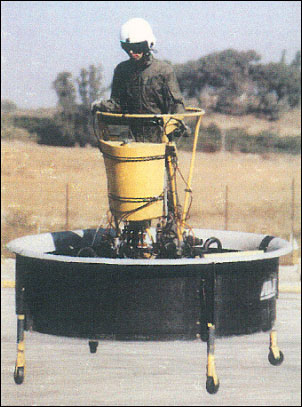
Launched as private venture, reviving concept explored by US Hiller VZ-1 in the 1950s but incorporating new features. The first (tethered) hovering flight was made on 28 August 1997; and the first free (untethered) flight (4X-BEB) 4 October 1998. Availability in kit form was originally planned for 2000.
A naturally stable VTOL platform which can be flown by persons with limited piloting experience. The Hummingbird has full engine redundancy, and can continue flying safely throughout full flight envelope after a single engine failure (initial hovering flights used approximately half of total available power). Air duct has outwards-curved lip on upper surface and diameter to length ratio of approximately 2.75:1.
Vertical speed (rise/descent) is controlled by pilot increasing or reducing rotor rpm via a twist-grip throttle with the left hand. Lateral (sideways) and longitudinal (fore/aft) motion is achieved simply by the pilot tilting his body slightly in desired direction. Maximum allowable speed is attained when pilot’s body reaches limit imposed by circular railing at waist height. The ‘Nose’ of vehicle can be turned by a small lever at pilot’s right hand.
The engines are mounted on four sides of a square gearbox which also serves as pedestal supporting the occupant. Rotors extend from the lower end of gearbox. The engines and propellers are off-the-shelf ultralight components and the circular outer duct is of graphite/epoxy construction.
Four non-retractable, free-castoring single wheels, each with shock-absorbing oleo that can withstand vertical impacts of up to 3.7m/s serve as landing gear.
Four 16.4kW Hirth F33-15A single-cylinder piston engines, each with dual ignition, own carburettor and own fuel line are coupled through torsional dampers and one-way clutches. These drive, via an AD & D gearbox equipped with a chip detector, two three-blade contrarotating propellers/rotors which are synchronised to obtain practically zero yawing moment at all throttle settings.
The Hummingbird accomodates a pilot only, standing inside tubular metal frame.
AD & D Hummingbird
Engines: 4 x Hirth F33-15A, 16.4kW
Diameter: 2.2m
Height overall: 1.9m
Empty weight: 145kg
Max T-O weight: 260kg
never-exceed speed: 74km/h
Hovering ceiling, IGE: 2440m
Hovering ceiling, OGE: 1525m
Range, standard fuel: 31km
Endurance, standard fuel: 30min
Standard fuel capacity: 19 litre
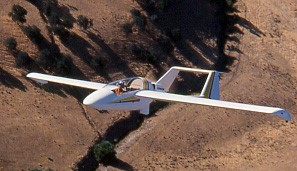
The Condor built by ADI in 1981 was a two place, powered sailplane made out of composite materials and powered by a Revmaster 2100 cc VW engine.
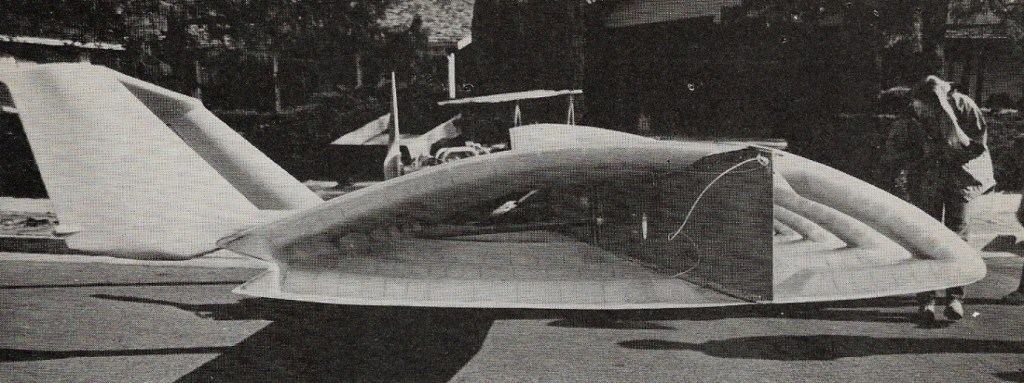
The Condor wing has foam ribbing, fibreglass covered, with a single aluminium spar.
While taking off at night, the engine stopped and the aircraft glided into a hill. The aircraft was totally destroyed.
Engine: Revmaster 2100 cc VW, 65 hp
Prop: Fahlin 34 x 58
Span: 32 ft
Length: 17 ft 11 in
Wing area: 130 sq.ft.
MAUW: 1100 lb
Useful load: 520 lb
Max speed: 95 mph est
Stall: 46 mph
Climb rate: 700 fpm

First flown in 1994, the SuperCruiser is a 4-place aircraft with a cruise speed of 190 mph and a stall speed of 59 mph. The aircraft has a length of 25.46 ft. and wing span of 29 ft. It has a gross weight of 2500 lbs. and a useful load of 1100 lbs. The prototype was powered by a Cont. IO-360ES. Lycoming engines from 160-200 HP are recommended and build time is 1200-1500 hours. Aircraft Spruce is a prime supplier for materials used in Super Cruiser kits.
Pulsar Aircraft Corp SuperCruiser
Engine: Continental IO-360, 210 hp
HP range: 80-210
Cruise speed: 175 mph
Stall: 55 mph
Range: 810 sm
ROC: 1400 fpm
Take-off dist: 900 ft
Landing dist: 1350 ft
Fuel cap: 52 USG
Weight empty: 1300 lb
Gross weight: 2400 lb
Length: 23.5 ft
Wing span: 29 ft
Wing area: 135 sq.ft
Seats: 4
Landing gear: nose
KIS TR-4 SuperCruiser
Engine: Lycoming O-360, 180 hp
Speed max: 195 mph
Cruise: 180 mph
Range: 925 sm
Stall: 50 mph
ROC: 1200 fpm
Take-off dist: 1200 ft
Landing dist: 1500 ft
Service ceiling: 17,000 ft
HP range: 160-200
Fuel cap: 200-400 lt
Weight empty: 1200 lb
Gross: 2400 lb
Height: 7.2 ft
Length: 25 ft
Wing span: 29 ft
Wing area: 135 sq.ft
Seats: 4
Landing gear: nose wheel
KIS TR-4 SuperCruiser
Engine: Continental IO-360ES
MTOW: 2500 lb
Cruise: 145 kt
KIS TR-4 SuperCruiser
Engine: Continental IO-300ES
Cruise: 165 kt
Seats: 4
Designed by Mark Brown, the 1985 Pulsar was based on Star Lite prototype N500SS.
High Tech Composites (HTC) in Oxnard, California, USA, owned by Rich Trickle, produced composite structures for other aircraft manufactures before Rich designed the two-seat KIS TR-1 (KIS stands for “Keep It Simple”). Constructed with the assistance of Vance Jaqua and Martin Hollmann, the aircraft was first presented at the EAA event at Oskosh, Wisconsin, in July 1991
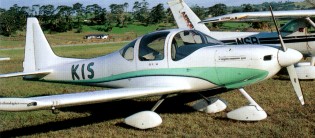
Subsequently HTC was renamed Tri-R Technologies and the composite kit plane was marketed to the homebuilt constructor. It could be fitted with a nose-wheel or tail-wheel landing gear, an 80 to 150 hp engine could be fitted, and for storage, the wings could be detached easily. The four-seat KIS Cruiser was also developed.
The KIS TD is the tail wheel version of TR-1, first flown in 1992.
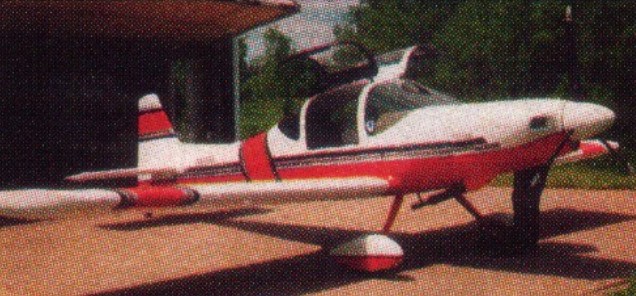
The Pulsar and Pulsar XP were designed by Mark Brown and offer great lightplane performance and economy in kit cost and operating expenses. These very popular kits are available in tailwheel or nosewheel configurations, and are easy to build and fly.
Equipped with fuel tanks in the wings, a composite spar and moulded wing skins, earlier models had a 1.5mm Finnish birch plywood/outer fibreglass matting covering foam ribs. Pulsar XP includes an in flight adjustable prop pitch option which increases 75% power cruise from 140 mph to 150 mph at 4 USG/hr, and was specifically designed for the Rotax 912. The first Pulsar XP was N912XP.
In 1996 the manufacturing rights for the Pulsar went from Aero Design to Skystar, which was then sold to become Pulsar Aircraft Corp. Pulsar Aircraft Corp. rescuing the Pulsar design from the original company’s bankruptcy. Pulsar Aircraft Corporation also keep the original legacy Pulsar design alive under the name of Pulsar XP.
Aircraft Spruce was a supplier of materials & components to Skystar for use in Pulsar kits.
Designed by Mark Brown and Solly Melyon around the same lines as the Pulsar XP, the Super Pulsar 100 was introduced by Pulsar Aircraft Corporation in August 2001. A high performance sport airplane capable of cruising at speeds over 200 mph but yet docile and safe for low time pilots. Its 2500 fpm climb will leave you breathless and it’s docile and slow flight stability lets you land on short fields. The Super Pulsar was equipped with 38 gallon fuel capacity for seven hours of endurance and 1250 mile range.
In 2001 the Pulsar Aircraft Company (formed in 1999) acquired the design and production rights of Tri-R, while the latter still produced the composite parts. The two-seat KIS TR-1 was re-designated Pulsar 150, while the KIS TR-4 Cruiser became the Pulsar Super Cruiser. In 2005 all aircraft production was transferred to Ilopango, El Salvador.
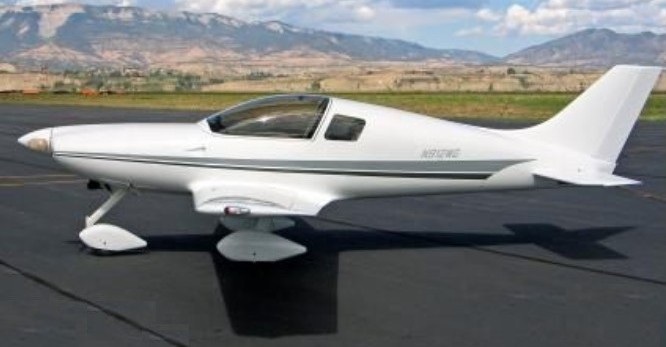
K150 / KIS TR-1
Engine: 100hp Aeromax
Wingspan: 23’0″
Length: 22’0″
Useful load: 700 lb
Max speed: 175 mph
Cruise: 160 mph
Stall: 52 mph
Range: 800 mi
Seats: 2
Taildragger or tri-gear
detachable wings
Pulsar
Engine: Rotax 582, 66 hp
Speed max: 160 mph
Cruise: 130 mph
Range: 500 sm
Stall: 45 mph
ROC: 1000 fpm
Take-off dist: 800 ft
Landing dist: 800 ft
Service ceiling: 15,000 ft
Fuel cap: 17 USG
Weight empty: 460 lb
Gross: 1000 lb
Height: 6.3 ft
Length: 19.5 ft
Wing span: 25 ft
Wing area: 80 sq.ft
Seats: 2
Landing gear: nose or tail wheel
Pulsar XP
Engine: Rotax 912, 80 hp
Prop: GSC Wood, 60 in
Speed max: 160 mph
Cruise: 140 mph
Range: 600 sm
Stall: 46 mph
ROC: 1200 fpm
Take-off dist: 800 ft
Landing dist: 800 ft
Service ceiling: 15,000 ft
Fuel cap: 2 x 10 USG
Useable fuel: 19 USG
Service ceiling: 15,000 ft
Weight empty: 630 lb
Gross: 1200 lb
Useful load: 533 lb
Wing Loading: 13.25 lb/sq.ft
Wing Power loading: 13.25 lb/hp
Height: 6.3 ft
Length: 19.5 ft
Wing span: 25 ft
Wing area: 80 sq.ft
Seats: 2
Landing gear: nose or tail wheel
Takeoff Roll: 800 ft
Landing Roll: 800 ft
Trim: Full electric
Brakes: Matco Hydraulic Disk
Super Pulsar 100
Engine: Pulsar Power Rotax , Jabiru, or Continental
Empty Weight: 340 kg / 750 lb
MTOW: 635 kg / 1400 lbs
Stall: 48 kt / 55 mph / 89 kmh
Cruise: 181 kt / 208 mph / 335 kmh
VNE: 191 kt / 220 mph / 354 kmh
Climb Ratio: 2200 ft/min / 11 m/s
Take-off dist (50ft obstacle): 500 ft / 152 m
Landing dist (50ft obstacle): 800 ft / 244 m
Pulsar Aircraft Corp Super Pulsar 100
Engine: Continental IO-240, 100 hp
Cruise: 165 mph
Range: 920 sm
Stall: 63 mph
ROC: 1700 fpm
Take-off dist: 600 ft
Landing dist: 800 ft
HP range: 100-125
Fuel cap: 38 USG
Weight empty: 820 lb
Gross: 1400 lb
Length: 20 ft
Wing span: 25 ft
Wing area: 80 sq.ft
Seats: 2
Cockpit width: 43 in
Landing gear: nose or tail wheel
KIS TR-1 / Pulsar 150
Engine: Continental IO-240, 125 hp
Speed max: 195 mph
Cruise: 170 mph
Range: 750 sm
Stall: 55 mph
ROC: 1100 fpm
Take-off dist: 1200 ft
Landing dist: 1300 ft
Service ceiling: 17,000 ft
HP range: 80-125
Fuel cap: 34 USG
Weight empty: 850 lb
Gross: 1450 lb
Height: 6 ft
Length: 22 ft
Wing span: 23 ft
Wing area: 88 sq.ft
Seats: 2
Landing gear: nose wheel
Pulsar Aircraft Corp Pulsar 150
Engine: Lycoming, 125 hp
Cruise: 175 mph
Range: 810 sm
Stall: 55 mph
ROC: 1500 fpm
Take-off dist: 750 ft
Landing dist: 1100 ft
HP range: 80-160
Fuel cap: 34 USG
Weight empty: 890 lb
Gross: 1450 lb
Length: 22 ft
Wing span: 28 ft
Wing area: 88 sq.ft
Seats: 2
Cockpit width: 42 in
Landing gear: nose or tail wheel
KIS TD
Engine: Lycoming O-235-C1B, 108 hp
HP range: 80-125
Speed max: 180 mph
Cruise: 165 mph
Range: 750 sm
Stall: 55 mph
ROC: 1300 fpm
Take-off dist: 600 ft
Landing dist: 1200 ft
Service ceiling: 17,000 ft
Fuel capacity: 21 USG
Weight empty: 812 lb
Gross: 1450 lb
Height: 6.17 ft
Length: 22 ft
Wing span: 23 ft
Wing area: 88 sq.ft
Seats: 2
Landing gear: tail wheel.
Pulsar II-912
Engine: Rotax 912, 80 hp
Speed max: 150 mph
Cruise: 150 mph
Range: 1000 sm
Stall: 49 mph
ROC: 1200 fpm
Take-off dist: 800 ft
Landing dist: 800 ft
Service ceiling: 15,000 ft
Fuel cap: 28 USG
Weight empty: 630 lb
Gross: 1200 lb
Height: 6.3 ft
Length: 19.5 ft
Wing span: 25 ft
Wing area: 80 sq.ft
Seats: 2
Landing gear: nose
Pulsar II-914 Turbo
Engine: Rotax 914 Turbo, 115 hp
Speed max: 180 mph
Cruise: 180 mph
Range: 900 sm
Stall: 49 mph
ROC: 2000 fpm
Take-off dist: 500 ft
Landing dist: 800 ft
Service ceiling: 17.500 ft
Fuel cap: 17 USG
Weight empty: 660 lb
Gross: 1200 lb
Height: 6.8 ft
Length: 20 ft
Wing span: 25 ft
Wing area: 80 sq.ft
Seats: 2
Landing gear: nose
Pulsar Aircraft Corp Pulsar III
Engine: Rotax 912, 80 hp
HP range: 80-120
Speed max: 150 mph
Stall: 50 mph
Cruise: 150 mph
Range: 810 sm
ROC: 1800 fpm
Take-off dist: 600 ft
Landing dist: 800 ft
Fuel cap: 28 USG
Weight empty: 650 lb
Gross: 1200 lb
Length: 20 ft
Wing span: 25 ft
Wing area: 80 sq.ft
Seats: 2
Landing gear: nose or tail
Skystar Aircraft Pulsar
Engine: Rotax, 80 hp
Wing span: 7.62 m
Wing area: 7.44 sq.m
MAUW: 544 kg
Empty weight: 280 kg
Fuel capacity: 106 lt
Max speed: 240 kph
Cruise speed: 225 kph
Minimum speed: 79 kph
Climb rate: 6.1 m/s
Seats: 2
Kit price (1998): $17,950
Tri-R Technologies Kis
Wing span: 7 m
Wing area: 8.1 sq.m
Engine: Continental / Lycoming
MAUW: 657 kg
Empty weight: 385 kg
Fuel capacity: 131 lt
Max speed: 280 kph
Cruise speed: 270 kph
Minimum speed: 88 kph
Climb rate: 5 m/s
Seats: 2
Fuel consumption: 22 lt/hr
Kit price (1998): $16,900
Kis
Engine: Limbach L2000, 80hp
Wingspan: 23’0″
Length: 22’0″
Useful load: 520 lb
Max speed: 150 mph
Cruise: 135 mph
Stall: 55 mph
Range: 600 mi
Seats: 2
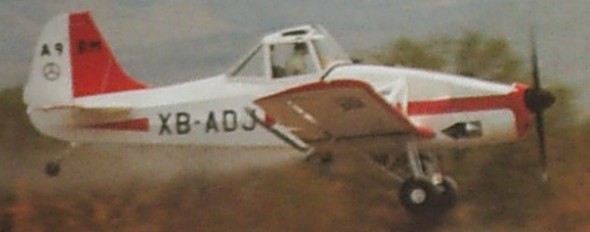
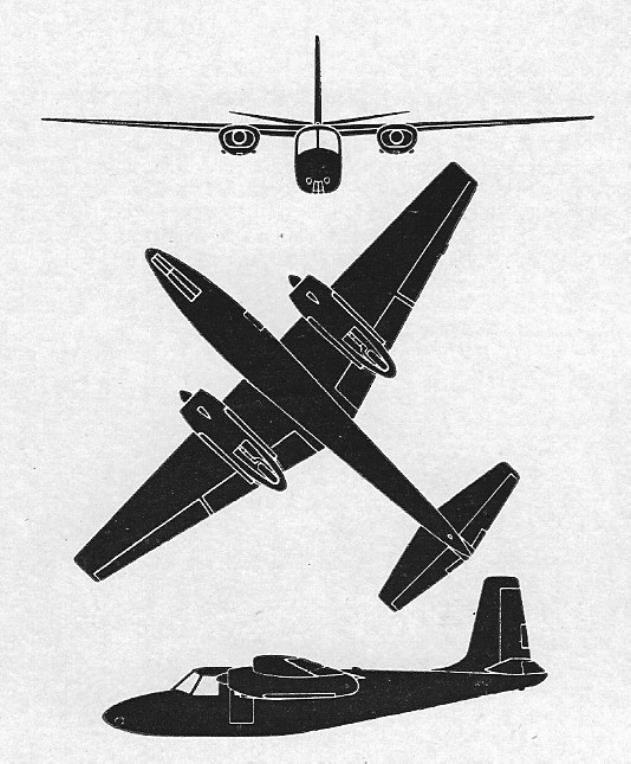
With an agreement between Industrias Unidas SA of Mexico and Rockwell International, Aeronautica Agricola Mexicana SA (AAMSA) was formed in 1971 to take over from Rockwell manufacture of the Aero Commander Quail Commander and Sparrow Commander agricultural aircraft. They had identical airframes but differed mainly by engine fit. The Sparrow Commander was powered by a 235 hp (175 kW) Lycoming O-540-B2B5 engine, while the Quail was fitted with the more powerful IO-540 engine. Both the Sparrow Commander and Quail Commander were available with liquid spray or dust disperdsal gear, or with a quick change combination dust or spray unit. Production of both types ended in the USA in 1970.
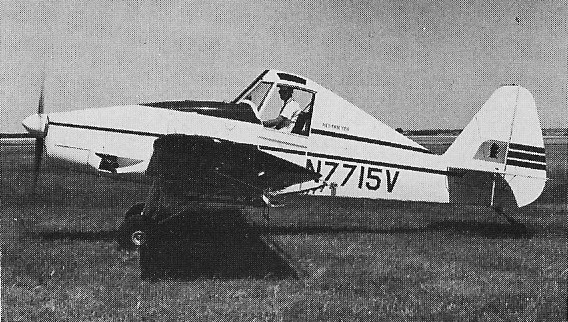
Construction of the Sparrow Commander continued in Mexico, as the AAMSA Sparrow. Only very small numbers had been built by 1975, when production was terminated. Only spares were manufactured in Mexico by AAMSA.
Manufacture then switched to the Quail Commander in 1971, designated A9B-M Quail. 101 A9B were built in Mexico, and by January 1982 26 A9B-M had been built.
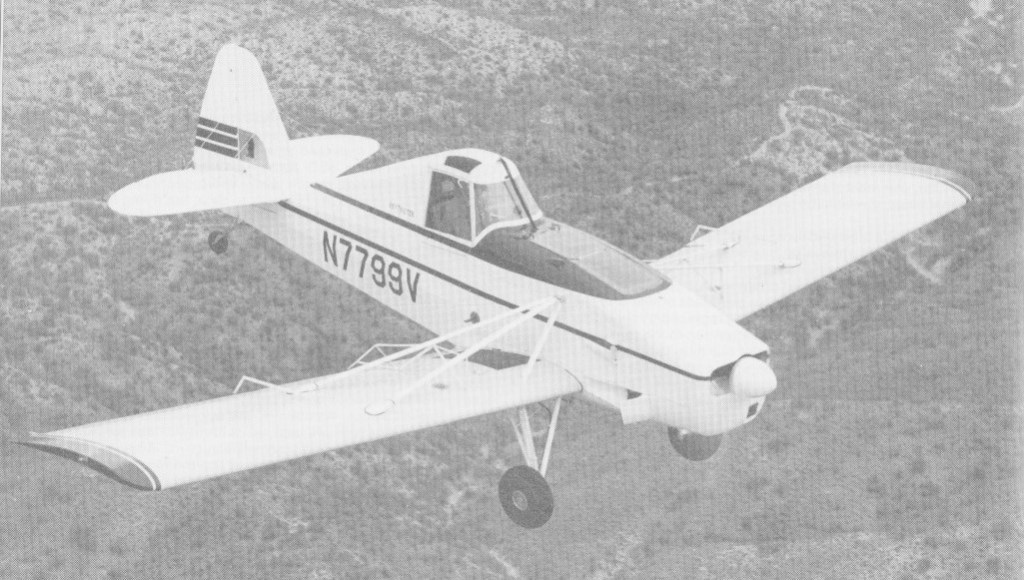
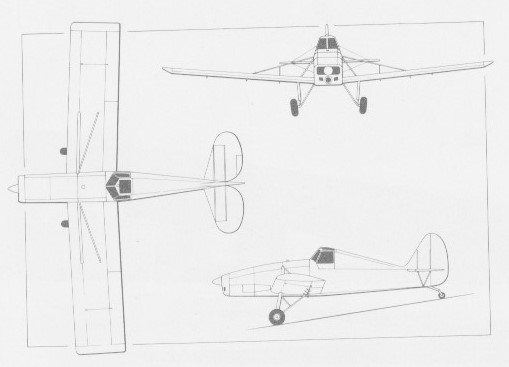
The Quail was a braced low-wing monoplane of composite construction. Its wings were based on wooden spars, with metal leading-edge skins and the remainder of the structure fabric covered; fuselage and tail unit were steel tube structures with fabric covering. The wings are Clark Y airfoil. The non-retractable tailwheel had shock absorbtion. The engine had a fixed pitch or optional variable-pitch propeller. The Quail had an enclosed cabin with a steel-tube overturn structure, cable cutters on the landing gear and windscreen, a cable deflector between the canopy and the tail fin, and proivision for avionics and night flying equipment. A 22.5 cu.ft (0.64 cu.m) glassfibre/polyester chemical hopper was fitted as standard with a capacity of 170 USG (643 lt) of liquid or 1200 lb (545 kg) of dry powder chemicals.
The Quail was manufactured in component form at the Industrias Unidas industrial complex at Pasteje in Mexico for assembly and marketing by its associated Aircraft Parts and Development Corp. in Laredo, Texas. By 1978 43 Quails had been built.
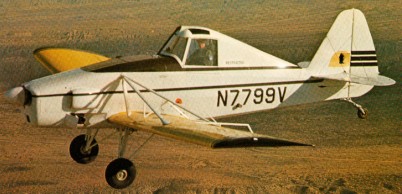
Sparrow Commander
Engine: Lycoming O-540-B2B5, 235 hp (175 kW)
Wingspan: 34 ft 9 in / 10.59 m
Length: 23 ft 6 in / 7.16 m
Empty weight: 1600 lb / 726 kg
Max payload: 1400 lb / 635 kg
MTOW (Agricultural): 3400 lb / 1542 kg
Max cruise 75% / 3000 lb / 1260 kg: 91 kt / 105 mph / 169 kph
Max ROC SL (Agricultural): 650 fpm / 198 m/min
Service ceiling (Agricultural): 14,000 ft / 4265 m
Range max cruise (Agricultural): 260 nm / 300 mi / 483 km
Seats: 1
Hopper capacity: 22.5 cu.ft / 0.64 cu.m / 170 USGal / 643 lt
NA Rockwell Quail Commander
Engine: Lycoming IO-540-G1C5, 290 hp.
Wing span: 34 ft 9 in / 10.59 m
Length: 23 ft 6 in / 7.16 m
Height: 7 ft 7 in / 2.31 m
Max TO weight: 3600 lb / 1633 kg
Max level speed: 120 mph / 193 kph
Hopper capacity: 210 USG / 795 lt
Ag payload: 1600 lb /726 kg
AAMSA A9B-M Quail
Engine: Avco Lycoming IO-540-K1A5, 300 hp.
Wing span: 34 ft 9 in / 15.76m
Length: 24 ft 0 in / 10.89m
Height: 7 ft 8 in / 3.48 m
Wing area: 182 sq.ft / 16.91 sq.m
Empty weight: 1800 lb / 816 kg
MTOW: 3800 lb / 1724 kg
Payload: 1600 lb / 725 kg
Max level speed: 120 mph / 193 kph / 104 kt
Normal operating speed: 90-100 mph / 145-161 kph
ROC: 850 fpm / 259 m/min
Service ceiling: 16,000 ft / 4875 m
Range 50%: 300 sm / 483 km / 260 nm
Hopper capacity: 28.5 cu.ft / 0.81 cu.m / 210 USG / 795 lt
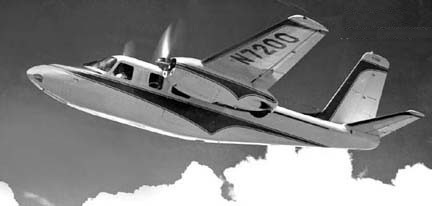
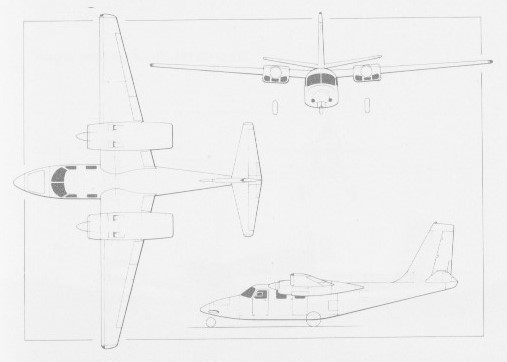
In 1958 the first pressurised Aero Commander was produced as the 720 Alti-Cruiser. An improved 680-E as the world’s first certificated, pressurized, non-airline business plane.
With extended wing, refrigerated air conditioning, Lear autopilot, they sold for $183,750.
With a pressurisation differential of only 2.3 psi and a loss of 300 lbs of payload compared to the non-pressurised version, the 680E, the 720 model was a flop in the marketplace with only thirteen sold. Production of the 720 ceased in 1960.
Engines: 2 x GSO 480-B1A6, 340hp
TBO: 1,400 hr
Wingspan: 47’0″
Length: 35’5″
Useful load: 2600 lb
Max speed: 255 mph
Cruise: 226 mph
Stall: 71mph
Range: 1550 mi
Ceiling: 25,360′
Seats: 4-6
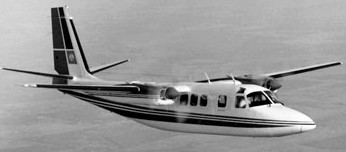
The Rockwell Commander 685 was a turbocharged high-performance piston-powered airplane designed to meet the business requirements of room and speed normally found in propjet aircraft. The seven to nine place 685 is powered by twin turbocharged 435-hp Continental engines with Hartzell constant-speed full feathering three-blade props. It can cruise at speeds of 255 mph at 24,000 feet. Its cabin can be arranged in no less than 12 different ways and can maintain sea level cabin pressure at altitudes up to 9,000 feet (4.2 psi differential). The Commander’s high wing, sturdy landing gear, and 75 knot stall speed allow it to operate from short unimproved strips. With 322 gallons of fuel, the 685 has a range of 1,731 miles with a 45-minute reserve. Its simple fuel system requires no crossfeeding. All fuel feeds into a central fuselage tank.
The 685 / 680FL, Courser Commander (ATC 2A4) first flew on 29 December 1962. It sold only in small numbers and was cancelled in late 1969.
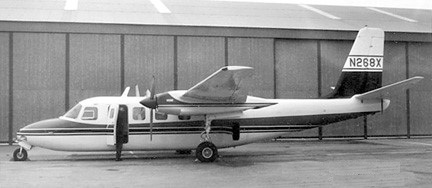
685
Engines: 2 x Continental GTSIO-¬520-K, 435hp
MAUW: 9000 lbs.
Gross weight: 9,000 lb
Empty weight: 6,021 lb
Fuel capacity: 250-322 USG
Seats: 9
Top speed: 279 mph.
Cruise speed: 256 mph
Stall speed: 86 mph
Initial climb rate: 1,490 fpm
Range: 976-1,284 sm
Ceiling: 27,500 ft
Takeoff dist (50ft): 1,943 ft
Landing distance (50ft): 2,312 ft
Twin Commander 685A
Gross weight: 11,200 lb
Empty weight: 7192 lbs
Useful load: 4008 lb
Seats: 9
Rate of Climb: 2802 fpm
Rate of Climb, SE: 985 fpm
Max Cruise Speed, FL290: 303 kts
680FL, Courser Commander
Engines: 2 x 320hp Lycoming GSO-540-B1A/-B1C
Wingspan: 49’6″
Length: 35’1″
Seats: 5-7
685 / 680-FL
Engines: 2 x 435hp Lycoming GTSIO-520F
Wingspan: 49’3″
Length: 41’6″
Cruise speed: 225 mph
Stall: 85 mph
Range: 1160 mi
Seats: 4-6
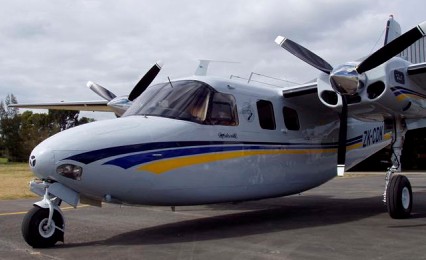
Appearing circa 1970, the Aero Commander was under ATC 2A7 and A3SW.
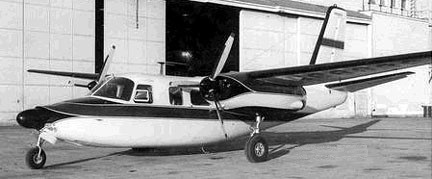
Two civil 680 went to the USAF as U-4B, 55-4647 and 55-4648, and four to Army, 56-4023 to 56-4026, later becoming U-9C.
The US Army tested electronics systems with the one NL-26D, 57-6531, and tested side-looking radar (SLAR) with RL-26D 57-6183 and 57-6184, plus three modified from L-26C. They later became NL-9D and RU-9D. Two more were built, but destroyed in pre-delivery accidents.
Aero Commander 680 Super in production in late 1955.
The Aero Commander 680-E (ATC 2A4) appeared in 1958.
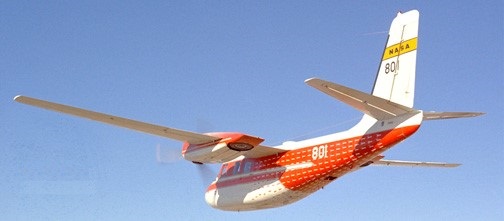
The 680F first appeared in 1964.
First flown on 31 December 1964, the first turbo-prop Commander, the 680T, appeared in 1966. The 680T was to all intents and purposes, a turbine-engined edition of the pressurised Grand Commander, the nine seat 680FLP.
The 1967 680V featured picture windows and clamshell gear doors.
The 680W appeared in 1968.
The 1969 680T Turbo II, Hawk Commander ATC (2A4) was priced at $369,500.
680
Engines: 2 x 290hp Lycoming IO-540
Wingspan: 34’3″
Length: 34’10”
Useful load: 2075 lb
Max speed: 260 mph
Cruise speed: 250 mph
Stall: 77 mph
Range: 1400 mi
Ceiling: 22,000′
680-E
Engines: 2 x 320hp Lycoming GSO-480B-A6
Wingspan: 49’6″
Length: 35’1″
Gross wt: 7500 lb
Max speed: 255 mph
Cruise speed: 226 mph
Stall: 85 mph
Range: 1400 mi
Seats: 4-6
680F
Engines: 2 x Lycoming IGSO 540, 380 hp.
TBO: 1,200 hr.
680T
Engine: 2 x 575hp AiResearch TPE-331 (605hp TPE-331-43 in 1965)
680T Turbo II, Hawk Commander
Engines: 2 x 500hp Garret AiResearch TPE-331
Wingspan: 44’0″
Length: 43’0″
Useful load: 3935 lb
Max speed: 290 mph
Cruise speed: 268 mph
Stall: 94 mph
Range: 1490 mi
Ceiling: 25,600′
Seats: 7-9
680V
Engines: 2 x TPE-331-43BL
Gross wt: 9400 lb
681B Turbo Commander
Wingspan: 44’1″
Length: 42’11”
Max speed: 390 mph
Cruise speed: 278 mph
Range: 1315 mi
MR.RPM Turbo 800 / Aero Commander 680F
Engines: 2 x Lycoming IO-720-B1A, 400 hp
Seats: 7
Wing loading: 31.4 lb/sq.ft
Pwr loading: 10 lb/hp
Max TO wt: 8000 lb
Empty wt: 4841 lb
Equipped useful load: 2800 lb
Service ceiling: 31,000 ft
Payload max fuel: 1462 lb
75% cruise: 226 kt
Range max fuel/ 75% cruise: 980 nm/4.3 hr
55% cruise: 200 kt
Range max fuel / 55% cruise: 1130 nm/ 5.7 hr
Vmc: 78 kt
Stall: 67-76 kt
1.3 Vso: 87 kt
ROC: 1390 fpm
SE ROC: 262 fpm @ 100 kt
SE ceiling: 14,800 ft
Fuel cap: 1338 lb
Min field length: 1972 ft
MR.RPM Turbo 800L / Aero Commander 680FL
Engines: 2 x Lycoming IO-720-B1A, 400 hp
Seats: 8-11
Wing loading: 33.3 lb/sq.ft
Pwr loading: 10.6 lb/hp
Max TO wt: 8500 lb
Empty wt: 5541 lb
Equipped useful load: 2600 lb
Service ceiling: 31,000 ft
Payload max fuel: 1262 lb
Vmc: 78 kt
Range max fuel/ 75% cruise: 980 nm/4.3 hr
Stall: 72-75 kt
Range max fuel / 55% cruise: 1130 nm/ 5.7 hr
1.3 Vso: 94 kt
75% cruise: 226 kt
55% cruise: 200 kt
ROC: 1250 fpm
SE ROC: 201 fpm @ 100 kt
SE ceiling: 12,800 ft
Min field length: 2350 ft
Cabin press: 3.2 psi
Fuel cap: 1338 lb
L-26C
1956 civil 680
Engines: 2 x 320hp supercharged Lycoming GSO-480B
Wingspan: 44’0″
Max speed: 255 mph
Cruise: 198 mph
Range: 1500 mi
Ceiling: 22,900′
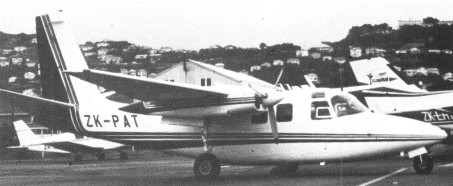
The first of the Commander twins was the 1958 model 500 with 230hp Lycoming O-540 engines. In 1960 the model 500A with Continental IO-470-M engines, redesigned nacelles, structural mods, new landing gear, and higher gross weight, was introduced. Both operated under 6A1.
Aero Design & Engineering 500 / 520 / 560 / Shrike Commander Article
The 500 was developed into the six seat Aero Commander 520 (the 520 indicating the total horsepower), certificated January 30,1952 and selling forty-three in that same year of production. From 1956 USAF and Army version of 520, 560, and 680 were designated L-26. All redesignated U-9 in 1962.
Approximately 150 model 520 were built. The 520 sold for $45,000, $66,000 in 1954. An upgrading of the powerplants followed in 1954, from the 260 hp Lycoming GO-435 engines of the Commander 520 to the 295 hp Lycoming GO-480 engines of the 560 in 1954. Gross weight lifted by 500 lbs to the 6,000 of the Commander 560 vertical tail surfaces were slightly swept. Approximately 150 model 560A were built with swept vertical tail, increased gross weight, and structural mods.
Three civil 520 went to the US Army, 52-6217 to 52-6219, as YL-26, later becoming U-9B.
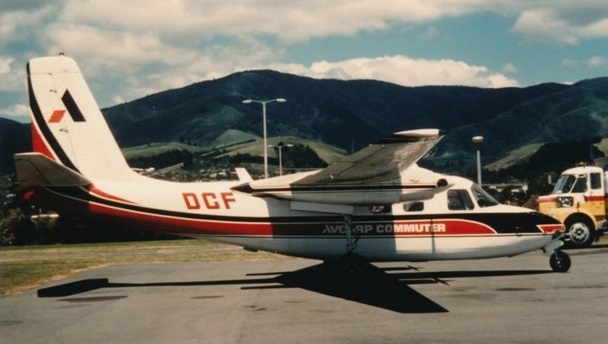
The 1960 model 500B, also under 6A1 featured Lycoming IO-540-B1A5 engines and a gross weight of 6750 lb.
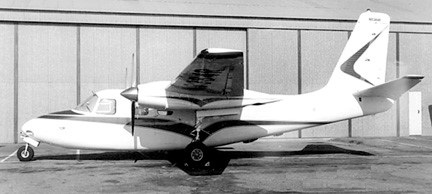
President Eisenhower took office and refused to use the “Independence”, Harry Truman’s airplane, as his Air Force One. Instead, he ordered a Lockheed Constellation as his primary aircraft. But for short trips into and out of his farm grass strip near Gettysburg, PA, the President needed something to operate from the short and unimproved landing area. Helicopters were not yet reliable enough. Driving took too long and snarled traffic. He told his chief pilot, Col. William Draper, to conduct an evaluation. His mission was to find a plane to go back and forth to the farm, and to make other short trips. The Colonel chose one of the most popular executive transports of the day, the Aero Commander 560A, and the Air Force ordered several for the President’s use. The Air Force designated the planes the L-26. Himself a pilot, Ike often took the controls of the Aero Commander, enjoying the opportunity to fly.
The fourteen U-4B (redesignated from L-26B) plus two L-26C (55-4647 and 55-4648) were the first lightplanes to earn the designation “Air Force One” and painted in the now standard blue-and-white color scheme.
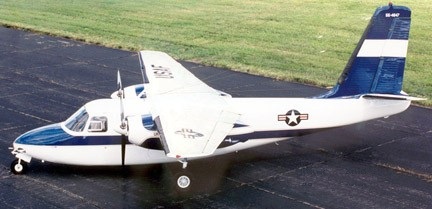
A fleet of six Commander L-26’s were assigned to the White House and used exclusively by President Eisenhower, Vice President Nixon, Cabinet and government officials, Secret Service, family and White House staff. This aircraft, 55-4638, was one of those original six. Two more were added a year later with turbocharged engines and assigned exclusively for Presidential use. This plane was used daily in the famous Gettysburg Airlift in 1955 and 1956, as well as the Greenbriar Airlift that hauled Ike along with the President of Mexico to North Carolina. Another seven L-26 aircraft were based in the Washington DC area and assigned to military units.
The sole USAF YL-26A 55-3815 of 1955 was a civil 560, later becoming U-4A.
A total of 34 L-26B were produced from 1952. Fourteen went to USAF; 55-4634 to 55-4646, and 57-1791, later becoming U-4B.
Approximately 70 model 560E were built with wingtip extensions and gross weight increase.
95 of the Aero Commander 500 were built.
The Aero Commander 500A and 500B later known as 500U, then Shrike Commander.
The 560F was a 1960 model.
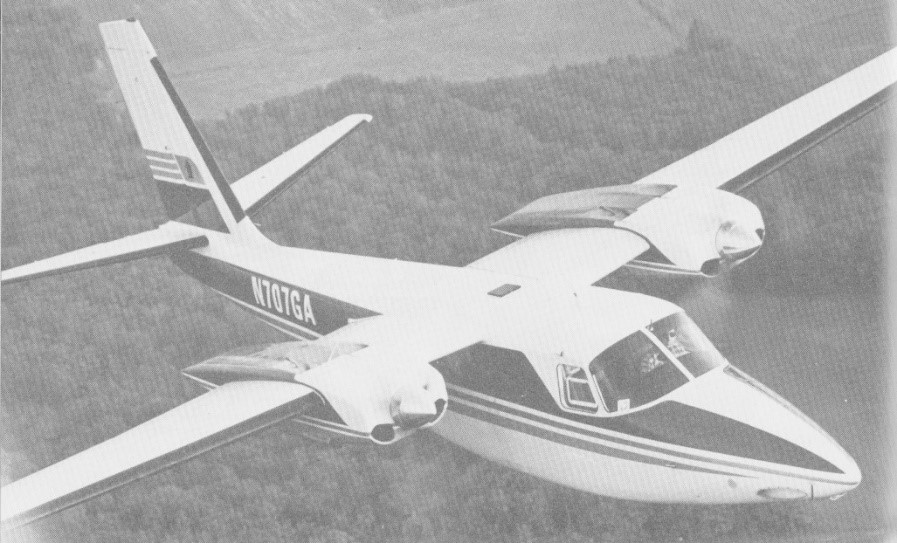
The 1968 500S (6A1) incorporated more powerful engines, a redesigned pointed nose, some structural strengthening, pilot’s door and other equipment changes. Engines can be run at full throttle without restriction. All fuel tanks are interconnected, so no tank selection or cross-feeding is required. One-engine flight is managed without any particular fuss.
The 1964 500-U / Shrike Commander / Shrike Esquire (6A1) was the only twin in its class approved for limited aerobatics, as demonstrated by Bob Hoover in tours. Base price was $103,950.
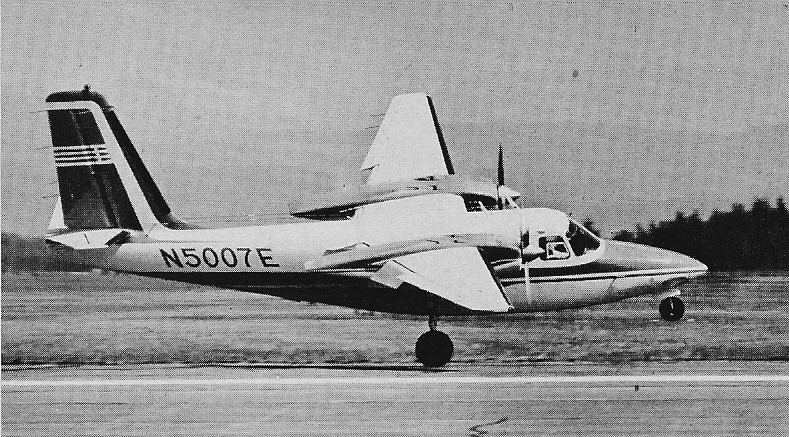
One distinguishing feature of the Rockwell Shrike is its eyebrow windows for improved cockpit visibility. The Shrike was certified in the utility category partly because the landing gear was designed for use on aircraft nearly twice the Shrike’s gross weight making landings on unimproved airstrips easy. The Shrike Commander 500S production was terminated 1980.
500
Engines: 2 x Lycoming O-540-A1A6, later -A2B, 230-hp
Seats: 6
Gross wt: 6,000 lb
500
Engines: 2 x Lycoming, 250-hp
Seats: 5-7
Gross wt: 6,000 lb
Empty wt: 3,850 lb
Fuel capacity: 156 USG
Top speed: 218 mph
Cruise speed: 205 mph
Stall speed: 63 mph
Initial climb rate: 1,400 fpm
Ceiling: 22,500 ft
Range: 1,100 sm
Takeoff distance (50ft’): 1,250 ft
Landing distance (50ft): 1,350 ft
500A
Engines: 2 x Continental IO-470, 260 hp
Seats: 6-7
Gross wt: 6,250 lb
Empty wt: 4,255 lb
Fuel capacity: 156 USG
Top speed: 228 mph
Cruise: 218 mph
Stall: 62 mph
Initial climb rate: 1,400 ft
Ceiling: 22,500 ft
Range: 1,225 sm
Takeoff distance (50ft): 1,210 ft
Landing distance (50): 1,150 ft
Colemill Super 300 / Aero Commander 500A
Engines: 2 x Continental IO-520-E, 300 hp
Seats: 7
Wing loading: 25.6 lb/sq.ft
Pwr loading: 10.9 lb/hp
Max TO wt: 6530 lb
Empty wt: 4200 lb
Equipped useful load: 1971 lb
Payload max fuel: 1035 lb
Range max fuel/ 75% cruise: 1148 nm/4.9 h.
75% cruise: 205 kt
Vmc: 85 kt
Stall: 72 kt
1.3 Vso: 94 kt
ROC: 1800 fpm
SE ROC: 290 fpm @ 101 kt
SE ceiling: 6,700 ft
Min field length: 2200 ft.
Fuel cap: 936 lb.
500B
Engines: 2 x Lycoming IO-540-B1A5, 290 hp.
TBO: 1,200 hr.
Gross weight: 6750 lb
500S
Engines: 2 x Continental, 290 hp.
Shrike Commander
Engines: 2 x Lycoming IO-540-E1B5, 290-hp
Wing span: 49 ft 0.5 in / 14.95 m
Length: 36 ft 9.75 in / 11.22 m
Gross wt: 6,750 lb / 3062 kg
Empty wt: 4,608 lb / 2090 kg
Top speed: 215 mph
Cruise speed 75% 9000ft/2745m: 203 mph / 176 kt / 326 kph
Stall speed: 68 mph
Initial climb rate: 1,340 fpm / 409 m/min
Range at 178 kt / 205 mph / 330 km, 45min res: 798 miles / 698 nm / 1525 km
Service ceiling: 19,400 ft / 5913 m
TO dist (50ft): 1,915 ft
Landing distance (50ft): 2,235 ft
Fuel capacity: 156 USG
Seats: 4-7
Cabin length: 10 ft 7.5 in / 3.24 m
Cabin width: 4 ft 4 in / 1.32 m
Cabin height: 4 ft 5 in / 1.35 m
Cabin capacity: 177 cu.ft / 5.01 cu.m / 500 lb / 227 kg
500U
Engines: 2 x Lycoming O-540-A1A6, later GO-480-C1B6, 290-hp
Wingspan: 49’1″
Length: 36’7″
Gross wt: 6,750 lb
Empty wt: 4,635 lb
Fuel capacity: 156 USG
Top speed: 230 mph
Cruise speed: 215 mph
Stall speed: 68 mph
Ceiling: 19,400 ft
Initial climb rate: 1,340 ft
Range: 1,230 sm
Takeoff distance (50ft): 1,375 ft
Landing distance (50ft): 1,235 ft
Seats: 4-7
520
Engines: 2 x Lycoming GO-435-A, 260 hp
Wingspan: 43’10”
Length: 32’0″
Useful load: 1318 lb
Max speed: 181 mph
Cruise: 165 mph
Stall: 56 mph
Range: 700 mi
Seats: 8
560
Engines: 2 x Lycoming GO-480, 295 hp
Span: 44 ft
Wing area: 242 sq.ft
Length: 34 ft 2.5 in
Height: 14 ft 9 in
MAUW: 6000 lb
560A
Engine: 270 hp Lycoming GO-480-B
Span: 44 ft
Wing area: 242 sq.ft
Length: 34 ft 2.5 in
Height: 14 ft 9 in
Empty weight: 3970 lb
Loaded weight: 6000 lb
Max speed: 209 mph at SL
Cruise: 200 mph at 10,000 ft
ROC: 1400 fpm
Range: 1048 mi
Seats: 5-7
580-E
1957
Engines: 275hp Lycoming GO-480D.
560F
Engines: 2 x Lycoming GSO-540, 340 hp.
YL-26 / U-9B
1952 Civil 520
Engines: 2 x 260hp Lycoming GO-435C
YL-26A
Civil 560
L-26B / U-4B
1952 Civil 560-A
Engines: 2 x 270hp supercharged Lycoming GSO-480
Wingspan: 49 ft
Length: 36 ft 9 in
Height: 14 ft 6 in
Range: 1,078 mi