Aero Gare Sea Hawk

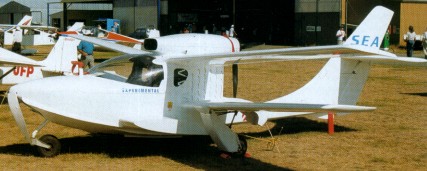
Three years of design work and almost eighteen months construction by Aero Gare of California saw two prototypes constructed, and resulted in flight testing in 1985. A Sea Hawk wing kit, assembled and static load tested, failed in excess of 9.5G loading. Analysis revealed deficiencies in construction technique with changes resulting in a wing capable of withstanding loads in excess of 10G’s without weight penalty.
The Sea Hawk was designed from the beginning to utilize composite construction. The Sea Hawk’s unusual biplane appearance has not detracted from its popularity with 150 kits sold in three months from release date.
The design has the ability to use many different engines in the 100 to 160hp range.

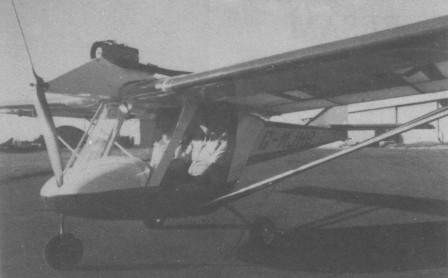
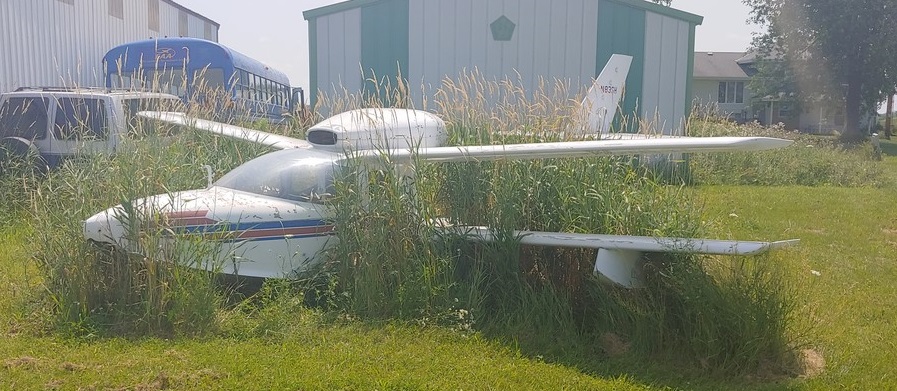
Tim Good was at AirVenture 2019 and spotted the original prototype Sea Hawk by Garry LeGare hidden behind a garage just off Ripple Ave near Camp Scholler.

prototype Sea Hawk          courtesy Tim Good

Engine: 100-160 hp
Gross weight: 1600 lb
Empty weight: 850 lb
Fuel capacity: 70 USG
Wingspan: 24 ft
Length: 21 ft
Height: 76 in
Cruise: 120 kt
Stall: 42 mph
Climb rate: 1200 fpm
Ceiling: 18,000 ft
Takeoff distance: 500 ft
Landing distance: 600 ft
Range: 1320 sm

Aero-Flight Streak

AFA-3 Streak-165

The Streak two-seat all-metal monoplane was developed by the Aero-Flight Aircraft Corporation of California in three versions which were similar apart from fuel capacities and engines.

Dec 60

Designed by James Nagamatsu (ex-Curtiss Co), the cost was $3,995. Two were built, including NX92846. NX92846 was repowered at Long Beach in Oct 1947 with 125hp Continental C-125 as AFA-2, and c.1949 as AFA-3 with 165hp Continental C-125.

Aero Flight Streak 85 NX92846

Project abandoned after failing to arouse interest in a saturated post-war market.

Aero Flight Streak 225 N6300C

AFA-1 Streak-85
Engine: Continental C85-12J, 85 hp
Wingspan: 25’3″
Length: 21’2″
Useful load: 559 lb
Max speed: 175 mph
Cruise: 165 mph
Stall: 52 mph
Range: 700 mi
Ceiling: 17,000′
Seats: 2

AFA-2 Streak-125
Engine: Continental C125, 125 hp
Wingspan: 25’3″
Length: 21’8″
Useful load: 600 lb
Max speed: 203 mph
Cruise: 192 mph
Stall: 55 mph
Range: 600-750 mi
Seats: 2

AFA-3 Streak-165
Engine: Franklin, 165 hp
Wing span: 25 ft 3 in
Length: 22 ft 4 in
Empty weight: 1060 lb
Loaded weight: 1695 lb
Max speed: 219 mph
Cruise: 210 mph
ROC: 2000 fpm
Max range: 1065 mi
Seats: 2

Aero & Engineering Services / AES Sky Ranger

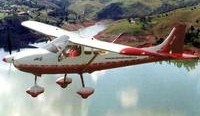
A side by side two seater single engined high wing mono¬plane with conventional three axis control. Wing has swept back leading edge, swept forward trailing edge and tapering chord; conventional tail. Pitch control by elevator on tail; yaw control by fin mounted rudder; roll control by half span ailerons; control inputs through stick for pitch/roll and pedals for yaw. Wing braced from below by struts; wing profile NACA 4415 (root), 4412 (tip), 100% double surface. Undercarriage has three wheels in tricycle formation; glass fibre sus¬pension on all wheels. Push right go right nosewheel steering connected to yaw control. Optional brakes on main wheels. Glass fibre fuselage, partially enclosed. Engine mounted above wing driving tractor propeller. Fuselage uses bonded internal framing made from uni directional glass fibre impregnated with aircraft quality resin. Ribs and I section spar from laminated glass fibre and foam; spruce spar caps. Leading edge is pre formed foam and glass fibre; trailing edge is spruce; rest of wing covered with zero porosity Dacron.
Just as the Aero & En¬gineering Services’ Lone Ranger is derived from its Striplin namesake, so the British Sky Ranger is taken from the Striplin Sky Ranger.
The aircraft has been considerably mod¬ified for European conditions, in a manner very similar to that applied to the Sky Ranger. Standard engine is the Cuyuna 430 with reduction drive. One aircraft was been produced with a Hunting HS525A engine.
Unlike the Lone Ranger, the standard cabin has no fixed side panel, both sides being left open unless the optional doors are ordered.

Engine: Cuyuna 430, 30 hp at 6300 rpm
Propeller dia x pitch: 60 x 36 in / 1.52 x 0.91 m
Total fuel capacity: 9.6 USG / 8.0 Imp gal / 36.3 litre
Micro V belt ratio: 2.2/1
Power per unit area: 0.19 hp/sq.ft / 2.0hp/sq.m
Length overall: 17.0 ft / 5.18 m
Height overall: 8.0 ft / 2.44m
Wing span: 36.0 ft / 10.97m
Chord at root: 5.0 ft / 1.52m
Chord at tip: 4.0 ft / 1.22m
Dihedral: 5 degrees
Sweepback: 1.5 degrees
Tailplane span: 8.4 ft / 2.56 m
Fin height: 3.5 ft / 1.07 m
Total wing area: 162 sq.ft / 15.1 sq.m
Total aileron area: 16.6 sq.ft / 1.54 sq.m
Fin area: 6.2 sq.ft / 0.58sq.m
Rudder area: 4.4 sq.ft / 0.41 sq.m
Tail¬plane area: 10.0 sq.ft / 0.93 sq.m
Total elevator area: 9.1 sq.ft / 0.85 sq.m
Wing aspect ratio: 8.0/1
Wheel track: 5.0ft / 1.52m
Wheelbase: 4.8ft / 1.46 m
Nosewheel dia overall: 11 in / 28 cm
Main wheels dia overall: 14 in / 36 cm
Empty weight: 330 lb / 150kg
Max take off weight: 760 lb / 345kg
Payload: 370 lb / 168kg
Load factors design: +4.0 / 2.0
Load factors ulti¬mate: +6.0, 3.0
Max wing loading: 4.69 lb/sq.ft / 22.8 kg/sq.m
Max power loading: 25.3 lb/hp / 11.5kg/hp
Max level speed: 80 mph / 129 kph
Never exceed speed: 90 mph / 145 kph
Max cruising speed: 75 mph / 121 kph
Economic cruise: 65 mph / 105 kph
Stalling speed: 28 mph / 45 kph
Max climb rate at SL: 450 ft/min / 2.3 m/s
Take off distance: 220 ft / 65 m
Land¬ing distance: 350 ft / 105 m
Service ceiling: 8000 ft / 2440 m
Min sink rate: 260 ft/min at 35 mph / 1.3 m/s at 56 kph
Best glide ratio pwr off: 15/1 at 39mph / 63 kph
Range at ave cruise: 250 sm / 402 km

Aero & Engineering Services / AES Lone Ranger

A single seat single engined high wing monoplane with conventional three axis control. Wing has swept back leading edge, swept forward trailing edge and tapering chord; conventional tail. Pitch control by elevator on tail; yaw control by fin mounted rudder; roll control by half span ailerons; control inputs through stick for pitch/roll and pedals for yaw. Wing braced from below by struts; wing profile NACA 4415 (root), 4412 (tip), 100% double surface. Undercarriage has three wheels in tricycle formation; glass fibre sus¬pension on all wheels. Push right go right nosewheel steering connected to yaw control. Optional brakes on main wheels. Glass fibre fuselage, partially enclosed. Engine mounted above wing driving tractor propeller. Fuselage uses bonded internal framing made from uni directional glass fibre impregnated with aircraft quality resin. Ribs and I section spar from laminated glass fibre and foam; spruce spar caps. Leading edge is pre formed foam and glass fibre; trailing edge is spruce; rest of wing covered with zero porosity Dacron.
The Aero & Engineering Services Lone Ranger started life as a British ¬built Striplin Lone Ranger, David Wilson’s company having the sole European agency for the Striplin machines. However, it has since been substantially modified to suit British tastes and British weather conditions, and must now be regarded as an aircraft in its own right.
The principal change is to the wing design and mounting. The wing section has been increased at the root to a 15% thick NACA4415, tapering to 12% at the tips, while the wing is mounted much more squarely, with virtually no sweepback at the leading edge and a small sweep forward at the trailing edge. The sweepback change is designed to give the effect of increased dihedral, making the aircraft easier to handle in less than perfect conditions. Each wing contains a fuel tank.
Another alteration is the use of convention¬al wood and fabric elevator, ailerons and rudder, rather than foam cored; all the control surfaces are of larger area than on the American machine. Push pull rods are used for the elevator and aileron controls, with a cable for the rudder.
Some early aircraft were fitted with Chrys¬ler engines, which were later rejected in favour of the Zenoah 250. The standard cabin has a windscreen and one side panel; the other side is left open, but a door can be supplied as an extra, making the aircraft totally enclosed.

Engine: Zenoah, 22 hp @ 6300 rpm
Prop: 50×27 in / 1.27x 0.69m
Power per unit area: 0.14hp/sq.ft / 1.5 hp/sq.m
Total fuel capacity: 9.6 USG, 8.0 Imp gal, 36.3 litre.
V belt reduction, ratio: 2.3/1
Length overall: 15.8 ft / 4.82 m
Height overall: 7.2ft / 2.19m
Wing span: 34.0 ft / 10.36m
Chord at root: 5.0ft / 1.52m
Chord at tip: 4.0 ft / 1.22m
Dihedral: 5 degrees
Sweepback: 1.5 degrees
Tailplane span: 8.0 ft / 2.44 m
Fin height: 3.0 ft / 0.91 m
Total wing area: 153 sq.ft / 14.2 sq.m
Total aileron area: 16.6 sq.ft / 1.54 sq.m
Fin area: 4.5 sq.ft / 0.42 sq.m
Rudder area: 4.0 sq.ft / 0.37 sq.m
Tail¬plane area: 8.0 sq.ft / 0.74 sq.m
Total elevator area: 8.0 sq.ft / 0.74 sq.m
Wing aspect ratio: 7.5/1
Wheel track: 3.0 ft / 0.91 m
Wheelbase: 4.5 ft / 1.37 m
Nosewheel dia overall: 11 in / 28 cm
Main wheels dia overall: 11 in / 28 cm
Empty weight: 210 lb / 95kg
Max take off weight: 476 lb / 216 kg
Payload: 210 lb / 95 kg
Max wing loading: 3.11 lb/sq.ft / 15.2kg/sq.m
Max power loading: 21.6 lb/hp / 9.8kg/hp
Load factors: +4.0, 2.0
Design load: +6.0, 3.0 ulti¬mate
Max level speed: 75 mph / 121 kph
Never exceed speed: 80 mph / 129 kph
Max cruising speed: 55 mph / 88 kph
Stalling speed: 21 mph / 34 kph
Max climb rate at SL: 450 ft/min / 2.3 m/s
Min sink rate: 210 ft/min at 33 mph, 1.1 m/s at 53 kph
Best glide ratio pwr off: 17/1 @ 38mph / 61kph
Take off distance: 180 ft / 55 m
Landing distance: 250 ft / 75 m
Service ceiling: 10,000 ft / 3050 m
Range at ave cruise: 250 mile / 402km
Aero Dovron Straton D-8

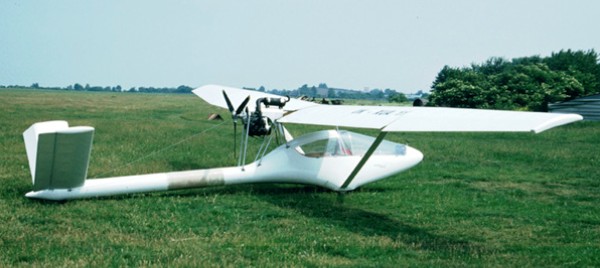
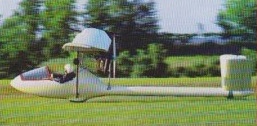
The motorised ultralight sailplane Straton D8 Moby Dick was original driven for a Trabant or Rotax 227-engine. The wood construction V tail design has fibreglass wingtips and weights only 180kg. Like the D7 Mini Straton, the D8 was developed as a homebuilt motorised sail plane in the Czech Republic. It was available in partial kits or factory assembled leading edges, wing spars and ribs. Due to the low cost price, the Straton D8 was an attractive model for the homebuilder. The D8 is not only built in Europe, but also in the U.S.A.

Engine: Trabant, 24 hp
Hp range: 20-32
Max speed: 80 mph
Cruise: 60 mph
Stall: 20 mph
Range: 240 sm
ROC: 550 fpm
TO dist: 250 ft
Ldg dist: 280 ft
Glide ratio: 18-1
Fuel cap: 5 USG
Empty wt: 250 lb
Mtow: 470 lb
Height: 5.5 ft
Length: 20.7 ft
Wingspan: 38 ft
Wing area: 107 sq.ft
Seats: 1
Undercarriage: single wheel.

Aero Dovron Mini Straton D-7 / Toresi Straton D7

Toresi Straton D7

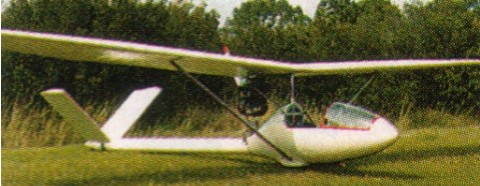
This motorglider was designed in the Czech Republic in the late 1980’s. It has been certified by the Czech governing body. It has a glide ratio of 17:1, one man field assembly and takeoff. Engine choices are Trabant or Rotax 277. Available as a kit, for approximately US$6995.

The Toresi Straton D7 has a composite fuselage and fabric covered wooden wings.

Engine: Trabant, 24 hp
HP range: 18-35
Speed max: 80 mph
Cruise: 55 mph
Range: 200 sm
Stall: 25 mph
ROC: 550 fpm
Take-off dist: 150 ft
Landing dist: 180 ft
Fuel cap: 5 USG
Weight empty: 250 lb
Gross: 470 lb
Height: 5.5 ft
Length: 19.68 ft
Wing span: 36 ft
Wing area: 105.5 sq.ft
Seats: 1
Landing gear: single wheel

Toresi Straton D7
Engine: Hirth 263, 30 hp
Wing span: 10.80 m
Wing area: 9.98 sq.m
MAUW: 250 kg
Empty weight: 100 kg
Fuel capacity: 20 lt
Max speed: 125 kph
Cruise speed: 85 kph
Minimum speed: 45 kph
Climb rate: 5 m/s
Certification: VZ
Seats: 1
Fuel consumption: 5.5 lt/hr
Kit price (1998): 55 000 Fttc

Aerodis America AA200 Orion

First flown on 2 June 1981, Grinvalds Orion, one of the earliest composite kit- and homebuilt aircraft, was built in France and the USA

A four-seat composites lightplane with tail-mounted propeller

The first one ever built, serial # 001, was the project of Peter L. Rodriguez.

serial # 001                                        Courtesy Peter L. Rodriguez

Aero Development Speer S-2-C

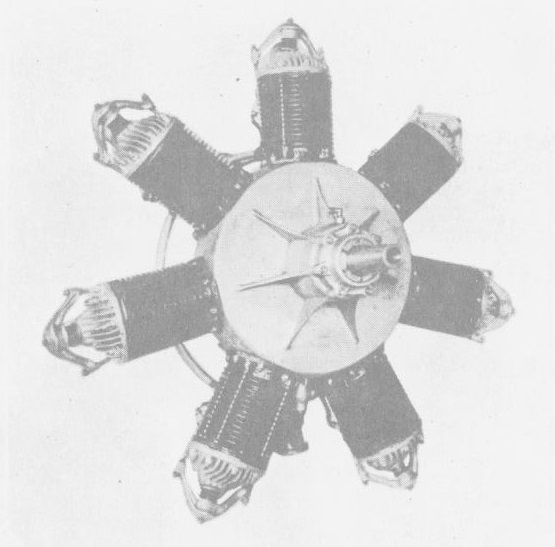
Produced in the 1920s, the Speer S-2-C features a solid master rod operating on roller bearings, and two piece crankshaft. The cast aluminium cylinder head are bolted to nickel iron brrel. The cylinder is of superposed or “F” head construction, the exhaust valve being in the head and the intake valve in the ell. The valves are operated by a special action that eliminates all parts outside the crankcase that require lubrication. The combustion chamber is of a type that provides high turbulence and resulting fuel economies.

All accessories are grouped at the rear of the engine for protection from the weather and to provide ease of maintenance.

Due to the fact that there are no babbit bearings, the need for high pressre lubrication has been eliminated, consequently only sufficient pressure is carried to serve as an indicationbthat oil is flowing.

Available at extra cost were Eclipse starter, Viking fuel pump, tools, and instruction book.

Type: 7 cyl air cooled radial
Power: 120 hp at 1800 rpm
Displacement: 491 cu.in
Compression: 5.2/1
Bore: 4 1/8 in
Stroke: 5 1/4 in
Length: 27 3/8 in
Diameter: 38 1/2 in
Weight: 330 lb
Fuel consumption: not more than .53 lb/hp/hr
Oil consumption: not more than .025 lb/hp/hr
Lubrication: Pressure and scavenging gear pumps
Ignition: Dual Scintilla MN-7D
Carburation: Stromberg NAS5B
Spark Plugs: 2 Champion/cylinder