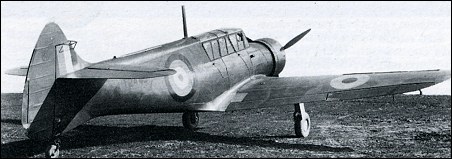
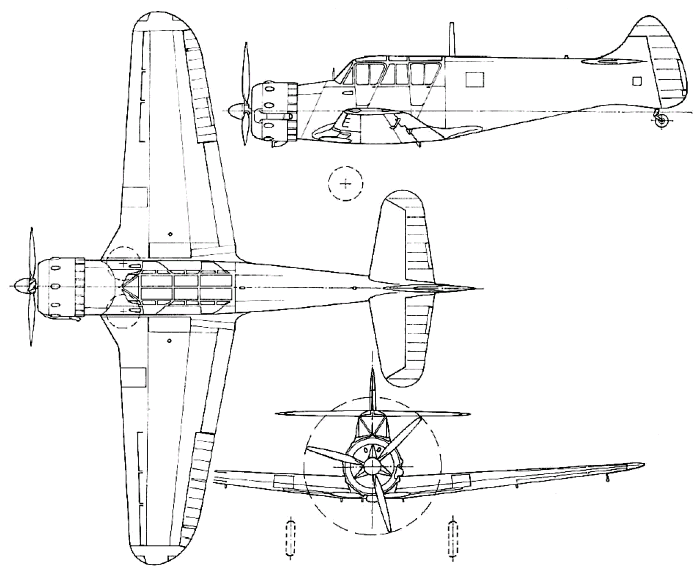
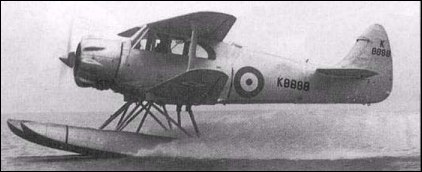
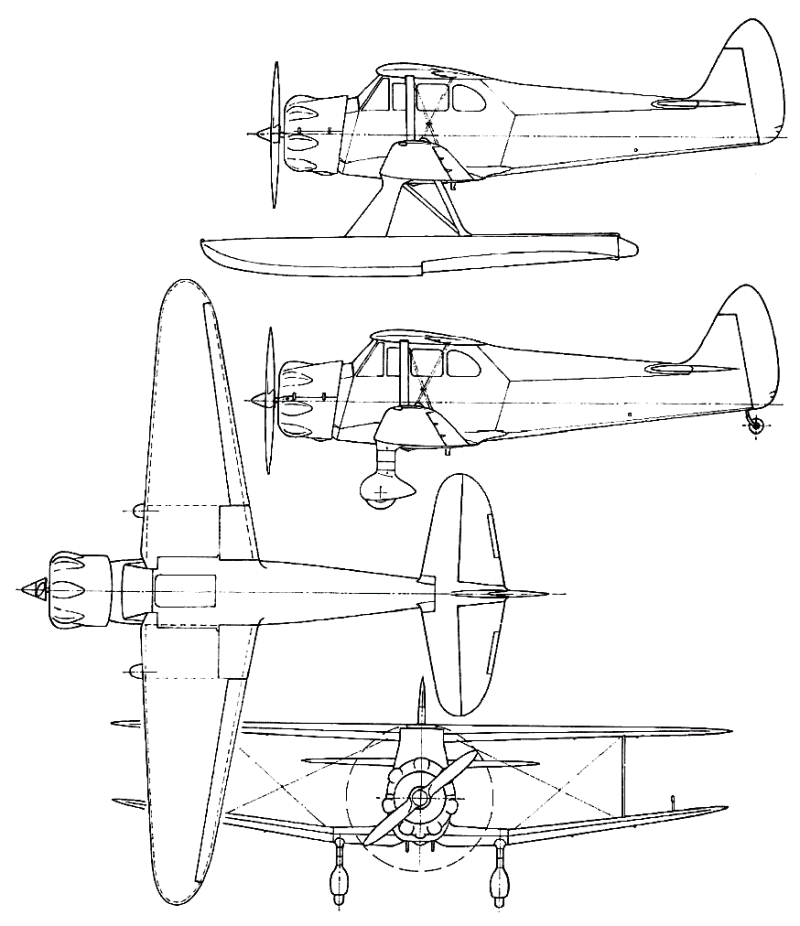
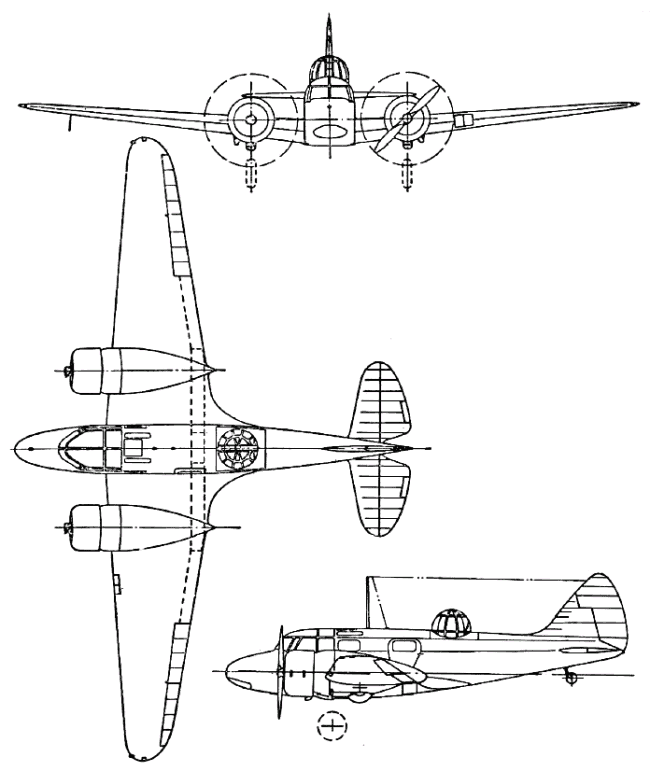
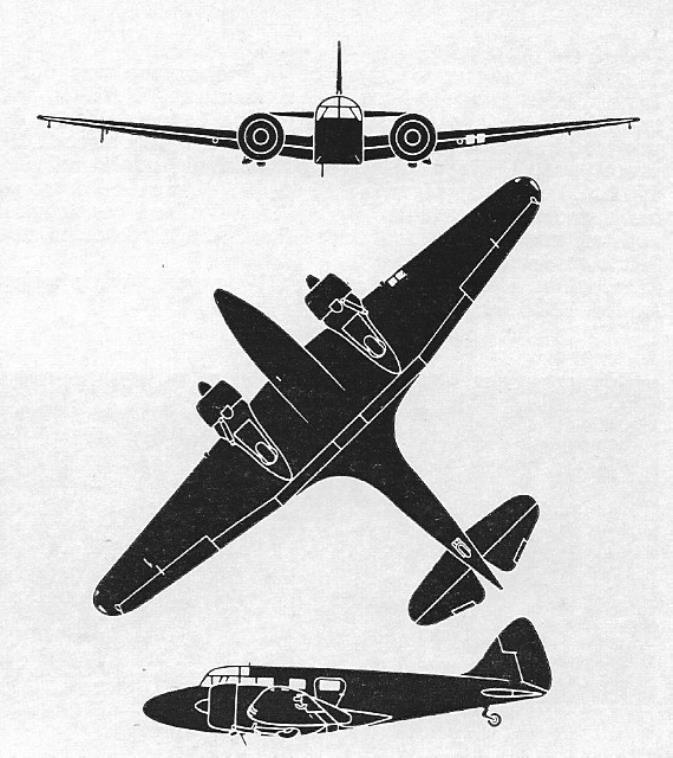
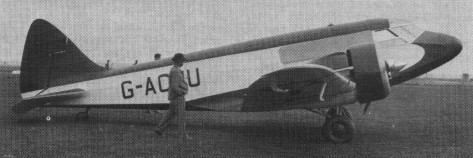
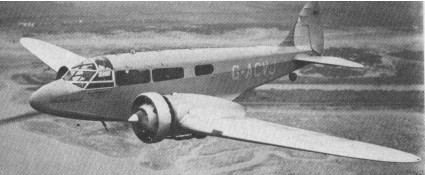
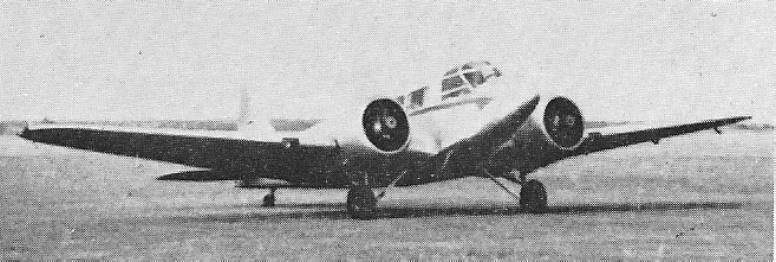
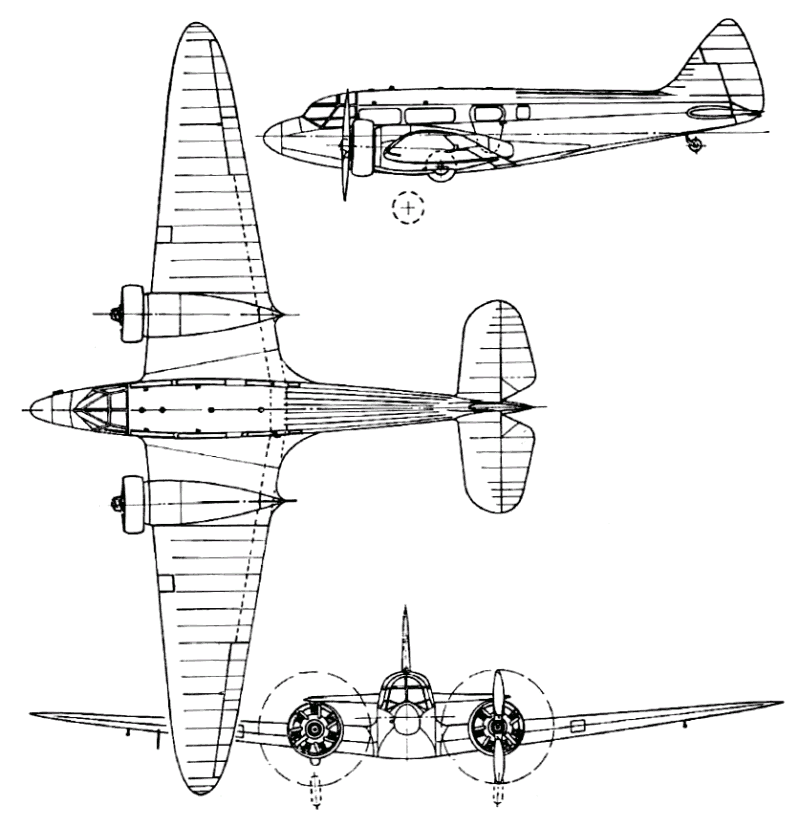
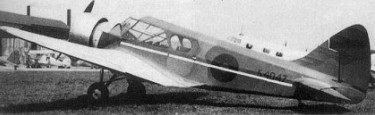
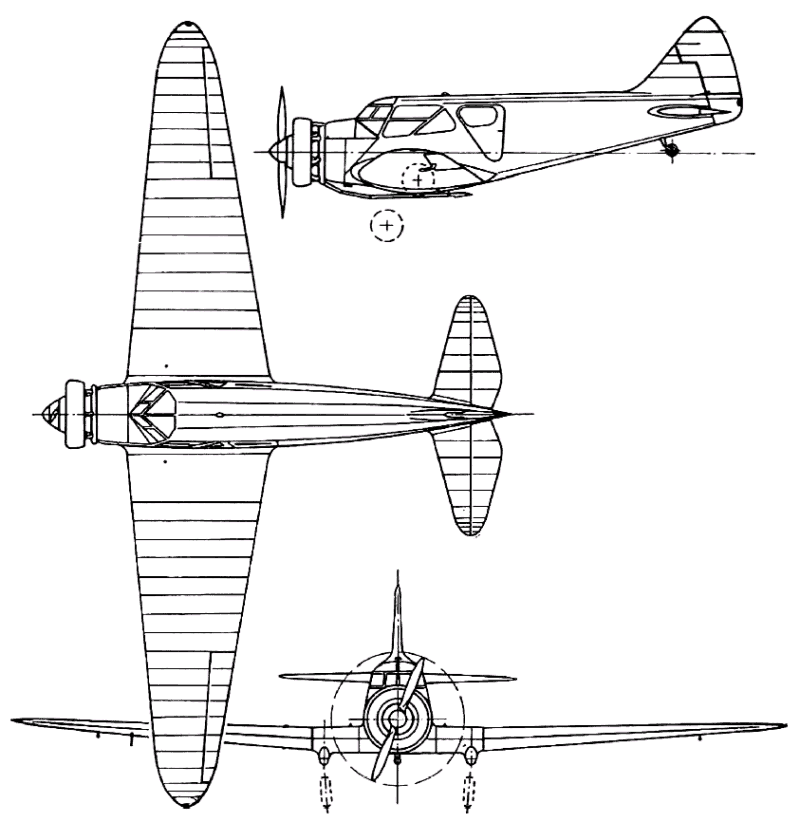
Designed to Air Ministry Specification 134/39 for an advanced trainer, the Airspeed AS.45 design was a conventional low-wing monoplane having retractable tailwheel type landing gear, and powered by a 544kW Bristol Mercury VIII radial air-cooled engine. Following Air Ministry approval of the design, which was given the provisional name Cambridge, two prototypes were ordered, the first of these making a maiden flight on 19 February 1941. The wings and tail unit were wood with plywood skins, except for control surfaces which were fabric-covered. The trailing edge of each wing was shared almost equally by ailerons and flaps. Four doors were provided, two on each side, so that exit in emergency could be made on either side. The main units of the Dowty landing gear retracted inwards, the wheels lying flush in the undersur¬face of the wing centre-section. Instructor and trainee were seated in tandem beneath a glazed canopy. Flight testing of these two prototypes was to show that low-speed flight characteristics were poor, and speed was below estimates. Both of the aircraft were handed over to the RAF in July 1942, following a decision not to proceed with production.
Engine: 1 x Bristol Mercury VIII radial piston, 544-kW (730-hp) Propeller: three-blade constant-speed Maximum speed at 4875 m (16,000ft): 381 km/h (237 mph) Service ceiling: 7560m (24,800ft) Range: 1094 km (680 miles) Wing span: 12.8m (42ft 0in) Length: 11 m (36ft 1 in) Height: 3.51 m (11ft 6in) Wing area: 26.94sq.m (280sq,ft) Armament: none Seats: 2
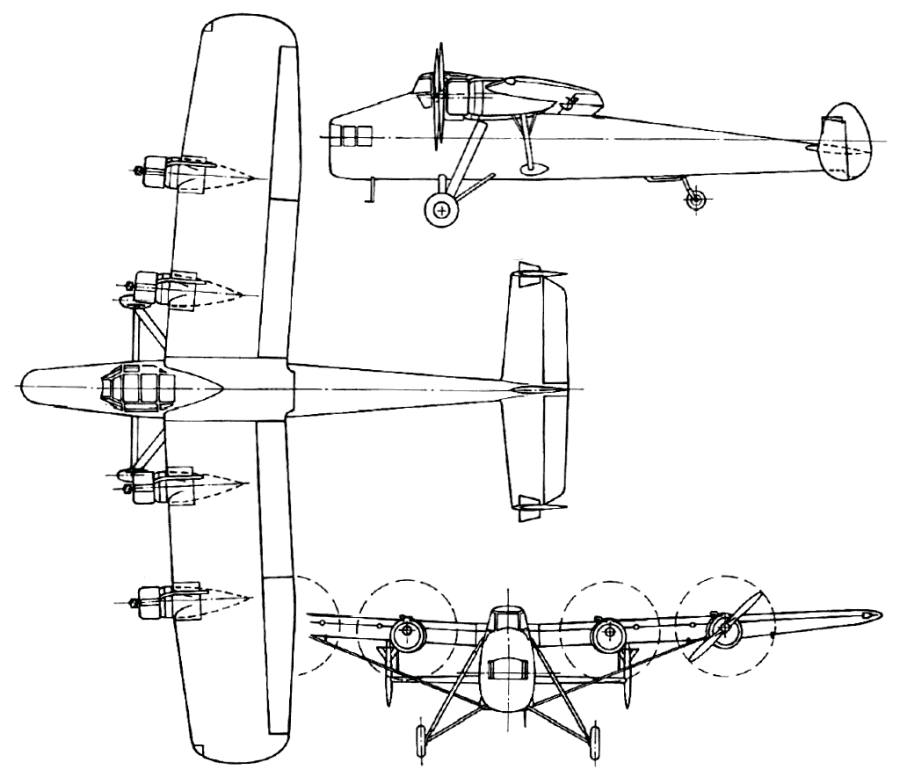
In 1937 the British Admiralty envisaged a need for an aircraft that could shadow enemy fleets at night and drafted Specification S.23/37 calling for a slow-flying silent aircraft with a long range, capable of operating from an aircraft carrier flight deck. The specified performance was to be a speed of 40 knots / 70kph at 500m for not less than 11 hours with accommodation for a pilot, observer and radio operator. Five companies showed interest – Percival, Short Brothers, Fairey Aviation, General Aircraft Ltd and Airspeed. Two prototypes were built, the Airspeed A.S.39 (serial N1323) and the General Aircraft G.A.L.38 (P1758). The A.S.39 design was a high-wing aircraft with four 130 hp Pobjoy Niagara V engines with fixed pitch propellers, extensive slats, flaps and drooping ailerons, fixed landing gear and an observer’s position in the nose. As for other aircraft carrier planes, the wings folded for storage. The Airspeed Fleet Shadower had a metal fuselage and three small fins. The two prototypes flew after the out break of the Second World War, the AS.39 flying on 17 October 1940. The aircraft met the requirement but the Admiralty changed their minds about the desirability of such an air¬ craft and scrapped this pro¬gramme in 1940 due to the introduction of radar.
Engines: 4 x 130hp Pobjoy Niagara V Max take-off weight: 3147 kg / 6938 lb Empty weight: 2083 kg / 4592 lb Wingspan: 16.25 m / 53 ft 4 in Length: 12.2 m / 40 ft 0 in Height: 3.17 m / 10 ft 5 in Wing area: 43.85 sq.m / 472.0 sq ft Max. speed: 201 km/h / 125 mph Ceiling: 1830 m / 6000 ft Crew: 3
Designed as a radio-controlled and unmanned target aircraft, first flown as a piloted aircraft in 1937. A total of seven aircraft were built (including prototypes) of 65 production aircraft ordered.
Engine: Armstrong Siddeley Cheetah IX, 345 hp Length: 29.068 ft / 8.86 m Wingspan: 31.004 ft / 9.45 m Max take off weight: 3801.4 lb / 1724.0 kg Max. speed: 150 kt / 277 km/h Cruising speed: 131 kt / 243 km/h Service ceiling: 20013 ft / 6100 m Crew: 1
In 1936 Airspeed submited a proposal to meet Air Ministry Specification T.23/36, for a twin-engined trainer. Airspeed’s design for this was based on the AS.6 Envoy, which may have helped the Air Minis-try’s decision to order an initial quantity of 136 AS.l0s.
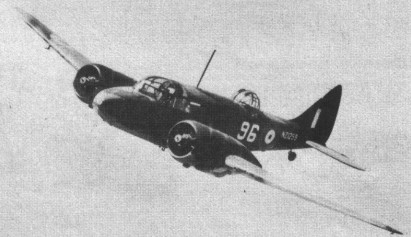
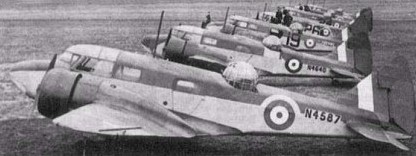
Sharing the AS.6 Envoy wooden construction, tailwheel type retractable landing gear and basic air¬frame, normal accommodation was for a crew of three at any one time, but in addition to seats for a pilot/pupil and co-pilot/instructor, there were positions for the training of an air-gunner, bomb-aimer, camera operator, navigator, and radio operator. Dual controls were standard, making the Oxford suitable for use as a twin-engined trainer; with the dual-control set removed from the co¬pilot’s position, a bomb aimer could take up a prone position and drop practice smoke bombs which were carried in the centre-section well; or the seat could be slid back and a chart table, hinged to the fuselage side, erected for use by a trainee navigator; an aft-facing seat behind the co-pilot position was available for a radio operator; and, in the Oxford 1, an Armstrong Whitworth dorsal gun turret was provided for an air-gunner’s training. The turret was removed from later versions and they were used mainly for pilot training. A hood was also available so that the Oxford could be used for instrument training.
Oxford
The prototype AS.10 Oxford made its first flight on 19 June 1937, and deliveries began in November of that year, with four of the first six going to the RAFs Central Flying School, the other two to No.11 Flying Training School.
One example of a Mk II aircraft was fitted experimentally with two 186-kW (250-hp) de Havilland Gipsy Oueen inline engines. Odd variants included an early Oxford I equipped with special McLaren landing gear, the main units of which could be offset to cater for a reasonable degree of crosswind at both take-off and landing, and one with a tail unit which included twin endplate fins and rudders, especially installed for a series of spin recovery tests.
The outbreak of World War II created a demand for these trainers, not only for use by the RAF, but also by those nations which were involved in the Commonwealth Air Training Scheme. These included Australia (nearly 400 Oxfords), Canada (200), New Zealand (300), Rhodesia (10), and South Africa (700). Examples went also to the Free French air force and, under reverse Lend-Lease, a number were used by USAAF units in Europe. A number were equipped to serve as air ambulances. The Fleet Air Arm also had one training unit, No. 758 Instrument Flying Squadron, equipped with Oxfords from June 1942.
The demand for Oxfords was beyond Airspeed’s productive capacity, the company building a total of 4,411 at Portsmouth, Hants, and 550 at Christchurch, Hants. Other construction was by de Havilland at Hatfield (1,515), Percival Aircraft at Luton (1,360), and Standard Motors at Coventry (750), to give a total of 8,586. Airspeed built its last example in July 1945, and the Oxford remained in service with the RAF at No. 10 Advanced Flying Training School, Pershore, until 1954. Many were supplied after the war to the Dutch air force.
Consul
During 1946-1948 many were converted to Consul civil version status post-war as civilian six passenger aircraft. About 150 were sold worldwide, some conversions and some new builds.
Mk I – Weapons trainer, usually fitted with a Armstrong Whitworth dorsal gun turret Engines: 2 x Armstrong Siddeley Cheetah IX (335hp) or Cheetah X, 280-kW (375-hp). Propellers: Fixed-pitch Length: 34.48ft (10.51m) Wingspan: 53.31ft (16.25m) Height: 11.09ft (3.38m) Maximum Speed: 186mph (300kmh; 162kts) Cruise: 140 mph Maximum Range: 932miles (1,500km) Service Ceiling: 19,199ft (5,852m) Armament: 1 x 7.7mm (0.303-in) Vickers K machine gun in dorsal turret Bombload: 250lbs internal Accommodation: 3 Empty Weight: 5,379lbs (2,440kg) Maximum Take-Off Weight: 7,599lbs (3,447kg)
Mk II – Pilot, radio-operator and navigator trainer Engines: 2 x Armstrong Siddeley Cheetah IX (335hp) or Cheetah X, 280-kW (375-hp) Propellers: Fixed-pitch Top speed: 185 mph Cruise: 140 mph
Mk.II Engine: 2 x Armstrong Siddeley Cheetah 10, 395 hp Span: 43 ft 4 in Length: 35 ft 4 in Height: 10 ft 1.5 in Wing area: 348 sq.ft Empty weight: 6047 lb Loaded weight: 8250 lb Top speed: 185 mph Max cruise: 156 mph ROC: 1180 fpm Max range: 900 mi
Mk III – Radio and navigation trainer Engines: 2 x Armstrong Siddeley Cheetah XV 318-kW (425hp) Propellers: Rotol constant-speed Number built: 1
Mk IV – Testbed for the De Havilland Gipsyqueen IV (Gipsy-Six IIIS, Turbocharged, 6 cylinder inline engine).
Mk V – Radio and navigation trainer Engines: 2 x Pratt & Whitney R 985-AN6 Wasp Junior, 335kW (450-hp) Propellers: Constant-speed Wingspan: 16.26 m / 53 ft 4 in Length: 10.52 m / 34 ft 6 in Height: 3.38 m / 11 ft 1 in Wing area: 32.33 sq.m / 348.00 sq ft Max take-off weight: 3269 kg / 7207 lb Empty weight: 2572 kg / 5670 lb Wing load: 22.96 lb/sq.ft / 112.0 kg/sq.m Max. speed at 1250m (4,l00ft): 325 km/h / 175 kts / 202 mph Service ceiling: 6400 m / 21000 ft Range: 1127 km / 609 nm / 700 miles Seats: 3-4
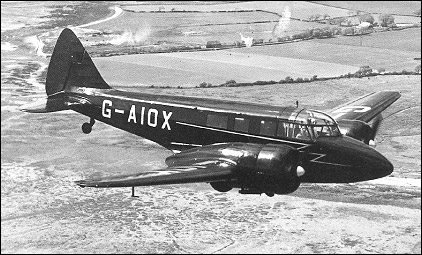
In parallel with the design work on the Envoy, Tiltman was also working on the Cheetah engined machine for Stack. This required so many variations from the basic Envoy that it was designated the A.S.8 Viceroy. A batch of six machines was laid down, the initial flight test of the prototype, G ACMT, being scheduled for April 1934. Maximum effort was made on the prototype, but modifications to the airframe and the complexity of building with different engines caused much delay. At Farnborough deep prejudice existed over cantilever wings, and they demanded a 25 per cent increase in the load factor. After four months negotiation, and Tiltman testing a complete wing to destruction proved this increase was unnecessary. On June 26, 1934, FIt Lt C. H. S. Colman, Airspeed’s test pilot, flew ‘CMT for the first time. It handled extremely well with no snags, and was demonstrated at the Society of British Aircraft Constructors’ Show at Hendon on July 2. The certification trials at Martlesham Heath were troubled, mainly with the Wolseley engines, in which two fuel pump spindles sheared. A failed gasket in the hydraulic system caused the machine to land with one undercarriage leg half down, with consequent damage and delay, and the fuel tanks developed leaks. The major problem, was that the machine was overweight, and its single engine performance was not satisfactory. It was felt that the new Wolseley IB engines would cure this defect. Generally, the test pilots were extremely impressed with the handling and performance of the Envoy, and a Certificate of Airworthiness was, issued on October 9, 1934. All entries in the Australia Race had to be handed over to the Royal Aero Club scrutineers by October 14. The manufacturers of the Viceroy’s engines and automatic pilot failed to keep their delivery promises, and the machine did not fly until September 19. To add to Airspeed’s problems, the engine revs were low and the weight high. Its 315 hp Cheetah VI engines gave it a top speed of 210 m.p.h. (338 km/hr) at 7,000ft (2,135m). It cruised at 190 mph (306 km/hr) and, with a massive long range fuel tank in the cabin, had a range of 1,400 miles (2,253km). To save time, a Martlesham test pilot flew to Portsmouth to carry out the C of A trials. The machine was completely satisfactory and displayed a top speed of 210 mph (338 km/hr). The MacRobertson Race to Australia was in two sections, absolute speed and handicap with a maximum elapsed time. The Viceroy was so heavily handicapped as to have virtually no chance of success. Stack’s Viceroy was forced down at Abbeville in Northern France with electrical trouble. The weather was foul. He soon took off again for Marseilles, but returned almost immediately. During the evening of October 20 he left for Rome, reached Athens and withdrew from the race. At the end of 1935 Stack and Turner sued Airspeed for “the recission of a hire purchase agreement and repayment of £2,448 paid by them for the Viceroy.” They alleged that Airspeed had been negligent in failing to ensure that the aircraft was fully airworthy. The case was settled out of court, the plaintiffs withdrawing all their allegations and agreeing to return the Viceroy to the Company with a further payment of £1,850.
The design of the AS.6 Envoy, began in late 1933 as and Hessell Tiltman, the technical director and chief designer based it on the Courier and using as many common parts as possible and their new Javelin or the Wolseley A.R.9 engine. T. Neville Stack was finally content with a Cheetah-engined machine with a cruise speed of 180 mph and endurance of six hours.
Tiltman followed the same basic construction as the Courier. The airframe was of wooden construction, the fuselage was a semi monocoque structure in two sections, the front fuselage comprising the cockpit, cabin, toilet and luggage compartment and the rear fuselage carrying the tail unit. The doors and windows were built integrally with the sides and the stressed ply skin cut away before assembly. All the major fuselage sections were jig built with longerons of spruce and a skin of birch ply laid at an angle of 450. No diagonal bracing was needed, as the skin carried all the shear loads, bending loads being carried by the longitudinal members. The fuselage shell comprised two sides, a bottom and a top panel, to form a light, rigid box. The top and bottom curvature was formed with formers and stringers covered in fabric. With accommodation for a pilot and eight passengers the Envoy had all control surfaces fabric-covered, and a retractable tailwheel type landing gear and a variable-incidence tailplane were fitted.
Three versions were produced. The Series 1 and 2 Envoys had a twin spar wing with Warren girder inter spar bracing. The leading edge was covered by 1mm ply, and the wing was fabric covered. It was stiff in torsion and was complicated to build. The Series I (17 examples built) was without trailing-edge flaps; the Series II (13 built) introduced hydraulically operated split flaps which extended from the aileron to wing root on the trailing edge of each wing, and also from wing root to wing root beneath the centre-section. With flaps down the stalling speed was reduced by 11 mph (177 kph). The Series III (19 built) was similar, but had a number of detail improvements. The Series 3 Envoy, introduced at the end of 1936, was built with a ply-covered wing, the two spars forming a torsion box to eliminate the Warren girder bracing and give a stronger and stiffer wing. The production time for the wing was reduced by 35 40 percent. The tail unit was a wooden structure, fabric covered. The undercarriage, operated by a hydraulic handpump, was geometrically and functionally similar to the Couriers.
A.S.6Jc Envoy III
In parallel with the design work on the Envoy, Tiltman was also working on the Cheetah engined machine for Stack. This required so many variations from the basic Envoy that it was decided to identify it as the A.S.8, to be known as Viceroy.
Soon after the 1934 SBAC Show at Hendon, Tiltman received from the Air Ministry an in¬vitation to tender for an Envoy con¬verted to a Coastal Patrol aircraft. Nothing more was heard of the project.
The prototype first flew on 26 June 1934 and 50 were built, including the pro¬totype, by Airspeed for British, Japanese, Czechoslovakian, and Chinese. South Africa acquired seven En¬voys in 1936: three of these were used by the SAAF and had an armament com¬prising a forward firing machine-gun and a dorsal gun turret. The four civil Envoys which made up the total, and which were for operation by South African Air¬ways, were capable of quick conversion for use in a military role. A small number were supplied to the RAF. A number were used in the Spanish Civil War. Mitsubishi also built a number under licence.
Engines fitted to Envoys included the Wolseley AR.9, Scorpio I or Aries III, Armstrong Siddeley Lynx IVC or Cheetah IX, Wright Whirlwind R.760 and Walter Castor II.
AS.6 Engine: 2 x Wolseley AR.9, 149-kW (200-hp)
AS.6A Engine: 2 x Armstrong Siddeley Lynx IVC, 179-kW (240-hp)
AS.6E Engine: 2 x Walter Castor II, 254-kW (340-hp)
AS.6G Engine: 2 x Wolseley Scorpio I, 186-kW (250-hp)
AS.6H Engine: 2 x Wolseley Aries III, 168-kW (225-hp)
AS.6J Engine: 2 x Armstrong Siddeley Cheetah IX, 261-kW (350-hp) Maximum speed at 2225m (7,300ft): 338 km/h / 183 kts / 210 mph Cruising speed at 3050m (10,000ft): 290 km/h / 157 kts / 180mph Service ceiling 6860m (22,500ft) Range: 1046 km / 565 nm / 650 miles Empty weight: 1840kg (4,057 lb) Maximum take-off weight: 2858 kg (6,300 lbs) Wing span: 15.95m (52ft 4in) Length: 10.52m (34ft 6in) Height: 2.9m (9ft 6in) Wing area: 31.49 sq.m (339sq.ft) Wing load: 18.66 lb/sq.ft / 91.0 kg/sq.m
A.S.6Jc Envoy III Engines: 2 x Armstrong Siddeley Cheetah A.S.9, 375 hp Span: 52 ft 4 in Length: 34 ft 0 in Height: 9 ft 6 in Empty weight: 4340 lb Loaded weight: 6600 lb Max speed: 203 mph Cruise: 170 mph Range: 620 mi
AS.6JM/C Engine: 2 x Armstrong Siddeley Cheetah IX, 261-kW (350-hp) Take-off weight: 2960 kg / 6526 lb Empty weight: 1920 kg / 4233 lb Wingspan: 15.9 m / 52 ft 2 in Length: 10.5 m / 34 ft 5 in Height: 2.8 m / 9 ft 2 in Wing area: 31.5 sq.m / 339.06 sq ft Max. speed: 325 km/h / 202 mph Cruise speed: 270 km/h / 168 mph Ceiling: 6700 m / 22000 ft Range: 990 km / 615 miles Crew: 2 Passengers: 6
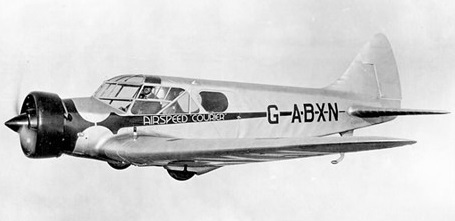
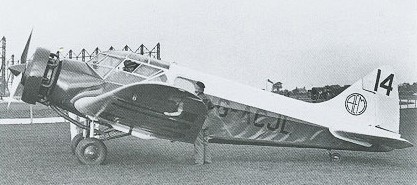
A light transport of conventional all-wood construction, with all control surfaces fabric-covered, of 1935. The first British aircraft with retractable undercarriage to go into production, a five-six-seat cantilever low-wing cabin monoplane.
First flown on 11 April 1933 (G-ABXN) from Portsmouth, four days later it crashed at Portsmouth, receiving minor damage. Repaired, it had another accident at RAF Martlesham Heath. It was used in aerial refuelling experiments by Sir Alan Cobham, using two Handley Page W10s as aerial tankers. The experiments led to an attempt of a non-stop flight to India that started at Portsmouth on 24 September 1934. It ended the same day when Cobham had to make a forced landing at Malta, due to a broken throttle; in the event the Courier was damaged. The aircraft was impressed into the RAF in June 1940, s/n X9427.
Sixteen were built with a total of 15 production aircraft.
AS.5B Engine: Armstrong Siddeley Cheetah V, 301 hp Length : 28.51 ft / 8.69 m Wingspan : 47.014 ft / 14.33 m Wing area : 250.048 sqft / 23.23 sq.m Max take off weight : 3999.9 lbs / 1814.0 kg Weight empty : 2328.5 lbs /1056.0 kg Max. speed : 144 kts / 266 km/h Cruising speed : 126 kts / 233 km/h Service ceiling : 16995 ft / 5180 m Wing load : 15.99 lb/sq.ft / 78.00 kg/sq.m Range : 556 nm / 1030 km Crew : 1
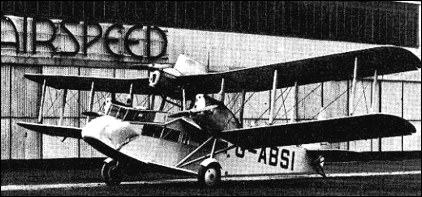
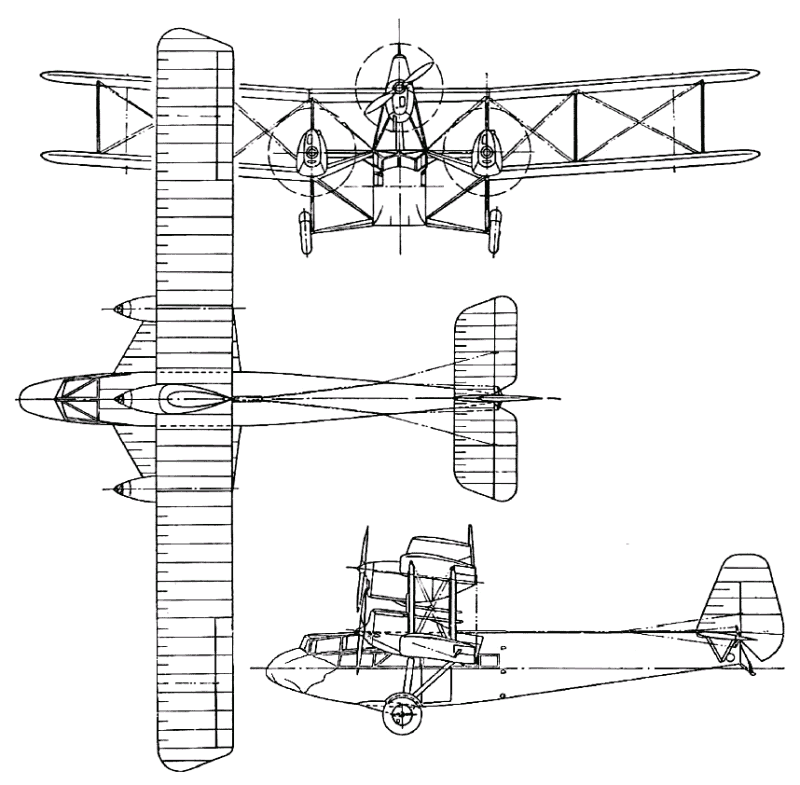
A ten-passenger biplane airliner of 1932 with cranked lower wings attached to the upper fuselage. Four were built; two for Sir Alan Cobham’s National Aviation Day tours and two for Midland and Scottish Air Ferries. Powered by three 89kW de Havilland Gipsy engines, two on the lower wings and one mounted centrally on the upper wing.