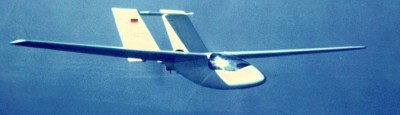
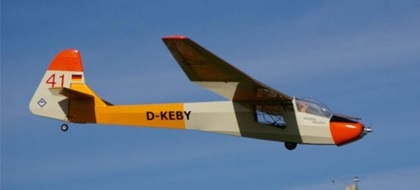
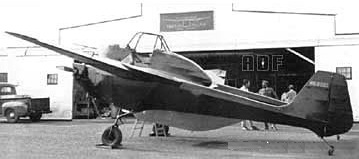
Designed and built by the Stuttgart Akademische Fliegergruppe (Akaflieg) in Germany, the FS-26 was an experimental single-seater, aimed at investigating the characteristics of a motorglider equipped with a reflex airfoil and a separate horizontal stabilizer. Made of fibreglass, the FS-26 re-used the cockpit of the Phoebus sailplane modified to include the engine controls and instruments, and the long retractable landing gear. The aircraft was powered by a Hirth F10A engine, located at the rear of the fuselage. In soaring configuration, the propeller blades could be folded and the engine cowling openings were closed. The wing used an Eppler 515 airfoil, and could be divided into three parts for trailering on the road. The connections between the fuselage and the wing had been carefully studied, as well as the engine cooling. The FS-26 made its first flight on September 25, 1970. After several tests, this aircraft was donated to the Wasserkuppe Soaring Museum.
Wing span: 12.60 m Length: 3.94 m Wing Area: 13.20 sq.m Airfoil: Eppler 515 Empty weight: 250 kg Max. weight: 360 kg
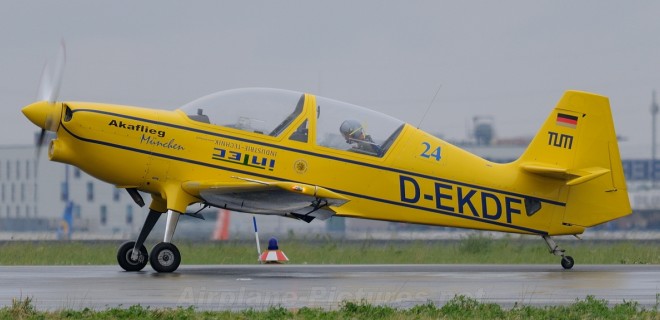
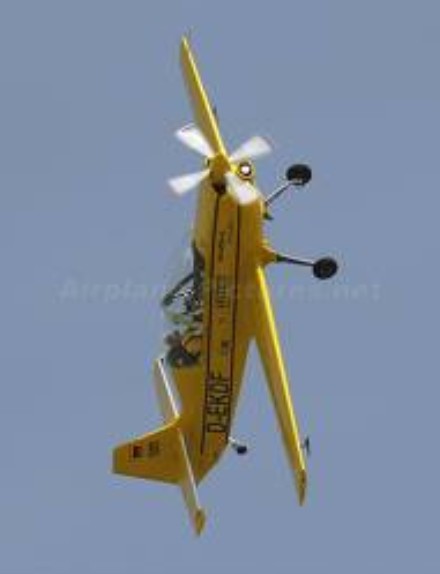
Students at Akaflieg München recognized that the requirements of an aerobatic aircraft and glider tug coincided, both needing a high power-to-weight ratio, high rate of climb at relatively low speed, and high control authority. To meet these requirements design and construction of the Mü30 Schlacro (SCHLepp-ACRObatic) began in 1985 led by Dieter Thomas. Initially it was intended to fit a Porsche PFM 3200, obtained from Porsche at no cost. Use of the PFM 3200 promised to cut operating costs and environmental impact dramatically, with the engine certified to use MOGAS in place of the very expensive AVGAS, but Porsche abandoned development of the PFM3200 in 1992, leaving the Mü30 without an engine.
During development the ailerons were optimized for maximum roll rate, the wings revised with carbonfibre structure and the center of gravity adjusted by moving the wings 150mm (6ins) forward, compensating for a heavier Lycoming engine and ensuring reserve for possible future re-design.
Work on the prototype continued and an alternative engine installation was designed for the 223 kW (300 hp) Lycoming AEIO-540 driving a four-bladed propeller. First flight with the Lycoming engine was carried out in 2000 with flight testing continuing till 2003. Problems with cooling the Lycoming engine necessitated the complete re-design of the cooling air intake, exhaust system and cowling.
Flying re-commenced on 16 February 2007, resuming flight tests which proved to be satisfactory and certification is well advanced. Initial problems with lateral stability have been overcome by altering the control geometry and flight tests by Uli Schell have revealed the aircraft to have adequate stability and be easy to control. Flight testing was completed by New Year’s Eve 2007, with the exception of Vd (Maximum Design Dive Speed – 1.2x Vne) which had earlier highlighted problems with the elevator trim. After thickening the trailing edge of the elevators the trim problems were alleviated and the Vd test was carried out successfully.
Mü30 Engine: Lycoming AEIO-540, 223 kW (300 hp) Length: 7.5 m Wingspan: 9 m Empty weight: 748 kg Maximum speed: 400 km/h (216 mph)
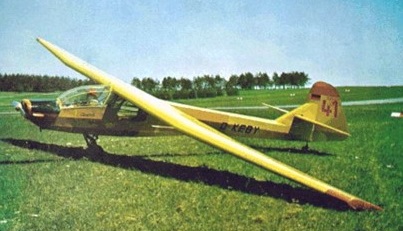
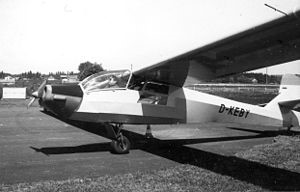
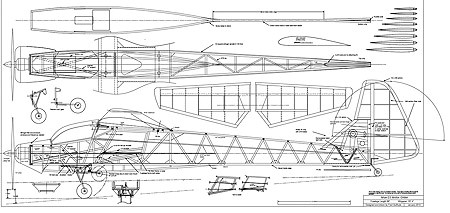
In 1957 the students at Akaflieg München began the design and construction of the Mü23 Saurier two-seat motor-glider. Using the classic ‘Munich School’ construction technique, the Mü23 was built using fabric covered welded steel tube for the fuselage and wooden wings and tail covered with plywood and fabric. The pilot sitting directly behind the engine under a built-up transparent canopy and the passenger sitting in a compartment under the centre section of the wing, similar to the seating arrangement of the Akaflieg München Mü10 Milan.
Using the Mü Scheibe aerofoil section imbued the Mü23 with excellent low speed characteristics and short landings and takeoffs, but development was slowed by problems with the chosen engines, initially a Volkswagen VW1200, later a Braendle ZB700 and finally a Volkswagen VW1500N which gave satisfactory performance.
Once the performance of the aircraft could be guaranteed with the VW1500N engine, the Mü23 took part in sailplane and motor glider competitions with some success. In 2010 the Mü23 is undergoing restoration.
This unique single-seat powered sailplane, created by the Darmstadt Akaflieg, looks exactly like a Standard Class high-performance sailplane except for its low-mounted wing. It features a retractable two-blade folding propeller, driven by twin Fichtel & Sachs modified KM 914V engines situated in the nose cone.
The D-39 is an adaptation of the basic D-38 airframe, having the same glassfibre/balsa sandwich construction with ailerons of glassfibre/Klegecel foam sandwich, and Schempp-Hirth airbrakes on the upper wing surfaces. No flaps are fitted. It is equipped with a manually-retractable sprung monowheel, and accommodation comprises a semi-reclining seat under a flush canopy, the rear section of which is detachable.
D-39 Engines: 2 x Fichtel & Sachs KM 914V, 35 kW (47 hp) Wing span: 15.0 m / 49 ft 2 in Length: 7.15 m / 23 ft 5.5 in Height: 1.02 m / 3 ft 4.5 in Wing area: 11.0 sq.m / 118.4 sq ft Wing section: Wortmann FX-61 -184/60-126 Aspect ratio: 20.5 Empty weight: 280 kg / 617 lb Max weight: 400 kg / 882 lb Water ballast: None Max wing loading: 36.3 kg/sq.m / 7.43 lb/sq ft Max speed: 135 kt / 250 km/h Stalling speed: 39 kt / 72 km/h Min sinking speed: 1.0 m/sec / 3.3 ft/sec Best glide ratio: 36 at 56.5 kt / 105 km/h T-O run: 200 m / 656 ft Rate of climb at S/L: 240 m/min / 787 ft/min Range: 500 km / 269 nm
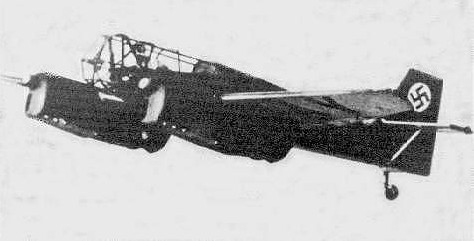
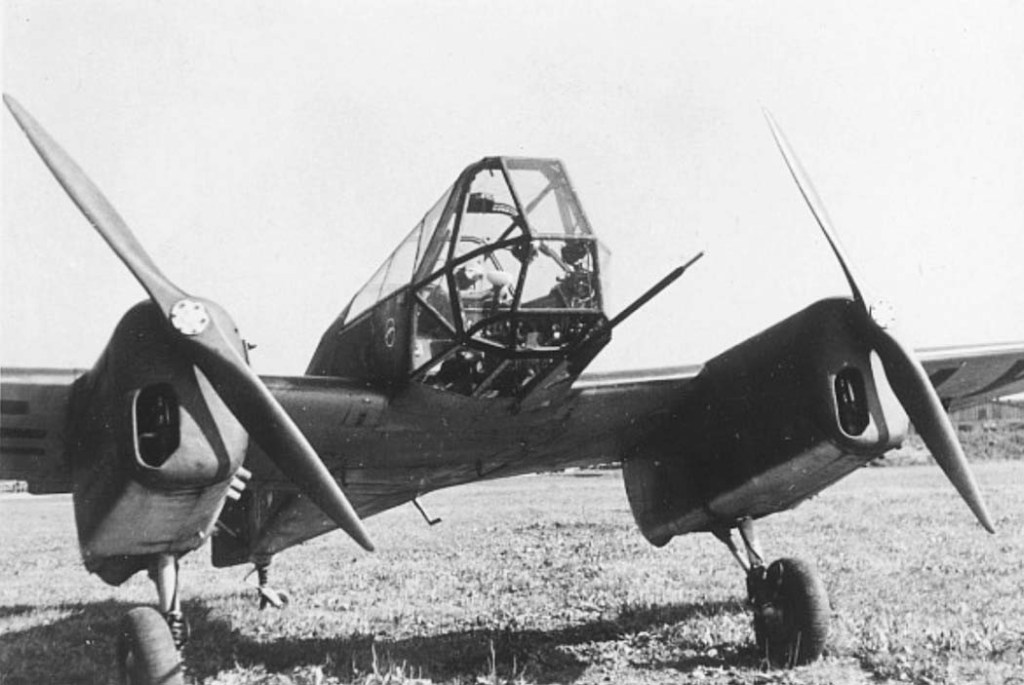
To practically test the position of the pilot, the Flugtechnische Fachgruppe (Aero-technical Group) Stuttgart constructed the FS17 research aircraft. The FS17 was a glider that was designed to withstand forces up to 14g. After the completion of the test program an order was given by the DVL ((Deutsche Versuchanstalt für Luftfahrt e.V. Berlin-Aldershof) (German Experimental Department for Aerospace Reg.) to the FFG Berlin ((Flugtechnische Fachgruppe)(Aero-technical Group)) to construct a powered aircraft. FFG Berlin was chosen as it possessed the necessary workshops and technicians. In the Spring of 1943 the FFG Berlin constructed the Berlin B9 to the specifications provided.
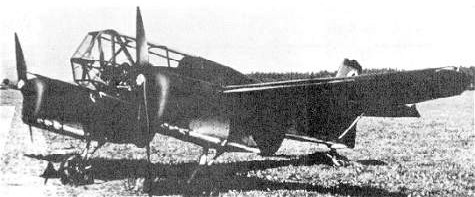
The Berlin B9 is a low winged type aircraft of standard layout. It is of mixed construction and stressed to accept 22g. The fuselage is constructed of steel tubing covered by timber ribbing and fabric covering. The fuselage is trapezoidal in cross-section. Its largest frame has an area of 0.67sq.m. The fuselage diminishes in area towards the rear and finishes in the empennage. The cockpit is covered with a 1.5m long, clear canopy that is jettisonable. The fuselage bolts to the wings at four points.
The single leg retractable undercarriage is borrowed from the Me108. It is raised and lowered by a hand ratchet. The empennage consists of a fin with balanced rudder and elevators that is attached to the end of the fuselage. The elevators have a range of 30 per cent (27 degrees).
The wing assembly consists of a rectangular centre section and two trapezoid like outer sections. The leading edge is square to the fuselage for half of its length. At the point where the outer panel is connected, a trail of 2 degrees is introduced. This is held for the remaining length of the wing.
The wing is constructed of two box like spars. These are situated at 20 per cent and 50 per cent through the wing from the leading edge. Dural sheets are glued to the spars for the purpose of providing attachment points for the wing to the fuselage and the engine to the wing. Solid planking to withstand the torsional forces generated by high acceleration manoeuvrers covers the area between the spars. The mounting struts for the motors are situated within the engine nacelles. The four fuel tanks are placed between the spars on either side of the motors. The rudder and flaps mechanisms are situated just behind the last wing spar. The flaps are situated below the fuselage. They are 20 per cent of the width of the wing and can be extended to 60 degrees.
Two Hirth Type HM500 motors generating 105 PS drive two fixed pitch Schäfer propellers.
The aircraft was designed to accommodate a pilot lying in the prone position. As such it needed a flight control system that did not load up under high acceleration and needed no extra pilot training to be able to use. A fundamental change to the flight controls was out of the question. The decision was made to employ a control column instead of a control wheel.
Cockpit layout is far more important in an aircraft designed for prone operation that in an aircraft where the conventional sitting position is employed. The cockpit must be layed out in a definite right and left side pattern. Crossing hands to manipulate controls in the prone position creates significant difficulties for pilots. Blohm & Voss encountered this problem with control columns in some of their work. They also discovered that by using a small control column, the left hand could also be used to control the aircraft if the right hand was incapacitated. In the Berlin B 9, the right hand is used to control the elevators and ailerons. It is also given the task of releasing the pilots harness and the canopy release. The left hand operates all the other controls and instruments. The feet, in the same fashion as in a conventional sitting position, operate the rudder and brakes.
In the FS17 and the first mockups of the Berlin B 9, the control column was situated centrally. In the finished Berlin B 9, the control column was located asymmetrically and approved for right-handed flight only. Even so, the left hand can be used to control the aircraft if necessary. This design change severely restricts the downward field of view to the point where ground observation is not one of the strong points of this aircraft.
The Berlin B 9 was completed in the Spring of 1943, and under the supervision of H.W. Lerche of the experimental station at Rechlin, the aeroplane made it’s first test flight.
As of August 1943, the Berlin B 9 was presented to official Departments involved. By November 1943 thirty pilots had flown and evaluated the aeroplane. Only one accident occurred during the entire program. This occurred when a pilot made an error that may have ended up in an aborted take-off. The damage was repaired within three weeks.
The prone position of the pilot was generally indicated as being comfortable. On occasion there was a request for softer upholstery. Fatigue and tiredness was experienced in the neck (from head lifting) and shoulder muscles from moving the upper arms and the incorrect positioning of the parachute harness. Flying in a combination of winter equipment and heavy furs was noted as being tiring.
Pilots who flew the aircraft often soon adjusted to the prone position and were able to make 1 ½ hour flights without discomfort.
A chin support was considered bothersome in horizontal flight. The cockpit configuration without the chin support and the parachute on the pilot’s back was favoured most pilots. Although under high g loads a chin support was seen as being imperative. The control column was changed to become vertical and was accepted as being more comfortable by the pilots. The forces need to control the aircraft were considered as being too low. Most pilots were used to controlling much heavier aircraft. As a result, the gearing of the rudder control was changed to increase the load needed to move the rudder in flight. Several pilots took some time to get used to the feel of the rudder. No problem was encountered with the amount of force needed to operate the elevators. Cramps that developed in flight caused some difficulty to the pilots. By performing rolling exercises on the ground, leg muscles soon became accustomed to the position and cramps ceased to develop. Pilot’s legs were very sensitive to the wrong length settings for the pedals.
The Berlin B 9 was able to achieve accelerations of 8.5g when pulling out of dives and 6g over several seconds in steep spiral climbs. Accelerations of these magnitudes are not endurable by pilots when in the normal seated position. At the beginning of the test program, these forces were only recognised by the heaviness of the head and limbs. These forces did not impair the pilot’s mental and physical reactions. Because of this, pilots often underestimated the number of gs they had pulled.
The Berlin B 9’s speed and ability to generate higher forces was restricted by the fixed pitch and relatively low rotational speed, Schwarz propellers.
The Berlin B 9, had shown how prone cockpits not only resisted g better but also reduced frontal area.
Pilots who flew in the Berlin B 9:
Eingeflogen durch Haupt-Ing. H.W. Lerche, Rechlin – 10. 4. 43
Ing. L. Schmidt, FFG Berlin (Flugerprobung) – 14. 4. 43
Dipl.-lng. E. G. Friedrichs, FFG Berlin und DVL (Flugerprobung) – 14. 4. 43
The AU18-150 lightweight twin-engined monoplane was developed by the AirUtility Cargo Company as a single-seat carrier aircraft, for a variety of detachable pods which can be mounted under the centre section.
Designed by Elsworth Gardenhire, the AU18-150 lightweight twin-engined monoplane was developed by the AirUtility Cargo Company as a single-seat carrier aircraft, for a variety of detachable pods which can be mounted under the centre section. The twin-boom, twin-tail fuselages had a pilot’s pod atop the wing midsection.
First flying on 18 April 1949, N68819 retired after its final flight in 1958.
AirUtility AU-18 N68819
Modifications led to 1954 designation as AU-18-150B, as well as experimental AU-27 with 130hp Lycoming O-290, a ground-support plane for military trials.
AU18-150 Engines: 2 x Continental A75-8, 75 hp Wingspan: 39 ft 10.5 in Length: 21 ft 11 in Empty weight: 1322 lb Loaded eight: 2119 lb Useful load: 797 lb Max speed: 125 mph ROC: 850 fpm Seats:1
The Airtrike Eagle 5 is a German ultralight trike, designed and produced by Airtrike of Berlin. The aircraft is supplied as a complete ready-to-fly-aircraft.