Argus Motoren

Argus Motoren was a German manufacturing firm known for their series of small inverted-V engines and the V-1 (flying bomb) pulse jet engine.

Started in Berlin in 1906 as a subsidiary of Henri Jeannin’s automobile business, Argus Motoren company spun off entirely in November 1906. Their early products were car and boat engines, but later that year they were contracted to produce engines for the French airship, Ville de Paris, supplying them with a converted boat motor. They turned increasingly to the aviation market, and were widely used by 1910, receiving an order from Sikorsky for one of his large airplanes under construction in Russia. During World War I Argus produced engines for the German army and air corps.

After WWI the company manufactured automobile engines and acquired a majority interest in Horch Automobile in 1919. In 1926 they resumed aircraft engine design, producing a series of inverted inline and V engines. Although all were at the “low-power” end of the market by the start of World War II, they saw extensive use in training aircraft and other utility roles. Most famous of these designs are the Argus As 10, used in the Fieseler Fi 156 Storch, in the Arado Ar 66 and in the Focke-Wulf Fw 56 Stösser; and the Argus As 410, used on many German trainers, including the Arado Ar 96.

The Berlin-Reinickendorf subcamp of Sachsenhausen concentration camp provided labor for the Argus-Werke.

The firm became defunct at the end of WW2.

Argonaut Pirate  

Argonaut H-24 NX15682

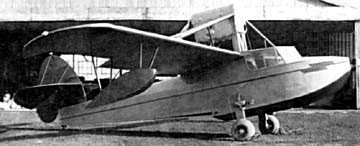
Three-seat monoplane amphibian, with Menasco Pirate engine
Donald G. White of Buffalo, New York, formed a White Aircraft Inc in 1939 to continue production, in modified form, of the Pirate amphibian designed and built previously by Argonaut Aircraft Inc.

The 1934 H-20 Pirate three seater prototype NX14760 c/n H20-100 was powered by a 120hp Curtiss Crusader, later 125hp Menasco and cost $4,975.

The one H-24 Pirate NX/NC15682 c/n H24-500 (ATC 650), designed by Howard J Heindell, was built in 1935 and cost $4,995.

H-20 Pirate
Engine: 120hp Curtiss Crusader, later 125hp Menasco C-4
Wingspan: 35’4″
Length: 26’0″
Useful load: 870 lb
Max speed: 110 mph
Cruise: 100 mph
Stall: 42 mph
Range: 490 mi
Ceiling: 12,000′
Seats: 3

H-24 Pirate
Engine: 125hp Menasco C-4
Wingspan: 42’0″
Length: 27’1″
Useful load: 650 lb
Max speed: 104 mph
Cruise: 89 mph
Stall: 45 mph
Range: 350 mi
Ceiling: 10,500′
Seats: 2

1935 Factory ad shows H-24 Pirate:
Wingspan: 35’4″
Length: 26’0″
Useful load: 680 lb
Max speed: 120 mph
Cruise: 104 mph
Stall: 40 mph
Range: 500 mi

Arctic Aircraft S2B2

In 1969, production of the Interstate Cadet was resurrected by Bill and Jan Diehl, owners of Arctic Aircraft Co. in Anchorage, Alaska. The one family operation has modified the Cadet to become a lightweight bush plane. Installation of a 150-hp Lycoming engine has markedly increased performance and useful load. Large, high flotation tires permit safe landings on beaches or riverbeds. Construction is of chromoly tubing covered with Dacron. All control cables, brake cables, fuel lines, are completely exposed. The revived Cadet, now dubbed the S2B2, has been certificated for aerobatics, and even snap maneuvers are approved.

Engine: Lycoming 150 hp
Gross wt. 1,900 lb
Empty wt. 1,100 lb
Fuel capacity 40 USG
Top speed: 115 mph
Cruise speed: 110 mph
Stall: 39 mph
Range: 650 mi
Initial climb rate: 1,000 fpm
Takeoff run: 350 ft

Arctic Aircraft S1B2 Interstate / Tern

Arctic Tern (Interstate)

A successor to the L6 Grasshopper of WW2, the S.1 BE is a strut-braced high-wing monoplane known as the Arctic Tern, a developed version of the Interstate S.1A, first flown in the 1950s.

The Tern aka Interstate S-1-B2 was 1975 continued production of Interstate L-6 (S-1-B1) revised for bush operations. Tooling and jigs re-acquired by Interstate Co in 1985. (No connection, nor similarity, between this and Rocheville-EMSCO Arctic Tern.)

Interstate S1B2 Tern
Engine: Lycoming O-320-A2B, 150 hp.
TBO: 2000 hrs.
Prop: McCauley 2-blade, 72-in.
Length: 24 ft.
Height: 7 ft.
Wingspan: 36.8 ft.
Wing area: 186.2 sq.ft.
Maximum takeoff weight: 1850 lbs.
Standard empty weight: 1075 lbs.
Maximum useful load: 775 lbs.
Maximum landing weight: 1850 lbs.
Wing loading: 9.97 lbs/sq.ft.
Power loading: 12.3 lbs/hp.
Maximum usable fuel: 240 lbs.
Best rate of climb: 1275 @ 60 kts.
Climb gradient: 765 ft/nm.
ROC @ 8000 ft: 820 fpm.
Service ceiling: 19,000 ft.
Maximum speed: 103 kts.
Stalling speed clean: 42 kts.
Stalling speed flaps down: 28 kts.
Turbulent-air penetration speed: 105 kts.
Seats: 2.
Fixed tail wheel under carriage.
First built: 1975.

Arado Ar.440

A 1942 development of the Ar 240, abandoned on favour of the Do 335. A general-purpose twin-engine, enclosed tandem two-seater. Only four were built.

Engines: 2 x Daimler Benz DB 603G, 1900 hp

Engines: 2 x Daimler Benz DB 627A, 2000 hp
Propellers: metal three-blade variable pitch
Wing span: 14,33 m
Length: 12,80 m
Height: 3,95 m
Wing area: 31,30 m²
Empty weight: 6200 kg
MTOW: 9450 kg
Wing loading: 301,916 Kg/m²
Powwer loading: 4,021 Kg/hp
Max speed: 620 Kmh at 6000 m
Cruise: 555 Kmh at 6000 m
ROC: 6000 m in 11 min
Ceiling: 10500 m
Range: 2000 km
Armament: 2 x 7,92 mm MG 17 in wing root, 2 barbettes F 13, dorsal and ventral with one 2 Mg 81 7,92 mm each.

Arado Ar.396 / SIPA S 10 / S 11 / S 12

A development of the Ar 96. A tandem two-seat advanced trainer of wooden construction, with a monoplane low wing cantilever, and retractable main landing gear. First flown on 29 December 1944.
Thr Ar.396 A1 single-seat version was armed and the Ar.396 A2 two-seater version was not armed.
Three prototypes were built but not delivered to Luftwaffe because of the end of the hostilities.
Production continued in France by SIPA after WWII as the SIPA S 10, S 11, and S 12.

Arado Ar.396 / SIPA S 11
Engine: Argus As 411 MY, 580 hp
Propeller: metal three-blade variable pitch
Wingspan: 11,00 m
Length: 9,30 m
Height: 2,45 m
Wing area: 18,30 m²
Empty weight:: 1643 kg
MTOW: 2060 kg
Max speed: 355 Kmh at 2400 m
Cruise: 275 Kmh
Ceiling: 6900 m
Range: 600 Km

Arado Ar.240

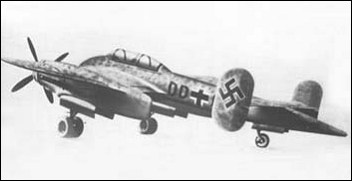
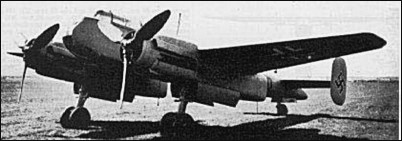
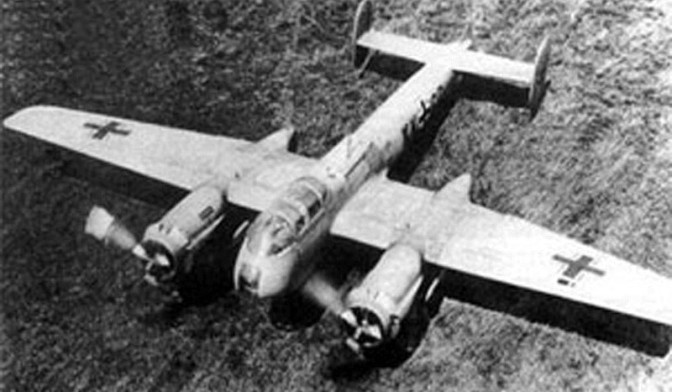
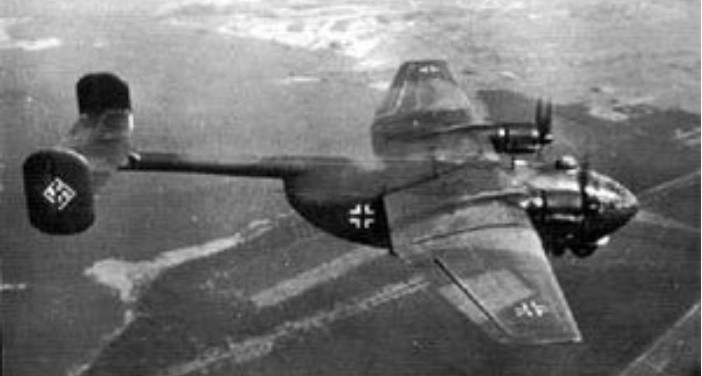
The Arado Ar 240 was designed by Walter Blume to an RLM 1938 response to replace the twin engine, two seat Messerschmitt BF 110 Zerstorer heavy fighter.

Intended to be produced as a high-speed and high-altitude reconnaissance aircraft, night fighter and bomber, the first prototype flew on 10 May 1940. Two prototypes and pre-production aircraft were completed and tested – most as reconnaissance aircraft but including examples for other roles – until 15 aircraft had been built by October 1942. The third prototype had the fuselage lengthened of 1,25 m, (12m 80 m), and equipped with 2 MG 17 of 7,92 mm in the wing root and 2 barbettes, 1 dorsal and 1 ventral, each with one 2 MG 81 of 7,92 mm.

The design was to feature a fully pressurized cockpit for two, remote-controlled operated armament and a specially designed lift flap. In addition to its heavy fighter role, the Ar 240 was to be a dive bomber as well, complicating the Ar 240 design further with the introduction of a dive braking system. The end product was a progressively heavy-laden design.

The Ar 240 was a traditional twin-engine layout with engines on a mid-mount monoplane wing. Crew was a pilot and navigator/gunner. The navigator/gunner manning two remote-controlled fuselage barbettes, each mounting twin 7.92m MG81 machine guns. An additional 2 x 7.92mm MG17 machine guns were available in fixed positions as well.

With the Ar 240A-0 series, the system had reach production stages. The definitive design would end up being the multi-purpose Ar 240C series of which several major variants would be developed. The Ar 240C version had a new aerofoil with the modified profile.

The type was used in the unarmed reconnaissance role over England during the operational trials phase of the development.

With no decision as to the best role for the aircraft, the programme was terminated in late 1942. A total of 14 were built. A few completed aircraft were taken into service by the Luftwaffe and used on the Eastern Front. Maximum level speed of the ninth aircraft, powered by two 1,304kW Daimler-Benz 603A-2 engines, was 730 km/h.

Gallery

Variants:

Variants:

Ar 240V-1 – Initial Prototype Model

Ar 240V-2 – Second Prototype Model; larger ailerons, additional vertical fin on dive braking system and inclusion of smallish radiators for improved cooling.

Ar 240V-3 – Third Prototype Model; fitted with Arado / DVL FA 9 rear-firing weapons system; armament consisted of 1 x 7.92mm MG 81Z machine gun.

Ar 240V-4 – Fourth Ordered Prototype; first in series to include operational dive brake system.

Ar 240V-5 – Fifth Ordered Prototype; fitted with updated FA 13 weapon system consisting of 2 x 13mm MG 131 cannons.

Ar 240V-6 – Sixth Prototype Model

Ar 240A-0 – Initial Production Model Series; high-altitude reconnaissance variant; four preproduction aircraft produced.

Ar 240B-0 – Proposed Fighter-Bomber/Reconnaissance Variant.

Ar 240C-0 – Multi-Role Platform

Ar 240C-1 – Heavy Fighter Variant

Ar 240C-2 – Night Fighter Variant

Ar 240C-3 – Light Bomber Variant

Ar 240C-4 – High-Altitude Reconnaissance Variant

Ar 240E-0 – Dedicated Bomber Variant

Ar 240F-0 – Dedicated Fighter Variant

Specifiactions:

Prototype
Engines: 2 x Daimler Benz 601A, 1075 hp
Propellers: metal three-bladed variable pitch
Wing span: 14,33 m
Length: 11,55 m
Height: 3,95 m
Wing area: 31,30 m².

Ar 240A
Engines: 2 x Daimler Benz DB 601E, 1175 hp
Propellers: metal variable pitch
Wingspan: 14,33 m
Length: 12,80 m
Height: 3,95 m
Wing area: 31,30 m²
Empty weight: 6200 kg
MTOW: 9450 kg
Wing loading: 301,916 Kg/m²
Power loading: 4,021kg/hp
Max speed: 620 Kmh at 6000 m
Cruise: 555 Kmh to 6000 m
ROC: 6000 m in 11 min
Ceiling: 10500 m
Range: 2000 km
Crew: 2
Armament: 2 MG 17 7,92 mm, 2 Mg 81 7,92 mm.

Engines: 2 x BMW 801TJ, 1880 hp
Propellers: metal variable pitch
Wingspan: 14,33 m
Length: 12,80 m
Height: 3,95 m
Wing area: 31,30 m²
Empty weight: 6200 kg
MTOW: 9450 kg
Wing loading: 301,916 Kg/m²
Power loading: 4,021kg/hp
Max speed: 620 Kmh at 6000 m
Cruise: 555 Kmh to 6000 m
ROC: 6000 m in 11 min
Ceiling: 10500 m
Range: 2000 km
Crew: 2
Armament: 2 MG 17 7,92 mm, 2 Mg 81 7,92 mm.
Number built: 1

Engines: 2 x Daimler Benz DB 603A, 1750 hp
Propellers: metal variable pitch
Wingspan: 14,33 m
Length: 12,80 m
Height: 3,95 m
Wing area: 31,30 m²
Empty weight: 6200 kg
MTOW: 9450 kg
Wing loading: 301,916 Kg/m²
Power loading: 4,021kg/hp
Max speed: 620 Kmh at 6000 m
Cruise: 555 Kmh to 6000 m
ROC: 6000 m in 11 min
Ceiling: 10500 m
Range: 2000 km
Crew: 2
Armament: 2 MG 17 7,92 mm, 2 Mg 81 7,92 mm.
Number built: 1

Ar 240B
Engines 2 x Daimler Benz DB 605A, 1475 hp
Empty weight: 6950 kg
MTOW: 8900 kg
Max speed: 630 Kmh at 6055 m
Cruise: 580 Kmh at 6055 m
Range: 1910 km

Ar 240C
Engines: 2 x Daimler Benz DB 603A-2, 1750 hp
Max speed: 676 Kmh
Armament:, 4 x 20 mm MG 151/20 in nose, 2 x MG 131 13 mm in barbettes, and 2 x 20 mm MG 151 in a ventral careenage.
Arado Ar.232

Arado Ar 232 Tausendfüssler

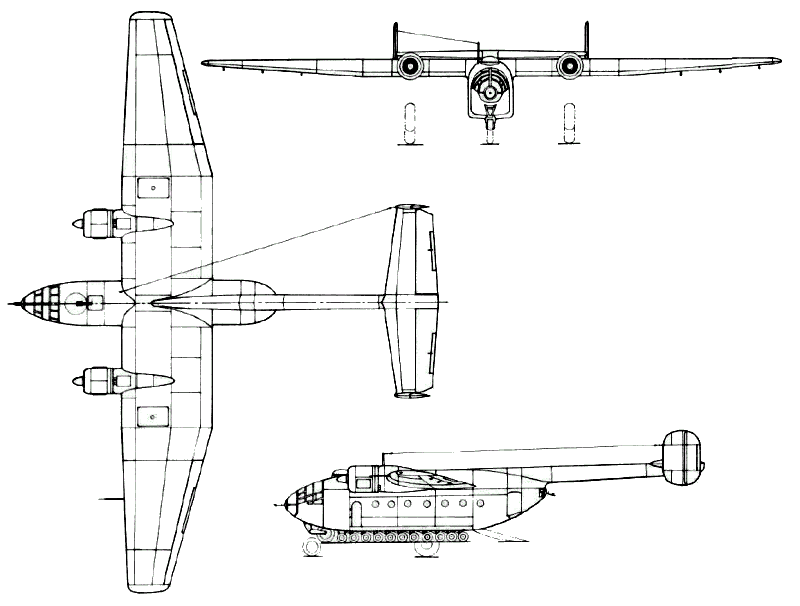
The Arado Ar 232 was built around a monocoque fuselage, designed for cargo-carrying capacity.

Known unofficially as the “millipede” (or “Tausendfussler”) thanks to the many sets of wheels utilized in the undercarriage arrangement, the Ar 232 system saw only a limited production run with no more than 22 total examples made. To that end, the Ar 232 served in an equally-limiting capacity for Luftwaffe special operations missions and one other transportation air group.

Powered was four Bramo piston engines, two mounted on each wing, each generating 1,200 horsepower. The wings were of a high monoplane with a twin-fin tail assembly. Armament was defensive and included a nose-mounted 13mm machine gun, a 20mm cannon in a dorsal turret mounting and one or two 13mm machine guns mounted at rear.

The landing gear featured a retractable main nosewheel type gear and a secondary gear of ten pairs of smaller wheels on shorter legs situated under the fuselage. The smaller wheels were normally off the ground but took the weight of the aircraft during loading and unloading when the main undercarriage legs were reduced in length to facilitate cargo handling.

The first prototype Ar.232 flew in 1941 powered by two 1,192kW BMW 801MA radial engines.

The Ar 232 series included “A” and “B models. The difference was in the choice and number of powerplants. Aircraft were built as Ar.232As or B-0s and Ar.232Bs, most of which were powered by four 894kW BMW Bramo 323R-2 radials and carried a crew of four and about 4,500kg of cargo (including vehicles).

Ar.232s, including the prototypes, served with the Luftwaffe from 1942 until 1944.

Engines: 4 x BMW 801MA radial, 1193kW
Take-off weight: 21135 kg / 46595 lb
Empty weight: 12802 kg / 28224 lb
Wingspan: 33.50 m / 109 ft 11 in
Length: 23.52 m / 77 ft 2 in
Height: 5.69 m / 18 ft 8 in
Wing area: 142.60 sq.m / 1534.93 sq ft
Ceiling: 8000 m / 26250 ft
Range: 1060 km / 659 miles

Engine: 4 x BMW Bramo 323 R-2 Fafnir, 986 hp
Wingspan: 109.908 ft / 33.5 m
Length: 77.1 ft / 23.5 m
Height: 18.701 ft / 5.7 m
Max take off weight: 46657.8 lb / 21160.0 kg
Weight empty: 22667.4 lb / 10280.0 kg
Max. speed: 183 kt / 338 km/h
Service ceiling: 26247 ft / 8000 m
Range: 702 nm / 1300 km
Armament: 3x MG 131 13mm, 1x MG 151 20mm

Arado Ar 232 Tausendfussler (Millipede)
Engines: 4 x Bramo 232-R Fafnir radial, 1,200hp each.
Length: 77.17ft (23.52m)
Wingspan: 109.91ft (33.50m)
Height: 18.70ft (5.70m)
Maximum Take-Off Weight: 46,650lbs (21,160kg)
Maximum Speed: 211mph (340kmh; 184kts)
Maximum Range: 830miles (1,335km)
Service Ceiling: 22,638ft (6,900m)
Armament:
1 x 20mm cannon (in dorsal turret)
1 x 13mm machine gun (nose-mounted)
1 or 2 x 13mm machine gun(s) (rear position mount)
Crew: 4