
Swedish Ask-Nyrop Monoplane No.1 “Gräshoppan” (Grasshopper) of 1910, built by Oskar Ask and Hjalmar Nyrop in Landskrona.
Swedish Ask-Nyrop Monoplane No.1 “Gräshoppan” (Grasshopper) of 1910, built by Oskar Ask and Hjalmar Nyrop in Landskrona.
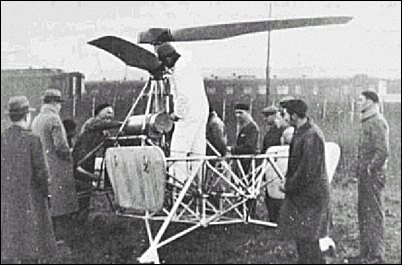
Hungarian engineer Oscar von Asboth, Director of the Austro-Hungarian State Propeller Factory, designed and tested four different helicopters.
He worked alongside von Karman, and in particular was responsible for the development work on the rotors for the Petroczy-von Karman helicopter, and between 1928 and 1931, now working in Budapest, von Asboth tested various contra-rotating co-axial two-bladed rotors only 4.35m in diameter.
Stability was achieved in the helicopters by the the air which the rotors directed on to six mobile surfaces round the horizontal hinges. These six ‘deflectors’ were operated by the pilot, using traditional aircraft controls.
The fourth model, known as AH 4, had, instead of a Le Rhone 110hp rotary, a Clerget 130hp engine, which drove not only the rotors but also a tractor propeller. This rotorcraft in flying condition weighed 410kg, and could climb at a rate of 2m/s. By mid-1930 the aircraft reportedly attained an altitude of 30m and covered 3.2km at about 19km/h.
About 1930 two missions, one British, the other French, went to Budapest to von Asboth. An expert in the British mission named Liptrot climbed to a height of 31m, and flew for a distance of 2800m. Von Asboth then completed his research particularly into his rotor system, the blades of which contained a movable part extending from the hub to the middle, and a fixed part from the middle to the tip of the blade. He then went to England, where the Blackburn Company became his licensee.
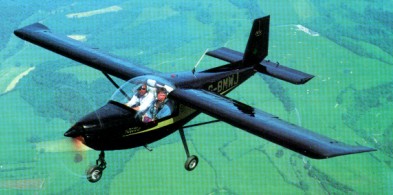
Richard Nobles design team aimed for an aircraft that was inexpensive to fly and buy; have two seats; should have an all-metal airframe; and be available as either factory assembled or as a simply assembled kit. The engine, custom-designed by Mike Hewland, is an inverted, inline three cylinder, 77 hp, water-cooled engine weighs in at 120 lbs with a 14 lb radiator located under the fuselage behind the cabin. It featured electronic ignition. The aircraft has been approved to United States FAR Part 23 requirements.
The engine burns a two stroke mixture on a 40-1 ratio although testing has provided satisfactory performance throughout a range of 20-1 to 95-1. Fuel burn is around three gallons an hour, either an avgas or mogas mix with oil.
The prototype, G OARV, made its first flight on 1lth March 1985 and was followed into the air by the second aircraft on 12th November. The fourth (004) was delivered in kit form to L.Wensley of Lincoln.
The Super 2 was later developed into the Swedish, certificated, Opus 280 by ASL Hagfors.
The Super 2 later became the Island Aircraft ARV-1 Super 2, then the Aviation Scotland ARV-1 Super2.
Highlander Aircraft Corp offered Highlander two-seat monoplane in kit form circa 1997.
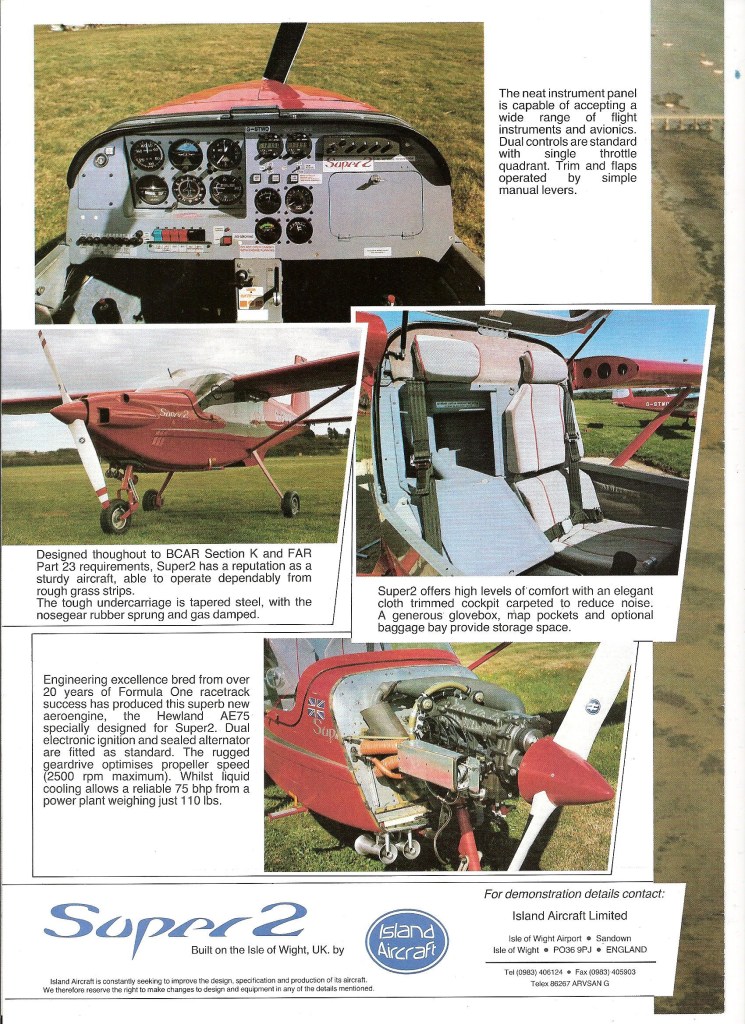
ASL Hagfors Aero AB of Sweden marketed a certificated version of the ARV Super 2 Highlander, as the Opus 280.
ARV Super 2
Engine: Hewland AE75, 77 hp
Length: 18.045 ft / 5.5 m
Height: 7.546 ft / 2.3 m
Wingspan: 28.543 ft / 8.7 m
Wing area: 92.57 sq.ft / 8.6 sq.m
Max take off weight: 1102.5 lb / 500.0 kg
Weight empty: 674.7 lb / 306.0 kg
Max. weight carried: 427.8 lb / 194.0 kg
Max. speed: 103 kt / 190 km/h
Landing speed: 48 kt / 88 km/h
Cruising speed: 86 kt / 160 km/h
Initial climb rate: 590.55 ft/min / 3.00 m/s
Service ceiling: 13123 ft / 4000 m
Wing load: 11.89 lb/sq.ft / 58.0 kg/sq.m
Range: 367 nm / 680 km
Crew: 2
Engine: MWAE AE100R (100hp 2 rotor Wankel).
Max speed: 98 kts.
Cruise: 84 kts.
Highlander Aircraft Highlander
Engine: Rotax 912, 80 hp.
Speed max: 145 mph.
Cruise: 125 mph.
Range: 530 sm.
Stall: 50 mph.
ROC: 800 fpm.
Take-off dist: 600 ft.
Landing dist: 700 ft.
Service ceiling: 10,000 ft.
Fuel cap: 20 USG.
Weight empty: 715 lbs.
Gross: 1165 lbs.
Height: 10 ft.
Length: 18 ft.
Wing span: 29.5 ft.
Wing area: 92.5 sq.ft.
Seats: 2.
Landing gear: nose wheel.
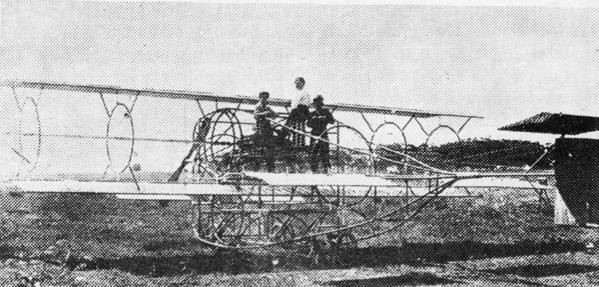
Designed by Argentinian amateur Enrique Artigalá and known as the Argentino 1ro, quoted as fitted with a 50 hp Gnôme and built during 1911.
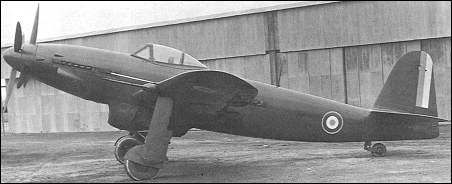
Designed by Ingenieur-General Vernisse and M Badie, the VB 10 was an all-metal single-seat fighter powered by engines mounted in tandem fore and aft of the pilot’s cockpit and driving contra-rotating co-axial propellers. Thirty VG 10s were ordered off the drawing board in May 1940, and work continued under the Vichy government. The first prototype with two 860hp Hispano- Suiza 12Y31 12-cylinder liquid-cooled engines was flown on 7 July 1945. The second prototype with 1150hp HS 12Z12/13 engines and an armament of four 20mm Hispano-Suiza cannon and six 12.7mm Browning machine guns flew on 21 September 1946. A contract for 200 aircraft had been placed on 22 December 1945 (this later being cut back to 50 aircraft), and the first production VB 10 flew on 3 November 1947 with 1150hp HS 12Z Ars 15/16 engines and an armament of four 20mm cannon. Production was cancelled on 21 September 1948 after completion and testing of four series aircraft.
VB 10
Take-off weight: 8860 kg / 19533 lb
Empty weight: 6230 kg / 13735 lb
Wingspan: 15.49 m / 50 ft 10 in
Length: 12.98 m / 42 ft 7 in
Height: 5.20 m / 17 ft 1 in
Wing area: 35.50 sq.m / 382.12 sq ft
Max. speed: 700 km/h / 435 mph
Range: 1700 km / 1056 miles
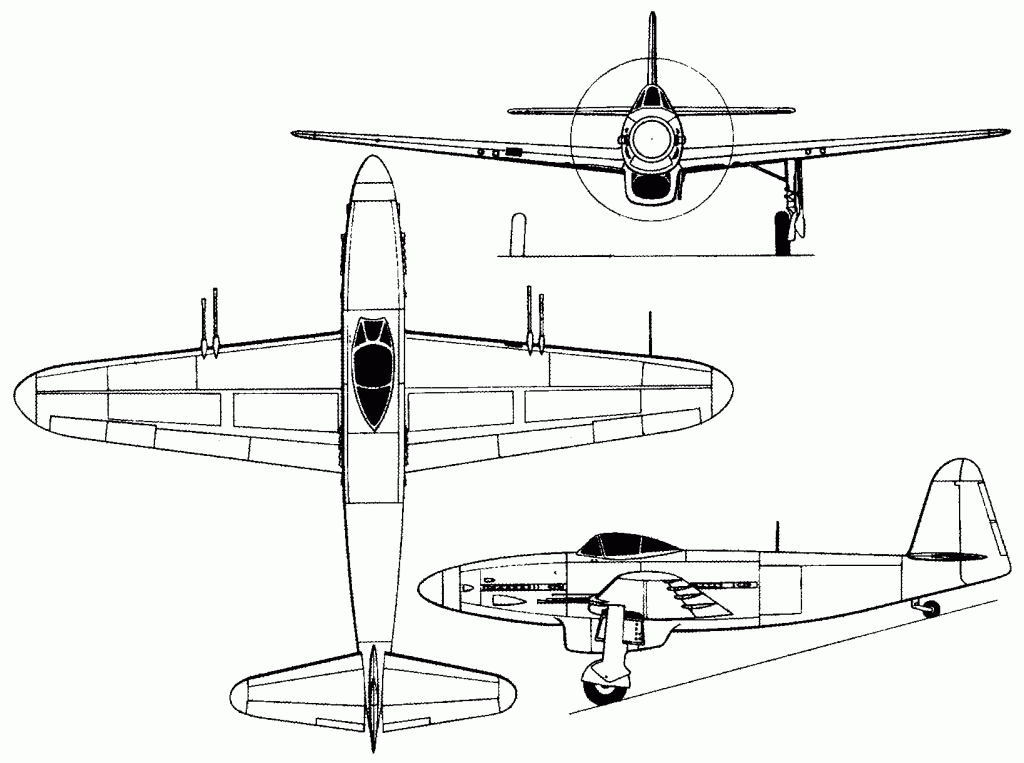

Designed by Maurice Delanne, the Arsenal-Delanne 10-C2 two-seat fighter was built by the Arsenal de l’Aeronautique. Of so-called Nenadovich biplane configuration, the tandem-mounted wings provided a continuous slot effect and offered a large C of G range. Of metal stressed-skin construction and powered by an 860hp Hispano-Suiza 12Ycrs 12-cylinder liquid-cooled engine, the Arsenal-Delanne 10-C2 prototype was virtually complete at Villacoublay when German forces occupied the factory in June 1940, work on the aircraft continued and the first flight test was made in October 1941. After completion of the initial test programme, the aircraft was ferried to Germany for further trials. The intended armament comprised an engine-mounted 20mm Hispano-Suiza cannon, two wing-mounted 7.5mm MAC 1934 machine guns and two further 7.5mm weapons on a flexible mounting.

Arsenal-Delanne 10-C2
Engine: 860hp Hispano-Suiza 12Ycrs 12-cylinder liquid-cooled
Take-off weight: 2880 kg / 6349 lb
Wingspan: 10.11 m / 33 ft 2 in
Length: 7.33 m / 24 ft 1 in
Height: 3.06 m / 10 ft 0 in
Wing area: 22.5 sq.m / 242.19 sq ft
Max. speed: 550 km/h / 342 mph

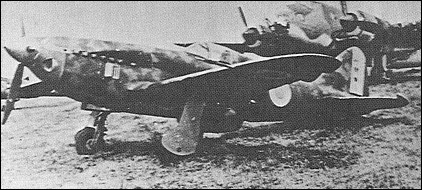
The VG 39 development in the VG 30 series of fighters commenced its flight test programme on 3 May 1940. The prototype differed from the VG 33 mainly by having a 1200hp Hispano-Suiza Type 89ter 12-cylinder liquid-cooled engine with an elongated propeller shaft, a revised wing structure, and a wing-mounted armament of six 7.5mm MAC 1934 M39 machine guns.
During flight testing the prototype VG 39 attained a maximum speed of 625km/h at an altitude of 5750m. The planned production model, the VG 39bis, was to have embodied a fuselage similar to that of the VG 36 and to have supplemented the wing armament with a 20mm engine-mounted cannon, the definitive model having a 1600hp Hispano-Suiza 12Z engine.
VG 39
Wingspan: 10.80 m / 35 ft 5 in
Length: 8.75 m / 28 ft 8 in
Wing area: 14.00 sq.m / 150.69 sq ft
Max. speed: 625 km/h / 388 mph
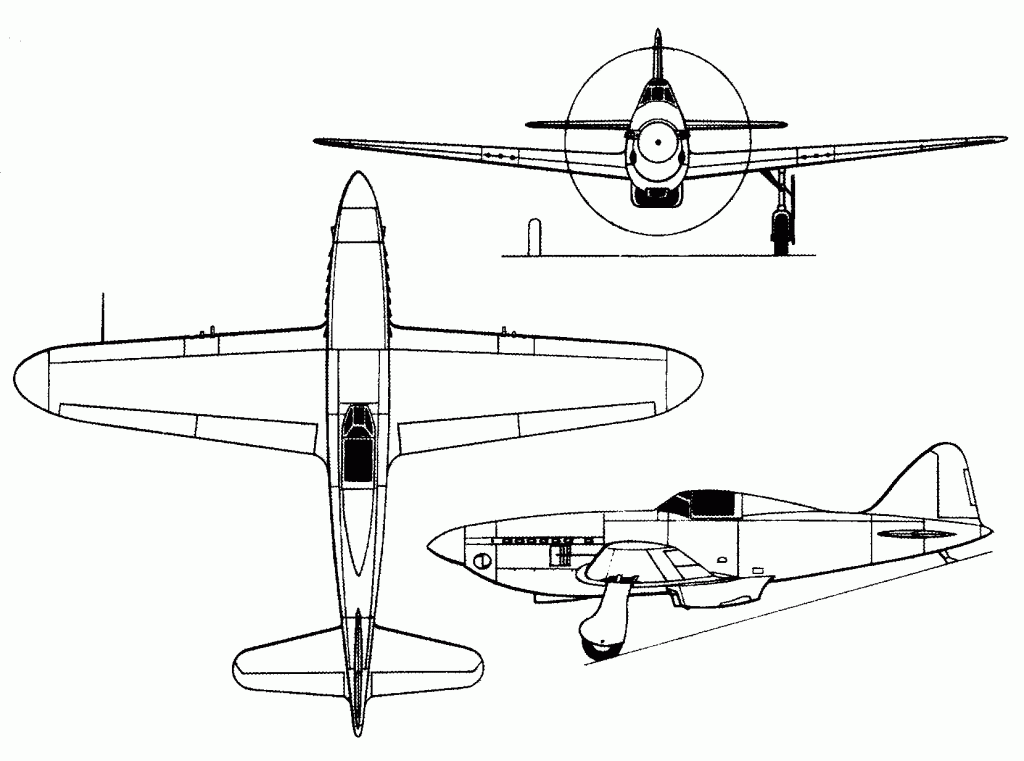
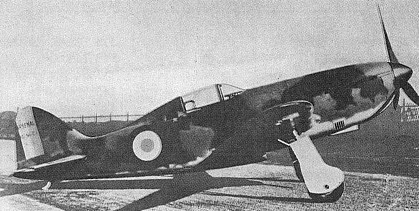
Developments of the VG 33 under test in 1940 included the VG 34, flown on 20 January 1940 with a 910hp Hispano-Suiza 12Y45 engine, and the VG 35 with a 1000hp Hispano-Suiza 12Y51 which flew on 25 February 1940. The VG.35 attained a maximum speed of 575km/h at 6200m during tests, and the airframes and armament of both the VG 34 and VG 35 were identical to those of the VG 33.
The VG 36 flown on 14 May 1940, had the 1000hp HS12Y51 of the VG 35, but included some redesign of the rear fuselage with a shallower, wider faired radiator bath. Armament of the VG 36 comprised one 20mm HS 404 cannon and four 7.5mm MAC 1934 M39 machine guns.
VG 36
Wingspan: 10.80 m / 35 ft 5 in
Length: 8.10 m / 26 ft 7 in
Height: 3.31 m / 10 ft 10 in
Wing area: 14.00 sq.m / 150.69 sq ft
Max. speed: 590 km/h / 367 mph
Ceiling: 7000 m / 22950 ft
Range: 1100 km / 684 miles
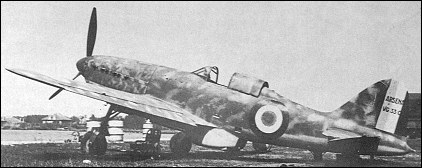
A derivative of the VG 30, the VG 31, differed by having the radiator bath moved aft to improve the C of G, and having a smaller wing of 12.00 sq.m. It was proposed to power this development with an 860hp Hispano-Suiza 12Y31 12- cylinder liquid-cooled engine, but the prototype was never assembled.
The VG 32 reverted to the original wing and was powered by a 1,040hp Allison V-1710- C15 engine, but the prototype was captured by German forces at Villacoublay two weeks before its scheduled maiden flight in 1940.
The first development of the basic design to fly was the VG 33, on 24 May 1939. A production contract for 220 examples was placed in September 1939, this contract eventually being increased to 1,000 machines, but only 19 had been completed by the Chantiers Aero-Maritimes de la Seine by the fall of France.
The VG 33 was armamed with one 20mm Hispano-Suiza 404 cannon and four 7.5mm MAC 1934 M39 machine guns, and was powered by an 860hp Hispano-Suiza 12Y31 engine.
VG.33
Engine: 860hp Hispano-Suiza 12Y31
Take-off weight: 2720 kg / 5997 lb
Empty weight: 1800 kg / 3968 lb
Wingspan: 10.80 m / 35 ft 5 in
Length: 8.55 m / 28 ft 1 in
Height: 3.35 m / 10 ft 12 in
Wing area: 14 sq.m / 150.69 sq ft
Max. speed: 558 km/h / 347 mph
Cruise speed: 487 km/h / 303 mph
Ceiling: 11000 m / 36100 ft
Range: 1200 km / 746 miles
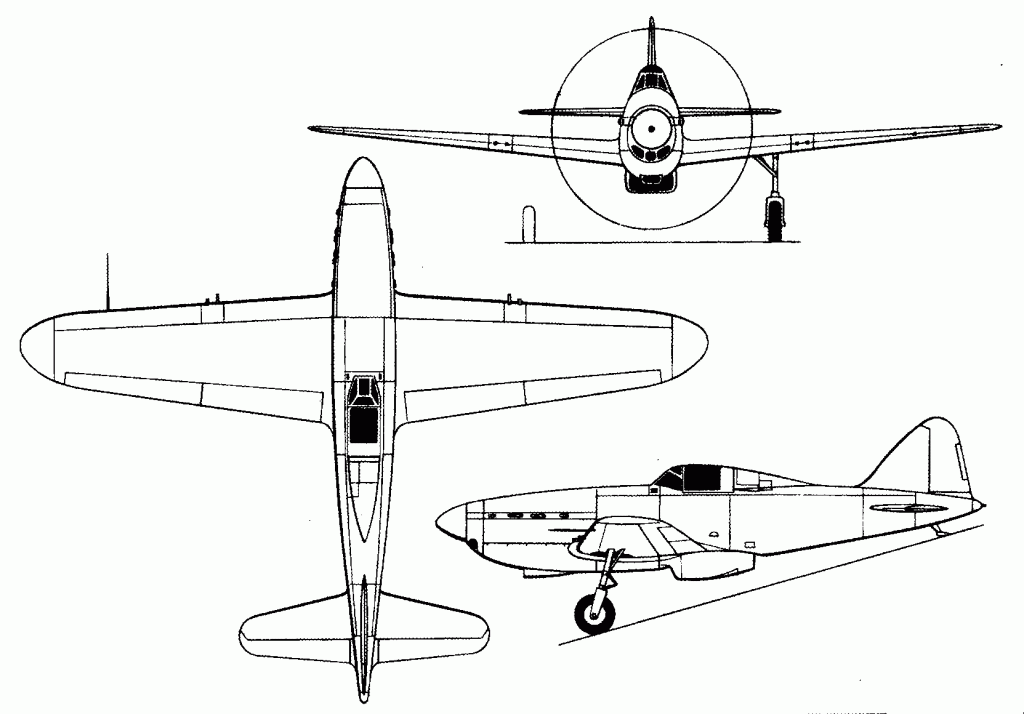
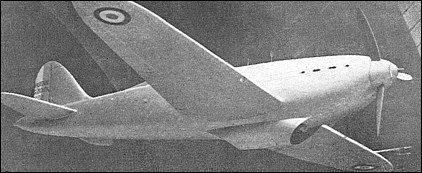
The VG 30 had a wooden stressed-skin construction and was intended to be powered by a Potez 12 Dc “flat-twelve” air-cooled engine of 610hp at 1000m and mounting a 20mm Hispano motor cannon.
Designed by Ingenieur-General Vernisse and Jean Galtier the VG 30 single-seat fighter was built by the Arsenal de l’Aeronautique and was evolved to compete with the Caudron C.713 to meet a lightweight interceptor requirement. A full-scale mock-up of the VG 30 was exhibited at the Exposition Internationale in Paris in the summer of 1936 but development was delayed by the non-availability of the Potez 12 Dc engine. The prototype was eventually flown at Villacoublay on 1 October 1938 with a 690hp Hispano- Suiza 12 Xcrs 12-cylinder liquid-cooled engine. The VG 30 proved faster than the Morane-Saulnier 406 and, in July 1939, allegedly attained 805km/h in a dive between 4000m and 2000m. Proposed armament comprised one 20mm Hispano- Suiza 404 cannon and four 7.5mm MAC machine guns. Development was abandoned in favour of the VG 33.
VG 30
Wingspan: 10.80 m / 35 ft 5 in
Length: 8.40 m / 27 ft 7 in
Height: 3.31 m / 10 ft 10 in
Wing area: 14.00 sq.m / 150.69 sq ft

