A 1925 single place, open cockpit biplane.
Engine: 90hp Curtiss OX-5
Loaded weight: 700 lb
A 1925 single place, open cockpit biplane.
Engine: 90hp Curtiss OX-5
Loaded weight: 700 lb
The 1916 Potlatch Bug was a single place, open cockpit biplane, built as an exhibition plane for motion picture work. One example was built, powered by a 50hp Adams-Farwell rotary.
In 1913 Babcock built a replica German Taube, with a gull-wing. The open cockpit, single place Taube was a mid-wing monoplane.
In 1913 Babcock built one copy of the Curtiss pusher. A single seat, open cockpit biplane.
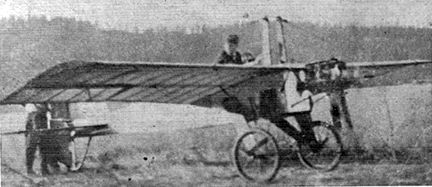
In 1910, Babcock built a vaguely Blériot copy. The first confirmed aircraft built and flown by Vearne C. Babcock and equipped with a 35 horse-power Curtiss engine.
A single place, open cockpit, mid-wing monoplane, only one was built.
It was listed as scheduled to fly at an air meet in Seattle, Washington, on June 11, 1911, however, poor weather brought the meet to a premature close.
Babcock built two airworthy copies of the Wright Biplane; in 1905 and 1909.
They were likely sold for exhibition work.
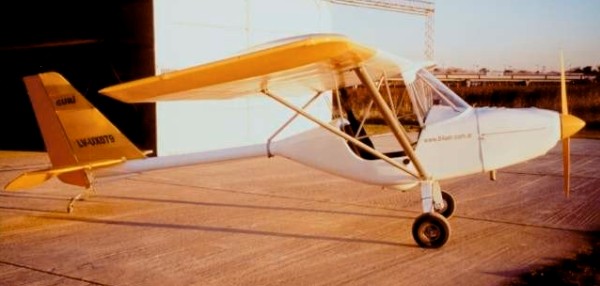
The design goal for the Gurí was for a versatile ultralight and also an airplane kit that is easy to build. The Gurí design uses metalic and composites where it made the most sense from an engineering and a construction standpoint. The Gurí constant-chord wings are aluminum and fabric, with slotted ailerons and flaps.
For the compound curves of the cockpit, fiberglass composites are used. Fiberglass fabrics and epoxy-vinylester resin factory molding cockpit, landing gear and several parts insures a smooth finish and a simple assembly project. Rear fuselage is a 6 inch diameter aluminum tail boom with aluminum tube and fabric tail surfaces.
The main goal of the kit is the assembly of parts supplied, covering the flight surfaces, install system and engine, ulphostery and painting. It does not include a engine, prop, paint and instruments.
Optional equipment includes wheel pants, instruments, floats, and ballistic chute. This aircraft can have 50 HP to 80 HP engine. Price 2009: 18000 USD
BA-5 Gurí
Engine: Rotax 503 50 HP
Cruise speed @ 75%: 110 km/h (70 mph)
Stall speed: 55 km/h (35 mph)
Rate of Climb: 3 m/s (600 ft/m)
Never exceded speed (VNE): 190 km/h (120 mph)
Range: 500 km.(313 m.)
Takeoff Distance: 150 m.(500 ft.)
Landing Distance: 150 m.(500 ft.)
Glide ratio: 12:1
G Loading: +6 -4gs
Fuel Consumption: 15 lts/hr
Fuel capacity: 70 lts.
Span: 10 m.(33 ft.)
Length: 6 m.(20 ft.)
Wing area: 14 sq.m (150 sq.ft)
Chord: 1.4 m.(55 in)
Empty weight: 225 kg.(495 lb.)
Gross weight: 450 kg.(1000 lb.)
Cockpit width: 1.05 m.(42 in)
Baggage capacity: 15 kg.(33 lb.)
Seats: 2
BA-5 Gurí
Engine: HKS 700E 60HP
Cruise speed @ 75%: 120 km/h (75 mph)
Stall speed: 55 km/h (35 mph)
Rate of Climb: 3.5 m/s (700 ft/m)
Never exceded speed (VNE): 190 km/h (120 mph)
Range: 840 km.(525 m.)
Takeoff Distance: 150 m.(500 ft.)
Landing Distance: 150 m.(500 ft.)
Glide ratio: 12:1
G Loading: +6 -4gs
Fuel Consumption: 10 lts/hora
Fuel capacity: 70 lts.
Span: 10 m.(33 ft.)
Length: 6 m.(20 ft.)
Wing area: 14 sq.m (150 sq.ft)
Chord: 1.4 m.(55 in)
Empty weight: 225 kg.(495 lb.)
Gross weight: 450 kg.(1000 lb.)
Cockpit width: 1.05 m.(42 in)
Baggage capacity: 15 kg.(33 lb.)
Seats: 2
BA-5 Gurí
Engine: Rotax 582 64HP
Cruise speed @ 75%: 130 km/h (80 mph)
Stall speed: 55 km/h (35 mph)
Rate of Climb: 4 m/s (800 ft/m)
Never exceded speed (VNE): 190 km/h (120 mph)
Range: 500 km.(313 m.)
Takeoff Distance: 100 m.(330 ft.)
Landing Distance: 150 m.(500 ft.)
Glide ratio: 12:1
G Loading: -4gs +6
Fuel Consumption: 18 lts/hr
Fuel capacity: 70 lts.
Stall: 32 kt / 37 mph / 60 kmh
Cruise: 70 kt / 81 mph / 130 kmh
VNE: 103 kt / 118 mph / 190 kmh
Empty Weight: 230 kg / 507 lbs
MTOW Weight: 450 kg / 992 lbs
Climb Ratio: 800 ft/min / 4 m/s
Glide Ratio: 10
Span: 10 m.(33 ft.)
Length: 6 m.(20 ft.)
Wing area: 14 sq.m (150 sq.ft)
Chord: 1.4 m.(55 in)
Empty weight: 225 kg.(495 lb.)
Gross weight: 450 kg.(1000 lb.)
Cockpit width: 1.05 m.(42 in)
Baggage capacity: 15 kg.(33 lb.)
Seats: 2
BA-5 Gurí
Engine: Rotax 912 80 HP
Cruise speed @ 75%: 150 km/h (90 mph)
Stall speed: 60 km/h (38 mph)
Rate of Climb: 5m/s (1000 ft/m)
Never exceded speed (VNE): 190 km/h (120 mph)
Range: 800 km.(500 m.)
Takeoff Distance: 80 m.(260 ft.)
Landing Distance: 150 m.(500 ft.)
Glide ratio: 12:1
G Loading: +6 -4gs
Fuel Consumption: 12 lts/hr
Fuel capacity: 70 lts.
Span: 10 m (33 ft.)
Length: 6 m (20 ft.)
Wing area: 14 sq.m (150 sq.ft)
Chord: 1.4 m.(55 in)
Empty weight: 225 kg.(495 lb.)
Gross weight: 450 kg.(1000 lb.)
Cockpit width: 1.05 m.(42 in)
Baggage capacity: 15 kg.(33 lb.)
Seats: 2
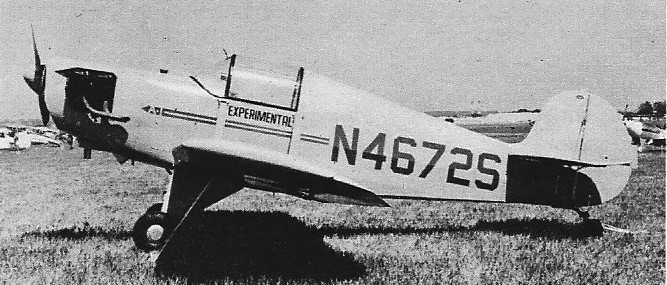
Donald E Aydlett began construction of the sole A-1 in 1963, flying it on 6 July 1965. It was a low wing monoplane of mixed wood and steel construction. The wing was a fabric covered wood structure, with streamlined lift struts from the upper fuselage longerons. The fuselage and tail unit were steel, again fabric covered, and the tail unit was wire braced. The tailplane was on top of the fuselage; the rounded fin carried a generous, unbalanced rudder. The cockpit, over the wing, was enclosed by a canopy which merged at the rear with the raised fuselage decking. Power came from a 125 hp (93 kW) flat four Lycoming O-290-G, mounted with cylinder heads and exhaust pipes exposed. The A-1 had a fixed, conventional undercarriage, with mainwheels mounted on faired V-struts and a tailwheel.
Only one [N4672S, C/N 1001] was ever built.
Engine: 1 × Lycoming O-290-G, 125 hp (93 kW)
Propellers: 2-bladed fixed pitch
Wingspan: 22 ft 3 in (6.78 m)
Length: 17 ft 0 in (5.18 m)
Height: 6 ft 0 in (1.83 m)
Empty weight: 690 lb (313 kg)
Max takeoff weight: 1,200 lb (544 kg)
Maximum speed: 185 mph (298 km/h; 161 kn)
Cruise speed: 115 mph (100 kn; 185 km/h)
Service ceiling: 15,000 ft (4,572 m)
Rate of climb at sea level: 1,000 ft/min (5.1 m/s)
Seats: 1
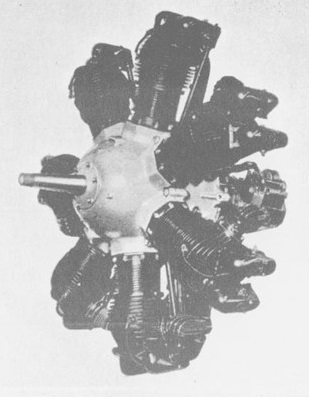
The Axelson B cylinder barrels are Ni-Cr steel forgings, with cylinder heads of cast aluminium alloy screwed and shrunk on to the barrels. Coolong pins are machined integral with the barrel. Hinged rocker boxes compensate for heat expansion, automatically maintaining valve tappet clearance regardless of engine temperature. .
Approved Dept. Commerce Certificate No.16
Type: 7 cylinder, fixed radial, air cooled
Rating: 150 hp at 1800 rpm
Displacement: 612.3 cu.in
Compression ratio: 5-1
Bore: 4.5 in
Stroke: 5.5 in
Diameter: 45 in
Length: 37.75 in
Weight: 420 lb
Fuel consumption: not more than .55 lb/hp/hr
Oil consumption: not more than .017 lb/hp/hr
Lubrication: Duplex gear pressure pump, 60-70 lb, ½ crankshaft speed
Ignition: 2 Scintilla Magnetos, MN-7 D type
Carburation: Stromberg NAR 5-A
Spark plugs: 1 per cylinder
Price: $2950
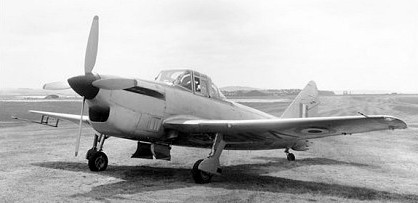
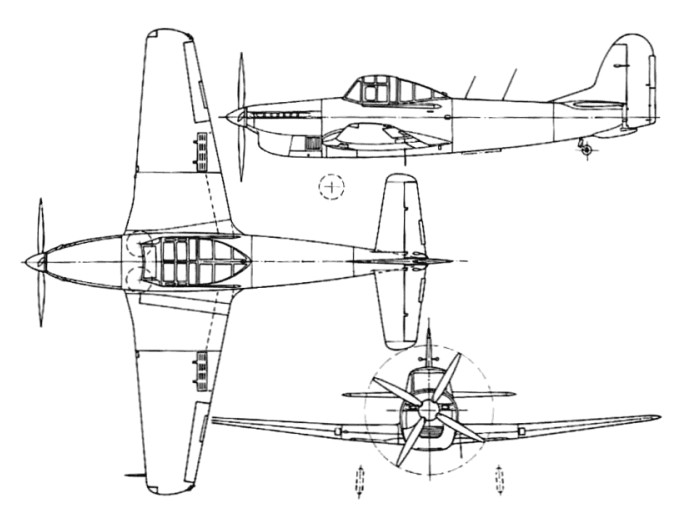
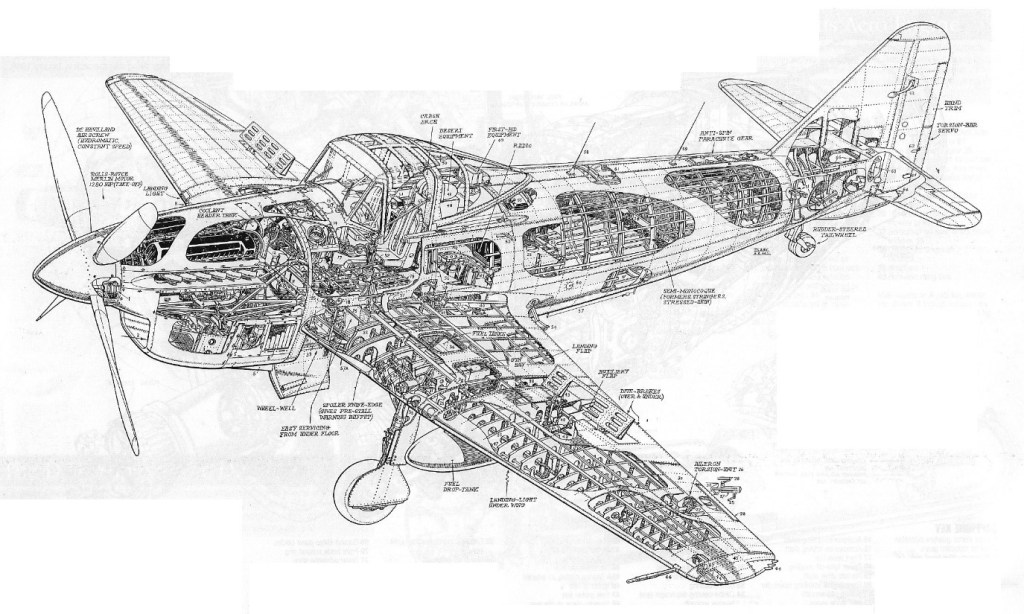
The Athena was a single engine side-by-side two seat trainer with a tail wheel undercarriage. designed to Specification T.7/45 for a three-seat turbo-prop advanced trainer.
Two turbo-prop versions were developed, the Athena T.1 with a 1135 eshp A.S. Mambe A.S.Ma.1, and the Athena T.1A with a 1125 eshp Rolls-Royce Dart R.Da.1
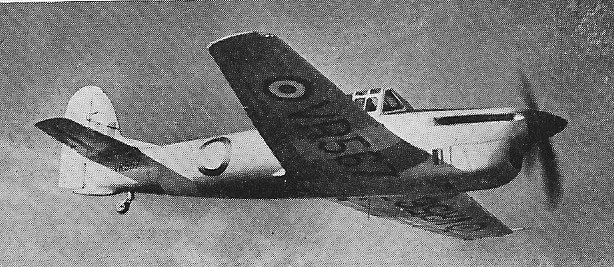
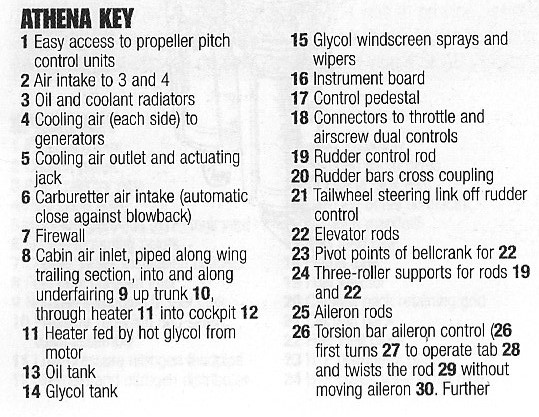
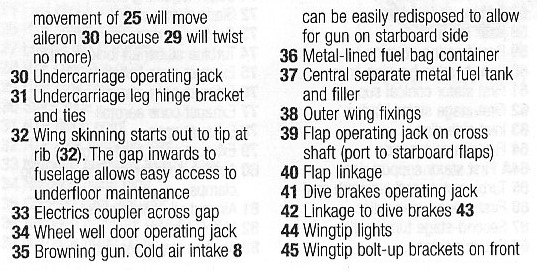
The design was then modified to meet specification T.14/47, and seventeen pre-production Athena T.2s were built, powered by the 1280 hp / 954kW Rolls-Royce Merlin 35. First flown in 1948, the Athena T.2 advanced trainer was in pro¬duction by 1950. These eventually went to the RAF Flying College, Manby, as gunnery trainers.
Athena T.Mk 2
Engine: 1 x Rolls-Royce Merlin 35, 1280 hp / 954kW
Take-off weight: 4256 kg / 9383 lb
Empty weight: 2966 kg / 6539 lb
Wingspan: 12.19 m / 40 ft 0 in
Length: 11.37 m / 37 ft 4 in
Height: 3.94 m / 13 ft 11 in
Wing area: 25.08 sq.m / 269.96 sq ft
Max. speed: 472 km/h / 293 mph
Cruise speed: 359 km/h / 223 mph
Ceiling: 8840 m / 29000 ft
Range: 885 km / 550 miles