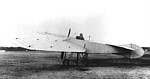
The 1913 Badaire monoplane was designed and built by Maurice Badaire in France.
The 1913 Badaire monoplane was designed and built by Maurice Badaire in France.
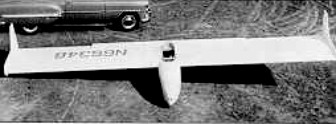
The Flying Plank was developed in 1954 by Al Backstrom, assisted by Phil Easley and Jack Powell. The prototype EPB-1 was used for drag reduction tests at the Mississippi State College, using a modified Abrial reflex airfoil.
Plans for the -1A development were sold and a number built, most with twin wingtip rudders, but some were completed with a central fin and rudder at the end of a lengthened fuselage (EPB1-C) to improve performance and control. Span have varied up to 9.30 m / 30.5 ft. A self-launching model was developed later.
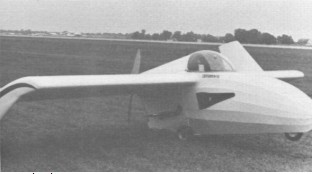
Except for the fiberglass nose cap for the fuselage, standard wood structure was used throughout, and construction time for an experience woodworker was in the neighborhood of 600 hours. More than 150 sets of plans were sold.

Construction of the powered Plank was begun in 1972, most of the work being done by Van White, a director of the EAA (Experimental Aircraft Association). It was intended originally to fit a Sachs Wanzel or OMC snowmobile Wankel engine, but as neither became available, a fan-cooled single-ignition Kiekhaefer Aeromarine 440 was installed, driving a two-bladed pusher propeller via belts.
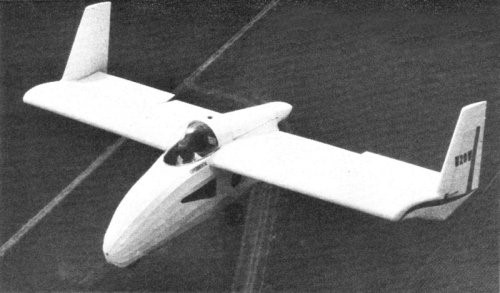
The original tandem-wheel/outrigger undercarriage was replaced by a more robust tricycle unit in 1976.
An improved version, the “Super Plank”, was under development in 1973. At least two of them were built, including N20WB, by Larry Linville and Dennis Harmon. Backstrom also built a motor glider light aircraft called WPB-1 Powered Plank in early 1970s.
The Backstrom WPB-1 is on display at the Airpower Museum in Blakesburg, IA. And the Vintage Sailplane Association has plans.
EPB-1A
Wing Span: 7.62m / 25ft
Wing Area: 9.29sq.m / 100sq.ft
Empty Weight: 68kg / 150lb
Payload: 91kg / 200lb
Gross Weight: 159kg / 350lb
Wing Load: 17.11kg/sq.m / 3.5lb/sq.ft
L/DMax: 20@ 97 kph / 52 kt / 60 mph
Seats: 1
MinSink: 1.07 m/s / 3.5 fps / 1.88 kt
Aspect ratio: 6.25
Airfoil: Abrial 15%
Structure: wood / fabric
WPB-1 N20WB
1975
Engine: 40hp Kiekhafer Aeromarine 440
Wingspan: 21’0″
Length: 11’0″
Useful load: 220 lb
Max speed: 106 mph
Stall: 55 mph
Seats: 1

The Bacon Super T-6 was a North American AT-6F Texan that was modified during the mid-1950s by the Erle L. Bacon Corporation in an attempt to interest foreign air forces in an upgrade for their T-6 fleets.
Produced in 1944 and operated by the United States Army Air Forces alongside its brethren, following the end of World War II AT-6F Texan 44-82028 was sold on the civilian market, operating in Iceland for a time before being acquired by Bacon for conversion.
Described as appearing “like an illicit hangar affair between a T-33 and a T-6”, the conversion consisted of adding the tip tanks ex-Cessna 310, canopy, and tricycle landing gear from a Lockheed T-33 Shooting Star; streamlining of the cowl and wings including jet stack exhaust, augmenter cooling, and a 4-foot (1.2 m) reduction in wingspan compared to the standard T-6; in addition, the cockpit was upgraded with a revised instrument panel and modernized avionics, and the aircraft’s brakes were upgraded.

Bacon hoped to sell the conversion to foreign air forces, many of which operated large fleets of T-6 aircraft; after taxi trials at the end of 1956, it first flew in April 1957, and flight testing was considered generally successful. No interest from its intended customers materialized and the aircraft was sold on the civilian market; it eventually received a paint scheme, believed to have been intended for a role in a movie, resembling that of a Russian fighter aircraft.

It was stored at Whiteman Air Park in California, and allowed to deteriorate in the elements, with its registration being cancelled in 2013.
Powerplant: 1 × Pratt & Whitney R-1340-AN-1 Wasp, 600 hp (450 kW)
Propeller: 2-bladed variable-pitch
Wingspan: 38 ft 6 in (11.73 m)
Length: 29 ft 6 in (8.99 m)
Height: 11 ft 8.5 in (3.569 m)
Fuel capacity: 100 US gal (83 imp gal; 379 L) in two tip tanks
Maximum speed: 225 mph (362 km/h, 196 kn)
Cruise speed: 215 mph (346 km/h, 187 kn) at 64% power
Rate of climb: 1,750 ft/min (8.9 m/s) at sea level
Crew: 2
Armament: .30-inch (7.6 mm) machine guns, underwing bomb racks or rocket launchers optional
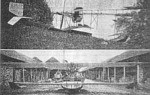
The 1913 Bachelier-Dupont-Baudrin biplane flying-boat was designed and built by Bachelier, Dupont and Baudrin in France.
Span: upper 36’9″ lower 29’6″
Length: 26’3″
Weight empty: 836 lbs
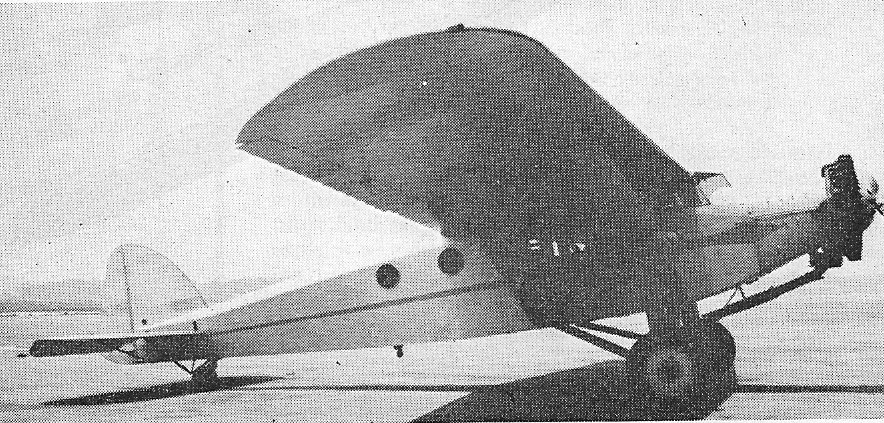
The Morton L. Bach Model T-11-P is believed to be the only one of the thirty tri-motor Model 3-CT-S/’5/’6/’8/’9/’9K and ‘9S six-ten-seaters converted (in the summer of 1934) to a single radial.
Engine: Pratt & Whitney Hornet A, 525 hp
AUW: 7000 lb
Empty weight: 4175 lb
Crew: 2
Passengers: 6-8
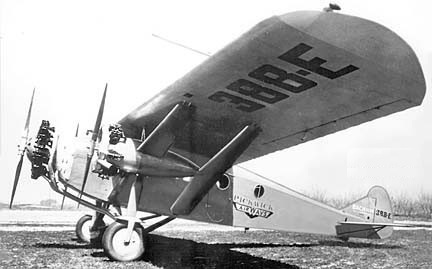
The Bach Air Yacht of 1928 was a three-engined commercial transport with a maximum capacity of two crew and ten passengers.
The first Air Yacht was the 1928 N5082 c/n 1. Three more in the registrations are identified only as Air Yacht with no model designation: N3534 c/n 1 had a J-5 + two Kinners; N3997 c/n 1 had one Wright J-5 + two Siemens; N4184 shows nothing but a c/n 2.
1928 3-CT-2 Air Yacht NC7065 c/n 1 was a 10-place powered by one Wright J-5 + two 100hp Ryan-Siemens.
In 1928 two 3-CT-4 Air Yacht were built; NC7657 c/n 3 and N7658 c/n 4. Powered by one P&W Wasp + two 100hp Ryan-Siemens, both were 10-place.
The sole 3-CT-5 Air Yacht, built in 1929, NC7092 c/n 2 received ATC 2-98 and was powered by one 450hp P&W Wasp + two 130hp Comet. It too was 10-place.
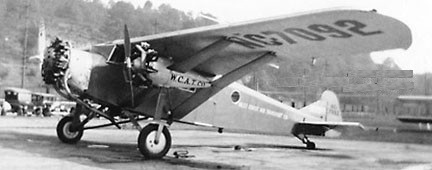
The 1929 3-CT-6 Air Yacht (ATC 114) sold for $39,500 powered by one 525hp P&W Hornet + two 130hp Comet. A 12-place, five were built for Pickwick Airways (N219H c/n 10, N302E c/n 6, N388 c/n 5, NC539E c/n 7, and NC850E c/n 8 c/ns.
N19H and N388 were rebuilt into a single-engine, the latter as a sesqui-wing banana-duster with an added smaller lower wing. Used in 1933 in Honduras by United Fruit Company, registered XH-TRA.
Interesting is that N388E, pictured at top and shown in Summer 1967 AAHS Journal, is not in the registers—that number is worn by an Arrow Sport.
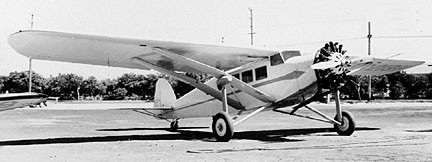
Four 10-place 3-CT-8 Air Yacht (ATC 172) were built in 1929 NC53M c/n 16, NC54M c/n 17, NC245K c/n 15, and NC8069 c/n 11. They were priced at $39,500.
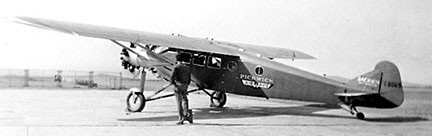
The 1929 10-place 3-CT-9 Air Yacht (ATC 271) was powered by one 450hp P&W Wasp + two 225hp Wright J-6-7 engines and priced at $39,500.
At least three were built; NC511V c/n 21, NC520M c/n 18, and NC809M c/n 19.
ATC 2-175 was for one conversion to 7-pace Special NC809M.
The 3-CT-8 set a new altitude record, and the first ever for tri-motors, on 26 July 1929, carrying a 1000-kilo load (2220 lb) to 20,820′ piloted by Waldo Waterman), and two CTs came in first and second in multi-engine speed competition at the 1929 Nationals, piloted by William Brock and Waldo Waterman.
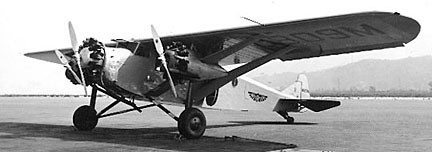
In 1931 two 3-CT-9K Air Yacht (ATC 2-376) were built; NC12206 c/n 22 and NC12297 c/n 23. 10-place, they were powered by one 420hp P&W Wasp B + two 210hp Kinner C-5.
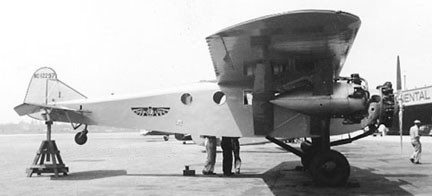
The 1930 3-CT-9S Air Yacht (ATC 299) was a Deluxe “executive” version of 3-CT-9 with cowled engines (PW Wasp + two Wright R-760), wheel pants, and customized interior, priced at $40,000+. ATC 2-179 was superseded by ATC 299. One was built; NC317V c/n 20.
One 3-CTS Air Yacht built in 1930 NC2830 c/n 8 (ATC 2-104), was a 3-CT-8 modified with 450hp P&W Wasp + two 220hp Wright J-5 engines.
Air Yacht
Engines: 1 x J-5 + two Kinners
Air Yacht
Engines: one Wright J-5 + two Siemens
3-CT-2 Air Yacht
Engines: one Wright J-5 + two 100hp Ryan-Siemens
Seats: 10
3-CT-4 Air Yacht
Engines: one P&W Wasp + two 100hp Ryan-Siemens
Seats: 10
3-CT-5 Air Yacht
Engines: one 450hp P&W Wasp + two 130hp Comet
Seats: 10
3-CT-6 Air Yacht
Engines: one 525hp P&W Hornet + two 130hp Comet
Wingspan: 58’5″
Length: 36’10”
Useful load: 3261 lb
Max speed: 154 mph
Cruise: 126 mph
Stall: 60 mph
Range: 600 mi
Seats: 12
Price: $39,500;
3-CT-8 Air Yacht
Engines: one 525hp P&W Hornet + two 165hp Wright J-6
Wingspan: 58’5″
Length: 36’10”
Useful load: 3195 lb
Max speed: 157 mph
Cruise: 133 mph
Stall: 60 mph
Range: 590 mi
Seats: 10
Price: $39,500
3-CT-9 Air Yacht
Engines: one 450hp P&W Wasp + two 225hp Wright J-6-7
Wingspan: 58’5″
Length: 36’10”
Useful load: 2990 lb
Max speed: 162 mph
Ceuise: 136 mph
Stall: 60 mph
Range: 525 mi
Price: $39,500
Seats: 10
3-CT-9K Air Yacht
Engines: one 420hp P&W Wasp B + two 210hp Kinner C-5
Seats: 10
3-CT-9S Air Yacht
Engines: PW Wasp + two Wright R-760
Useful load 2807 lb
Range: 600 mi
Price: $40,000+
3-CTS Air Yacht
Engines: one 450hp P&W Wasp + two 220hp Wright J-5
Wingspan: 58’5″
Length: 36’10”
Seats: 12
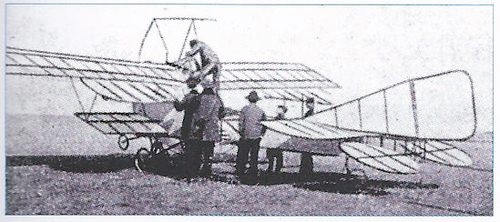
The 1910 Monoplano, designed by Ing. Omero Bacchiega of Tortona (midway between Genova and Milano), was constructed of beech and bamboo with metal rods for added strength. It was fitted with a 25 hp Anzani engine, driving a 2 meter diameter propeller.
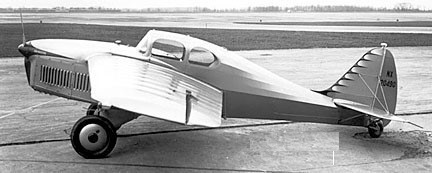
The 1928 LC-11 Cadet was developed by Verne Babcock from his original concept from 1921.
A single place, open cockpit, mid-wing monoplane, power was from a 55hp Clark engine.
Three were built: N551E / cn 502, N889E, and NX7997 / cn 501. Two were built by Taubman, possibly with 90hp LeBlond, the last was Babcock-built and possibly refitted with 90hp Franklin.
Engine: 55hp Clark
Wingspan: 30’0″
Length: 19’0″
Loaded weight: 500 lb
Speed: 100 mph
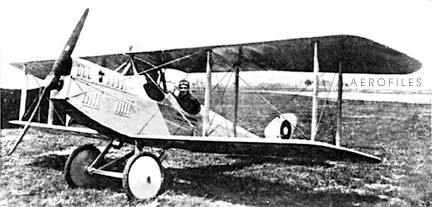
The 1919 LC-7 (Light Commercial 7) was a 2 place, open cockpit biplane, powered by a 60hp Kemp I-4.

