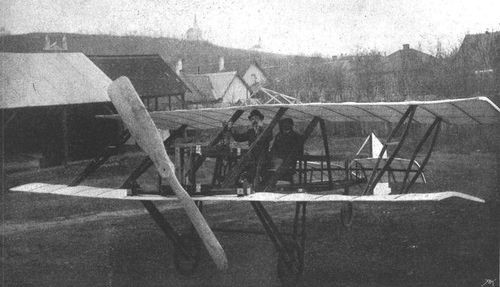
Berger 1910 Doppeldecker

An Austro-hungarian design by Franz Berger, the machine was an early example of negative stagger – the lower wing mounted considerably forward of the top wing. Of wooden construction with the exception of the wing struts which were of aluminium, the photograph was taken before February 19, 1910 in the Hungarian region of the double-monarchy, at Balatonboglár near Lake Balaton (in German: the “Plattensee”) at a time when no engine was fitted. It was however planned to use an Anzani 3-cylinder radial of 35-40 hp.

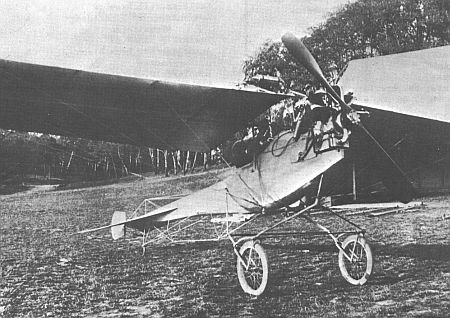
Berger Monoflygplan

The Monoflygplan of 1911 was an unsuccessful design by Swedish actor Bror Berger, powered by a 42 hp R.E.P 5-cylinder fan type air-cooled engine.

Building began during 1910 in a closed-down cinema behind the Blanchs Café, and in September 1911 Berger tried the machine at Gärdet, Stockholm. The first take-off attempt ended when the landing gear collapsed and the propeller broke. A new propeller was bought from Landskrona while sturdier gear was fitted, and the resulting new trials were, according to the press, very promising. Yet after 1911 nothing more was mentioned of the monoplane until it was donated to the Stockholm Technical Museum in 1927, in the same state of repair as it remains in today.

Benz Bz.IV

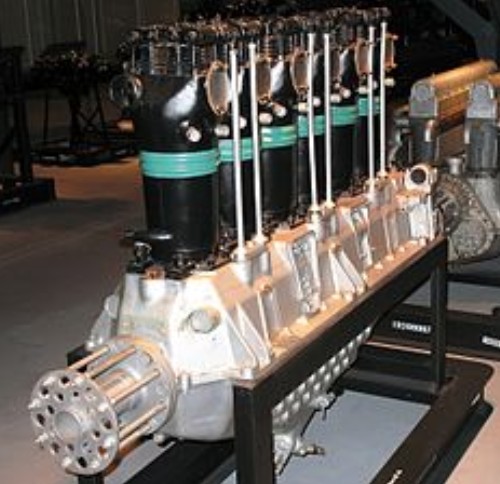
The Benz Bz.IV was a German six-cylinder, water-cooled, inline engine developed for aircraft use. Deliveries began in 1916 and some 6,400 were produced.

The Bz.IV was a dual-camshaft design, with two intake and two exhaust valves per cylinder. The cylinders were cast iron surrounded by a sheet metal cooling jacket. The crankcase was aluminium and pistons were initially steel but later versions had aluminium pistons. A high compression version of the engine (Bz IVü) was produced from 1917 onwards and can be recognised by the red bands painted on each cylinder. In February 1918, pistons from such an engine fitted to an Aviatik G.130 were the first captured aluminium pistons to be examined by the British Ministry of Munitions.

Applications:
AEG C.VI
AEG J.I
AGO C.IV
Albatros C.VII
Albatros J.I
Chitty 2 (racing car)
DFW C.V
Dobi-II
Friedrichshafen FF.49
Friedrichshafen G.II
Halberstadt C.V
Junkers J.I
LVG C.VI
NAVO RK-P4/220
Pfalz D.XII
Pfalz D.XIV
R-planes, the German giants of WWI

Specifications:
Type: 6-cylinder, water-cooled, inline aircraft piston engine
Bore: 145 mm (5.7 in)
Stroke: 190 mm (7.5 in)
Displacement: 18.83 l (1,149.1 cu in)
Length: 1,990 mm (78.3 in)
Width: 530 mm (20.9 in)
Height: 1,150 mm (45.3 in)
Dry weight: 370 kg (815.7 lb)
Valvetrain: Twin inlet and exhaust valves operated by pushrod actuated double rockers
Fuel system: Two Benz 2-jet carburettors feeding three cylinders each
Fuel type: Gasoline specific gravity 0.72
Oil system: Pressure feed at 0.2 MPa (28 psi): 50% Vacuum Heavy, 50% Sternol
Cooling system: Water-cooled
Power output: 170 kW (228.0 hp) at 1,400 rpm
Specific power: 9.1 kW/l (0.2 hp/cu in)
Compression ratio: 4.91:1
Fuel consumption: 85.2 l (150 imp pt) / hour
Specific fuel consumption: 0.495 l/kW/hr (0.65 pts/hp/hour)
Oil consumption: 2.6 l (4.5 imp pt) / hour
Power-to-weight ratio: 0.3796 kW/kg (0.231 hp/lb)

Benz Bz.IIIb

The Benz Bz.IIIb was an eight-cylinder, water-cooled, V-engine developed in Germany for use in aircraft in 1918.

Inspired by the Hispano-Suiza 8, some of which were captured and tested, the Benz Bz.IIIb was a fairly large engine, but its performance was disappointing. Despite not being accepted for service use a number of late World War I prototype German aircraft used the Bz.IIIb and the Benz IIIbo.

Applications:
AEG DJ.I
AEG PE
Albatros D.X
Albatros Dr.II

Specifications:

Benz Bz.IIIb
Type: 8-cylinder liquid-cooled V engine
Bore: 135 mm (5.31 in)
Stroke: 135 mm (5.31 in)
Displacement: 15.5 L (943 cu in)
Length: 1,300 mm (51 in)
Width: 860 mm (34 in)
Height: 850 mm (33 in)
Dry weight: 257 kg (568lb)
Fuel system: Carburetor
Cooling system: Liquid-cooled
Power output: 200 hp at 1,750 rpm

Benz Bz.III

The Benz Bz.III was a six-cylinder, water-cooled, inline engine developed in Germany for use in aircraft in 1914. Developing 112 kW (150 hp) at 1,400 rpm from 14.3 L (875 cu in), it powered many German military aircraft during World War I. It was replaced in production by the unrelated Benz Bz.IIIa and eventually the V-8 Benz Bz.IIIb.

Applications:
AEG C.I
AEG C.II
AEG C.III
AEG C.IV
AEG G.II
Albatros C.I
Albatros C.II
Albatros C.III
Albatros D.I
Albatros G.II
Friedrichshafen FF.33
Friedrichshafen FF.41
Friedrichshafen G.I
Gotha G.I
Hansa-Brandenburg KDW
Hansa-Brandenburg W.29
R-planes

Specifications:

Type: Six-cylinder, inline piston engine
Bore: 130 mm (5.118 in)
Stroke: 180 mm (7.087 in)
Displacement: 14.3 l (873 cu in)
Dry weight: 270 kg (595 lb)
Valvetrain: One camshaft in the engine block, driving one inlet and one exhaust valve per cylinder via pushrods and rocker arms.
Cooling system: Water-cooled
Power output: 112 kW (150 hp) at 1,400 rpm
Specific power: 8.4 kW/l
Compression ratio: 4.7
Specific fuel consumption: 310 g/kWh

Bentlay A.R.1 / BR1 / Humber A.R.1 / BR1

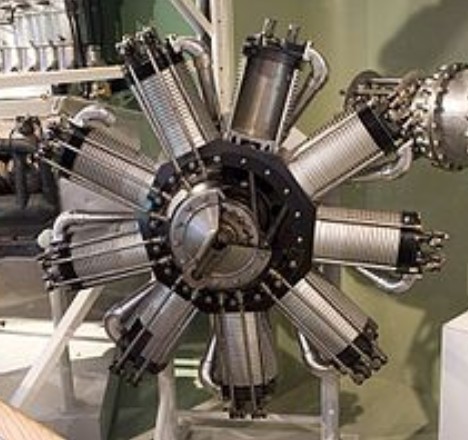
The 130 horsepower (97 kW) Clerget 9B was an important engine for the British Royal Naval Air Service and Royal Flying Corps, being license-produced in Britain and powering a number of important British aircraft, including the Sopwith Camel. However, at £907 a copy it was expensive, and prone to overheating, so the Admiralty asked Lieutenant W. O. Bentley, an established pre-war engine designer, to produce a modified version to solve these problems.

Bentley came up with his idea of an engine – fitted with aluminium cylinders with cast iron liners, and aluminium pistons. Dual ignition was introduced to improve reliability, and the stroke increased to 6.7 inches (17 cm) which allowed power to be increased to 150 horsepower (110 kW). The cost of the engine was also reduced, falling to £605 per engine.

The resulting engine, initially known as the A.R.1 for “Admiralty Rotary”, but later called the BR.1 (“Bentley Rotary”) was manufactured in quantity, although initially against Admiralty orders. It was standardised for the Camel in RNAS squadrons, but unfortunately there were never enough to entirely replace the inferior and more expensive Clerget engine in British service, and most RFC Camel squadrons continued to use Clerget engines; in fact licenced production of the Clerget continued.

The BR.1 was developed as the BR.2, a heavier, more powerful engine, which powered, among other types or aircraft, the Camel’s eventual replacement, the Sopwith Snipe.

Applications:
Sopwith Camel
Avro 536
Westland N.1B
Port Victoria P.V.9

Specifications:
Type: 9-Cylinder air-cooled rotary engine
Bore: 4.72 in, (120 mm)
Stroke: 6.69 in (170 mm)
Displacement: 1,055.9 cu in (17.3 L)
Dry weight: 397 lb (180 kg)
Cooling system: Air-cooled
Power output: 150 bhp (110 kW) at 1,250 rpm
Fuel consumption: 11 gallon/hr (50 L/hr)
Oil consumption: 12 pints/hr (6.8 L/hr)
Power-to-weight ratio: 0.38 bhp/lb