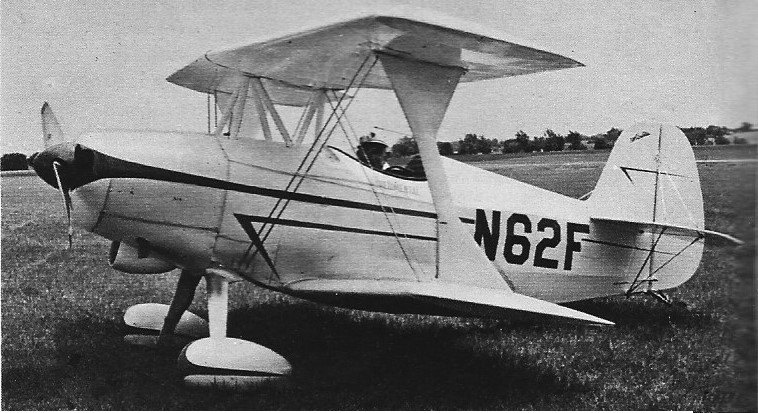
The Bert BF-4 N62F single-seat biplane was the fourth design of Floyd Bert. It took a year to construct at a cost of about $3500.
The wings are wood with Ceconite cover, and ailerons, on the lower wings only, are aluminium and fabric. The fuselage and tail are steel tube and fabric.
The engine is fitted with an inverted fuel system.
Engine: Lycoming O-320-A1A Wingspan: 14 ft / 4.3 m Length: 15 ft / 4.6 m Empty weight: 660 lb / 299.4 kg Gross weight: 1000 lb / 453.6 kg Cruise: 140 mph / 225 kph Landing speed: 60 mph / 96.6 kph ROC: 3200 fpm / 16.26 m/sec Endurance: 2 hr 30 min
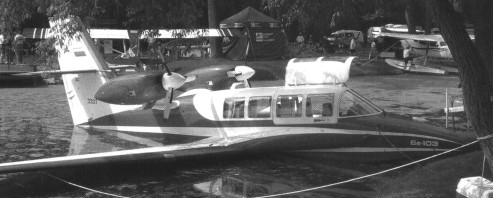
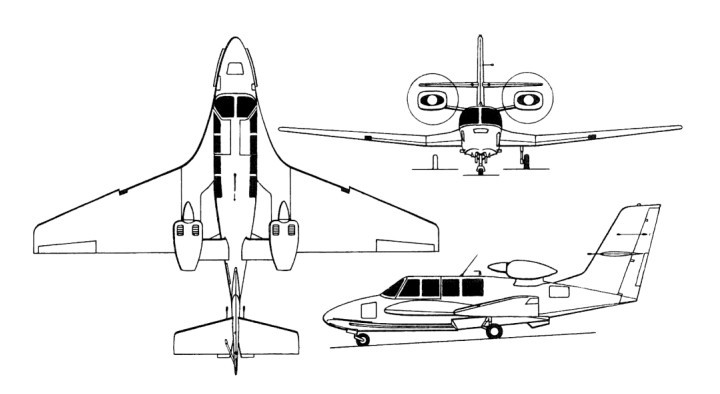
A 1986 designed amphibious twin engine aircraft. Licence built in the USA and certified by the FAA. The first prototype flew on 19 July 1997.
Engine: 2 x Teledyne Continental Motors 10-360ES4, 210hp Take-off weight: 2435 kg / 5368 lb Wingspan: 12.7 m / 41 ft 8 in Length: 10.6 m / 34 ft 9 in Cruise: 165 mph. Seats: 6.
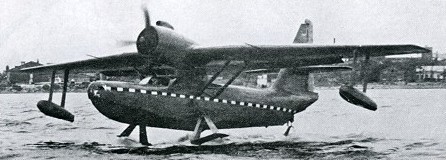
The Beriev Be-8 ‘Mole’ of 1947 was an all-metal utility amphibian flying-boat, with the main units of the landing gear retracting into the sides of the hull just below the pilot’s cabin. The wing was supported above the hull by a central pylon, together with a pair of parallel struts on each side. The passenger cabin accommodated six. A small batch of Be-8s was built, and examples were used in a variety of roles including flying ambulance, liaison, and training.
Engine: 1 x Shvetsov ASh-21 radial, 522kW Take-off weight: 3624 kg / 7990 lb Loaded weight: 2815 kg / 6206 lb Wingspan: 19.0 m / 62 ft 4 in Length: 13.0 m / 42 ft 8 in Wing area: 40.0 sqm / 430.56 sq ft Max. speed: 266 km/h / 165 mph Ceiling: 5550 m 18200 ft Range: 810 km / 503 miles
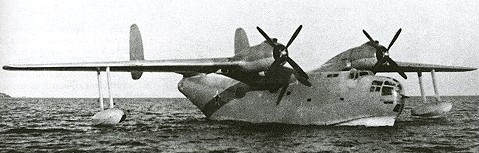
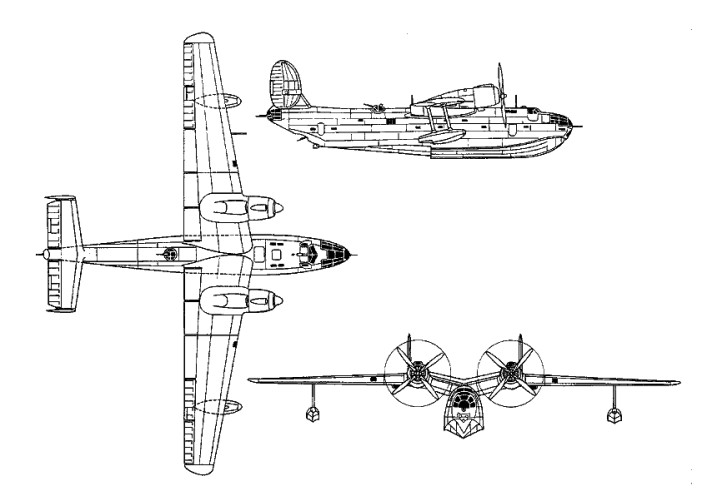
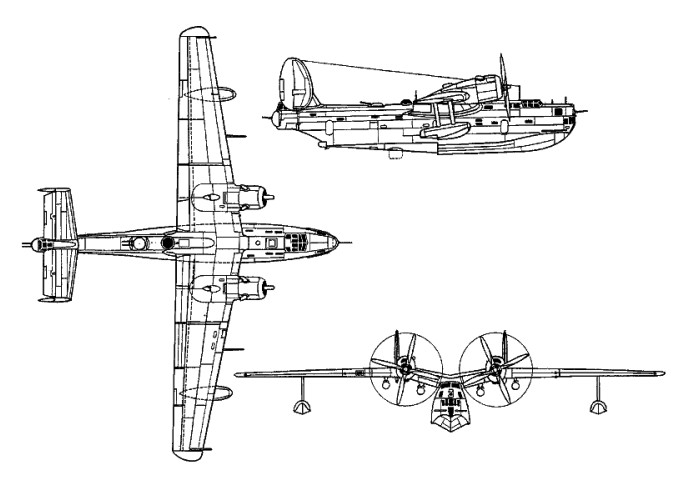
Development of a large maritime reconnaissance and bombing flying-boat was initiated by the Beriev design bureau in 1943, and the Beriev LL-143 prototype flew for the first time on 6 September 1945. An all-metal high-wing monoplane, it was powered by two 1492kW Shvetsov ASh-72 radial engines. Armament comprised twin NS-23 23mm cannon in a tail turret (behind the twin fins and rudders) and similar provision in a remotely controlled dorsal barbette. A single NS-23 cannon was installed in the bow turret.
The LL-143 was developed into the Beriev Be-6 production aircraft, the first example of which was flown by M. I. Tsepilov in 1949. It differed from the prototype by having more sophisticated equipment, which included a retractable radome aft of the second step, and a redesigned nose without cannon armament. At a later stage the tail gun position was replaced by MAD (magnetic anomaly detection) equipment. The Be-6, to which NATO allocated the code-name ‘Madge’, carried a heavy offensive load comprising various combinations of mines, depth charges or torpedoes on underwing pylons outboard of the engines.
Be-6
Be-6s operated patrol, maritime reconnaissance and anti-submarine duties until the early 1970s, and a few remained in service on transport or fishery patrol duties into the late 1970s.
LL-143 Take-off weight: 21300 kg / 46959 lb Empty weight: 15110 kg / 33312 lb Wingspan: 33.0 m / 108 ft 3 in Length: 23.0 m / 75 ft 6 in Height: 7.5 m / 24 ft 7 in Wing area: 120.0 sqm / 1291.67 sq ft Max. speed: 371 km/h / 231 mph Ceiling: 6000 m / 19700 ft Range: 5100 km / 3169 miles
Be-6 Engine : 2 x ASh-73TK, 1765kW, 2300 hp Take-off weight; 23400 kg / 51588 lb Empty weight: 18827 kg / 41507 lb Wingspan: 33.0 m / 108 ft 3 in Length: 23.7 m / 77 ft 9 in Height: 7.6 m / 24 ft 11 in Wing area: 120.0 sqm / 1291.67 sq ft Max. speed: 400 km/h / 249 mph Range: 4900 km / 3045 miles Crew: 8 Armament: 4 x 23mm machine-guns
The first prototype flew as an amphibian in May 1938. The second prototype was built as a flying boat. Only two were built.
Engine: 2 x M-87A, 950hp Take-off weight: 8795 kg / 19390 lb Empty weight: 6083 kg / 13411 lb Wingspan: 25.0 m / 82 ft 0 in Length: 15.9 m / 52 ft 2 in Wing area: 78.5sqm / 844.97 sq ft Max. speed: 350 km/h / 217 mph Ceiling: 8700 m / 28550 ft Range: 1150-2415 km / 715 – 1501 miles
The impoved modification of MBR-2 built in 1938. One prototype only.
Engine: 1 x M-103, 960hp Take-off weight: 3600 kg / 7937 lb Empty weight: 2418 kg / 5331 lb Wingspan: 13.0 m / 42 ft 8 in Length: 10.6 m / 34 ft 9 in Wing area: 26.0 sqm / 279.86 sq ft Max. speed: 376 km/h / 234 mph Ceiling: 8500 m / 27900 ft Range: 720-1215 km / 447 – 755 miles
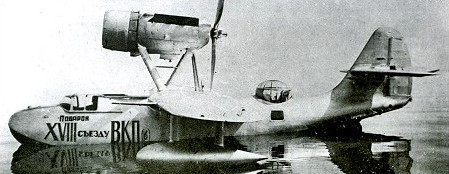
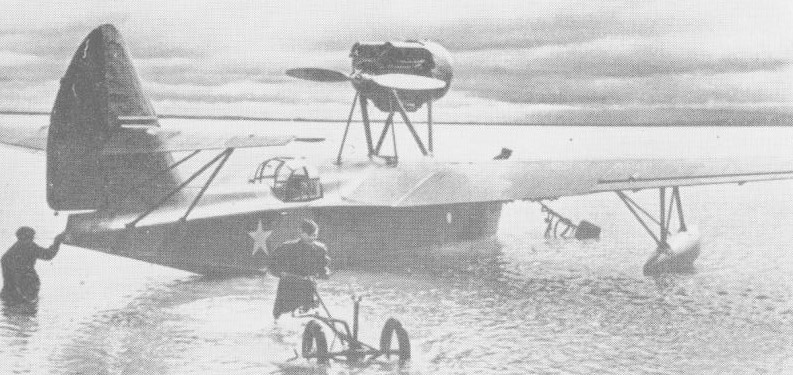
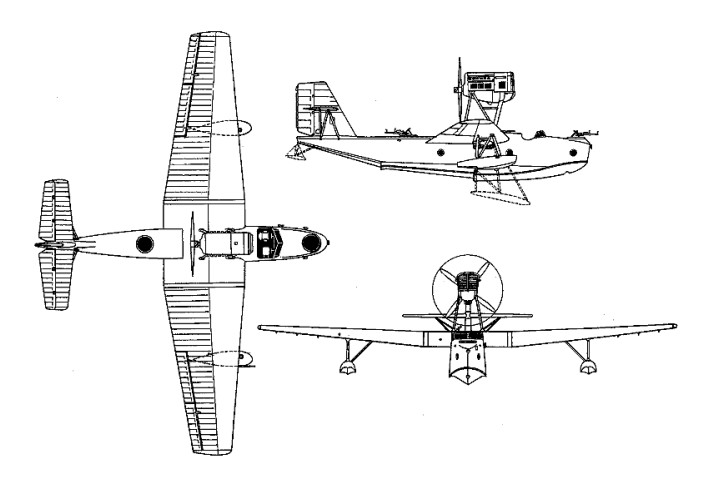
Georgii Mikhailovich Beriev produced his first original design, Aircraft No. 25, at the Menzhinsky plant in Moscow in 1932. The B.M.W. VIF-powered prototype was transported to Sevastopol on the Black Sea for flight tests, and proving successful the new flying-boat went into production as the MBR-2 (Morskoy Blizhnii Razvedchik, or naval short-range reconnaissance). In production form it was powered by a Soviet-built M-17B inline engine. Deliveries of the MBR-2M-17 intended for use in the short-range bombing and maritime reconnaissance roles, began in 1934. It was a shoulder-wing cantilever monoplane, with its M-17B engine mounted on a pair of N-struts over the wing; it had a two-step wooden hull with plywood covering, and the pilot’s cockpit located just in front of the wing. A strut-braced horizontal tailplane was set high on the single fin. Bow and midships gunners each had a single 7.62mm PV-1 machine-gun.
In 1935, with the first production version already in service, Beriev carried out a redesign of the MBR-2. The pilot’s cockpit was fully enclosed, and the midships gunner’s position protected by a glazed cupola. The M-17B engine was replaced by the M-34NB (redesignated AM-34NB in 1937) of 619kW, and a new curved fin and rudder replaced the original angular vertical tailplane. ShKAS machine-guns supplanted the obsolete PV-1s. The new version was placed in large-scale production, which continued until 1942, when 1,300 of all variants had been built. The MBR-2AM-34 served with all four main Soviet fleets and saw considerable service, first during the Winter War of 1939-40 with Finland, and then throughout the Great Patriotic War of 1941-5. It was tough, reliable and could be fitted with wheel or ski landing gear. Post-war, the MBR-2 served for nearly a decade on fishery patrol duties; it received the NATO codename ‘Mote’.
Variants:
Beriev MBR-2AM-34 In 1935, with the first production version already in service, Beriev carried out a radical redesign of the MBR-2. The pilot’s cockpit was fully enclosed, and the midships gunner’s position protected by a glazed cupola; the M-17B engine was replaced by the M-34NB (redesignated AM-34NB in 1937) of 619kW; an entirely new curved fin and rudder replaced the original angular vertical tailplane; and ShKAS machine-guns supplanted the obsolete PV-1s.
Beriev MBR-2M-103 In 1937 a standard MBR-2AM-34 was modified to take a more powerful M-103 engine, but no production of this version was undertaken
Beriev MP-1 This was a civil passenger version of the MBR-2M-17; it carried six passengers in an enclosed cabin, or an equivalent weight of freight; used in some numbers by Soviet Civil Aviation
Beriev MP-1bis A 1937 civil development of the MBR-2AM-34, with similar capacity to that of the MP-1; one MP-1 bis, piloted by Paulina Osipenka, established a number of women’s world records; between 22 and 25 May 1937 she attained respectively 7605m with a 500kg payload and 7000m with a 1000kg payload; on 2 July the same year she made a non-stop flight of 2416km between Novgorod and Archangelsk.
Specifications:
MBR-2M-17 Engine: 2 x M-17B inline piston, 507kW Take-off weight: 4100 kg / 9039 lb Empty weight: 2475 kg / 5456 lb Wingspan: 19.0 m / 62 ft 4 in Length: 13.5 m / 44 ft 3 in Wing area: 55.0 sqm / 592.01 sq ft Max. speed: 200 km/h / 124 mph Ceiling: 4400 m / 14450 ft Range: 650 km / 404 miles Crew: 4 Armament: 2 x 7.62mm machine-guns, 500kg of bombs
MBR-2AM-34 Max speed: 245km/h Range: 800km Service ceiling: 7150m Empty weight: 2718kg Loaded weight: 4000kg
MBR-2bis Engine: 1 x AM-34NB, 860hp Length: 44.29ft (13.5m) Width: 62.34ft (19.00m) Height: 12.47ft (3.80m) Maximum Take-Off Weight: 9,359lbs (4,245kg) Maximum Speed: 154mph (248kmh; 134kts) Maximum Range: 870miles (1,400km) Service Ceiling: 19,685ft (6,000m) Armament: 2 x 7.62mm machine gun Bombload: 661lbs (300kg) Crew: 4-5 Hardpoints: 2
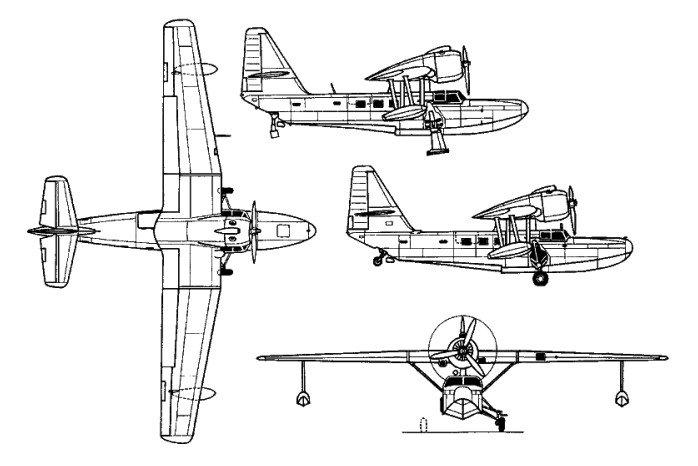
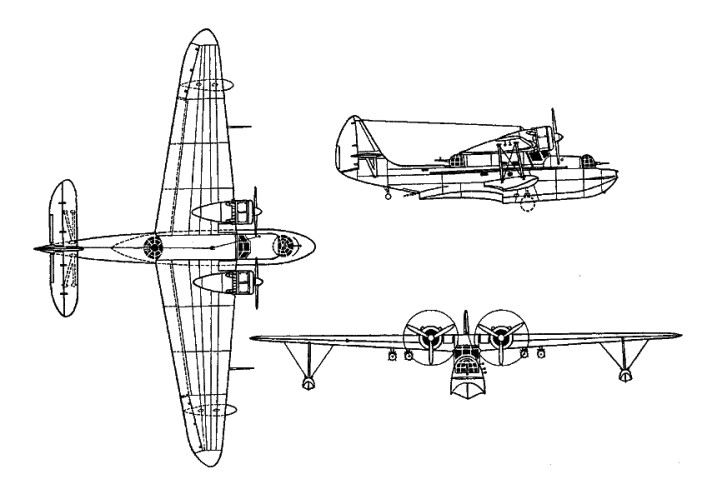
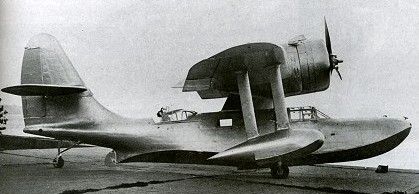
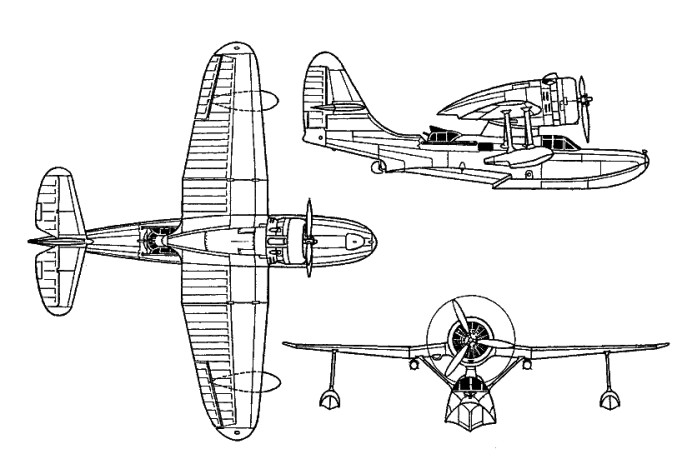
More or less in parallel with the construction and development of the KOR-1 floatplane, The Beriev bureau worked on the design of a small flying-boat intended to fulfil the same requirement as the hastily developed KOR-1, but to provide much enhanced performance. In configuration the Beriev KOR-2 was a parasol-wing monoplane, the wing pylon-mounted above the stepped flying-boat hull, and braced by two streamlined struts on each side. An inverted gull wing, with a wing-mounted engine and three-bladed controllable-pitch propeller. The tail unit was similar in configuration to that of the KOR-1, except that the high-mounted tailplane was a strut-free cantilever structure. First flown in 1940, this Beriev design was built in a factory at Taganrog, on the shore of the Sea of Azov, only a small number of these aircraft had been completed and delivered to the Soviet navy before the Taganrog area was over-run by the invading Germans in the autumn of 1941. Production of the KOR-2, or Beriev Be-4 as it had then been redesignated, was resumed at a Central Asian factory during 1942, but no records of the number constructed have so far been discovered.
Engine: 1 x Shvetsov M-62 radial, 671kW Take-off weight: 2760 kg / 6085 lb Empty weight: 2055 kg / 4531 lb Wingspan: 12.0 m / 39 ft 4 in Length: 10.5 m / 34 ft 5 in Height: 4.05 m / 13 ft 3 in Wing area: 25.5 sq.m / 274.48 sq.ft Max. speed: 360 km/h / 224 mph Ceiling: 8100 m / 26600 ft Range: 950 km / 590 miles Armament: 1 x 7.62mm machine-gun, 300kg of bombs
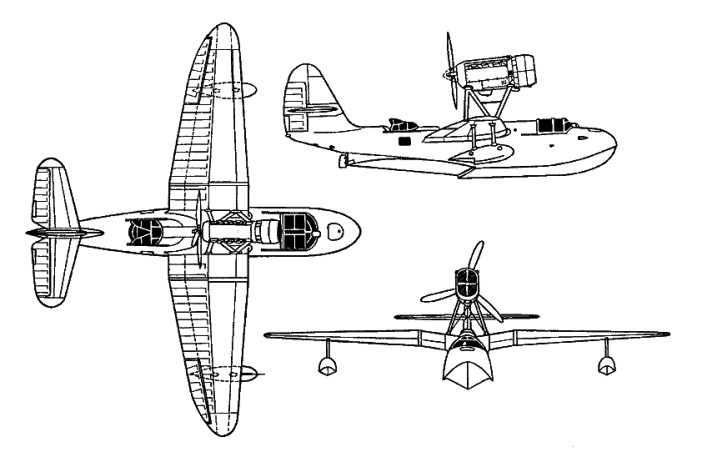
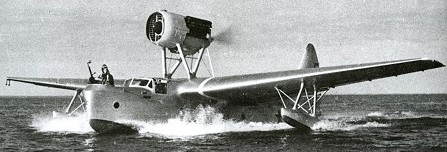
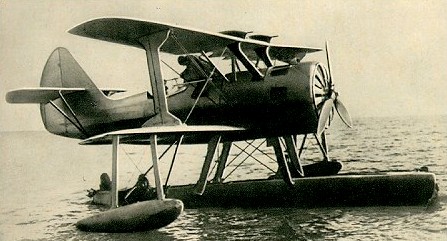
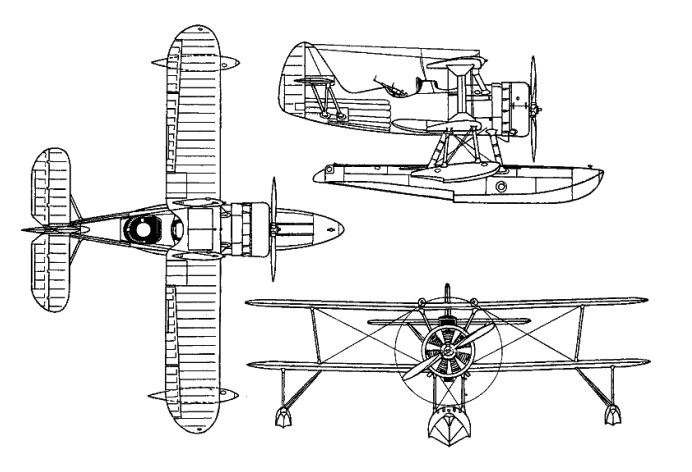
The Be-2, originally designated KOR-1, was a shipboard reconnaissance seaplane. It was first flown on 4 September 1936 by P O Noman and entered service in 1938.
Engine: 1 x M-25A, 715hp Take-off weight: 2425 kg / 5346 lb Empty weight: 1640 kg / 3616 lb Wingspan: 11.0 m / 36 ft 1 in Length: 7.1 m / 23 ft 4 in Height: 4.4 m / 14 ft 5 in Wing area: 31.8 sq.m / 342.29 sq ft Max. speed: 277 km/h / 172 mph Ceiling: 6600 m / 1650 ft Range: 860 km / 534 miles
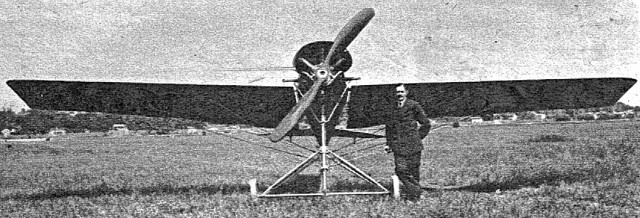
This 1910 machine was designed by Olaf Berg (aerodynamic expert) and Louis Storm (statics expert) for the shipbuilders firm Burmeister & Wain in Denmark. Olaf Berg was one of the early flying pioneers in Paris in 1908, where he saw Farman, Blériot and Levasseur fly at Issy-les-Moulineaux. It was powered by a three-cylinder Nielsen engine. The type III was bought by the Danish army and served until 1914. It currently resides in the Denmark Flymuseum.
Wingspan 8.8 m / 31’2″ Length 8.3 m / 26’3″ Height 2.1 m Weight empty: 770 lbs Speed: 60 mph