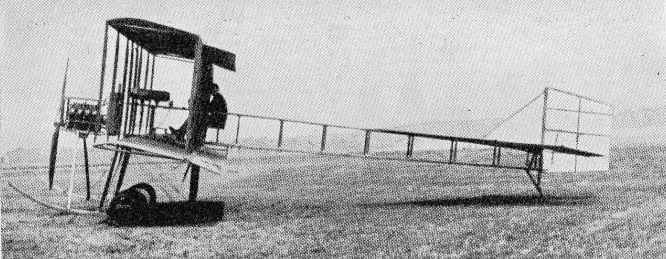
Billing 1911 Biplane        

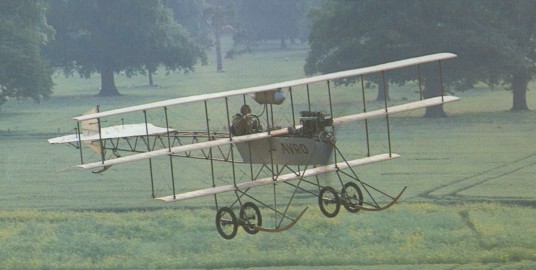
The 1911 Billing biplane was designed and built by Eardley Billing at Brooklands in the UK during 1911. It was a single-seat tractor built from C.A.Moreing’s discarded Voisin.

The Billing tractor biplane was constructed using the wings of the Voisin pusher of C.A. Moreing. The engine was a 40 h.p. ENV Type D. It was originally flown with an uncovered fuselage but fabric was added later.
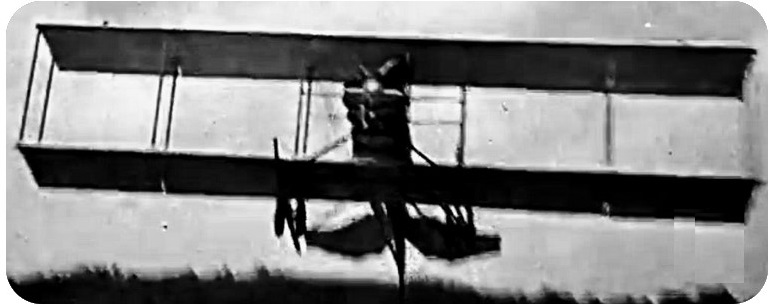
The machine was in use from May 1911 to the end of the season, becoming nicknamed the ‘Oozley Bird’. Billing was, at that time, in charge of the Lane Gliding School at Brooklands and for a brief period at the begining of 1912 was in charge of the Deperdussin School at Brooklands. Eardley and his wife Ada also ran the Bluebird restaurant at Brooklands until its closure at the outbreak of war.
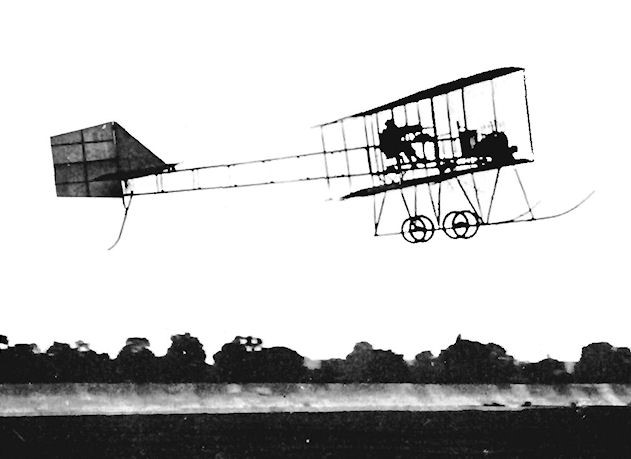
The Billing biplane was crashed on 4 October 1911 by N.S. Percival, who rebuilt it as the Percival Parseval I at the end of 1911. Percival had completed the tests for his Royal Aero Club Aviator’s Certificate No.111 in the machine on 1 August 1911.

Replica
Best-Devereux & Co Eardley-Billing

Bianchi Santos-Dumont Demoiselle

The film “Those Magnificent Men in Their Flying Machines” is notable for reproductions of 1910-era aircraft, including a triplane, monoplanes, biplanes and also Horatio Phillips’s 20-winged multiplane from 1904. Air Commodore Wheeler insisted on authentic materials but allowed the use of modern engines and modifications necessary to ensure safety. Of 20 types built in 1964 at £5,000 pounds each, six could fly, flown by six stunt pilots and maintained by 14 mechanics. The race takeoff scene where seven aircraft are in the air at once included a composite addition. Flying conditions were monitored with aerial scenes filmed before 10 am or in early evening when the air was least turbulent, for the replicas, true to the originals, were flimsy – and control, especially in the lateral plane, tended to be marginal.

The actual machine upon which they were based on was No.20 built by the Clement Bayard Motor Co in Paris. They were built at White Waltham using a welded steel tube fuselage, wooden wings (with ailerons instead of wing warping) and a 30 hp Ardem 4C02 engine. Initial flight trials were very poor and a 50 hp Ardem 4C02 and a two foot extension to the wing span was put in before they could fly well enough.

The replica of the Santos-Dumont Demoiselle was in its early form unable to leave the ground except in short hops. Extending the wingspan and fitting a more powerful Ardem 50 hp engine produced only marginal improvement. When Doug Bianchi and the Personal Planes production staff who constructed the replica consulted with Alan Wheeler, he recalled that the Demoiselle’s designer and first pilot, Alberto Santos-Dumont was a very short, slightly built man. A suitably small pilot, Joan Hughes, a wartime member of the Air Transport Auxiliary who was the Airways Flying Club chief instructor, was hired. With the reduced payload, the diminutive Demoiselle flew very well, and Hughes proved a consummate stunt flyer.

Joan Hughes – former WW2 ATA pilot

After filming they were dispersed:
PPS/REP/2 – PPS/DEM/1 to RAF Gatow, Berlin
PPS/REP/3 – PPS/DEM/2 to Sydney, Australia
PPS/REP/4 – PPS/DEM/3 to R.Jude at Laleham, UK

Bianchi Fokker E.III / Personal Planes Services Fokker E.III

The aircraft was a full-scale replica of a Fokker Eindecker EIII that was built circa 1975 to be as close as possible to the original design which entered military service in 1915.

The plans for the aircraft were based on contemporary records and measurements of the only surviving original example, which is housed in the Science Museum in London.

The E.III G-AVJO was marked up as Fok.E.III/157.

The replica E.III with a Continental A75 engine. Registered G-AVJO serial PPS/REP/6 and PPS/FOK/1, it flew with WW1 markings as ‘Fok.EIII/157’ and later in Dutch Air Force colours as ‘La34’. It went into store at Booker.

Bianchi Morane N / Personal Plane Services M.S. Type N

A Morane N replica was built purely for fun by Doug Bianchi at Wycombe Air Park. It differs from the genuine article in that it has a fixed tailplane and normal elevators, as distinct from an all flying tailplane, and ailerons are used in¬stead of wing warping.

The engine was a Continental C 90 and although the nose shape is correct it is nine inches too long. The fuselage is made of welded steel and the wings are of wood. The gun is gas operated and works although so far it has only been fired on the ground, as it is rather too close to the petrol tank for comfort. The replica performs well, with a top speed of 100 mph, and will cruise at 80 mph

Type N (replica)

A M.S. Type N replica was built by Personal Plane Services at Booker in 1969. Powered by a Warner Super Scarab in flew that year, registered G-AWBU PPS/REP/7. It flew in French Air Force colours as ‘No.50’.

BFW CL.III

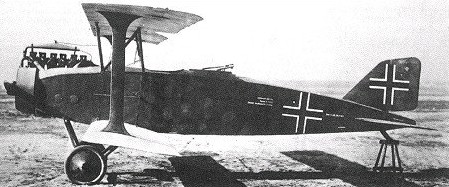
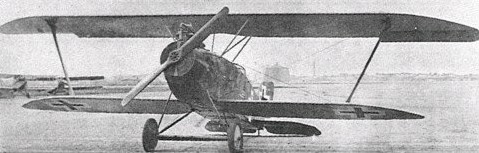
Redesign of the CL.la by BFW in accordance with the “new design principles” as requested by Idflieg resulted in the CL.III, a single prototype of which was completed at the close of hostilities but was not apparently subjected to Idflieg testing. Adhering closely to the concept of the CL.la, the CL.III was powered by a 200hp Benz Bz IV engine and featured longer-span, more angular wings. A further development, the CL.IV, remained on the BFW drawing boards.

Engine: 200hp Benz Bz IV
Wingspan: 11.54 m / 38 ft 10 in
Length: 7.81 m / 26 ft 7 in

BFW 17 / CL.I

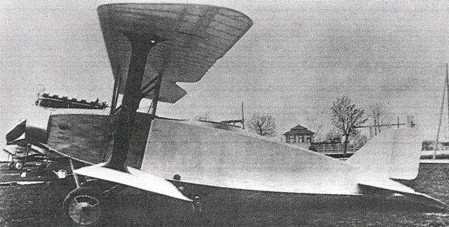
In late 1917, the Bayerische Flugzeugwerke (BFW) of Munich was awarded a contract to build two prototypes of the CL.I two-seat reconnaissance fighter of original design. At the time, BFW was negotiating a contract to build 100 Halberstadt CL.II reconnaissance fighters and the company’s CL.I was specifically designed to require 20% less manufacturing manhours than the Halberstadt aircraft. The first prototype, known by BFW as the Type 17, was completed in April 1918 with a 160hp Mercedes D III engine. A single-bay unequal span biplane with an intended armament of one fixed LMG 08/15 machine gun and an LMG 14 on a ring mounting, the CL.I was sent to the Adlershof test centre for Typprüfung in July 1918, but the Idflieg reported that it was “in no way equal” to the Hannover CL.V, requesting that improvements be made and the aircraft resubmitted for further evaluation. Accordingly, a lighter fuselage was fitted and, as the CL.la, the aircraft underwent static load testing between 30 August and 14 September 1918. Results were unsatisfactory and BFW agreed to redesign the CL.Ia in accordance with “new design principles”.

Engine: 160hp Mercedes D III
Take-off weight: 1060 kg / 2337 lb
Empty weight: 720 kg / 1587 lb
Wingspan: 10.62 m / 35 ft 10 in
Length: 7.81 m / 26 ft 7 in

B&F Technik FK-14 Polaris / FK-Lightplanes FK-14

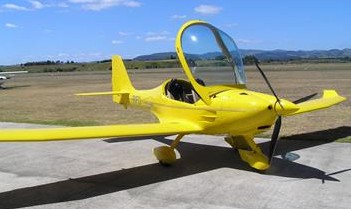
Development of this high-performance cruiser started in 1997, and Otto Funk developed the main wing structure with its special Fowler flap system in co-operation with the University of Stuttgart using its laminar wind tunnel. The rest of the airframe was designed by Peter Funk, whereby standard parts of the FK9 Mk3 were used as far as possible. The construction of the Polaris began in 1998 and the prototype of the FK14 was flown first in May 1999.
The FK14 is constructed in a mix of aluminium and fibreglass composite materials. The cockpit area is built of a crash-resilient tubular steel frame. The wings have a composite leading edge, with spars of carbonfibre covered in sheet aluminium.

Production of the airframes takes place in Krosno, Poland; assembly of the airframes and the final production of the aircraft in the factory in Speyer in Germany.

Engine options: Rotax 912 / 912-S
Empty weight: 284kg
Max. demonstrated take off weight: 544 kg
Demonstrated ultimate loads: + 6,4g / -4,0g (520kg)
Wingspan: 9,04 m
Length: 5,69 m
Height: 2,00 m (trigearversion)
Vstall: 35 kt / 40 mph / 64 Km/h
Vne: 157 kt / 180 mph / 290 km/h
Cruise (75%): 235 km/h / 243 km/h
Take off run over 15m obstacle: 205m / 180m
Best climb: 1100 / 1500 ft/min at 145km/h

Engine: Rotax 912, 80 hp
Wing span: 8.8 m
Wing area: 9.0 sq.m
Empty weight: 200 kg
MAUW: 450 kg
Max speed: 290 kph
Minimum speed: 65 kph
Seats: 2