Blanton V-6 STOL

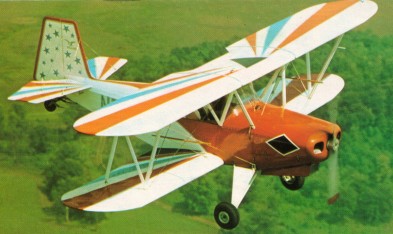
The prototype was built from a salvaged PA-22.

Top speed: 135 mph
Cruise: 120 mph
Stall: 48 mph
Range: 600 nm
Rate of climb: 1700 fpm
Takeoff dist: 500 ft
Landing dist: 500 ft
Service ceiling: 18,000 ft
Engine: Ford V-6, 230 hp
HP range: 230-300 hp
Fuel capacity: 36 USG
Empty weight: 1250 lb
Gross weight: 2200 lb
Height: 7.2 ft
Length: 22.3 ft
Wing span: 32 ft
Wing area: 168 sq.ft
Seats: 4
Undercarriage: tailwheel

Blanton Sport Racer         

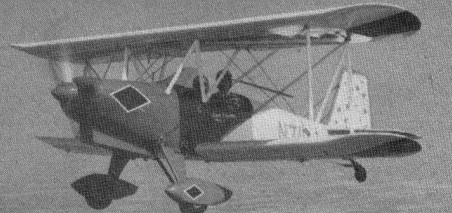
The Blanton Sport Racer N87SR first flew on 23 April 1988.

Top speed: 200 mph
Cruise: 175 mph
Stall: 62 mph
Range: 525 nm
Rate of climb: 900 fpm
Takeoff dist: 1600 ft
Landing dist: 1800 ft
Service ceiling: 18,000 ft
Engine: Ford Javelin , 230 hp
HP range: 150-260 hp
Fuel capacity: 30 USG
Empty weight: 1175 lb
Gross weight: 1825 lb
Height: 5.7 ft
Length: 21 ft
Wing span: 22 ft
Wing area: 81 sq.ft
Seats: 2

Blanton Wichawk

Designed by Dave Blanton, the Wichawk is structurally similar to the Boeing Stearman biplane and is stressed for up to 12g’s positive and six g’s negative. Standard seating is for two in a side-by-side or tandem configuration, which is rather unusual for a sport biplane of its type. Optional tandem or three-place seating is also available. Designed to take the Continental O-470-11 engine of 225 hp, the 180-hp Lycoming is most often used, and can be adapted to house various horizontally opposed or radial engines. The wings make use of wooden spars with light alloy ribs, while the fuselage is constructed from welded steel tubes.

Gallery

Engine: Lycoming O-360, 180 hp.
HP range: 160-300.
Length: 19 ft.
Wing span: 24 ft.
Wing area: 180 sq.ft.
Weight empty: 1281 lbs.
Gross: 2400 lbs.
Fuel cap: 40 USG.
Speed max: 140 mph.
Cruise: 127 mph.
Range: 500 sm.
Stall: 56 mph.
ROC: 1700 fpm.
Take-off dist: 150 ft.
Landing dist: 400 ft.
Service ceiling: 18,000 ft.
Seats: 2/3.
Landing gear: tail wheel.

Blaney 1911 monoplane

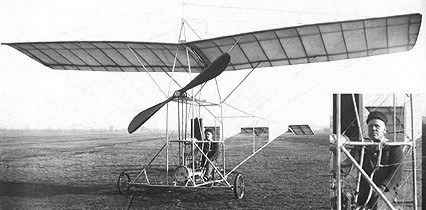
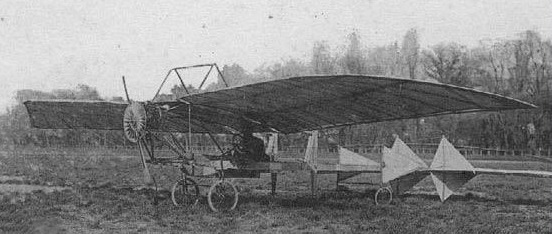
The Jethro. D. Blaney monoplane was a design with a high, frail-looking, cantilever wing attached to a pylon above the box-like undercarriage and engine. The Kirkham engine drove a chain-driven prop that was mounted midway between the undercarriage and engine, which gave it a low center of gravity. It was designed by Blaney with the mechanical engineering done by Chance Vought, who thought it was “two years behind the times.” It was tested at Cicero Flying Field in July 1911, but never left the ground. After it was given a few more failed trial runs, like a number of other unsuccessful experimental aeroplanes at Cicero Field, the Blaney Monoplane remained there and was later abandoned.

Bland Mayfly

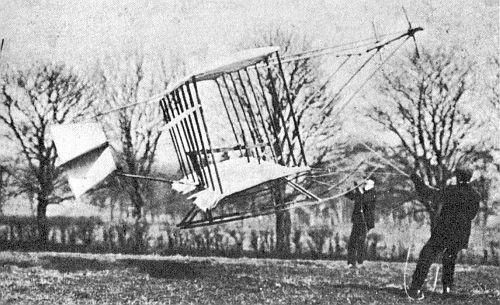
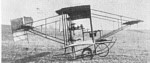
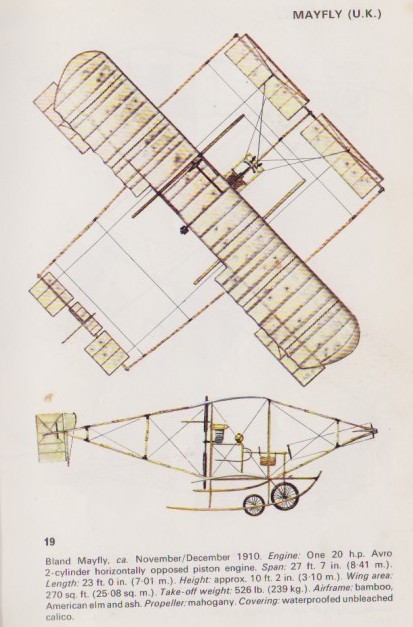
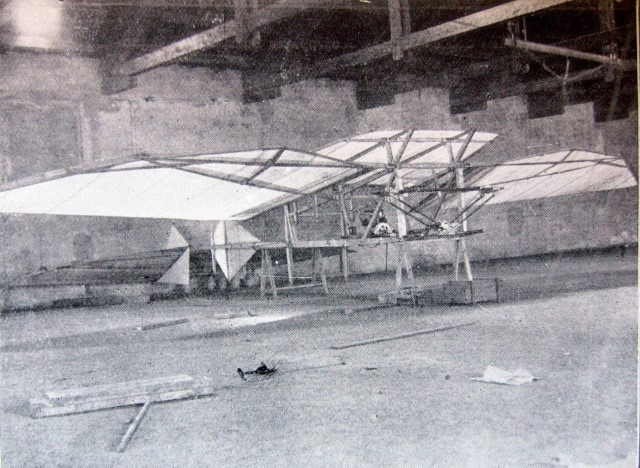
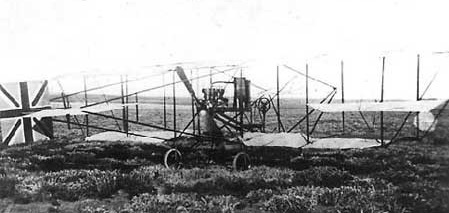
In the summer of 1910 A. V. Roe and Company declared its willingness to build aeroplanes to other people’s designs. Bolts, fittings and bracing wires were supplied to Miss Lilian Bland who built and flew the Mayfly biplane of her own design at Carnamony, Belfast. The first “Mayfly” of Lilian Bland was tested as a glider, probably during February 1910. It was built after the 1909 Blackpool meet and was an amalgam of the Farman and Wright types seen there. Its span was 8.40 m and constructed in less than three months.

Likely the first woman to build as well as fly her own aeroplane, Bland and S.Givvvany developed it empirically, testing and modifying it as a kite and glider before putting a 20 hp engine in it. This aircraft was fitted with one of the few examples of the 20 h.p. two cylinder, horizontally opposed, air cooled Avro engines. It was never given an Avro designation.

Lilian Bland couldn’t sell her constantly modified “Mayfly” and gave it to the Aero Club of Dublin before marrying and leaving for Canada.

Span: 27’7″
Length: 23′

Blanc and Barlatier 1907 monoplane

In 1906, Blanc and Barlatier conceived, without success, the first single-seater monoplane with wings inspired by the bat. The kite was pulled by two propellers driven by a central engine of 14 hp Buchet.

Designed and built by Barlatier and Blanc in 1907-8, only one was built, tested at the camp Le Rouet near Marseille, France.

Engine: 1 REP, 30 hp
Span: 46′ / 14.00 m
Length: 31’2″ / 9.50 m
Wing area: 45.00 sq.m
Weight: 530 lb / 240 kg

Blanch Biplane / Experimental

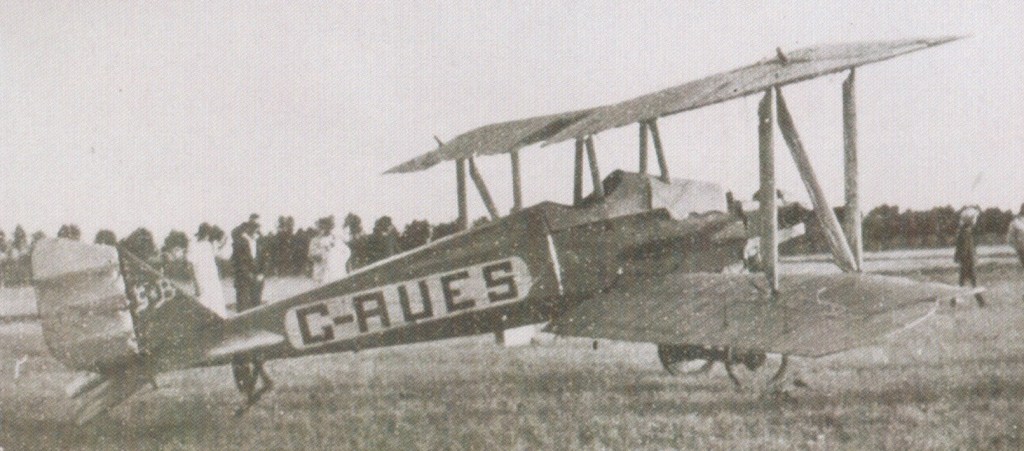
The Blanch Biplane, also known as the Blanch Experimental, was designed and constructed by Mr William James Blanch in the 1920s near Armadale, WA., Australia. Mr Blanch was an engineer who migrated to Australia following the conclusion of World War I. His aim was to design and construct a light biplane demonstrating the feasibility of producing an aircraft with a low powered engine which could be constructed cheaply and sold to future aviators. He was interested in aviation and began construction of a single-seat light biplane for which Certificate of Registration 106 and registration G-AUES (c/n 1) were allotted but not taken up. It was of wooden construction with fabric covering and was to be powered by a 19.3 kw (26 hp) Morehouse engine produced by the E B Heath Company of Chicago, USA, this company also building the popular, at the time, Heath Parasol monoplane.

The Australian Civil Aviation Branch (CAB) was approached by Mr Blanch in 1922 to inform them that material for construction had been ordered and he was founding a business to build and develop the aircraft, being backed for the for the construction of the prototype by Messrs Gordon and Clark who operated as Gordon Motor & Cycle Co of Perth, WA. Construction took place in the rear of a soft-drink shop in Third Avenue, Armadale. The CAB was supplied with technical data, calculations and drawings. In July 1922 Captain Frank Barnwell (1880-1938), Chief designer of the Bristol Aeroplane Company, made a structural analysis of the design. Estimated performance included a speed of 97 km/h (60 mph).

CAB inspections were made in January 1923 of the aircraft and the work was said to be highly creditable but detail workmanship was not up to the standard required for a Certificate of Airworthiness. Further CAB inspections in May and September 1923 required major changes to the construction, including the re-design of the wing with the original solid spars replaced by built-up units. At the latter inspections the fuselage, tailplane and elevators were covered and the fuel tank, instruments, controls and engine were installed but work on the wings had not advanced far.

The wings were completed by June 1924 and the CAB inspector stated the workmanship was in advance of anything done up to that time. By January 1925 the uncovered wings were attached to the fuselage and all controls connected. The aircraft was moved to Cullen’s Field off Railway Avenue where taxiing trials were commenced but it was found the engine would not exceed 1,150 rpm and thus not supply sufficient power.

Mr Blanch then applied to the CAB for £3,000 ($6,000) to set up a facility to build the design but this was not forthcoming. He was offered a 21.6 kw (29 hp) Morehouse engine built in the United States by Wright. In the event this engine was not imported and consideration was given to a chain driven converted Henderson motor-cycle engine. Certificate of Registration No 106 was then allotted. Further modifications to the aircraft were made, including installation of a new carburettor and strengthening of the undercarriage.

Soon after, financial support for the aircraft was withdrawn by the backers and the aircraft was left under a tree on Sherwood Estate. The wings were removed and placed in the loft of a barn but the fuselage suffered some damage from vermin and had to be moved to a shed at Maddington. It seems the aircraft was complete and ready for flight but was never flown.

The Civil Aviation Branch suggested an ABC Scorpion engine be procured to be installed at its cost, which could later be used in the Branch’s de Havilland DH.53s but this did not occur. The aircraft was still in existence during World War II but its final fate is not known. Mr Blanch died in about 1929.

Engine: One 19.3 kw (26 hp) Morehouse two-cylinder horizontally-opposed
Wingspan: 7.92 m (26 ft)
Length: 6.4 m (21 ft)
Max speed: 97 km/h (60 mph)
Initial rate of climb: 61 m/min (200 ft/min)
Loaded weight: 295 kg (650 lb)

Blake Bluetit

W.H.C. Blake and his brother built the little Bluetit monoplane from Simmonds Spartan Two Seater G-AAGN c/n 14, Simmonds Spartan Three Seater G-AAJB c/n 19 and some Avo 504 parts.

It was built at Winchester, UK, in the mid-1930s, powered by a 32 hp Gnat engine. It is not known if it ever flew.

It survived the war and later became part of the Shuttleworth Collection. Allocated BAPC.37 it was stored at Old Warden.