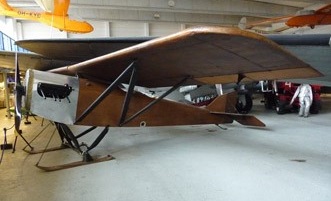
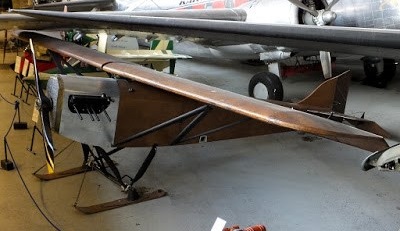
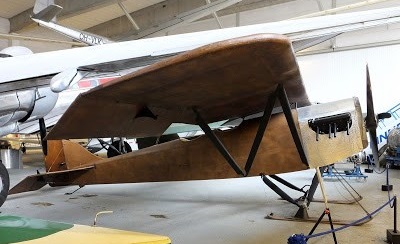
This two-seat monoplane designed and built by Attle R. Blomqvist and Emil Nyberg is the second oldest homebuilt aircraft in Finland. The first flight in 1926. It was damaged in a forced landing in 1927, after which was put in storage.
Donated to the Finnish Aviation Museum by engineer A. R. Blomqvist in 1983, restored by the members of the Aviation Museum Society in 1991 – 1994.
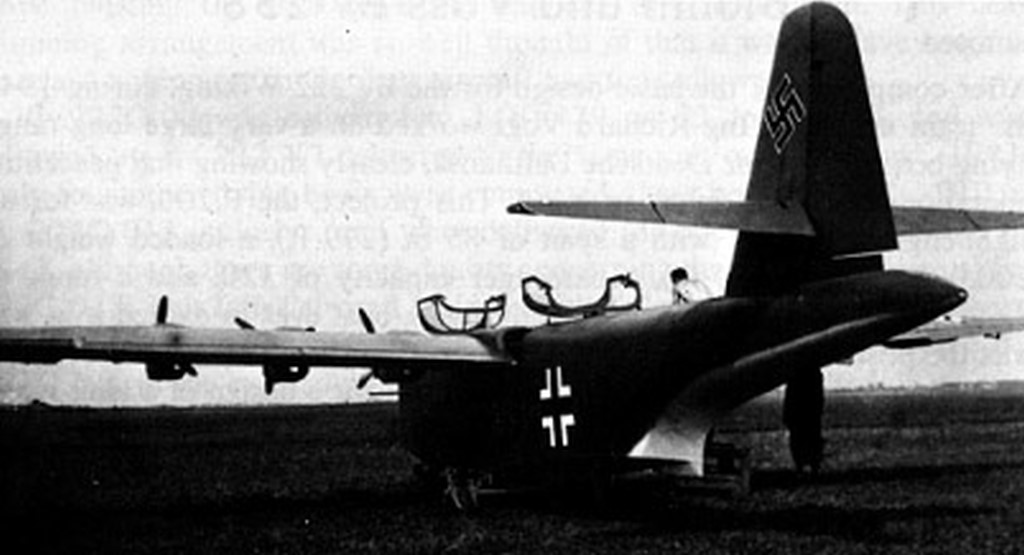
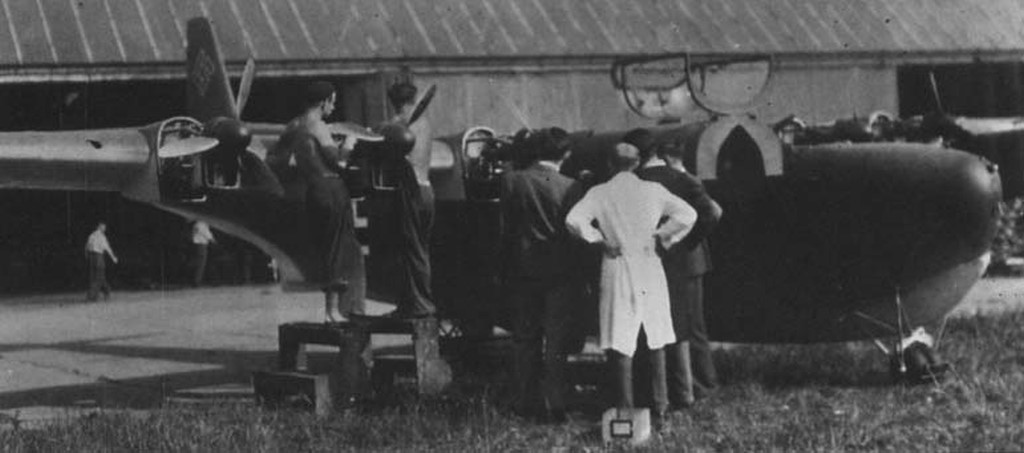
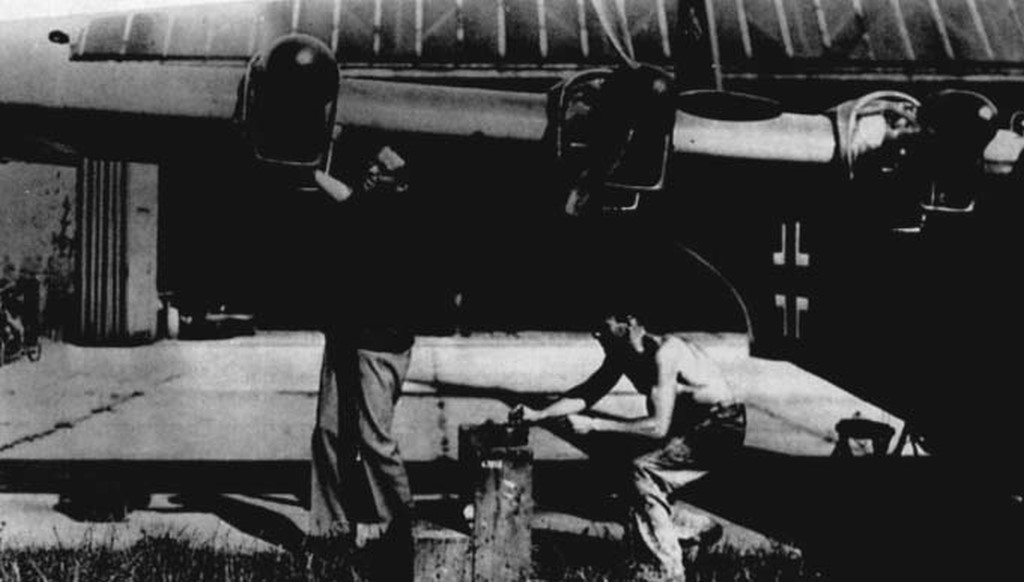
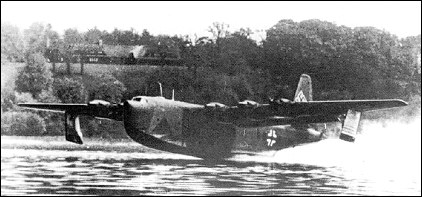
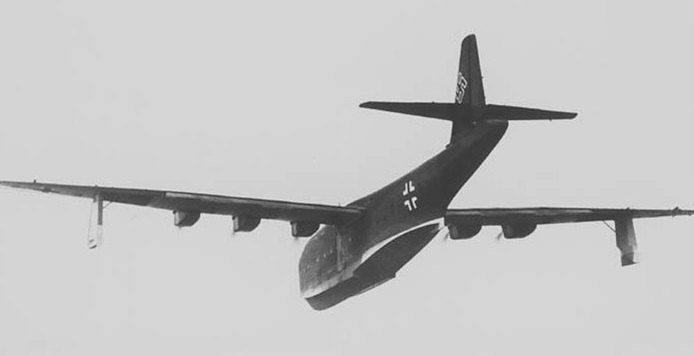
The FGP 227 was a ¼ scale flying model of the Blohm & Voss BV 238 flying boat, built to provide data for the development of the BV 238. The FGP 227 was a faithful scale model with accommodation for a pilot in the front cockpit and a flight test observer in a cockpit aft of the wing. Power was supplied by six 15.7 kW (21 hp) ILO F 12/400 air-cooled two-stroke engines driving three bladed propellers.
Completed early in 1944 the FGP 227 (BQ+UZ) was fitted with a temporary wheeled undercarriage of ten small wheels fitted with low-pressure tyres. Intended to allow flight tests to commence from the manufacturers airfield, the FGP 227 refused to take-off from the grass airfield. To allow flight test to begin the aircraft was dismantled and transported to Erprobungsstelle See, Travemünde, (E-Stelle – flying boat testing station). During transport French prisoners of war loading the wing onto flat-bed trucks allowed it to fall from a crane causing damage which was not repaired until September 1944.
Flight tests commenced in September 1944 as soon as the repairs were completed, but all six engines stopped due to fuel starvation soon after take-off, resulting in a heavy landing on the water. The FGP 227 was again repaired after which the aircraft flew several more times. However, by this time the BV 238 programme had been halted, not least because BV 238 V1 had been sunk at its moorings on Lake Schaal by allied fighters, so no useful data were gleaned from the programme.
Engines: 6 × ILO F 12/400 air-cooled two-stroke, 15.7 kW (21.1 hp) each Propellers: 3-bladed fixed pitch propellers Wingspan: 15.25 m (50 ft 0 in) Wing area: 24.24 m2 (260.9 sq ft) Length: 11.95 m (39 ft 2 in) Empty weight: 1,250 kg (2,756 lb) Gross weight: 1,640 kg (3,616 lb) Crew: 2
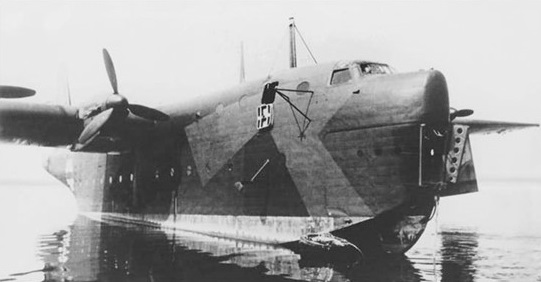
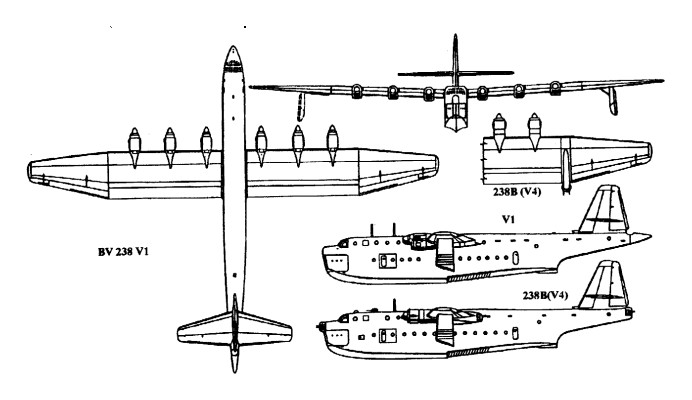
Originally designed as a passenger flying boat for the postwar Lufthansa, the BV 238 design was adapted in 1941 for military use as a maritime patrol and transport aircraft. When completed in 1944 it was the largest aircraft since the Maxim Gorkii and the heaviest built to that time.
Bv.238
A quarter-scale testbed called the FGP 227 was deemed necessary to test the aerodynamics and water handling, but it completely failed to take off when tested on wheels and was then damaged by saboteurs. All the engines seized on the FGP 227 first flight from water — months after the first full-scale BV 238 flew in April of 1944, powered by six Daimler Benz inverted V-12 engines.
Bv.238
The sole complete BV 238 was caught on a lake by P-51 Mustangs and sunk by machine-gun fire in September 1944. Although three further BV 238s and three BV 250 landplane bombers were under construction, the loss of the only flying example caused the Luftwaffe to give up on the idea.
Bv 238 V-1 Engines: 6 x 1900hp Daimler-Benz DB 603G inline piston Wingspan: 60.17 m / 197 ft 5 in Length: 43.36 m / 142 ft 3 in Height: 12.80 m / 41 ft 12 in Empty Weight: 120,593lbs (54,700kg) Maximum Take-Off Weight: 187,393lbs (85,000kg) Max. speed: 425 km/h / 264 mph Maximum Range: 4,474miles (7,200km) Service Ceiling: 23,950ft (7,300m)
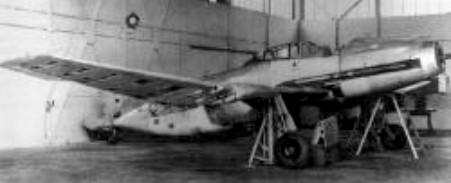
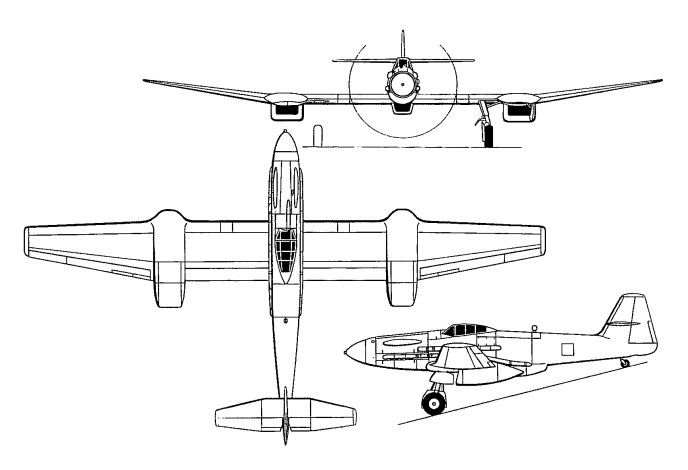
The origins of the Blohm & Voss Bv 155 lay in a meeting held at the Messerschmitt’s Augsburg plant in May 1942 to discuss the “Special High Altitude Fighter”. Both Messerschmitt and Fock-Wulf expressed interest in developing a special high altitude fighter, Messerschmitt had already done some design work on a related project. Messerschmitt’s preliminary study, known as the Bf 109 ST, had been allocated the official RLM 8-series aircraft designation Me 155. The number 155 had previously been assigned to the Klemm firm but since it had not taken up the number the RLM reassigned it to Messerschmitt. At the same time, numbers 152, 153 and 154, which had also been allocated to Klemm but not used, were re-assigned to Focke-WuIf. The original Me 109 ST was advanced in three variants; A, B & C (version A) called for a carrier/aircraft fitted with the DB 605, while (version B) called for a similar fighter powered by the high altitude DB 628. In order to relieve his already over committed design bureau and to speed development, Messerschmitt decided to transfer the Me 155B to Paris. Due to various problems work progressed only slowly throughout the remainder of 1942. By early 1943 things were starting to go wrong with the project. Fock-Wulf were progressing well with their Ta 152, little had been achieved with the Me 155B. During the first half of 1943, Messerschmitt’s design engineers had evolved basic parameters of an (extreme high altitude fighter) design study under the company designation Me P1091. By mid 1943 the Messerschmitt people were pursuing the Me 209H in competition with the Ta 152H and turning there Me P1091 in to the Me 155B. Development passed to Blohm & Voss as the Bv 155. The V1, V2 and V3 prototypes were outwardly very different, mainly by relocation of the radiators. The final Bv 155C had the cooling systems under the nose. A contract for 30 production aircraft was issued in the finals days of WWII. Never flown. The V1 prototype first flew on 01 September 1944, and V2 in February 1945. Three prototypes were built.
Engine: Daimler Benz DB 603A,1610 hp with turbocompressor TKL 15 (1,450 hp at 49,210 ft. (15,000m)) Propeller: metal three-bladed variable pitch Wingspan: 20,30 m / 67 ft. 3 in Length: 11,90 m / 39 ft 4 1/2 in Height: 2,98 m / 9 ft 9 1/2 in Wing area: 39,00 sq.m Empty weight: 4868 kg / 10,716 lb Maximum weight: 13,262 lb. (6016 kg) Wing loading: 141,025 Kg/sq.m Power loading: 3,105 Kg/hp Max speed: 690 Kmh Ceiling: 16950 m Range: 1440 km Armament: 1 x 30 mm MK 108, 2 x 20 mm MG 151/20
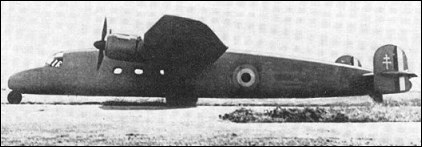
High-wing transport built in occupied France by Breguet, designed for Lufthansa after the war. The Bv 144 was a shoulder-wing aircraft. It had a variable incidence wing, turning round a tubular spar. Two were built, but only one made a few flights.
Engines: 2 x BMW 801A, 1560hp Span: 26.90m Length: 21.90m Height: 5.10m Wing area: 89.40 sq.m Empty weight: 9910kg Max Take off weight: 14100kg Max speed: 460km/h Cruising speed: 410km/h at 4000m Service ceiling: 8,600m Range: 1550km Crew: 3 plus 18 passengers
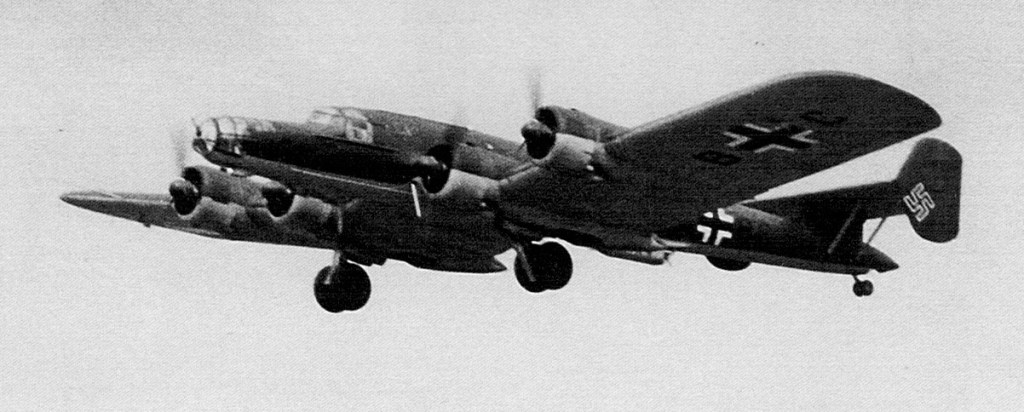
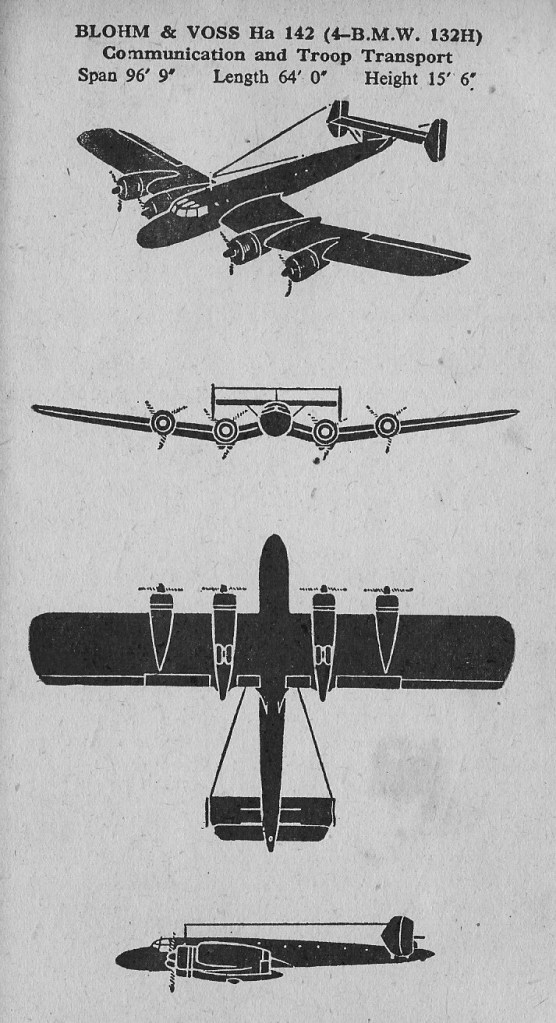
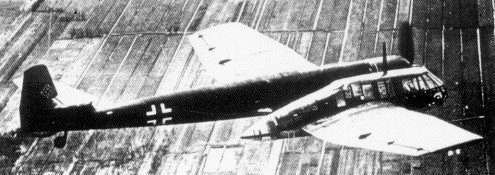
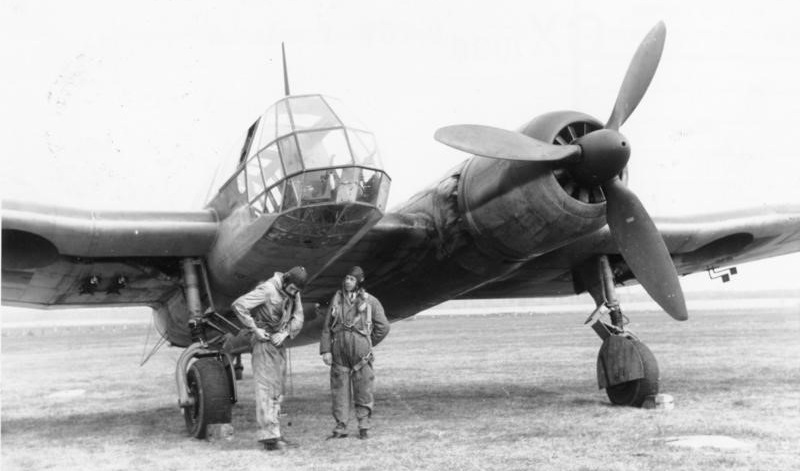
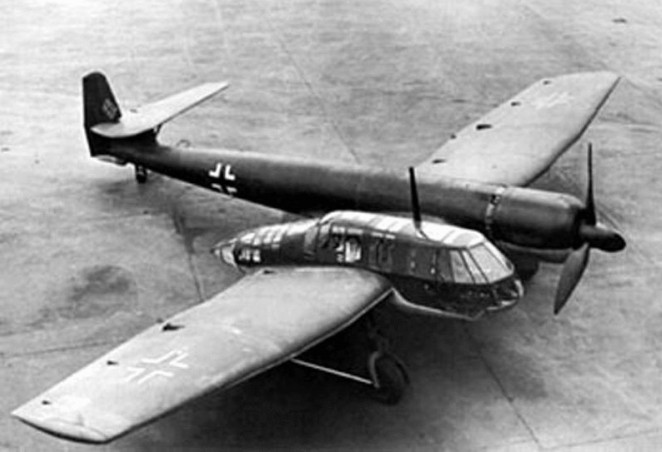
Designed as an armed reconnaissance aircraft incorporating the wings, fuselage and tail unit of the Ha 139. Powered by four BMW 132H engines.
H1 142 V1 operated by Rowehl’s unit
Few built and used as transports by the Luftwaffe.
Ha 142 V2 PC+BC
Ha 142 V2 received factory code PC+BC and was used for transport duties by the Aufklärunsgruppe Ob.d.L.in France during the autumn of 1940 where re-coded T5-CH.
Ha 142 V2 T5-CH
Engines: 4 x BMW 132H, 735kW Take-Off Weight: 16700 kg / 36817 lb Empty Weight: 6390 kg / 14088 lb Wingspan: 29.5 m / 96 ft 9 in Length: 19.7 m / 64 ft 8 in Wing Area: 130.0 sq.m / 1399.31 sq ft Max. Speed: 400 km/h / 249 mph Cruise Speed: 350 km/h / 217 mph Ceiling: 6800 m / 22300 ft Range W/Max.Fuel: 4400 km / 2734 miles Crew: 4-5
Resulting from a 1937 requirement for a short-range reconnaissance plane with a single engine and accommodation for a crew of three, Richard Vogt, the technical director of Blohm und Voss’s aircraft subsidiary, Ham¬burger Flugzeugbau, proposed that an official RLM requirement could best be met by an asymmetric design. The result was the company financed Ha 141 0, flown in Feb¬ruary 1938 with Major General Ernest Udet at the controls. An unorthodox machine with an extensively glazed crew nacelle offset to starboard of the centerline and the 865-hp (645-kW) BMW 132N radial engine to port at the front of the boom supporting the tail unit. A perspex-glazed crew gondola on the starboard side housed the pilot, observer and rear gunner, while the fuselage on the port side led smoothly from the engine to a tail unit.
The engine was a conventional radial piston powered machine spinning a three-bladed propeller system. The engine of choice became a single BMW 801A 14-cylinder radial of 1,560 horsepower providing for a 272mph maximum speed, a 1,181 mile range and a 31,810 foot service ceiling. The later pre-series Bv 141s would make use of only a single tail system, hence its asymmetrical arrangement. Despite this appearance, the weight of the aircraft was spread out quite well when in flight, relating to the Bv 141s good handling characteristics.
It proved to be quite successful, so much so that an order was placed for three planes including the original, since that one was built with private funds. The original BV-141-V and A models had a conventional stabilizer.
The aircraft’s design prompted a mixed response from the RLM and had no impact on their decision to build the Fw 189. Indeed, an urgent need for BMW 801 engines for use in the Fw 190 fighter aircraft further reduced any chance that the BV 141 would see production. Though the RLM officials remained uncertain of its potential they awarded a contract for further for five Bv 141A developed versions with 960L hp BMW 132N engine and armament of two fixed and two rear movable 7.92 mm (0.312¬in) MG 17 and four 50 kg (110 lb) bombs. Lengthy trials in 1939 40 were favourable, but the RLM claimed that the oddity was under-powered as an excuse to avoid large scale orders.
The German air ministry preferred the competing Focke-Wulf Fw 189, but the manufacturer’s enterprise in building three prototypes, the last two somewhat larger than the first, paid off in an order for five pre-production By l4lAs. These were evaluated up to April 1940, but no production was ordered even of the more powerful Bv 141B.
Vogt had anticipated this and in January 1941 flew the first completely redesigned Bv 141B with 1560 hp BMW 801 and larger airframe of different shape, including an asymmetric tailplane, first tested on the V2 prototype, designed to improve the rear gunner’s field of fire and which had resulted in no noticeable deterioration in handling qualities.
Only five B series aircraft were built, making 13 of all versions. No 10 was used operationally in the autumn of 1941, but this unique aircraft was eventually dropped as the twin boom Fw 189 was an adequate tactical reconnaissance aircraft and the Blohm und Voss shops were needed to help make the Fw 200C Condor after an air raid had damaged the Focke Wulf factory complex at Bremen.
All further development was cancelled in 1942.
Some 38 Bv 141 examples were known to have been produced though none survive today. Several were recovered by the Allies. In all, there were three V-series prototypes designated as V1, V2 and V3. The pre-series models numbered five examples under the Bv 141 A-0 branding and became V4 through V8. These were followed by the revised Bv 141 B-0 pre-series models from V9 through V18. There were eight Bv 141 B-1 series models thereafter.
The Ilmavoimat / Maavoimat / VL team evaluated this aircraft and conducted a series of test flights over April/May 1938. The performance was found to be good and the observation visibility excellent although STOL capability was lacking. Overall though, the design was rather too radical for the Finns and while it remained in consideration, it was as a “possibility” rather than up for firm consideration.
Bv 141A five pre-production aircraft Engine: 1,000-hp/746-kW BMW-Bramo 323 Wing span: 50 ft 8.25 in/15.45m
Bv 141B three-seat short-range reconnaissance plane. Engines: one 1,560-hp (1,163-kW) BMW 801A radial piston Maximum speed: 230 mph (370 km/h) at sea level Service ceiling: 32,810 ft (10,000 m) Range: 746 miles (1,200 km). Empty Weight: 10,362 lb (4,700 kg) Maximum take-offweight: 13,448 lb (6,100 kg). Span: 57 ft 3.5 in (17.46 m) Length: 45 ft 9.25 in (13.95 m) Height: 11 ft 9.25 in (3.60 m) Wing area: 570.51 sq ft (53.00 sq.m) Rate-of-Climb: 1,860ft/min (567m/min) Crew: 3 Armament: two fixed MG 17 and two trainable MG 15 0.312-in (7.92-mm) machine guns, and four 110-lb (50-kg) bombs.
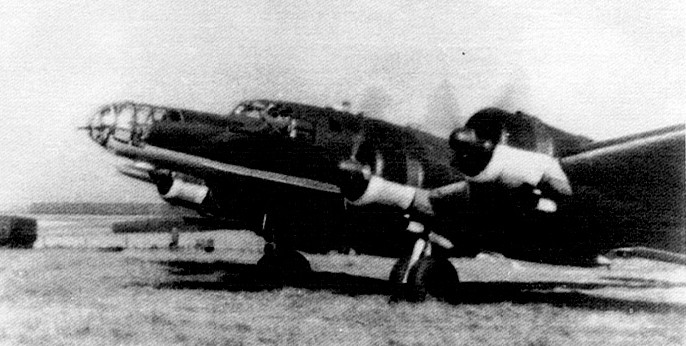
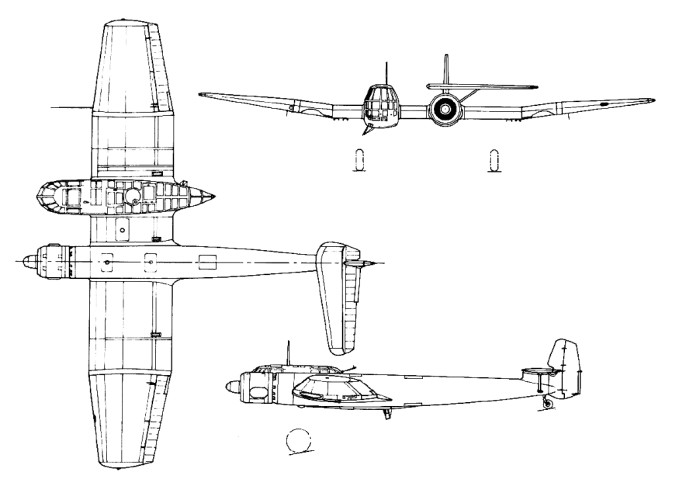
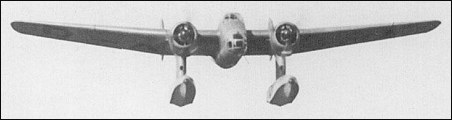
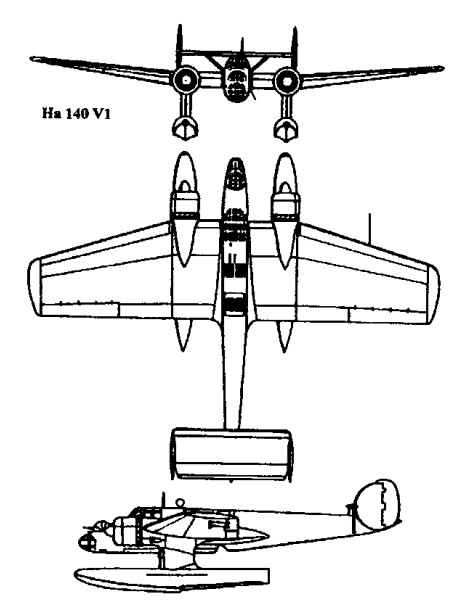
A twin-engined torpedo-bomber floatplane, based on the Ha.139 long-range mailplane, the Ha.140 was first flown on 30 September1937, and competed with the He-115. According to some sources the Luftwaffe actually preferred the Ha 140, but Blohm & Voss did not have the production capacity to meet the orders. Others claim that the aircraft had unacceptable handling. Only four were built.
Engines: 2 x BMW 132K, 830 hp Propellers: 3 blade metal variable pitch Wing span: 22,00 m Length: 16,74 m Height: 3,50 m Empty weight: 6300 kg MTOW: 9227 kg Power loading: 5,558 Kg/hp Max speed: 333 Kmh Range: 2000 km
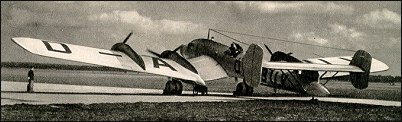
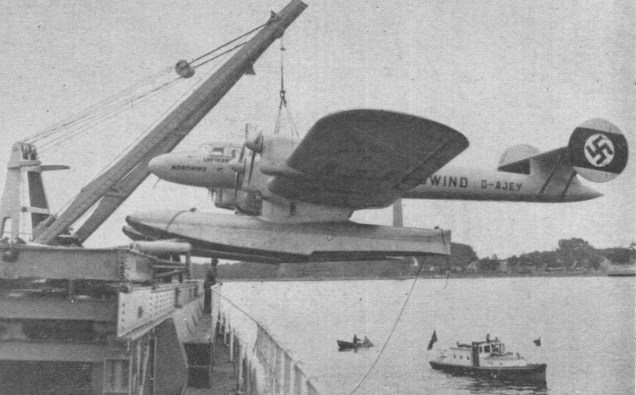
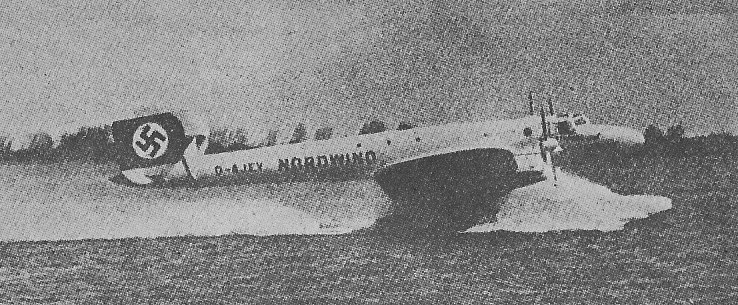
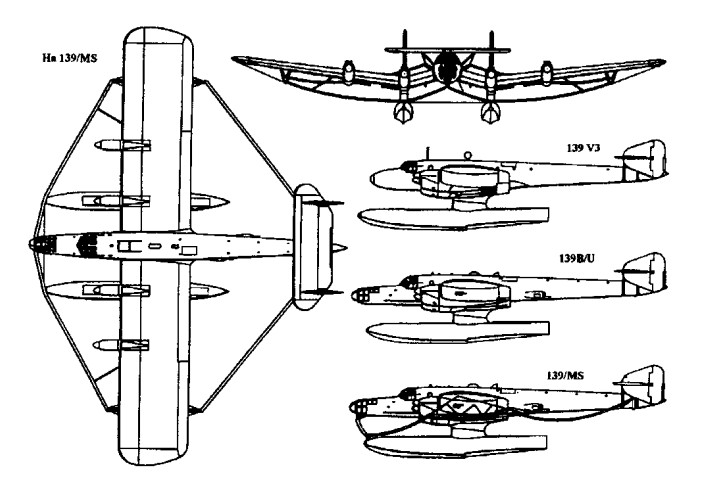
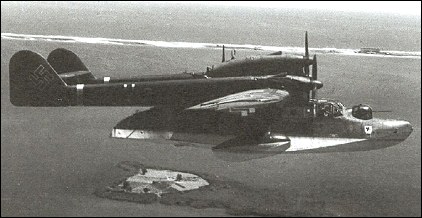
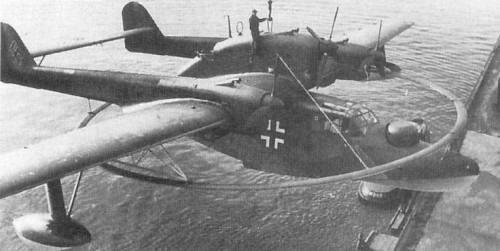
First flown in Autumn 1936, two Ha 139 – the Nordmeer and Nordwind – were delivered to Deutsche Luft Hansa in 1937. In the summer and autumn of that year they made 14 experimental transatlantic flights between Horta (Azores) and New York, operating from depot ships. In the spring of 1938 Nordwind went into service on the regular South Atlantic mail service between Bathurst (Gambia) and Natal (Brazil). Up to the end of June 1939 the seaplanes had successfully completed 100 transatlantic flights: 40 across the North Atlantic and 60 across the South Atlantic.
For the 26 transatlantic flights of 1938 between the Azores and New York an improved and larger type of Ha 139, the Ha 139B Nordstern, was delivered.
The Ha 139 type was also used to a limited extent during World War II as a reconnaissance, mine-laying and ambulance aircraft. Power was provided by four 447kW Junkers Jumo 205G engines.
Engines: 4 x Junkers Jumo 205 C diesel, 600 hp Propellers: 3 metal blades variable pitch Wing span: 27,00 m Length: 19,50 m Height: 4,80 m Wing area: 117 sq.m Empty weight: 10360 kg MTOW: 17500 kg Wing loading:: 149,572 kg/sq.m Power loading: 7,291 Kg/hp Max speed: 315 Kmh Cruise speed: 260 Kmh Ceiling: 3500 m Range: 5300 km Armament: 4 x MT MG 17, 7,92 mm
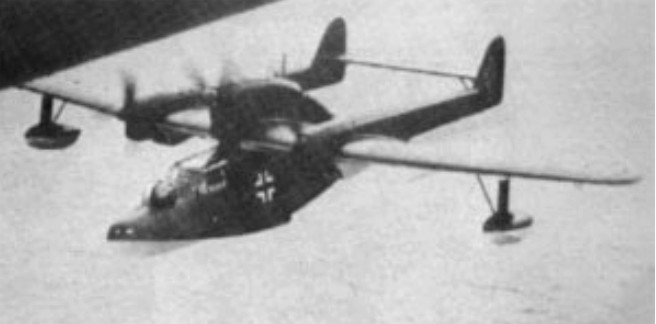
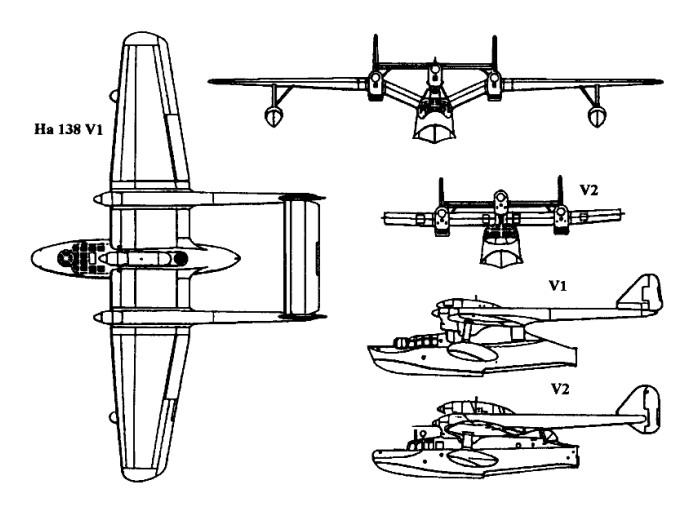
German patrol flying boat. The Blohm und Voss shipyard’s aircraft subsidiary was Hamburger Flugzeugbau, so the first two prototypes were designated Ha 138. Both flown in 1937, they were powered by three 600 hp / 447kW Junkers Jumo 205C-4 heavy oil diesel engines. The third machine, the Bv 138A 01 of 1938, was greatly modified with larger hull and flat (as distinct from gull) wing, and the tail booms were redesigned. Fuel oil was carried inside the tubular main spar. In 1939 delivery began of 25 Bv 138A 1 ocean patrol boats, but they seldom carried their armament and were soon relegated to transport, serving in this role during the invasion of Norway in April 1940.
In October 1940, when the A 1 was first deployed to French bases, the 21 Bv 138B 1 began to enter service. These were much better performers, with 880 hp Jurno 205D diesels and a turret at each end of the hull mounting a 20 mm MG 151/20 cannon.
In 1941 43 Blohm und Voss delivered 227 of the C 1 version, with many detail refinements and a 13 mm (0.51 in) MG 131 in an open cockpit behind the centre engine. Constant speed propellers were standard, the centre unit having four blades and the outers reversing for water manoeuvres. The inner wing carried four stores racks, each rated at 150 kg (331 lb), usually occupied by depth charges.
The Bv 138 finished its career in a mine-sweeping role, carrying a large degaussing “hoop” around its fuselage to explode magnetic mines. A total of 273 production Bv 138s were completed.
Ha 138 Engines: 3 x 600 hp / 447kW Junkers Jumo 205C-4 heavy oil diesel
Bv 138A 01 Engines: 3 x 600 hp / 447kW Junkers Jumo 205C-4 heavy oil diesel
Bv 138A-1 Engines: 3 x 880 hp Jumo 205D diesels Armament: 2 x 20 mm MG 151/20 cannon.
Bv 138B-1 Engines: 3 x Junkers Jumo 205C-4
Bv 138C-1 Engine: 3 x 746kW Junkers Jumo 205D 12-cylinder diesel engines Max take-off weight: 17650 kg / 38912 lb Wingspan: 26.94 m / 88 ft 5 in Length: 19.85 m / 65 ft 1 in Height: 5.90 m / 19 ft 4 in Max. speed: 285 km/h / 177 mph / 154kt Ceiling: 5000 m / 16400 ft Range: 4300 km / 2672 miles Armament: 2 x 20mm MG 151/20 cannon, 13mm (0.51 in) MG 131 + 1 x 7.92mm machine-gun, four stores racks, each rated 150 kg (331 lb)