
The registration ZK-HCK to B.Heape, Whangarei, New Zealand, was cancelled on 27 February 1990, as withdrawn from use.
The registration ZK-HCK to B.Heape, Whangarei, New Zealand, was cancelled on 27 February 1990, as withdrawn from use.
There was a 50 hp Slyphe 5-cylinder of the BMFW, exposed at the ALA in 1912.
The 70 hp Sylphe 7-cylinder appeared not until 1913.

The Military monoplane designed by Ing. Philipp Enders [System Enders] was announced in Flugsport 1911 to be constructed by the Flug Technische Gesellschaft Nürnberg-Fürth E.V., yet in the same issue a drawing infers that it was to be constructed by the Nürnberger Motoren und Maschinenfabrik. In the end the steel-constructed machine was exposited in the Berlin ALA (Algemeinen Luftfahrt Ausstellung) 1912 as a finished machine of the Bayerische Motoren- und Flugzeugwerke Nürnberg.
The third monoplane of the BMFW, it was powered by a 50/55 hp BMFW Sylphe engine of own design.

The first design of Enders dated from 1910 and had steel tube holding the elevator / rudder and the pilot sitting Grade-wise beneath the wing in a sort of bathtub construction.
This simple high-wing monoplane with its characteristic tuning-fork like steel-tube fuselage was the first aircraft built by the BMFW (Bayerische Motoren- und Flugzeugwerke) in Nürnberg. It is also known as Philipp Enders monoplane. Enders was manager of the BMFW and equipped his first monoplane with a three-cylinder engine of own design.

In 1956 after restrictions on aircraft construction in Germany were lifted Walter Blume produced, a modernized version of the Ar 79. The canopy was extended rearward, the fin was replaced by a more modern form, the wing replaced by an all metal wing and the landing gear replaced by a tricycle undercarriage. The original Hirth engine Hirth being no longer available, was replaced by the Lycoming O-320.
A four-seater with straight-tapered flying surfaces, there are wingtip fairings to increase the effective aspect ratio and boundary-layer fences between the centre-section and outer wing panels. Two fuel tanks are in the wing centre section, one on each side of the fuselage.
Engine: Lycoming 150 hp
Wingspan: 34 ft 5 in
Length: 26 ft 9 in
Height: 7 ft 10.5 in
Empty weight: 1350 lb
Loaded weight: 2337 lb
Max speed: 149 mph at SL
Cruise: 133 mph
Range: 630 mph
Prop: 2 blade variable pitch
Seats: 4


In 1998 a retired Neurological-surgeon, Dr. Jack Barlass, approached Blue Yonder to build him a nostalgic War Bird. He had about 450 hours flying in the RCAF at the end of World War 11 and wanted to re-live some of those treasured flying memories.
Our first reaction was to build something really different and suggested building a airplane that looked like the Japanese Zero. He thought that would be all right, however the next day he decided on making it look more like a North American Harvard (T6 Texan). A few days later he had second thoughts about having a tail dragger because at 72 years of age he was not sure he wanted the added pressures associated with tail dragger flying. Our new suggestion was to come up with something that looked like an Aerocoupe. It would not have the War Bird look but would be a very safe and stable cantilever wing airplane. He accepted the idea, but we could tell he was not thrilled. The next day, full of enthusiasm he said , “lets build a King Cobra.”
Because of the success with the wing design and air foil of the Merlin and EZ Flyer it was decided that would be the air foil complete with yonkers ailerons, which work so well. The King Cobra look would come from the fin and rudder along with the canopy and to some extent the nose.
Initially the engine to be used was the Rotax 503, 52 HP but when the time for fitting up the engine arrived Dr. Jack decided to put a new Rotax 618 in his EZ Flyer and move the Rotax 582 from his EZ Flyer to the new airplane. Hence, althought the craft was designed to fly on 52 HP it was now going to get 65. The C of G seemed to be moving further back, as design changes were being made. The day of final assembly came and a final Center of Gravity was determined. It was further back than liked, but on a prototype airplane and wing the only way to really tell how everything is going to work together is to wind tunnel test it or fly it. It was elected to fly it. With only 20 mph on the clock and some up elevator the nose wheel was comming off the ground. The large rudder gave very positive directional control with the nose wheel off the ground. With the nose wheel off the ground and about 35 mph on the dial it became airborne. The adjustable trim tab had enough allowance in it to allow hands off. True air speed at moderate cruise rpm was over 85 mph.
The new airplane behaved normally in slow flight, as well as high speed flight of over 105 mph (TAS 112 mph). For the stall, at 30 mph the airplane burbled, broke and started flying again at about 35 mph.
The airplane was handed over to its new owner, Dr. Jack, who several months later passed away with cancer after putting over 50 hours on his new airplane. Blue Yonder bought the airplane from the Estate and put it into full production. From date of order a kit can be available in ususlly 6 to 8 weeks.
LSA legal.
Engine: Rotax 582, 65 hp
Hp range: 65-100
Top Speed: 120 mph.
Cruise Speed: 90 mph.
Stall Speed: 30 mph.
Rate of climb: 900 fpm
Fuel Capacity: 24 USgal.
Range: 620 sm.
Takeoff Distance: 150 ft.
Landing Distance: 225 ft.
Service Ceiling: 14,000 ft.
Empty Weight: 543 lbs.
Gross Weight: 1200 lbs.
Height: 6 ft.
Length: 21 ft.
Wingspan: 27 ft.
Wing Area: 158 sq. ft.
Number of Seats: 1
Cockpit width: 30 in
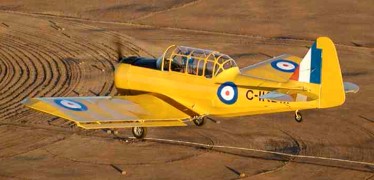
An LSA legal ultralight.
Engine: Rotax 582, 65 hp
Hp range: 65-100
Top Speed: 100mph.
Cruise Speed: 90 mph.
Stall Speed: 40 mph.
Range: 620 sm.
Rate of climb: 800 fpm
Takeoff Distance: 150 ft.
Landing Distance: 225 ft.
Service Ceiling: 12,000 ft.
Empty Weight: 613 lbs.
Gross Weight: 1300 lbs.
Fuel capacity: 24 USG
Height: 7 ft.
Length: 23 ft.
Wingspan: 28 ft.
Wing Area: 158 sq. ft.
Number of Seats: 1
Cockpit width: 30 in
In 1929 the Blue Streak Motors Co, of Wichita KS., USA, built two aero engines.
The Blue Streak 70 was a 70 hp, 2-cycle three cylinder air-cooled radial, with dual cylinders and U-shaped conn rods.
The Blue Streak 125 was a 125hp five cylinder air-cooled radial.

The 1910 Bloudek-Potucek-Cermak “Racek” 1-seater monoplane was designed and built by Stanko Bloudek, Slovenian and Javoslav Potucek and Jan Cermak, both Czech.
Span: 28’7″
Length: 20’8″
Weight: 440 lb
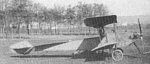
The 1911 Bloudek-Cermak Libella was a single-seat monoplane designed and built by S.Bloudek, Slovenian and J. Cermak, Czech, in the Austro-Hungarian Empire.
1911 Bloudek-Cermak Libella II was a single seat biplane designed and built by S.Bloudek and J. Cermak.
Libella
Span: 27’10”
Length: 29’6″
Seats: 1
Libella II
Span: 27’10”
Length: 29’6″
Weight: 838 lb
Seats: 1

